×

Senegal🇸🇳 | regionsÎle de GoréeUNESCO fortifications, pastel colonial houses, Atlantic viewpoints | things to do and best time to go

Explore Casamance RiverExplore Joal-Fadiouth

Backpacking in Île de Gorée
🏆 Top pickregion ranked #1
By Johan Kruseman 🇳🇱 | Updated September 3, 2026

You’re standing in the shade of a baobab, the Atlantic breeze sticky on your skin, as the distant clang of a ferry bell mixes with the laughter of schoolkids darting between pastel-washed colonial houses. The air smells faintly of salt and grilled fish. This is Île de Gorée, a tiny island just off Dakar’s coast—close enough for a day trip, but a world apart in pace and mood.

Gorée is famous, sometimes painfully so. Backpackers come for its haunting history—those stone slave houses and rust-red fort walls—but stay for the slow afternoons, car-free alleys, and the kind of local art scene that feels lived-in, not staged. It’s not cheap by Senegal standards, and yes, the crowds can get thick when the ferries unload, but linger past the last boat and you’ll find a rare calm. Compared to the wild Casamance or the surfy chaos of Yoff, Gorée is compact, contemplative, and best for those who value atmosphere over adrenaline.

Discover everything you want to know in the 📖 Senegal Travel Guide.


Get your Senegal guide
93 ranked highlights, routes & tips, works offline (380 pages)
Loading the map 🌍
CLICK TO FILTER
cities
towns
villages
landmarks
national parks
hikes
beaches
attractions
festivals
regions
SHOW COUNTRY’S BESTSHOW ALL

✨ Why go?
Ranked #1 region in Senegal
Reasons people choose to visit here

Île de Gorée is a backpacker’s dream, blending history, culture, and natural beauty in one compact spot. You can stroll through the colorful streets of Gorée Island, where the past whispers from every corner. The Maison des Esclaves is a must-see, offering a poignant glimpse into the island’s role in the transatlantic slave trade.

But it’s not just about the history. The island’s beaches are perfect for unwinding after a day of exploration. You can easily hop on a ferry from Dakar, making transport a breeze. This flexibility means you can spend your days soaking up the sun or diving into local art and music without the hassle of constant relocation.

What’s the kicker? You can mix nature and culture seamlessly. Spend a morning hiking the rugged coastline, then dive into a vibrant evening … read more 👉
Île de Gorée is a backpacker’s dream, blending history, culture, and natural beauty in one compact spot. You can stroll through the colorful streets of Gorée Island, where the past whispers from every corner. The Maison des Esclaves is a must-see, offering a poignant glimpse into the island’s role in the transatlantic slave trade.

But it’s not just about the history. The island’s beaches are perfect for unwinding after a day of exploration. You can easily hop on a ferry from Dakar, making transport a breeze. This flexibility means you can spend your days soaking up the sun or diving into local art and music without the hassle of constant relocation.

What’s the kicker? You can mix nature and culture seamlessly. Spend a morning hiking the rugged coastline, then dive into a vibrant evening of live music and local cuisine. This slow travel approach allows you to savor every moment, making your experience richer. So, if you’re looking for a spot that offers a little bit of everything without breaking the bank or your back, Île de Gorée is your ticket.
Want to include Île de Gorée in your Senegal route?
Create a personalized Senegal itinerary that includes Île de Gorée and the places that fit your trip — based on your travel style, budget, and available time. Get your route in seconds.

Generate my trip

💡 HighlightsThe experiences that define the visit

  1. Fort d’Estrées — A compact, walkable 19th-century fort with crenellated walls, old cannon emplacements and breezy ramparts. Climb up for a hands-on feel of colonial military architecture and uncluttered views across the bay toward Dakar.
  2. La Marine (fishermen’s quay and morning fish market) — Watch the small pirogues come in at dawn, see catches unloaded and traded, and eat the freshest grilled fish you’ll find on the island. It’s raw, local and a great way to observe daily life away from curated tours.
  3. Colonial streets and colorful carved doorways — The narrow, sun-bleached alleys lined with vividly painted, carved wooden doors are uniquely Gorée: each doorway tells a neighborhood story. No two streets feel the same; wander and let the details—hinges, plaques, paint layers—hook you.
read more 👉
  1. Fort d’Estrées — A compact, walkable 19th-century fort with crenellated walls, old cannon emplacements and breezy ramparts. Climb up for a hands-on feel of colonial military architecture and uncluttered views across the bay toward Dakar.
  2. La Marine (fishermen’s quay and morning fish market) — Watch the small pirogues come in at dawn, see catches unloaded and traded, and eat the freshest grilled fish you’ll find on the island. It’s raw, local and a great way to observe daily life away from curated tours.
  3. Colonial streets and colorful carved doorways — The narrow, sun-bleached alleys lined with vividly painted, carved wooden doors are uniquely Gorée: each doorway tells a neighborhood story. No two streets feel the same; wander and let the details—hinges, plaques, paint layers—hook you.
  4. Western-tip sunset viewpoint — The island’s bluff on the west side is a simple, unbeatable spot for sunset, with open sea and Dakar’s silhouette in the distance. Locals bring radios, kids run, and the light on the water is pure postcard-level—no ticket required.
  5. Gorée’s small beaches and natural tide pools — Tiny sandy patches and rock pools around the shoreline make for easy paddling, shell hunting and quick swims. It’s intimate beach time—no big resorts, just locals splashing and the occasional fishing pirogue.
  6. Place du Gouvernement and the market lanes — The island’s central square is where life converges: casual cafés, spice sellers, and small food stalls serving coffee, beignets and local snacks. Great for people-watching and grabbing an inexpensive, tasty bite between walks.
  7. Hidden gem: Rooftop terraces and family-run cafés — Tucked above narrow streets are low-key rooftop spots where locals sip tea and argue football scores while you get a panoramic view without a crowd. Perfect for slow afternoons and people-watching with a breeze.
  8. Hidden gem: Local artisans’ workshops (door-carvers & painters) — Small studios and backyard workshops where craftspeople refurbish doors, paint signs or carve wood—hands-on, skilled work that’s part of Gorée’s visual identity. Chat politely, peek at the process, and you might take home something made right there.
  9. Hidden gem: The quiet hillside cemetery with sea views — A peaceful, lesser-visited slope dotted with weathered graves looking out to the Atlantic. It’s oddly restorative—good for a reflective break and unique vistas that many visitors miss.
  10. Community fishing life and small-boat building spots — Walk the back alleys where fishermen mend nets and handcraft small boats; you’ll see techniques passed down generations. It’s a working, everyday tradition that gives real texture to island life—raw, loud and completely authentic.
Spotted a mistake or missing something? Contact us.

Things to do around Île de Gorée

Ratings based on Tripadvisor reviews. When you book through this link, you support our work at no extra cost to you.

⌛️ 5 daysSeeing the highlights in 5 days

Day 1: Île de Gorée

Start your adventure by hopping on a ferry from Dakar. The ride is about 20 minutes, but it sets the tone. You’re leaving the hustle behind. Once on the island, take a moment to soak in the vibrant colors of the buildings and the salty breeze. The pace here is slower, and that’s the beauty of it. Spend your day wandering the narrow streets, visiting the Maison des Esclaves, and chatting with locals. This is where you’ll feel the island’s history pulse beneath your feet.

Day 2: Exploring the Island

Today is all about getting lost in the charm of Île de Gorée. Rent a bike or simply stroll. The island is small, but every corner has a story. Check out the Fort d’Estrées for panoramic views. The transport here is easy; everything is within walking distance. This day is about … read more 👉
Day 1: Île de Gorée

Start your adventure by hopping on a ferry from Dakar. The ride is about 20 minutes, but it sets the tone. You’re leaving the hustle behind. Once on the island, take a moment to soak in the vibrant colors of the buildings and the salty breeze. The pace here is slower, and that’s the beauty of it. Spend your day wandering the narrow streets, visiting the Maison des Esclaves, and chatting with locals. This is where you’ll feel the island’s history pulse beneath your feet.

Day 2: Exploring the Island

Today is all about getting lost in the charm of Île de Gorée. Rent a bike or simply stroll. The island is small, but every corner has a story. Check out the Fort d’Estrées for panoramic views. The transport here is easy; everything is within walking distance. This day is about savoring the moment, not rushing. Grab lunch at a local eatery—try the thieboudienne. It’s a dish that embodies Senegalese culture, and you’ll want to taste it.

Day 3: Off-Path Reward: Île de la Madeleine

Take a boat trip to Île de la Madeleine. It’s a quick detour, but the untouched beaches and serene atmosphere are worth it. You’ll escape the crowds and find a slice of paradise. Bring a picnic and enjoy the tranquility. This is your chance to recharge before diving back into the island’s history.

Day 4: Cultural Immersion

Return to Île de Gorée and immerse yourself in local art. Visit the various galleries and meet the artists. The transport is simple; just walk or rent a bike again. Engage in conversations about their work and the island’s legacy. This day is about connecting with the soul of the place.

Day 5: Reflection and Farewell

Spend your last day revisiting your favorite spots. Maybe catch the sunset at the beach. Reflect on your journey. The ferry back to Dakar is your bridge to the mainland, but you’ll carry the island’s spirit with you.

The must-do day? Day 2. It encapsulates the essence of Île de Gorée, blending history, culture, and the laid-back vibe that makes this place unforgettable.
Turn your Île de Gorée visit into an Senegal adventure
Build a complete Senegal route with Île de Gorée, hidden gems, must-see destinations, and realistic travel times included.

Generate my trip

🌤️ When to go?Best time to visit Île de Gorée


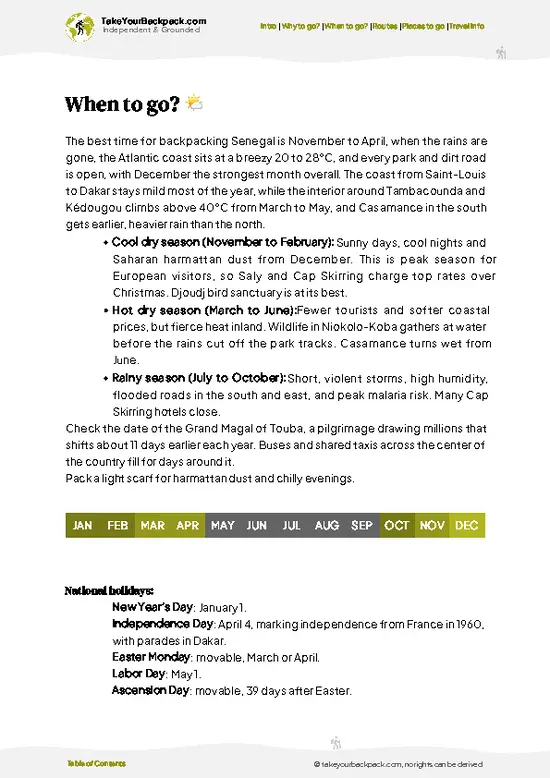
  • Topic: Weather – The dry season from November to May is your best bet. Expect clear skies and minimal rain, perfect for wandering the island without soggy shoes or canceled boat rides. The wet season (June to October) brings heavy, unpredictable downpours that can turn your plans upside down.

  • Topic: Temperature – Daytime temps hover around 25-30°C (77-86°F) during the dry months, which feels warm but manageable with ocean breezes. The wet season is hotter and more humid, pushing closer to 32°C (90°F), making midday strolls less appealing.

  • Topic: Daylight Hours – Around 11 to 12 hours of daylight year-round, but the dry season offers more consistent sunny mornings, so you can start early and pack in more before the afternoon heat or any surprise showers.

  • Topic: Crowds – Peak tourist
read more 👉

  • Topic: Weather – The dry season from November to May is your best bet. Expect clear skies and minimal rain, perfect for wandering the island without soggy shoes or canceled boat rides. The wet season (June to October) brings heavy, unpredictable downpours that can turn your plans upside down.

  • Topic: Temperature – Daytime temps hover around 25-30°C (77-86°F) during the dry months, which feels warm but manageable with ocean breezes. The wet season is hotter and more humid, pushing closer to 32°C (90°F), making midday strolls less appealing.

  • Topic: Daylight Hours – Around 11 to 12 hours of daylight year-round, but the dry season offers more consistent sunny mornings, so you can start early and pack in more before the afternoon heat or any surprise showers.

  • Topic: Crowds – Peak tourist flow aligns with the dry season, especially December through February. If you want fewer people, aim for the shoulder months of November or May—still dry, but with a quieter vibe.

  • Topic: Seasonal Activities – The dry season hosts cultural events and festivals on the mainland that spill over to Gorée, adding layers to your visit. The wet season’s slower pace means fewer events but also fewer tourists, if you prefer solitude.

  • Topic: Price Fluctuations – Expect higher prices for lodging and ferries during peak dry months. Booking in shoulder seasons can save you a chunk, and locals might be more open to negotiating rates when the island is less busy.


Pro-tip: Arrive early in the dry season to catch the tail end of the cultural buzz before the crowds flood in—and snag better deals on accommodations.


source: climatestotravel.comJANJanuary: excellent for travelingFEBFebruary: excellent for travelingMARMarch: excellent for travelingAPRApril: highly recommended for travelingMAYMay: highly recommended for travelingJUNJune: fair for travelingJULJuly: fair for travelingAUGAugust: fair for travelingSEPSeptember: fair for travelingOCTOctober: fair for travelingNOVNovember: highly recommended for travelingDECDecember: excellent for traveling
when-to-go

✈️ The backpacker research shortcutSenegal Travel Guide

An offline-friendly backpacking guide with optimized travel routes, ranked highlights, transport advice, and the best areas to stay.
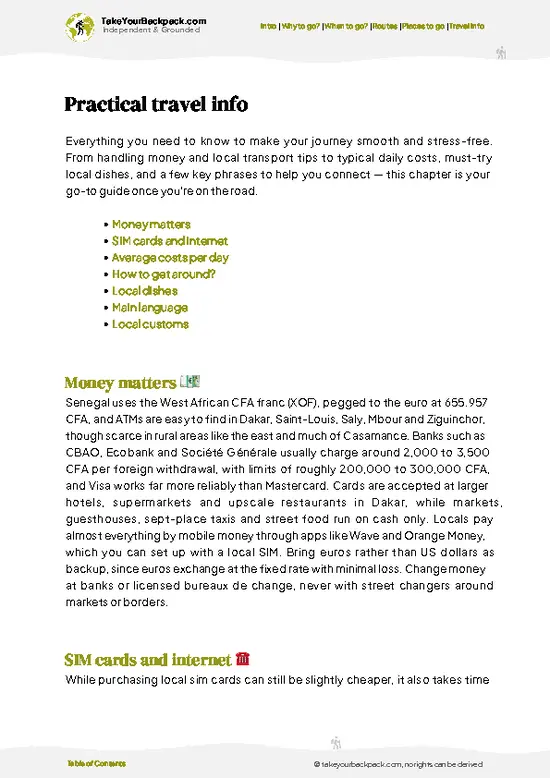
example page 0 from our offline Travel Guide for Senegal
example page 1 from our offline Travel Guide for Senegal
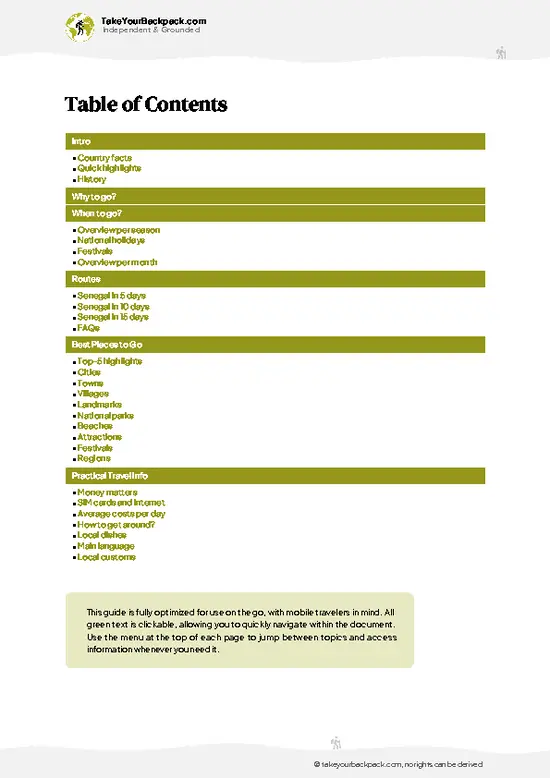
example page 2 from our offline Travel Guide for Senegal
example page 3 from our offline Travel Guide for Senegal
example page 4 from our offline Travel Guide for Senegal
example page 5 from our offline Travel Guide for Senegal
example page 6 from our offline Travel Guide for Senegal
example page 7 from our offline Travel Guide for Senegal
The digital guide (380 pages) contains:
93 highlights, ranked by travel appeal
Optimized 5, 10 & 15-day travel routes
Cities, national parks, landmarks, beaches
How to get around
Offline-friendly for travel without Wi-Fi
👉 Click to see all 30+ guide features

📅 Plan smarter in minutes, not weeks
Month by month travel advice
Festivals & national holidays
Budget expectations

🗺️ Go to the right places, skip the overrated ones
Honest pros & cons of destinations
Top hikes, parks & viewpoints
Lesser-known places most travelers miss
Clear “worth it vs skip it” guidance

🛏️ Travel smoothly without rookie mistakes
Best areas to stay
Transport systems explained simply
Common scams & safety advice
SIM cards, money & practical tips

🌍 Understand the country, not just visit it
Culture & traditions
52 Essential phrases & customs
Festivals worth planning around
Traveler-friendly historical context
Insights that make places more meaningful

📱 Built for real travel conditions
Fully downloadable PDF
Works completely offline
Optimized for phone use
Useful in remote areas & buses
Everything in one place
Save weeks of stressful planning
Get instant access to your full guide. 30‑day money-back guarantee.
+ Add another guide for just US$7.80

By proceeding you agree to our terms.
Sent to your inbox immediately after payment • 100% Secure Checkout
Best Backpacking Travel Advisor 2025 tourism awardBest Backpacking
Travel Advisor
2025
What others say about Take Your Backpack Guides:
⭐⭐⭐⭐⭐
Fantastic, amazing amount of information!
⭐⭐⭐⭐⭐
My goodness this is amazing, it's what I've been looking for hats off too you!
⭐⭐⭐⭐⭐
I think this is absolutely BRILLIANT
⭐⭐⭐⭐
Very complete and informative. It's still missing places, but I gotta to commend you
⭐⭐⭐⭐⭐
This is truly amazing, thank you, can't wait to explore it with my kids!
⭐⭐⭐⭐⭐
Awesome resource, thank you!
⭐⭐⭐⭐⭐
This is amazing! Can't wait to explore the ones I haven't seen
⭐⭐⭐⭐
I love this! Well done, great idea.
⭐⭐⭐⭐⭐
Thanks for taking the time to make this gem!
⭐⭐⭐⭐⭐
This might be the best website I've ever seen.
⭐⭐⭐⭐⭐
Congratulations, and thank you so much for your work; it's incredibly valuable.
⭐⭐⭐⭐
In all seriousness I think you did a great job pointing out the important spots
⭐⭐⭐⭐⭐
10/10 very good
⭐⭐⭐⭐⭐
As someone who's only just starting to visit regularly this is awesome, thank you.
⭐⭐⭐⭐
Thank you very much! I'm going to visit my dad, it's going to be very useful!
⭐⭐⭐⭐⭐
This is really cool! We'll be travelling for the first time and this definitely come in handy.
⭐⭐⭐⭐⭐
You are now our minister of culture, congratulations 👨‍💼
⭐⭐⭐⭐⭐
Just wanted to tell you that this is a pearl! Going to follow your recommendations.
⭐⭐⭐⭐⭐
This is so cool. I'll definitely be using the resource for my travels soon.
⭐⭐⭐⭐⭐
This is very impressive! Good work.
⭐⭐⭐⭐⭐
This is an amazing and informative site. Very well done!

🛏️ Where to stay?Best areas and accommodation options

When you hit the shores of Île de Gorée, you’re diving into a rich tapestry of history and culture. The island is small, but the vibe is electric, especially in the main village area. This is where you want to be.

Stay close to the bustling Place de l’Indépendance. It’s the heart of the island, where locals gather, and you can soak up the atmosphere. You’ll find street vendors selling fresh juices and local snacks, perfect for mingling with fellow travelers. The energy here is contagious, and it’s a great spot to meet other backpackers.

Head towards the southern part of the island for a quieter … read more 👉
When you hit the shores of Île de Gorée, you’re diving into a rich tapestry of history and culture. The island is small, but the vibe is electric, especially in the main village area. This is where you want to be.

Stay close to the bustling Place de l’Indépendance. It’s the heart of the island, where locals gather, and you can soak up the atmosphere. You’ll find street vendors selling fresh juices and local snacks, perfect for mingling with fellow travelers. The energy here is contagious, and it’s a great spot to meet other backpackers.

Head towards the southern part of the island for a quieter experience. The coastal paths offer stunning views and a more laid-back vibe. You’ll find small guesthouses that cater to budget travelers. This area is safe and gives you a chance to unwind after a day of exploring.

Don’t overlook the northern side, either. It’s a bit more residential, but you’ll find charming nooks and crannies. The locals are friendly, and you can often join in on community events.

Timing is key. Visit during the week to avoid the weekend tourist rush. This way, you’ll experience the island like a local, making connections that turn a simple trip into something memorable.

🚌 Getting aroundMoving around without the hassle

Île de Gorée is a dance of vibrant chaos and laid-back rhythm. Picture this: the salty breeze tousling your hair as you navigate narrow, cobblestone streets, where the scent of grilled fish mingles with the laughter of locals. Here, time feels fluid. Schedules? They exist, but they’re more like suggestions. You’ll find yourself swept up in the island’s pulse, where spontaneity reigns and every corner reveals a new adventure. The transport options reflect this vibe—some are structured, while others are delightfully unpredictable, allowing you to embrace the island’s charm without feeling like a tourist.


  • Ferry: The primary lifeline to the mainland, ferries run from Dakar to Île de Gorée. They typically start at 7:00 AM and the last one leaves around 7:00 PM. Expect to pay around 1,500 CFA
read more 👉
Île de Gorée is a dance of vibrant chaos and laid-back rhythm. Picture this: the salty breeze tousling your hair as you navigate narrow, cobblestone streets, where the scent of grilled fish mingles with the laughter of locals. Here, time feels fluid. Schedules? They exist, but they’re more like suggestions. You’ll find yourself swept up in the island’s pulse, where spontaneity reigns and every corner reveals a new adventure. The transport options reflect this vibe—some are structured, while others are delightfully unpredictable, allowing you to embrace the island’s charm without feeling like a tourist.


  • Ferry: The primary lifeline to the mainland, ferries run from Dakar to Île de Gorée. They typically start at 7:00 AM and the last one leaves around 7:00 PM. Expect to pay around 1,500 CFA (about $2.50) for a one-way ticket. The ride takes about 20 minutes, offering a breezy introduction to the island.


  • Walking: The best way to soak in the island’s essence. With no cars allowed, you’ll traverse the entire island on foot. It’s free, and you can take your time exploring the colorful buildings and local art. Just remember, the sun can be fierce, so pack water and wear comfy shoes.


  • Bicycle Rentals: For a more adventurous spin, rent a bike from one of the local shops. Prices hover around 1,000 CFA ($1.70) per hour. This option allows you to cover more ground while still feeling the island’s vibe. Just be cautious on the uneven paths!


  • Horse-drawn Carriage: For a unique experience, hop on a carriage ride. Prices vary, but expect to pay around 5,000 CFA ($8.50) for a short tour. It’s a charming way to see the sights, but be prepared for a leisurely pace.


  • Local Taxis: While not as common, you can find a few local taxis for hire. Prices are negotiable, so it’s wise to agree on a fare before you hop in. This option is best for those who want to explore less accessible spots without the hassle of walking.


Master tactical tip: Always check the ferry schedule ahead of time, especially if you’re planning a day trip. The last ferry can fill up quickly, so aim to arrive early. Embrace the island’s rhythm, but keep an eye on the clock to avoid an unexpected overnight stay!

🍲 FoodWhat to Eat & Drink

On Île de Gorée, food is a vibrant tapestry of flavors and stories. Start with thieboudienne, the island’s signature dish. Picture a hearty plate of fish, rice, and vegetables, all simmered in a rich tomato sauce. The aroma alone will pull you in. Don’t miss yassa, marinated chicken or fish grilled to perfection, served with a tangy onion sauce that dances on your palate.

For drinks, try bissap, a refreshing hibiscus tea that’s both tart and sweet. It’s the perfect antidote to the island heat. If you’re feeling adventurous, sip on gingembre, a spicy ginger drink that packs a punch.

When it comes to dining, embrace the local vibe. Head to the markets where the air is thick with spices and laughter. Grab a plate of street food—perhaps some accara, deep-fried bean cakes that are crispy on the … read more 👉
On Île de Gorée, food is a vibrant tapestry of flavors and stories. Start with thieboudienne, the island’s signature dish. Picture a hearty plate of fish, rice, and vegetables, all simmered in a rich tomato sauce. The aroma alone will pull you in. Don’t miss yassa, marinated chicken or fish grilled to perfection, served with a tangy onion sauce that dances on your palate.

For drinks, try bissap, a refreshing hibiscus tea that’s both tart and sweet. It’s the perfect antidote to the island heat. If you’re feeling adventurous, sip on gingembre, a spicy ginger drink that packs a punch.

When it comes to dining, embrace the local vibe. Head to the markets where the air is thick with spices and laughter. Grab a plate of street food—perhaps some accara, deep-fried bean cakes that are crispy on the outside and soft inside. You’ll find vendors chatting with locals, creating a warm, communal atmosphere.

Dining customs here are relaxed. Sharing food is common, so don’t be surprised if someone offers you a taste. Just remember to eat with your right hand; it’s a sign of respect. Enjoy the flavors, the company, and the stories that come with every bite.

FAQFrequently asked questions about Île de Gorée

One full day is sufficient to explore Île de Gorée thoroughly. The island is small, about 900 meters long and 300 meters wide, allowing you to visit key sites like the House of Slaves and local markets within a day.
You get around Île de Gorée on foot, as motor vehicles are banned on the island. Walking is the only practical way to explore the narrow streets and reach all attractions, which are within a short distance of each other.
Île de Gorée is known for its historical significance as a major center of the Atlantic slave trade. The House of Slaves museum is the most famous site, attracting visitors interested in the island's role in this dark chapter of history.
⚠️ Things can change over time, so always validate details locally before you go.

Expanding your trip beyond this stop

Île de Gorée isn’t the only highlight in Senegal. Explore all what Senegal has to offer.
Country photo of Senegal

We 💚 feedbackParting advice and final tips

Île de Gorée is a slice of history wrapped in vibrant colors and salty air. The vibe? A laid-back rhythm that invites you to linger. Don’t miss the local art scene—those small galleries are where the real magic happens. But here’s the insider tip: visit early in the morning. The light is golden, and the crowds are thin. Just be ready for the occasional cat that thinks your lap is its throne. It’s all part of the charm. Enjoy every moment; it’s a place that stays with you.

✍️ Help improve this page!
The information on this page is based on in-depth research, insights shared by experienced travelers, and feedback from the local travel community in Senegal. While every effort is made to keep the information accurate and current, conditions can change — so if you spot anything incorrect or outdated, please get in touch.


🙋‍♂️ Give feedback

👋 Meet the founderWho’s Behind Take Your Backpack?

Johan, backpacker and founder of TakeYourBackpackHi, I’m Johan (Netherlands 🇳🇱), the creator of TakeYourBackpack. Over the past decade, I’ve backpacked through 80+ countries across six continents, gaining extensive experience with independent travel, long-term trips, and overland routes.

This site is built on a combination of firsthand travel experience and carefully curated insights from other backpackers. Many guides are based on places I’ve personally visited, while others bring together tips, observations, and practical advice shared by trusted travelers I’ve met along the way.

The goal is to provide realistic, experience-driven guidance — not generic itineraries — so you can explore destinations with better context, clearer expectations, and more confidence.

Get full Senegal guide •
Instant download • 93 highlights • Full Offline guide