×

Serbia🇷🇸 | attractionsMuseum of Yugoslavia & House of FlowersTito’s mausoleum, socialist-era relics, Yugoslav memorabilia | things to do and best time to go

Explore National Museum of SerbiaExplore Knez Mihailova Street

Backpacking in Museum of Yugoslavia & House of Flowers
👌 Worth visitingattraction ranked #10
By Johan Kruseman 🇳🇱 | Updated May 12, 2026

Here’s what nobody tells you: the Museum of Yugoslavia and House of Flowers is one of the rare Belgrade attractions where you can actually find shade, peace, and a seat—without elbowing through a busload of selfie sticks. Tucked in the leafy Dedinje district, a quick bus or tram ride south of the city center, this place is a time capsule with teeth. Yes, you’ll see Tito’s tomb and the parade of Yugoslav nostalgia, but the real punch comes from the raw, unvarnished artifacts—gifts from world leaders, propaganda posters, and the kind of personal effects that make history feel uncomfortably close. It’s not cheap by Balkan museum standards, but it’s a fraction of what you’d pay for a Western European “blockbuster.” The crowds are manageable, especially compared to Belgrade Fortress or the Nikola Tesla Museum, and the vibe is more contemplative than chaotic. If you want to understand Serbia beyond the clichés, this is where you start.

Discover everything you want to know in the 📖 Serbia Travel Guide.


Get your Serbia guide
82 ranked highlights, routes & tips, works offline (325 pages)
Loading the map 🌍
CLICK TO FILTER
cities
towns
villages
landmarks
national parks
hikes
beaches
attractions
festivals
regions
SHOW COUNTRY’S BESTSHOW ALL

✨ Why go?
Ranked #10 attraction in Serbia
What makes it a must-see attraction

Backpackers often roll their eyes at the Museum of Yugoslavia & House of Flowers, expecting a dusty relic packed with clichés. Sure, it’s not a flashy theme park or a buzzing nightlife hub, but that’s exactly why it earns its spot on the must-see list. This place is a raw, unfiltered dive into a complex history that shaped an entire region. The Museum of Yugoslavia isn’t just about old artifacts; it’s a deep dive into the rise and fall of a country that tried to hold together wildly different cultures under one flag. The House of Flowers, Tito’s final resting place, adds a surreal, almost cinematic layer—part mausoleum, part shrine—where you can feel the weight of history pressing in.

Yes, it draws crowds, especially on weekends, and the entrance fee isn’t dirt cheap by Serbian standards. … read more 👉
Backpackers often roll their eyes at the Museum of Yugoslavia & House of Flowers, expecting a dusty relic packed with clichés. Sure, it’s not a flashy theme park or a buzzing nightlife hub, but that’s exactly why it earns its spot on the must-see list. This place is a raw, unfiltered dive into a complex history that shaped an entire region. The Museum of Yugoslavia isn’t just about old artifacts; it’s a deep dive into the rise and fall of a country that tried to hold together wildly different cultures under one flag. The House of Flowers, Tito’s final resting place, adds a surreal, almost cinematic layer—part mausoleum, part shrine—where you can feel the weight of history pressing in.

Yes, it draws crowds, especially on weekends, and the entrance fee isn’t dirt cheap by Serbian standards. But the payoff? Immense. You get a front-row seat to stories that textbooks skim over, told through personal items, propaganda posters, and the very architecture that screams Cold War tension. For backpackers threading through the Balkans, this stop is a milestone—an anchor point that turns Serbia from just another country on the map into a place with a pulse, a past, and a story that demands your attention.
Want to include Museum of Yugoslavia & House of Flowers in your Serbia route?
Create a personalized Serbia itinerary that includes Museum of Yugoslavia & House of Flowers and the places that fit your trip — based on your travel style, budget, and available time. Get your route in seconds.

Generate my trip

💡 HighlightsTop highlights of Museum of Yugoslavia & House of Flowers

Josip Broz Tito’s Mausoleum (House of Flowers)
Let’s cut through the myth: this isn’t some dusty dictator’s tomb. Tito’s mausoleum is a time capsule of Yugoslav ambition, nostalgia, and contradiction. The marble, the flowers, the silence—this is where you feel the weight of a vanished country. Locals still come to pay respects, and you’ll see everything from old partisans to curious teens. The real magic is the atmosphere: reverent, a little eerie, and loaded with the kind of history you can’t fake for Instagram. If you want to understand why Yugoslavia still haunts the region’s imagination, stand here for ten minutes and watch who comes and goes.


Relics of Tito’s Life: The Gifts Collection
Forget the usual museum glass cases. Here, you get a front-row seat to the world’s weirdest diplomatic … read more 👉
Josip Broz Tito’s Mausoleum (House of Flowers)
Let’s cut through the myth: this isn’t some dusty dictator’s tomb. Tito’s mausoleum is a time capsule of Yugoslav ambition, nostalgia, and contradiction. The marble, the flowers, the silence—this is where you feel the weight of a vanished country. Locals still come to pay respects, and you’ll see everything from old partisans to curious teens. The real magic is the atmosphere: reverent, a little eerie, and loaded with the kind of history you can’t fake for Instagram. If you want to understand why Yugoslavia still haunts the region’s imagination, stand here for ten minutes and watch who comes and goes.


Relics of Tito’s Life: The Gifts Collection
Forget the usual museum glass cases. Here, you get a front-row seat to the world’s weirdest diplomatic gift exchange. There are batons from the Relay of Youth, astronaut helmets, tribal masks, and enough oddball memorabilia to fill a Bond villain’s lair. Each object is a snapshot of Yugoslavia’s global moment—when Tito could get a gift from Kennedy one week and Nasser the next. It’s kitsch, it’s political theater, and it’s a crash course in Cold War soft power. You’ll laugh, you’ll cringe, and you’ll leave with a new appreciation for the art of international schmoozing.


The Museum of Yugoslavia’s Permanent Exhibition
This isn’t a nostalgia trap. The permanent exhibition is a blunt, sometimes jarring, look at the rise and fall of a country that tried to do socialism its own way. Propaganda posters, everyday objects, and personal stories collide in a way that’s more punk rock than state-sponsored. You’ll see the optimism, the contradictions, and the cracks that led to Yugoslavia’s unraveling. If you want to understand the Balkans beyond the headlines, this is your crash course—no sugarcoating, no tourist spin.


The Relay of Youth Batons
Every May 25th, Yugoslav youth would run a nationwide relay, passing batons to celebrate Tito’s birthday. The batons themselves are on display—some are sleek, some are gaudy, all are loaded with symbolism. This is where you see how a government tried to manufacture unity, and how ordinary people turned it into a genuine celebration (or a reluctant obligation). It’s weirdly moving, especially when you realize how many hands these batons passed through.


The Outdoor Sculpture Park
Step outside and you’re in a sculpture garden that’s pure Yugoslav modernism—bold, abstract, and unapologetically strange. These aren’t your average statues. They’re concrete dreams, relics of a time when art was supposed to build a new world. Some are beautiful, some are brutal, all are photogenic in a way that Instagram can’t quite capture. This is the side of Yugoslavia that rarely makes the tourist brochures: ambitious, experimental, and defiantly itself.
Spotted a mistake or missing something? Contact us.

Things to do around Museum of Yugoslavia & House of Flowers

Ratings based on Tripadvisor reviews. When you book through this link, you support our work at no extra cost to you.

🌤️ When to go?Weather, crowds, and seasonal trade-offs


  • Weather: The best weather hits from late April through early October. Expect mild to warm days—around 15-25°C (59-77°F)—perfect for wandering the outdoor parts of the complex without sweating buckets or freezing your fingers off.

  • Temperature: Winters (December to February) can be chilly, dipping to 0-5°C (32-41°F), which makes the outdoor exhibits less inviting. Summers (June to August) can spike to 30°C (86°F), so early morning visits are smarter to avoid heat and fatigue.

  • Daylight Hours: Long daylight stretches from May to August mean you can comfortably explore after your main sightseeing or grab a coffee nearby without rushing. In winter, daylight shrinks to about 8 hours, squeezing your visit into a tighter window.

  • Crowds: The Museum of Yugoslavia and House of Flowers draw more
read more 👉

  • Weather: The best weather hits from late April through early October. Expect mild to warm days—around 15-25°C (59-77°F)—perfect for wandering the outdoor parts of the complex without sweating buckets or freezing your fingers off.

  • Temperature: Winters (December to February) can be chilly, dipping to 0-5°C (32-41°F), which makes the outdoor exhibits less inviting. Summers (June to August) can spike to 30°C (86°F), so early morning visits are smarter to avoid heat and fatigue.

  • Daylight Hours: Long daylight stretches from May to August mean you can comfortably explore after your main sightseeing or grab a coffee nearby without rushing. In winter, daylight shrinks to about 8 hours, squeezing your visit into a tighter window.

  • Crowds: The Museum of Yugoslavia and House of Flowers draw more visitors in summer, especially July and August, when tourists flood Belgrade. Spring (April-May) and early autumn (September) offer a quieter vibe, letting you soak in the history without elbowing through selfie sticks.

  • Seasonal Activities: Special exhibitions and cultural events often pop up in spring and autumn, adding layers to the experience beyond the permanent displays. Winter is quieter, with fewer extras but also fewer crowds.

  • Price Fluctuations: Entry fees stay fairly stable year-round, but expect slight hikes during peak tourist months (July-August). Off-season visits (November-March) can sometimes snag discounts or combo tickets with other Belgrade museums.


Pro-tip: Aim for late April or September to catch the sweet spot of pleasant weather, manageable crowds, and extra cultural programming—your best shot at experiencing the Museum of Yugoslavia & House of Flowers without the tourist circus.


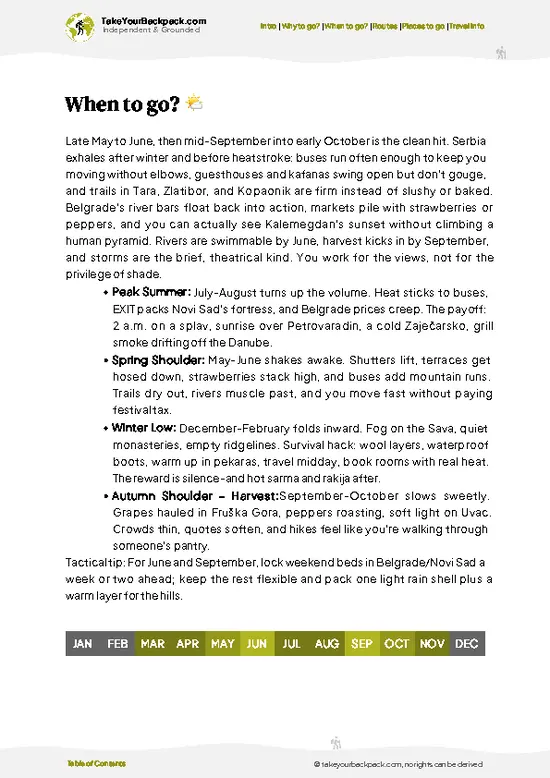
source: climatestotravel.comJANJanuary: fair for travelingFEBFebruary: fair for travelingMARMarch: good for travelingAPRApril: highly recommended for travelingMAYMay: excellent for travelingJUNJune: highly recommended for travelingJULJuly: good for travelingAUGAugust: good for travelingSEPSeptember: excellent for travelingOCTOctober: highly recommended for travelingNOVNovember: good for travelingDECDecember: fair for traveling
when-to-go

✈️ The backpacker research shortcutSerbia Travel Guide

An offline-friendly backpacking guide with optimized travel routes, ranked highlights, transport advice, and the best areas to stay.
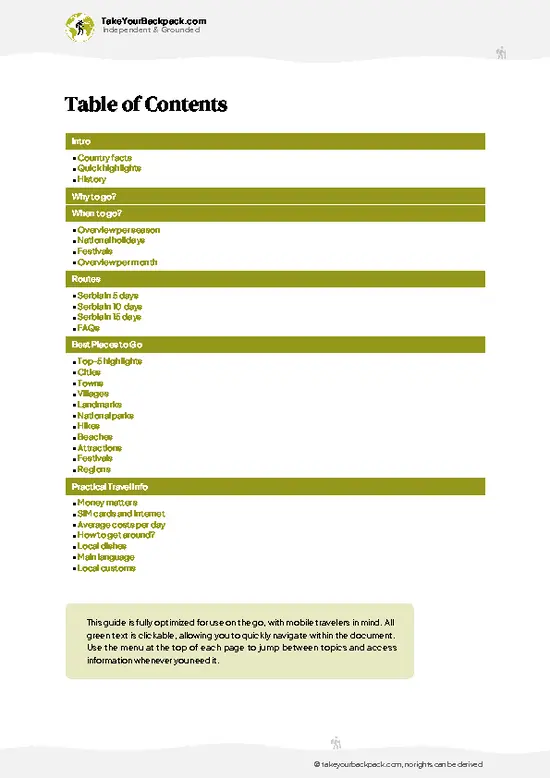
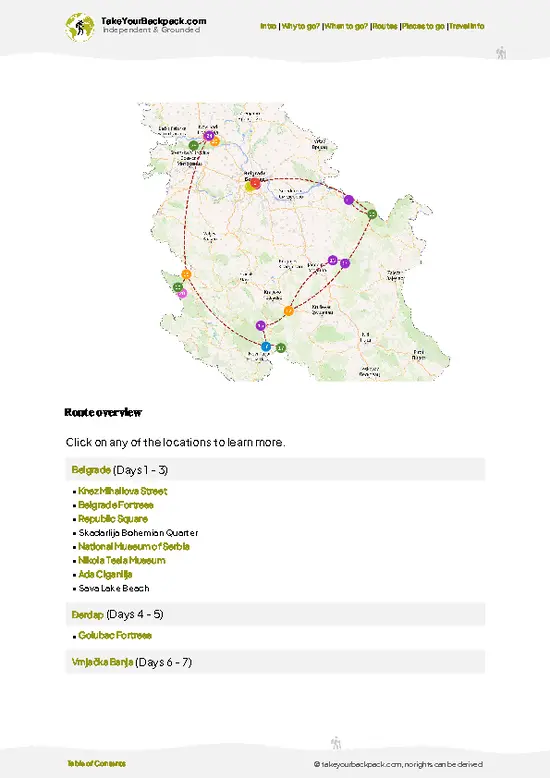
example page 0 from our offline Travel Guide for Serbia
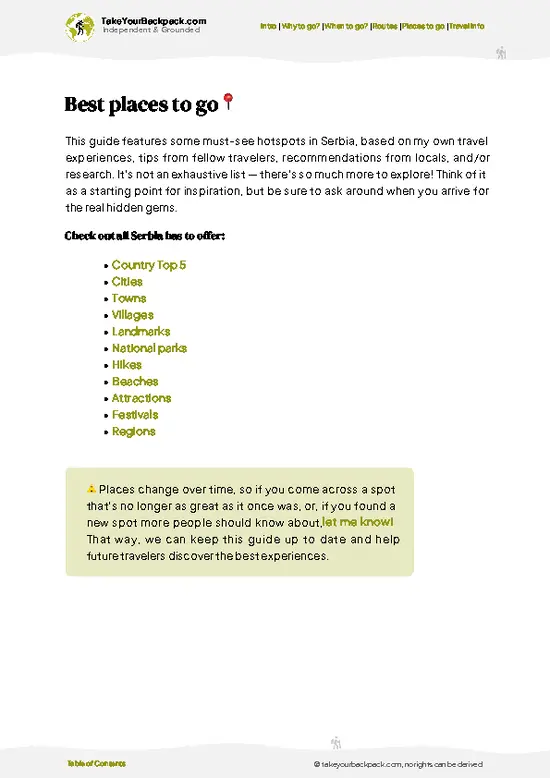
example page 1 from our offline Travel Guide for Serbia
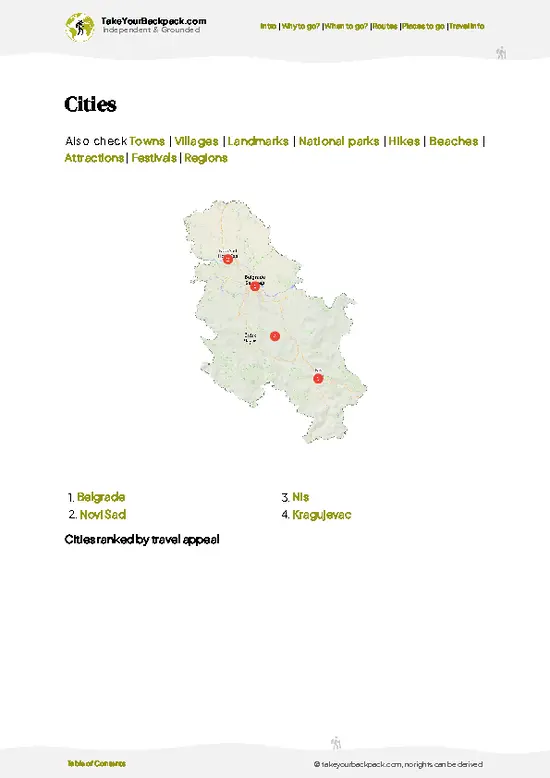
example page 2 from our offline Travel Guide for Serbia
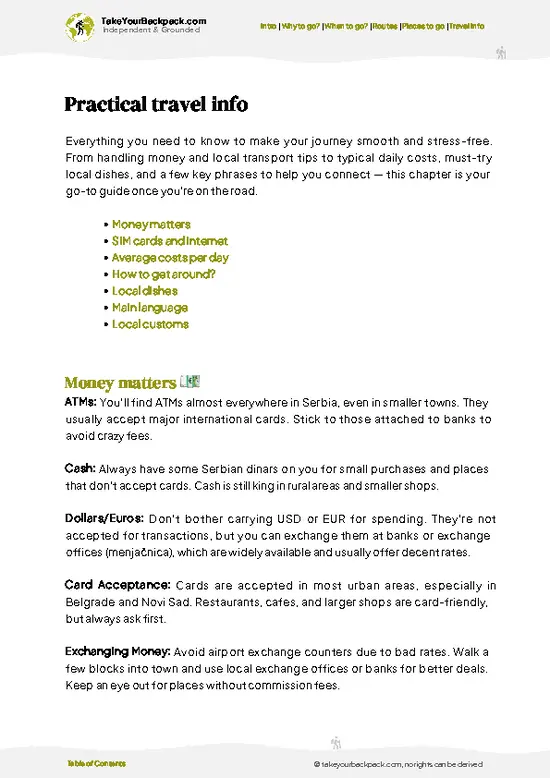
example page 3 from our offline Travel Guide for Serbia
example page 4 from our offline Travel Guide for Serbia
example page 5 from our offline Travel Guide for Serbia
example page 6 from our offline Travel Guide for Serbia
example page 7 from our offline Travel Guide for Serbia
The digital guide (325 pages) contains:
82 highlights, ranked by travel appeal
Optimized 5, 10 & 15-day travel routes
Cities, national parks, landmarks, beaches
How to get around
Offline-friendly for travel without Wi-Fi
👉 Click to see all 30+ guide features

📅 Plan smarter in minutes, not weeks
Month by month travel advice
Festivals & national holidays
Budget expectations

🗺️ Go to the right places, skip the overrated ones
Honest pros & cons of destinations
Top hikes, parks & viewpoints
Lesser-known places most travelers miss
Clear “worth it vs skip it” guidance

🛏️ Travel smoothly without rookie mistakes
Best areas to stay
Transport systems explained simply
Common scams & safety advice
SIM cards, money & practical tips

🌍 Understand the country, not just visit it
Culture & traditions
52 Essential phrases & customs
Festivals worth planning around
Traveler-friendly historical context
Insights that make places more meaningful

📱 Built for real travel conditions
Fully downloadable PDF
Works completely offline
Optimized for phone use
Useful in remote areas & buses
Everything in one place
Save weeks of stressful planning
Get instant access to your full guide. 30‑day money-back guarantee.


By proceeding you agree to our terms.
Sent to your inbox immediately after payment • 100% Secure Checkout
Best Backpacking Travel Advisor 2025 tourism awardBest Backpacking
Travel Advisor
2025
What others say about Take Your Backpack Guides:
⭐⭐⭐⭐⭐
Fantastic, amazing amount of information!
⭐⭐⭐⭐⭐
My goodness this is amazing, it's what I've been looking for hats off too you!
⭐⭐⭐⭐⭐
I think this is absolutely BRILLIANT
⭐⭐⭐⭐
Very complete and informative. It's still missing places, but I gotta to commend you
⭐⭐⭐⭐⭐
This is truly amazing, thank you, can't wait to explore it with my kids!
⭐⭐⭐⭐⭐
Awesome resource, thank you!
⭐⭐⭐⭐⭐
This is amazing! Can't wait to explore the ones I haven't seen
⭐⭐⭐⭐
I love this! Well done, great idea.
⭐⭐⭐⭐⭐
Thanks for taking the time to make this gem!
⭐⭐⭐⭐⭐
This might be the best website I've ever seen.
⭐⭐⭐⭐⭐
Congratulations, and thank you so much for your work; it's incredibly valuable.
⭐⭐⭐⭐
In all seriousness I think you did a great job pointing out the important spots
⭐⭐⭐⭐⭐
10/10 very good
⭐⭐⭐⭐⭐
As someone who's only just starting to visit regularly this is awesome, thank you.
⭐⭐⭐⭐
Thank you very much! I'm going to visit my dad, it's going to be very useful!
⭐⭐⭐⭐⭐
This is really cool! We'll be travelling for the first time and this definitely come in handy.
⭐⭐⭐⭐⭐
You are now our minister of culture, congratulations 👨‍💼
⭐⭐⭐⭐⭐
Just wanted to tell you that this is a pearl! Going to follow your recommendations.
⭐⭐⭐⭐⭐
This is so cool. I'll definitely be using the resource for my travels soon.
⭐⭐⭐⭐⭐
This is very impressive! Good work.
⭐⭐⭐⭐⭐
This is an amazing and informative site. Very well done!

🛏️ Where to stay?Best areas to stay in Serbia

If you’re hitting the Museum of Yugoslavia and the House of Flowers, forget the touristy downtown chaos. The real backpacker vibe is in the neighborhoods just south of the city center—areas like Dedinje and Senjak. These spots aren’t just safe; they’re where locals live, breathe, and unwind, giving you a genuine slice of Belgrade life without the inflated prices or tourist traps.

Dedinje, in particular, is quieter but still close enough to walk or grab a quick bus to the museum. It’s leafy, calm, and feels like a break from the city buzz, perfect for solo travelers who want to recharge after … read more 👉
If you’re hitting the Museum of Yugoslavia and the House of Flowers, forget the touristy downtown chaos. The real backpacker vibe is in the neighborhoods just south of the city center—areas like Dedinje and Senjak. These spots aren’t just safe; they’re where locals live, breathe, and unwind, giving you a genuine slice of Belgrade life without the inflated prices or tourist traps.

Dedinje, in particular, is quieter but still close enough to walk or grab a quick bus to the museum. It’s leafy, calm, and feels like a break from the city buzz, perfect for solo travelers who want to recharge after a day of history overload. Senjak, meanwhile, has a bit more buzz with cafes and small bars where you can meet other budget travelers and locals alike. Both areas offer a social atmosphere without the backpacker herd mentality you’ll find closer to Knez Mihailova.

Bottom line: stay where the locals hang, not where the tourists swarm. It’s safer, more affordable, and you’ll get stories worth telling.

👛 Costs (as of 13 March 2025)Travel costs and budget guide for Museum of Yugoslavia & House of Flowers

The entrance fee for the Museum of Yugoslavia & House of Flowers typically ranges from USD5 to USD10. Additional costs may include guided tours or special exhibitions, which can add a few dollars more. Overall, expect to spend around this range for a full visit.

source: muzej-jugoslavije.org
⚠️ Prices can change and everyone travels differently, so take this as a rough guide. Hope it helps you plan your adventure!

Other Serbian attractions near Museum of Yugoslavia & House of Flowers

Explore more nearby:


💡 Not sure where to go next?
Create a personalized itinerary for Serbia including Museum of Yugoslavia & House of Flowers and the places that fit your trip.

Generate my itinerary

👉 Discover all attractions

Or checkout all Serbia has to offer (think cities, towns, villages, national parks, hikes, beaches, festivals)
Country photo of Serbia

We 💚 feedbackKey takeaways before you go

The Museum of Yugoslavia and the House of Flowers aren’t your typical polished tourist spots—they come with crowds and a modest entry fee that might make you pause. But here’s the kicker: once you push past the surface, you’ll find a raw, layered story of a country that tried to hold itself together through chaos. The vibe is part history lesson, part eerie nostalgia, with Tito’s mausoleum offering a strangely intimate glimpse into a complex legacy. It’s not flashy, but it’s real—and that’s what stays with you.

✍️ Help improve this page!
The information on this page is based on in-depth research, insights shared by experienced travelers, and feedback from the local travel community in Serbia. While every effort is made to keep the information accurate and current, conditions can change — so if you spot anything incorrect or outdated, please get in touch.


🙋‍♂️ Give feedback

👋 Meet the founderWho’s Behind Take Your Backpack?

Johan, backpacker and founder of TakeYourBackpackHi, I’m Johan (Netherlands 🇳🇱), the creator of TakeYourBackpack. Over the past decade, I’ve backpacked through 80+ countries across six continents, gaining extensive experience with independent travel, long-term trips, and overland routes.

This site is built on a combination of firsthand travel experience and carefully curated insights from other backpackers. Many guides are based on places I’ve personally visited, while others bring together tips, observations, and practical advice shared by trusted travelers I’ve met along the way.

The goal is to provide realistic, experience-driven guidance — not generic itineraries — so you can explore destinations with better context, clearer expectations, and more confidence.

Get full Serbia guide •
Instant download • 82 highlights • Full Offline guide