v2.webp)


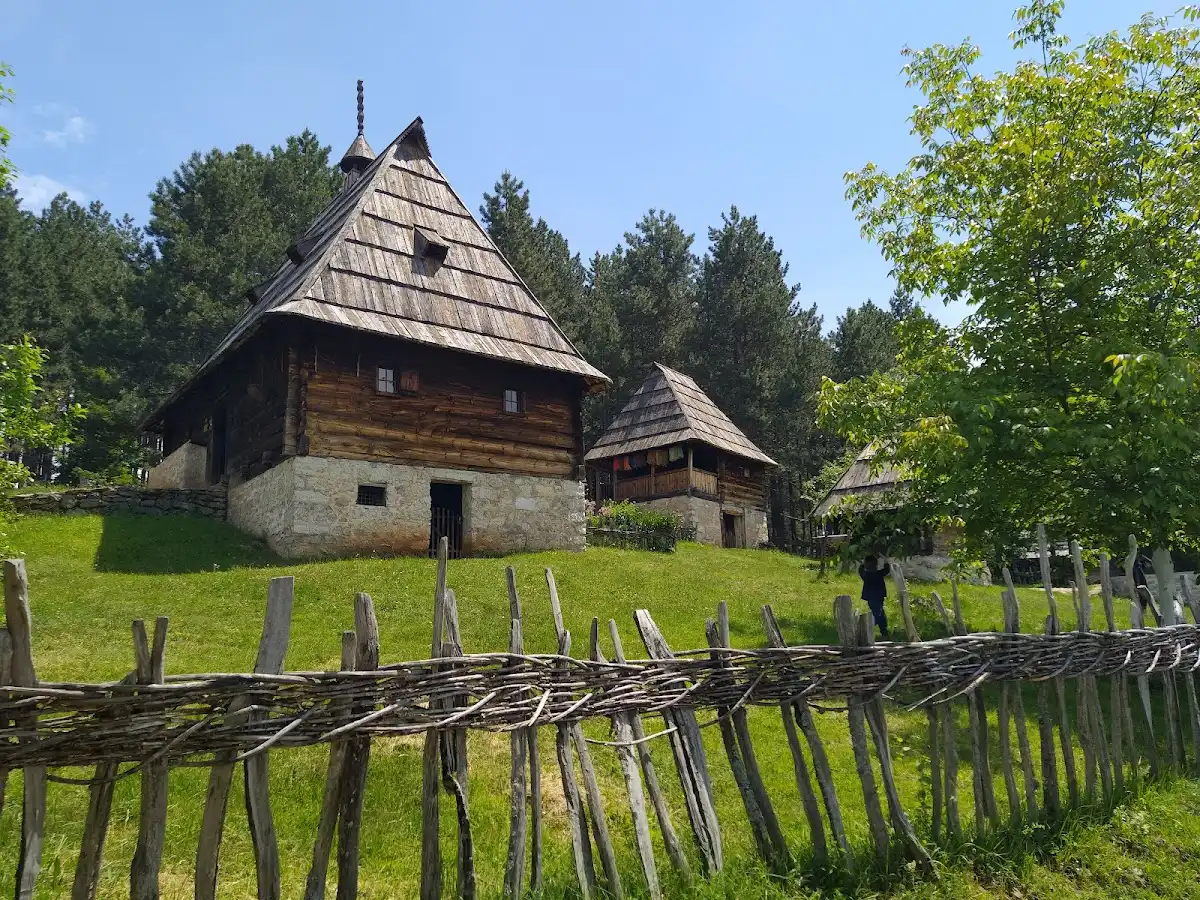
- Old Village Open-Air Museum (Muzej na otvorenom Sirogojno) — The heart of Sirogojno: a cluster of authentic 19th-century wooden houses relocated and preserved to show how mountain life actually looked. Walkable, very photogenic, and full of small, believable details that beat any glossy exhibit.
- Museum of Knitting (Pletenje) — Sirogojno is famous for its sweaters; this small museum explains the techniques, patterns and social history behind local knitwear and usually has real examples and tools on display.
- Traditional wooden houses and interiors — Each house in the open-air museum is furnished with original or carefully restored interiors (peasant beds, chests, utensils), so you can step inside and see everyday life rather than just looking at facades.
- Village church (relocated/heritage
- Old Village Open-Air Museum (Muzej na otvorenom Sirogojno) — The heart of Sirogojno: a cluster of authentic 19th-century wooden houses relocated and preserved to show how mountain life actually looked. Walkable, very photogenic, and full of small, believable details that beat any glossy exhibit.
- Museum of Knitting (Pletenje) — Sirogojno is famous for its sweaters; this small museum explains the techniques, patterns and social history behind local knitwear and usually has real examples and tools on display.
- Traditional wooden houses and interiors — Each house in the open-air museum is furnished with original or carefully restored interiors (peasant beds, chests, utensils), so you can step inside and see everyday life rather than just looking at facades.
- Village church (relocated/heritage chapel) — The modest wooden church in the museum complex is a good example of rural ecclesiastical architecture and gives a sense of local spiritual life and funerary customs.
- Old schoolhouse and teacher’s room — A tiny, atmospheric space that shows how formal education looked in mountain villages: blackboard, benches, schoolbooks and the odd comment from local guides that makes it feel alive.
- Blacksmith’s forge and craft workshops — Restored smithy, woodworking and weaving workshops where local craftsmen sometimes demonstrate tools and basic techniques — good for seeing skills that actually kept the village running.
- Watermill and grain processing display — The restored mill is tangible rural engineering: watch the mechanism (or see the explanation) and imagine how much work went into a single loaf of bread before modern mills.
- Traditional bread oven / bakery demonstration area — Some museum programs include bread-baking demos or a look inside a communal oven — a small sensory window into everyday foodways (and sometimes a chance to taste).
- Local knitwear cooperative shop / souvenir workshop — Real sweaters and wool products made in Sirogojno are sold here; it’s not touristy factory trash but items tied to local craft and—if you talk to the sellers—you’ll hear the stories behind the patterns.
- Village trails & viewpoints around Sirogojno — Short walked routes right from the museum/village give clean views over Zlatibor hills, passing small hamlets, old stone walls and graveyards—simple but honest landscape that explains why people settled here.
Spotted a mistake or missing something? Contact us.


 Best Backpacking
.jpg) Hi, I’m Johan (Netherlands 🇳🇱), the creator of TakeYourBackpack. Over the past 3 decades, I’ve backpacked through 90+ countries across six continents, gaining extensive experience with independent travel, long-term trips, and overland routes.
Hi, I’m Johan (Netherlands 🇳🇱), the creator of TakeYourBackpack. Over the past 3 decades, I’ve backpacked through 90+ countries across six continents, gaining extensive experience with independent travel, long-term trips, and overland routes.