×

Serbia🇷🇸 | best villagesYour Guide to the 3 Best villages in Serbia

Villages in Serbia come in flavors that have little to do with each other, and picking the wrong one is how you end up hunting for a bus that left at 6:10. The Vojvodina plains are flat, tidy and easy by bike. The Stara Planina and Zlatibor highlands trade pavement for pine, cattle and wood smoke. The Danube gorge and eastern Serbia are the quiet ones, where a village shop may double as the only café. Independent travelers get the best deal here: prices stay low, hosts feed you whether you asked or not, and crowds mostly mean three cyclists and a dog.

By Johan Kruseman 🇳🇱 | Updated October 18, 2026
Explore the best landmarks in Serbia

Why go?What Makes Them Special

Serbia is unusually good for village travel because the countryside never emptied into a few mega-cities. Roughly 40 percent of the population still lives in rural settlements, and many families keep a village house even after moving to Belgrade or Novi Sad. That means homestays, farm kitchens and slivovitz cellars are part of ordinary life rather than a staged product. Geography adds range: the Pannonian plain in the north, the Dinaric mountains in the west and southwest, and the Carpathian and Balkan ranges in the east and southeast produce very different building styles, foods and festival calendars. Orthodox monasteries sit inside many rural areas, and the Ottoman, Habsburg and Yugoslav eras each left visible layers.

Before choosing Serbia for villages, know that public transport thins … read more 👉
Serbia is unusually good for village travel because the countryside never emptied into a few mega-cities. Roughly 40 percent of the population still lives in rural settlements, and many families keep a village house even after moving to Belgrade or Novi Sad. That means homestays, farm kitchens and slivovitz cellars are part of ordinary life rather than a staged product. Geography adds range: the Pannonian plain in the north, the Dinaric mountains in the west and southwest, and the Carpathian and Balkan ranges in the east and southeast produce very different building styles, foods and festival calendars. Orthodox monasteries sit inside many rural areas, and the Ottoman, Habsburg and Yugoslav eras each left visible layers.

Before choosing Serbia for villages, know that public transport thins out fast. Buses reach the main village road a few times a day, sometimes once, and Sunday service can vanish. English is patchy outside tourist-oriented guesthouses, though gestures and rakija work wonders. Cards are accepted less often than you would hope, so carry dinar cash. Signage is often Cyrillic only. Hospitality is real, which also means refusing a third plate of food takes diplomacy and stamina.
Behind the Scenes of Selection
The list of best villages in Serbia is created based on authenticity, scenic beauty, community spirit, traditions, and overall character. If you feel a village is missing in this list, please let us know.

When to go?Seasonal Guide to Visiting

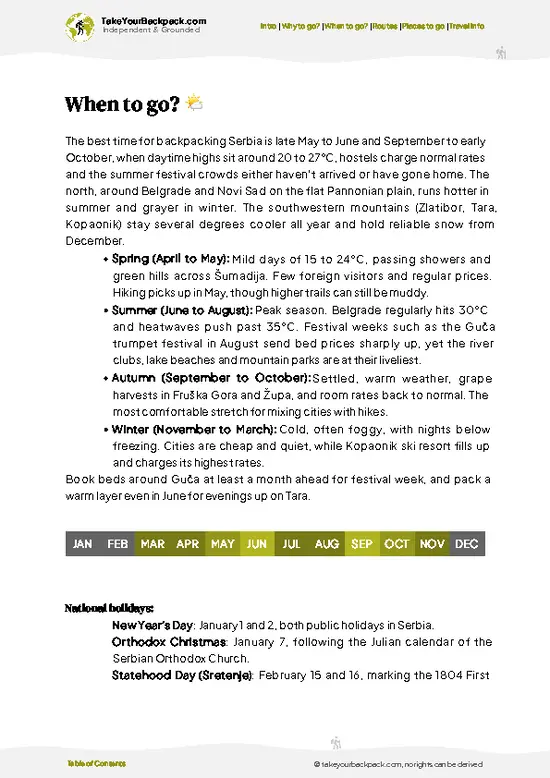
Best months: May to June and September to early October are the best months for villages in Serbia, because daytime temperatures sit around 18 to 26°C, hay meadows and orchards are in their prime, and the roads are dry enough for walking and cycling. Spring brings blossom and green hills, though May can bring afternoon downpours, and Serbia receives roughly 600 to 800 mm of rain a year across most lowland areas. Autumn is harvest season: plums turn into rakija, peppers into ajvar, and every courtyard smells faintly of both.
Summer and winter: July and August push the Vojvodina plains and the Danube valley to 30 to 38°C, which is fine for a swimming spot and unkind for hiking. The mountains of Zlatibor, Tara and Stara Planina stay 8 to 10°C cooler, and guesthouse prices there rise by roughly … read more 👉
Best months: May to June and September to early October are the best months for villages in Serbia, because daytime temperatures sit around 18 to 26°C, hay meadows and orchards are in their prime, and the roads are dry enough for walking and cycling. Spring brings blossom and green hills, though May can bring afternoon downpours, and Serbia receives roughly 600 to 800 mm of rain a year across most lowland areas. Autumn is harvest season: plums turn into rakija, peppers into ajvar, and every courtyard smells faintly of both.
Summer and winter: July and August push the Vojvodina plains and the Danube valley to 30 to 38°C, which is fine for a swimming spot and unkind for hiking. The mountains of Zlatibor, Tara and Stara Planina stay 8 to 10°C cooler, and guesthouse prices there rise by roughly 20 to 40 percent in peak weeks. Winter, December to February, runs from around 0°C in the plains to well below freezing in the highlands, with deep snow that can close minor roads. Ski-adjacent villages get busy then; elsewhere, some guesthouses close or take bookings only by phone. Shoulder months are the calm, cheaper compromise.

village hoppingPlanning Your Route Efficiently

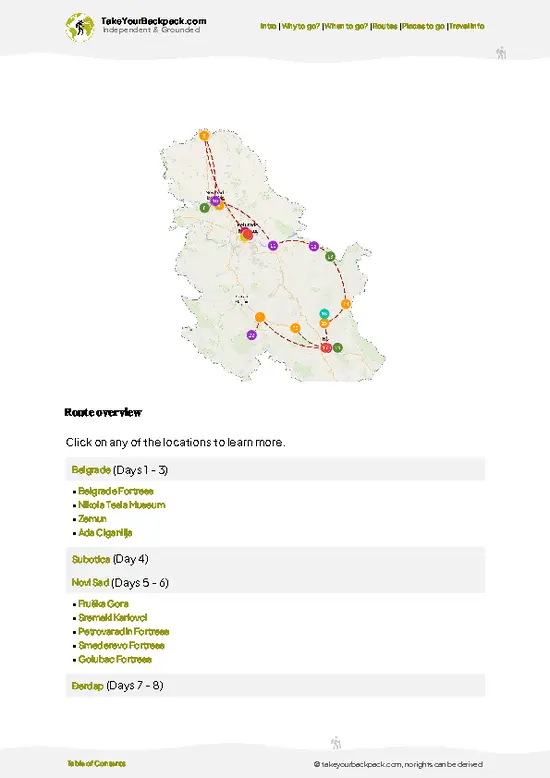
Trip length: A trip combining several villages in Serbia needs 7 to 10 days, and 5 days is the minimum if you stick to one or two regions. The country is small, but village roads are slow, so a 150 km hop can swallow three hours.
Regions and direction: Start in Belgrade or Novi Sad, which have the best bus and rail links. The flat north (Vojvodina) pairs with the Danube corridor, then you can swing south through central Serbia toward the western highlands around Zlatibor and Tara. Eastern Serbia and the Stara Planina area form a separate loop that is best done as its own trip or as a deliberate finale, because it needs 4 to 6 hours of travel from the western uplands. Moving in one broad arc beats zigzagging.
Pacing and common mistakes: Allow 1 to 2 nights per stop; a half day suits a village … read more 👉
Trip length: A trip combining several villages in Serbia needs 7 to 10 days, and 5 days is the minimum if you stick to one or two regions. The country is small, but village roads are slow, so a 150 km hop can swallow three hours.
Regions and direction: Start in Belgrade or Novi Sad, which have the best bus and rail links. The flat north (Vojvodina) pairs with the Danube corridor, then you can swing south through central Serbia toward the western highlands around Zlatibor and Tara. Eastern Serbia and the Stara Planina area form a separate loop that is best done as its own trip or as a deliberate finale, because it needs 4 to 6 hours of travel from the western uplands. Moving in one broad arc beats zigzagging.
Pacing and common mistakes: Allow 1 to 2 nights per stop; a half day suits a village that is mostly a walk and a lunch. Typical hops between regions run 2 to 5 hours by bus. The classic mistake is trusting a map distance and planning three villages in a day, then discovering the afternoon bus does not exist. Another is skipping Sunday and holiday timetables. Build in one buffer day, confirm return buses with your host, and consider renting a car for the highland stretch, where it saves hours of waiting.

The ListThe Best villages of Serbia

1 Mokra Gora

narrow-gauge railway, mountain vistas, stone bridges

Ride a historic train through forested slopes and deep valleys, then wander among scattered hamlets shaped by the landscape and railway heritage.

serbia-city-mokra-gora
© Google | В З

2 Sirogojno

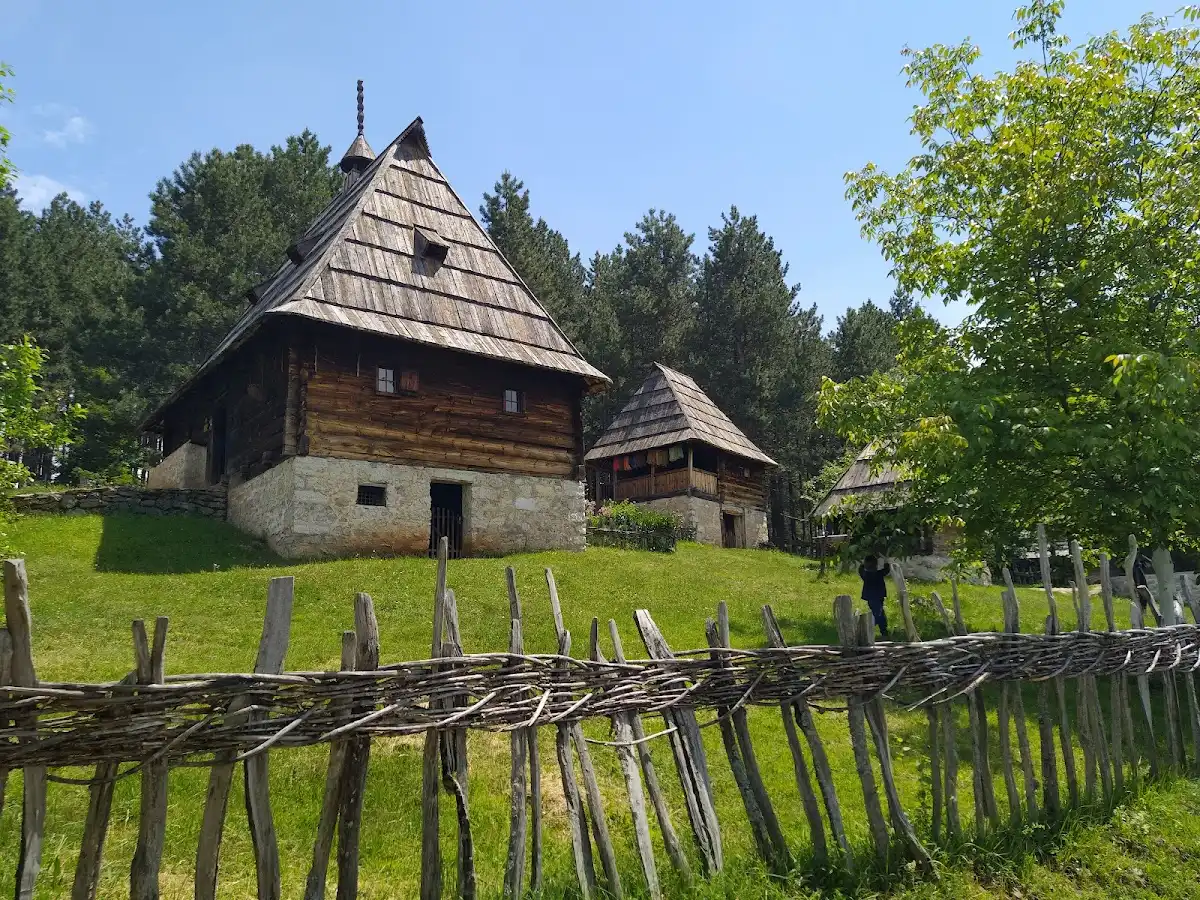
open-air museum, thatched cottages, handwoven woolens

See everyday objects and farmhouses preserved in an outdoor museum, then meet artisans who keep traditional crafts and rural customs alive.

serbia-city-sirogojno
© Google | Dragan Basurović

3 Tršić

folk architecture, Vuk Karadžić legacy, wooded hills

Walk through a village where traditional wooden homes and the birthplace of a language reformer reveal rural Serbian life and literary history.

Loading the map 🌍

Expert viewInsights from Locals and Experts

How many villages: Four to six villages is the number I advise for a one to two week trip. Fewer than four and you miss how different the plains, highlands and eastern valleys feel. More than six and you spend your days on dusty bus benches rather than in kitchens and on trails. Two nights per base lets you arrive, walk, eat, and wake up to a rooster instead of a timetable.
Which kind for which traveler: Cyclists and slow wanderers should lean toward the flat northern villages, where quiet lanes and canal paths run for hours and you finish with a plate of fish stew or sausages. Hikers get more from the highland and mountain settlements, where trails climb through beech and pine to a meadow view and a mug of hot rakija. Culture seekers do best in villages near monasteries and old wooden or stone … read more 👉
How many villages: Four to six villages is the number I advise for a one to two week trip. Fewer than four and you miss how different the plains, highlands and eastern valleys feel. More than six and you spend your days on dusty bus benches rather than in kitchens and on trails. Two nights per base lets you arrive, walk, eat, and wake up to a rooster instead of a timetable.
Which kind for which traveler: Cyclists and slow wanderers should lean toward the flat northern villages, where quiet lanes and canal paths run for hours and you finish with a plate of fish stew or sausages. Hikers get more from the highland and mountain settlements, where trails climb through beech and pine to a meadow view and a mug of hot rakija. Culture seekers do best in villages near monasteries and old wooden or stone architecture, where frescoes and a candlelit service repay the early start. The east suits those who want silence and a table that serves whatever the host cooked that morning.
What it costs: Budget US$30 to 50 a day on a backpacker setup. A guesthouse bed or homestay room runs roughly US$15 to 30 per person, often with breakfast, and a home-cooked dinner adds US$8 to 15. Village entry is mostly free; monasteries ask for a donation or a small fee of up to a few dollars, and local guides for a hike cost around US$25 to 60 for a half day. Buses between regions cost about US$3 to 10 per leg, while a taxi from the nearest town may cost US$10 to 30. Carry dinars, since village shops rarely take cards.
Safety and manners: Rural Serbia is very safe for visitors, and the main risks are practical: dogs on farm tracks, tractor traffic on narrow roads, ticks in summer grass and uneven mobile signal in the hills. In mountain areas, check conditions before setting out, and let your host know your route. Mine and unexploded ordnance warnings apply only to a few southern border zones, so stay on marked paths there.

On culture, greet people with a handshake and a smile, remove shoes if asked, and cover shoulders and knees at monasteries. Accept the coffee, the sweet and the glass of rakija at least once, since a polite sip is part of the conversation. Ask before photographing people or their animals. Sundays and religious holidays, especially Easter and slava days, are family-centered, so shops close early. Showing up on a quiet Sunday afternoon and finding the whole village at a long table is a gift, not an inconvenience.

✈️ The backpacker research shortcutSerbia Travel Guide

An offline-friendly backpacking guide with optimized travel routes, ranked highlights, transport advice, and the best areas to stay.
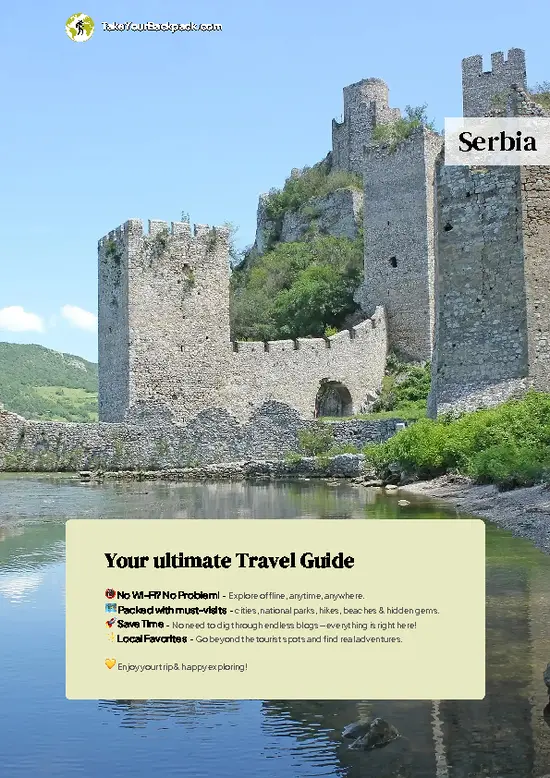
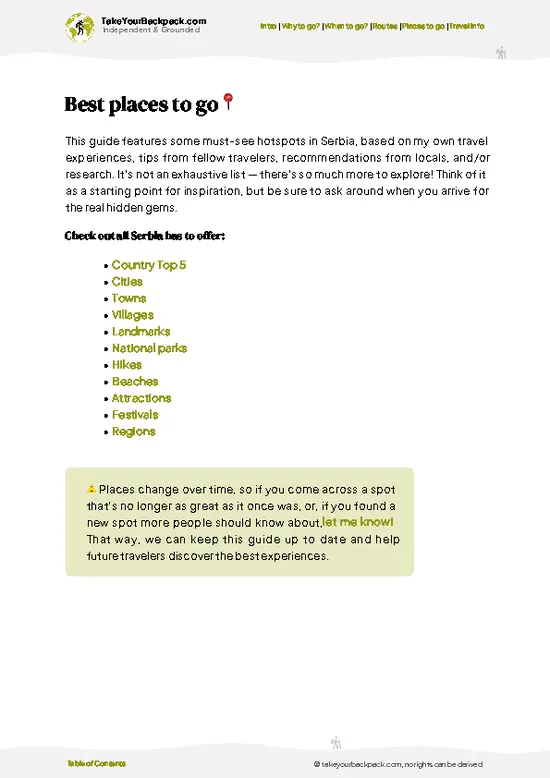
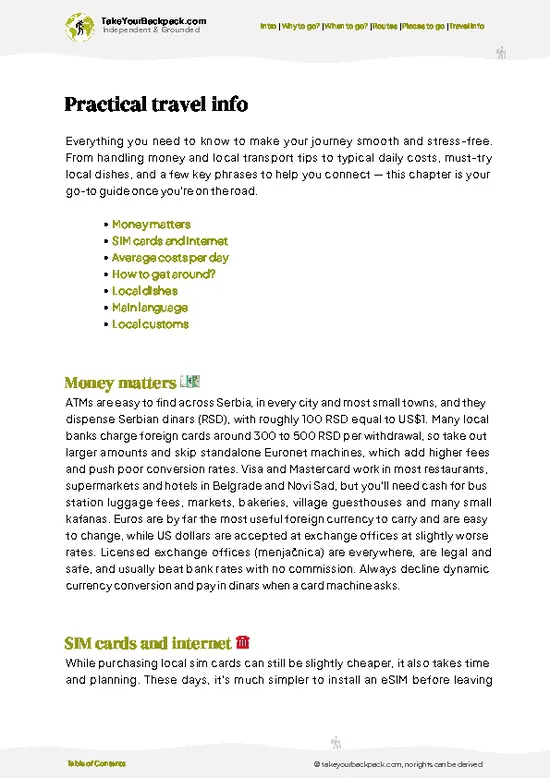
example page 0 from our offline Travel Guide for Serbia
example page 1 from our offline Travel Guide for Serbia
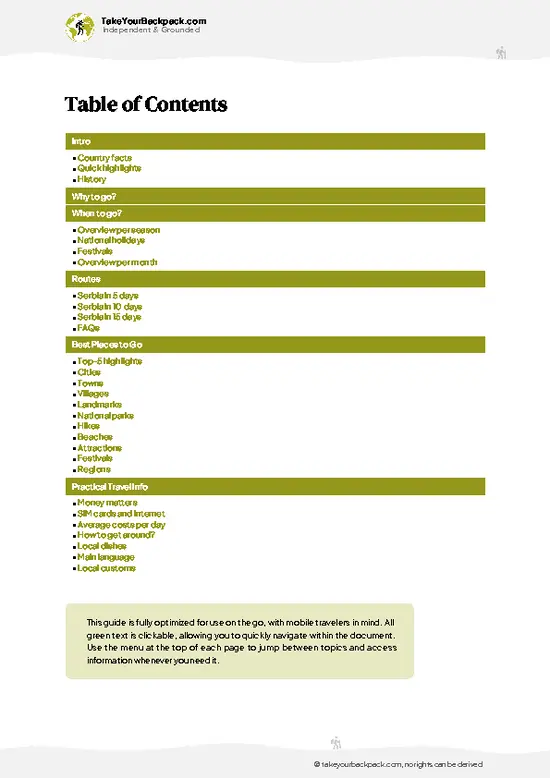
example page 2 from our offline Travel Guide for Serbia
example page 3 from our offline Travel Guide for Serbia
example page 4 from our offline Travel Guide for Serbia
example page 5 from our offline Travel Guide for Serbia
example page 6 from our offline Travel Guide for Serbia
example page 7 from our offline Travel Guide for Serbia
The digital guide (309 pages) contains:
✅ 80 highlights, ranked by travel appeal
✅ Optimized 5, 10 & 15-day travel routes
✅ Cities, national parks, landmarks, beaches
✅ How to get around
✅ Offline-friendly for travel without Wi-Fi
👉 Click to see all 30+ guide features

📅 Plan smarter in minutes, not weeks
✅ Month by month travel advice
✅ Festivals & national holidays
✅ Budget expectations

🗺️ Go to the right places, skip the overrated ones
✅ Honest pros & cons of destinations
✅ Top hikes, parks & viewpoints
✅ Lesser-known places most travelers miss
✅ Clear “worth it vs skip it” guidance

🛏️ Travel smoothly without rookie mistakes
✅ Best areas to stay
✅ Transport systems explained simply
✅ Common scams & safety advice
✅ SIM cards, money & practical tips

🌍 Understand the country, not just visit it
✅ Culture & traditions
✅ 52 Essential phrases & customs
✅ Festivals worth planning around
✅ Traveler-friendly historical context
✅ Insights that make places more meaningful

📱 Built for real travel conditions
✅ Fully downloadable PDF
✅ Works completely offline
✅ Optimized for phone use
✅ Useful in remote areas & buses
✅ Everything in one place
Stop searching, start planning
Get instant access to your full guide. 30‑day money-back guarantee.
+ Add another guide for just

By proceeding you agree to our terms.
Sent to your inbox immediately after payment • 100% Secure Checkout
Best Backpacking Travel Advisor 2025 tourism awardBest Backpacking
Travel Advisor
2025
What others say about Take Your Backpack Guides:
⭐⭐⭐⭐⭐
Fantastic, amazing amount of information!
⭐⭐⭐⭐⭐
My goodness this is amazing, it's what I've been looking for hats off too you!
⭐⭐⭐⭐⭐
I think this is absolutely BRILLIANT
⭐⭐⭐⭐
Very complete and informative. It's still missing places, but I gotta to commend you
⭐⭐⭐⭐⭐
This is truly amazing, thank you, can't wait to explore it with my kids!
⭐⭐⭐⭐⭐
Awesome resource, thank you!
⭐⭐⭐⭐⭐
This is amazing! Can't wait to explore the ones I haven't seen
⭐⭐⭐⭐
I love this! Well done, great idea.
⭐⭐⭐⭐⭐
Thanks for taking the time to make this gem!
⭐⭐⭐⭐⭐
This might be the best website I've ever seen.
⭐⭐⭐⭐⭐
Congratulations, and thank you so much for your work; it's incredibly valuable.
⭐⭐⭐⭐
In all seriousness I think you did a great job pointing out the important spots
⭐⭐⭐⭐⭐
10/10 very good
⭐⭐⭐⭐⭐
As someone who's only just starting to visit regularly this is awesome, thank you.
⭐⭐⭐⭐
Thank you very much! I'm going to visit my dad, it's going to be very useful!
⭐⭐⭐⭐⭐
This is really cool! We'll be travelling for the first time and this definitely come in handy.
⭐⭐⭐⭐⭐
You are now our minister of culture, congratulations 👨‍💼
⭐⭐⭐⭐⭐
Just wanted to tell you that this is a pearl! Going to follow your recommendations.
⭐⭐⭐⭐⭐
This is so cool. I'll definitely be using the resource for my travels soon.
⭐⭐⭐⭐⭐
This is very impressive! Good work.
⭐⭐⭐⭐⭐
This is an amazing and informative site. Very well done!

🛏️ Where to stay?Best Stay Options in Serbia

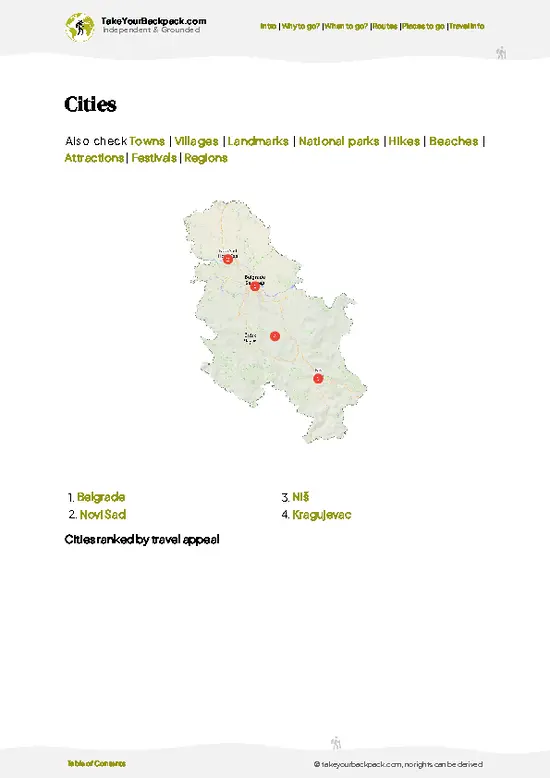
Serbia has plenty of hostels and budget guesthouses, with dorm beds typically running €10 to €18 a night and private rooms in family-run guesthouses from about €25. In Belgrade, Stari Grad and Dorćol put you within walking distance of Kalemegdan and Knez Mihailova, with lively bars and late-night noise to match, while Savamala sits closer to the riverfront clubs and the Sava waterfront but feels rougher around the edges after dark, and Vračar is quieter and leafier yet still a 20-minute walk from the old town. In Novi Sad the pedestrian Old Town around Zmaj Jovina is the easy pick for cafés and safe evening strolls, and in Niš the streets around the fortress and Kopitareva are compact, cheap … read more 👉
Serbia has plenty of hostels and budget guesthouses, with dorm beds typically running €10 to €18 a night and private rooms in family-run guesthouses from about €25. In Belgrade, Stari Grad and Dorćol put you within walking distance of Kalemegdan and Knez Mihailova, with lively bars and late-night noise to match, while Savamala sits closer to the riverfront clubs and the Sava waterfront but feels rougher around the edges after dark, and Vračar is quieter and leafier yet still a 20-minute walk from the old town. In Novi Sad the pedestrian Old Town around Zmaj Jovina is the easy pick for cafés and safe evening strolls, and in Niš the streets around the fortress and Kopitareva are compact, cheap and close to the nightlife.

If you enjoy meeting fellow travelers, consider choosing hostels with high ratings for atmosphere. On the other hand, if you prefer having your own space, a hotel might be a better option.

SerbiaWhere to Go Next

👋 Meet the founderWho’s Behind Take Your Backpack?

Johan, backpacker and founder of TakeYourBackpackHi, I’m Johan (Netherlands 🇳🇱), the creator of TakeYourBackpack. Over the past 3 decades, I’ve backpacked through 90+ countries across six continents, gaining extensive experience with independent travel, long-term trips, and overland routes.

This site is built on a combination of firsthand travel experience and carefully curated insights from other backpackers. Many guides are based on places I’ve personally visited, while others bring together tips, observations, and practical advice shared by trusted travelers I’ve met along the way.

The goal is to provide realistic, experience-driven guidance — not generic itineraries — so you can explore destinations with better context, clearer expectations, and more confidence.