
St. James Basilica
Step inside and the hush is immediate—thick stone walls swallow the outside world, and the scent of old wood and candle wax lingers. The real draw is the late-Gothic wooden altar by Master Paul, a 16th-century marvel that towers over you, every saint and angel carved with a craftsman’s obsession. The stained glass throws colored light across the pews in the late afternoon, making the whole place feel like a living painting. Visit in the early morning or just before closing to avoid tour groups and catch the light at its best. Entry is around €2-€3, and you’ll want at least 45 minutes to do it justice.
Master Paul’s House
This squat, ochre house on the main square is where Levoča’s most famous artist lived and worked. It’s not just a museum—it’s a time capsule. The creak … read more 👉
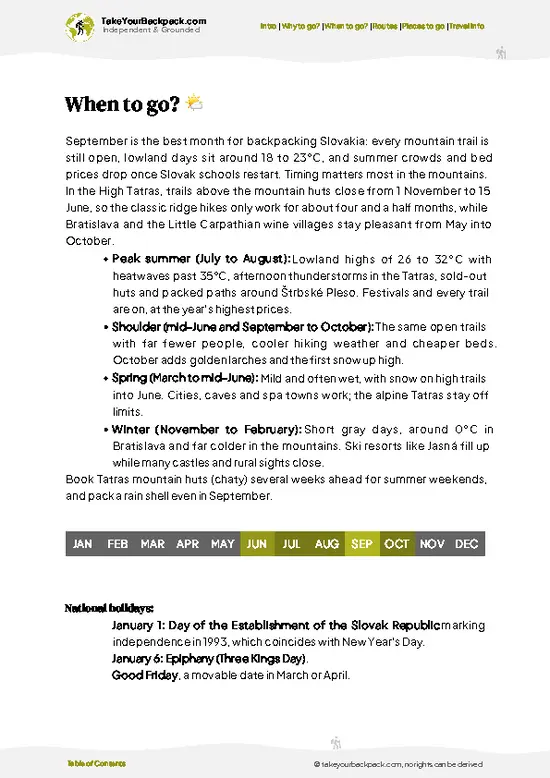
St. James Basilica
Step inside and the hush is immediate—thick stone walls swallow the outside world, and the scent of old wood and candle wax lingers. The real draw is the late-Gothic wooden altar by Master Paul, a 16th-century marvel that towers over you, every saint and angel carved with a craftsman’s obsession. The stained glass throws colored light across the pews in the late afternoon, making the whole place feel like a living painting. Visit in the early morning or just before closing to avoid tour groups and catch the light at its best. Entry is around €2-€3, and you’ll want at least 45 minutes to do it justice.
Master Paul’s House
This squat, ochre house on the main square is where Levoča’s most famous artist lived and worked. It’s not just a museum—it’s a time capsule. The creak of the floorboards, the smell of lime plaster, and the simple tools on display give you a tactile sense of how masterpieces were made before electricity. The exhibits are compact but dense with detail, and the attic workshop feels like you’ve stumbled into a genius’s private world. Open year-round, best visited in the quieter hours after lunch. Entry is about €2, and 30-40 minutes is plenty.
Levoča Town Hall & Cage of Shame
Levoča’s main square is a stage, and the Town Hall is its anchor. The Renaissance arcades are photogenic, but the real story is outside: the iron “Cage of Shame,” where petty criminals were displayed for public ridicule. Touch the cold metal—imagine the stories. The Town Hall itself houses a small museum on Levoča’s golden age, with maps, guild relics, and portraits that put faces to the town’s legends. Go mid-morning for the best light on the square. Entry to the museum is about €2, and you’ll need 30-45 minutes.
Medieval City Walls & Polish Gate
Walk the perimeter and you’ll feel the shift from tourist bustle to local rhythm—kids on bikes, laundry flapping, the distant clang of church bells. The Polish Gate, with its weathered stone and arrow slits, is the most atmospheric stretch. Climb the gate’s tower for a view over red rooftops to the hills beyond. The walls are free to explore, and a full circuit with stops takes about an hour. Early evening is magic, when the sun drops and the town glows.
St. Jacob’s Square (Namestie Majstra Pavla)
This isn’t just a plaza—it’s Levoča’s living room. Cobbled, wide, and edged with pastel Renaissance houses, it’s where you’ll find open-air markets, impromptu concerts, and the slow swirl of daily life. Grab a bench, watch the locals, and let the rhythm of the town sink in. Free, always open, and best in the late afternoon when the light softens and the cafes spill onto the square. Stay as long as you like; this is where Levoča’s soul is most visible.
Levoča is a launchpad for the Spis Castle, the pilgrimage site at Mariánska hora, and the hauntingly preserved medieval town of Spisska Kapitula—all easy day trips that deepen the story you start in town.
Spotted a mistake or missing something? Contact us.

Private Hiking Tour Visit to Slovakia with Licensed Guide

Day Hike with a Local Mountain Guide in High Tatras

Slovakia Ancestry Private Tour for 2 people minimum

Day Experience in High Tatras: Challenge of Porter

4 days - Wine tasting & Spa (small group minimum 2 people & maximum 4 people)

Poprad to Bratislava Airport (BTS) - Departure Private Transfer

Winter in the High Tatras Mountains

Small-Group East Slovakia Whisky & Distillery Tour

Magic Christmas tour in Levoca


 Best Backpacking
 Hi, I’m Johan (Netherlands 🇳🇱), the creator of TakeYourBackpack. Over the past 3 decades, I’ve backpacked through 90+ countries across six continents, gaining extensive experience with independent travel, long-term trips, and overland routes.