×

Solomon Islands🇸🇧 | national parksLake TeganoBrackish lake, limestone islets, dugout canoes, endemic sea snake | things to do and best time to go

Explore Kolombangara IslandExplore Langa Langa Lagoon

Backpacking in Lake Tegano
🌟 Highlightnational park ranked #2
By Johan Kruseman 🇳🇱 | Updated October 22, 2026

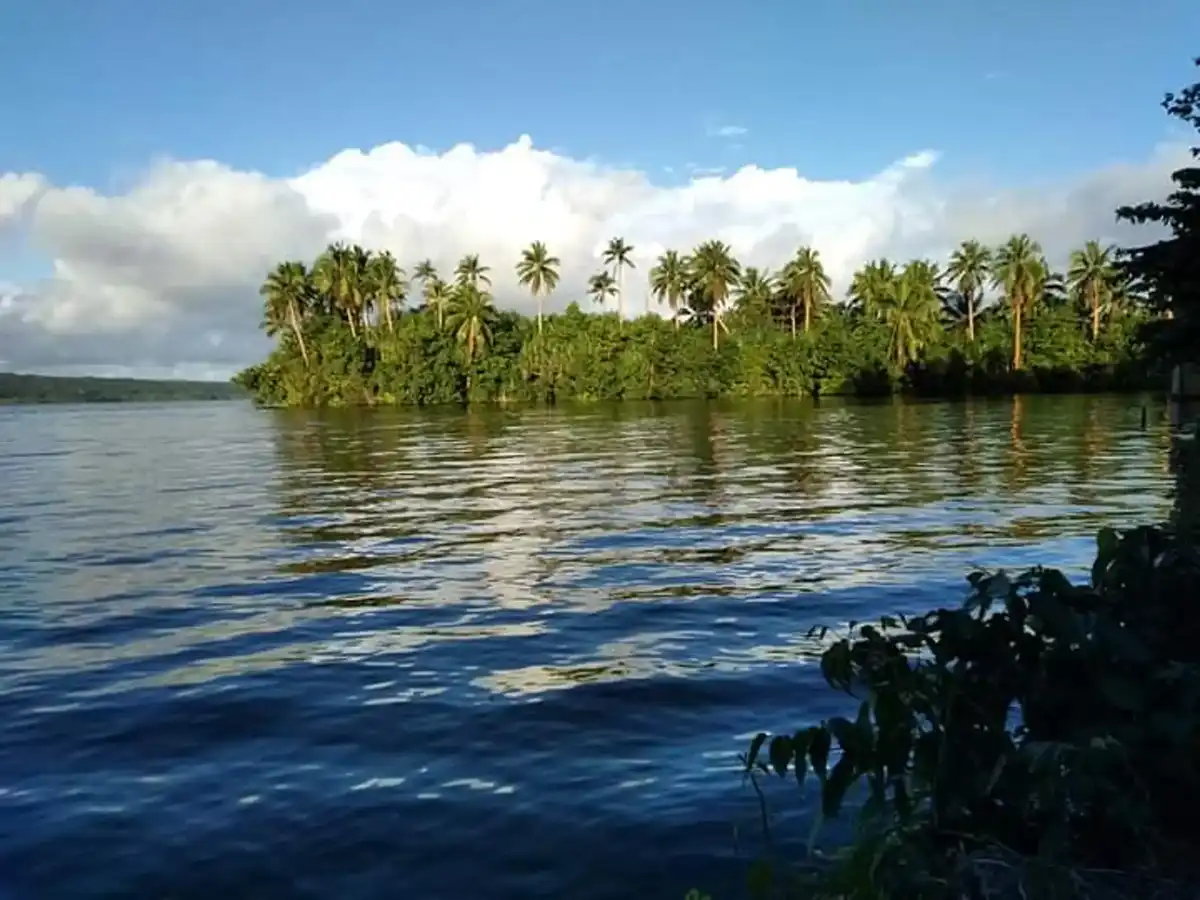
Lake Tegano is the largest lake in the insular Pacific, a brackish sheet of green water ringed by limestone and dotted with forested islets, and it is the heart of the East Rennell World Heritage Area. It sits at the eastern end of Rennell Island in the south of the Solomon Islands. Paddling a dugout across it at dawn, with frigatebirds overhead and the smell of wet leaf litter drifting off the shore, is the reason to come. Flights are infrequent and get cancelled, so pad your schedule with spare days. Cash runs out fast, so bring more than seems sensible. Rain and mosquitoes arrive uninvited, so pack repellent and a dry bag. Ask villagers before you walk or fish, because the land is customary. Birders and slow, self-sufficient travelers will love it. Anyone wanting fixed itineraries, nightlife or reliable connections will not.

Discover everything you want to know in the 📖 Solomon Islands Travel Guide.


example page 0 from our offline Travel Guide for Solomon Islands
example page 1 from our offline Travel Guide for Solomon Islands
example page 2 from our offline Travel Guide for Solomon Islands
example page 3 from our offline Travel Guide for Solomon Islands
example page 4 from our offline Travel Guide for Solomon Islands
example page 5 from our offline Travel Guide for Solomon Islands
example page 6 from our offline Travel Guide for Solomon Islands
example page 7 from our offline Travel Guide for Solomon Islands
Loading the map 🌍
CLICK TO FILTER
towns
villages
landmarks
national parks
hikes
beaches
attractions
festivals
regions
SHOW COUNTRY’S BESTSHOW ALL

✨ Why go?
Ranked #2 national park in Solomon Islands
The unique appeal for travelers

Backpackers come to Lake Tegano because it is a place you cannot do on a tour bus. No operators run set routes here, so everything is arranged with the villagers who own the land and the lake. That means you decide whether to spend a morning paddling between islets or a day tracking birds on the forest tracks. The lake holds Laticauda crockeri, a sea snake found nowhere else, and the surrounding forest shelters several endemic birds, including the Rennell shrikebill. Few places offer that kind of wildlife without crowds. The other draw is community life. Rennellese villages around the lake are Polynesian in language and custom, and accommodation tends to be simple family-run guesthouses where you eat what the household eats. Come prepared to be flexible, bring your own supplies, and treat … read more 👉
Backpackers come to Lake Tegano because it is a place you cannot do on a tour bus. No operators run set routes here, so everything is arranged with the villagers who own the land and the lake. That means you decide whether to spend a morning paddling between islets or a day tracking birds on the forest tracks. The lake holds Laticauda crockeri, a sea snake found nowhere else, and the surrounding forest shelters several endemic birds, including the Rennell shrikebill. Few places offer that kind of wildlife without crowds. The other draw is community life. Rennellese villages around the lake are Polynesian in language and custom, and accommodation tends to be simple family-run guesthouses where you eat what the household eats. Come prepared to be flexible, bring your own supplies, and treat conversations as part of the experience. If you like unscripted travel and are happy with slow logistics, this suits you far better than a packaged trip.

💡 HighlightsMust-see experiences and standout moments

  1. Lake Tegano itself: the main event, a brackish lake that covers a vast area and feels more like an inland sea, with water that shifts from jade to slate depending on the cloud. Dugout canoes are the way to see it.
  2. The limestone islets: small islands crowned with dense forest and undercut at the waterline into mushroom shapes. Birds roost here, and the canoe glides close enough to see roots clinging to bare rock.
  3. Endemic sea snake (Laticauda crockeri): this banded snake lives only in the lake. It is shy and rarely aggressive, but local guides know where to look and how to keep a respectful distance.
  4. Birdwatching in the forest: the Rennell shrikebill and other island endemics live in the trees around the lake. Early morning, when the canopy is loud and the air is still cool, is the best time.
  5. Kangava
… read more 👉
  1. Lake Tegano itself: the main event, a brackish lake that covers a vast area and feels more like an inland sea, with water that shifts from jade to slate depending on the cloud. Dugout canoes are the way to see it.
  2. The limestone islets: small islands crowned with dense forest and undercut at the waterline into mushroom shapes. Birds roost here, and the canoe glides close enough to see roots clinging to bare rock.
  3. Endemic sea snake (Laticauda crockeri): this banded snake lives only in the lake. It is shy and rarely aggressive, but local guides know where to look and how to keep a respectful distance.
  4. Birdwatching in the forest: the Rennell shrikebill and other island endemics live in the trees around the lake. Early morning, when the canopy is loud and the air is still cool, is the best time.
  5. Kangava Bay: a sea bay on Rennell’s south coast, near the lake, with white sand beaches and a coral reef that is good for snorkeling. It makes a quiet place to swim or to watch birds at dusk.
  6. Lakeside villages: Polynesian-speaking communities where gardens, canoes and thatched houses sit close to the water. A visit includes introductions to the host family and respect for local custom.
  7. The raised coral coastline: beyond the lake, the island’s edges rise as sheer limestone cliffs with rough sea below. The walks along it are demanding but give a sense of how the island was formed.
For a first visit, start with the lake itself by canoe at dawn, since it ties everything else together: the islets, the birds and the snake all come into view from the water.
Spotted a mistake or missing something? Contact us.
🌤️ When to go?Weather, crowds, and seasonal trade-offs

The best window for Lake Tegano is May to October, when rain eases and the lake’s surface stays calm enough for canoe trips.
  • Dry-ish Season (May to October): Southeast trade winds bring lighter rain and fewer sticky nights. Days run 26 to 31°C (79 to 88°F), nights around 23°C (73°F). Sunrise and sunset sit near 6:00 and 18:00 all year, so plan walking before dark at 18:00.
  • Wet Season (November to April): Heavy showers, high humidity and 27 to 32°C (81 to 90°F). Cyclones can pass the region between January and March, and flights or boats to Rennell may be cancelled. Tracks turn to mud.
  • Crowds and Prices: Rennell sees only a trickle of visitors in any month, so crowds are not a factor. Fares and guesthouse rates barely change, though flights fill around Christmas and school holidays.
  • Wildlife Timing:
… read more 👉
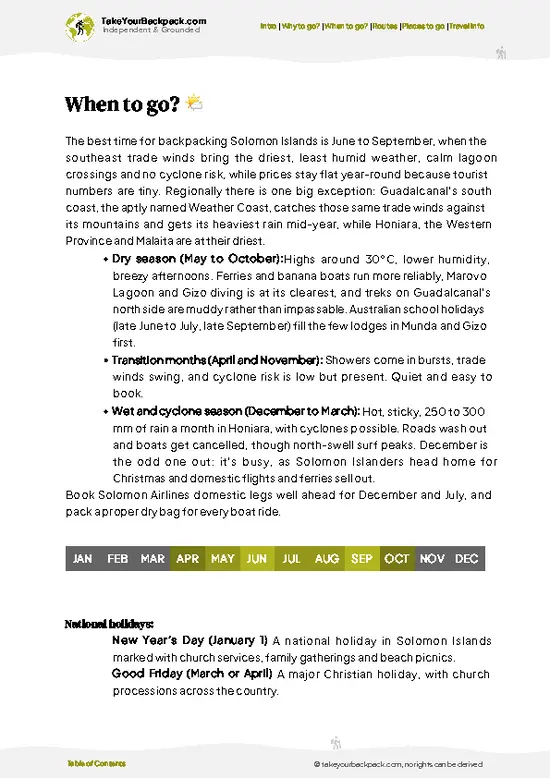
The best window for Lake Tegano is May to October, when rain eases and the lake’s surface stays calm enough for canoe trips.
  • Dry-ish Season (May to October): Southeast trade winds bring lighter rain and fewer sticky nights. Days run 26 to 31°C (79 to 88°F), nights around 23°C (73°F). Sunrise and sunset sit near 6:00 and 18:00 all year, so plan walking before dark at 18:00.
  • Wet Season (November to April): Heavy showers, high humidity and 27 to 32°C (81 to 90°F). Cyclones can pass the region between January and March, and flights or boats to Rennell may be cancelled. Tracks turn to mud.
  • Crowds and Prices: Rennell sees only a trickle of visitors in any month, so crowds are not a factor. Fares and guesthouse rates barely change, though flights fill around Christmas and school holidays.
  • Wildlife Timing: Birdwatching for the endemic Rennell species is good year-round, with early mornings best.
Book the Honiara flight to Rennell a few weeks ahead, since the plane is small and flights run only a few times a week.


source: climatestotravel.comJANJanuary: fair for travelingFEBFebruary: fair for travelingMARMarch: fair for travelingAPRApril: fair for travelingMAYMay: highly recommended for travelingJUNJune: excellent for travelingJULJuly: highly recommended for travelingAUGAugust: highly recommended for travelingSEPSeptember: excellent for travelingOCTOctober: highly recommended for travelingNOVNovember: fair for travelingDECDecember: fair for traveling

✈️ The backpacker research shortcutSolomon Islands Travel Guide

An offline-friendly backpacking guide with optimized travel routes, ranked highlights, transport advice, and the best areas to stay.
example page 0 from our offline Travel Guide for Solomon Islands
example page 1 from our offline Travel Guide for Solomon Islands
example page 2 from our offline Travel Guide for Solomon Islands
example page 3 from our offline Travel Guide for Solomon Islands
example page 4 from our offline Travel Guide for Solomon Islands
example page 5 from our offline Travel Guide for Solomon Islands
example page 6 from our offline Travel Guide for Solomon Islands
example page 7 from our offline Travel Guide for Solomon Islands
The digital guide (145 pages) contains:
✅ 33 highlights, ranked by travel appeal
✅ Optimized 5, 10 & 15-day travel routes
✅ Cities, national parks, landmarks, beaches
✅ How to get around
✅ Offline-friendly for travel without Wi-Fi
👉 Click to see all 30+ guide features

📅 Plan smarter in minutes, not weeks
✅ Month by month travel advice
✅ Festivals & national holidays
✅ Budget expectations

🗺️ Go to the right places, skip the overrated ones
✅ Honest pros & cons of destinations
✅ Top hikes, parks & viewpoints
✅ Lesser-known places most travelers miss
✅ Clear “worth it vs skip it” guidance

🛏️ Travel smoothly without rookie mistakes
✅ Best areas to stay
✅ Transport systems explained simply
✅ Common scams & safety advice
✅ SIM cards, money & practical tips

🌍 Understand the country, not just visit it
✅ Culture & traditions
✅ 52 Essential phrases & customs
✅ Festivals worth planning around
✅ Traveler-friendly historical context
✅ Insights that make places more meaningful

📱 Built for real travel conditions
✅ Fully downloadable PDF
✅ Works completely offline
✅ Optimized for phone use
✅ Useful in remote areas & buses
✅ Everything in one place
Stop searching, start planning
Get instant access to your full guide. 30‑day money-back guarantee.
+ Add another guide for just

By proceeding you agree to our terms.
Sent to your inbox immediately after payment • 100% Secure Checkout
Best Backpacking Travel Advisor 2025 tourism awardBest Backpacking
Travel Advisor
2025
What others say about Take Your Backpack Guides:
⭐⭐⭐⭐⭐
Fantastic, amazing amount of information!
⭐⭐⭐⭐⭐
My goodness this is amazing, it's what I've been looking for hats off too you!
⭐⭐⭐⭐⭐
I think this is absolutely BRILLIANT
⭐⭐⭐⭐
Very complete and informative. It's still missing places, but I gotta to commend you
⭐⭐⭐⭐⭐
This is truly amazing, thank you, can't wait to explore it with my kids!
⭐⭐⭐⭐⭐
Awesome resource, thank you!
⭐⭐⭐⭐⭐
This is amazing! Can't wait to explore the ones I haven't seen
⭐⭐⭐⭐
I love this! Well done, great idea.
⭐⭐⭐⭐⭐
Thanks for taking the time to make this gem!
⭐⭐⭐⭐⭐
This might be the best website I've ever seen.
⭐⭐⭐⭐⭐
Congratulations, and thank you so much for your work; it's incredibly valuable.
⭐⭐⭐⭐
In all seriousness I think you did a great job pointing out the important spots
⭐⭐⭐⭐⭐
10/10 very good
⭐⭐⭐⭐⭐
As someone who's only just starting to visit regularly this is awesome, thank you.
⭐⭐⭐⭐
Thank you very much! I'm going to visit my dad, it's going to be very useful!
⭐⭐⭐⭐⭐
This is really cool! We'll be travelling for the first time and this definitely come in handy.
⭐⭐⭐⭐⭐
You are now our minister of culture, congratulations 👨‍💼
⭐⭐⭐⭐⭐
Just wanted to tell you that this is a pearl! Going to follow your recommendations.
⭐⭐⭐⭐⭐
This is so cool. I'll definitely be using the resource for my travels soon.
⭐⭐⭐⭐⭐
This is very impressive! Good work.
⭐⭐⭐⭐⭐
This is an amazing and informative site. Very well done!

🛏️ Where to stay?How to pick the right area

The best base for Lake Tegano is a village guesthouse or homestay in Tegano or nearby Lake Tegano communities, at the eastern end of Rennell Island. There are no hotels, and no formal lodging inside the World Heritage area, so you stay with local families who run simple leaf-house or timber guest rooms. Expect a mattress with a net, shared bucket showers or rain water, and meals of fish, taro, sweet potato and coconut included or arranged on the spot.
The other option is Tingoa, the main settlement near the airstrip on the west of Rennell, and Lavangu on the central south coast, where guesthouses … read more 👉
The best base for Lake Tegano is a village guesthouse or homestay in Tegano or nearby Lake Tegano communities, at the eastern end of Rennell Island. There are no hotels, and no formal lodging inside the World Heritage area, so you stay with local families who run simple leaf-house or timber guest rooms. Expect a mattress with a net, shared bucket showers or rain water, and meals of fish, taro, sweet potato and coconut included or arranged on the spot.
The other option is Tingoa, the main settlement near the airstrip on the west of Rennell, and Lavangu on the central south coast, where guesthouses are a little more established. Tingoa suits arrival and departure nights since the airstrip is close, but Tegano itself puts you at the lake’s edge, with canoe trips and forest walks starting from your door.
Honiara is the only city, reached by flight or by an infrequent cargo boat. Nobody stays there for the lake, only to connect.
Bring cash in small notes, a headlamp, food extras like rice and tea, and book through a local contact or the Rennell and Bellona tourism association, because phone signal is patchy and walk-ins are uncommon. Solar power is limited, so charge devices when you can.

👛 Costs (as of 22 October 2026)Typical daily expenses

A day at Lake Tegano on East Rennell costs roughly US$49 to 97 for one person, and most of that goes to a village homestay, meals and boat or truck transport.
CategoryBudget RangeLocal Reality
Entrance and conservation feeUS$6 to 12East Rennell is a World Heritage site run by landowners, so a visitor fee is collected locally in Solomon dollars. Rates are set by the community and can change.
Accommodation (high season)US$15 to 30Basic guesthouses and leaf-house homestays in Tegano and Lavangu villages, usually with a mattress and a net. Some include simple meals.
Food and suppliesUS$10 to 20Fish, taro, sweet potato and coconut are the staples. Store goods are scarce and pricey, so bring rice, noodles, tinned fish, coffee and snacks from Honiara.
Local transportUS$8 to 15Boat hire on the lake and
… read more 👉
A day at Lake Tegano on East Rennell costs roughly US$49 to 97 for one person, and most of that goes to a village homestay, meals and boat or truck transport.
CategoryBudget RangeLocal Reality
Entrance and conservation feeUS$6 to 12East Rennell is a World Heritage site run by landowners, so a visitor fee is collected locally in Solomon dollars. Rates are set by the community and can change.
Accommodation (high season)US$15 to 30Basic guesthouses and leaf-house homestays in Tegano and Lavangu villages, usually with a mattress and a net. Some include simple meals.
Food and suppliesUS$10 to 20Fish, taro, sweet potato and coconut are the staples. Store goods are scarce and pricey, so bring rice, noodles, tinned fish, coffee and snacks from Honiara.
Local transportUS$8 to 15Boat hire on the lake and rides along the track from the airstrip add up quickly because fuel is expensive. Sharing a boat with others cuts the cost.
Guide and activitiesUS$10 to 20A local guide is needed for lake trips, bird walks and visits to the islands. Fees are agreed with the village or guesthouse before you go.
Total Daily BudgetUS$49 to 97Roughly US$55 to 85 on a typical day with a shared boat and modest meals. Flights to Rennell from Honiara are extra and are the biggest single expense of the trip.
Carry all your cash in small notes, since there are no banks or ATMs on the island. Payments are made in Solomon dollars, and change is rarely available for large bills.
⚠️ Prices can change and everyone travels differently, so take this as a rough guide. Hope it helps you plan your adventure!

🥾 TrailsTrail guide for Lake Tegano national park

Walking at Lake Tegano means forest paths, shoreline tracks and boat crossings rather than marked trails with signposts. Everything is arranged with landowners from the lake villages, who guide you and decide where you can go. Expect heat, humidity and sharp ground.
  • Lakeshore village walks: Short tracks link the lake communities along the water’s edge. The ground is flat to gently rolling, often muddy after rain, and takes under an hour between settlements. Easy, but bring sandals that grip.
  • Forest on raised coral: Paths climb through dense forest growing on old limestone reef. The rock is jagged
… read more 👉
Walking at Lake Tegano means forest paths, shoreline tracks and boat crossings rather than marked trails with signposts. Everything is arranged with landowners from the lake villages, who guide you and decide where you can go. Expect heat, humidity and sharp ground.
  • Lakeshore village walks: Short tracks link the lake communities along the water’s edge. The ground is flat to gently rolling, often muddy after rain, and takes under an hour between settlements. Easy, but bring sandals that grip.
  • Forest on raised coral: Paths climb through dense forest growing on old limestone reef. The rock is jagged and pitted, the air is thick, and the canopy is loud with birds. Rennell has several species found nowhere else, including the Rennell fantail and the Rennell white-eye, so a guide who knows the calls is worth having. Moderate difficulty, half a day for a slow loop.
  • Canoe and boat days on the lake: The water is brackish, and the shoreline is crowded with limestone islets topped with trees. Crocker’s sea snake lives here and nowhere else, a banded, shy animal you may glimpse from the boat. Paddling is easy, though wind can whip up chop across open stretches.
  • Cross-island walk toward the coast: Longer days on foot take you from the lake through forest to the sea cliffs. Expect a full day, uneven rock, and no shade on exposed sections. Coconut crabs live in the forest here, and they are best looked at, not handled.
  • Caves and sinkholes: Limestone caves near the lake hold bats and dripping chambers. Go only with a local guide, with a headlamp and spare batteries.
Reaching the park takes planning. Solomon Airlines flies to Rennell from Honiara on a limited schedule, and flights are often delayed or rebooked, so leave slack at both ends. Public transport on the island is basically absent, so you arrange rides and boats through your host. The lake is part of the East Rennell World Heritage Area, which is owned and run by the local communities. Visitors pay locally for guiding, boat use and conservation or village fees, so carry small Solomon Islands dollar notes, because there are no banks or ATMs nearby. Crowds are nonexistent. You may share the water with a few travelers at most, and the main sounds are birds, paddles and village life. Bring insect repellent, a dry bag, rain gear and all the cash you need.
⚠️ Hiking info can sometimes be outdated or inaccurate. Before you hit the trail, check the latest conditions with locals. If you do spot anything that's off, I'd love to hear from you, so I can update it for fellow travelers.

🛡️ SafetyScams, Hazards, and Annoyances

Lake Tegano is a low-risk place for walkers, but remote, and that shapes everything. Medical help is basic, with a small clinic at best on Rennell and Honiara a flight away, so carry a proper first-aid kit, antiseptic, rehydration salts and your regular medication. Evacuation depends on a small plane and weather.
Heat and humidity are the main daily hazard. Walk early, drink plenty of treated water and wear quick-dry clothing. Forest tracks and limestone terrain are slippery after rain, and sharp coral rock cuts skin easily, so wear closed shoes with grip. Mosquitoes carry malaria and dengue, so use repellent, sleep under a net and ask your doctor about prophylaxis.
Saltwater crocodiles live in parts of the Solomons, but locals manage lake travel well. Ask your host before swimming and follow … read more 👉
Lake Tegano is a low-risk place for walkers, but remote, and that shapes everything. Medical help is basic, with a small clinic at best on Rennell and Honiara a flight away, so carry a proper first-aid kit, antiseptic, rehydration salts and your regular medication. Evacuation depends on a small plane and weather.
Heat and humidity are the main daily hazard. Walk early, drink plenty of treated water and wear quick-dry clothing. Forest tracks and limestone terrain are slippery after rain, and sharp coral rock cuts skin easily, so wear closed shoes with grip. Mosquitoes carry malaria and dengue, so use repellent, sleep under a net and ask your doctor about prophylaxis.
Saltwater crocodiles live in parts of the Solomons, but locals manage lake travel well. Ask your host before swimming and follow their advice about where it is safe. Always go with a local guide, which respects land ownership and keeps you on the right track. Cyclone season can cancel flights, so leave a buffer day.

FAQTraveler FAQ

Plan 3 to 5 days on Rennell, the island that holds Lake Tegano. A day goes to travel each way by small plane from Honiara, and you need at least two full days for canoe trips on the lake, forest birding and village visits. Extra days let you absorb weather delays, which are common.
Yes, and a car would not help anyway. Rennell has very few roads, so you fly from Honiara to the island airstrip near Tingoa, then continue by shared truck, boat or on foot with a local guide. Expect a few hours of combined transfers to reach Tegano, and arrange these with your guesthouse.
Yes, there are local fees, but no national park ticket. Tegano is a World Heritage site owned by local communities, so you pay landowners and guides in cash, usually US$10 to 25 per day in total. Ask your host to arrange access in advance and carry small SBD notes, because there is no card payment or ATM on the island.
⚠️ Things can change over time, so always validate details locally before you go.

Other Solomon Islander national parks near Lake Tegano

Explore more nearby:

  • Rennell Island—Tegano village, coconut crabs, raised coral cliffs, sea caves| 30 km away
  • Langa Langa Lagoon—artificial islands, shell money workshops, mangrove channels| 323 km away
  • Tetepare Island—Uninhabited island, leatherback beaches, dugong seagrass, ecolodge huts| 468 km away

💡 Not sure where to go next?
Create a personalized itinerary for Solomon Islands including Lake Tegano and the places that fit your trip.

Generate my itinerary

👉 Discover all national parks

Or checkout all Solomon Islands has to offer (think cities, towns, villages, national parks, hikes, beaches, festivals)
Country photo of Solomon Islands

We 💚 feedbackWhat to keep in mind

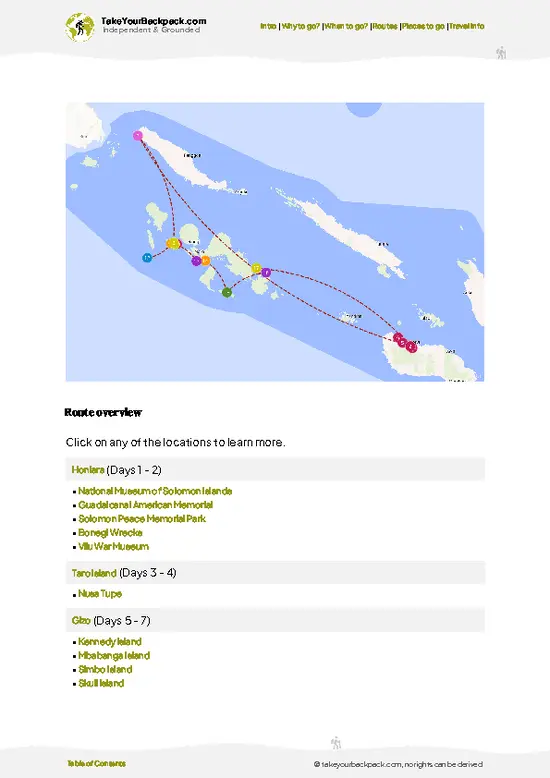
Treat Lake Tegano as the quiet end of a longer Solomon Islands loop. Start with a few days around Honiara, then fly to Rennell and stay long enough to cover the lake, the forest and the coast without rushing. Afterward, head to Western Province for reef and wreck diving, since the contrast is huge. Pack more cash than you think you need, and fold in a spare day for flight delays.

✍️ Help improve this page!
The information on this page is based on in-depth research, insights shared by experienced travelers, and feedback from the local travel community in Solomon Islands. While every effort is made to keep the information accurate and current, conditions can change — so if you spot anything incorrect or outdated, please get in touch.


🙋‍♂️ Give feedback

👋 Meet the founderWho’s Behind Take Your Backpack?

Johan, backpacker and founder of TakeYourBackpackHi, I’m Johan (Netherlands 🇳🇱), the creator of TakeYourBackpack. Over the past 3 decades, I’ve backpacked through 90+ countries across six continents, gaining extensive experience with independent travel, long-term trips, and overland routes.

This site is built on a combination of firsthand travel experience and carefully curated insights from other backpackers. Many guides are based on places I’ve personally visited, while others bring together tips, observations, and practical advice shared by trusted travelers I’ve met along the way.

The goal is to provide realistic, experience-driven guidance — not generic itineraries — so you can explore destinations with better context, clearer expectations, and more confidence.