×

Solomon Islands🇸🇧 | unique sitesMarovo Lagoon
coral atolls, remote villages, dugout canoes, turquoise channels | things to do and best time to go

Explore LataExplore Taro Island

Backpacking in Marovo Lagoon
🏆 Top pickunique site ranked #1
By Johan Kruseman 🇳🇱 | Updated April 28, 2026

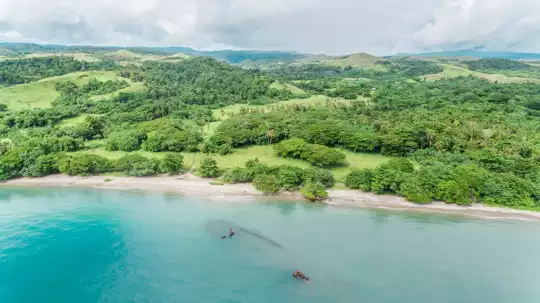
Everyone arrives at Marovo Lagoon expecting some empty, private-aquarium fantasy. Reality check: this is not a polished resort circuit with infinity pools and smoothie bars; it’s a remote, lived-in seascape in Western Province, Solomon Islands, where real communities, weather, and logistics call the shots. For backpackers, that’s exactly the point. The lagoon itself is outrageous—reef walls dropping into deep blue, sandbars that look fake in photos, and water so clear your mask feels optional—but getting here is slow, sometimes pricey, and absolutely not plug-and-play. Boats are irregular, Wi‑Fi is a rumor, and costs creep up because almost everything is brought in by ship. Crowds are minimal; you’ll share the water with village kids and spearfishers, not cruise ships. Culturally, it’s rich but low-key: woodcarving, quiet churches, WWII stories over instant coffee. The vibe is raw, gentle, and very real—more relationship-building than bucket-list ticking.

Discover everything you want to know in the 📖 Solomon Islands Travel Guide.
Loading the map 🌍
CLICK TO FILTER
town
village
unique site
national park
hike
beach
attraction
festival
region
SHOW COUNTRY‘S BESTSHOW ALL

✨ Why go?
Ranked #1 unique site in Solomon Islands
What makes this unique site worth visiting

Marovo Lagoon in the Solomon Islands isn’t just another pretty postcard; it’s a raw, vibrant ecosystem that demands your attention. Sure, you’ll share the space with other travelers, but the real magic lies in its untouched beauty and the authentic experiences waiting for you.

Getting there isn’t a walk in the park. You’ll need to hop on a boat from Gizo or Munda, but that journey is part of the charm. The crystal-clear waters and lush green islands are a feast for the senses. Dive into the coral gardens or kayak through the mangroves, and you’ll quickly forget the crowds.

Costs? They’re surprisingly low for what you get. Local guesthouses offer a cozy stay without breaking the bank, and meals are often home-cooked, giving you a taste of true island life.

Marovo Lagoon fits seamlessly … read more 👉
Marovo Lagoon in the Solomon Islands isn’t just another pretty postcard; it’s a raw, vibrant ecosystem that demands your attention. Sure, you’ll share the space with other travelers, but the real magic lies in its untouched beauty and the authentic experiences waiting for you.

Getting there isn’t a walk in the park. You’ll need to hop on a boat from Gizo or Munda, but that journey is part of the charm. The crystal-clear waters and lush green islands are a feast for the senses. Dive into the coral gardens or kayak through the mangroves, and you’ll quickly forget the crowds.

Costs? They’re surprisingly low for what you get. Local guesthouses offer a cozy stay without breaking the bank, and meals are often home-cooked, giving you a taste of true island life.

Marovo Lagoon fits seamlessly into a broader route through the Solomons. Pair it with a trek to Kolombangara Island or a visit to Gizo’s markets. This isn’t just a stop; it’s a gateway to understanding the soul of the Solomon Islands. Make time for it, and you’ll leave with stories that outshine any Instagram filter.
Get the complete Travel Guide for Solomon Islands
Everything organized for offline planning — routes, highlights, costs & tips

See what’s inside 👉

Get the Travel Guide -

💡 HighlightsTop highlights of Marovo Lagoon

  • World’s largest saltwater lagoon: Marovo is widely regarded as the world’s largest saltwater lagoon—an enormous, sheltered bowl of clear water rimmed by a living barrier reef and mangrove channels that gives an immediate sense of scale and remoteness you don’t get in crowded tourist spots.
  • Barrier reef and coral gardens: Shallow reefs and coral gardens right inside the lagoon make for effortless, spectacular snorkeling and diving—think colourful reef fish, hard and soft corals, and places where you can drift over healthy reef with minimal current.
  • WWII wrecks and wartime history: Scattered around the New Georgia group are wartime relics—sunken ships and aircraft from the Pacific campaign. Even easy snorkel trips can bring you up close to rusty hulks and the stories they carry, which adds
read more 👉
  • World’s largest saltwater lagoon: Marovo is widely regarded as the world’s largest saltwater lagoon—an enormous, sheltered bowl of clear water rimmed by a living barrier reef and mangrove channels that gives an immediate sense of scale and remoteness you don’t get in crowded tourist spots.
  • Barrier reef and coral gardens: Shallow reefs and coral gardens right inside the lagoon make for effortless, spectacular snorkeling and diving—think colourful reef fish, hard and soft corals, and places where you can drift over healthy reef with minimal current.
  • WWII wrecks and wartime history: Scattered around the New Georgia group are wartime relics—sunken ships and aircraft from the Pacific campaign. Even easy snorkel trips can bring you up close to rusty hulks and the stories they carry, which adds a haunting historical layer to the scenery.
  • Traditional village life and kastom culture: The shoreline is dotted with small Melanesian villages where kastom (custom) is still strong. Visiting a village for a kava ceremony, carving demo, or home-cooked meal gives real cultural context—no staged tourist show, just daily life.
  • Mangrove mazes and tiny islets: Narrow channels through mangrove forests lead to dozens of tiny sand cays and coral islets—perfect for lazy boat-hopping, birdwatching, and finding a private beach for a few hours.
  • Megafauna and unusual sea life: The lagoon supports giant clams, sea turtles, and abundant reef fish; those giant clams clustered in shallow beds are a proper “wow” moment and a reminder of the area’s ecological value.
  • Peaceful sunsets and off-grid night skies: Low light pollution and few resorts mean dramatic lagoon sunsets and some of the clearest starfields you’ll see in the Pacific—a simple, beautiful reward after a day of snorkelling or village visits.
Spotted a mistake or missing something? Contact us.
🌤️ When to go?Choosing the right time of year


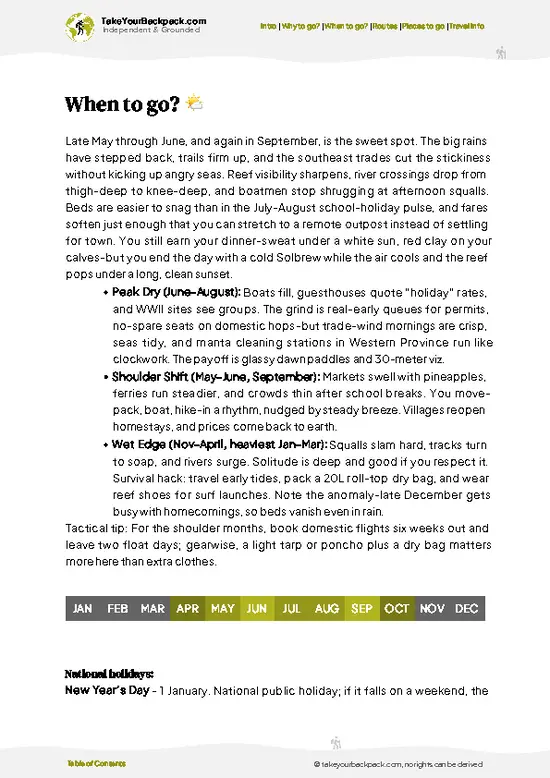
  • Weather: The dry season from May to October is your best bet. Expect less rain and calmer seas, which means clearer water for diving and snorkeling. The wet season (November to April) brings heavy rains and cyclones, turning the lagoon into a soggy mess.

  • Temperature: Temperatures hover between 24°C and 30°C (75°F to 86°F) year-round. It’s warm but not oppressive, perfect for water activities. Just remember, humidity spikes during the wet season, making it feel hotter than it is.

  • Daylight Hours: Daylight stays pretty consistent, roughly 11 to 12 hours daily. Sunrise around 6 AM and sunset near 6 PM give you plenty of daylight for exploring without rushing.

  • Crowds: Don’t expect hordes of tourists here. The dry season sees a slight uptick, mostly from eco-tourists and divers, but it’s
read more 👉

  • Weather: The dry season from May to October is your best bet. Expect less rain and calmer seas, which means clearer water for diving and snorkeling. The wet season (November to April) brings heavy rains and cyclones, turning the lagoon into a soggy mess.

  • Temperature: Temperatures hover between 24°C and 30°C (75°F to 86°F) year-round. It’s warm but not oppressive, perfect for water activities. Just remember, humidity spikes during the wet season, making it feel hotter than it is.

  • Daylight Hours: Daylight stays pretty consistent, roughly 11 to 12 hours daily. Sunrise around 6 AM and sunset near 6 PM give you plenty of daylight for exploring without rushing.

  • Crowds: Don’t expect hordes of tourists here. The dry season sees a slight uptick, mostly from eco-tourists and divers, but it’s never overwhelming. If you want near solitude, shoulder months like April or November work well.

  • Seasonal Activities: Dry season is prime for diving, snorkeling, and village visits. The wet season limits outdoor plans but brings lush greenery and fewer visitors if you’re into offbeat experiences.

  • Price Fluctuations: Prices peak during the dry season due to demand, especially June to August. Booking in advance can save you a chunk. The wet season offers lower rates but comes with the risk of weather disruptions.


Pro-tip: Aim for late May or early October to catch good weather, fewer crowds, and better prices—a sweet spot that most travelers overlook.


source: climatestotravel.comJANJanuary: fair for travelingFEBFebruary: fair for travelingMARMarch: fair for travelingAPRApril: good for travelingMAYMay: highly recommended for travelingJUNJune: excellent for travelingJULJuly: excellent for travelingAUGAugust: excellent for travelingSEPSeptember: excellent for travelingOCTOctober: highly recommended for travelingNOVNovember: good for travelingDECDecember: fair for traveling
when-to-go

✈️ The backpacker research shortcutSolomon Islands Travel Guide

An offline-friendly backpacking guide with optimized travel routes, ranked highlights, transport advice, and the best areas to stay.
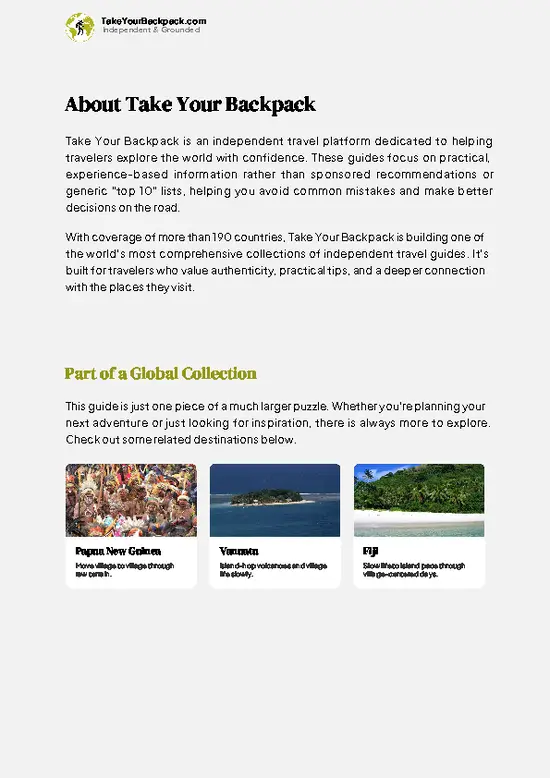
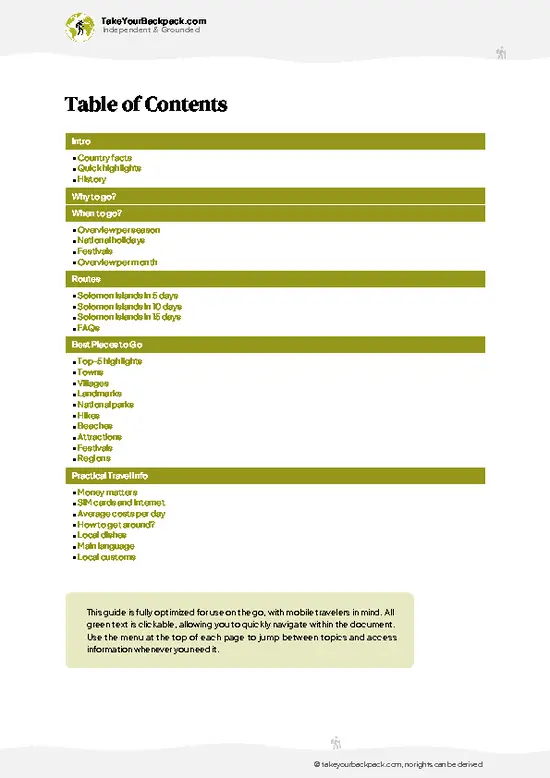
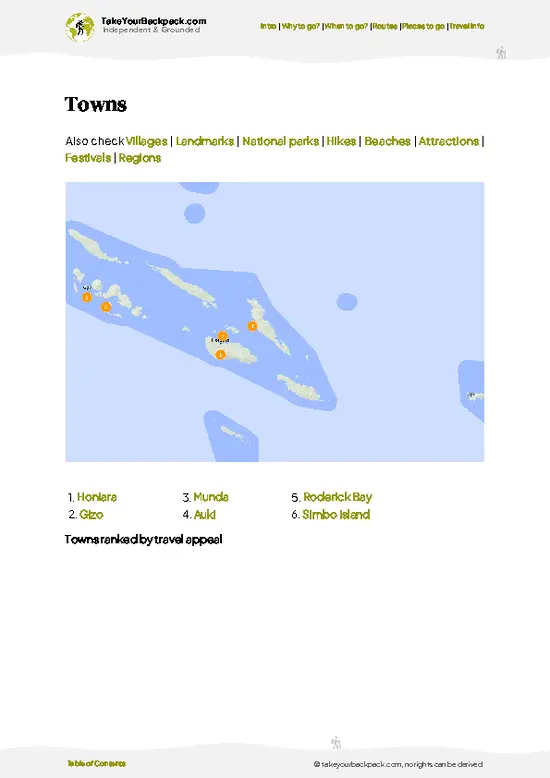
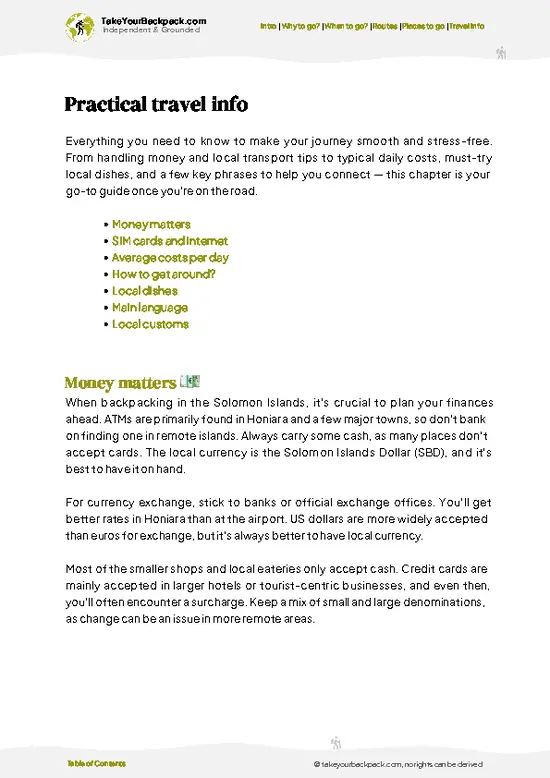
example page 0 from our offline Travel Guide for Solomon Islandsexample page 1 from our offline Travel Guide for Solomon Islandsexample page 2 from our offline Travel Guide for Solomon Islandsexample page 3 from our offline Travel Guide for Solomon Islandsexample page 4 from our offline Travel Guide for Solomon Islandsexample page 5 from our offline Travel Guide for Solomon Islands
The digital guide (169 pages) contains:
45 highlights, ranked by travel appeal
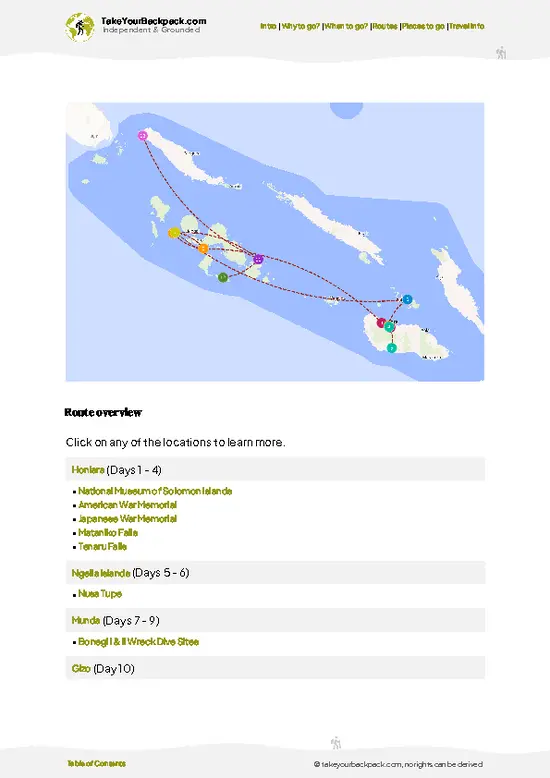
Optimized 5, 10 & 15-day travel routes
Best neighborhoods to stay
How to get around
Offline-friendly for travel without Wi-Fi
👉 See all 30+ guide features

📅 Plan smarter in minutes, not weeks
Month by month travel advice
Festivals & national holidays
Budget expectations

🗺️ Go to the right places, skip the overrated ones
Honest pros & cons of destinations
Top hikes, parks & viewpoints
Lesser-known places most travelers miss
Clear “worth it vs skip it” guidance

🛏️ Travel smoothly without rookie mistakes
Best areas to stay
Transport systems explained simply
Common scams & safety advice
SIM cards, money & practical tips

🌍 Understand the country, not just visit it
Culture & traditions
52 Essential phrases & customs
Festivals worth planning around
Traveler-friendly historical context
Insights that make places more meaningful

📱 Built for real travel conditions
Fully downloadable PDF
Works completely offline
Optimized for phone use
Useful in remote areas & buses
Everything in one place
Save weeks of stressful planning
Get instant access to the full guide directly. 30-day money-back guarantee.


Sent to your inbox immediately after payment • 100% Secure Checkout
Best Backpacking Travel Advisor 2025 tourism awardBest Backpacking
Travel Advisor
2025
What others say about Take Your Backpack Guides:
⭐⭐⭐⭐⭐
Fantastic, amazing amount of information!
⭐⭐⭐⭐⭐
My goodness this is amazing, it's what I've been looking for hats off too you!
⭐⭐⭐⭐⭐
I think this is absolutely BRILLIANT
⭐⭐⭐⭐
Very complete and informative. It's still missing places, but I gotta to commend you
⭐⭐⭐⭐⭐
This is truly amazing, thank you, can't wait to explore it with my kids!
⭐⭐⭐⭐⭐
Awesome resource, thank you!
⭐⭐⭐⭐⭐
This is amazing! Can't wait to explore the ones I haven't seen
⭐⭐⭐⭐
I love this! Well done, great idea.
⭐⭐⭐⭐⭐
Thanks for taking the time to make this gem!
⭐⭐⭐⭐⭐
This might be the best website I've ever seen.
⭐⭐⭐⭐⭐
Congratulations, and thank you so much for your work; it's incredibly valuable.
⭐⭐⭐⭐
In all seriousness I think you did a great job pointing out the important spots
⭐⭐⭐⭐⭐
10/10 very good
⭐⭐⭐⭐⭐
As someone who's only just starting to visit regularly this is awesome, thank you.
⭐⭐⭐⭐
Thank you very much! I'm going to visit my dad, it's going to be very useful!
⭐⭐⭐⭐⭐
This is really cool! We'll be travelling for the first time and this definitely come in handy.
⭐⭐⭐⭐⭐
You are now our minister of culture, congratulations 👨‍💼
⭐⭐⭐⭐⭐
Just wanted to tell you that this is a pearl! Going to follow your recommendations.
⭐⭐⭐⭐⭐
This is so cool. I'll definitely be using the resource for my travels soon.
⭐⭐⭐⭐⭐
This is very impressive! Good work.
⭐⭐⭐⭐⭐
This is an amazing and informative site. Very well done!

🛏️ Where to stay?Best areas to stay in Solomon Islands

Marovo Lagoon is a slice of paradise, but let’s cut through the Instagram haze. Crowds can be a buzzkill, especially during peak season. If you want to soak in the real magic, you need to know where to stay.

Head to the village of Munda. It’s a hub for backpackers, offering a mix of budget accommodations and a vibrant local scene. You’ll find friendly faces and a chance to connect with fellow travelers. The laid-back vibe here is contagious, and the locals are eager to share their culture.

Another solid option is Gizo. It’s a bit busier but has a range of affordable lodgings. The waterfront … read more 👉
Marovo Lagoon is a slice of paradise, but let’s cut through the Instagram haze. Crowds can be a buzzkill, especially during peak season. If you want to soak in the real magic, you need to know where to stay.

Head to the village of Munda. It’s a hub for backpackers, offering a mix of budget accommodations and a vibrant local scene. You’ll find friendly faces and a chance to connect with fellow travelers. The laid-back vibe here is contagious, and the locals are eager to share their culture.

Another solid option is Gizo. It’s a bit busier but has a range of affordable lodgings. The waterfront views are stunning, and you can easily hop on a boat to explore the lagoon. Plus, the nightlife is lively enough to meet new friends without feeling overwhelming.

Don’t overlook the smaller villages scattered around the lagoon. They offer homestays that let you dive deeper into local life. You’ll get authentic meals and stories that no guidebook can provide.

Safety is generally good, but always trust your instincts. Keep your belongings close and be respectful of local customs. The real treasure here isn’t just the scenery; it’s the connections you’ll make along the way.

👛 Costs (as of 25 December 2024)How expensive it really is

Visiting Marovo Lagoon in the Solomon Islands can be a transformative experience, but it’s essential to know what you’re getting into financially.
  • Accommodation: Expect to pay between $50 to $150 per night. Options range from basic guesthouses to more upscale eco-lodges. The more you spend, the better the amenities and views, but even budget stays can offer a slice of paradise.
  • Food: Meals can cost anywhere from $5 to $30. Local eateries serve fresh fish and tropical fruits at lower prices, while higher-end restaurants will charge more for a sit-down experience. Don’t miss out on trying local dishes; they’re often the highlight.
  • Transportation: Getting around can be tricky. Expect to spend around $10 to $50 for boat transfers between islands. If you’re venturing further, chartering a boat can
read more 👉
Visiting Marovo Lagoon in the Solomon Islands can be a transformative experience, but it’s essential to know what you’re getting into financially.
  • Accommodation: Expect to pay between $50 to $150 per night. Options range from basic guesthouses to more upscale eco-lodges. The more you spend, the better the amenities and views, but even budget stays can offer a slice of paradise.
  • Food: Meals can cost anywhere from $5 to $30. Local eateries serve fresh fish and tropical fruits at lower prices, while higher-end restaurants will charge more for a sit-down experience. Don’t miss out on trying local dishes; they’re often the highlight.
  • Transportation: Getting around can be tricky. Expect to spend around $10 to $50 for boat transfers between islands. If you’re venturing further, chartering a boat can run you $200 or more, depending on distance and duration.
  • Activities: Budget for around $20 to $100 for excursions. Snorkeling, diving, or guided tours can vary widely in price. Some local guides offer unique experiences that are worth the splurge, while others may be more budget-friendly.
  • Miscellaneous: Set aside $10 to $30 for souvenirs and tips. Local crafts are often handmade and reflect the culture, making them a meaningful purchase. Tipping guides is appreciated but not mandatory.

Understanding these costs helps you plan better. Marovo Lagoon is not just about the price tag; it’s about the experience. The beauty and culture here are worth every cent.


source: visitsolomons.com.sb
⚠️ Prices can change and everyone travels differently, so take this as a rough guide. Hope it helps you plan your adventure!

Ideas for continuing your journey

Marovo Lagoon isn’t the only highlight in Solomon Islands. Explore all what Solomon Islands has to offer.
Country photo of Solomon Islands

We 💚 feedbackParting advice and final tips

Marovo Lagoon isn’t just another postcard paradise; it’s a living, breathing slice of life. Expect crowds at the popular spots, but don’t let that fool you. The real magic lies in the quiet villages where you can sip kava with locals and hear their stories. The best surprise? The underwater world—snorkeling here feels like stepping into a vibrant dream. Just a heads-up: bring cash. ATMs are scarce, and you’ll want to support the local economy directly. Trust me, it’s worth every penny.

✍️ Help improve this page!
The information on this page is based on in-depth research, insights shared by experienced travelers, and feedback from the local travel community in Solomon Islands. While every effort is made to keep the information accurate and current, conditions can change — so if you spot anything incorrect or outdated, please get in touch.


🙋‍♂️ Give feedback

👋 Meet the founderWho’s Behind Take Your Backpack?

Johan, backpacker and founder of TakeYourBackpackHi, I’m Johan (Netherlands 🇳🇱), the creator of TakeYourBackpack. Over the past decade, I’ve backpacked through 80+ countries across six continents, gaining extensive experience with independent travel, long-term trips, and overland routes.

This site is built on a combination of firsthand travel experience and carefully curated insights from other backpackers. Many guides are based on places I’ve personally visited, while others bring together tips, observations, and practical advice shared by trusted travelers I’ve met along the way.

The goal is to provide realistic, experience-driven guidance — not generic itineraries — so you can explore destinations with better context, clearer expectations, and more confidence.

Get Full Country Guide |
Instant download • 45 highlights • Full Offline guide