×

Solomon Islands🇸🇧 | villagesTaro IslandProvincial capital, small airport, mangrove coastline | things to do and best time to go

Explore Marovo LagoonExplore National Museum of Solomon Islands

Backpacking in Taro Island
🏆 Top pickvillage ranked #1
By Johan Kruseman 🇳🇱 | Updated September 23, 2026

Taro Island is not for anyone chasing rooftop bars, shopping streets, or a packed hostel scene. It’s for backpackers who don’t mind heat, salt on their skin, and a town that goes quiet by 9 p.m. Sitting just off the northwest tip of Choiseul Island in the Solomon Islands, Taro is a tiny administrative hub: an airstrip, a few government buildings, houses on stilts, and the sea always in view. As a destination, it’s more launchpad than headline act. You come here to stage boat trips to nearby villages, reefs, and mangroves, not to “do” Taro itself. It’s walkable, basic, and safe if you use normal sense, but you’ll pay a bit more for supplies than in larger towns. Compared with Gizo or Munda, Taro feels quieter, more functional, and far less touristic—perfect as a calm, practical stop in a longer island chain.

Discover everything you want to know in the 📖 Solomon Islands Travel Guide.
Loading the map 🌍
CLICK TO FILTER
towns
villages
landmarks
national parks
hikes
beaches
attractions
festivals
regions
SHOW COUNTRY’S BESTSHOW ALL

✨ Why go?
Ranked #1 village in Solomon Islands
Why visitors keep coming back

Taro Island serves as a gateway for backpackers seeking both adventure and cultural immersion in the Solomon Islands. Its walkable streets make it easy to navigate, allowing you to pop into small-scale hostels or guesthouses that offer a cozy, communal vibe. Here, you can savor local food experiences, from fresh fish caught that morning to hearty root vegetables, all while chatting with friendly locals.

The island is a launchpad for nearby hikes and pristine beaches, making it perfect for hikers and slow travelers who want to soak in the scenery. Many backpackers linger a few days, enjoying the laid-back atmosphere and the chance to connect with fellow adventurers. It’s not a party hub; instead, it’s a place where solo travelers or small groups can recharge and share stories. Taro Island … read more 👉
Taro Island serves as a gateway for backpackers seeking both adventure and cultural immersion in the Solomon Islands. Its walkable streets make it easy to navigate, allowing you to pop into small-scale hostels or guesthouses that offer a cozy, communal vibe. Here, you can savor local food experiences, from fresh fish caught that morning to hearty root vegetables, all while chatting with friendly locals.

The island is a launchpad for nearby hikes and pristine beaches, making it perfect for hikers and slow travelers who want to soak in the scenery. Many backpackers linger a few days, enjoying the laid-back atmosphere and the chance to connect with fellow adventurers. It’s not a party hub; instead, it’s a place where solo travelers or small groups can recharge and share stories. Taro Island isn’t just a stop; it’s a chance to embrace the rhythm of island life.
Want to include Taro Island in your Solomon Islands route?
Create a personalized Solomon Islands itinerary that includes Taro Island and the places that fit your trip — based on your travel style, budget, and available time. Get your route in seconds.

Generate my trip

💡 HighlightsTop highlights of Taro Island

  • Choiseul Provincial Administration complex: The island’s administrative heart—visit to see where provincial business happens, meet local officials, and get a real sense of Taro’s role as Choiseul’s tiny capital.
  • Taro Jetty and Wharf: The main arrival point and social hub for fishermen and boat crews; great for people-watching, catching passing launches, and timing your next hop to nearby villages.
  • Taro Village Market: Fresh fish, coconut, root crops and the odd handmade trinket — a compact market where you can talk to vendors, taste local snacks, and pick up simple souvenirs.
  • Community church: Most of village life orbits the local church and its Sunday services; attend (with permission) to hear choirs, meet families, and observe community rhythms.
  • Village meeting house / communal kastom
… read more 👉
  • Choiseul Provincial Administration complex: The island’s administrative heart—visit to see where provincial business happens, meet local officials, and get a real sense of Taro’s role as Choiseul’s tiny capital.
  • Taro Jetty and Wharf: The main arrival point and social hub for fishermen and boat crews; great for people-watching, catching passing launches, and timing your next hop to nearby villages.
  • Taro Village Market: Fresh fish, coconut, root crops and the odd handmade trinket — a compact market where you can talk to vendors, taste local snacks, and pick up simple souvenirs.
  • Community church: Most of village life orbits the local church and its Sunday services; attend (with permission) to hear choirs, meet families, and observe community rhythms.
  • Village meeting house / communal kastom space: The local gathering place for ceremonies and discussions — visiting here (ask first) gives a window into kastom, local decision-making and storytelling.
  • Mangrove fringe and shoreline walk: A short, accessible walk around the island edges where you’ll see mudflats, shorebirds, crab pickers and how locals harvest sea resources — low-effort, high-context.
  • Island viewpoint / headland: A brief climb to the highest point gives panoramic views over Choiseul’s waters and nearby islands — excellent at sunrise or sunset and a quiet spot to reflect.
  • Traditional canoe and boat workshops: Small-scale boatbuilding is still practiced — watching craftsmen shape outriggers and canoes is an honest cultural experience (ask before photographing).
  • Village school and community projects: If you’re curious about local life, a respectful visit to the school or community development projects (with permission) shows everyday routines and often leads to warm conversations.
  • Homestays and family hospitality: Staying with a local family or a small village guestroom is the best way to learn foodways, weaving, and daily routines — more meaningful than a hotel and usually the most memorable part of a visit.
A few real day-trip options a short boat ride from Taro are exploring nearby Choiseul villages for kastom dances and handicrafts, snorkeling the local reef pockets, and visiting low-key beaches and mangrove channels along the Choiseul coast.
Spotted a mistake or missing something? Contact us.
⌛️ 1 dayHow to make the most of one day

Taro Island, a slice of paradise in the Solomon Islands, is a place where the rhythm of life slows down, and the beauty of simplicity shines. The air is thick with the scent of frangipani and saltwater, inviting you to explore its vibrant culture and stunning landscapes.

Start your day early with a stroll through the local market in the heart of Taro Town. The colors of fresh produce and handmade crafts pop against the backdrop of the lush green hills. Grab a coconut to sip on while you chat with friendly vendors. This is where you’ll feel the pulse of the community, a perfect prelude to your adventure.

In the afternoon, head to the nearby village of Taro, where you can visit the traditional canoe-building workshop. This isn’t on the standard tourist path, but it’s a chance to see craftsmanship … read more 👉
Taro Island, a slice of paradise in the Solomon Islands, is a place where the rhythm of life slows down, and the beauty of simplicity shines. The air is thick with the scent of frangipani and saltwater, inviting you to explore its vibrant culture and stunning landscapes.

Start your day early with a stroll through the local market in the heart of Taro Town. The colors of fresh produce and handmade crafts pop against the backdrop of the lush green hills. Grab a coconut to sip on while you chat with friendly vendors. This is where you’ll feel the pulse of the community, a perfect prelude to your adventure.

In the afternoon, head to the nearby village of Taro, where you can visit the traditional canoe-building workshop. This isn’t on the standard tourist path, but it’s a chance to see craftsmanship in action and learn about the island’s maritime heritage. The artisans are eager to share their stories, and you might even get a chance to try your hand at carving.

As the sun begins to dip, make your way to the beach at Taro Island Resort. The golden light dances on the water, creating a breathtaking view. Settle in with a local dish, perhaps some grilled fish seasoned with coconut and lime, while the sky transforms into a canvas of oranges and purples.

This day on Taro Island isn’t just about sights; it’s about connecting with the land and its people, making every moment feel like a well-earned treasure.
Turn your Taro Island visit into an Solomon Islands adventure
Build a complete Solomon Islands route with Taro Island, hidden gems, must-see destinations, and realistic travel times included.

Generate my trip

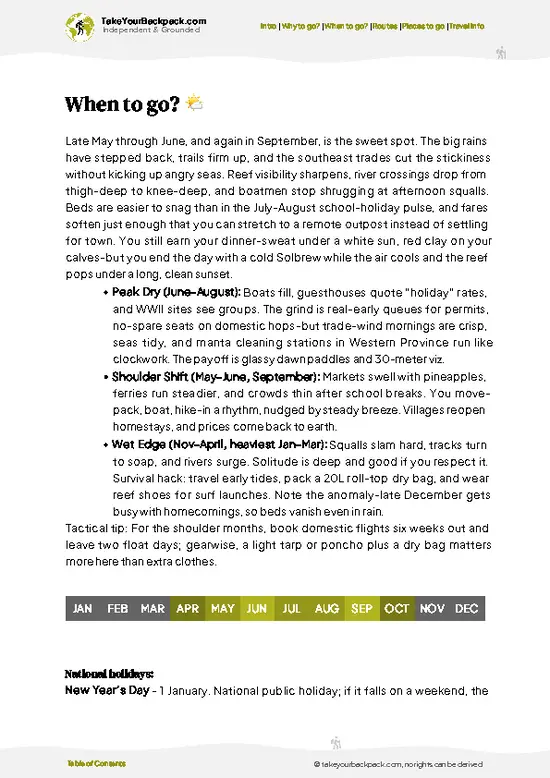
🌤️ When to go?Seasonal considerations and timing


  • Weather: The dry season from April to October is your best bet. Expect less humidity and fewer rain showers, which means clearer skies and calmer seas perfect for snorkeling or diving around Taro Island’s coral reefs.

  • Temperature: Daytime temps hover between 27°C and 31°C (80°F to 88°F) year-round, but the dry season feels more comfortable. The wet season’s heat can push humidity into the 90% range, making every step feel heavier.

  • Daylight Hours: Near the equator, daylight stays steady—about 12 hours year-round. This consistency means you can plan your hikes or boat trips without worrying about early sunsets cutting your adventures short.

  • Crowds: Taro Island is off the beaten path, so crowds are minimal anytime. However, local festivals during the dry season bring a burst of energy
… read more 👉

  • Weather: The dry season from April to October is your best bet. Expect less humidity and fewer rain showers, which means clearer skies and calmer seas perfect for snorkeling or diving around Taro Island’s coral reefs.

  • Temperature: Daytime temps hover between 27°C and 31°C (80°F to 88°F) year-round, but the dry season feels more comfortable. The wet season’s heat can push humidity into the 90% range, making every step feel heavier.

  • Daylight Hours: Near the equator, daylight stays steady—about 12 hours year-round. This consistency means you can plan your hikes or boat trips without worrying about early sunsets cutting your adventures short.

  • Crowds: Taro Island is off the beaten path, so crowds are minimal anytime. However, local festivals during the dry season bring a burst of energy and cultural immersion without overwhelming the vibe.

  • Seasonal Activities: The dry months align with traditional ceremonies and fishing seasons, offering a richer cultural experience. Wet season limits outdoor activities due to slippery trails and rougher waters.

  • Price Fluctuations: Accommodation and transport costs rise slightly in the dry season, but the trade-off is worth it for reliable weather and access to local events. The wet season offers cheaper rates but with more logistical headaches.


Pro-tip: Aim for May to July—when the air is crisp, the sea is calm, and the island’s pulse is at its liveliest without the hassle of heavy rains or inflated prices.


source: climatestotravel.comJANJanuary: fair for travelingFEBFebruary: fair for travelingMARMarch: good for travelingAPRApril: highly recommended for travelingMAYMay: excellent for travelingJUNJune: excellent for travelingJULJuly: excellent for travelingAUGAugust: highly recommended for travelingSEPSeptember: highly recommended for travelingOCTOctober: highly recommended for travelingNOVNovember: fair for travelingDECDecember: fair for traveling
when-to-go

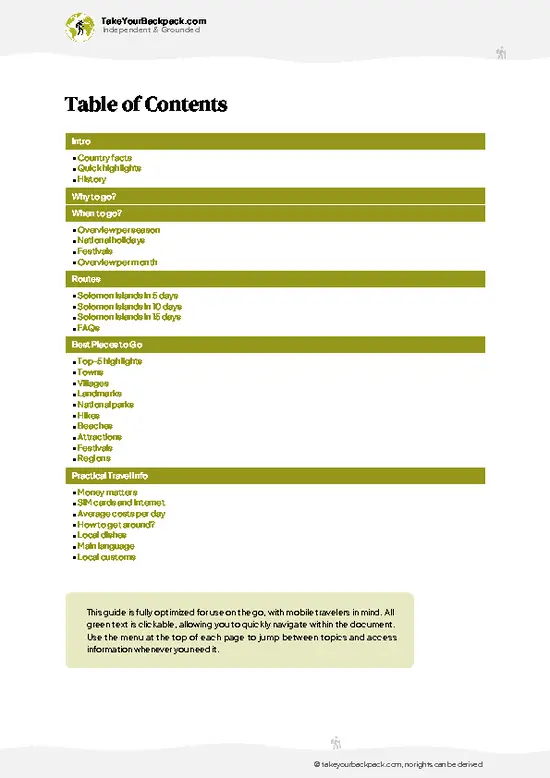
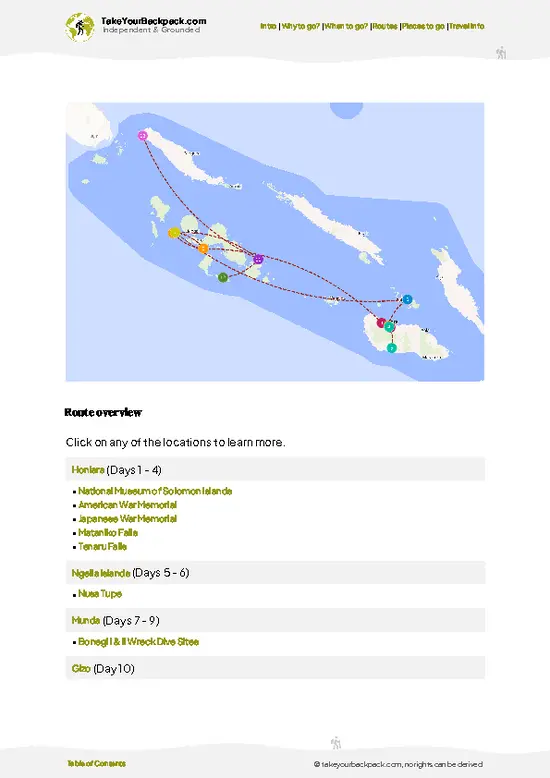
✈️ The backpacker research shortcutSolomon Islands Travel Guide

An offline-friendly backpacking guide with optimized travel routes, ranked highlights, transport advice, and the best areas to stay.
example page 0 from our offline Travel Guide for Solomon Islands
example page 1 from our offline Travel Guide for Solomon Islands
example page 2 from our offline Travel Guide for Solomon Islands
example page 3 from our offline Travel Guide for Solomon Islands
example page 4 from our offline Travel Guide for Solomon Islands
example page 5 from our offline Travel Guide for Solomon Islands
example page 6 from our offline Travel Guide for Solomon Islands
example page 7 from our offline Travel Guide for Solomon Islands
The digital guide (173 pages) contains:
✅ 39 highlights, ranked by travel appeal
✅ Optimized 5, 10 & 15-day travel routes
✅ Cities, national parks, landmarks, beaches
✅ How to get around
✅ Offline-friendly for travel without Wi-Fi
👉 Click to see all 30+ guide features

📅 Plan smarter in minutes, not weeks
✅ Month by month travel advice
✅ Festivals & national holidays
✅ Budget expectations

🗺️ Go to the right places, skip the overrated ones
✅ Honest pros & cons of destinations
✅ Top hikes, parks & viewpoints
✅ Lesser-known places most travelers miss
✅ Clear “worth it vs skip it” guidance

🛏️ Travel smoothly without rookie mistakes
✅ Best areas to stay
✅ Transport systems explained simply
✅ Common scams & safety advice
✅ SIM cards, money & practical tips

🌍 Understand the country, not just visit it
✅ Culture & traditions
✅ 52 Essential phrases & customs
✅ Festivals worth planning around
✅ Traveler-friendly historical context
✅ Insights that make places more meaningful

📱 Built for real travel conditions
✅ Fully downloadable PDF
✅ Works completely offline
✅ Optimized for phone use
✅ Useful in remote areas & buses
✅ Everything in one place
Save weeks of stressful planning
Get instant access to your full guide. 30‑day money-back guarantee.
+ Add another guide for just

By proceeding you agree to our terms.
Sent to your inbox immediately after payment • 100% Secure Checkout
Best Backpacking Travel Advisor 2025 tourism awardBest Backpacking
Travel Advisor
2025
What others say about Take Your Backpack Guides:
⭐⭐⭐⭐⭐
Fantastic, amazing amount of information!
⭐⭐⭐⭐⭐
My goodness this is amazing, it's what I've been looking for hats off too you!
⭐⭐⭐⭐⭐
I think this is absolutely BRILLIANT
⭐⭐⭐⭐
Very complete and informative. It's still missing places, but I gotta to commend you
⭐⭐⭐⭐⭐
This is truly amazing, thank you, can't wait to explore it with my kids!
⭐⭐⭐⭐⭐
Awesome resource, thank you!
⭐⭐⭐⭐⭐
This is amazing! Can't wait to explore the ones I haven't seen
⭐⭐⭐⭐
I love this! Well done, great idea.
⭐⭐⭐⭐⭐
Thanks for taking the time to make this gem!
⭐⭐⭐⭐⭐
This might be the best website I've ever seen.
⭐⭐⭐⭐⭐
Congratulations, and thank you so much for your work; it's incredibly valuable.
⭐⭐⭐⭐
In all seriousness I think you did a great job pointing out the important spots
⭐⭐⭐⭐⭐
10/10 very good
⭐⭐⭐⭐⭐
As someone who's only just starting to visit regularly this is awesome, thank you.
⭐⭐⭐⭐
Thank you very much! I'm going to visit my dad, it's going to be very useful!
⭐⭐⭐⭐⭐
This is really cool! We'll be travelling for the first time and this definitely come in handy.
⭐⭐⭐⭐⭐
You are now our minister of culture, congratulations 👨‍💼
⭐⭐⭐⭐⭐
Just wanted to tell you that this is a pearl! Going to follow your recommendations.
⭐⭐⭐⭐⭐
This is so cool. I'll definitely be using the resource for my travels soon.
⭐⭐⭐⭐⭐
This is very impressive! Good work.
⭐⭐⭐⭐⭐
This is an amazing and informative site. Very well done!

🛏️ Where to stay?Best areas and accommodation options

Taro Island’s best spot for backpackers is the waterfront area near the main wharf. This neighborhood hums with local life—the salty tang of the sea mixes with the chatter of fishermen and market vendors. It’s where you’ll find the most budget-friendly hostels, often run by locals who double as informal guides. Staying here means you’re steps away from the pulse of the island, making it easy to strike up conversations with fellow travelers or islanders over a shared meal or a cold drink.

Compared to the quieter residential zones inland, the wharf area feels alive without being overwhelming. It’s … read more 👉
Taro Island’s best spot for backpackers is the waterfront area near the main wharf. This neighborhood hums with local life—the salty tang of the sea mixes with the chatter of fishermen and market vendors. It’s where you’ll find the most budget-friendly hostels, often run by locals who double as informal guides. Staying here means you’re steps away from the pulse of the island, making it easy to strike up conversations with fellow travelers or islanders over a shared meal or a cold drink.

Compared to the quieter residential zones inland, the wharf area feels alive without being overwhelming. It’s safe, thanks to the steady flow of people and the watchful eyes of the community. The streets are compact, so you can explore on foot, catching the morning light filtering through palm fronds and the occasional waft of grilled fish from nearby stalls.

If you wander too far from this hub, you’ll lose that social vibe and easy access to transport and supplies. The inland neighborhoods offer calm but lack the spontaneous connections that make backpacking here rewarding. For solo travelers craving both safety and social energy, the waterfront near the wharf is the sweet spot.

🚌 Getting aroundTransportation options and practical tips

Taro Island moves at the pace of the tides—unhurried but deliberate. The sun slants low in the afternoon, casting long shadows over the narrow streets where locals weave through clusters of market stalls and fishing boats bob gently in the harbor. Time here isn’t dictated by clocks but by the rhythm of daily life: the catch coming in, the market opening, the ferry’s horn echoing across the water. It’s a place where schedules flex, and intuition guides your steps. To navigate Taro like a local, you’ll want to sync with this flow, blending patience with a readiness to move when the moment calls.


  • Walking: The heart of Taro is compact enough to explore entirely on foot. Streets are uneven and often sandy, so sturdy shoes are a must. Walking lets you soak in the salty air, hear the chatter
… read more 👉
Taro Island moves at the pace of the tides—unhurried but deliberate. The sun slants low in the afternoon, casting long shadows over the narrow streets where locals weave through clusters of market stalls and fishing boats bob gently in the harbor. Time here isn’t dictated by clocks but by the rhythm of daily life: the catch coming in, the market opening, the ferry’s horn echoing across the water. It’s a place where schedules flex, and intuition guides your steps. To navigate Taro like a local, you’ll want to sync with this flow, blending patience with a readiness to move when the moment calls.


  • Walking: The heart of Taro is compact enough to explore entirely on foot. Streets are uneven and often sandy, so sturdy shoes are a must. Walking lets you soak in the salty air, hear the chatter of vendors, and spot the vibrant colors of woven baskets and fresh produce. It’s free, flexible, and the best way to catch the island’s authentic pulse.


  • Public Minibuses: These small vans run from early morning around 6:30 AM until about 7 PM, weaving between Taro and nearby villages. Fares hover around a dollar or two, making them the cheapest motorized option. They’re cramped and can be hot, but they’re reliable if you’re not in a rush and want to travel like a local.


  • Motorbike Rentals: For about $15 to $20 a day, renting a motorbike gives you freedom to explore beyond the island’s core. Roads can be rough and narrow, so some riding experience is essential. Early morning rides offer cooler air and softer light, perfect for catching the island’s rugged coastline without the midday heat.


  • Water Taxis: These small boats shuttle between Taro and neighboring islands or the mainland. They don’t run on a strict timetable—departures depend on passenger numbers and weather conditions. Expect to pay around $5 to $10 per trip. The ride is bumpy but scenic, with the salt spray and ocean breeze making the journey part of the adventure.


  • Bicycle Rentals: If you prefer a slower pace than a motorbike but want more range than walking, bicycles are a solid middle ground. Rentals cost roughly $5 to $8 per day. The island’s flat terrain makes pedaling easy, and you’ll catch the scent of frangipani and sea salt as you glide past quiet villages and open fields.

👛 Costs (as of 23 September 2026)Travel costs and budget guide for Taro Island

Backpacking in Taro Island, Solomon Islands, means embracing a laid-back pace with modest costs, but it’s essential to know where your money goes to keep things smooth and simple.
  • Dorm Accommodation: Expect to pay around $10 to $20 USD per night for basic dorm beds or shared rooms. Options are limited and rustic, often with fan cooling and shared bathrooms, so booking ahead during peak times helps avoid scrambling for space.
  • Meals: Local eateries serve up fresh fish, root vegetables, and tropical fruits for about $3 to $7 USD per meal. Cooking your own food is rare but possible if you find guesthouses with kitchen access, which can save a bit. Street food is cheap but keep an eye on freshness to avoid stomach issues.
  • Local Transport: Getting around Taro Island is mostly on foot or by small
… read more 👉
Backpacking in Taro Island, Solomon Islands, means embracing a laid-back pace with modest costs, but it’s essential to know where your money goes to keep things smooth and simple.
  • Dorm Accommodation: Expect to pay around $10 to $20 USD per night for basic dorm beds or shared rooms. Options are limited and rustic, often with fan cooling and shared bathrooms, so booking ahead during peak times helps avoid scrambling for space.
  • Meals: Local eateries serve up fresh fish, root vegetables, and tropical fruits for about $3 to $7 USD per meal. Cooking your own food is rare but possible if you find guesthouses with kitchen access, which can save a bit. Street food is cheap but keep an eye on freshness to avoid stomach issues.
  • Local Transport: Getting around Taro Island is mostly on foot or by small motorboats. Boat rides to nearby spots cost roughly $2 to $5 USD. There’s no formal taxi system, so plan your routes and times carefully to avoid waiting long in the tropical heat.
  • Basic Activities/Entry Fees: Most natural attractions like beaches and snorkeling spots are free or ask for a small community fee around $1 to $3 USD. Organized tours or guided trips can run $15 to $30 USD, but independent exploration is the norm and often more rewarding.
  • Miscellaneous Expenses: Budget $2 to $5 USD for essentials like bottled water, snacks, or phone credit. Internet is patchy and expensive, so download maps and info beforehand to stay offline without stress.

Altogether, you’re looking at roughly $20 to $50 USD per day to cover the essentials on Taro Island. This range reflects the island’s simplicity and limited infrastructure, rewarding those who come prepared and ready to embrace a slower, more elemental travel rhythm.


source: visitsolomons.com.sb
⚠️ Prices can change and everyone travels differently, so take this as a rough guide. Hope it helps you plan your adventure!

🚌 Day tripsShort trips worth adding

Taro Island is a backpacker’s dream base, offering easy access to some of the Solomon Islands’ most captivating spots. The island’s laid-back vibe and local charm set the stage for unforgettable day trips.

Snorkeling at Tavanipupu Island
Just a short boat ride away, Tavanipupu Island is a snorkeler’s paradise. The coral gardens here burst with life, and you’ll find yourself surrounded by colorful fish darting through the clear, warm water. The trip takes about 30 minutes, costing around $15 for the boat ride. Bring your own gear if you can; rentals can be hit or miss. The best time to go is during the dry season, from May to October, when visibility is at its peak. A common mistake? Forgetting sunscreen—trust me, the sun is relentless out there.


Exploring the Village of Honiara
A … read more 👉
Taro Island is a backpacker’s dream base, offering easy access to some of the Solomon Islands’ most captivating spots. The island’s laid-back vibe and local charm set the stage for unforgettable day trips.

Snorkeling at Tavanipupu Island
Just a short boat ride away, Tavanipupu Island is a snorkeler’s paradise. The coral gardens here burst with life, and you’ll find yourself surrounded by colorful fish darting through the clear, warm water. The trip takes about 30 minutes, costing around $15 for the boat ride. Bring your own gear if you can; rentals can be hit or miss. The best time to go is during the dry season, from May to October, when visibility is at its peak. A common mistake? Forgetting sunscreen—trust me, the sun is relentless out there.


Exploring the Village of Honiara
A day trip to Honiara, the capital, offers a taste of local life. It’s about an hour by boat, and you can expect to spend around $10 on transport. Stroll through the bustling markets, where the scent of fresh produce and local spices fills the air. Don’t miss the National Museum for a glimpse into the islands’ rich history. Weekdays are best for fewer crowds, but be prepared for a lively atmosphere. First-timers often underestimate the time needed to explore—plan for a full day to soak it all in.
👉 Explore Honiara

Hiking to Mount Austen
For the adventurous, a hike up Mount Austen is a must. The trailhead is a quick 20-minute ride from Taro Island, costing about $5. The hike takes roughly 3-4 hours round trip, rewarding you with panoramic views of the surrounding islands. The best time to tackle this is early morning to avoid the heat. Many newcomers underestimate the trail’s difficulty; sturdy shoes and plenty of water are essential.


Visiting the Bonegi Beach
Bonegi Beach is a serene escape, just 30 minutes by boat. The cost is around $10, and the beach is famous for its WWII wrecks just offshore, perfect for diving or snorkeling. The calm waters are inviting, especially in the late afternoon when the sun casts a golden hue over the sand. Many first-timers miss the chance to explore the wrecks—don’t forget your underwater camera!
Want to know what more Solomon Islands offers?
The Solomon Islands Travel Guide describes 39 highlights, from cities to national parks, from beaches to hikes

Get the Travel Guide -

🛡️ SafetyStaying Safe: What Travelers Should Know

Taro Island is generally safe, but a few practical tips can enhance your experience. Stay aware in crowded markets; it’s easy to get distracted by the vibrant colors and local chatter. Keep your belongings close, especially in busier areas.

If you’re traveling solo, consider sticking to well-lit paths after dark. The atmosphere shifts at night, and while locals are friendly, it’s wise to remain cautious.

Scams are rare, but be mindful of overly eager vendors. A polite “no, thank you” usually suffices. Everyday annoyances might include slow service at local eateries; embrace it as part of the laid-back island vibe. Patience here is key, and it often leads to genuine interactions. Enjoy the journey; it’s all part of the adventure.

FAQFrequently asked questions about Taro Island

You get to Taro Island by flying into Gizo, the nearest major town, then taking a boat ride of about 30 minutes. Flights to Gizo are available from Honiara, the capital of Solomon Islands, usually taking around 1 hour. Boat schedules can vary, so plan accordingly.
Yes, Taro Island is worth the trip for its authentic local culture and beautiful coastal scenery. It offers a quiet, less touristy experience compared to other islands, with opportunities for snorkeling and exploring traditional villages. The island is small, making it easy to explore in a couple of days.
Yes, Taro Island can be visited as a day trip from Gizo. The boat ride takes about 30 minutes each way, allowing enough time to explore the island and enjoy some snorkeling or beach time. However, staying overnight is recommended to fully experience the island's charm.
⚠️ Things can change over time, so always validate details locally before you go.

More places to explore across Solomon Islands

Taro Island isn’t the only highlight in Solomon Islands. Explore all what Solomon Islands has to offer.
Country photo of Solomon Islands

We 💚 feedbackIs it worth it?

Taro Island is a slice of paradise that feels untouched. The air is thick with the scent of salt and frangipani, and the locals greet you like family. The best surprise? The vibrant coral reefs just a short swim from the shore—bring your snorkel gear. Just a heads-up: the roads can be rough, so don’t rush. Embrace the slow pace; it’s part of the charm.

✍️ Help improve this page!
The information on this page is based on in-depth research, insights shared by experienced travelers, and feedback from the local travel community in Solomon Islands. While every effort is made to keep the information accurate and current, conditions can change — so if you spot anything incorrect or outdated, please get in touch.


🙋‍♂️ Give feedback

👋 Meet the founderWho’s Behind Take Your Backpack?

Johan, backpacker and founder of TakeYourBackpackHi, I’m Johan (Netherlands 🇳🇱), the creator of TakeYourBackpack. Over the past decade, I’ve backpacked through 80+ countries across six continents, gaining extensive experience with independent travel, long-term trips, and overland routes.

This site is built on a combination of firsthand travel experience and carefully curated insights from other backpackers. Many guides are based on places I’ve personally visited, while others bring together tips, observations, and practical advice shared by trusted travelers I’ve met along the way.

The goal is to provide realistic, experience-driven guidance — not generic itineraries — so you can explore destinations with better context, clearer expectations, and more confidence.

Get full country guide •
Instant download • 39 highlights • Full Offline guide