×

Solomon Islands🇸🇧 | best landmarksTop-Rated landmarks in Solomon Islands

The Solomon Islands offer a tapestry of unique sites that reflect their rich cultural heritage and stunning natural landscapes. From the haunting remnants of World War II to vibrant local markets, each location tells a story. Accessibility varies; some sites require a rugged trek, while others are a short boat ride away.

Choosing the right unique site can significantly impact your backpacking experience—think about the vibe, season, and budget. For instance, visiting during the dry season opens up more remote areas, enhancing cultural immersion. Understanding these nuances ensures you connect deeply with the islands, making every moment feel earned and rewarding.

By Johan Kruseman 🇳🇱 | Updated September 21, 2026
Explore the best national parks in Solomon Islands

Why go?Why Travelers Love These Spots

The Solomon Islands stand out for their rich tapestry of cultural heritage, historical significance, and natural beauty. Unlike many other destinations, these islands offer a unique blend of Melanesian traditions and remnants of World War II history, creating a profound sense of place. The islands are less commercialized, allowing for a more authentic experience that immerses travelers in local customs and lifestyles.

Geographically, the Solomon Islands are a chain of over 900 islands, each with its own distinct character. This diversity means that while some sites are remote and require significant travel time, the reward is often a deeper understanding of the local culture and environment. The climate can be humid and tropical, which may deter some travelers, but those who venture out will … read more 👉
The Solomon Islands stand out for their rich tapestry of cultural heritage, historical significance, and natural beauty. Unlike many other destinations, these islands offer a unique blend of Melanesian traditions and remnants of World War II history, creating a profound sense of place. The islands are less commercialized, allowing for a more authentic experience that immerses travelers in local customs and lifestyles.

Geographically, the Solomon Islands are a chain of over 900 islands, each with its own distinct character. This diversity means that while some sites are remote and require significant travel time, the reward is often a deeper understanding of the local culture and environment. The climate can be humid and tropical, which may deter some travelers, but those who venture out will find lush landscapes and vibrant ecosystems that are worth the effort.

Accessibility can be a challenge, with limited infrastructure in some areas. This means that while some sites may be difficult to reach, the journey itself often becomes part of the experience. Travelers should consider timing their visits around the dry season for optimal conditions, as heavy rains can limit access to certain areas.

Ultimately, the unique sites of the Solomon Islands offer a chance to connect with both the land and its people, making the effort to explore them profoundly rewarding.
How the List Was Created
The list of best unique sites in Solomon Islands is created based on history or culture, wow factor, atmosphere, quirks, and memorability. If you feel a unique site is missing in this list, please let us know.

When to go?Best Time to Visit Solomon Islands for landmarks

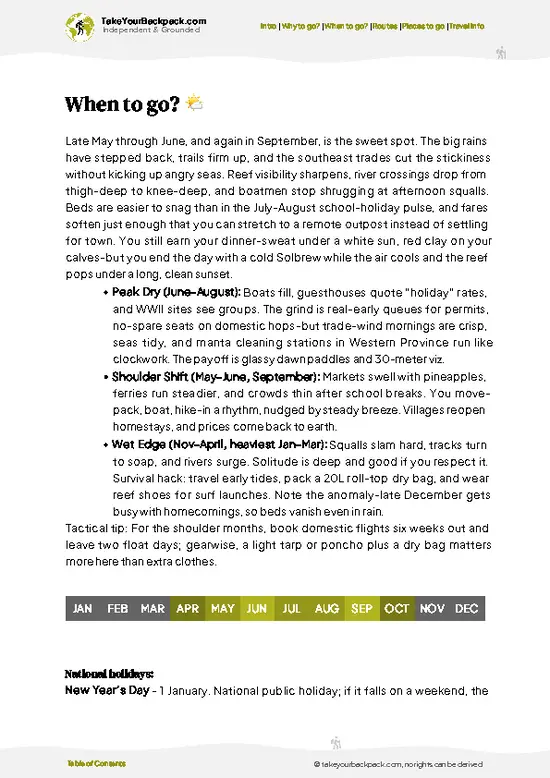
Seasonality significantly shapes the experience of unique sites in the Solomon Islands. The dry season, typically from May to October, offers the most favorable weather. Expect clear skies and lower humidity, making it ideal for exploring. Visibility is at its peak, enhancing the allure of the islands’ natural beauty.

Optimal months for visits align with this dry season. During these months, the trails are more accessible, and the vibrant marine life is easier to spot. The lush landscapes are alive, yet the heat is manageable.

Shoulder seasons—April and November—present a mixed bag. These months can offer lower costs and fewer crowds, but they also bring unpredictable weather. Rain can make trails muddy and limit access to certain areas. Travelers should weigh the trade-offs: a quieter … read more 👉
Seasonality significantly shapes the experience of unique sites in the Solomon Islands. The dry season, typically from May to October, offers the most favorable weather. Expect clear skies and lower humidity, making it ideal for exploring. Visibility is at its peak, enhancing the allure of the islands’ natural beauty.

Optimal months for visits align with this dry season. During these months, the trails are more accessible, and the vibrant marine life is easier to spot. The lush landscapes are alive, yet the heat is manageable.

Shoulder seasons—April and November—present a mixed bag. These months can offer lower costs and fewer crowds, but they also bring unpredictable weather. Rain can make trails muddy and limit access to certain areas. Travelers should weigh the trade-offs: a quieter experience versus the potential for wet conditions.

Peak periods coincide with local festivals and events, drawing larger crowds. While these occasions provide a rich cultural experience, they can also lead to higher prices and limited availability in accommodations.

Understanding these seasonal patterns is crucial for planning a visit that maximizes both access and enjoyment of the Solomon Islands’ unique offerings.

unique site hoppingHow to Combine landmarks Into One Trip

General Routing Logic

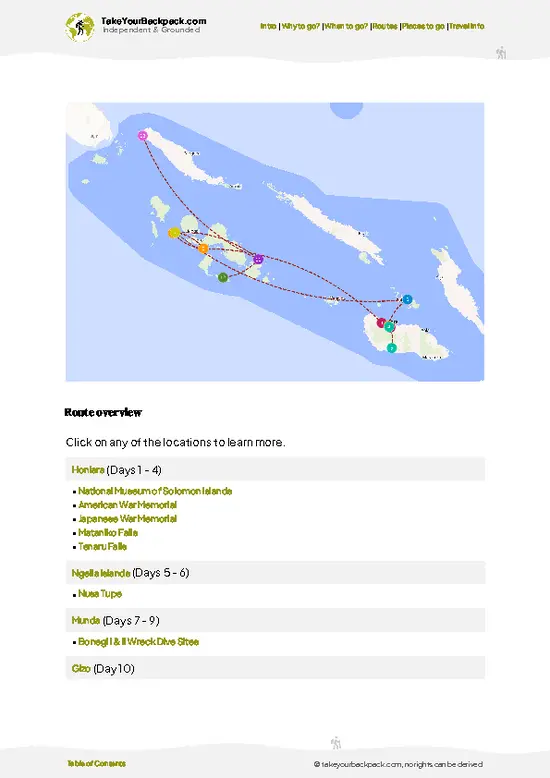
Traveling through the Solomon Islands requires a strategic approach. Start in Honiara, the capital, where you can explore the National Museum and the vibrant local markets. From there, head to the Western Province, clustering sites like Gizo and the stunning Marovo Lagoon. This region is rich in marine life and cultural experiences, making it a perfect first stop.

Typical Time Needed

Allocate at least two days for each major stop. This allows time for exploration and relaxation. For instance, diving in the lagoon or visiting local villages can easily fill a day. Don’t rush; the islands reward those who take their time.

Common Planning Mistakes

Many travelers underestimate travel times between islands. Boat schedules can be unpredictable, and weather can change plans. … read more 👉

General Routing Logic

Traveling through the Solomon Islands requires a strategic approach. Start in Honiara, the capital, where you can explore the National Museum and the vibrant local markets. From there, head to the Western Province, clustering sites like Gizo and the stunning Marovo Lagoon. This region is rich in marine life and cultural experiences, making it a perfect first stop.

Typical Time Needed

Allocate at least two days for each major stop. This allows time for exploration and relaxation. For instance, diving in the lagoon or visiting local villages can easily fill a day. Don’t rush; the islands reward those who take their time.

Common Planning Mistakes

Many travelers underestimate travel times between islands. Boat schedules can be unpredictable, and weather can change plans. Avoid cramming too many sites into a short timeframe. Instead, focus on a few key experiences to deepen your understanding of the local culture.

Trade-offs and Constraints

Consider the balance between speed and depth. A quick visit might mean missing out on the rich stories behind the sites. Budget constraints can also affect comfort levels, especially when choosing accommodations. Prioritize experiences that resonate with you, even if they require more effort. Flexibility is key; be prepared to adapt your plans based on local advice or unexpected opportunities.

The ListHighly Recommended landmarks of Solomon Islands

1 Marovo Lagoon

coral atolls, remote villages, dugout canoes, turquoise channels

Glide between forested islets and meet local carvers while discovering a vast saltwater lagoon shaped by centuries of island life.

Loading the map 🌍

Expert viewExpert Commentary on landmarks

Access Constraints
Traveling through the Solomon Islands is an adventure that demands flexibility. Many unique sites are remote, requiring a mix of boat rides and rugged hikes. Expect to navigate muddy trails and sometimes unreliable transport. The islands are scattered, so don’t underestimate travel time. A day trip to a site can easily turn into a half-day affair, especially if you factor in waiting for boats or local transport. Prioritize your sites based on proximity and accessibility. If you’re keen on diving, for instance, focus on the sites near the best dive operators.

Crowd Patterns
The islands are not overrun with tourists, but certain spots can get busy, especially during peak season. If you want to experience the raw beauty without the crowds, aim for early mornings or late … read more 👉
Access Constraints
Traveling through the Solomon Islands is an adventure that demands flexibility. Many unique sites are remote, requiring a mix of boat rides and rugged hikes. Expect to navigate muddy trails and sometimes unreliable transport. The islands are scattered, so don’t underestimate travel time. A day trip to a site can easily turn into a half-day affair, especially if you factor in waiting for boats or local transport. Prioritize your sites based on proximity and accessibility. If you’re keen on diving, for instance, focus on the sites near the best dive operators.

Crowd Patterns
The islands are not overrun with tourists, but certain spots can get busy, especially during peak season. If you want to experience the raw beauty without the crowds, aim for early mornings or late afternoons. The light during these times is magical, and you’ll often find locals more willing to share their stories. However, some cultural festivals draw larger crowds, so check local calendars. If you’re looking for a quiet experience, steer clear of these events or plan your visit around them.

Combining Sites
Realistically, you can explore about three to five unique sites in a week, depending on your pace and interests. If you’re diving, you might want to focus on two or three prime dive spots. If hiking is your thing, consider a couple of trails that lead to stunning viewpoints or waterfalls. The key is to group sites that are geographically close. This not only saves time but also allows you to soak in the local culture as you travel between them.

Time and Effort
Expect to invest a good chunk of your day in travel. A two-hour boat ride can feel like an eternity when the waves are choppy, but the payoff is often worth it. The effort to reach a secluded beach or a hidden waterfall is a rite of passage. You’ll find that the sweat and grime of the journey make the eventual dip in the ocean or the sight of cascading water all the more rewarding. Plan for downtime; it’s part of the experience.

Safety and Cultural Considerations
Safety is generally good, but be mindful of local customs. The Solomon Islands are rich in culture, and respecting local traditions is crucial. Dress modestly, especially in villages, and always ask before taking photos of people. Some areas may have specific cultural protocols, so a little research goes a long way. If you’re venturing into more remote areas, consider hiring a local guide. They not only know the terrain but can also provide insights into the culture and history that you won’t find in a guidebook.

Final Thoughts
The Solomon Islands are a patchwork of experiences waiting to be stitched together. Each unique site offers a glimpse into the heart of the islands, but the journey between them is just as significant. Embrace the unpredictability of travel here. The grit of the streets and the burn of the trails lead to moments that linger long after you’ve left. Whether it’s the taste of fresh coconut water after a long hike or the laughter shared with locals, these are the rewards that make the effort worthwhile.

✈️ The backpacker research shortcutSolomon Islands Travel Guide

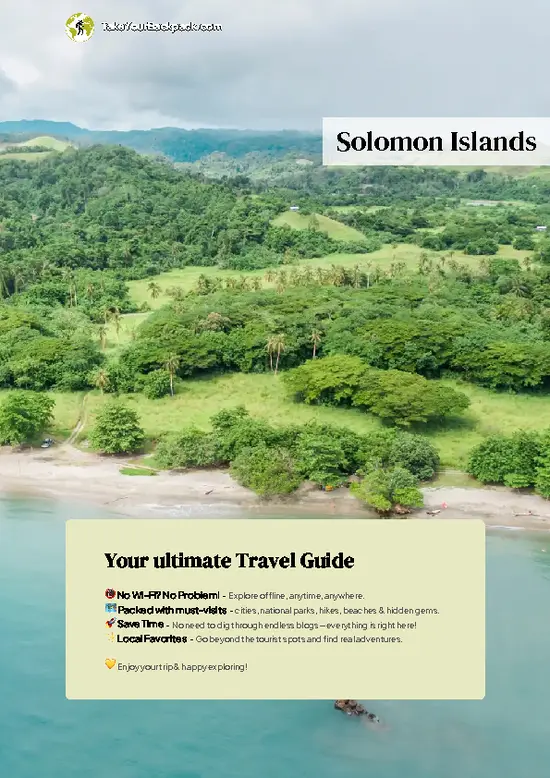
An offline-friendly backpacking guide with optimized travel routes, ranked highlights, transport advice, and the best areas to stay.
example page 0 from our offline Travel Guide for Solomon Islands
example page 1 from our offline Travel Guide for Solomon Islands
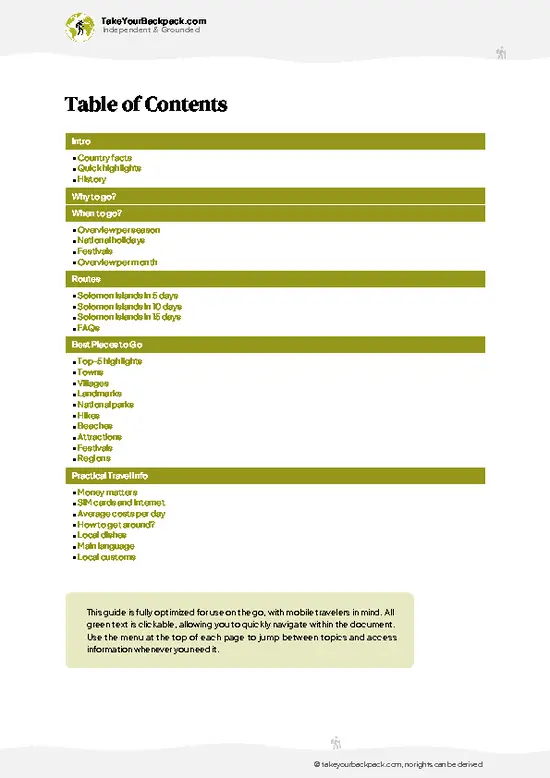
example page 2 from our offline Travel Guide for Solomon Islands
example page 3 from our offline Travel Guide for Solomon Islands
example page 4 from our offline Travel Guide for Solomon Islands
example page 5 from our offline Travel Guide for Solomon Islands
example page 6 from our offline Travel Guide for Solomon Islands
example page 7 from our offline Travel Guide for Solomon Islands
The digital guide (173 pages) contains:
✅ 39 highlights, ranked by travel appeal
✅ Optimized 5, 10 & 15-day travel routes
✅ Cities, national parks, landmarks, beaches
✅ How to get around
✅ Offline-friendly for travel without Wi-Fi
👉 Click to see all 30+ guide features

📅 Plan smarter in minutes, not weeks
✅ Month by month travel advice
✅ Festivals & national holidays
✅ Budget expectations

🗺️ Go to the right places, skip the overrated ones
✅ Honest pros & cons of destinations
✅ Top hikes, parks & viewpoints
✅ Lesser-known places most travelers miss
✅ Clear “worth it vs skip it” guidance

🛏️ Travel smoothly without rookie mistakes
✅ Best areas to stay
✅ Transport systems explained simply
✅ Common scams & safety advice
✅ SIM cards, money & practical tips

🌍 Understand the country, not just visit it
✅ Culture & traditions
✅ 52 Essential phrases & customs
✅ Festivals worth planning around
✅ Traveler-friendly historical context
✅ Insights that make places more meaningful

📱 Built for real travel conditions
✅ Fully downloadable PDF
✅ Works completely offline
✅ Optimized for phone use
✅ Useful in remote areas & buses
✅ Everything in one place
Save weeks of stressful planning
Get instant access to your full guide. 30‑day money-back guarantee.
+ Add another guide for just

By proceeding you agree to our terms.
Sent to your inbox immediately after payment • 100% Secure Checkout
Best Backpacking Travel Advisor 2025 tourism awardBest Backpacking
Travel Advisor
2025
What others say about Take Your Backpack Guides:
⭐⭐⭐⭐⭐
Fantastic, amazing amount of information!
⭐⭐⭐⭐⭐
My goodness this is amazing, it's what I've been looking for hats off too you!
⭐⭐⭐⭐⭐
I think this is absolutely BRILLIANT
⭐⭐⭐⭐
Very complete and informative. It's still missing places, but I gotta to commend you
⭐⭐⭐⭐⭐
This is truly amazing, thank you, can't wait to explore it with my kids!
⭐⭐⭐⭐⭐
Awesome resource, thank you!
⭐⭐⭐⭐⭐
This is amazing! Can't wait to explore the ones I haven't seen
⭐⭐⭐⭐
I love this! Well done, great idea.
⭐⭐⭐⭐⭐
Thanks for taking the time to make this gem!
⭐⭐⭐⭐⭐
This might be the best website I've ever seen.
⭐⭐⭐⭐⭐
Congratulations, and thank you so much for your work; it's incredibly valuable.
⭐⭐⭐⭐
In all seriousness I think you did a great job pointing out the important spots
⭐⭐⭐⭐⭐
10/10 very good
⭐⭐⭐⭐⭐
As someone who's only just starting to visit regularly this is awesome, thank you.
⭐⭐⭐⭐
Thank you very much! I'm going to visit my dad, it's going to be very useful!
⭐⭐⭐⭐⭐
This is really cool! We'll be travelling for the first time and this definitely come in handy.
⭐⭐⭐⭐⭐
You are now our minister of culture, congratulations 👨‍💼
⭐⭐⭐⭐⭐
Just wanted to tell you that this is a pearl! Going to follow your recommendations.
⭐⭐⭐⭐⭐
This is so cool. I'll definitely be using the resource for my travels soon.
⭐⭐⭐⭐⭐
This is very impressive! Good work.
⭐⭐⭐⭐⭐
This is an amazing and informative site. Very well done!

🛏️ Where to stay?Where to Stay in Solomon Islands

Yes — there are hostels and budget guesthouses in the Solomon Islands, but they are mainly in Honiara on Guadalcanal while other islands have only a few basic low-cost options, so plan to base in Honiara for the best cheap-bed availability and use inter-island transport to reach outer islands.
Within Honiara the central business district/Town has the most choices and best access to markets, museums and transport (better for nightlife but busy and noisier); Point Cruz is handy for ferries and short tours but more touristy and sometimes pricier; residential areas like Kukum and Panatina are quieter and often cheaper yet need taxis for evening services; White River and outer islands offer very … read more 👉
Yes — there are hostels and budget guesthouses in the Solomon Islands, but they are mainly in Honiara on Guadalcanal while other islands have only a few basic low-cost options, so plan to base in Honiara for the best cheap-bed availability and use inter-island transport to reach outer islands.
Within Honiara the central business district/Town has the most choices and best access to markets, museums and transport (better for nightlife but busy and noisier); Point Cruz is handy for ferries and short tours but more touristy and sometimes pricier; residential areas like Kukum and Panatina are quieter and often cheaper yet need taxis for evening services; White River and outer islands offer very basic budget stays with limited amenities and emergency infrastructure.

If you enjoy meeting fellow travelers, consider choosing hostels with high ratings for atmosphere. On the other hand, if you prefer having your own space, a hotel might be a better option.

Solomon IslandsMore of Solomon Islands

👋 Meet the founderWho’s Behind Take Your Backpack?

Johan, backpacker and founder of TakeYourBackpackHi, I’m Johan (Netherlands 🇳🇱), the creator of TakeYourBackpack. Over the past decade, I’ve backpacked through 80+ countries across six continents, gaining extensive experience with independent travel, long-term trips, and overland routes.

This site is built on a combination of firsthand travel experience and carefully curated insights from other backpackers. Many guides are based on places I’ve personally visited, while others bring together tips, observations, and practical advice shared by trusted travelers I’ve met along the way.

The goal is to provide realistic, experience-driven guidance — not generic itineraries — so you can explore destinations with better context, clearer expectations, and more confidence.

Get full country guide •
Instant download • 39 highlights • Full Offline guide