
×

Solomon Islands🇸🇧 | beachesUepi IslandReef wall, Marovo Lagoon, night snorkel, woodcarving villages | things to do and best time to go

Explore Turtle ReefExplore Rendova Island Beach

Backpacking in Uepi Island
🏆 Top pickbeach ranked #1
By Johan Kruseman 🇳🇱 | Updated October 22, 2026

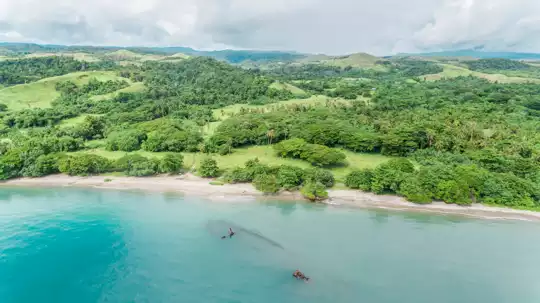
Uepi Island sits on the Marovo Lagoon, and the island is largely occupied by a single resort, so the beach is a narrow strip of coral sand rather than a public stretch you can wander onto freely. It lies in the Western Province of the Solomon Islands, on the edge of one of the largest saltwater lagoons in the world. The good side is obvious the moment you slide into the water: the reef wall drops off just a few steps from shore (a place known as Uepi Point), the water is clear and warm, and the only sounds are birds, wind in the palms and small waves. Snorkeling and diving here are excellent. The bad side is that this is not a swimming-and-sunbathing beach with cheap shacks behind it. There is no budget food street, access takes planning, and the sand is thin at high tide. Go if you want reef over crowds. Skip it if you need nightlife or a tight budget.

Discover everything you want to know in the 📖 Solomon Islands Travel Guide.


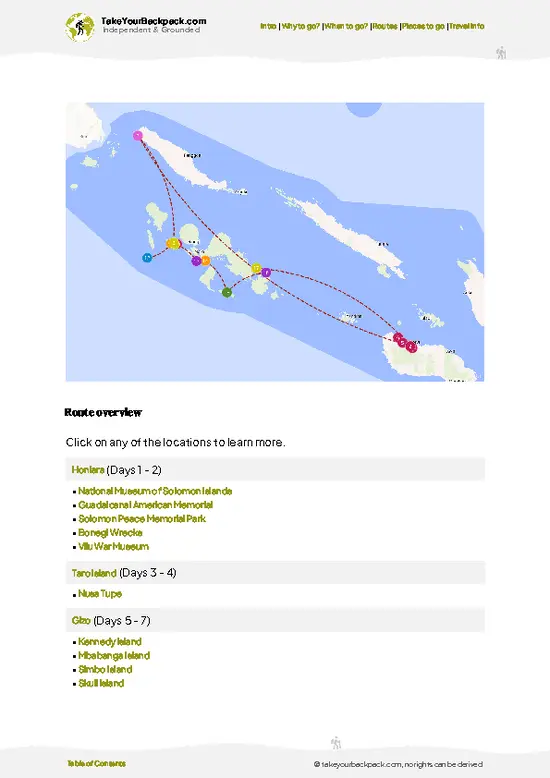
example page 0 from our offline Travel Guide for Solomon Islands
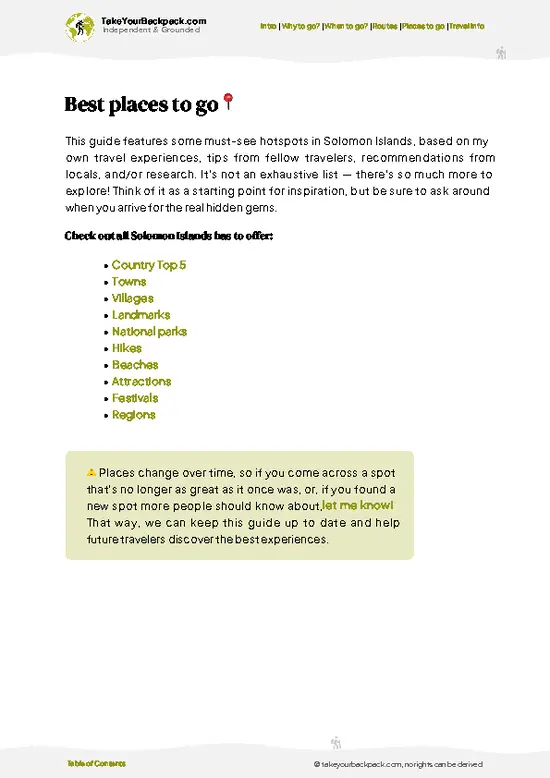
example page 1 from our offline Travel Guide for Solomon Islands
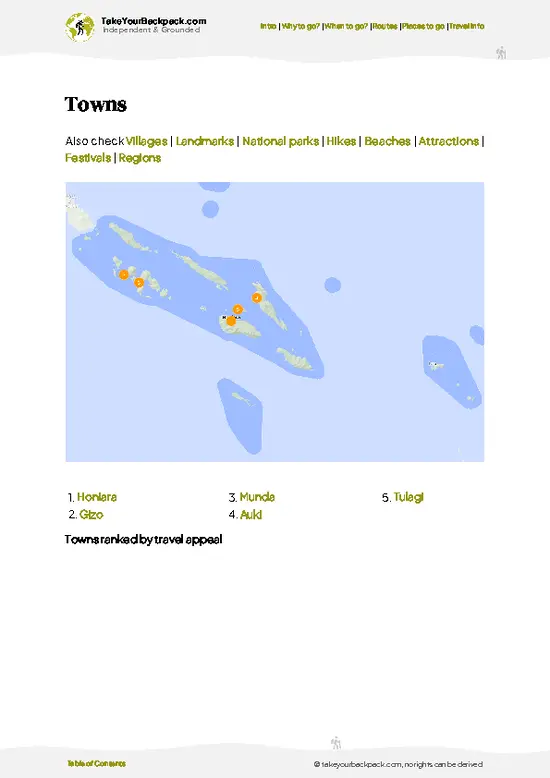
example page 2 from our offline Travel Guide for Solomon Islands
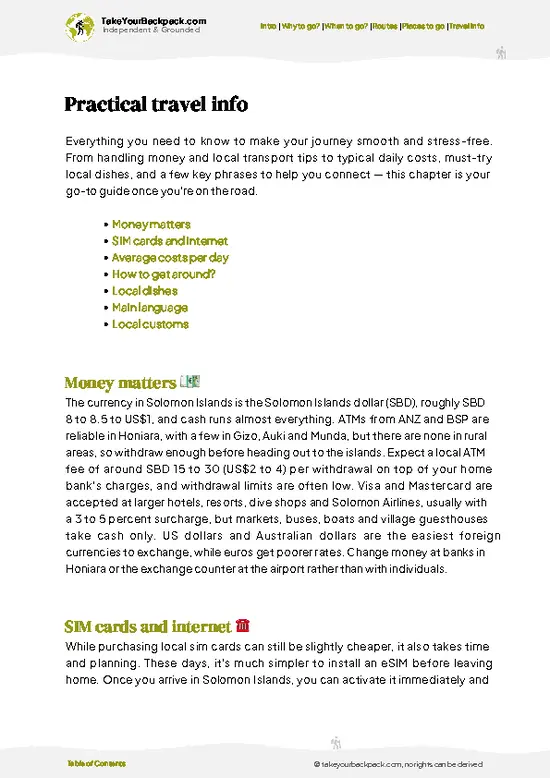
example page 3 from our offline Travel Guide for Solomon Islands
example page 4 from our offline Travel Guide for Solomon Islands
example page 5 from our offline Travel Guide for Solomon Islands
example page 6 from our offline Travel Guide for Solomon Islands
example page 7 from our offline Travel Guide for Solomon Islands
Loading the map 🌍
CLICK TO FILTER
towns
villages
landmarks
national parks
hikes
beaches
attractions
festivals
regions
SHOW COUNTRY’S BESTSHOW ALL

✨ Why go?
Ranked #1 beach in Solomon Islands
What makes it a must-see beach

Backpackers stop here for one reason above all: the reef. The Uepi Point drop-off begins within a short swim of the shore, so you can float over a wall that plunges into deep blue with reef sharks, turtles, barracuda and schools of fish passing by, with no boat needed for a good snorkel. Divers get a second draw, since the lagoon is known for walls, passes and healthy coral that have escaped the damage seen elsewhere.

The second reason is the setting. Uepi lies inside the Marovo Lagoon, a double barrier system of islets, mangrove channels and villages linked by dugout canoes. Staying here gives you a calm base from which to paddle, visit villages and look at carvings, which the region is known for, without the noise of a town.

It also works as a reset on a long trip through the Western Province. … read more 👉
Backpackers stop here for one reason above all: the reef. The Uepi Point drop-off begins within a short swim of the shore, so you can float over a wall that plunges into deep blue with reef sharks, turtles, barracuda and schools of fish passing by, with no boat needed for a good snorkel. Divers get a second draw, since the lagoon is known for walls, passes and healthy coral that have escaped the damage seen elsewhere.

The second reason is the setting. Uepi lies inside the Marovo Lagoon, a double barrier system of islets, mangrove channels and villages linked by dugout canoes. Staying here gives you a calm base from which to paddle, visit villages and look at carvings, which the region is known for, without the noise of a town.

It also works as a reset on a long trip through the Western Province. After rough ferries and dusty ports, a few quiet days with only waves and birdsong feel like a proper break.

💡 HighlightsThe experiences that define the visit

  1. Uepi Point Drop-off: The beach's signature experience. You wade in, swim a short way over shallow coral gardens and then the bottom vanishes into a wall. Reef sharks, turtles, big schools of fish and sometimes eagle rays pass along the edge. Snorkelers get plenty of action without a boat, and the clear water gives visibility that is hard to beat in the region.
  2. Scuba Diving the Marovo Walls: Dive boats leave from the island to walls, channels and passes in the lagoon. Expect healthy hard corals, large pelagic fish and good visibility. Both beginners and experienced divers have options, and the shore itself offers easy entry for some dives.
  3. House Reef Night Snorkel: After dark the reef changes. Hunting crustaceans, sleeping parrotfish wrapped in mucus cocoons and shy eels come out in your torch
… read more 👉
  1. Uepi Point Drop-off: The beach's signature experience. You wade in, swim a short way over shallow coral gardens and then the bottom vanishes into a wall. Reef sharks, turtles, big schools of fish and sometimes eagle rays pass along the edge. Snorkelers get plenty of action without a boat, and the clear water gives visibility that is hard to beat in the region.
  2. Scuba Diving the Marovo Walls: Dive boats leave from the island to walls, channels and passes in the lagoon. Expect healthy hard corals, large pelagic fish and good visibility. Both beginners and experienced divers have options, and the shore itself offers easy entry for some dives.
  3. House Reef Night Snorkel: After dark the reef changes. Hunting crustaceans, sleeping parrotfish wrapped in mucus cocoons and shy eels come out in your torch beam. It is calm and close to shore, and a good way to spend the evening in a place with no nightlife.
  4. Dugout Canoe Paddling in the Lagoon: Carved canoes are the local transport, and you can paddle along the shallow shoreline and mangrove edges. Water is flat, birds are everywhere, and you might spot rays gliding below the surface. Early morning gives the best light and the calmest water.
  5. Village Visits and Woodcarving: Nearby Marovo villages are famous for ebony and kerosene wood carvings, including inlaid bowls and sculpted figures. Visiting lets you meet carvers, see work in progress and buy directly, which helps families more than any shop would. Go with a guide and respect local customs about dress and photography.
Snorkeling the drop-off and paddling take a morning each, so allow two to four days to fit in diving, a night snorkel and a village visit.
Spotted a mistake or missing something? Contact us.

🌤️ When to go?Weather, crowds, and seasonal trade-offs

  • Dry Season (May to October): The best window for diving and snorkeling around Uepi, with calmer seas and clearer water on the Marovo Lagoon side. Days run about 29 to 31°C (84 to 88°F), nights drop to roughly 23 to 24°C (73 to 75°F). Southeast trades can make the outer passages lumpy, but the lagoon stays sheltered.
  • Wet Season (November to April): Humid, with heavy afternoon downpours and the odd cyclone-season squall. Highs sit near 31 to 32°C (88 to 90°F). Visibility drops after big rain, though sheltered reefs still deliver. Fewer visitors, and lodges often have open beds.
  • Daylight: Close to the equator, sunrise is around 6 am and sunset around 6 pm all year, so plan swims and paddles before the midday glare.
  • Crowds and Prices: Uepi is a small, remote setting, so it never gets crowded. Flights
… read more 👉
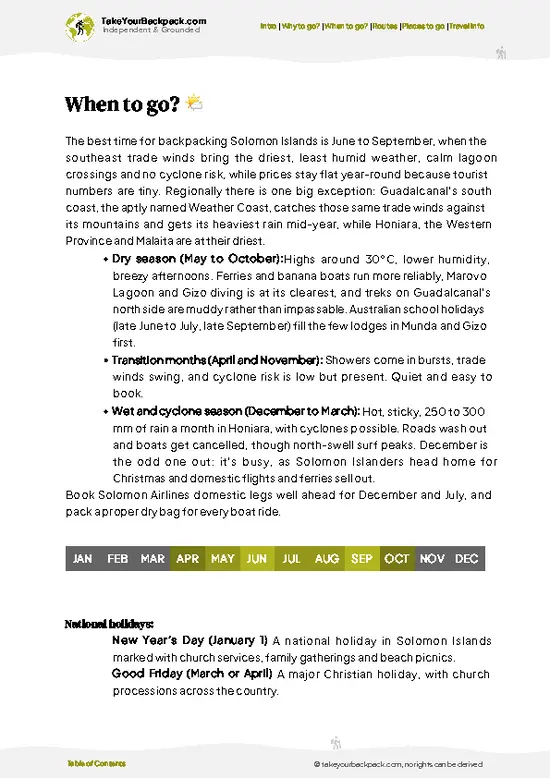
  • Dry Season (May to October): The best window for diving and snorkeling around Uepi, with calmer seas and clearer water on the Marovo Lagoon side. Days run about 29 to 31°C (84 to 88°F), nights drop to roughly 23 to 24°C (73 to 75°F). Southeast trades can make the outer passages lumpy, but the lagoon stays sheltered.
  • Wet Season (November to April): Humid, with heavy afternoon downpours and the odd cyclone-season squall. Highs sit near 31 to 32°C (88 to 90°F). Visibility drops after big rain, though sheltered reefs still deliver. Fewer visitors, and lodges often have open beds.
  • Daylight: Close to the equator, sunrise is around 6 am and sunset around 6 pm all year, so plan swims and paddles before the midday glare.
  • Crowds and Prices: Uepi is a small, remote setting, so it never gets crowded. Flights and lodge availability tighten from June to September, when dive travelers arrive.
Book your flight to Seghe early if you aim for July or August, since seats on the small planes fill first.


source: climatestotravel.comJANJanuary: fair for travelingFEBFebruary: fair for travelingMARMarch: fair for travelingAPRApril: fair for travelingMAYMay: highly recommended for travelingJUNJune: excellent for travelingJULJuly: excellent for travelingAUGAugust: excellent for travelingSEPSeptember: excellent for travelingOCTOctober: highly recommended for travelingNOVNovember: fair for travelingDECDecember: fair for traveling
when-to-go

✈️ The backpacker research shortcutSolomon Islands Travel Guide

An offline-friendly backpacking guide with optimized travel routes, ranked highlights, transport advice, and the best areas to stay.
example page 0 from our offline Travel Guide for Solomon Islands
example page 1 from our offline Travel Guide for Solomon Islands
example page 2 from our offline Travel Guide for Solomon Islands
example page 3 from our offline Travel Guide for Solomon Islands
example page 4 from our offline Travel Guide for Solomon Islands
example page 5 from our offline Travel Guide for Solomon Islands
example page 6 from our offline Travel Guide for Solomon Islands
example page 7 from our offline Travel Guide for Solomon Islands
The digital guide (145 pages) contains:
✅ 33 highlights, ranked by travel appeal
✅ Optimized 5, 10 & 15-day travel routes
✅ Cities, national parks, landmarks, beaches
✅ How to get around
✅ Offline-friendly for travel without Wi-Fi
👉 Click to see all 30+ guide features

📅 Plan smarter in minutes, not weeks
✅ Month by month travel advice
✅ Festivals & national holidays
✅ Budget expectations

🗺️ Go to the right places, skip the overrated ones
✅ Honest pros & cons of destinations
✅ Top hikes, parks & viewpoints
✅ Lesser-known places most travelers miss
✅ Clear “worth it vs skip it” guidance

🛏️ Travel smoothly without rookie mistakes
✅ Best areas to stay
✅ Transport systems explained simply
✅ Common scams & safety advice
✅ SIM cards, money & practical tips

🌍 Understand the country, not just visit it
✅ Culture & traditions
✅ 52 Essential phrases & customs
✅ Festivals worth planning around
✅ Traveler-friendly historical context
✅ Insights that make places more meaningful

📱 Built for real travel conditions
✅ Fully downloadable PDF
✅ Works completely offline
✅ Optimized for phone use
✅ Useful in remote areas & buses
✅ Everything in one place
Stop searching, start planning
Get instant access to your full guide. 30‑day money-back guarantee.
+ Add another guide for just

By proceeding you agree to our terms.
Sent to your inbox immediately after payment • 100% Secure Checkout
Best Backpacking Travel Advisor 2025 tourism awardBest Backpacking
Travel Advisor
2025
What others say about Take Your Backpack Guides:
⭐⭐⭐⭐⭐
Fantastic, amazing amount of information!
⭐⭐⭐⭐⭐
My goodness this is amazing, it's what I've been looking for hats off too you!
⭐⭐⭐⭐⭐
I think this is absolutely BRILLIANT
⭐⭐⭐⭐
Very complete and informative. It's still missing places, but I gotta to commend you
⭐⭐⭐⭐⭐
This is truly amazing, thank you, can't wait to explore it with my kids!
⭐⭐⭐⭐⭐
Awesome resource, thank you!
⭐⭐⭐⭐⭐
This is amazing! Can't wait to explore the ones I haven't seen
⭐⭐⭐⭐
I love this! Well done, great idea.
⭐⭐⭐⭐⭐
Thanks for taking the time to make this gem!
⭐⭐⭐⭐⭐
This might be the best website I've ever seen.
⭐⭐⭐⭐⭐
Congratulations, and thank you so much for your work; it's incredibly valuable.
⭐⭐⭐⭐
In all seriousness I think you did a great job pointing out the important spots
⭐⭐⭐⭐⭐
10/10 very good
⭐⭐⭐⭐⭐
As someone who's only just starting to visit regularly this is awesome, thank you.
⭐⭐⭐⭐
Thank you very much! I'm going to visit my dad, it's going to be very useful!
⭐⭐⭐⭐⭐
This is really cool! We'll be travelling for the first time and this definitely come in handy.
⭐⭐⭐⭐⭐
You are now our minister of culture, congratulations 👨‍💼
⭐⭐⭐⭐⭐
Just wanted to tell you that this is a pearl! Going to follow your recommendations.
⭐⭐⭐⭐⭐
This is so cool. I'll definitely be using the resource for my travels soon.
⭐⭐⭐⭐⭐
This is very impressive! Good work.
⭐⭐⭐⭐⭐
This is an amazing and informative site. Very well done!

🛏️ Where to stay?How to pick the right area

The best place to stay is on Uepi Island itself, right beside the beach, because the island is tiny and the reef starts a few steps from the shore. There is no town, no nightlife strip and no ATM, so what you choose is basically a lodge setting, a village homestay or a basic guesthouse on a neighboring island. Budget is tight here: expect roughly SBD 400 to 900 (US$50 to 110) per person for simple village or guesthouse stays with meals, and noticeably more at the main dive resort on Uepi.

For backpackers, the social side lives in the shared dining areas and on the dive or snorkel boats, where … read more 👉
The best place to stay is on Uepi Island itself, right beside the beach, because the island is tiny and the reef starts a few steps from the shore. There is no town, no nightlife strip and no ATM, so what you choose is basically a lodge setting, a village homestay or a basic guesthouse on a neighboring island. Budget is tight here: expect roughly SBD 400 to 900 (US$50 to 110) per person for simple village or guesthouse stays with meals, and noticeably more at the main dive resort on Uepi.

For backpackers, the social side lives in the shared dining areas and on the dive or snorkel boats, where you meet other travelers over meals. Staying in a village on nearby islands of the Marovo Lagoon, such as around Chea or Peava, costs less and puts you in a family-run setup with kastom hospitality, outrigger canoe rides and fish bought straight from the water. Many of these places operate on solar power and rainwater, so bring a headlamp, cash in Solomon Islands dollars and a few days of patience for boat schedules.

Seghe, the airstrip town on New Georgia, is a practical stopover if flights or boats do not line up. Book ahead by phone or email, because walk-ins rarely work out here.

🛡️ SafetyScams, Hazards, and Annoyances

Uepi’s beach is calm and low risk, with sheltered lagoon water, little wave energy and no real rips. Tides are modest, but the reef flat can run shallow at low water, so check the tide before wading out and wear reef shoes to protect your feet from coral and sea urchins. The drop-off just offshore is steep and dramatic, and currents can pick up in the channels, so snorkel with a guide or follow the staff’s advice on where to enter.

Reef sharks are common and generally uninterested in people. Saltwater crocodiles exist in the Solomons, so ask locals before swimming near river mouths or mangrove edges, and swim where villagers do. Stonefish live on reef flats, which is another reason to keep shoes on.

The equatorial sun burns quickly even under cloud, so wear a rash guard and reef-safe sunscreen. … read more 👉
Uepi’s beach is calm and low risk, with sheltered lagoon water, little wave energy and no real rips. Tides are modest, but the reef flat can run shallow at low water, so check the tide before wading out and wear reef shoes to protect your feet from coral and sea urchins. The drop-off just offshore is steep and dramatic, and currents can pick up in the channels, so snorkel with a guide or follow the staff’s advice on where to enter.

Reef sharks are common and generally uninterested in people. Saltwater crocodiles exist in the Solomons, so ask locals before swimming near river mouths or mangrove edges, and swim where villagers do. Stonefish live on reef flats, which is another reason to keep shoes on.

The equatorial sun burns quickly even under cloud, so wear a rash guard and reef-safe sunscreen. Afternoon squalls roll in during the wet months. Theft is rare on this remote island, though keep cameras and phones out of the rain and sand. Malaria is present in the country, so carry repellent and talk to a doctor before you travel.

FAQTraveler FAQ

Fly from Honiara to Seghe on Solomon Airlines, a trip of about 1 hour, then take a pre-arranged boat transfer across the Marovo Lagoon, roughly 45 minutes to 1 hour. Most visitors arrange the boat through their lodge, which charges roughly SBD 500 to 1,000 (US$60 to 120) each way. Cargo and passenger boats from Honiara also run to the Western Province, but they take a day or more and have unreliable timetables.
Snorkeling and diving are the main draws. The house reef drops off steeply close to shore and shows coral walls, reef sharks, turtles and schools of fish, with the best visibility from May to October. Swimming is easy in the sheltered lagoon water, though the reef flat gets shallow at low tide. There is no surf here, since the lagoon is protected by barrier islands.
The beach itself has no entrance fee, but access is controlled by landowners and lodges, so you need a booking or permission to land on Uepi. Staying overnight is the usual way in, with simple stays starting around SBD 400 to 900 (US$50 to 110) per person including meals. Guided snorkel trips and dives cost extra, and a small custom fee may apply for visiting reef or village areas in the lagoon.
⚠️ Things can change over time, so always validate details locally before you go.

Other Solomon Islander beaches near Uepi Island

Explore more nearby:

  • Rendova Island Beach—Dark volcanic sand, Mount Rendova, wartime relics, village paths| 71 km away
  • Mbabanga Island—House reef, calm lagoon, Sanbis Resort, kayaking, night sky| 122 km away
  • Nusa Tupe—Western Province, house reef, starry nights, near Gizo| 124 km away

💡 Not sure where to go next?
Create a personalized itinerary for Solomon Islands including Uepi Island and the places that fit your trip.

Generate my itinerary

👉 Discover all beaches

Or checkout all Solomon Islands has to offer (think cities, towns, villages, national parks, hikes, beaches, festivals)
Country photo of Solomon Islands

We 💚 feedbackIs it worth it?

Treat Uepi as the quiet middle of a longer Western Province loop. Pair it with a few days in Gizo for WWII wrecks and a livelier town, or with another Marovo village stay, and finish with the flight back toward Honiara. I would bring your own snorkel mask, reef-safe sunscreen and cash, since there is nothing to buy on the island, and I would book ahead rather than turn up hoping.

✍️ Help improve this page!
The information on this page is based on in-depth research, insights shared by experienced travelers, and feedback from the local travel community in Solomon Islands. While every effort is made to keep the information accurate and current, conditions can change — so if you spot anything incorrect or outdated, please get in touch.


🙋‍♂️ Give feedback

👋 Meet the founderWho’s Behind Take Your Backpack?

Johan, backpacker and founder of TakeYourBackpackHi, I’m Johan (Netherlands 🇳🇱), the creator of TakeYourBackpack. Over the past 3 decades, I’ve backpacked through 90+ countries across six continents, gaining extensive experience with independent travel, long-term trips, and overland routes.

This site is built on a combination of firsthand travel experience and carefully curated insights from other backpackers. Many guides are based on places I’ve personally visited, while others bring together tips, observations, and practical advice shared by trusted travelers I’ve met along the way.

The goal is to provide realistic, experience-driven guidance — not generic itineraries — so you can explore destinations with better context, clearer expectations, and more confidence.