×

Somalia🇸🇴 | attractionsArba’a Rukun Mosque – Mogadishucoral stone, medieval minaret, prayer hall, city center | things to do and best time to go

Explore Mogadishu Cathedral RuinsExplore Fakr ad-Din Mosque – Mogadishu

Backpacking in Arba’a Rukun Mosque – Mogadishu
🏆 Top pickattraction ranked #2
By Johan Kruseman 🇳🇱 | Updated September 23, 2026

Forget the fantasy: Arba’a Rukun Mosque isn’t some untouched, photogenic relic waiting for your perfect sunrise shot. It’s not a secret, and it’s not easy. This 13th-century mosque sits right in the heart of Mogadishu’s old Hamar Weyne district, a city that’s more headline than holiday for most travelers. Here’s the truth: backpacking to Arba’a Rukun is a logistical gauntlet—security concerns, permits, and costs that’ll make you rethink your definition of “off the beaten path.” But if you’re chasing real history, not just hashtags, this place delivers. The mosque’s coral stone arches and ancient mihrab are battered but breathing, still anchoring a community that’s survived centuries of turmoil. Don’t expect crowds of tourists—expect locals, the call to prayer, and a raw, unvarnished sense of place. Compared to Somalia’s other draws, Arba’a Rukun isn’t about spectacle; it’s about standing in a living chapter of African-Islamic history, if you’re bold enough to get there.

Discover everything you want to know in the 📖 Somalia Travel Guide.
Safety warning

The current risk level for Somalia is high. Check the advice before going.


Get your Somalia guide
82 ranked highlights, routes & tips, works offline (347 pages)
Loading the map 🌍
CLICK TO FILTER
cities
towns
landmarks
national parks
hikes
beaches
attractions
festivals
regions
SHOW COUNTRY’S BESTSHOW ALL

✨ Why go?
Ranked #2 attraction in Somalia
What makes this attraction worth visiting

The Arba’a Rukun Mosque in Mogadishu isn’t just another photo op on your Instagram feed—it’s a raw, unfiltered slice of Somalia’s soul. Yes, it’s crowded, and yes, the city’s chaos can be overwhelming, but that’s part of the deal. This mosque is one of the oldest Islamic landmarks in East Africa, dating back to the 13th century, and standing here means you’re touching centuries of history that shaped not just Somalia, but the entire region’s spiritual and cultural identity. Backpackers who make the trek aren’t just ticking off a checklist—they’re stepping into a living narrative of resilience and faith amid a city that’s been through hell and back. The architecture is simple but powerful, with its four pillars symbolizing the core of Islamic belief, a detail that hits harder when you understand … read more 👉
The Arba’a Rukun Mosque in Mogadishu isn’t just another photo op on your Instagram feed—it’s a raw, unfiltered slice of Somalia’s soul. Yes, it’s crowded, and yes, the city’s chaos can be overwhelming, but that’s part of the deal. This mosque is one of the oldest Islamic landmarks in East Africa, dating back to the 13th century, and standing here means you’re touching centuries of history that shaped not just Somalia, but the entire region’s spiritual and cultural identity. Backpackers who make the trek aren’t just ticking off a checklist—they’re stepping into a living narrative of resilience and faith amid a city that’s been through hell and back. The architecture is simple but powerful, with its four pillars symbolizing the core of Islamic belief, a detail that hits harder when you understand the local context. It’s not about polished tourist trails; it’s about the adrenaline rush of being somewhere few outsiders dare to go, where every stone whispers stories of survival and community. For anyone threading through Somalia, the Arba’a Rukun Mosque is a milestone that demands respect, reflection, and a readiness to see beyond the surface.
Want to include Arba’a Rukun Mosque – Mogadishu in your Somalia route?
Create a personalized Somalia itinerary that includes Arba’a Rukun Mosque – Mogadishu and the places that fit your trip — based on your travel style, budget, and available time. Get your route in seconds.

Generate my trip

💡 HighlightsWhat this place is best known for

The Four Pillars: The Heart of the Mosque
Let’s cut through the Instagram haze: the Arba’a Rukun Mosque isn’t about sweeping domes or gold-plated minarets. It’s about the four squat, ancient pillars that give the mosque its name. These aren’t just architectural features—they’re the bones of one of Africa’s oldest mosques, built in 1269. Run your hand along the stone and you’re touching eight centuries of history. No velvet ropes, no glass cases—just raw, tactile connection to the past. This is the kind of authenticity that can’t be faked for a photo op.


The Coral Stone Walls: A Living Fossil Record
Forget polished marble. The walls here are built from coral stone, quarried from the Indian Ocean itself. Look closely and you’ll see fossilized shells and marine life embedded in the blocks. It’s … read more 👉
The Four Pillars: The Heart of the Mosque
Let’s cut through the Instagram haze: the Arba’a Rukun Mosque isn’t about sweeping domes or gold-plated minarets. It’s about the four squat, ancient pillars that give the mosque its name. These aren’t just architectural features—they’re the bones of one of Africa’s oldest mosques, built in 1269. Run your hand along the stone and you’re touching eight centuries of history. No velvet ropes, no glass cases—just raw, tactile connection to the past. This is the kind of authenticity that can’t be faked for a photo op.


The Coral Stone Walls: A Living Fossil Record
Forget polished marble. The walls here are built from coral stone, quarried from the Indian Ocean itself. Look closely and you’ll see fossilized shells and marine life embedded in the blocks. It’s a literal cross-section of Mogadishu’s relationship with the sea, and a reminder that this city was a trading powerhouse long before the world started posting about “hidden gems.” The texture and irregularity of the stone give the mosque a rugged, lived-in feel—no two blocks are the same, and every inch tells a story.


The Mihrab: Subtle, Ancient, and Unfiltered
The mihrab (prayer niche) here isn’t a showpiece for tourists—it’s a centuries-old marker pointing toward Mecca, worn smooth by generations. There’s no gold leaf, no ornate calligraphy. Instead, you get a sense of humility and endurance. Stand here at dawn or dusk, when the light slants through the open arches, and you’ll feel the weight of time pressing in. This is spiritual architecture stripped to its essentials—quiet, powerful, and utterly unpretentious.


The Courtyard: Community in Action
This isn’t a museum. The courtyard is alive with the rhythms of daily prayer, conversation, and the occasional game of mancala played by local elders. If you want to see the real Mogadishu—resilient, communal, and proud—skip the staged “cultural experiences” and just sit here for a while. You’ll see kids darting between pillars, elders debating politics, and the kind of unfiltered humanity that never makes it onto a travel brochure.


The Call to Prayer: Soundtrack of Survival
The adhan here isn’t piped through a fancy sound system. It’s raw, sometimes crackling, and all the more powerful for it. The call echoes off the coral stone and out toward the sea, a reminder that faith endures even when everything else changes. If you’re lucky enough to be here at sunset, the sound alone is worth the journey—haunting, grounding, and absolutely real.
Spotted a mistake or missing something? Contact us.
🌤️ When to go?Choosing the right time of year

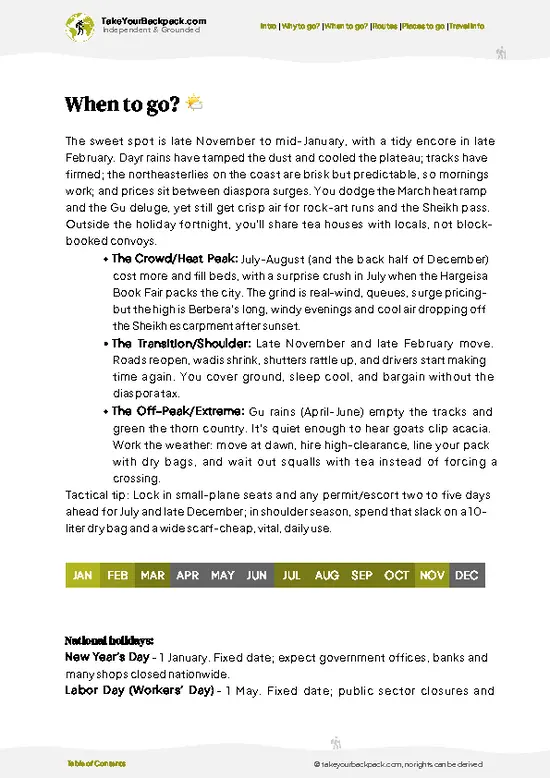
  • Topic: Weather and Temperature - The best time to visit Arba’a Rukun Mosque is between November and February. During these months, temperatures hover around a comfortable 24-28°C (75-82°F). Avoid the scorching heat of March to May when it can spike above 35°C (95°F), making daytime exploration brutal.
  • Topic: Daylight Hours - Daylight is fairly consistent year-round, roughly 11 to 12 hours daily. However, the cooler months offer more pleasant mornings and evenings to explore without the harsh midday sun beating down on you.
  • Topic: Crowds - Expect fewer tourists from June to September, as this coincides with the hotter, less hospitable season. November to February sees a modest uptick, but don’t expect tourist hordes like in more famous global spots. The mosque remains a local hub, so you’ll get
… read more 👉
  • Topic: Weather and Temperature - The best time to visit Arba’a Rukun Mosque is between November and February. During these months, temperatures hover around a comfortable 24-28°C (75-82°F). Avoid the scorching heat of March to May when it can spike above 35°C (95°F), making daytime exploration brutal.
  • Topic: Daylight Hours - Daylight is fairly consistent year-round, roughly 11 to 12 hours daily. However, the cooler months offer more pleasant mornings and evenings to explore without the harsh midday sun beating down on you.
  • Topic: Crowds - Expect fewer tourists from June to September, as this coincides with the hotter, less hospitable season. November to February sees a modest uptick, but don’t expect tourist hordes like in more famous global spots. The mosque remains a local hub, so you’ll get authentic interactions rather than staged experiences.
  • Topic: Seasonal Activities - The cooler months align with local festivals and religious events, which can add a rich cultural layer to your visit. These times offer a chance to witness traditional ceremonies around the mosque, giving you a deeper connection to the place beyond the architecture.
  • Topic: Price Fluctuations - Prices for accommodation and local transport tend to rise slightly during the cooler months due to increased demand. Budget travelers might find better deals in the hotter months but at the cost of comfort and accessibility.
Pro-tip: Aim for late November or early December to catch the sweet spot of mild weather, manageable crowds, and vibrant local life without paying a premium.


source: climatestotravel.comJANJanuary: excellent for travelingFEBFebruary: excellent for travelingMARMarch: fair for travelingAPRApril: fair for travelingMAYMay: fair for travelingJUNJune: good for travelingJULJuly: good for travelingAUGAugust: good for travelingSEPSeptember: good for travelingOCTOctober: highly recommended for travelingNOVNovember: excellent for travelingDECDecember: excellent for traveling
when-to-go

✈️ The backpacker research shortcutSomalia Travel Guide

An offline-friendly backpacking guide with optimized travel routes, ranked highlights, transport advice, and the best areas to stay.
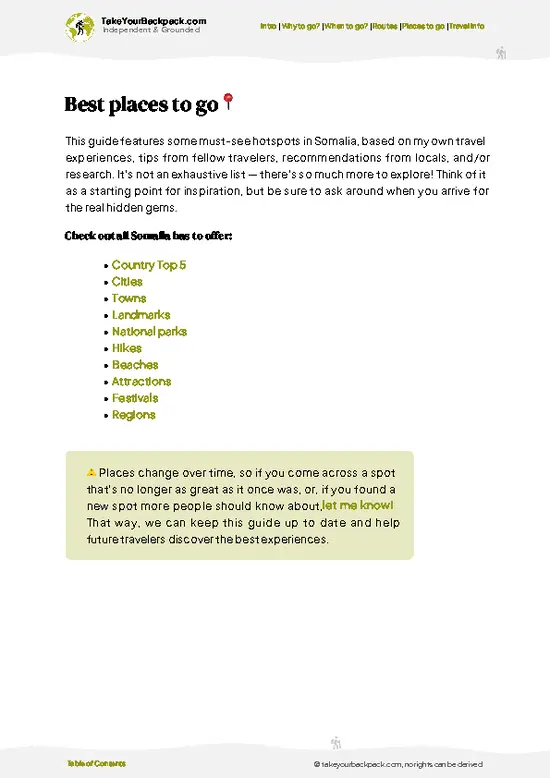
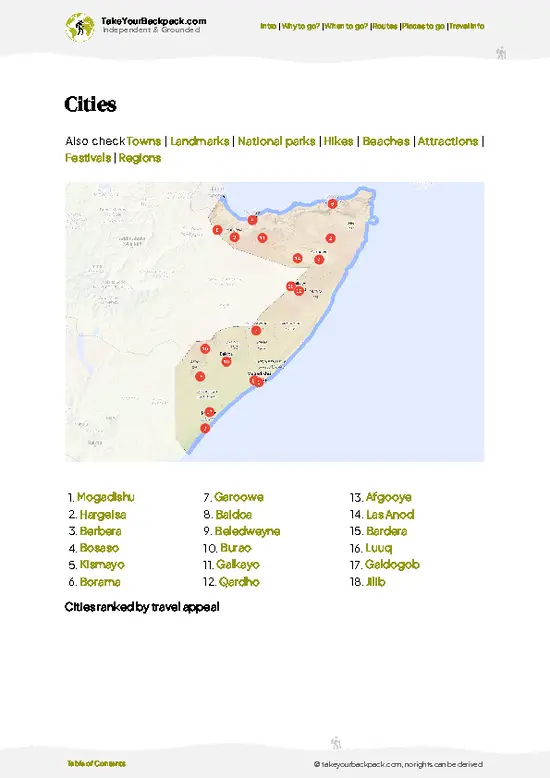
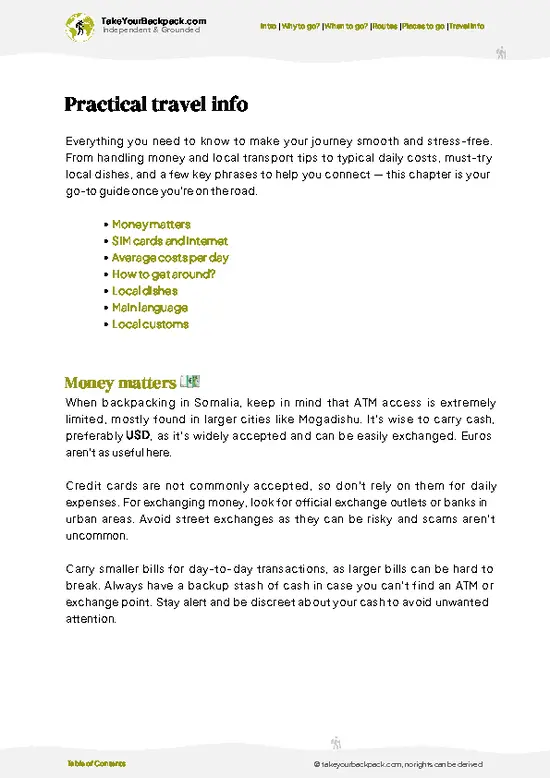
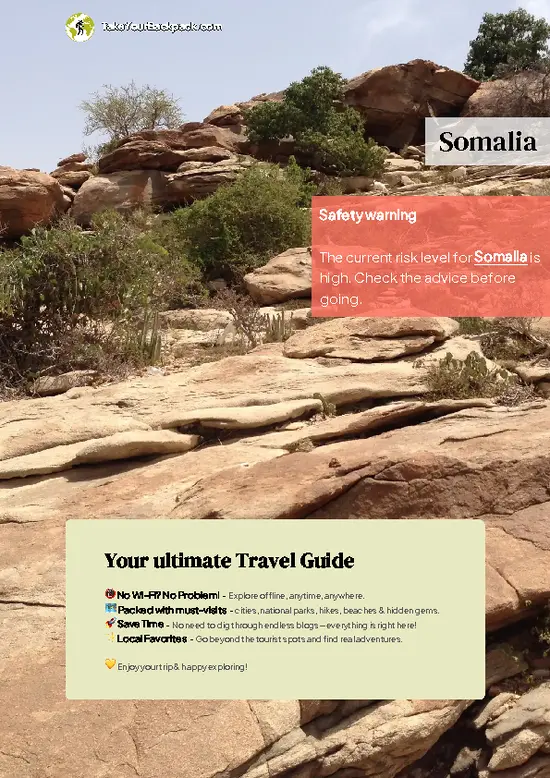
example page 0 from our offline Travel Guide for Somalia
example page 1 from our offline Travel Guide for Somalia
example page 2 from our offline Travel Guide for Somalia
example page 3 from our offline Travel Guide for Somalia
example page 4 from our offline Travel Guide for Somalia
example page 5 from our offline Travel Guide for Somalia
example page 6 from our offline Travel Guide for Somalia
example page 7 from our offline Travel Guide for Somalia
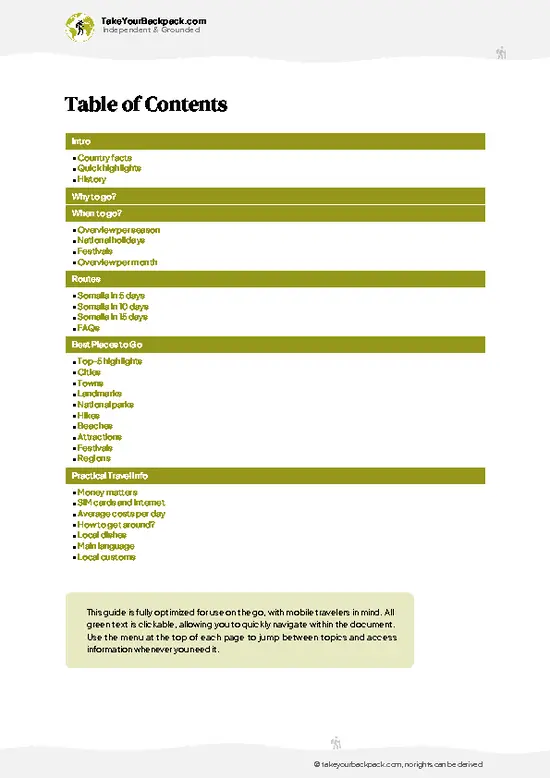
The digital guide (347 pages) contains:
✅ 82 highlights, ranked by travel appeal
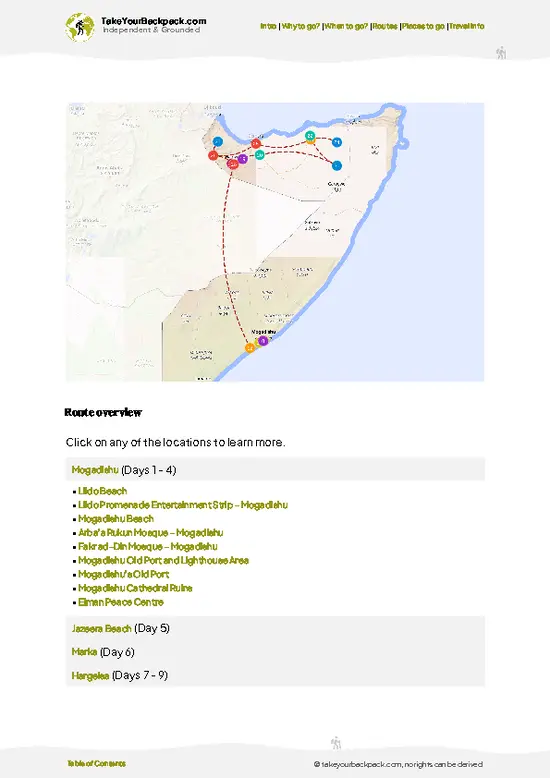
✅ Optimized 5, 10 & 15-day travel routes
✅ Cities, national parks, landmarks, beaches
✅ How to get around
✅ Offline-friendly for travel without Wi-Fi
👉 Click to see all 30+ guide features

📅 Plan smarter in minutes, not weeks
✅ Month by month travel advice
✅ Festivals & national holidays
✅ Budget expectations

🗺️ Go to the right places, skip the overrated ones
✅ Honest pros & cons of destinations
✅ Top hikes, parks & viewpoints
✅ Lesser-known places most travelers miss
✅ Clear “worth it vs skip it” guidance

🛏️ Travel smoothly without rookie mistakes
✅ Best areas to stay
✅ Transport systems explained simply
✅ Common scams & safety advice
✅ SIM cards, money & practical tips

🌍 Understand the country, not just visit it
✅ Culture & traditions
✅ 52 Essential phrases & customs
✅ Festivals worth planning around
✅ Traveler-friendly historical context
✅ Insights that make places more meaningful

📱 Built for real travel conditions
✅ Fully downloadable PDF
✅ Works completely offline
✅ Optimized for phone use
✅ Useful in remote areas & buses
✅ Everything in one place
Save weeks of stressful planning
Get instant access to your full guide. 30‑day money-back guarantee.
+ Add another guide for just

By proceeding you agree to our terms.
Sent to your inbox immediately after payment • 100% Secure Checkout
Best Backpacking Travel Advisor 2025 tourism awardBest Backpacking
Travel Advisor
2025
What others say about Take Your Backpack Guides:
⭐⭐⭐⭐⭐
Fantastic, amazing amount of information!
⭐⭐⭐⭐⭐
My goodness this is amazing, it's what I've been looking for hats off too you!
⭐⭐⭐⭐⭐
I think this is absolutely BRILLIANT
⭐⭐⭐⭐
Very complete and informative. It's still missing places, but I gotta to commend you
⭐⭐⭐⭐⭐
This is truly amazing, thank you, can't wait to explore it with my kids!
⭐⭐⭐⭐⭐
Awesome resource, thank you!
⭐⭐⭐⭐⭐
This is amazing! Can't wait to explore the ones I haven't seen
⭐⭐⭐⭐
I love this! Well done, great idea.
⭐⭐⭐⭐⭐
Thanks for taking the time to make this gem!
⭐⭐⭐⭐⭐
This might be the best website I've ever seen.
⭐⭐⭐⭐⭐
Congratulations, and thank you so much for your work; it's incredibly valuable.
⭐⭐⭐⭐
In all seriousness I think you did a great job pointing out the important spots
⭐⭐⭐⭐⭐
10/10 very good
⭐⭐⭐⭐⭐
As someone who's only just starting to visit regularly this is awesome, thank you.
⭐⭐⭐⭐
Thank you very much! I'm going to visit my dad, it's going to be very useful!
⭐⭐⭐⭐⭐
This is really cool! We'll be travelling for the first time and this definitely come in handy.
⭐⭐⭐⭐⭐
You are now our minister of culture, congratulations 👨‍💼
⭐⭐⭐⭐⭐
Just wanted to tell you that this is a pearl! Going to follow your recommendations.
⭐⭐⭐⭐⭐
This is so cool. I'll definitely be using the resource for my travels soon.
⭐⭐⭐⭐⭐
This is very impressive! Good work.
⭐⭐⭐⭐⭐
This is an amazing and informative site. Very well done!

🛏️ Where to stay?How to pick the right area

The Arba’a Rukun Mosque in Mogadishu is a powerful symbol of the city’s deep history and resilience, but let’s cut through the usual hype: this isn’t a polished tourist hotspot. The reality is, Mogadishu is still shaking off decades of conflict, so safety is a top concern. That means your best bet is to stay in neighborhoods that are not just close to the mosque but also have a visible security presence and a community vibe that feels alive and watchful.

The areas around the mosque, particularly in the Hodan and Wadajir districts, offer the kind of gritty, authentic experience that backpackers … read more 👉
The Arba’a Rukun Mosque in Mogadishu is a powerful symbol of the city’s deep history and resilience, but let’s cut through the usual hype: this isn’t a polished tourist hotspot. The reality is, Mogadishu is still shaking off decades of conflict, so safety is a top concern. That means your best bet is to stay in neighborhoods that are not just close to the mosque but also have a visible security presence and a community vibe that feels alive and watchful.

The areas around the mosque, particularly in the Hodan and Wadajir districts, offer the kind of gritty, authentic experience that backpackers who crave real connection will appreciate. These neighborhoods are where locals live, work, and socialize, so you get a raw, unfiltered look at daily life. It’s not about polished hostels or tourist traps—think guesthouses or small lodges run by families who know the city’s pulse and can offer a safe, welcoming base.

Socializing here means stepping into local cafes or street corners where Somali tea and conversation flow freely. You won’t find crowds of backpackers, but you will find genuine interactions and stories that no Instagram post can capture. The cost? Modest, especially compared to the West, but expect to pay a premium for security and comfort that meets your basic needs. This is a place for travelers who want to see beyond the surface and respect the city’s ongoing story.

👛 Costs (as of 23 September 2026)What things cost and how to budget

As of the most recent estimates, there are no entrance fees or additional costs associated with visiting the Arba'a Rukun Mosque in Mogadishu, Somalia.
⚠️ Prices can change and everyone travels differently, so take this as a rough guide. Hope it helps you plan your adventure!

FAQFrequently asked questions about Arba’a Rukun Mosque – Mogadishu

30 to 45 minutes is sufficient to visit Arba’a Rukun Mosque in Mogadishu. This allows time to appreciate the architecture and the historical significance without rushing. The mosque is relatively compact, so a brief visit is adequate.
Yes, Arba’a Rukun Mosque is worth the entrance fee if you are interested in Islamic architecture and Somali history. The fee is typically low or sometimes waived for locals and tourists, making it an affordable cultural experience. The mosque is one of the oldest in Mogadishu, adding to its value.
You can get to Arba’a Rukun Mosque by taxi or local transport from central Mogadishu. It is located near the city center, approximately 2 kilometers from the main market area. Walking is possible if you are staying nearby, but taxis are the safest and most convenient option.
⚠️ Things can change over time, so always validate details locally before you go.

Other Somali attractions near Arba’a Rukun Mosque – Mogadishu

Explore more nearby:


💡 Not sure where to go next?
Create a personalized itinerary for Somalia including Arba’a Rukun Mosque – Mogadishu and the places that fit your trip.

Generate my itinerary

👉 Discover all attractions

Or checkout all Somalia has to offer (think cities, towns, villages, national parks, hikes, beaches, festivals)
Country photo of Somalia

We 💚 feedbackFinal thoughts on visiting Arba’a Rukun Mosque – Mogadishu

Visiting Arba’a Rukun Mosque isn’t about ticking off a postcard spot—it’s about stepping into a living piece of Mogadishu’s soul. Yes, it’s busy, and the modest entrance fee might catch you off guard, but that’s just the surface. The real magic is in the quiet moments inside, where the call to prayer echoes off ancient walls and the community’s rhythm pulses strong. Don’t expect polished tourist comforts; come ready to absorb history and humanity raw and unfiltered. This place rewards patience and respect with a glimpse of Somalia few outsiders ever see.

✍️ Help improve this page!
The information on this page is based on in-depth research, insights shared by experienced travelers, and feedback from the local travel community in Somalia. While every effort is made to keep the information accurate and current, conditions can change — so if you spot anything incorrect or outdated, please get in touch.


🙋‍♂️ Give feedback

👋 Meet the founderWho’s Behind Take Your Backpack?

Johan, backpacker and founder of TakeYourBackpackHi, I’m Johan (Netherlands 🇳🇱), the creator of TakeYourBackpack. Over the past 3 decades, I’ve backpacked through 90+ countries across six continents, gaining extensive experience with independent travel, long-term trips, and overland routes.

This site is built on a combination of firsthand travel experience and carefully curated insights from other backpackers. Many guides are based on places I’ve personally visited, while others bring together tips, observations, and practical advice shared by trusted travelers I’ve met along the way.

The goal is to provide realistic, experience-driven guidance — not generic itineraries — so you can explore destinations with better context, clearer expectations, and more confidence.

Get full Somalia guide •
Instant download • 82 highlights • Full Offline guide