×

Somalia🇸🇴 | townsDhusamarebcentral crossroads, administrative center, dry savannah | things to do and best time to go

Explore EylExplore Hobyo

Backpacking in Dhusamareb
🏆 Top picktown ranked #8
By Johan Kruseman 🇳🇱 | Updated June 8, 2026

Everyone talks about Dhusamareb as the political heart of central Somalia, but if you’re traveling here, that’s not the reason you’ll remember. What matters more is the way the town slows you down—dusty streets, the scent of cardamom tea drifting from simple cafés, and the low hum of daily life that feels a world away from the chaos of Mogadishu. Dhusamareb sits in the Galguduud region, right in the country’s arid interior, and it’s less a destination for sights than a checkpoint on the overland route north or west. There’s no old city to wander, but the markets are lively, and the evenings are slow—don’t expect a backpacker scene or nightlife, but you might find a conversation over sweet tea if you’re open. Getting here is a test of patience: rough roads, shared minibuses, and checkpoints, but that’s part of the story. It’s safer and calmer than many Somali towns, but still not a place for careless wandering. Compared to Galkayo or Beledweyne, Dhusamareb is quieter, more practical than scenic, and best used as a staging post rather than a highlight. Costs are low, comforts are basic, and the reward is a rare, unfiltered glimpse of Somali life.

Discover everything you want to know in the 📖 Somalia Travel Guide.
Safety warning

The current risk level for Somalia is high. Check the advice before going.


Get your Somalia guide
83 ranked highlights, routes & tips, works offline (354 pages)
Loading the map 🌍
CLICK TO FILTER
cities
towns
landmarks
national parks
hikes
beaches
attractions
festivals
regions
SHOW COUNTRY’S BESTSHOW ALL

✨ Why go?
Ranked #8 town in Somalia
What makes this town worth visiting

Dhusamareb is a strategic waypoint for backpackers exploring Somalia’s rugged beauty. Nestled between the hiking trails of the nearby mountains and the coastal beaches, it offers a unique blend of adventure and culture. The walkable streets are lined with small-scale guesthouses and hostels, where you can easily strike up conversations with fellow travelers or locals over a bowl of spicy camel stew.

Many backpackers stay a few days, soaking in the friendly atmosphere and sharing stories. It’s a place for slow travelers and solo adventurers who appreciate the chance to connect with the community. While the nightlife is low-key, the social vibe is palpable, making it easy to find companions for hikes or cultural excursions.

If you’re looking for a base to explore the surrounding landscapes … read more 👉
Dhusamareb is a strategic waypoint for backpackers exploring Somalia’s rugged beauty. Nestled between the hiking trails of the nearby mountains and the coastal beaches, it offers a unique blend of adventure and culture. The walkable streets are lined with small-scale guesthouses and hostels, where you can easily strike up conversations with fellow travelers or locals over a bowl of spicy camel stew.

Many backpackers stay a few days, soaking in the friendly atmosphere and sharing stories. It’s a place for slow travelers and solo adventurers who appreciate the chance to connect with the community. While the nightlife is low-key, the social vibe is palpable, making it easy to find companions for hikes or cultural excursions.

If you’re looking for a base to explore the surrounding landscapes or simply want to immerse yourself in local life, Dhusamareb is more than just a stop; it’s a gateway to authentic experiences.
Want to include Dhusamareb in your Somalia route?
Create a personalized Somalia itinerary that includes Dhusamareb and the places that fit your trip — based on your travel style, budget, and available time. Get your route in seconds.

Generate my trip

💡 HighlightsTop highlights of Dhusamareb

  • Suuqa Dhexe (Dhusamareb Central Market) — The real heart of the town: stalls of fresh produce, spices, second-hand clothes and local textiles. Great for people-watching, bargaining practice and tasting street snacks while soaking up everyday life.
  • Suq Xoolaha (Livestock Market) — A noisy, aromatic morning scene where camels, goats and sheep change hands. It’s the clearest way to understand the pastoral economy and local rhythms — go early to see the best action.
  • Masjidka Weyn (Main Friday Mosque) — More than architecture: it’s the social pulse on Fridays when sermons, community announcements and meetings happen. Quietly observe (or join respectfully) to feel how religion and civic life intersect here.
  • Galmudug Administrative Complex / Governor’s Compound — The political hub of the region.
read more 👉
  • Suuqa Dhexe (Dhusamareb Central Market) — The real heart of the town: stalls of fresh produce, spices, second-hand clothes and local textiles. Great for people-watching, bargaining practice and tasting street snacks while soaking up everyday life.
  • Suq Xoolaha (Livestock Market) — A noisy, aromatic morning scene where camels, goats and sheep change hands. It’s the clearest way to understand the pastoral economy and local rhythms — go early to see the best action.
  • Masjidka Weyn (Main Friday Mosque) — More than architecture: it’s the social pulse on Fridays when sermons, community announcements and meetings happen. Quietly observe (or join respectfully) to feel how religion and civic life intersect here.
  • Galmudug Administrative Complex / Governor’s Compound — The political hub of the region. Seeing the offices and public noticeboards helps you grasp how local government and clan politics shape everyday decisions in Dhusamareb.
  • Dhusamareb Conference Hall — Where regional reconciliation meetings and civic ceremonies take place. Visiting gives context to recent political processes and offers a chance to catch public events or speeches when they’re on.
  • Dhusamareb Airport (regional airstrip) — Small but functional; it’s the town’s gateway. Even if you’re not flying, the strip and the waiting area show how Dhusamareb connects to the rest of Somalia and humanitarian networks.
  • Garoonka Kubadda (Dhusamareb Stadium) — Local football matches draw big, loud crowds. Watching a game is an instant, joyful introduction to community pride and youth culture here.
  • Xaafadaha Taariikhiga (Old Town neighborhoods) — Narrow lanes, traditional homesteads and community gathering spots. Walk slowly: conversations with elders and housefront scenes tell more about local history than signs ever will.
  • Farsamada Gacanta (Local Crafts & Weavers’ Workshops) — Small workshops and basket/weave sellers near the market produce practical, beautiful items (mats, baskets, simple leatherwork). Buying direct supports families and gets you a genuine souvenir.
  • Goobaha Shaaha (Tea Houses & Roadside Cafés) — Not glamorous, but crucial. These are where elders debate, traders negotiate deals and visitors get invited into conversations over intense Somali tea — the best way to meet people and hear local stories.
A few real, visitable spots outside the city that make easy day trips from Dhusamareb are Cadaado (Adado) for regional markets and local history, Ceel Buur (El Buur) for its quarries and landscape, and Caabudwaaq (Abudwak) for larger trading markets and regional flavor.
Spotted a mistake or missing something? Contact us.

Things to do near Dhusamareb

Ratings based on Tripadvisor reviews. When you book through this link, you support our work at no extra cost to you.

🏘️ NeighborhoodsWhere things are and how it's laid out

Dhusamareb offers a unique blend of culture and community, perfect for the adventurous backpacker. Here’s how to navigate its neighborhoods:

Central Market Area: This is the heartbeat of Dhusamareb. The vibrant market buzzes with life, where you can smell spices and hear the chatter of locals. It’s walkable, making it easy to explore shops and street food stalls. Prices are reasonable, perfect for budget travelers. While nightlife is minimal, the daytime energy is infectious. Ideal for short stays to soak in the local vibe.

Old Town: A quieter, more traditional section, Old Town feels like stepping back in time. The narrow streets are lined with historical buildings, and the atmosphere is serene. It’s less touristy, offering a genuine glimpse into local life. Walkability is decent, but be … read more 👉
Dhusamareb offers a unique blend of culture and community, perfect for the adventurous backpacker. Here’s how to navigate its neighborhoods:

Central Market Area: This is the heartbeat of Dhusamareb. The vibrant market buzzes with life, where you can smell spices and hear the chatter of locals. It’s walkable, making it easy to explore shops and street food stalls. Prices are reasonable, perfect for budget travelers. While nightlife is minimal, the daytime energy is infectious. Ideal for short stays to soak in the local vibe.

Old Town: A quieter, more traditional section, Old Town feels like stepping back in time. The narrow streets are lined with historical buildings, and the atmosphere is serene. It’s less touristy, offering a genuine glimpse into local life. Walkability is decent, but be prepared for some uneven paths. Great for longer stays if you want to immerse yourself in the culture.

Residential District: This area is more laid-back, with a mix of locals and a few guesthouses. It’s a bit farther from the main attractions, but the peace is worth it. Transport options are available, though not as frequent. Perfect for those seeking a longer retreat away from the hustle, with a chance to connect with residents.

⌛️ 1 dayWhat you can realistically do in a day

Dhusamareb, Somalia, is a town that pulses with life and resilience. It’s a place where the scent of spices wafts through the air, mingling with the earthy aroma of the surrounding landscape. The vibrant markets and the warm smiles of locals create an atmosphere that feels both welcoming and authentic.

Start your morning at the bustling local market, known as Suuq. The sun casts a golden hue over the stalls, illuminating fresh produce and handmade crafts. Engage with vendors; their stories are as rich as the spices they sell. Grab a breakfast of sambusa—savory pastries filled with meat or vegetables—paired with sweet Somali tea. This isn’t just a meal; it’s a taste of community.

In the afternoon, head towards the historic district. The architecture tells tales of the past, with buildings … read more 👉
Dhusamareb, Somalia, is a town that pulses with life and resilience. It’s a place where the scent of spices wafts through the air, mingling with the earthy aroma of the surrounding landscape. The vibrant markets and the warm smiles of locals create an atmosphere that feels both welcoming and authentic.

Start your morning at the bustling local market, known as Suuq. The sun casts a golden hue over the stalls, illuminating fresh produce and handmade crafts. Engage with vendors; their stories are as rich as the spices they sell. Grab a breakfast of sambusa—savory pastries filled with meat or vegetables—paired with sweet Somali tea. This isn’t just a meal; it’s a taste of community.

In the afternoon, head towards the historic district. The architecture tells tales of the past, with buildings that have weathered the sands of time. Visit the local mosque, where the intricate designs and peaceful ambiance invite reflection. For a unique experience, venture to the outskirts of town to explore the ancient rock art at Laas Geel. It’s a bit off the beaten path, but the vibrant petroglyphs are a testament to the region’s rich history.

As evening descends, return to the heart of Dhusamareb. The streets come alive with laughter and chatter. Find a local eatery and savor a dinner of camel meat stew, a dish that embodies the flavors of the region. The day winds down with the sounds of traditional music echoing in the background, wrapping you in the warmth of Somali culture.

This day in Dhusamareb isn’t just about seeing; it’s about feeling the pulse of a town that thrives on connection and history.
Turn your Dhusamareb visit into an Somalia adventure
Build a complete Somalia route with Dhusamareb, hidden gems, must-see destinations, and realistic travel times included.

Generate my trip

🌤️ When to go?Choosing the right time of year


  • Topic: Weather – Dhusamareb bakes under a hot semi-arid climate. The best window is between November and February when temperatures dip to a manageable 22–28°C (72–82°F). Outside this, expect relentless heat that can sap your energy before you even lace your boots.

  • Topic: Temperature – Daytime highs can soar above 35°C (95°F) from March to October, making midday trekking brutal. Nights cool off but not enough to fully shake the heat. Early dry season mornings offer the most comfortable start.

  • Topic: Daylight Hours – Near the equator, daylight stays steady around 12 hours year-round. This means you can plan your hikes without worrying about shrinking daylight, but start early to avoid the afternoon scorch.

  • Topic: Crowds – Dhusamareb isn’t a tourist hotspot, so crowds are minimal year-round.
read more 👉

  • Topic: Weather – Dhusamareb bakes under a hot semi-arid climate. The best window is between November and February when temperatures dip to a manageable 22–28°C (72–82°F). Outside this, expect relentless heat that can sap your energy before you even lace your boots.

  • Topic: Temperature – Daytime highs can soar above 35°C (95°F) from March to October, making midday trekking brutal. Nights cool off but not enough to fully shake the heat. Early dry season mornings offer the most comfortable start.

  • Topic: Daylight Hours – Near the equator, daylight stays steady around 12 hours year-round. This means you can plan your hikes without worrying about shrinking daylight, but start early to avoid the afternoon scorch.

  • Topic: Crowds – Dhusamareb isn’t a tourist hotspot, so crowds are minimal year-round. However, local market days and festivals in the cooler months bring a lively buzz, perfect for cultural immersion without the tourist crush.

  • Topic: Seasonal Activities – Cooler months coincide with camel races and traditional gatherings, offering a rare glimpse into Somali pastoral life. Timing your visit here means more than just tolerable weather; it’s about catching the town’s pulse.

  • Topic: Price Fluctuations – Prices for lodging and guides remain stable due to low tourism volume but expect slight hikes during festival seasons when demand spikes locally.


Pro-tip: Aim for late November to early February—cooler temps, vibrant local life, and manageable prices combine to make your Dhusamareb experience both comfortable and rich.


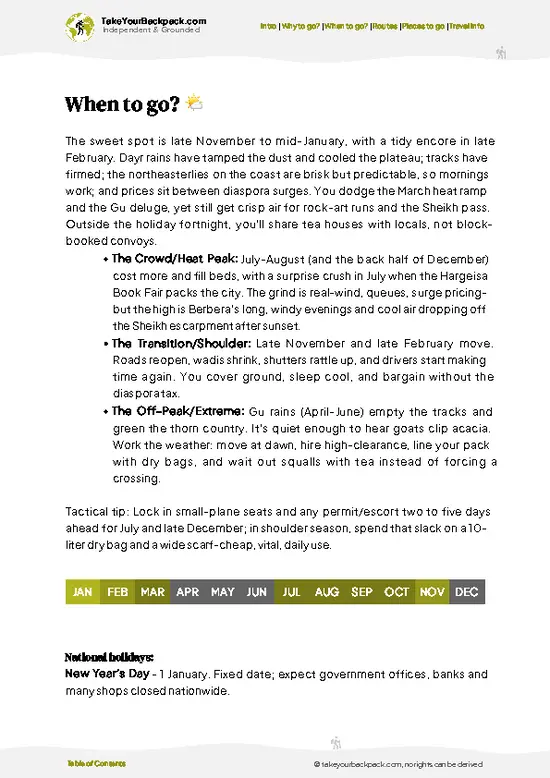
source: climatestotravel.comJANJanuary: excellent for travelingFEBFebruary: excellent for travelingMARMarch: fair for travelingAPRApril: fair for travelingMAYMay: fair for travelingJUNJune: fair for travelingJULJuly: fair for travelingAUGAugust: fair for travelingSEPSeptember: fair for travelingOCTOctober: fair for travelingNOVNovember: highly recommended for travelingDECDecember: excellent for traveling
when-to-go

✈️ The backpacker research shortcutSomalia Travel Guide

An offline-friendly backpacking guide with optimized travel routes, ranked highlights, transport advice, and the best areas to stay.
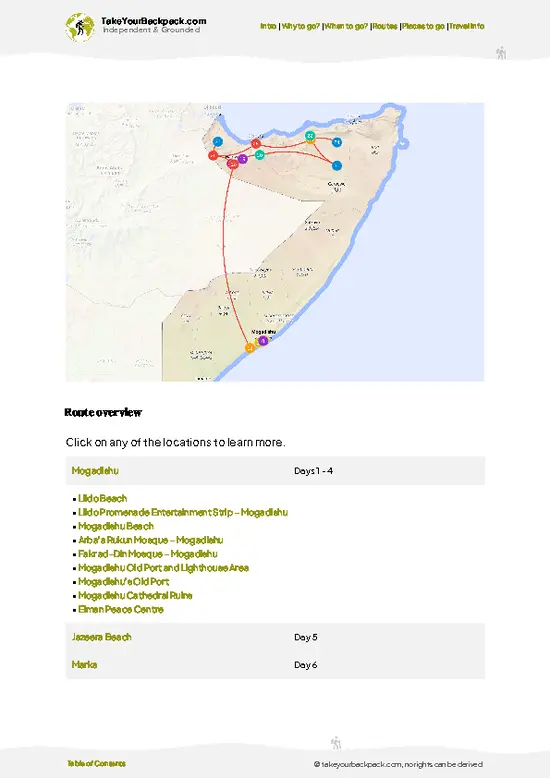
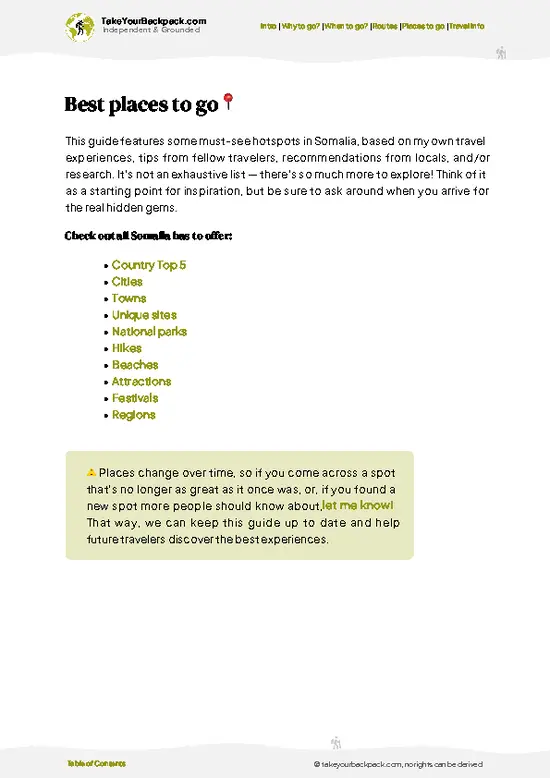
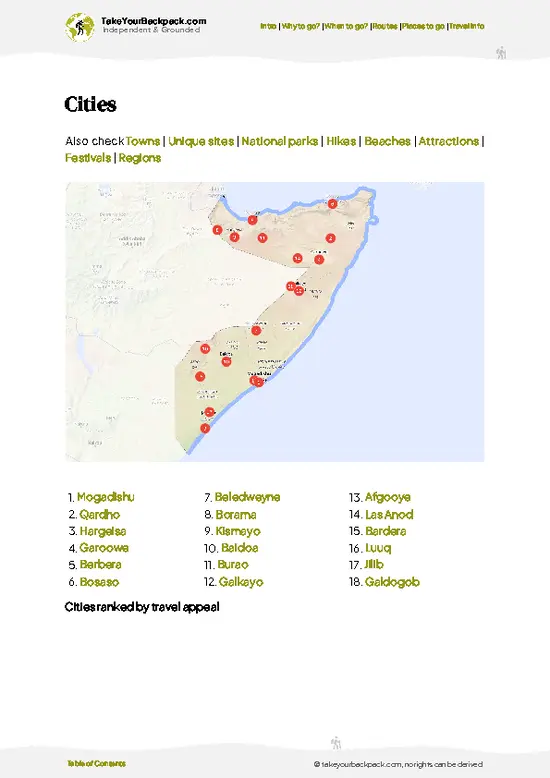
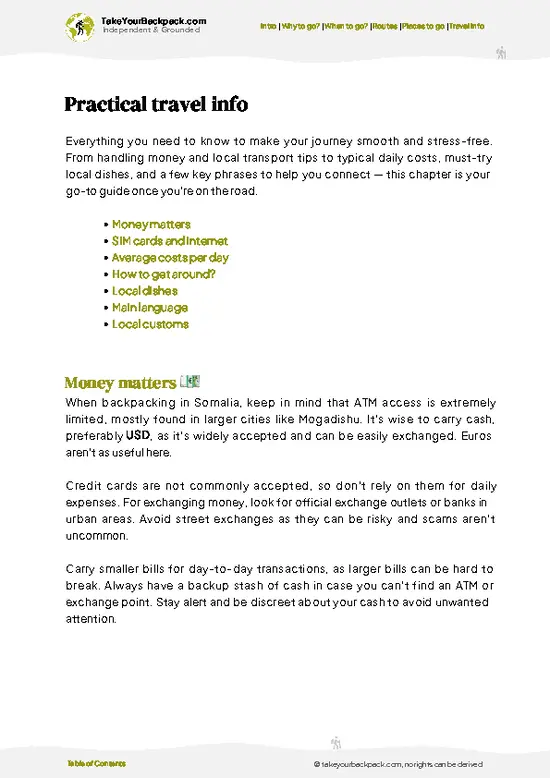
example page 0 from our offline Travel Guide for Somalia
example page 1 from our offline Travel Guide for Somalia
example page 2 from our offline Travel Guide for Somalia
example page 3 from our offline Travel Guide for Somalia
example page 4 from our offline Travel Guide for Somalia
example page 5 from our offline Travel Guide for Somalia
example page 6 from our offline Travel Guide for Somalia
example page 7 from our offline Travel Guide for Somalia
The digital guide (354 pages) contains:
83 highlights, ranked by travel appeal
Optimized 5, 10 & 15-day travel routes
Cities, national parks, landmarks, beaches
How to get around
Offline-friendly for travel without Wi-Fi
👉 Click to see all 30+ guide features

📅 Plan smarter in minutes, not weeks
Month by month travel advice
Festivals & national holidays
Budget expectations

🗺️ Go to the right places, skip the overrated ones
Honest pros & cons of destinations
Top hikes, parks & viewpoints
Lesser-known places most travelers miss
Clear “worth it vs skip it” guidance

🛏️ Travel smoothly without rookie mistakes
Best areas to stay
Transport systems explained simply
Common scams & safety advice
SIM cards, money & practical tips

🌍 Understand the country, not just visit it
Culture & traditions
52 Essential phrases & customs
Festivals worth planning around
Traveler-friendly historical context
Insights that make places more meaningful

📱 Built for real travel conditions
Fully downloadable PDF
Works completely offline
Optimized for phone use
Useful in remote areas & buses
Everything in one place
Save weeks of stressful planning
Get instant access to your full guide. 30‑day money-back guarantee.


By proceeding you agree to our terms.
Sent to your inbox immediately after payment • 100% Secure Checkout
Best Backpacking Travel Advisor 2025 tourism awardBest Backpacking
Travel Advisor
2025
What others say about Take Your Backpack Guides:
⭐⭐⭐⭐⭐
Fantastic, amazing amount of information!
⭐⭐⭐⭐⭐
My goodness this is amazing, it's what I've been looking for hats off too you!
⭐⭐⭐⭐⭐
I think this is absolutely BRILLIANT
⭐⭐⭐⭐
Very complete and informative. It's still missing places, but I gotta to commend you
⭐⭐⭐⭐⭐
This is truly amazing, thank you, can't wait to explore it with my kids!
⭐⭐⭐⭐⭐
Awesome resource, thank you!
⭐⭐⭐⭐⭐
This is amazing! Can't wait to explore the ones I haven't seen
⭐⭐⭐⭐
I love this! Well done, great idea.
⭐⭐⭐⭐⭐
Thanks for taking the time to make this gem!
⭐⭐⭐⭐⭐
This might be the best website I've ever seen.
⭐⭐⭐⭐⭐
Congratulations, and thank you so much for your work; it's incredibly valuable.
⭐⭐⭐⭐
In all seriousness I think you did a great job pointing out the important spots
⭐⭐⭐⭐⭐
10/10 very good
⭐⭐⭐⭐⭐
As someone who's only just starting to visit regularly this is awesome, thank you.
⭐⭐⭐⭐
Thank you very much! I'm going to visit my dad, it's going to be very useful!
⭐⭐⭐⭐⭐
This is really cool! We'll be travelling for the first time and this definitely come in handy.
⭐⭐⭐⭐⭐
You are now our minister of culture, congratulations 👨‍💼
⭐⭐⭐⭐⭐
Just wanted to tell you that this is a pearl! Going to follow your recommendations.
⭐⭐⭐⭐⭐
This is so cool. I'll definitely be using the resource for my travels soon.
⭐⭐⭐⭐⭐
This is very impressive! Good work.
⭐⭐⭐⭐⭐
This is an amazing and informative site. Very well done!

🛏️ Where to stay?Where staying makes the most sense

In Dhusamareb, the heart of the city pulses strongest around the central market district. This area is your best bet for backpackers craving safety and social energy. The streets here are alive with vendors selling fresh spices and roasted coffee beans, the air thick with the scent of earth and smoke. It’s where locals gather, making it easier to strike up conversations and get a real feel for daily life. Compared to the quieter, more residential outskirts, this neighborhood offers a natural rhythm that keeps you connected without feeling overwhelmed.

Hostel options are limited but tend to cluster … read more 👉
In Dhusamareb, the heart of the city pulses strongest around the central market district. This area is your best bet for backpackers craving safety and social energy. The streets here are alive with vendors selling fresh spices and roasted coffee beans, the air thick with the scent of earth and smoke. It’s where locals gather, making it easier to strike up conversations and get a real feel for daily life. Compared to the quieter, more residential outskirts, this neighborhood offers a natural rhythm that keeps you connected without feeling overwhelmed.

Hostel options are limited but tend to cluster near this central hub, offering basic, clean accommodations that prioritize security and communal spaces. Staying here means you’re never far from a shared meal or a chance encounter with fellow travelers or friendly locals. Other parts of Dhusamareb can feel isolated or less secure after dark, so anchoring yourself near the market district isn’t just about convenience—it’s about tapping into the city’s pulse while keeping your experience grounded and safe.

🚌 Getting aroundHow to get from A to B

Dhusamareb moves at the pace of the sun—steady, deliberate, and shaped by the rhythms of daily life rather than strict timetables. The air carries the dry scent of acacia and dust, stirred by the occasional breeze that cools the heat of midday. Streets aren’t lined with schedules but with people who know the pulse of the town by instinct. Here, transit isn’t about precision; it’s about reading the flow, catching the right moment, and blending into the local tempo. The town’s layout encourages walking, but when you need to cover ground, a handful of practical options keep you moving without draining your wallet.


  • Walking: The most reliable way to navigate Dhusamareb’s compact center. Streets are unpaved but manageable, with the sun casting sharp shadows through sparse trees. Walking lets
read more 👉
Dhusamareb moves at the pace of the sun—steady, deliberate, and shaped by the rhythms of daily life rather than strict timetables. The air carries the dry scent of acacia and dust, stirred by the occasional breeze that cools the heat of midday. Streets aren’t lined with schedules but with people who know the pulse of the town by instinct. Here, transit isn’t about precision; it’s about reading the flow, catching the right moment, and blending into the local tempo. The town’s layout encourages walking, but when you need to cover ground, a handful of practical options keep you moving without draining your wallet.


  • Walking: The most reliable way to navigate Dhusamareb’s compact center. Streets are unpaved but manageable, with the sun casting sharp shadows through sparse trees. Walking lets you absorb the town’s texture—the chatter of vendors, the scent of fresh bread, and the occasional bleat of goats. No cost, full control, and the best way to discover tucked-away corners.


  • Shared Minibuses: These are the backbone of local transit, running from early morning around 7 AM until dusk near 6 PM. They follow loose routes connecting neighborhoods and the outskirts. Expect a bumpy ride on dusty roads, but fares are low—usually under $1. The minibuses fill up fast, so timing your departure with the crowd is key to snagging a seat.


  • Motorcycle Taxis (Boda-bodas): When time is tight or the sun is relentless, boda-bodas offer a quick, nimble alternative. Prices vary but generally hover around $1 to $2 for short hops. Drivers weave through narrow alleys and uneven terrain, cutting travel time in half compared to walking. Helmets aren’t guaranteed, so hold on tight and embrace the rawness of the ride.


  • Private Car Hire: For longer trips outside town or when comfort matters, private cars can be arranged through local contacts or guesthouses. Rates start around $30 per day, negotiable depending on distance and duration. This option offers shade, speed, and a buffer from the dust, but it’s a splurge compared to other modes.

👛 Costs (as of 5 April 2026)Typical daily expenses

Backpacking in Dhusamareb, Somalia, demands a clear grasp of local costs to navigate the town smoothly without surprises. Here’s what you can expect day-to-day:
  • Dorm Accommodation: Options are limited and basic, often in guesthouses rather than formal hostels. Expect to pay around $10 to $20 per night. These places provide a simple bed and shared facilities, with minimal frills but enough to rest after a day in the sun-soaked streets.
  • Meals: Food is straightforward and hearty, with local staples like rice, beans, and goat meat. Street food or small eateries will cost you about $3 to $7 per meal. Fresh fruit and tea are common, and the flavors are earthy and direct, reflecting the region’s arid climate.
  • Local Transport: Transport is mostly informal—shared taxis or minibuses. A typical short
read more 👉
Backpacking in Dhusamareb, Somalia, demands a clear grasp of local costs to navigate the town smoothly without surprises. Here’s what you can expect day-to-day:
  • Dorm Accommodation: Options are limited and basic, often in guesthouses rather than formal hostels. Expect to pay around $10 to $20 per night. These places provide a simple bed and shared facilities, with minimal frills but enough to rest after a day in the sun-soaked streets.
  • Meals: Food is straightforward and hearty, with local staples like rice, beans, and goat meat. Street food or small eateries will cost you about $3 to $7 per meal. Fresh fruit and tea are common, and the flavors are earthy and direct, reflecting the region’s arid climate.
  • Local Transport: Transport is mostly informal—shared taxis or minibuses. A typical short ride within town runs about $1 to $3. The roads are dusty, and vehicles are often older models, so expect a bumpy but authentic ride through the town’s lively, sunlit lanes.
  • Basic Activities/Entry Fees: Dhusamareb is more about absorbing the atmosphere than ticketed attractions. If you visit local markets or cultural spots, entry is usually free or minimal, around $1 to $2 if any fee applies. The real draw is the experience of daily life and the open-air markets.
  • Miscellaneous Expenses: This covers bottled water, snacks, phone credit, and occasional tips. Budget around $2 to $5 daily. Water is essential in the dry heat, and staying hydrated is non-negotiable.

All told, a realistic daily budget for backpacking in Dhusamareb falls between $20 and $40. This range balances basic comfort with the raw, unfiltered experience of a town where infrastructure is sparse but the cultural texture is rich. Planning with these figures in mind keeps you prepared and lets you focus on the unique rhythms of this Somali town.
⚠️ Prices can change and everyone travels differently, so take this as a rough guide. Hope it helps you plan your adventure!

🚌 Day tripsBest day trips from Dhusamareb

Dhusamareb, Somalia, is a vibrant hub for backpackers eager to explore the rich landscapes and cultures nearby. With its bustling markets and friendly locals, it’s the perfect launchpad for unforgettable day trips.

Trip to El Bur
Just a short drive from Dhusamareb, El Bur offers a glimpse into the heart of Somali culture. The journey takes about an hour, winding through arid landscapes dotted with acacia trees. Once there, you can wander the ancient ruins and soak in the local life. The scent of spices wafts from street vendors, inviting you to sample traditional dishes. Expect to spend around $10 for transport and food. The best time to visit is during the cooler months, from November to February. A common mistake is underestimating the heat; bring plenty of water and a hat to stay comfortable. … read more 👉
Dhusamareb, Somalia, is a vibrant hub for backpackers eager to explore the rich landscapes and cultures nearby. With its bustling markets and friendly locals, it’s the perfect launchpad for unforgettable day trips.

Trip to El Bur
Just a short drive from Dhusamareb, El Bur offers a glimpse into the heart of Somali culture. The journey takes about an hour, winding through arid landscapes dotted with acacia trees. Once there, you can wander the ancient ruins and soak in the local life. The scent of spices wafts from street vendors, inviting you to sample traditional dishes. Expect to spend around $10 for transport and food. The best time to visit is during the cooler months, from November to February. A common mistake is underestimating the heat; bring plenty of water and a hat to stay comfortable.
👉 Explore El Bur

Trip to the Shabelle River
A trip to the Shabelle River is a must for nature lovers. It’s about a 45-minute drive, and the scenery shifts to lush greenery as you approach. Here, you can relax by the water, watch fishermen at work, or even join in if you’re feeling adventurous. The total cost is around $15, including transport and snacks. The river is best visited in the early morning for cooler temperatures and stunning sunrises. Many first-timers forget to bring insect repellent, so pack some to avoid pesky bites.


Trip to the Gedo Region
For those seeking a bit more adventure, head to the Gedo Region, roughly two hours from Dhusamareb. This area is known for its dramatic landscapes and rich wildlife. You can hike through rugged terrain, spotting unique flora and fauna along the way. Budget around $20 for transport and a packed lunch. The ideal time to go is during the dry season, from June to September. A common pitfall is not checking local conditions; always ask locals about the best routes before heading out.
Want to know what more Somalia offers?
The Somalia Travel Guide describes 83 highlights, from cities to national parks, from beaches to hikes

Get the Travel Guide -

🛡️ SafetySafety Tips and Common Scams in Dhusamareb

Dhusamareb is generally safe, but staying aware is key. The bustling market area can be lively, and while the atmosphere is friendly, it’s wise to keep your belongings close. Solo travelers should avoid wandering too far after dark; the streets can feel different at night, and it’s best to stick to well-lit areas.

Common scams are rare, but be cautious of overly eager guides who may offer services that aren’t necessary. A polite “no, thank you” usually suffices. Everyday annoyances might include occasional power outages or slow internet, so patience is your best friend. Embrace the rhythm of the town, engage with locals, and you’ll find that the small challenges only add to the experience.

Other Somali towns near Dhusamareb

Explore more nearby:

  • El Bur—limestone hills, traditional wells, rural isolation| 98 km away
  • Harardhere—remote coastline, sandy tracks, fishing outpost| 190 km away
  • Hobyo—sandy coastline, old fort ruins, remote outpost| 238 km away

💡 Not sure where to go next?
Create a personalized itinerary for Somalia including Dhusamareb and the places that fit your trip.

Generate my itinerary

👉 Discover all towns

Or checkout all Somalia has to offer (think cities, towns, villages, national parks, hikes, beaches, festivals)
Country photo of Somalia

We 💚 feedbackIs it worth it?

Dhusamareb pulses with a raw energy that’s hard to shake off. The scent of spiced tea wafts through the air, mingling with the chatter of locals who are genuinely curious about your presence. Expect some bumps—literally and figuratively—on the roads, but that’s part of the charm. The best surprise? The warmth of the community. Embrace it, and you’ll leave with stories that linger long after you’ve returned home.

✍️ Help improve this page!
The information on this page is based on in-depth research, insights shared by experienced travelers, and feedback from the local travel community in Somalia. While every effort is made to keep the information accurate and current, conditions can change — so if you spot anything incorrect or outdated, please get in touch.


🙋‍♂️ Give feedback

👋 Meet the founderWho’s Behind Take Your Backpack?

Johan, backpacker and founder of TakeYourBackpackHi, I’m Johan (Netherlands 🇳🇱), the creator of TakeYourBackpack. Over the past decade, I’ve backpacked through 80+ countries across six continents, gaining extensive experience with independent travel, long-term trips, and overland routes.

This site is built on a combination of firsthand travel experience and carefully curated insights from other backpackers. Many guides are based on places I’ve personally visited, while others bring together tips, observations, and practical advice shared by trusted travelers I’ve met along the way.

The goal is to provide realistic, experience-driven guidance — not generic itineraries — so you can explore destinations with better context, clearer expectations, and more confidence.

Get full Somalia guide •
Instant download • 83 highlights • Full Offline guide