×

Somalia🇸🇴 | citiesGalkayoPuntland-Galmudug divide, truck traffic, camel-milk stalls, evening tea talk | things to do and best time to go

Explore BuraoExplore Qardho

Backpacking in Galkayo
👍 Recommendedcity ranked #11
By Johan Kruseman 🇳🇱 | Updated November 1, 2026

Galkayo suits experienced, independent travelers with a real interest in Somali life, regional politics and trade, and people who already have local contacts. Anyone wanting hostels, sightseeing lists or easy independent wandering will find it less rewarding, because there is no tourism infrastructure and little to tick off. The city sits in central Somalia, split between Puntland in the north and Galmudug in the south. That division is why two administrations, two security setups and two sets of rules exist. Go with a trusted local host or contact who can arrange movement and lodging, rather than turning up cold. Spend time on the markets and tea houses, skip anything that needs a guidebook.

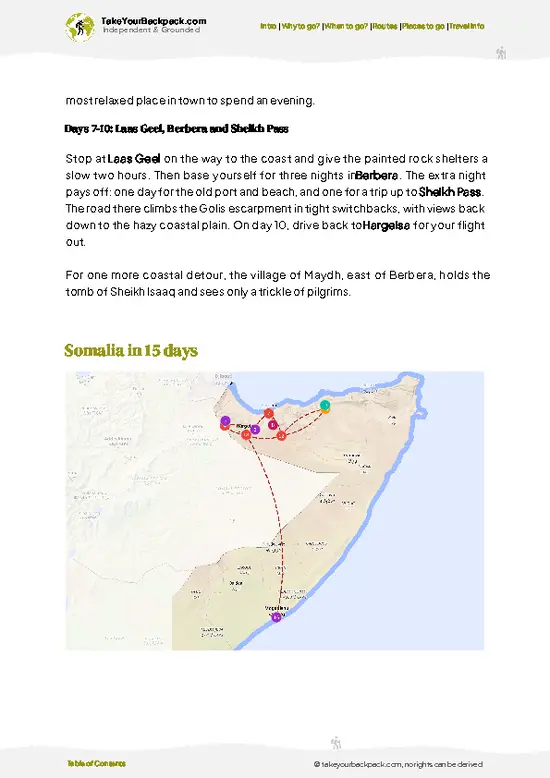
Part of Backpacking in Somalia: all 68 places on one map, with routes and the best time to go.
Discover everything you want to know in the 📖 Somalia Travel Guide.
Safety warning

The current risk level for Somalia is high. Check the advice before going.


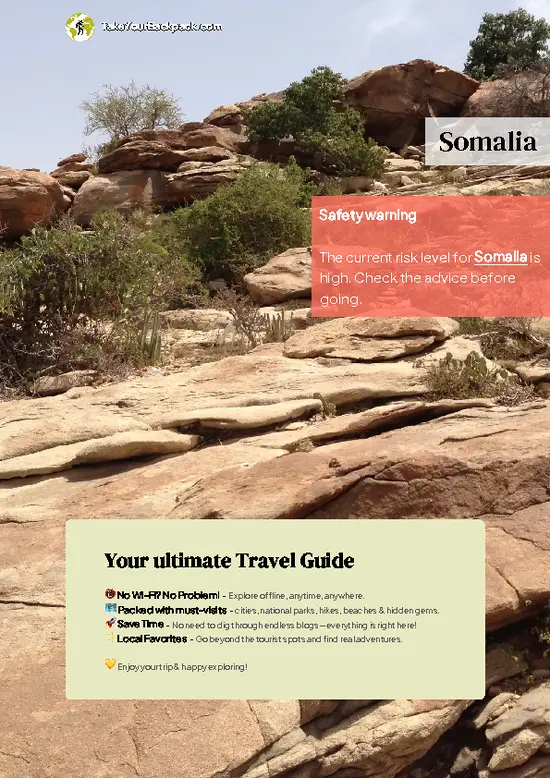
example page 0 from our offline Travel Guide for Somalia
example page 1 from our offline Travel Guide for Somalia
example page 2 from our offline Travel Guide for Somalia
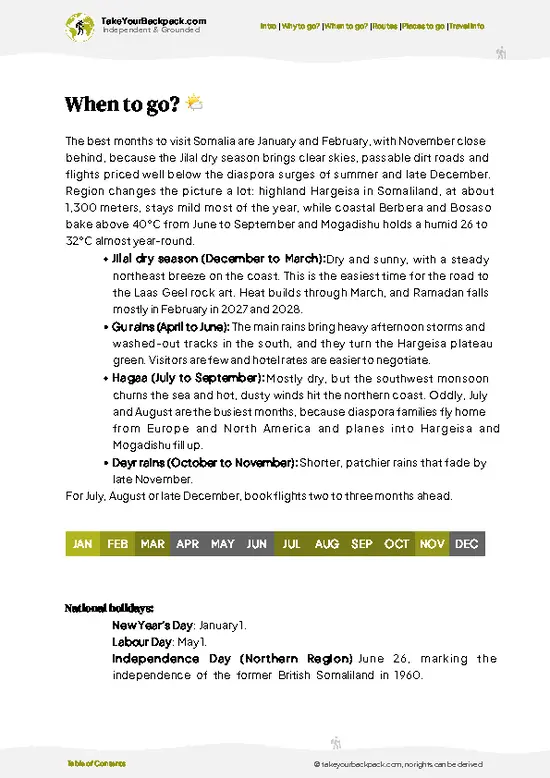
example page 3 from our offline Travel Guide for Somalia
example page 4 from our offline Travel Guide for Somalia
example page 5 from our offline Travel Guide for Somalia
example page 6 from our offline Travel Guide for Somalia
example page 7 from our offline Travel Guide for Somalia
Loading the map 🌍
CLICK TO FILTER
cities
towns
landmarks
national parks
hikes
beaches
attractions
festivals
regions
SHOW COUNTRY’S BESTSHOW ALL

✨ Why go?
Ranked #11 city in Somalia
Why visitors keep coming back

Galkayo is a working crossroads, not a sightseeing stop, and that is the reason to come. The city is divided into a northern half in Puntland and a southern half in Galmudug, so you can learn more about how modern Somalia is stitched together here than in many larger cities. It is a livestock and trading hub, so the markets, the tea houses and the long conversations with traders are the main activity. Accommodation is a handful of hotels rather than hostels, and a local host matters far more than any listing. As a stop on a route between Garowe and the south, or toward Ethiopia, Galkayo is a practical pause, best kept to a short, well-arranged visit.

💡 HighlightsTop highlights of Galkayo

  1. The north-south dividing line: the city is split between Puntland and Galmudug, and crossing the line shows two administrations, two flags and two checkpoint cultures within minutes. Go in daylight with a local guide. Free, 1 hour.
  2. Livestock market: goats, sheep and camels are traded for export across the region, and the trading is loud and fast. Mornings are best, before the heat. Free to look, 1 to 2 hours, and ask before photographing anyone.
  3. Main town market: stalls sell fabric, spices, camel milk, sandals and phone credit. Late afternoon is lively once the heat eases. Free, 1 to 2 hours, small purchases US$1 to 5.
  4. Tea houses: sweet spiced Somali tea and talk about trade, politics and the drought. Evenings are the social peak. Tea costs about US$0.50 to 1, and an hour is plenty.
  5. Galkayo Airport
… read more 👉
  1. The north-south dividing line: the city is split between Puntland and Galmudug, and crossing the line shows two administrations, two flags and two checkpoint cultures within minutes. Go in daylight with a local guide. Free, 1 hour.
  2. Livestock market: goats, sheep and camels are traded for export across the region, and the trading is loud and fast. Mornings are best, before the heat. Free to look, 1 to 2 hours, and ask before photographing anyone.
  3. Main town market: stalls sell fabric, spices, camel milk, sandals and phone credit. Late afternoon is lively once the heat eases. Free, 1 to 2 hours, small purchases US$1 to 5.
  4. Tea houses: sweet spiced Somali tea and talk about trade, politics and the drought. Evenings are the social peak. Tea costs about US$0.50 to 1, and an hour is plenty.
  5. Galkayo Airport area and the main road: watching the traffic of trucks and minibuses shows how goods move across central Somalia. Mornings are quietest. Free, 30 minutes, and only with a local host.
  6. Local mosques: the city has several large mosques with distinctive Somali architecture. Visit outside prayer times and ask first. Free, 20 to 30 minutes, dress modestly.
Galkayo is a base for trips toward Hobyo and the central coast, Garowe and the Nugaal valley, though all need serious local arrangements. None of the items above needs a ticket or advance booking, but a local guide should be arranged before arrival.
Spotted a mistake or missing something? Contact us.

🏘️ NeighborhoodsHow different areas shape the experience

Galkayo is split in two by the Puntland and Galmudug administrations, and the city layout follows that line, so learn the halves before you walk anywhere.
  • North Galkayo (Puntland side): Calmer, more orderly and the better base for visitors. Wide streets, tea shops, shawarma and grilled fish counters, and shops selling camel milk. It is walkable in daylight, but distances stretch in the heat, so take a short ride for anything beyond 1 km.
  • South Galkayo (Galmudug side): Livelier and more crowded, with bigger markets for livestock, fabric and phone credit. Worth an hour to watch trading, not worth a long wander. Go with a local contact, since security is less predictable.
  • The dividing road area: Commonly called the green line zone. There are no sights, so skip it unless you are crossing between
… read more 👉
Galkayo is split in two by the Puntland and Galmudug administrations, and the city layout follows that line, so learn the halves before you walk anywhere.
  • North Galkayo (Puntland side): Calmer, more orderly and the better base for visitors. Wide streets, tea shops, shawarma and grilled fish counters, and shops selling camel milk. It is walkable in daylight, but distances stretch in the heat, so take a short ride for anything beyond 1 km.
  • South Galkayo (Galmudug side): Livelier and more crowded, with bigger markets for livestock, fabric and phone credit. Worth an hour to watch trading, not worth a long wander. Go with a local contact, since security is less predictable.
  • The dividing road area: Commonly called the green line zone. There are no sights, so skip it unless you are crossing between halves, and cross in daytime only.
  • Airport and outskirts: Flat, dusty and spread out. Nothing to see, and you need a vehicle to reach it.

⌛️ 1 dayHow to make the most of one day

8:00 AM: Local tea house Start here because it is the best place to meet people, hear the day's news and confirm your plans with your host. Order sweet tea and breakfast, then walk to the market.
9:30 AM: Livestock market Watch traders negotiate over goats and camels while the morning is still cool. Keep your camera away unless someone agrees. Move on by car or short ride when you feel done.
11:30 AM: Main town market Browse cloth, spices and everyday goods, and buy a small item such as camel milk or a scarf. This is where you get a feel for local prices and daily life.
1:00 PM: Lunch Eat rice with goat meat or fish at a local restaurant, and rest during the heat.
3:30 PM: The dividing line With your guide, cross between the Puntland and Galmudug sides. It is rarely on any itinerary, yet it explains … read more 👉
8:00 AM: Local tea house Start here because it is the best place to meet people, hear the day's news and confirm your plans with your host. Order sweet tea and breakfast, then walk to the market.
9:30 AM: Livestock market Watch traders negotiate over goats and camels while the morning is still cool. Keep your camera away unless someone agrees. Move on by car or short ride when you feel done.
11:30 AM: Main town market Browse cloth, spices and everyday goods, and buy a small item such as camel milk or a scarf. This is where you get a feel for local prices and daily life.
1:00 PM: Lunch Eat rice with goat meat or fish at a local restaurant, and rest during the heat.
3:30 PM: The dividing line With your guide, cross between the Puntland and Galmudug sides. It is rarely on any itinerary, yet it explains the city better than any monument. Keep it short and respectful.
5:30 PM: Mosque and neighborhood stroll Walk a calm residential area as the light softens, then return to a tea house.

🌤️ When to go?Seasonal considerations and timing

Galkayo is hot and dry for most of the year, so timing is about avoiding the worst heat and the rains.
  • Dec to Mar (Jilaal): Driest and sunniest, 20 to 32°C (68 to 90°F), cool nights, dusty winds. Best for moving around.
  • Apr to Jun (Gu): Main rains, 24 to 34°C (75 to 93°F). Roads to outlying villages can turn muddy, and the landscape goes green.
  • Jul to Sep (Xagaa): Hottest and driest, 28 to 38°C (82 to 100°F), with hot, gusty winds. Shorter outings only.
  • Oct to Nov (Deyr): Lighter rains, 24 to 33°C (75 to 91°F). Daylight stays near 12 hours all year.
Flight and local prices barely shift by season, so choose by comfort. Plan around Ramadan, when daytime eateries close.

source: climatestotravel.comJANJanuary: excellent for travelingFEBFebruary: excellent for travelingMARMarch: highly recommended for travelingAPRApril: below average for travelingMAYMay: below average for travelingJUNJune: below average for travelingJULJuly: fair for travelingAUGAugust: fair for travelingSEPSeptember: good for travelingOCTOctober: good for travelingNOVNovember: excellent for travelingDECDecember: excellent for traveling
when-to-go

✈️ The backpacker research shortcutSomalia Travel Guide

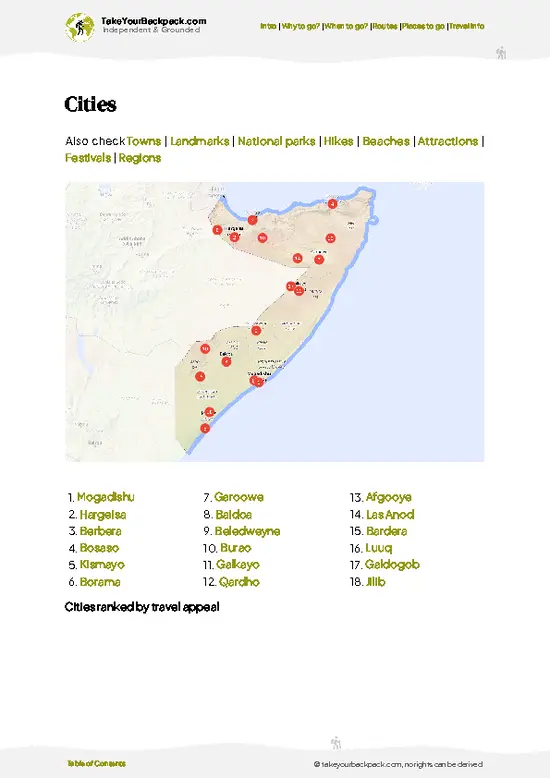
What the free pages can't give you: ready-made routes, every place ranked, and it works offline. All in 1 guide.
example page 0 from our offline Travel Guide for Somalia
example page 1 from our offline Travel Guide for Somalia
example page 2 from our offline Travel Guide for Somalia
example page 3 from our offline Travel Guide for Somalia
example page 4 from our offline Travel Guide for Somalia
example page 5 from our offline Travel Guide for Somalia
example page 6 from our offline Travel Guide for Somalia
example page 7 from our offline Travel Guide for Somalia
The digital guide (237 pages) contains:-page digital guide:
✅ Ready-made 5, 10 & 15-day routes
✅ All 68 places ranked, so you skip the overrated ones
✅ Works offline, all in 1 guide
✅ Cities, national parks, landmarks, beaches
✅ How to get around
👉 Click to see all 30+ guide features

📅 Plan smarter in minutes, not weeks
✅ Month by month travel advice
✅ Festivals & national holidays
✅ Budget expectations

🗺️ Go to the right places, skip the overrated ones
✅ Honest pros & cons of destinations
✅ Top hikes, parks & viewpoints
✅ Lesser-known places most travelers miss
✅ Clear “worth it vs skip it” guidance

🛏️ Travel smoothly without rookie mistakes
✅ Best areas to stay
✅ Transport systems explained simply
✅ Common scams & safety advice
✅ SIM cards, money & practical tips

🌍 Understand the country, not just visit it
✅ Culture & traditions
✅ 52 Essential phrases & customs
✅ Festivals worth planning around
✅ Traveler-friendly historical context
✅ Insights that make places more meaningful

📱 Built for real travel conditions
✅ Fully downloadable PDF
✅ Works completely offline
✅ Optimized for phone use
✅ Useful in remote areas & buses
✅ All in 1 guide
Stop searching, start planning
Get instant access to your full guide. 30‑day money-back guarantee.


By proceeding you agree to our terms.
Sent to your inbox immediately after payment • 100% Secure Checkout
Best Backpacking Travel Advisor 2025 tourism awardBest Backpacking
Travel Advisor
2025
What others say about Take Your Backpack Guides:
⭐⭐⭐⭐⭐
Fantastic, amazing amount of information!
⭐⭐⭐⭐⭐
My goodness this is amazing, it's what I've been looking for hats off too you!
⭐⭐⭐⭐⭐
I think this is absolutely BRILLIANT
⭐⭐⭐⭐
Very complete and informative. It's still missing places, but I gotta to commend you
⭐⭐⭐⭐⭐
This is truly amazing, thank you, can't wait to explore it with my kids!
⭐⭐⭐⭐⭐
Awesome resource, thank you!
⭐⭐⭐⭐⭐
This is amazing! Can't wait to explore the ones I haven't seen
⭐⭐⭐⭐
I love this! Well done, great idea.
⭐⭐⭐⭐⭐
Thanks for taking the time to make this gem!
⭐⭐⭐⭐⭐
This might be the best website I've ever seen.
⭐⭐⭐⭐⭐
Congratulations, and thank you so much for your work; it's incredibly valuable.
⭐⭐⭐⭐
In all seriousness I think you did a great job pointing out the important spots
⭐⭐⭐⭐⭐
10/10 very good
⭐⭐⭐⭐⭐
As someone who's only just starting to visit regularly this is awesome, thank you.
⭐⭐⭐⭐
Thank you very much! I'm going to visit my dad, it's going to be very useful!
⭐⭐⭐⭐⭐
This is really cool! We'll be travelling for the first time and this definitely come in handy.
⭐⭐⭐⭐⭐
You are now our minister of culture, congratulations 👨‍💼
⭐⭐⭐⭐⭐
Just wanted to tell you that this is a pearl! Going to follow your recommendations.
⭐⭐⭐⭐⭐
This is so cool. I'll definitely be using the resource for my travels soon.
⭐⭐⭐⭐⭐
This is very impressive! Good work.
⭐⭐⭐⭐⭐
This is an amazing and informative site. Very well done!

🛏️ Where to stay?Choosing the right base

North Galkayo is the best area for a budget stay, with guesthouses and small hotels from about US$15 to 30 a night. True hostels with dorm beds are rare, so expect private rooms. Streets are quieter, security is more predictable, and bajaj and car drivers gather near the main roads, making onward travel easy. Check that the room has a fan or air conditioning and a generator, as power cuts are common.
The area near the main road in the north is the second choice. It is convenient for early minibus departures but noisier, with traffic and late tea-shop crowds. South Galkayo has fewer options for … read more 👉
North Galkayo is the best area for a budget stay, with guesthouses and small hotels from about US$15 to 30 a night. True hostels with dorm beds are rare, so expect private rooms. Streets are quieter, security is more predictable, and bajaj and car drivers gather near the main roads, making onward travel easy. Check that the room has a fan or air conditioning and a generator, as power cuts are common.
The area near the main road in the north is the second choice. It is convenient for early minibus departures but noisier, with traffic and late tea-shop crowds. South Galkayo has fewer options for outsiders and is better visited by day. Book ahead through a local contact where possible, since walk-in availability varies and many places do not list online. Return before dark.

🚌 Getting aroundHow to get around Galkayo

Galkayo has no train and no central bus terminal, so arrivals by minibus or coach are dropped at roadside depots on the main road, and a short motorbike or shared car ride gets you to the center for about US$1 to 2. Distances are small and the heat is heavy, so most people ride rather than walk beyond a few blocks.
  • Walking: Fine in the morning within North Galkayo. By midday the sun and dust make it a poor choice, and walking at night is not worth it.
  • Bajaj (three-wheeler): The standard way around town, usually US$1 to 3 per trip. Agree the price first, because there are no meters. They are cheap and shaded, but slow in traffic.
  • Motorbike taxi: Quickest for solo travelers, around US$1 to 2 for short hops. Skip it on wet roads and after dark.
  • Hired car with driver: The practical option for trips
… read more 👉
Galkayo has no train and no central bus terminal, so arrivals by minibus or coach are dropped at roadside depots on the main road, and a short motorbike or shared car ride gets you to the center for about US$1 to 2. Distances are small and the heat is heavy, so most people ride rather than walk beyond a few blocks.
  • Walking: Fine in the morning within North Galkayo. By midday the sun and dust make it a poor choice, and walking at night is not worth it.
  • Bajaj (three-wheeler): The standard way around town, usually US$1 to 3 per trip. Agree the price first, because there are no meters. They are cheap and shaded, but slow in traffic.
  • Motorbike taxi: Quickest for solo travelers, around US$1 to 2 for short hops. Skip it on wet roads and after dark.
  • Hired car with driver: The practical option for trips outside town and crossing between the two halves, roughly US$30 to 60 a day. A local driver handles checkpoints and knows which roads are safe, so this is money well spent.
  • Minibus and coach: Used for intercity runs to places like Garowe or Bosaso, with fares varying by distance. Book through your guesthouse rather than at the roadside, and leave early since vehicles depart when full.

👛 Costs (as of 1 November 2026)How expensive it really is

Galkayo costs about US$30 to 56 a day for a backpacker, though prices are higher than in many neighboring countries. Cash dollars are accepted widely, and travelers pay locally in Somali shillings for small items.
CategoryBudget RangeLocal Reality
Dorm accommodation (high season)US$15 to 25Few dorms exist, so a basic private guesthouse room is the norm.
Dorm accommodation (off-season)US$12 to 20Slightly cheaper in the hot months.
MealsUS$8 to 12Grilled meat, rice and tea at local places.
Local transportUS$3 to 6Bajaj and motorbike taxis, priced per trip.
City transport passNot availableNo passes exist, so you pay each ride.
Basic activities/entry feesUS$0 to 5Markets are free, and few formal sights charge.
MiscellaneousUS$4 to 8Phone data, water and tips.
Total Daily BudgetUS$30 to 56Mid-range figure
… read more 👉
Galkayo costs about US$30 to 56 a day for a backpacker, though prices are higher than in many neighboring countries. Cash dollars are accepted widely, and travelers pay locally in Somali shillings for small items.
CategoryBudget RangeLocal Reality
Dorm accommodation (high season)US$15 to 25Few dorms exist, so a basic private guesthouse room is the norm.
Dorm accommodation (off-season)US$12 to 20Slightly cheaper in the hot months.
MealsUS$8 to 12Grilled meat, rice and tea at local places.
Local transportUS$3 to 6Bajaj and motorbike taxis, priced per trip.
City transport passNot availableNo passes exist, so you pay each ride.
Basic activities/entry feesUS$0 to 5Markets are free, and few formal sights charge.
MiscellaneousUS$4 to 8Phone data, water and tips.
Total Daily BudgetUS$30 to 56Mid-range figure for a typical day.
Save money by eating where drivers and traders eat and by sharing a hired car with other travelers.
⚠️ Prices can change and everyone travels differently, so take this as a rough guide. Hope it helps you plan your adventure!

🚌 Day tripsWhere to go beyond the main area

Galkayo works as a base for modest day trips, but options are limited and you should arrange a local driver and clearance before any journey outside town.
Garowe:
Puntland's capital lies about 3 to 4 hours north by road. It has a livelier market and better restaurants, and the trip costs roughly US$10 to 20 by shared transport. Go in the dry months, and leave before dawn to return the same day.

Galdogob:
A small town about an hour to 90 minutes west, reached by hired car for US$30 to 50 round trip. You see rural life and livestock herding on the way, and the dry season is the safest time. First-timers often go without a local escort, which is a bad idea.
👉 Explore Galdogob
Hobyo Road Villages:
A drive east through scrubland shows camel herds and wells, with a half-day return trip costing about … read more 👉
Galkayo works as a base for modest day trips, but options are limited and you should arrange a local driver and clearance before any journey outside town.
Garowe:
Puntland's capital lies about 3 to 4 hours north by road. It has a livelier market and better restaurants, and the trip costs roughly US$10 to 20 by shared transport. Go in the dry months, and leave before dawn to return the same day.

Galdogob:
A small town about an hour to 90 minutes west, reached by hired car for US$30 to 50 round trip. You see rural life and livestock herding on the way, and the dry season is the safest time. First-timers often go without a local escort, which is a bad idea.
👉 Explore Galdogob
Hobyo Road Villages:
A drive east through scrubland shows camel herds and wells, with a half-day return trip costing about US$40 to 70 with a driver. Choose Jilaal for firm roads, and bring water.
👉 Explore Hobyo

🍲 FoodEating & Drinking in Galkayo

Galkayo sits in camel country, so camel milk (caano geel) is the local drink to try, served fresh, sour or in sweet tea. Camel meat appears grilled or stewed, and it is leaner and chewier than goat.
For casual eating, head to the roadside grill stalls and small restaurants in the north, where goat ribs and fried fish arrive with flatbread (canjeero) and a banana on the side. Eat meat with rice at lunch, and expect tea shops to fill in the evening with men talking over spiced sweet tea. Fresh mango and papaya juice is sold in small stands and costs about US$1 to 2. A meal is typically US$3 to 6. Eating is done with the right hand, and a quick hand-wash before sitting is normal.

🛡️ SafetyScams, Hazards, and Annoyances

Galkayo is a place for careful, informed travel, and the main thing is to understand the divide between the north and south halves. Stay in North Galkayo, move in daylight, and use a trusted local driver or guesthouse contact for any crossing. Avoid walking at night, especially alone, and keep valuables out of sight. Petty theft exists in crowded markets, so carry small cash only. Overcharging of foreigners is the common annoyance, so agree bajaj fares before getting in. Dress modestly and ask before taking photos of people, soldiers or government buildings. Check current advisories before you travel.

FAQFrequently asked questions about Galkayo

Two days is enough for Galkayo itself, covering the markets, tea shops and the north and south halves of the city. Add a third day if you want a trip to Garowe, about 3 to 4 hours away by road. Most travelers pass through on the way to Puntland or central Somalia rather than staying long.
Galkayo needs more caution than most backpacker stops, so solo travelers should arrange a local contact before arriving. Stay in North Galkayo, avoid walking after dark, and hire a trusted driver for any crossing into the south. Guesthouses cost roughly US$15 to 30 a night, and checking current advisories before you go is sensible.
Galkayo is known for being a divided city, with the northern half in Puntland and the southern half in Galmudug. It is also a major livestock and trading hub, with camel and goat markets and a busy road junction linking central and northern Somalia. Visitors also know it for fresh camel milk and grilled meat.
⚠️ Things can change over time, so always validate details locally before you go.

Other Somali cities near Galkayo

Explore more nearby:

  • Galdogob—Mudug plains, herder economy, roadside tea, acacia scrub| 54 km away
  • Las Anod—Sool plateau, Burao-Garowe road stop, camel-milk sellers| 188 km away
  • Garoowe—Puntland capital, Nugaal Valley, parliament quarter, university cafés| 214 km away

💡 Not sure where to go next?
Create a personalized itinerary for Somalia including Galkayo and the places that fit your trip.

Generate my itinerary

👉 Discover all cities

Or checkout all Somalia has to offer (think cities, towns, villages, national parks, hikes, beaches, festivals)
Country photo of Somalia

We 💚 feedbackFinal thoughts on visiting Galkayo

Galkayo will suit the curious, patient traveler who values conversation over checklists and already has a trusted local contact. I would arrive with a firm plan, dress conservatively and keep the stay short. Skip any idea of wandering alone, and bring cash in small US dollar notes.

✍️ Help improve this page!
The information on this page is based on in-depth research, insights shared by experienced travelers, and feedback from the local travel community in Somalia. While every effort is made to keep the information accurate and current, conditions can change — so if you spot anything incorrect or outdated, please get in touch.


🙋‍♂️ Give feedback

👋 Meet the founderWho’s Behind Take Your Backpack?

Johan, backpacker and founder of TakeYourBackpackHi, I’m Johan (Netherlands 🇳🇱), the creator of TakeYourBackpack. Over the past 30 years, I’ve backpacked through 88 countries across six continents, gaining extensive experience with independent travel, long-term trips, and overland routes.

This site is built on a combination of firsthand travel experience and carefully curated insights from other backpackers. Many guides are based on places I’ve personally visited, while others bring together tips, observations, and practical advice shared by trusted travelers I’ve met along the way.

The goal is to provide realistic, experience-driven guidance — not generic itineraries — so you can explore destinations with better context, clearer expectations, and more confidence.