×

Somalia🇸🇴 | attractionsNational Theatre of Somalia1960s facade, main auditorium, empty stage, rebuilt walls | things to do and best time to go

Explore Hargeisa War MemorialExplore Bakaara Market

Backpacking in National Theatre of Somalia
👌 Worth visitingattraction ranked #13
By Johan Kruseman 🇳🇱 | Updated November 2, 2026

The practical advantage here is location: National Theatre of Somalia sits in central Mogadishu, so you can see it on the same outing as the seafront and the old districts. It lies in Somalia’s capital, near Waberi district, on the road that runs past the old Hamar Weyne side. Built in the 1960s, it is a striking building, but it is no tourist site with tickets and guides. Security is why you travel with a vetted local escort and a short, planned stop. Skip lingering. Photograph the facade, hear the stories, move on. The hall still stands as a landmark.

Part of Backpacking in Somalia: all 68 places on one map, with routes and the best time to go.
Discover everything you want to know in the 📖 Somalia Travel Guide.
Safety warning

The current risk level for Somalia is high. Check the advice before going.


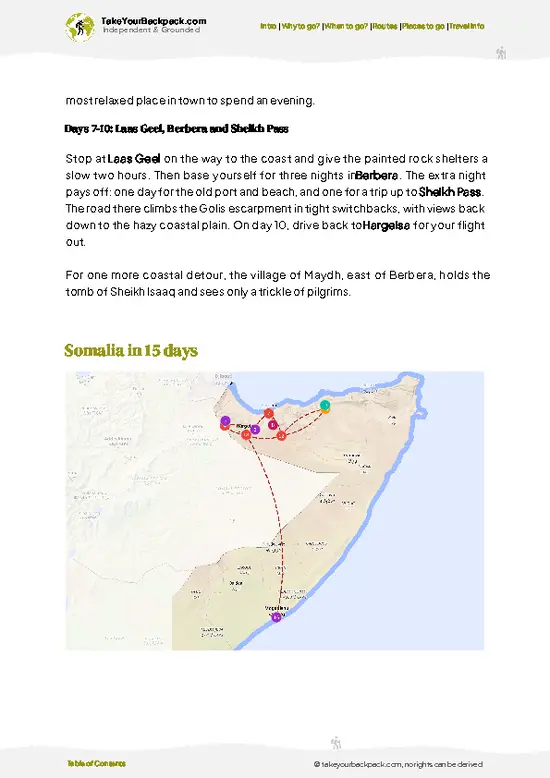
example page 0 from our offline Travel Guide for Somalia
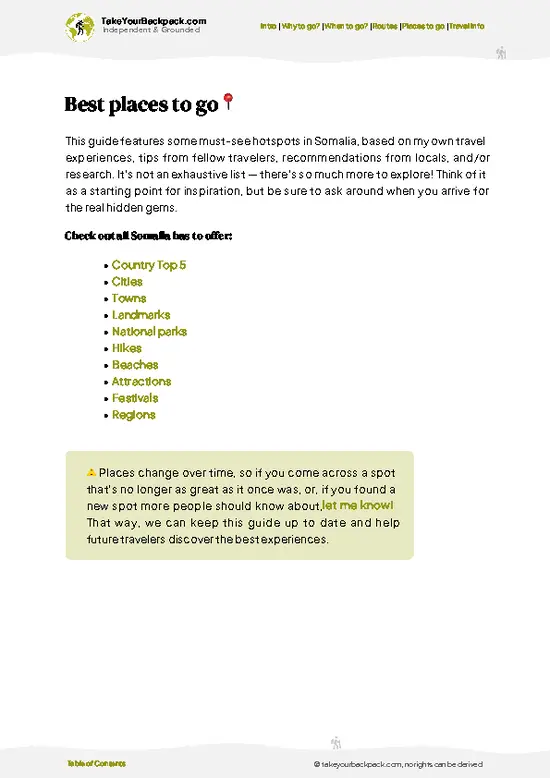
example page 1 from our offline Travel Guide for Somalia
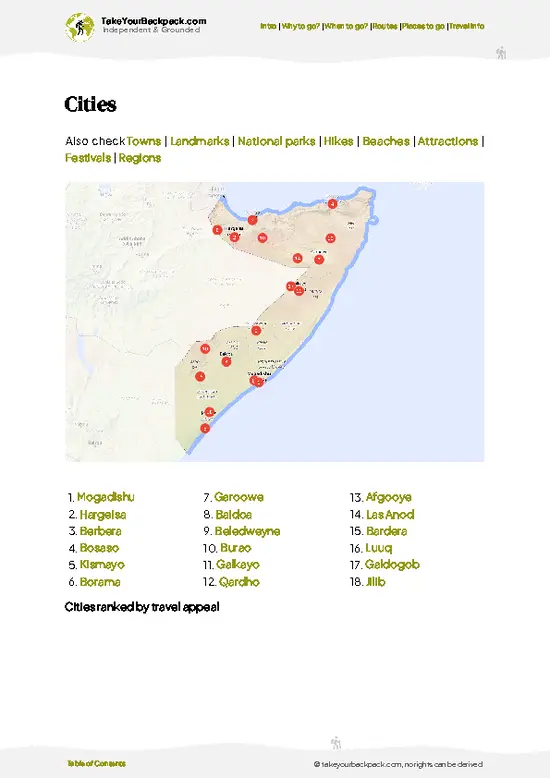
example page 2 from our offline Travel Guide for Somalia
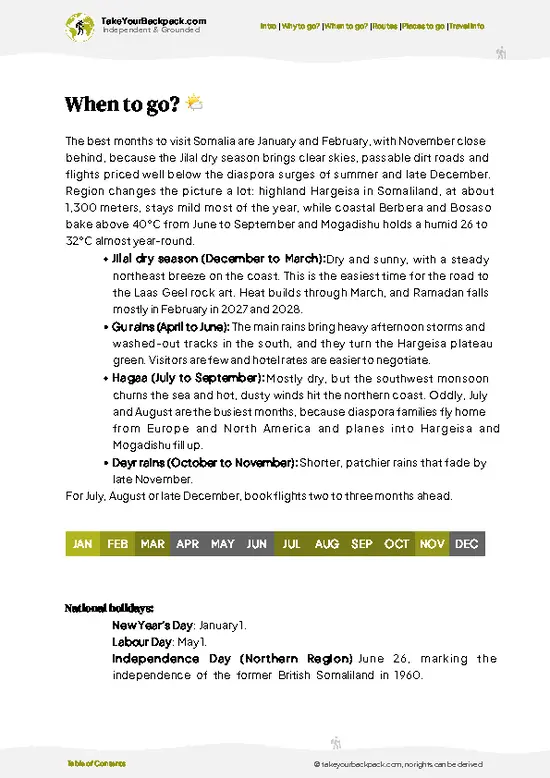
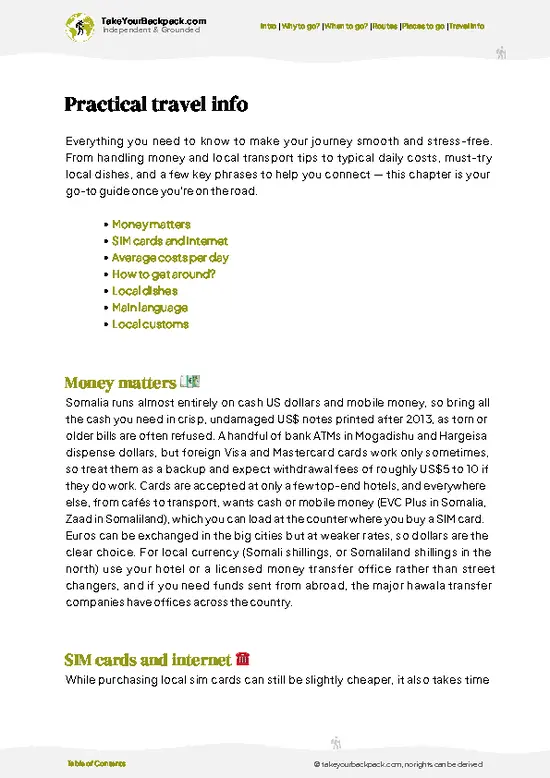
example page 3 from our offline Travel Guide for Somalia
example page 4 from our offline Travel Guide for Somalia
example page 5 from our offline Travel Guide for Somalia
example page 6 from our offline Travel Guide for Somalia
example page 7 from our offline Travel Guide for Somalia
Loading the map 🌍
CLICK TO FILTER
cities
towns
landmarks
national parks
hikes
beaches
attractions
festivals
regions
SHOW COUNTRY’S BESTSHOW ALL

✨ Why go?
Ranked #13 attraction in Somalia
What makes this attraction worth visiting

National Theatre of Somalia matters because it stands for a period when Somali music, poetry and plays were national projects. Seeing it in person is a way to understand Mogadishu beyond the headlines, and few visitors ever do. The building itself is the draw, with its large frame and the memory of the stage shows and radio-era performers tied to it. It also marks a milestone on a Mogadishu route: it works as a symbol of postwar recovery in a city that has rebuilt block by block. Stories from local artists and poets make it come alive more than any plaque. If you care about modern history, the 1960s architecture and what it survived are reason enough.

💡 HighlightsThe experiences that define the visit

  1. The main facade and entrance: the building’s imposing front is what most people come to photograph, and its scale says a lot about the ambitions of the era.
  2. The main auditorium: the large hall was built for plays, concerts and national celebrations, and its size is still apparent even where repairs continue.
  3. The stage: this is where Somali drama, dance and music were performed for national audiences, and it is the emotional center of the place.
  4. The surrounding grounds: walking the perimeter shows the scale of the complex and how the city has rebuilt around it.
  5. Local storytelling about the performers: artists and caretakers who know the history can describe the golden age of Somali music, which gives the empty rooms meaning.
  6. Evidence of rebuilding: patched walls and repaired sections show how damage
… read more 👉
  1. The main facade and entrance: the building’s imposing front is what most people come to photograph, and its scale says a lot about the ambitions of the era.
  2. The main auditorium: the large hall was built for plays, concerts and national celebrations, and its size is still apparent even where repairs continue.
  3. The stage: this is where Somali drama, dance and music were performed for national audiences, and it is the emotional center of the place.
  4. The surrounding grounds: walking the perimeter shows the scale of the complex and how the city has rebuilt around it.
  5. Local storytelling about the performers: artists and caretakers who know the history can describe the golden age of Somali music, which gives the empty rooms meaning.
  6. Evidence of rebuilding: patched walls and repaired sections show how damage was repaired after years of conflict.
National Theatre of Somalia takes about 30 to 60 minutes to see, longer if you sit with someone who remembers its performances.
Spotted a mistake or missing something? Contact us.

🌤️ When to go?Choosing the right time of year

  • Jilal (Dec to Mar): Dry and sunny, with highs of 30 to 33°C (86 to 91°F) and sea breezes off the Indian Ocean. Walking around the Hamar Weyne and Waberi districts is most comfortable now, and security movements are easiest to plan.
  • Gu (Apr to Jun): The main rains bring humidity, highs of 29 to 32°C (84 to 90°F), and muddy streets. Flights and ground plans can slip.
  • Xagaa (Jul to Sep): Windy and overcast, 26 to 30°C (79 to 86°F), with rough seas. Rooms are often easier to get.
  • Deyr (Oct to Nov): Short, lighter rains and warm days around 29 to 32°C (84 to 90°F).
Check performance and event schedules locally before you go, since evening programs depend on security and the calendar.

source: climatestotravel.comJANJanuary: good for travelingFEBFebruary: highly recommended for travelingMARMarch: fair for travelingAPRApril: fair for travelingMAYMay: fair for travelingJUNJune: below average for travelingJULJuly: below average for travelingAUGAugust: below average for travelingSEPSeptember: below average for travelingOCTOctober: fair for travelingNOVNovember: highly recommended for travelingDECDecember: good for traveling
when-to-go

✈️ The backpacker research shortcutSomalia Travel Guide

What the free pages can't give you: ready-made routes, every place ranked, and it works offline. All in 1 guide.
example page 0 from our offline Travel Guide for Somalia
example page 1 from our offline Travel Guide for Somalia
example page 2 from our offline Travel Guide for Somalia
example page 3 from our offline Travel Guide for Somalia
example page 4 from our offline Travel Guide for Somalia
example page 5 from our offline Travel Guide for Somalia
example page 6 from our offline Travel Guide for Somalia
example page 7 from our offline Travel Guide for Somalia
The digital guide (237 pages) contains:-page digital guide:
✅ Ready-made 5, 10 & 15-day routes
✅ All 68 places ranked, so you skip the overrated ones
✅ Works offline, all in 1 guide
✅ Cities, national parks, landmarks, beaches
✅ How to get around
👉 Click to see all 30+ guide features

📅 Plan smarter in minutes, not weeks
✅ Month by month travel advice
✅ Festivals & national holidays
✅ Budget expectations

🗺️ Go to the right places, skip the overrated ones
✅ Honest pros & cons of destinations
✅ Top hikes, parks & viewpoints
✅ Lesser-known places most travelers miss
✅ Clear “worth it vs skip it” guidance

🛏️ Travel smoothly without rookie mistakes
✅ Best areas to stay
✅ Transport systems explained simply
✅ Common scams & safety advice
✅ SIM cards, money & practical tips

🌍 Understand the country, not just visit it
✅ Culture & traditions
✅ 52 Essential phrases & customs
✅ Festivals worth planning around
✅ Traveler-friendly historical context
✅ Insights that make places more meaningful

📱 Built for real travel conditions
✅ Fully downloadable PDF
✅ Works completely offline
✅ Optimized for phone use
✅ Useful in remote areas & buses
✅ All in 1 guide
Stop searching, start planning
Get instant access to your full guide. 30‑day money-back guarantee.


By proceeding you agree to our terms.
Sent to your inbox immediately after payment • 100% Secure Checkout
Best Backpacking Travel Advisor 2025 tourism awardBest Backpacking
Travel Advisor
2025
What others say about Take Your Backpack Guides:
⭐⭐⭐⭐⭐
Fantastic, amazing amount of information!
⭐⭐⭐⭐⭐
My goodness this is amazing, it's what I've been looking for hats off too you!
⭐⭐⭐⭐⭐
I think this is absolutely BRILLIANT
⭐⭐⭐⭐
Very complete and informative. It's still missing places, but I gotta to commend you
⭐⭐⭐⭐⭐
This is truly amazing, thank you, can't wait to explore it with my kids!
⭐⭐⭐⭐⭐
Awesome resource, thank you!
⭐⭐⭐⭐⭐
This is amazing! Can't wait to explore the ones I haven't seen
⭐⭐⭐⭐
I love this! Well done, great idea.
⭐⭐⭐⭐⭐
Thanks for taking the time to make this gem!
⭐⭐⭐⭐⭐
This might be the best website I've ever seen.
⭐⭐⭐⭐⭐
Congratulations, and thank you so much for your work; it's incredibly valuable.
⭐⭐⭐⭐
In all seriousness I think you did a great job pointing out the important spots
⭐⭐⭐⭐⭐
10/10 very good
⭐⭐⭐⭐⭐
As someone who's only just starting to visit regularly this is awesome, thank you.
⭐⭐⭐⭐
Thank you very much! I'm going to visit my dad, it's going to be very useful!
⭐⭐⭐⭐⭐
This is really cool! We'll be travelling for the first time and this definitely come in handy.
⭐⭐⭐⭐⭐
You are now our minister of culture, congratulations 👨‍💼
⭐⭐⭐⭐⭐
Just wanted to tell you that this is a pearl! Going to follow your recommendations.
⭐⭐⭐⭐⭐
This is so cool. I'll definitely be using the resource for my travels soon.
⭐⭐⭐⭐⭐
This is very impressive! Good work.
⭐⭐⭐⭐⭐
This is an amazing and informative site. Very well done!

🛏️ Where to stay?Choosing the right base

The Hamar Weyne and Shingani districts of old Mogadishu, a short ride from the National Theatre of Somalia, are not where most budget travelers sleep. In practice, the safest option is a guesthouse or small hotel inside or near the secured Hodan, Waberi or airport (Halane) zones, where guards, walls and vetted drivers are standard. These areas put you within a short, arranged car ride of the theatre, and they usually have reliable generators and Wi-Fi. Social atmosphere here comes from other aid workers, journalists, returning diaspora and a handful of independent travelers who share meals and … read more 👉
The Hamar Weyne and Shingani districts of old Mogadishu, a short ride from the National Theatre of Somalia, are not where most budget travelers sleep. In practice, the safest option is a guesthouse or small hotel inside or near the secured Hodan, Waberi or airport (Halane) zones, where guards, walls and vetted drivers are standard. These areas put you within a short, arranged car ride of the theatre, and they usually have reliable generators and Wi-Fi. Social atmosphere here comes from other aid workers, journalists, returning diaspora and a handful of independent travelers who share meals and transport. Solo backpackers should book ahead through a local contact, use one trusted driver, and avoid wandering at night. Lido Beach side stays are lively on weekends but need the same precautions.

👛 Costs (as of 2 November 2026)Typical daily expenses

Expect to spend about US$115 a day around National Theatre of Somalia, mostly on secure lodging and transport. There is no formal ticket system, and visits are arranged informally.
CategoryBudget RangeLocal Reality
EntryUS$0 to 5Usually free or a small donation; event tickets vary
Accommodation (high season)US$50 to 80Secured guesthouses, lower in the rainy months
Security escort and driverUS$20 to 40Hired car with guard, essential for short hops
FoodUS$8 to 15Rice, fish and goat dishes at local restaurants; paid in dollars
ExtrasUS$2 to 5Tea, mobile data, water
Total Daily BudgetUS$115One day, high season
⚠️ Prices can change and everyone travels differently, so take this as a rough guide. Hope it helps you plan your adventure!

FAQCommon questions from travelers

Plan about 30 to 60 minutes at National Theatre of Somalia, longer if a performance is on. The building sits in central Mogadishu, so most visitors combine it with a morning at Hamar Weyne or Lido Beach. Arranged escorts usually limit stops, so keep the schedule to half a day.
National Theatre of Somalia is usually free or asks for a small donation of up to about US$5, so cost is not a concern. The value lies in the Chinese-built 1960s-era hall, its history as a cultural center and its rebuilt look after years of conflict. A guarded driver costs more than the visit itself, at roughly US$20 to 40 a day.
Fly into Aden Adde International Airport, then take an arranged armored or guarded car, about 20 to 40 minutes to the center depending on traffic. Taxis and bajaj are available, but most travelers use a hired driver for US$20 to 40 a day. Reaching National Theatre of Somalia by public transport is not advised.
⚠️ Things can change over time, so always validate details locally before you go.

Other Somali attractions near National Theatre of Somalia

Explore more nearby:


💡 Not sure where to go next?
Create a personalized itinerary for Somalia including National Theatre of Somalia and the places that fit your trip.

Generate my itinerary

👉 Discover all attractions

Or checkout all Somalia has to offer (think cities, towns, villages, national parks, hikes, beaches, festivals)
Country photo of Somalia

We 💚 feedbackSumming up the experience

National Theatre of Somalia is best seen in the morning, when the city is calmer, the light is soft on the facade and your escort can plan the stop without rush. Bring a good camera and patience, and ask a local to tell you who performed here.

✍️ Help improve this page!
The information on this page is based on in-depth research, insights shared by experienced travelers, and feedback from the local travel community in Somalia. While every effort is made to keep the information accurate and current, conditions can change — so if you spot anything incorrect or outdated, please get in touch.


🙋‍♂️ Give feedback

👋 Meet the founderWho’s Behind Take Your Backpack?

Johan, backpacker and founder of TakeYourBackpackHi, I’m Johan (Netherlands 🇳🇱), the creator of TakeYourBackpack. Over the past 30 years, I’ve backpacked through 88 countries across six continents, gaining extensive experience with independent travel, long-term trips, and overland routes.

This site is built on a combination of firsthand travel experience and carefully curated insights from other backpackers. Many guides are based on places I’ve personally visited, while others bring together tips, observations, and practical advice shared by trusted travelers I’ve met along the way.

The goal is to provide realistic, experience-driven guidance — not generic itineraries — so you can explore destinations with better context, clearer expectations, and more confidence.