
×

South Africa🇿🇦 | national parksAddo Elephant National Parkelephant herds, spekboom thicket, coastal dunes | things to do and best time to go

Explore Wild Coast Hiking TrailExplore Baviaanskloof Wilderness Area

Backpacking in Addo Elephant
🌟 Highlightnational park ranked #9
By Johan Kruseman 🇳🇱 | Updated October 13, 2026

A low rumble vibrates through the floor of the hide. You smell dust and crushed spekboom as a herd of elephants, close enough to count the wrinkles on their trunks, moves past your boots. This is Addo Elephant National Park, tucked in the Eastern Cape, about an hour’s drive from Port Elizabeth. Addo is honest: you get elephants—hundreds of them—plus buffalo, kudu, and the odd lion if you’re lucky, but don’t expect the endless savannahs of Kruger. Trails here are limited; most hiking is guided and tightly regulated for safety, so spontaneous wandering is out. The scenery is scrubby, not postcard-pretty, but it’s real, and the wildlife feels close. Entrance fees are reasonable, but budget camping fills fast and the main rest camp can feel crowded in peak season. Compared to the wild drama of Mountain Zebra or the lushness of Tsitsikamma, Addo is more about the animals than the landscape. If you want elephants, you’re in the right place. If you want solitude, you’ll need to work for it.

Discover everything you want to know in the 📖 South Africa Travel Guide.


example page 0 from our offline Travel Guide for South Africa
example page 1 from our offline Travel Guide for South Africa
example page 2 from our offline Travel Guide for South Africa
example page 3 from our offline Travel Guide for South Africa
example page 4 from our offline Travel Guide for South Africa
example page 5 from our offline Travel Guide for South Africa
example page 6 from our offline Travel Guide for South Africa
example page 7 from our offline Travel Guide for South Africa
Loading the map 🌍
CLICK TO FILTER
cities
towns
villages
landmarks
national parks
hikes
beaches
attractions
festivals
regions
SHOW COUNTRY’S BESTSHOW ALL

✨ Why go?
Ranked #9 national park in South Africa
Why visitors keep coming back

Addo Elephant National Park is a top choice for backpackers seeking independent exploration. The park’s layout encourages self-guided adventures, allowing you to roam at your own pace. You can spot elephants, lions, and a variety of wildlife without the constraints of a tour group.

Budget-conscious travelers will appreciate the affordable camping options and hostels nearby. These accommodations let you save money while immersing yourself in the park’s natural beauty. Just be aware that booking in advance is wise, especially during peak seasons.

The trail variety is another draw. Whether you’re up for a leisurely stroll or a more challenging hike, there’s something for everyone. Trails are well-marked, making navigation straightforward, but don’t underestimate the importance of a good map. … read more 👉
Addo Elephant National Park is a top choice for backpackers seeking independent exploration. The park’s layout encourages self-guided adventures, allowing you to roam at your own pace. You can spot elephants, lions, and a variety of wildlife without the constraints of a tour group.

Budget-conscious travelers will appreciate the affordable camping options and hostels nearby. These accommodations let you save money while immersing yourself in the park’s natural beauty. Just be aware that booking in advance is wise, especially during peak seasons.

The trail variety is another draw. Whether you’re up for a leisurely stroll or a more challenging hike, there’s something for everyone. Trails are well-marked, making navigation straightforward, but don’t underestimate the importance of a good map.

While tours are available, they can be pricey and often limit your freedom. For those who thrive on self-guided experiences, Addo is a perfect fit. Just remember to pack plenty of water and snacks; you’ll want to stay energized for those unforgettable wildlife encounters.

💡 HighlightsTop highlights of Addo Elephant

  • Massive elephant herds at the waterholes — Addo’s claim to fame: large, often relaxed elephant family groups that come to drink and bathe in open waterholes, which makes for breathtaking close-up viewing and photos. Early morning and late afternoon are magic for light and animal activity.
  • The “Big 7” experience — what sets Addo apart is that it markets the Big 7 (elephant, rhino, buffalo, lion, leopard plus great white shark and southern right whale off the coast), so you can pair a land safari with coastal boat or shoreline trips to try and spot whales or sharks in season. It’s a neat mix of bush and sea you don’t get in many parks.
  • Woody Cape and coastal dune forests — a totally different vibe from the main camp: ancient dune forests, wide beaches and wind-sculpted dunes that are great
… read more 👉
  • Massive elephant herds at the waterholes — Addo’s claim to fame: large, often relaxed elephant family groups that come to drink and bathe in open waterholes, which makes for breathtaking close-up viewing and photos. Early morning and late afternoon are magic for light and animal activity.
  • The “Big 7” experience — what sets Addo apart is that it markets the Big 7 (elephant, rhino, buffalo, lion, leopard plus great white shark and southern right whale off the coast), so you can pair a land safari with coastal boat or shoreline trips to try and spot whales or sharks in season. It’s a neat mix of bush and sea you don’t get in many parks.
  • Woody Cape and coastal dune forests — a totally different vibe from the main camp: ancient dune forests, wide beaches and wind-sculpted dunes that are great for peaceful walks, tide pooling and birding. The contrast between thick forest and the open ocean is striking and worth a half-day or full-day detour.
  • Zuurberg mountains and day hikes — the park’s mountain reaches give you proper hiking options with panoramic views, cooler air and fynbos vegetation. Trails are doable as day hikes and are perfect if you want to stretch legs away from the driving loop.
  • Self-drive loops and photographic viewpoints — well-marked gravel roads thread through varied habitat, with regular pullouts and waterholes that are ideal for wildlife photography or a leisurely picnic while animals browse nearby. You can do everything on a tight budget from your own vehicle if you’re comfortable driving slowly and scanning the bush.
  • Rich birdlife and coastal seabirds — the mix of thicket, fynbos, wetlands and ocean attracts a broad list of species: raptors, waterbirds and a healthy complement of coastal seabirds. Bring binoculars; even short stops can turn up something unexpected.
  • Conservation and close-to-nature encounters — Addo is a good example of active restoration: expanding habitats and species reintroductions have changed the place over decades, so you’ll often see healthy ecosystems and animals behaving naturally rather than crowded, zoo-like sightings. It’s rewarding if you care about conservation as much as the photos.
Spotted a mistake or missing something? Contact us.

Things to do near Addo Elephant National Park

Ratings based on Tripadvisor reviews. When you book through this link, you support our work at no extra cost to you.

🌤️ When to go?Choosing the right time of year

  • Weather: The best time to visit Addo Elephant National Park is during the dry winter months from May to September. Rainfall is minimal, which means animals gather around waterholes, making wildlife spotting easier. Avoid the wet summer (November to March) when heavy rains can muddy roads and limit game drives.
  • Temperature: Winter days are pleasantly cool, averaging 18-22°C (64-72°F), but nights can drop to near freezing, so pack layers. Summer temperatures climb to 28-32°C (82-90°F), which can be uncomfortable for long hikes and animal activity shifts to cooler hours.
  • Daylight Hours: Winter offers about 10-11 hours of daylight, enough for morning and afternoon game drives without rushing. Summer days stretch to 13-14 hours, but midday heat often forces a break, limiting active wildlife
… read more 👉
  • Weather: The best time to visit Addo Elephant National Park is during the dry winter months from May to September. Rainfall is minimal, which means animals gather around waterholes, making wildlife spotting easier. Avoid the wet summer (November to March) when heavy rains can muddy roads and limit game drives.
  • Temperature: Winter days are pleasantly cool, averaging 18-22°C (64-72°F), but nights can drop to near freezing, so pack layers. Summer temperatures climb to 28-32°C (82-90°F), which can be uncomfortable for long hikes and animal activity shifts to cooler hours.
  • Daylight Hours: Winter offers about 10-11 hours of daylight, enough for morning and afternoon game drives without rushing. Summer days stretch to 13-14 hours, but midday heat often forces a break, limiting active wildlife viewing.
  • Crowds: Peak season aligns with South African school holidays in July and December, bringing more visitors and higher prices. Visiting just outside these windows means fewer people and a more relaxed experience.
  • Seasonal Activities: Winter is prime for game viewing, especially elephants and predators. Summer brings lush vegetation and birdwatching opportunities but less predictable wildlife sightings due to dispersed animals.
  • Price Fluctuations: Accommodation and park fees spike during peak holiday periods. Booking in shoulder seasons (April-May, September-October) can save money without sacrificing wildlife encounters.
Pro-tip: Aim for late winter or early spring—cool, dry, fewer crowds, and you’ll catch the park waking up with newborn animals and active predators without the premium prices.


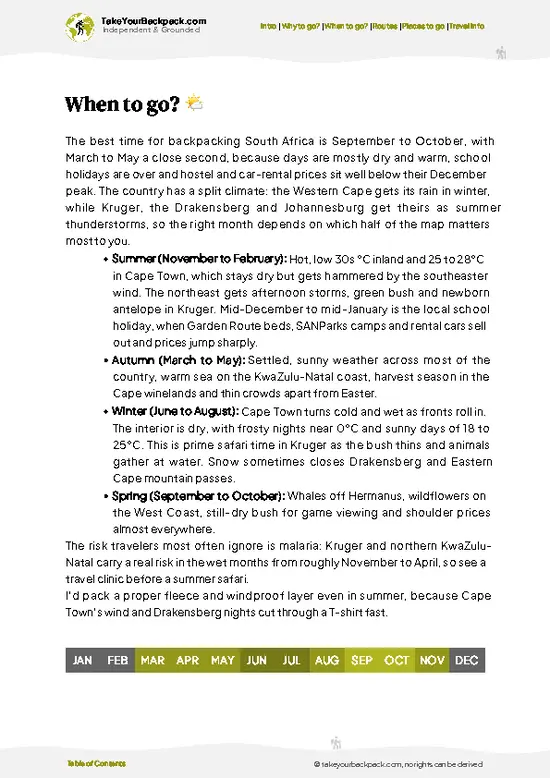
source: climatestotravel.comJANJanuary: fair for travelingFEBFebruary: fair for travelingMARMarch: fair for travelingAPRApril: good for travelingMAYMay: excellent for travelingJUNJune: excellent for travelingJULJuly: highly recommended for travelingAUGAugust: excellent for travelingSEPSeptember: excellent for travelingOCTOctober: good for travelingNOVNovember: fair for travelingDECDecember: good for traveling
when-to-go

✈️ The backpacker research shortcutSouth Africa Travel Guide

An offline-friendly backpacking guide with optimized travel routes, ranked highlights, transport advice, and the best areas to stay.
example page 0 from our offline Travel Guide for South Africa
example page 1 from our offline Travel Guide for South Africa
example page 2 from our offline Travel Guide for South Africa
example page 3 from our offline Travel Guide for South Africa
example page 4 from our offline Travel Guide for South Africa
example page 5 from our offline Travel Guide for South Africa
example page 6 from our offline Travel Guide for South Africa
example page 7 from our offline Travel Guide for South Africa
The digital guide (457 pages) contains:
✅ 125 highlights, ranked by travel appeal
✅ Optimized 7, 14 & 21-day travel routes
✅ Cities, national parks, landmarks, beaches
✅ How to get around
✅ Offline-friendly for travel without Wi-Fi
👉 Click to see all 30+ guide features

📅 Plan smarter in minutes, not weeks
✅ Month by month travel advice
✅ Festivals & national holidays
✅ Budget expectations

🗺️ Go to the right places, skip the overrated ones
✅ Honest pros & cons of destinations
✅ Top hikes, parks & viewpoints
✅ Lesser-known places most travelers miss
✅ Clear “worth it vs skip it” guidance

🛏️ Travel smoothly without rookie mistakes
✅ Best areas to stay
✅ Transport systems explained simply
✅ Common scams & safety advice
✅ SIM cards, money & practical tips

🌍 Understand the country, not just visit it
✅ Culture & traditions
✅ 52 Essential phrases & customs
✅ Festivals worth planning around
✅ Traveler-friendly historical context
✅ Insights that make places more meaningful

📱 Built for real travel conditions
✅ Fully downloadable PDF
✅ Works completely offline
✅ Optimized for phone use
✅ Useful in remote areas & buses
✅ Everything in one place
Stop searching, start planning
Get instant access to your full guide. 30‑day money-back guarantee.
+ Add another guide for just

By proceeding you agree to our terms.
Sent to your inbox immediately after payment • 100% Secure Checkout
Best Backpacking Travel Advisor 2025 tourism awardBest Backpacking
Travel Advisor
2025
What others say about Take Your Backpack Guides:
⭐⭐⭐⭐⭐
Fantastic, amazing amount of information!
⭐⭐⭐⭐⭐
My goodness this is amazing, it's what I've been looking for hats off too you!
⭐⭐⭐⭐⭐
I think this is absolutely BRILLIANT
⭐⭐⭐⭐
Very complete and informative. It's still missing places, but I gotta to commend you
⭐⭐⭐⭐⭐
This is truly amazing, thank you, can't wait to explore it with my kids!
⭐⭐⭐⭐⭐
Awesome resource, thank you!
⭐⭐⭐⭐⭐
This is amazing! Can't wait to explore the ones I haven't seen
⭐⭐⭐⭐
I love this! Well done, great idea.
⭐⭐⭐⭐⭐
Thanks for taking the time to make this gem!
⭐⭐⭐⭐⭐
This might be the best website I've ever seen.
⭐⭐⭐⭐⭐
Congratulations, and thank you so much for your work; it's incredibly valuable.
⭐⭐⭐⭐
In all seriousness I think you did a great job pointing out the important spots
⭐⭐⭐⭐⭐
10/10 very good
⭐⭐⭐⭐⭐
As someone who's only just starting to visit regularly this is awesome, thank you.
⭐⭐⭐⭐
Thank you very much! I'm going to visit my dad, it's going to be very useful!
⭐⭐⭐⭐⭐
This is really cool! We'll be travelling for the first time and this definitely come in handy.
⭐⭐⭐⭐⭐
You are now our minister of culture, congratulations 👨‍💼
⭐⭐⭐⭐⭐
Just wanted to tell you that this is a pearl! Going to follow your recommendations.
⭐⭐⭐⭐⭐
This is so cool. I'll definitely be using the resource for my travels soon.
⭐⭐⭐⭐⭐
This is very impressive! Good work.
⭐⭐⭐⭐⭐
This is an amazing and informative site. Very well done!

🛏️ Where to stay?Best areas to stay in South Africa

Addo Elephant National Park offers a range of accommodations, but options within the park are limited. The park’s main rest camp, Addo Main Camp, provides basic yet comfortable lodging. Here, you’ll find self-catering chalets and campsites. Staying inside the park means you’re close to the action, with early morning and late afternoon game drives at your fingertips. Just be aware that the camp can fill up quickly, especially during peak seasons, so booking in advance is essential.

If you prefer more amenities or a different vibe, consider nearby towns like Colchester or Kirkwood. Colchester is … read more 👉
Addo Elephant National Park offers a range of accommodations, but options within the park are limited. The park’s main rest camp, Addo Main Camp, provides basic yet comfortable lodging. Here, you’ll find self-catering chalets and campsites. Staying inside the park means you’re close to the action, with early morning and late afternoon game drives at your fingertips. Just be aware that the camp can fill up quickly, especially during peak seasons, so booking in advance is essential.

If you prefer more amenities or a different vibe, consider nearby towns like Colchester or Kirkwood. Colchester is just outside the park’s entrance and offers guesthouses and lodges that cater to backpackers. Kirkwood, a bit further away, has budget-friendly options and a local charm that can enhance your experience.

Keep in mind that while these towns provide more choices, they also mean extra travel time to get back to the park. Factor in fuel costs and potential delays. Ultimately, whether you choose to stay inside or nearby, prioritize your budget and energy for the park’s incredible wildlife encounters.

👛 Costs (as of 13 October 2026)What things cost and how to budget

Addo Elephant National Park is a fantastic destination, but it’s essential to be aware of the costs involved to avoid surprises.

Entry fees for the park are around $15 to $25 per person, depending on the season. If you plan to drive your own vehicle, there’s an additional fee of about $10. Guided tours can range from $50 to $150 per person, depending on the length and inclusivity of the experience.

Accommodation options vary widely. Campsites start at around $10 per person, while basic chalets can cost between $50 and $100 per night. If you’re looking for something more upscale, lodges within or near the park can run from $150 to $300 per night.

Food is another consideration. If you’re self-catering, budget for about $10 to $20 per day for groceries. Dining at park restaurants can cost … read more 👉
Addo Elephant National Park is a fantastic destination, but it’s essential to be aware of the costs involved to avoid surprises.

Entry fees for the park are around $15 to $25 per person, depending on the season. If you plan to drive your own vehicle, there’s an additional fee of about $10. Guided tours can range from $50 to $150 per person, depending on the length and inclusivity of the experience.

Accommodation options vary widely. Campsites start at around $10 per person, while basic chalets can cost between $50 and $100 per night. If you’re looking for something more upscale, lodges within or near the park can run from $150 to $300 per night.

Food is another consideration. If you’re self-catering, budget for about $10 to $20 per day for groceries. Dining at park restaurants can cost around $15 to $30 per meal.

Keep in mind that additional costs may arise from activities like guided walks or special safaris, which can add $30 to $100 to your daily budget. Fuel prices in South Africa can also fluctuate, so factor in your travel distance.

Planning ahead and budgeting for these expenses will help you focus on the wildlife and landscapes that make Addo truly special.
⚠️ Prices can change and everyone travels differently, so take this as a rough guide. Hope it helps you plan your adventure!

🥾 TrailsHiking Addo Elephant national park: highlights and difficulty

Addo Elephant National Park is a gem for hikers, offering a mix of scenic views and wildlife encounters. The terrain varies from rolling hills to dense thickets, and you might even catch a glimpse of elephants, lions, or the elusive black rhino. The park has some designated trails, making it easier to explore without getting lost.

One of the popular trails is the Schotia Tooth and Claw Trail. Here are the details:
  • Length: 10 km
  • Estimated Duration: 3-4 hours
  • Difficulty Level: Moderate
  • Key Features: Stunning views, diverse flora, and frequent wildlife sightings
  • Terrain: Mix of flat and hilly sections,
… read more 👉
Addo Elephant National Park is a gem for hikers, offering a mix of scenic views and wildlife encounters. The terrain varies from rolling hills to dense thickets, and you might even catch a glimpse of elephants, lions, or the elusive black rhino. The park has some designated trails, making it easier to explore without getting lost.

One of the popular trails is the Schotia Tooth and Claw Trail. Here are the details:
  • Length: 10 km
  • Estimated Duration: 3-4 hours
  • Difficulty Level: Moderate
  • Key Features: Stunning views, diverse flora, and frequent wildlife sightings
  • Terrain: Mix of flat and hilly sections, some rocky paths

Another option is the Grootkolk Trail:
  • Length: 7 km
  • Estimated Duration: 2-3 hours
  • Difficulty Level: Easy
  • Key Features: Scenic river views and birdwatching opportunities
  • Terrain: Mostly flat with well-maintained paths

Reaching the park isn’t too tricky. While public transport options are limited, you can catch a bus to nearby towns like Addo or Colchester and grab a taxi from there. Just be prepared for a bit of a wait. It can get crowded during peak season, especially around the main entrance, so timing your visit early in the morning or later in the afternoon can help you avoid the crowds. As for the entrance fee, it’s relatively affordable, but it’s always good to check the latest rates online before you head out.
⚠️ Hiking info can sometimes be outdated or inaccurate. Before you hit the trail, check the latest conditions with locals. If you do spot anything that's off, I'd love to hear from you, so I can update it for fellow travelers.

🛡️ SafetyTraveler Safety Guide

Addo Elephant National Park is generally a straightforward destination for backpackers, but there are a few realities to keep in mind. The weather can shift quickly, so layering is key. Mornings might be chilly, while afternoons can heat up. Always check forecasts before heading out.

The terrain is mostly manageable, with well-marked trails. However, some sections can be steep or rocky, so good footwear is essential. Navigation is typically easy, but a map or GPS can help avoid any confusion.

Wildlife encounters are a highlight, but respect is crucial. Keep a safe distance from elephants and other animals; they’re not as docile as they may seem. If you spot a lion, stay calm and back away slowly.

First-timers often underestimate the importance of hydration and snacks. Bring enough water … read more 👉
Addo Elephant National Park is generally a straightforward destination for backpackers, but there are a few realities to keep in mind. The weather can shift quickly, so layering is key. Mornings might be chilly, while afternoons can heat up. Always check forecasts before heading out.

The terrain is mostly manageable, with well-marked trails. However, some sections can be steep or rocky, so good footwear is essential. Navigation is typically easy, but a map or GPS can help avoid any confusion.

Wildlife encounters are a highlight, but respect is crucial. Keep a safe distance from elephants and other animals; they’re not as docile as they may seem. If you spot a lion, stay calm and back away slowly.

First-timers often underestimate the importance of hydration and snacks. Bring enough water and energy bars to keep your stamina up. By preparing for these practicalities, you’ll preserve your energy and budget for the moments that truly matter in this remarkable park.

FAQFrequently asked questions about Addo Elephant

2 to 3 days is ideal to explore Addo Elephant National Park thoroughly. This allows time for multiple game drives and to visit different sections of the park, which covers over 1,640 square kilometers.
No, you cannot visit Addo Elephant National Park without a car. The park is large and public transport options inside are non-existent, so a vehicle is necessary for game drives and moving between campsites or lodges.
Yes, there is an entrance fee for Addo Elephant National Park. As of recent rates, the fee is approximately 260 ZAR per adult per day, payable at the gate or online in advance. Permits are included in the entrance fee for general access.
⚠️ Things can change over time, so always validate details locally before you go.

Other South African national parks near Addo Elephant

Explore more nearby:


💡 Not sure where to go next?
Create a personalized itinerary for South Africa including Addo Elephant and the places that fit your trip.

Generate my itinerary

👉 Discover all national parks

Or checkout all South Africa has to offer (think cities, towns, villages, national parks, hikes, beaches, festivals)
Country photo of South Africa

We 💚 feedbackFinal thoughts on exploring Addo Elephant

Addo Elephant National Park is a must-visit for its incredible wildlife encounters, especially the elephants that roam freely. Watching them interact in their natural habitat is a privilege. However, be prepared for the reality of limited cell service and basic amenities. This isn’t a luxury retreat; it’s about immersing yourself in nature. Embrace the simplicity, but plan accordingly to avoid frustration. Prioritize your energy for the experiences that truly matter.

✈️ When did I visit South Africa?
I have visited South Africa, before and after my Zimbabwe trip in 2001.

✍️ Help improve this page!
The information on this page is based on my own backpacking experience in South Africa, supplemented with up-to-date research and feedback from other travelers. Travel details can change, so if you notice anything outdated or incomplete, feel free to let me know.


🙋‍♂️ Give feedback

👋 Meet the founderWho’s Behind Take Your Backpack?

Johan, backpacker and founder of TakeYourBackpackHi, I’m Johan (Netherlands 🇳🇱), the creator of TakeYourBackpack. Over the past 3 decades, I’ve backpacked through 90+ countries across six continents, gaining extensive experience with independent travel, long-term trips, and overland routes.

This site is built on a combination of firsthand travel experience and carefully curated insights from other backpackers. Many guides are based on places I’ve personally visited, while others bring together tips, observations, and practical advice shared by trusted travelers I’ve met along the way.

The goal is to provide realistic, experience-driven guidance — not generic itineraries — so you can explore destinations with better context, clearer expectations, and more confidence.