×

South Africa🇿🇦 | best national parksWhere to Find the 10 Best national parks in South Africa

South Africa runs two very different national park systems, and picking the wrong one wastes money. SANParks manages the big, fenced-in flagships, with tarred roads, self-drive game viewing and camps that fill up months ahead. The Kruger end of the spectrum is the busiest and the easiest, but it is also the most crowded in the dry winter. Provincial reserves and smaller parks cost less and feel quieter, though public transport rarely reaches them. The Cape coast and Garden Route parks suit hiking and cheap camping, with no big-five pressure. The Karoo and Kalahari parks are remote, cheap on entry and wonderful for stargazing, but distances are long and fuel stops are few. For backpacking or independent travel, a rental car is the real ticket, because shuttles and minibuses skip most gates. Skip the parks that need a long detour for a short walk. Back the ones where you can sleep inside the gate, since that saves hours of driving at dawn, when animals are most active.

By Johan Kruseman 🇳🇱 | Updated October 23, 2026
Explore the best hikes in South Africa

Why go?Understanding Their Importance

South Africa is one of the few countries where you can drive yourself through serious wildlife country on paved roads, sleep inside the park and cook on your own braai. That comes from a long history of fenced conservation, an unusually developed road network and a state agency that has run camps for decades. The result is easy access, but it also means a more managed, structured experience than in East Africa. Animals are habituated to vehicles, you stay on set roads, and walking is limited to guided trails or designated areas.

Geography adds variety. A single country covers subtropical lowveld, high grassland, semi-desert, fynbos coast and mountain ranges, so the landscape changes more than the wildlife list does. Climate follows the same split. Summer rain falls over most of the country, … read more 👉
South Africa is one of the few countries where you can drive yourself through serious wildlife country on paved roads, sleep inside the park and cook on your own braai. That comes from a long history of fenced conservation, an unusually developed road network and a state agency that has run camps for decades. The result is easy access, but it also means a more managed, structured experience than in East Africa. Animals are habituated to vehicles, you stay on set roads, and walking is limited to guided trails or designated areas.

Geography adds variety. A single country covers subtropical lowveld, high grassland, semi-desert, fynbos coast and mountain ranges, so the landscape changes more than the wildlife list does. Climate follows the same split. Summer rain falls over most of the country, while the southwest Cape gets winter rain, which matters when you choose where to go and when.

Before choosing South Africa for its parks, understand the cost structure. Entry is charged per person per day, and foreign visitors pay a higher rate than South Africans. Wild Card passes only pay off if you plan several SANParks stays in a year. Accommodation is cheap by international standards, but the best camps and campsites book out many months ahead for school holidays.

The other thing to accept is that transport is the gatekeeper. Intercity buses connect hubs, not gates, and there is no reliable public transport in most park regions. Budget for a car, or for a tour that picks up from a hostel. Crime is a concern in cities and on some roads, but inside parks the main risks are driving fatigue, animals on the road and the temptation to leave the vehicle. Expect good value, strong infrastructure and less wilderness than the brochures suggest.
Our Approach to Ranking
The list of best national parks in South Africa is created based on landscapes, wildlife, adventure opportunities, facilities, and overall experience. If you feel a national park is missing in this list, please let us know.

When to go?Best Time to Visit South Africa for national parks

Best months for wildlife and weather: May to September is the best window for the northeastern and bushveld parks, because the dry winter thins the vegetation, animals gather at water and malaria risk drops. Days are clear and mild, around 20 to 27°C, but early mornings can fall to 2 to 8°C, so pack a warm layer for open vehicles. Rain is almost absent in the lowveld between June and August.

Shoulder seasons: April, October and November are the smart compromise. Crowds thin, rates at private lodges and guesthouses outside the gates dip, and the bush is either just drying out or just greening up. October brings heat above 35°C in the lowveld and the first storms. Baby animals appear from November, which is a real draw, but visibility drops as foliage thickens.

Summer and its limits: December … read more 👉
Best months for wildlife and weather: May to September is the best window for the northeastern and bushveld parks, because the dry winter thins the vegetation, animals gather at water and malaria risk drops. Days are clear and mild, around 20 to 27°C, but early mornings can fall to 2 to 8°C, so pack a warm layer for open vehicles. Rain is almost absent in the lowveld between June and August.

Shoulder seasons: April, October and November are the smart compromise. Crowds thin, rates at private lodges and guesthouses outside the gates dip, and the bush is either just drying out or just greening up. October brings heat above 35°C in the lowveld and the first storms. Baby animals appear from November, which is a real draw, but visibility drops as foliage thickens.

Summer and its limits: December to February is hot and humid in the northeast and east, with temperatures of 30 to 40°C and afternoon thunderstorms. Animals are harder to spot in thick bush, and it is not the time for long self-drives. It is also the peak of South African school holidays, so camps and coastal parks are full and prices climb. For the Karoo and Kalahari, summer heat can exceed 40°C, so spring and autumn are better there.

The Western Cape is different: The southwest coast has a Mediterranean pattern: dry, sunny summers from November to March and cooler, wetter winters from June to August. For hiking and coastal parks, September to April is the useful range, with wildflowers from August to October on the west coast. Avoid the Easter weekend and mid-December to early January if you need accommodation on short notice, since bookings tighten and rates rise noticeably.

national park hoppingPlanning Your Route Efficiently

How long a multi-park trip needs: A trip combining several national parks in South Africa needs 10 to 21 days, and anything under 10 turns into a driving marathon. Distances are bigger than the map suggests, and park roads have speed limits of 40 to 50 km/h.

Which regions group together: Three clusters work. The northeast bushveld sits within reach of Johannesburg, which is the main arrival point, and links with eastern Mpumalanga and Limpopo. The Cape region around Cape Town pairs naturally with the Garden Route and its coast, along a single highway. The dry west and north, covering the Karoo and the Kalahari, is a separate loop and needs its own time. Linking the northeast with the Cape means a flight, not a drive, since the road is roughly 1,400 to 1,600 km from Johannesburg to Cape Town, … read more 👉
How long a multi-park trip needs: A trip combining several national parks in South Africa needs 10 to 21 days, and anything under 10 turns into a driving marathon. Distances are bigger than the map suggests, and park roads have speed limits of 40 to 50 km/h.

Which regions group together: Three clusters work. The northeast bushveld sits within reach of Johannesburg, which is the main arrival point, and links with eastern Mpumalanga and Limpopo. The Cape region around Cape Town pairs naturally with the Garden Route and its coast, along a single highway. The dry west and north, covering the Karoo and the Kalahari, is a separate loop and needs its own time. Linking the northeast with the Cape means a flight, not a drive, since the road is roughly 1,400 to 1,600 km from Johannesburg to Cape Town, or about 15 to 18 hours.

Direction and pacing: Fly into Johannesburg, do the bushveld first, then fly to Cape Town and work eastward along the coast to finish at Port Elizabeth or George. Flights between the two hubs take about two hours and often cost less than a rental one-way fee. Allow two to four nights per park, because one night means a lot of driving for little game viewing. Travel between regions should be treated as a full day.

Planning mistakes: The first mistake is cramming too many parks in, when two or three done properly beat six rushed. The second is driving at night, which is risky because of livestock, pedestrians and poor lighting, so aim to arrive before 4 p.m. The third is booking inside-park camps late. Reserve SANParks accommodation as far ahead as possible, particularly for December and Easter. The fourth is using the nearest city as a base for a distant gate, which adds two to three hours of daily driving. Sleep inside or beside the park instead.

The ListThe Best national parks of South Africa

1 Kruger National Park

Big Five, Sabie River road, Letaba tuskers, Pafuri baobabs

Self-drive from southern river roads to the remote north, with guided walks and night drives adding a different angle on the bush.

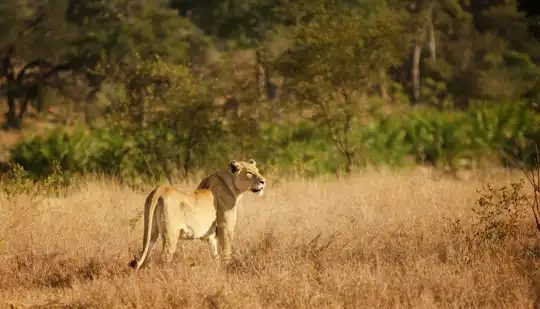
South Africa - Kruger National Park

2 Kgalagadi Transfrontier Park

Kalahari lions, fossil riverbeds, red dunes, meerkat burrows

Sit in your car along the dry Nossob and Auob riverbeds for black-maned lions, cheetah on the flats, and meerkats at dawn.

3 iSimangaliso Wetland Park

Estuary hippo cruise, Cape Vidal reef, Sodwana diving, turtle nesting

Cruise Lake St Lucia among hippos and crocodiles, then snorkel warm tidal pools or dive the southernmost coral reefs in Africa.

4 Hluhluwe-iMfolozi Park

White rhino, black rhino, ranger-led walks, Hilltop ridge

Track rhino along river valleys and ridges, and step out on foot with an armed ranger to read the bush.

5 Garden Route National Park

Otter Trail, Touw River, forest boardwalks, coastal sections

Paddle tea-colored lakes near Wilderness and hike sea cliffs along the Tsitsikamma coast, where forest and surf sit minutes apart.

6 Tsitsikamma National Park

Otter Trail, Big Tree yellowwood, tidal pools, marine reserve

Hike coastal cliffs and fynbos or stroll boardwalks to a centuries-old yellowwood, with dolphins and seasonal whales off the headlands.

7 Pilanesberg National Park

Crater rim hills, Mankwe Dam hides, wild dogs, malaria-free Big Five

Self-drive an extinct volcano crater for rhino, elephant and lions, and sit in lakeside hides watching hippos and fish eagles.

8 Addo Elephant National Park

Hapoor waterhole, elephant herds, flightless dung beetles, Woody Cape dunes

Drive slow gravel loops to waterholes where elephant herds drink beside the road, then head to the coastal dunes for hiking.

9 Augrabies Falls National Park

56-meter gorge falls, Arrow Point, Moon Rock, quiver trees

Follow boardwalks to platforms above the Orange River plunge, then climb a granite dome at sunset for views across the plains.

10 Golden Gate Highlands National Park

Brandwag Buttress, black wildebeest, Basotho village, Lesotho border

Watch blesbok graze below glowing sandstone cliffs, then hike to Cathedral Cave or tour a re-created Basotho village.

11 Richtersveld Transfrontier Park

Orange River camps, quiver tree valley, halfmens trees, 4x4 desert tracks

Drive rough tracks through mountain desert to river camps, wander quiver trees among boulders, and cross to Namibia by pont.

12 De Hoop Nature Reserve

Southern right whales, Whale Trail, Potberg vultures, empty dunes

Watch whales and calves rest in the shallows from July to November, then walk or cycle fynbos flats and white dunes.

13 Cederberg Wilderness Area

Wolfberg Cracks, Maltese Cross, San paintings, permit-capped hiking

Scramble through sandstone passages and past freestanding rock pillars on unmarked routes, with ancient paintings sheltered in overhanging caves.

14 Storms River Mouth

77 m suspension bridge, Waterfall Trail, river-mouth rock pools, gorge kayaking

Cross a swaying bridge above the surf, hop boulders to a waterfall, and paddle the forested gorge upriver.

15 Mapungubwe National Park

Mapungubwe Hill, golden rhino, Limpopo confluence, baobab river road

Join a guided climb to the royal burial hill, then look across the Limpopo into Botswana and Zimbabwe from the boardwalk.

16 West Coast National Park

Langebaan Lagoon, Postberg flowers, wader hides, bontebok roadsides

Watch migrant waders from hides over the salt marsh, then visit the turquoise lagoon and spring daisy carpets at Postberg.

17 Mountain Zebra National Park

Mountain zebra herds, cheetah tracking, Kranskop loop, Karoo plateau

Follow guided drives to radio-collared cheetah, then climb the plateau loop for zebra, eland and wide Karoo views.

18 Marakele National Park

Cape vulture cliffs, Waterberg summit road, Tlopi Dam, rock art shelters

Climb a steep road to near 2,000 meters and watch vultures wheel on thermals, then camp by a dam frequented by elephants.

19 Bontebok National Park

Bontebok plains, Breede River, spring fynbos, Langeberg backdrop

Spot white-faced antelope on the loop road, then paddle or swim the Breede River beside the rest camp.

20 Baviaanskloof Wilderness Area

Gravel kloof road, river fords, Smitskraal hot springs, San rock art

Crawl a lightly traveled 4x4 route over passes and river crossings, with a soak in warm spring water after the dust.

21 Camdeboo National Park

Dolerite pillars, Valley of Desolation, Graaff-Reinet edge, Nqweba Dam

Walk the rim among rock columns rising about 120 meters, then drive the plains loop to a viewpoint over town.

22 Ithala Game Reserve

Ntshondwe cliffs, Pongola River, rhino slopes, guided bush walks

Overnight beneath glowing rock faces, drive down to the Pongola lowlands, and walk with a ranger toward rhino.

23 Mokala National Park

Black rhino breeding, roan and sable, camel thorn trees, Lilydale waterhole

Self-drive Kalahari-edge savanna for rare antelope and rhino, and park at a waterhole where giraffe and kudu come to drink.

24 Anysberg Nature Reserve

Cape mountain zebra, quartzite ridges, Karoo stargazing, 4x4 tracks

Camp on open Karoo veld beneath dark skies, scan the slopes at dusk for mountain zebra, and walk without marked paths.

25 Mongena Private Game Reserve

Open-vehicle drives, lion prides, sundowner stop, night spotlighting

Ride guided drives through bushveld near Pretoria to find lions, rhino and elephants, with spotlight outings after dark.

Think you know South Africa?

Prove you’re a true local — uncover 15 lesser-known national parks in South Africa that locals tend to keep to themselves.
Loading the map 🌍

Expert viewTips and Advice from Travelers

How many parks to visit: Two to four parks is the right number for most backpackers, and three is the usual sweet spot. Each park needs at least two nights to be worth the entry fee, and the long drives between them eat the rest of your time. Five or more means you spend your trip in the car. Pick one big-game park, one coastal or mountain park, and add a desert one only if you have the days.

Which kind to prioritize: If wildlife is the point, spend your money on a big-game park with a bushveld setting and skip the smaller reserves that need a long detour for a few hours of viewing. If you want to hike cheaply, the coastal and mountain parks win, with long trails and basic huts. If you want solitude and night skies, the arid parks are the best value, though fuel and distance are real constraints. … read more 👉
How many parks to visit: Two to four parks is the right number for most backpackers, and three is the usual sweet spot. Each park needs at least two nights to be worth the entry fee, and the long drives between them eat the rest of your time. Five or more means you spend your trip in the car. Pick one big-game park, one coastal or mountain park, and add a desert one only if you have the days.

Which kind to prioritize: If wildlife is the point, spend your money on a big-game park with a bushveld setting and skip the smaller reserves that need a long detour for a few hours of viewing. If you want to hike cheaply, the coastal and mountain parks win, with long trails and basic huts. If you want solitude and night skies, the arid parks are the best value, though fuel and distance are real constraints. Anyone short on time and cash should choose a single anchor park and stay inside the gate.

What it actually costs: Budget US$45 to 90 a day for a self-drive traveler sharing costs, and US$30 to 50 if you camp and cook. Daily conservation fees for foreign visitors usually run about R300 to R600 (US$16 to 33) per adult, with the busiest parks at the top of that range. Campsites cost roughly R250 to R600 per site, and basic huts or bungalows run R900 to R2,500 (US$50 to 135). A guided dawn or night drive costs R350 to R700 (US$19 to 38) per person, and a guided walk is similar. A rental car is the biggest line, around R350 to R700 (US$19 to 38) a day for a small car plus fuel, and a Wild Card can save money only if you stay at several SANParks parks in one year.

Costs and delays that catch travelers out: Late booking is the biggest one. Camps in popular parks sell out many months ahead for school holidays, so reserve early and keep your dates flexible. Another is gate times. Gates close at sunset, and arriving late can mean a fine or a night outside, so check the closing time and leave plenty of margin. Fuel is the third trap. In remote regions, stations can be 100 to 300 km apart, so fill up at every chance. Carry a card and some cash, as small gates sometimes have patchy card machines.

Safety inside the parks: Stay in your car except at marked picnic sites and viewpoints. Elephants, lions and hippos are dangerous even when they look calm, and a vehicle should keep a clear distance. Keep windows up around primates, which will grab food. Malaria is a risk in the northeast lowveld, especially from November to April, so speak to a travel doctor about prophylaxis. Drink bottled or treated water if you are unsure. Outside the gate, do not leave valuables visible in a parked car, and avoid driving after dark.

Cultural considerations: Many parks sit next to communities that were displaced when the land was fenced, and community-run reserves and concessions are growing. Tip guides and camp staff about 10 percent, or R50 to R100 per person per activity. Buy crafts and food from local vendors at the gate when you can. Greet staff before asking for something, because it is the normal courtesy. Drones are banned in nearly all parks without permits, and photographing local people needs permission.

What not to spend on: Skip expensive private game drives if you already have a vehicle and a tight budget, unless a guide gives access to night drives or walking you cannot do yourself. A single guided night drive is worth the money, since self-drivers are not allowed out after gates close. Everything else can be done independently.

✈️ The backpacker research shortcutSouth Africa Travel Guide

An offline-friendly backpacking guide with optimized travel routes, ranked highlights, transport advice, and the best areas to stay.
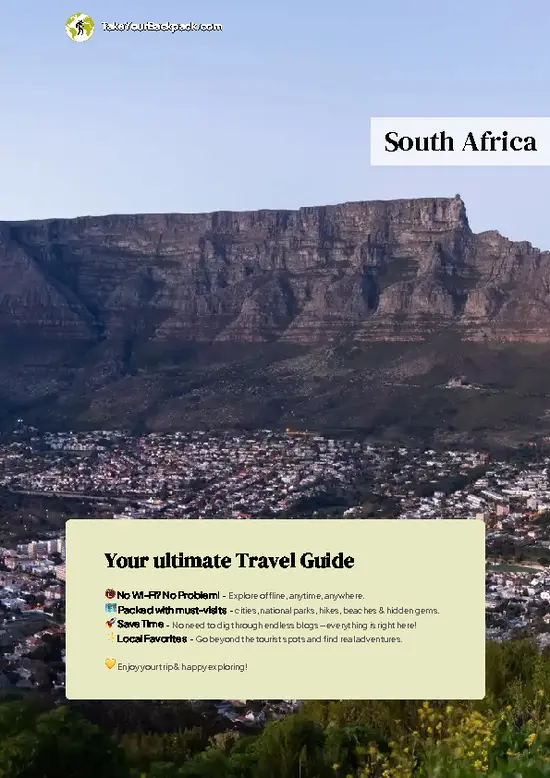
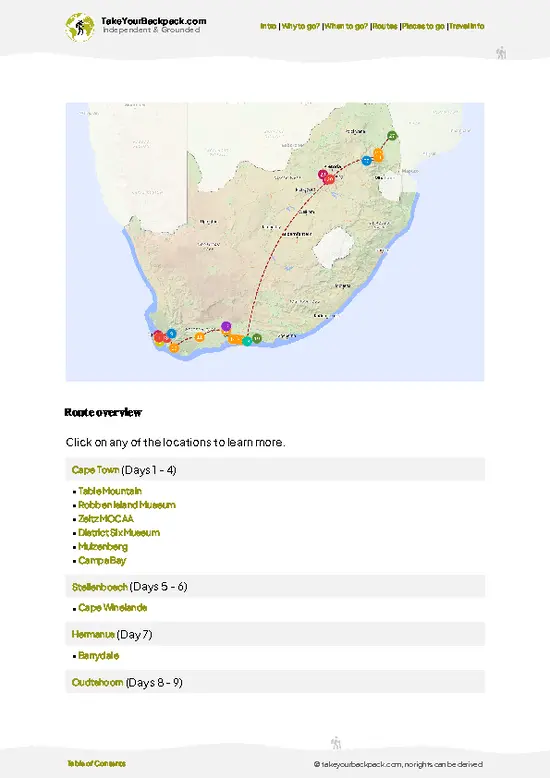
example page 0 from our offline Travel Guide for South Africa
example page 1 from our offline Travel Guide for South Africa
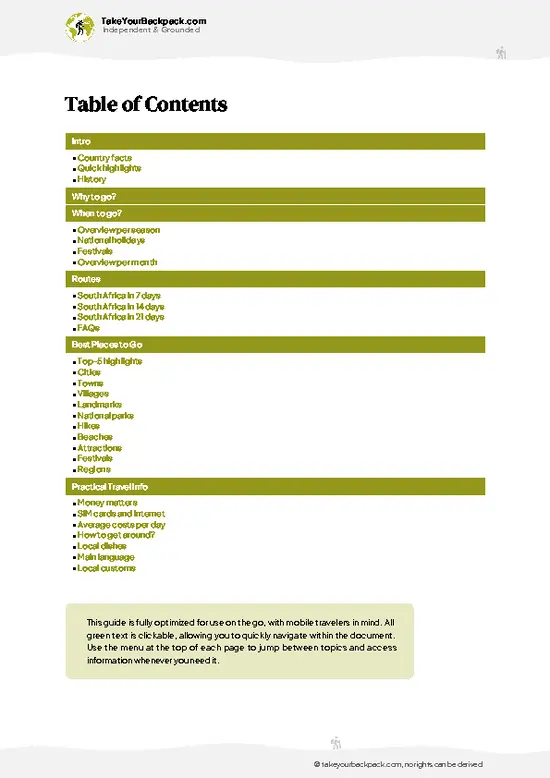
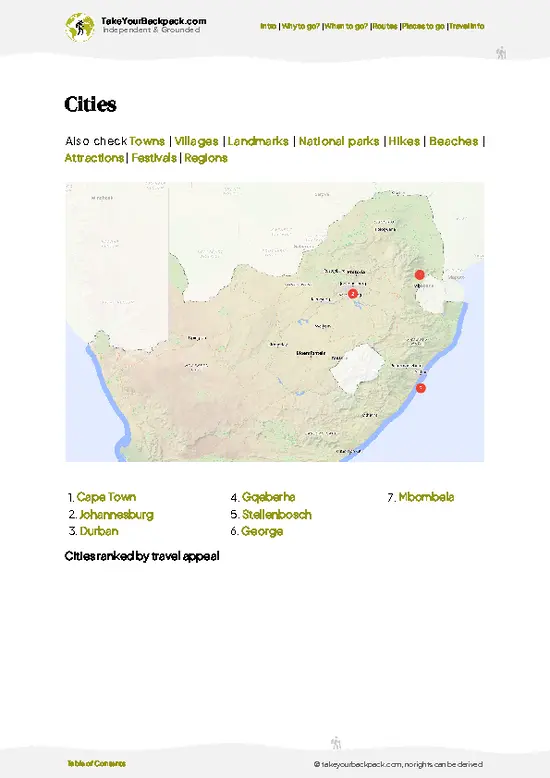
example page 2 from our offline Travel Guide for South Africa
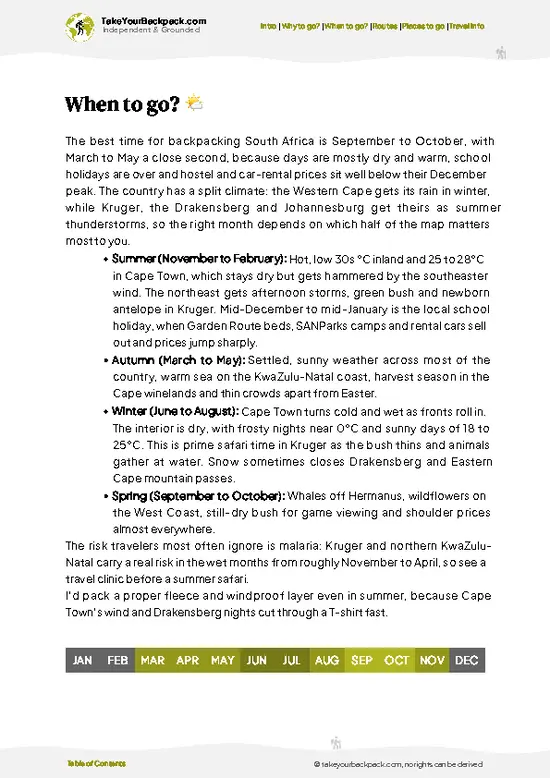
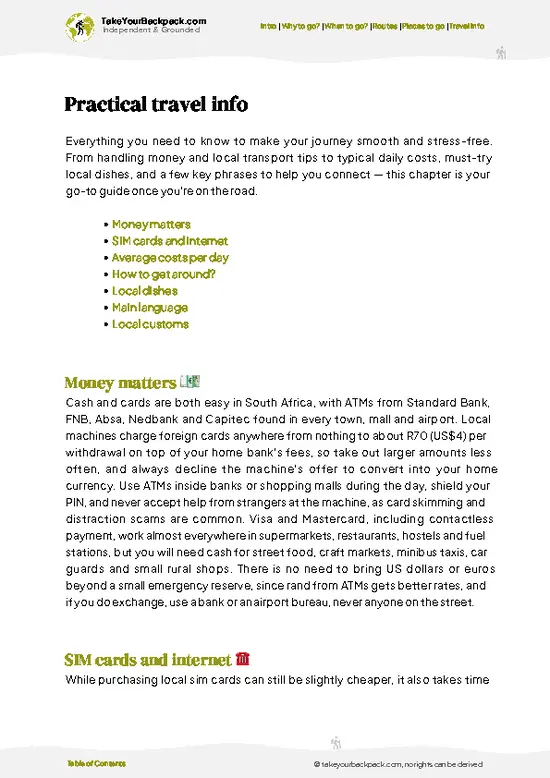
example page 3 from our offline Travel Guide for South Africa
example page 4 from our offline Travel Guide for South Africa
example page 5 from our offline Travel Guide for South Africa
example page 6 from our offline Travel Guide for South Africa
example page 7 from our offline Travel Guide for South Africa
The digital guide (457 pages) contains:
✅ 125 highlights, ranked by travel appeal
✅ Optimized 7, 14 & 21-day travel routes
✅ Cities, national parks, landmarks, beaches
✅ How to get around
✅ Offline-friendly for travel without Wi-Fi
👉 Click to see all 30+ guide features

📅 Plan smarter in minutes, not weeks
✅ Month by month travel advice
✅ Festivals & national holidays
✅ Budget expectations

🗺️ Go to the right places, skip the overrated ones
✅ Honest pros & cons of destinations
✅ Top hikes, parks & viewpoints
✅ Lesser-known places most travelers miss
✅ Clear “worth it vs skip it” guidance

🛏️ Travel smoothly without rookie mistakes
✅ Best areas to stay
✅ Transport systems explained simply
✅ Common scams & safety advice
✅ SIM cards, money & practical tips

🌍 Understand the country, not just visit it
✅ Culture & traditions
✅ 52 Essential phrases & customs
✅ Festivals worth planning around
✅ Traveler-friendly historical context
✅ Insights that make places more meaningful

📱 Built for real travel conditions
✅ Fully downloadable PDF
✅ Works completely offline
✅ Optimized for phone use
✅ Useful in remote areas & buses
✅ Everything in one place
Stop searching, start planning
Get instant access to your full guide. 30‑day money-back guarantee.
+ Add another guide for just

By proceeding you agree to our terms.
Sent to your inbox immediately after payment • 100% Secure Checkout
Best Backpacking Travel Advisor 2025 tourism awardBest Backpacking
Travel Advisor
2025
What others say about Take Your Backpack Guides:
⭐⭐⭐⭐⭐
Fantastic, amazing amount of information!
⭐⭐⭐⭐⭐
My goodness this is amazing, it's what I've been looking for hats off too you!
⭐⭐⭐⭐⭐
I think this is absolutely BRILLIANT
⭐⭐⭐⭐
Very complete and informative. It's still missing places, but I gotta to commend you
⭐⭐⭐⭐⭐
This is truly amazing, thank you, can't wait to explore it with my kids!
⭐⭐⭐⭐⭐
Awesome resource, thank you!
⭐⭐⭐⭐⭐
This is amazing! Can't wait to explore the ones I haven't seen
⭐⭐⭐⭐
I love this! Well done, great idea.
⭐⭐⭐⭐⭐
Thanks for taking the time to make this gem!
⭐⭐⭐⭐⭐
This might be the best website I've ever seen.
⭐⭐⭐⭐⭐
Congratulations, and thank you so much for your work; it's incredibly valuable.
⭐⭐⭐⭐
In all seriousness I think you did a great job pointing out the important spots
⭐⭐⭐⭐⭐
10/10 very good
⭐⭐⭐⭐⭐
As someone who's only just starting to visit regularly this is awesome, thank you.
⭐⭐⭐⭐
Thank you very much! I'm going to visit my dad, it's going to be very useful!
⭐⭐⭐⭐⭐
This is really cool! We'll be travelling for the first time and this definitely come in handy.
⭐⭐⭐⭐⭐
You are now our minister of culture, congratulations 👨‍💼
⭐⭐⭐⭐⭐
Just wanted to tell you that this is a pearl! Going to follow your recommendations.
⭐⭐⭐⭐⭐
This is so cool. I'll definitely be using the resource for my travels soon.
⭐⭐⭐⭐⭐
This is very impressive! Good work.
⭐⭐⭐⭐⭐
This is an amazing and informative site. Very well done!

🛏️ Where to stay?Where to Stay: South Africa Edition

South Africa has a dense hostel network, with dorm beds typically running R250 to 450 (about US$14 to 25) and private doubles from roughly R700 to 1,200 (US$38 to 65), especially in Cape Town and along the Garden Route in towns like Knysna and Wilderness. In Cape Town, the City Bowl around Long Street puts you near Table Mountain trailheads and the loudest bars but gets sketchy after dark, while Sea Point trades nightlife for a seafront promenade and calmer streets with easy minibus taxi links into town. In Johannesburg, leafy Melville is the safer, low-key pick with a strip of student bars, whereas Maboneng has the street art and weekend buzz but sits in an area where you should take an e-hailing … read more 👉
South Africa has a dense hostel network, with dorm beds typically running R250 to 450 (about US$14 to 25) and private doubles from roughly R700 to 1,200 (US$38 to 65), especially in Cape Town and along the Garden Route in towns like Knysna and Wilderness. In Cape Town, the City Bowl around Long Street puts you near Table Mountain trailheads and the loudest bars but gets sketchy after dark, while Sea Point trades nightlife for a seafront promenade and calmer streets with easy minibus taxi links into town. In Johannesburg, leafy Melville is the safer, low-key pick with a strip of student bars, whereas Maboneng has the street art and weekend buzz but sits in an area where you should take an e-hailing ride at night, and in Durban the Morningside area around Florida Road offers restaurants and relative quiet a short drive from the beachfront.

If you enjoy meeting fellow travelers, consider choosing hostels with high ratings for atmosphere. On the other hand, if you prefer having your own space, a hotel might be a better option.

South AfricaExplore Beyond This Category

👋 Meet the founderWho’s Behind Take Your Backpack?

Johan, backpacker and founder of TakeYourBackpackHi, I’m Johan (Netherlands 🇳🇱), the creator of TakeYourBackpack. Over the past 3 decades, I’ve backpacked through 90+ countries across six continents, gaining extensive experience with independent travel, long-term trips, and overland routes.

This site is built on a combination of firsthand travel experience and carefully curated insights from other backpackers. Many guides are based on places I’ve personally visited, while others bring together tips, observations, and practical advice shared by trusted travelers I’ve met along the way.

The goal is to provide realistic, experience-driven guidance — not generic itineraries — so you can explore destinations with better context, clearer expectations, and more confidence.