×

South Africa🇿🇦 | regionsCape Winelandsvineyard landscapes, Cape Dutch estates, mountain backdrops, cellar tastings | things to do and best time to go

Explore Anysberg Nature ReserveExplore Garden Route

Backpacking in Cape Winelands
🏆 Top pickregion ranked #2
By Johan Kruseman 🇳🇱 | Updated September 3, 2026

Here’s the trick nobody tells you until you’re already packing up: in the Cape Winelands, you can hop between world-class vineyards, mountain trails, and farm-to-table feasts without ever needing a car—if you time your route with the local minibuses and wine trams. The Cape Winelands sits just east of Cape Town, tucked behind the first blue ridges you see from the city, and it’s the kind of place that makes you wonder why you ever paid for a wine tour in France. For backpackers, it’s a double-edged sword: the scenery is outrageously good (think jagged peaks, rolling vineyards, and old Dutch towns like Stellenbosch and Franschhoek), but the region is no secret. Prices spike in high season, and Stellenbosch especially can feel like a student party with a luxury price tag. Still, compared to the Garden Route or Cape Town proper, the Winelands delivers more flavor per rand—if you’re willing to trade a bit of comfort for local buses and picnic lunches in the vines.

Discover everything you want to know in the 📖 South Africa Travel Guide.
Loading the map 🌍
CLICK TO FILTER
cities
towns
villages
landmarks
national parks
hikes
beaches
attractions
festivals
regions
SHOW COUNTRY’S BESTSHOW ALL

✨ Why go?
Ranked #2 region in South Africa
What makes it a must-see region

In the Cape Winelands, backpackers find a sweet spot where nature and culture collide. You can explore diverse landscapes without the hassle of constant relocation. Picture this: rolling vineyards, rugged mountains, and quaint towns all within a short drive or bike ride.

The transport flexibility here is a game changer. Rent a car or hop on a local shuttle; either way, you’re in control. Want to sip wine in Stellenbosch? Go for it. Prefer the laid-back vibe of Franschhoek? Easy choice.

What’s more, this region thrives on slow travel. You can spend a leisurely afternoon at a vineyard, tasting local wines and pairing them with artisanal cheeses. It’s not just about the wine; it’s about the experience.

You’ll also find plenty of cultural experiences—from art galleries to local markets—without … read more 👉
In the Cape Winelands, backpackers find a sweet spot where nature and culture collide. You can explore diverse landscapes without the hassle of constant relocation. Picture this: rolling vineyards, rugged mountains, and quaint towns all within a short drive or bike ride.

The transport flexibility here is a game changer. Rent a car or hop on a local shuttle; either way, you’re in control. Want to sip wine in Stellenbosch? Go for it. Prefer the laid-back vibe of Franschhoek? Easy choice.

What’s more, this region thrives on slow travel. You can spend a leisurely afternoon at a vineyard, tasting local wines and pairing them with artisanal cheeses. It’s not just about the wine; it’s about the experience.

You’ll also find plenty of cultural experiences—from art galleries to local markets—without feeling rushed. This blend of adventure and relaxation makes the Cape Winelands a must-visit. You’re not just a tourist; you’re part of a vibrant community, soaking in the essence of South Africa.
Want to include Cape Winelands in your South Africa route?
Create a personalized South Africa itinerary that includes Cape Winelands and the places that fit your trip — based on your travel style, budget, and available time. Get your route in seconds.

Generate my trip

💡 HighlightsDon't-miss highlights and experiences

  1. Stellenbosch historic core (Dorp Street & oak-lined lanes) — One of the richest concentrations of authentic Cape Dutch architecture in South Africa: narrow streets, 18th-/19th-century homesteads, tiny independent galleries and coffee spots run by students and locals. It’s the texture of the Winelands — history, art and everyday life — all within easy walking distance.
  2. Jonkershoek Nature Reserve — Rugged fynbos, clear mountain streams and proper hikes (from easy to all-day scrambles) under the Simonsberg and Jonkershoek ranges. Waterfalls, singletrack for mountain bikers and views that show why this valley is a backbone of Stellenbosch outdoor life.
  3. Babylonstoren Garden & Farm — An 18th-century farm reworked into one of the most impressive kitchen gardens in the country. Wander geometric
read more 👉
  1. Stellenbosch historic core (Dorp Street & oak-lined lanes) — One of the richest concentrations of authentic Cape Dutch architecture in South Africa: narrow streets, 18th-/19th-century homesteads, tiny independent galleries and coffee spots run by students and locals. It’s the texture of the Winelands — history, art and everyday life — all within easy walking distance.
  2. Jonkershoek Nature Reserve — Rugged fynbos, clear mountain streams and proper hikes (from easy to all-day scrambles) under the Simonsberg and Jonkershoek ranges. Waterfalls, singletrack for mountain bikers and views that show why this valley is a backbone of Stellenbosch outdoor life.
  3. Babylonstoren Garden & Farm — An 18th-century farm reworked into one of the most impressive kitchen gardens in the country. Wander geometric beds, smell the herbs, eat at the farm-to-table restaurant and pick up preserves — the design, variety and hands-on food experience are very Winelands-specific.
  4. Franschhoek Valley & Mont Rochelle foothills — The valley’s steep, lavender-lined passes, tiny wineries and French Huguenot legacy combine with world-class food culture. Hike Mont Rochelle for views over the vineyard terraces, then sit at a small bakers’ or artisanal deli in the village for something real and local.
  5. Paarl Rock (Paarl Mountain Nature Reserve) — A massive, walkable granite tor you can scramble up for sweeping panoramas of the Winelands and distant ocean. The rock pools and small trails feel more like a locals’ playground than a polished attraction — great for sunrise or a quiet afternoon.
  6. Bain’s Kloof Pass (Wellington) — A classic 19th-century mountain pass through a sandstone gorge, with waterfalls, rock pools and old masonry bridges. Drive it slowly, stop for short walks and bring a picnic; this is where residents go for a day out when they want nature without the crowds.
  7. Tulbagh’s Church Street & Valley architecture — One of the best-preserved clusters of original Cape Dutch houses and gables in the country, set against folded mountain walls. It’s small-town charm with authentic historic buildings, quiet galleries and fruit orchards nearby — a genuine Winelands village that many visitors miss.
  8. Simonsberg foothills and vineyards — The mountain that anchors several wine estates; short ridge hikes and vineyard walks here feel intimate and geological — the basalt and granite soils shape wines you won’t find elsewhere. Less theatrical than Franschhoek, more about terroir and honest walks between vines.
  9. Matroosberg & Hex River Mountains (seasonal) — High alpine plateaus in the Breede Valley where you can find snow in winter, dramatic rock faces and remote hiking routes. It’s wild country within the broader Winelands district — quiet, dramatic and very different from the valley floors.
  10. Helshoogte Pass viewpoint & back-road vineyard loops — Hidden gem: a short, dramatic ridge drive between Stellenbosch and Franschhoek with fantastic sunrise/sunset viewpoints. Skip the main tasting rooms and follow the small gravel spurs into family farms and roadside stalls for olives, biltong and casual vineyard walks that locals love.
Spotted a mistake or missing something? Contact us.

Things to do near Cape Winelands

Ratings based on Tripadvisor reviews. When you book through this link, you support our work at no extra cost to you.

⌛️ 5 daysHow to make the most of Cape Winelands

Day 1: Stellenbosch
Stellenbosch is your launchpad. This charming town is the heart of the Cape Winelands, where the transport system is your best friend. The local bus service is reliable, and rideshare apps are widely used. Spend your day wandering the oak-lined streets, tasting local wines, and indulging in artisanal food. The vibe here is relaxed, making it easy to acclimate. You’ll want to hit the Stellenbosch Wine Route, which is well-marked and accessible.

Day 2: Franschhoek
A short bus ride or a scenic bike ride takes you to Franschhoek, the culinary capital of South Africa. This town is all about the food and wine pairings. The transport options are limited, so plan to stay a while. Enjoy a leisurely lunch at one of the many vineyards, then take the Franschhoek Wine Tram for … read more 👉
Day 1: Stellenbosch
Stellenbosch is your launchpad. This charming town is the heart of the Cape Winelands, where the transport system is your best friend. The local bus service is reliable, and rideshare apps are widely used. Spend your day wandering the oak-lined streets, tasting local wines, and indulging in artisanal food. The vibe here is relaxed, making it easy to acclimate. You’ll want to hit the Stellenbosch Wine Route, which is well-marked and accessible.

Day 2: Franschhoek
A short bus ride or a scenic bike ride takes you to Franschhoek, the culinary capital of South Africa. This town is all about the food and wine pairings. The transport options are limited, so plan to stay a while. Enjoy a leisurely lunch at one of the many vineyards, then take the Franschhoek Wine Tram for a unique experience. It’s a hop-on, hop-off service that lets you explore at your own pace.

Day 3: Paarl
Next, head to Paarl. The bus system connects well, but it’s less frequent, so check the schedule. Paarl is less touristy, giving you a more authentic experience. Visit the historic sites and sample local wines at the smaller estates. The slower pace here allows for deeper conversations with locals, which is a treasure in itself.

Day 4: Off-Path Reward: Wellington
Take a detour to Wellington, just a short bus ride from Paarl. This hidden spot is often overlooked but offers fantastic wine and a glimpse into local life. The smaller wineries here are welcoming and often have fewer crowds. You’ll find unique varietals that you won’t taste elsewhere.

Day 5: Back to Stellenbosch
Return to Stellenbosch for your final day. Use this time to revisit your favorite spots or discover new ones. The transport system makes it easy to hop around. This day is about soaking it all in, reflecting on your journey, and perhaps picking up a few bottles to take home.

The must-do day? Day 2 in Franschhoek. The combination of exquisite food, stunning scenery, and the Wine Tram experience makes it the highlight of the trip. You’ll leave feeling like a local, not just a visitor.
Turn your Cape Winelands visit into an South Africa adventure
Build a complete South Africa route with Cape Winelands, hidden gems, must-see destinations, and realistic travel times included.

Generate my trip

🌤️ When to go?Weather, crowds, and seasonal trade-offs


  • Weather: Cape Winelands enjoys a Mediterranean climate. Summers (December to February) hit highs around 28-32°C (82-90°F), perfect for vineyard strolls but can get scorchingly dry. Winters (June to August) drop to 7-18°C (45-64°F), bringing crisp mornings and occasional rain—great for cozy wine tastings.

  • Daylight Hours: Summer days stretch long, with up to 14 hours of light, giving you more time to explore estates and hike. Winter cuts daylight to about 10 hours, so plan your outdoor adventures accordingly.

  • Crowds: Peak season aligns with summer and harvest time (February to April). Expect busier tasting rooms and higher prices. Off-peak months (May to September) offer a quieter, more intimate vibe, letting you savor the region without elbowing through crowds.

  • Seasonal Activities:
read more 👉

  • Weather: Cape Winelands enjoys a Mediterranean climate. Summers (December to February) hit highs around 28-32°C (82-90°F), perfect for vineyard strolls but can get scorchingly dry. Winters (June to August) drop to 7-18°C (45-64°F), bringing crisp mornings and occasional rain—great for cozy wine tastings.

  • Daylight Hours: Summer days stretch long, with up to 14 hours of light, giving you more time to explore estates and hike. Winter cuts daylight to about 10 hours, so plan your outdoor adventures accordingly.

  • Crowds: Peak season aligns with summer and harvest time (February to April). Expect busier tasting rooms and higher prices. Off-peak months (May to September) offer a quieter, more intimate vibe, letting you savor the region without elbowing through crowds.

  • Seasonal Activities: Harvest season is a highlight—think grape stomping, cellar tours, and festivals. Spring (September to November) bursts with wildflowers and fresh greenery, ideal for photographers and nature lovers.

  • Price Fluctuations: Accommodation and tours spike during harvest and summer holidays. Booking in shoulder seasons (March-April or September-November) can score you better deals without sacrificing the experience.


Pro-tip: Aim for late March to early April—post-harvest buzz, mild weather, fewer crowds, and wallet-friendly rates. It’s the sweet spot where you get the vibe without the hassle.


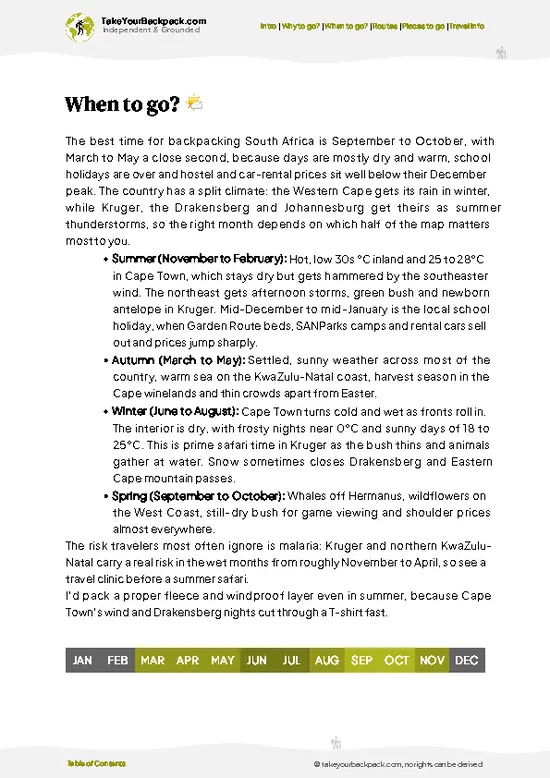
source: climatestotravel.comJANJanuary: highly recommended for travelingFEBFebruary: good for travelingMARMarch: highly recommended for travelingAPRApril: excellent for travelingMAYMay: highly recommended for travelingJUNJune: good for travelingJULJuly: good for travelingAUGAugust: good for travelingSEPSeptember: highly recommended for travelingOCTOctober: excellent for travelingNOVNovember: highly recommended for travelingDECDecember: highly recommended for traveling
when-to-go

✈️ The backpacker research shortcutSouth Africa Travel Guide

An offline-friendly backpacking guide with optimized travel routes, ranked highlights, transport advice, and the best areas to stay.
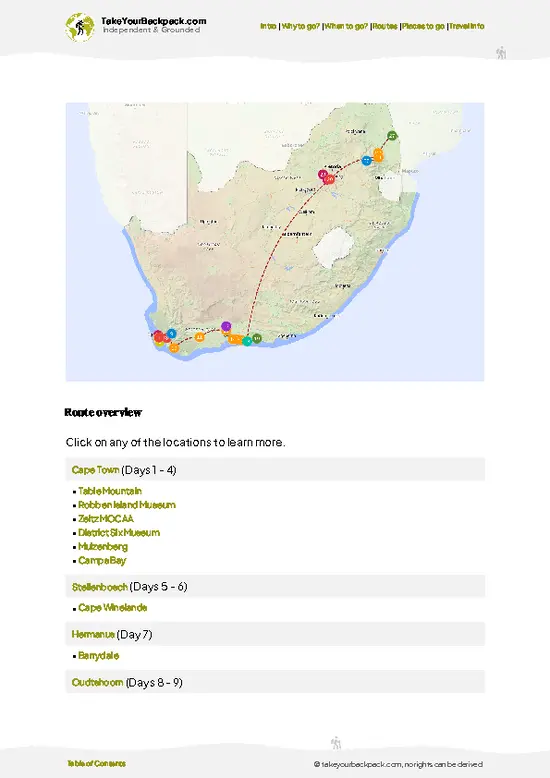
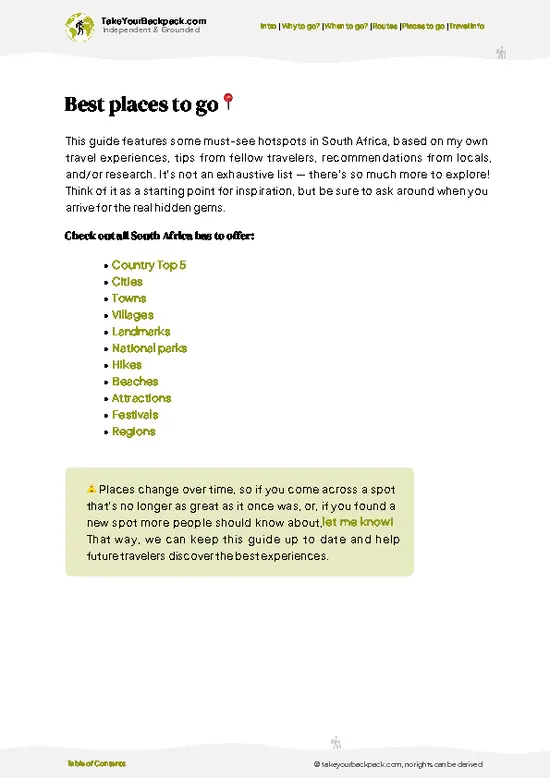
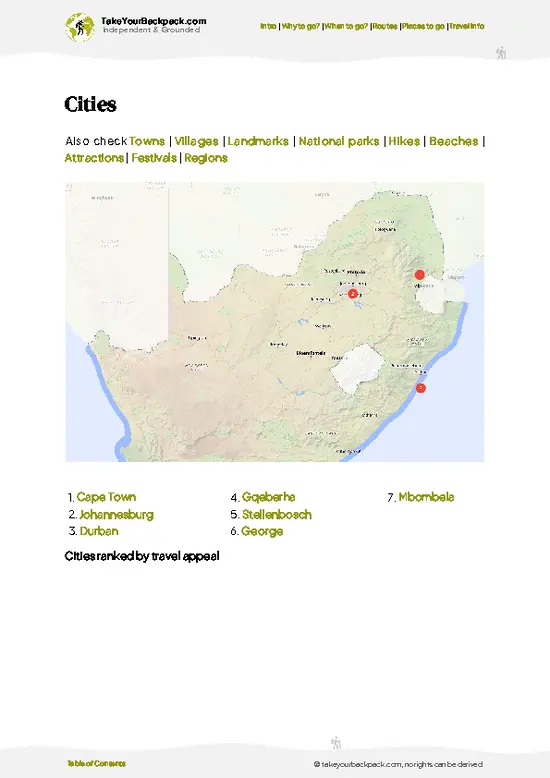
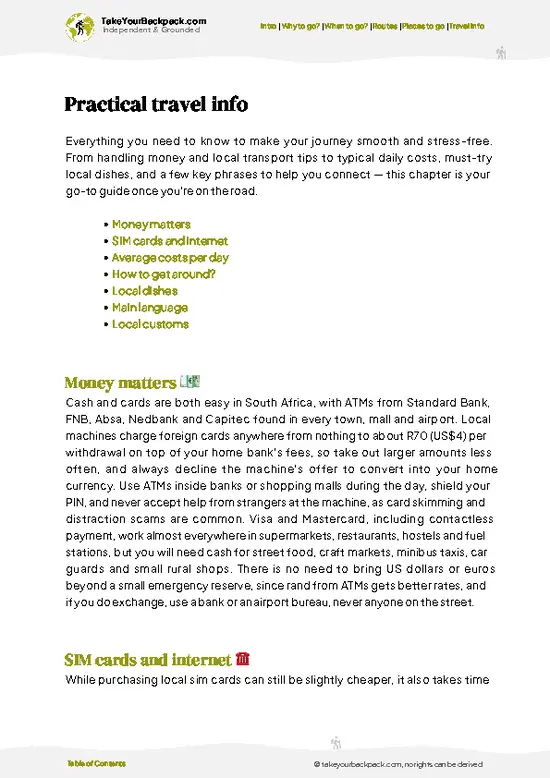
example page 0 from our offline Travel Guide for South Africa
example page 1 from our offline Travel Guide for South Africa
example page 2 from our offline Travel Guide for South Africa
example page 3 from our offline Travel Guide for South Africa
example page 4 from our offline Travel Guide for South Africa
example page 5 from our offline Travel Guide for South Africa
example page 6 from our offline Travel Guide for South Africa
example page 7 from our offline Travel Guide for South Africa
The digital guide (453 pages) contains:
129 highlights, ranked by travel appeal
Optimized 7, 14 & 21-day travel routes
Cities, national parks, landmarks, beaches
How to get around
Offline-friendly for travel without Wi-Fi
👉 Click to see all 30+ guide features

📅 Plan smarter in minutes, not weeks
Month by month travel advice
Festivals & national holidays
Budget expectations

🗺️ Go to the right places, skip the overrated ones
Honest pros & cons of destinations
Top hikes, parks & viewpoints
Lesser-known places most travelers miss
Clear “worth it vs skip it” guidance

🛏️ Travel smoothly without rookie mistakes
Best areas to stay
Transport systems explained simply
Common scams & safety advice
SIM cards, money & practical tips

🌍 Understand the country, not just visit it
Culture & traditions
Local customs
Festivals worth planning around
Traveler-friendly historical context
Insights that make places more meaningful

📱 Built for real travel conditions
Fully downloadable PDF
Works completely offline
Optimized for phone use
Useful in remote areas & buses
Everything in one place
Save weeks of stressful planning
Get instant access to your full guide. 30‑day money-back guarantee.
+ Add another guide for just US$7.80

By proceeding you agree to our terms.
Sent to your inbox immediately after payment • 100% Secure Checkout
Best Backpacking Travel Advisor 2025 tourism awardBest Backpacking
Travel Advisor
2025
What others say about Take Your Backpack Guides:
⭐⭐⭐⭐⭐
Fantastic, amazing amount of information!
⭐⭐⭐⭐⭐
My goodness this is amazing, it's what I've been looking for hats off too you!
⭐⭐⭐⭐⭐
I think this is absolutely BRILLIANT
⭐⭐⭐⭐
Very complete and informative. It's still missing places, but I gotta to commend you
⭐⭐⭐⭐⭐
This is truly amazing, thank you, can't wait to explore it with my kids!
⭐⭐⭐⭐⭐
Awesome resource, thank you!
⭐⭐⭐⭐⭐
This is amazing! Can't wait to explore the ones I haven't seen
⭐⭐⭐⭐
I love this! Well done, great idea.
⭐⭐⭐⭐⭐
Thanks for taking the time to make this gem!
⭐⭐⭐⭐⭐
This might be the best website I've ever seen.
⭐⭐⭐⭐⭐
Congratulations, and thank you so much for your work; it's incredibly valuable.
⭐⭐⭐⭐
In all seriousness I think you did a great job pointing out the important spots
⭐⭐⭐⭐⭐
10/10 very good
⭐⭐⭐⭐⭐
As someone who's only just starting to visit regularly this is awesome, thank you.
⭐⭐⭐⭐
Thank you very much! I'm going to visit my dad, it's going to be very useful!
⭐⭐⭐⭐⭐
This is really cool! We'll be travelling for the first time and this definitely come in handy.
⭐⭐⭐⭐⭐
You are now our minister of culture, congratulations 👨‍💼
⭐⭐⭐⭐⭐
Just wanted to tell you that this is a pearl! Going to follow your recommendations.
⭐⭐⭐⭐⭐
This is so cool. I'll definitely be using the resource for my travels soon.
⭐⭐⭐⭐⭐
This is very impressive! Good work.
⭐⭐⭐⭐⭐
This is an amazing and informative site. Very well done!

🛏️ Where to stay?Best areas to stay in South Africa

In the Cape Winelands, you’ve got a few standout spots that scream “backpacker-friendly.” First up, Stellenbosch. This town is a vibrant hub for young travelers. The streets buzz with energy, thanks to its university crowd. You’ll find plenty of cafes and bars where you can swap stories over a glass of local wine. Plus, it’s a great base for exploring nearby vineyards on foot or by bike.

Next, consider Franschhoek. It’s a bit more upscale but still welcoming. The charm here is palpable, with its French heritage and stunning mountain backdrop. While it’s known for fine dining, you can find budget-friendly … read more 👉
In the Cape Winelands, you’ve got a few standout spots that scream “backpacker-friendly.” First up, Stellenbosch. This town is a vibrant hub for young travelers. The streets buzz with energy, thanks to its university crowd. You’ll find plenty of cafes and bars where you can swap stories over a glass of local wine. Plus, it’s a great base for exploring nearby vineyards on foot or by bike.

Next, consider Franschhoek. It’s a bit more upscale but still welcoming. The charm here is palpable, with its French heritage and stunning mountain backdrop. While it’s known for fine dining, you can find budget-friendly eateries that serve up hearty meals. The town is compact, making it easy to navigate and socialize.

Then there’s Paarl. Less touristy, but that’s its charm. It’s got a laid-back vibe, and you’ll meet fellow travelers in local markets and parks. The scenery is breathtaking, with rolling hills and vineyards stretching as far as the eye can see.

Each of these towns offers a unique flavor of the Winelands, balancing safety, social opportunities, and budget-friendly options. Choose wisely, and you’ll create memories that linger long after the last sip of wine.

🚌 Getting aroundGetting around like a local

The Cape Winelands is a dance of time and taste, where the rhythm is set by the sun and the seasons rather than rigid schedules. Picture this: rolling vineyards stretching as far as the eye can see, each twist and turn revealing a new winery or quaint town. Here, the vibe is relaxed, almost chaotic, as locals and travelers alike meander through the landscape, sipping wine and savoring life. You won’t find a strict timetable; instead, embrace the spontaneity. Let the day unfold as you hop from one charming spot to another, but be savvy about your transport choices to maximize your experience without breaking the bank.


  • Minibus Taxis: These are the lifeblood of local transport. They run frequently, often from dawn until dusk, and cost around R20-30 per trip. Expect a lively ride, packed with
read more 👉
The Cape Winelands is a dance of time and taste, where the rhythm is set by the sun and the seasons rather than rigid schedules. Picture this: rolling vineyards stretching as far as the eye can see, each twist and turn revealing a new winery or quaint town. Here, the vibe is relaxed, almost chaotic, as locals and travelers alike meander through the landscape, sipping wine and savoring life. You won’t find a strict timetable; instead, embrace the spontaneity. Let the day unfold as you hop from one charming spot to another, but be savvy about your transport choices to maximize your experience without breaking the bank.


  • Minibus Taxis: These are the lifeblood of local transport. They run frequently, often from dawn until dusk, and cost around R20-30 per trip. Expect a lively ride, packed with locals and a few tourists. They’re fast and can get you to major towns like Stellenbosch and Franschhoek, but be ready for a bit of a squeeze.


  • Rental Cars: If you crave freedom, renting a car is the way to go. Prices start at about R300 per day, depending on the season. You’ll have the flexibility to explore at your own pace, hitting those off-the-beaten-path wineries. Just keep in mind that parking can be tricky in busier areas, especially during peak season.


  • Bicycle Rentals: For the adventurous spirit, biking through the vineyards is a must. Rentals are around R150-250 per day. It’s a leisurely way to soak in the scenery, but be prepared for some hills. Plus, many wineries offer tastings that pair perfectly with a post-ride snack.


  • Uber: In towns like Stellenbosch, Uber is a reliable option. Fares vary but expect to pay R50-100 for short rides. It’s convenient, especially if you’ve indulged a bit too much at a tasting. Just keep your phone charged for easy access.


  • Shuttle Services: Many wineries offer shuttle services for tastings. Prices can range from R100-300, depending on the distance and number of stops. This is a great way to relax and enjoy the wine without worrying about transport.


Here’s a tactical tip: if you’re planning to visit multiple wineries in one day, consider booking a shuttle service in advance. It’s often cheaper than individual rides and lets you focus on the wine instead of logistics. Plus, you’ll feel like a local, effortlessly gliding from one tasting to the next. Cheers to that!

🍲 FoodWhat to Eat & Drink

In the Cape Winelands, food and drink are a celebration of local culture. Picture this: a charcuterie board brimming with biltong—that savory, dried meat that’s a must-try. Pair it with a glass of Pinotage, a uniquely South African wine that dances between fruity and smoky. The terroir here is rich, and you can taste it in every sip.

For a true local experience, hit up the markets. The Franschhoek Market is a treasure trove of artisanal goods. Grab a boerewors roll—a spicy sausage wrapped in a soft bun—and wash it down with a refreshing craft beer from a nearby stall. The atmosphere buzzes with laughter and chatter, making it easy to strike up conversations with locals.

Dining customs here lean toward casual. Don’t be surprised if you find yourself sharing a table with strangers; it’s all … read more 👉
In the Cape Winelands, food and drink are a celebration of local culture. Picture this: a charcuterie board brimming with biltong—that savory, dried meat that’s a must-try. Pair it with a glass of Pinotage, a uniquely South African wine that dances between fruity and smoky. The terroir here is rich, and you can taste it in every sip.

For a true local experience, hit up the markets. The Franschhoek Market is a treasure trove of artisanal goods. Grab a boerewors roll—a spicy sausage wrapped in a soft bun—and wash it down with a refreshing craft beer from a nearby stall. The atmosphere buzzes with laughter and chatter, making it easy to strike up conversations with locals.

Dining customs here lean toward casual. Don’t be surprised if you find yourself sharing a table with strangers; it’s all part of the charm. Tipping is appreciated, but not mandatory—round up your bill if you’re feeling generous.

When it comes to etiquette, savor your meal slowly. Meals are a time to connect, so don’t rush. Enjoy the flavors, the company, and the stunning views of the vineyards. This isn’t just food; it’s a taste of the region’s heart.

FAQCommon questions from travelers

2 to 3 days are sufficient to explore the main highlights of Cape Winelands, including Stellenbosch, Franschhoek, and Paarl. This allows time for wine tastings, vineyard tours, and sampling local cuisine. Extending to 4 days lets you explore smaller towns and more wineries at a relaxed pace.
Getting around Cape Winelands without a car is possible using shuttle services like Wine Flies and Wine Hopper, which offer daily routes between major towns and vineyards for around 150 to 300 ZAR per trip. Alternatively, guided wine tours provide transport and tastings in one package. Public transport options are limited and not recommended for tourists.
Cape Winelands is known for its world-class vineyards and wine production, particularly for varieties like Chenin Blanc, Pinotage, and Sauvignon Blanc. It is also famous for its scenic mountain landscapes, Cape Dutch architecture, and gourmet food experiences. The region hosts the annual Franschhoek Wine Festival every May.
⚠️ Things can change over time, so always validate details locally before you go.

Other South African regions near Cape Winelands

Explore more nearby:

  • West Coast—fishing villages, Atlantic beaches, seafood shacks, salt pans| 61 km away
  • Overberg region—wheat fields, whale coast, fynbos reserves, mountain passes| 77 km away
  • Garden Route—coastal forests, lagoons, seaside towns, scenic drives| 305 km away

💡 Not sure where to go next?
Create a personalized itinerary for South Africa including Cape Winelands and the places that fit your trip.

Generate my itinerary

👉 Discover all regions

Or checkout all South Africa has to offer (think cities, towns, villages, national parks, hikes, beaches, festivals)
Country photo of South Africa

We 💚 feedbackParting advice and final tips

Cape Winelands is a wine lover’s paradise. The rolling vineyards and charming towns like Stellenbosch and Franschhoek offer tastings that feel like a rite of passage. But here’s the kicker: it can get pricey, especially if you’re indulging in those gourmet meals. Plan your splurges wisely. Hit the local markets for a budget-friendly lunch and save your coins for that unforgettable wine pairing dinner. Balance is key, and trust me, it’s worth it.

✈️ When did I visit South Africa?
I have visited South Africa, before and after my Zimbabwe trip in 2001.

✍️ Help improve this page!
The information on this page is based on my own backpacking experience in South Africa, supplemented with up-to-date research and feedback from other travelers. Travel details can change, so if you notice anything outdated or incomplete, feel free to let me know.


🙋‍♂️ Give feedback

👋 Meet the founderWho’s Behind Take Your Backpack?

Johan, backpacker and founder of TakeYourBackpackHi, I’m Johan (Netherlands 🇳🇱), the creator of TakeYourBackpack. Over the past decade, I’ve backpacked through 80+ countries across six continents, gaining extensive experience with independent travel, long-term trips, and overland routes.

This site is built on a combination of firsthand travel experience and carefully curated insights from other backpackers. Many guides are based on places I’ve personally visited, while others bring together tips, observations, and practical advice shared by trusted travelers I’ve met along the way.

The goal is to provide realistic, experience-driven guidance — not generic itineraries — so you can explore destinations with better context, clearer expectations, and more confidence.

Get full country guide •
Instant download • 129 highlights • Full Offline guide