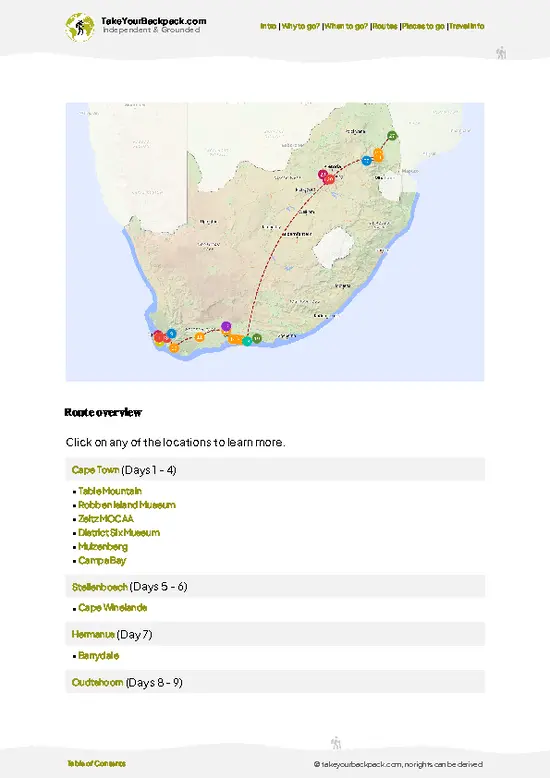
Pick three regions, four at the absolute most: I advise three regions on a trip of two to four weeks. South Africa is roughly twice the size of Texas, and the distances between its major areas run from 1,000 to 1,500 kilometers. Every extra region adds a domestic flight or a long bus day, and that eats the time you came for. Four only makes sense past five weeks. Anything beyond that turns the trip into a tour of departure lounges and car parks.
Choose the kind of region that matches how you travel: Coastal and mountain regions suit hikers, surfers and people on a tight budget, because hostels cluster there, shared transport is easy to find and most activities cost little or nothing. Wildlife regions suit travelers who want animals, but they are the least backpacker-friendly: lodges are expensive, …
read more 👉 Pick three regions, four at the absolute most: I advise three regions on a trip of two to four weeks. South Africa is roughly twice the size of Texas, and the distances between its major areas run from 1,000 to 1,500 kilometers. Every extra region adds a domestic flight or a long bus day, and that eats the time you came for. Four only makes sense past five weeks. Anything beyond that turns the trip into a tour of departure lounges and car parks.
Choose the kind of region that matches how you travel: Coastal and mountain regions suit hikers, surfers and people on a tight budget, because hostels cluster there, shared transport is easy to find and most activities cost little or nothing. Wildlife regions suit travelers who want animals, but they are the least backpacker-friendly: lodges are expensive, and you cannot walk around freely in the big parks. City regions suit people who want history, food and nightlife, but they carry the highest crime risk and the most hassle. If you have to cut something, cut the second city region. One is enough to understand the country, and a second mostly repeats the first at higher cost.
Skip any region whose main draw is a single photo stop reachable only on a half-day tour. The transport bill outweighs the view.
What a day and a visit actually cost: A shoestring backpacker spends about US$35 to 55 (R650 to 1,000) a day: dorm bed US$12 to 20, self-catered meals plus a cheap restaurant dinner US$10 to 15, local transport and activities the rest. A comfortable mid-range day with a private room, restaurant meals and a few activities runs US$80 to 140 (R1,500 to 2,600). Plan for the rand, which changes against the dollar, so budget with a 10 percent cushion.
The costs that catch people out are the big items. National park entry fees typically run R100 to 600 (US$6 to 33) per adult per day, with higher rates for non-residents, and some parks add a vehicle fee. Guided game drives cost US$30 to 100 per outing. Shark-cage dives, bungee jumps and similar activities run US$80 to 150 each, so pick one or two rather than booking every poster you see. Car rental costs US$20 to 40 a day plus fuel and one-way drop fees, which can add US$50 to 200 when you finish in a different city. Premium long-distance buses are cheaper than flying but take most of a day, so price your time too.
The fix is simple: set a total activity budget before you arrive and rank the activities, because that is where trips overspend.
Safety that is specific, not vague: Violent and opportunistic crime is a real feature of South African life, concentrated in city centers after dark and in certain townships and transit areas. Do not walk between venues at night, even for a few blocks. Use e-hailing apps such as Uber or Bolt, which are reliable in cities and cost US$2 to 8 for most rides. Keep phones out of sight on the street and at traffic lights, and leave valuables out of sight in parked cars, since smash-and-grab theft is common at trailheads and beach car parks.
Driving brings its own dangers: minibus taxis stop without warning, pedestrians and livestock appear on rural roads, and night driving outside towns is a bad idea. Plan to be at your destination before dark.
On trails and beaches, hike in groups or with a registered guide in areas with a record of robberies, and check conditions locally. Rip currents are common on the coast, and many beaches have no lifeguards.
Cultural points that matter: The legacy of apartheid still shapes where people live, and township visits are best done with a locally owned operator that pays residents, not a bus that parks and leaves. Ask before photographing people. Greet before asking for anything, a courtesy that goes a long way. Tipping is expected: 10 to 15 percent in restaurants, and a few rand to car guards who watch your vehicle. Rural communities often have their own rules for access to land and sacred sites, so follow the posted guidance.
Mistakes that cost the most: Underestimating distances is the biggest. Book transport early for peak travel weeks, because cheap flights and Baz Bus seats vanish. Take out travel insurance that covers adventure activities and theft, since public hospitals can be overstretched and private care is paid up front. Carry a card and some cash, because card use is widespread but power cuts can disable machines and shops.


 Best Backpacking
 Hi, I’m Johan (Netherlands 🇳🇱), the creator of TakeYourBackpack. Over the past 3 decades, I’ve backpacked through 90+ countries across six continents, gaining extensive experience with independent travel, long-term trips, and overland routes.