×

South Africa🇿🇦 | national parksMaloti-Drakensberg Parkbasalt cliffs, alpine grasslands, San rock shelters | things to do and best time to go

Explore Kruger National ParkExplore Marakele NP

Backpacking in Maloti-Drakensberg Park
UNESCO World Heritage site
👍 Recommendednational park ranked #12
By Johan Kruseman 🇳🇱 | Updated September 3, 2026

The first real fork in the road at Maloti-Drakensberg Park: do you aim for the iconic Amphitheatre hike or chase solitude in the southern valleys? This choice shapes everything—your energy, your budget, and whether you’re dodging selfie sticks or baboons. Maloti-Drakensberg Park straddles the border between South Africa and Lesotho, anchoring the eastern edge of the country. For backpackers, it’s a paradox—jaw-dropping basalt cliffs, waterfalls, and ancient San rock art, but also unpredictable weather, patchy public transport, and entrance fees that creep up if you’re not careful. The hiking is world-class, but the trails can be rough and signage is inconsistent. Compared to the more manicured Royal Natal or the wildlife-heavy Hluhluwe-iMfolozi, Drakensberg feels wilder, less commercial, and more rewarding if you’re willing to work for it. I’ve camped here in a storm and still came back for more.

Discover everything you want to know in the 📖 South Africa Travel Guide.
Loading the map 🌍
CLICK TO FILTER
cities
towns
villages
landmarks
national parks
hikes
beaches
attractions
festivals
regions
SHOW COUNTRY’S BESTSHOW ALL

✨ Why go?
Ranked #12 national park in South Africa
What sets this place apart

Backpackers flock to Maloti-Drakensberg Park for its blend of independent exploration and affordable accommodations. The park offers a range of budget camping options and nearby hostels, making it easy to stretch your funds. With trails that vary from easy strolls to challenging hikes, there’s something for everyone, whether you’re a novice or a seasoned trekker.

What sets this park apart is its suitability for self-guided travelers. You can roam freely, soaking in the stunning landscapes without the constraints of a tour group. Just be aware of the weather; it can change quickly, so pack accordingly. By planning wisely, you’ll preserve both your energy and budget for the moments that truly matter—like standing in awe of the majestic cliffs or discovering a hidden waterfall.
Want to include Maloti-Drakensberg Park in your South Africa route?
Create a personalized South Africa itinerary that includes Maloti-Drakensberg Park and the places that fit your trip — based on your travel style, budget, and available time. Get your route in seconds.

Generate my trip

💡 HighlightsKey sights and experiences for travelers

  • The Amphitheatre & Tugela Falls — A jaw-dropping basalt cliff face that looks like someone sliced a mountain wall clean; the Tugela cascades off it and is one of the world’s tallest waterfalls. Classic day-hike territory with insane photo ops and a proper sense of scale you won’t forget.
  • Giant’s Castle San Rock Art — Hundreds of ancient San (Bushman) paintings tucked into caves and overhangs. Short guided walks get you up close to fragile artwork and the stories they tell — cultural history mixed with moody cliff scenery.
  • Cathedral Peak Massif — Pointy granite spires, steep ridges and long ridgewalks that feel alpine rather than African. Great for scrambly hikes or overnight trips; the skyline here is the park’s most dramatic mountain silhouette.
  • Sani Pass & Lesotho Highveld — The rough
read more 👉
  • The Amphitheatre & Tugela Falls — A jaw-dropping basalt cliff face that looks like someone sliced a mountain wall clean; the Tugela cascades off it and is one of the world’s tallest waterfalls. Classic day-hike territory with insane photo ops and a proper sense of scale you won’t forget.
  • Giant’s Castle San Rock Art — Hundreds of ancient San (Bushman) paintings tucked into caves and overhangs. Short guided walks get you up close to fragile artwork and the stories they tell — cultural history mixed with moody cliff scenery.
  • Cathedral Peak Massif — Pointy granite spires, steep ridges and long ridgewalks that feel alpine rather than African. Great for scrambly hikes or overnight trips; the skyline here is the park’s most dramatic mountain silhouette.
  • Sani Pass & Lesotho Highveld — The rough 4x4 road that climbs to the “top of Africa” border with Lesotho. Not just a drive: high-altitude views, a short cross-border vibe, and yes, the famous high-altitude pub at the top. Feels adventurous in a way paved roads don’t.
  • Royal Natal National Park Trails — A compact area with excellent day-hikes (Tugela Gorge, Sentinel Peak), riverside walks and family-friendly routes. It packs big scenery into approachable trails — good if you want epic views without multi-day logistics.
  • Birdlife & Mountain Mammals — Look for bearded vultures (lammergeiers), Drakensberg siskins and orange-breasted sunbirds, plus eland and mountain reedbuck grazing the slopes. Wildlife here is adapted to the high, rocky environment, so sightings feel special.
  • High-Altitude Plateaus & Wildflower Meadows — Wide, grassy plateaus, peat bogs and seasonal wildflowers that open up into huge sky views. Perfect for multi-day backpacking, stargazing and that empty-highlands feeling you came for.
Spotted a mistake or missing something? Contact us.

Things to do near Maloti-Drakensberg Park

Ratings based on Tripadvisor reviews. When you book through this link, you support our work at no extra cost to you.

🌤️ When to go?Choosing the right time of year


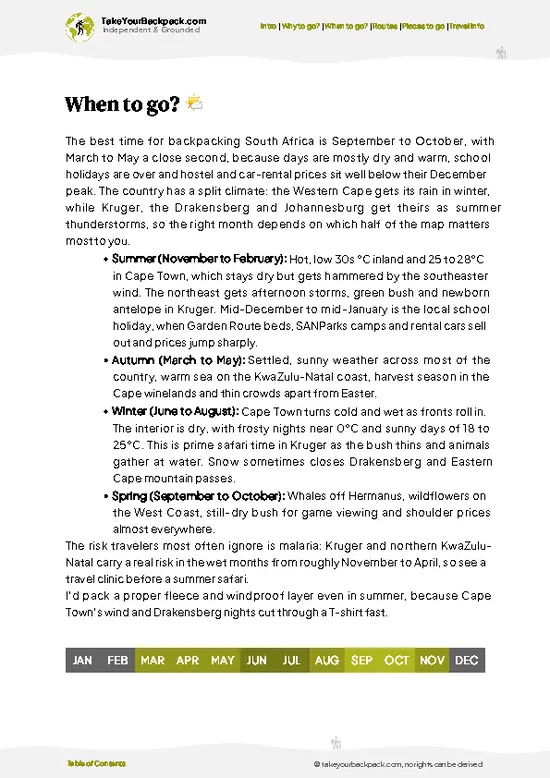
  • Weather: The park’s climate swings sharply. Summers (Nov-Mar) bring afternoon thunderstorms and humidity, making trails slippery and less predictable. Winters (Jun-Aug) are cold and dry, with daytime highs around 10-15°C (50-59°F) but nights can plunge below freezing, risking icy paths.

  • Temperature: Spring (Sep-Nov) and autumn (Mar-May) offer the best balance—mild days between 15-22°C (59-72°F) and cooler nights, ideal for hiking without overheating or frostbite.

  • Daylight Hours: Summer days stretch to about 13-14 hours, giving you more daylight for long treks. Winter cuts this to roughly 10 hours, limiting your window and increasing risk if you start late.

  • Crowds: Peak season is summer, especially December holidays, when local tourists flood the park. Shoulder seasons see fewer visitors,
read more 👉

  • Weather: The park’s climate swings sharply. Summers (Nov-Mar) bring afternoon thunderstorms and humidity, making trails slippery and less predictable. Winters (Jun-Aug) are cold and dry, with daytime highs around 10-15°C (50-59°F) but nights can plunge below freezing, risking icy paths.

  • Temperature: Spring (Sep-Nov) and autumn (Mar-May) offer the best balance—mild days between 15-22°C (59-72°F) and cooler nights, ideal for hiking without overheating or frostbite.

  • Daylight Hours: Summer days stretch to about 13-14 hours, giving you more daylight for long treks. Winter cuts this to roughly 10 hours, limiting your window and increasing risk if you start late.

  • Crowds: Peak season is summer, especially December holidays, when local tourists flood the park. Shoulder seasons see fewer visitors, letting you enjoy solitude and better campsite availability.

  • Seasonal Activities: Summer is prime for waterfall views and wildflowers but beware flash floods. Winter suits climbers and those chasing clear skies but requires serious cold-weather gear.

  • Price Fluctuations: Expect higher accommodation and permit fees during summer holidays. Booking in shoulder seasons can save money and secure better spots.


Pro-tip: Aim for late spring or early autumn to dodge crowds, avoid extreme weather, and stretch your daylight hours—this sweet spot preserves your energy and budget for the trails that truly matter.


source: climatestotravel.comJANJanuary: good for travelingFEBFebruary: good for travelingMARMarch: highly recommended for travelingAPRApril: excellent for travelingMAYMay: excellent for travelingJUNJune: fair for travelingJULJuly: fair for travelingAUGAugust: fair for travelingSEPSeptember: excellent for travelingOCTOctober: excellent for travelingNOVNovember: highly recommended for travelingDECDecember: good for traveling
when-to-go

✈️ The backpacker research shortcutSouth Africa Travel Guide

An offline-friendly backpacking guide with optimized travel routes, ranked highlights, transport advice, and the best areas to stay.
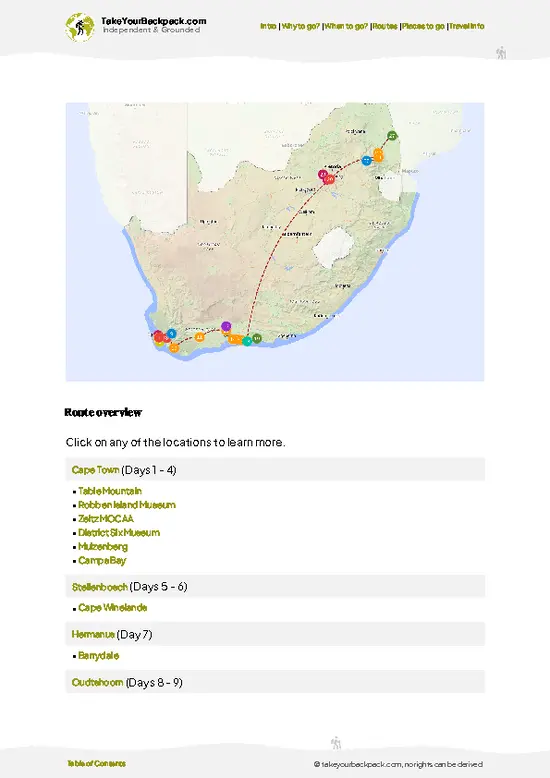
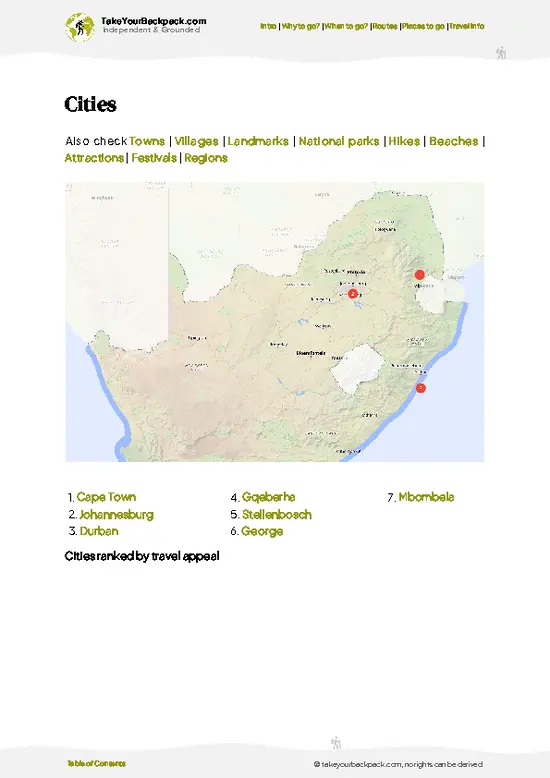
example page 0 from our offline Travel Guide for South Africa
example page 1 from our offline Travel Guide for South Africa
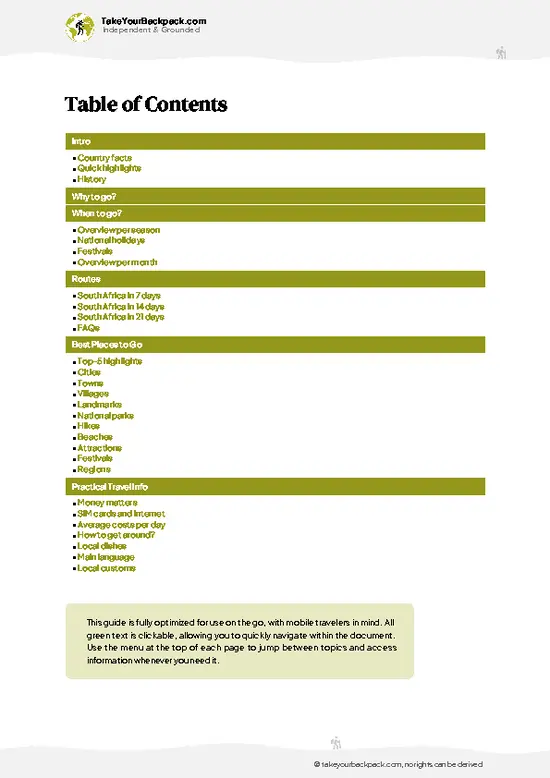
example page 2 from our offline Travel Guide for South Africa
example page 3 from our offline Travel Guide for South Africa
example page 4 from our offline Travel Guide for South Africa
example page 5 from our offline Travel Guide for South Africa
example page 6 from our offline Travel Guide for South Africa
example page 7 from our offline Travel Guide for South Africa
The digital guide (453 pages) contains:
129 highlights, ranked by travel appeal
Optimized 7, 14 & 21-day travel routes
Cities, national parks, landmarks, beaches
How to get around
Offline-friendly for travel without Wi-Fi
👉 Click to see all 30+ guide features

📅 Plan smarter in minutes, not weeks
Month by month travel advice
Festivals & national holidays
Budget expectations

🗺️ Go to the right places, skip the overrated ones
Honest pros & cons of destinations
Top hikes, parks & viewpoints
Lesser-known places most travelers miss
Clear “worth it vs skip it” guidance

🛏️ Travel smoothly without rookie mistakes
Best areas to stay
Transport systems explained simply
Common scams & safety advice
SIM cards, money & practical tips

🌍 Understand the country, not just visit it
Culture & traditions
Local customs
Festivals worth planning around
Traveler-friendly historical context
Insights that make places more meaningful

📱 Built for real travel conditions
Fully downloadable PDF
Works completely offline
Optimized for phone use
Useful in remote areas & buses
Everything in one place
Save weeks of stressful planning
Get instant access to your full guide. 30‑day money-back guarantee.
+ Add another guide for just US$7.80

By proceeding you agree to our terms.
Sent to your inbox immediately after payment • 100% Secure Checkout
Best Backpacking Travel Advisor 2025 tourism awardBest Backpacking
Travel Advisor
2025
What others say about Take Your Backpack Guides:
⭐⭐⭐⭐⭐
Fantastic, amazing amount of information!
⭐⭐⭐⭐⭐
My goodness this is amazing, it's what I've been looking for hats off too you!
⭐⭐⭐⭐⭐
I think this is absolutely BRILLIANT
⭐⭐⭐⭐
Very complete and informative. It's still missing places, but I gotta to commend you
⭐⭐⭐⭐⭐
This is truly amazing, thank you, can't wait to explore it with my kids!
⭐⭐⭐⭐⭐
Awesome resource, thank you!
⭐⭐⭐⭐⭐
This is amazing! Can't wait to explore the ones I haven't seen
⭐⭐⭐⭐
I love this! Well done, great idea.
⭐⭐⭐⭐⭐
Thanks for taking the time to make this gem!
⭐⭐⭐⭐⭐
This might be the best website I've ever seen.
⭐⭐⭐⭐⭐
Congratulations, and thank you so much for your work; it's incredibly valuable.
⭐⭐⭐⭐
In all seriousness I think you did a great job pointing out the important spots
⭐⭐⭐⭐⭐
10/10 very good
⭐⭐⭐⭐⭐
As someone who's only just starting to visit regularly this is awesome, thank you.
⭐⭐⭐⭐
Thank you very much! I'm going to visit my dad, it's going to be very useful!
⭐⭐⭐⭐⭐
This is really cool! We'll be travelling for the first time and this definitely come in handy.
⭐⭐⭐⭐⭐
You are now our minister of culture, congratulations 👨‍💼
⭐⭐⭐⭐⭐
Just wanted to tell you that this is a pearl! Going to follow your recommendations.
⭐⭐⭐⭐⭐
This is so cool. I'll definitely be using the resource for my travels soon.
⭐⭐⭐⭐⭐
This is very impressive! Good work.
⭐⭐⭐⭐⭐
This is an amazing and informative site. Very well done!

🛏️ Where to stay?Best areas and accommodation options

For backpackers heading to Maloti-Drakensberg Park, options range from cozy lodges to budget-friendly campsites. Inside the park, the Royal Natal National Park offers basic huts and camping spots. These are perfect for those wanting to wake up surrounded by stunning peaks. Just remember to book in advance, especially during peak seasons.

If you prefer a bit more comfort, consider staying in Underberg or Himeville, both just outside the park. They have guesthouses and hostels that cater to backpackers. Prices are reasonable, and you’ll find local eateries to refuel after a day of hiking.

Be cautious … read more 👉
For backpackers heading to Maloti-Drakensberg Park, options range from cozy lodges to budget-friendly campsites. Inside the park, the Royal Natal National Park offers basic huts and camping spots. These are perfect for those wanting to wake up surrounded by stunning peaks. Just remember to book in advance, especially during peak seasons.

If you prefer a bit more comfort, consider staying in Underberg or Himeville, both just outside the park. They have guesthouses and hostels that cater to backpackers. Prices are reasonable, and you’ll find local eateries to refuel after a day of hiking.

Be cautious of hidden costs like park entrance fees and equipment rentals. These can add up quickly. Plan ahead to keep your budget intact and your energy focused on the breathtaking trails and views that await you.

👛 Costs (as of 3 September 2026)Typical daily expenses

Visiting Maloti-Drakensberg Park comes with a few costs that can sneak up on you if you’re not prepared.

Entrance fees typically range from $5 to $10 USD per person for day visitors. If you’re planning to camp, expect to pay around $10 to $15 USD per night for a campsite. For those looking to stay in more comfortable accommodations, lodges and guesthouses in the area can cost anywhere from $50 to $150 USD per night, depending on the season and amenities.

Guided tours can add to your budget. Prices vary widely, but you might spend between $30 and $100 USD for a half-day tour. If you’re interested in activities like horseback riding or rock climbing, factor in additional costs, usually around $20 to $50 USD per person.

Keep in mind that food and supplies can also add up. A meal at a local … read more 👉
Visiting Maloti-Drakensberg Park comes with a few costs that can sneak up on you if you’re not prepared.

Entrance fees typically range from $5 to $10 USD per person for day visitors. If you’re planning to camp, expect to pay around $10 to $15 USD per night for a campsite. For those looking to stay in more comfortable accommodations, lodges and guesthouses in the area can cost anywhere from $50 to $150 USD per night, depending on the season and amenities.

Guided tours can add to your budget. Prices vary widely, but you might spend between $30 and $100 USD for a half-day tour. If you’re interested in activities like horseback riding or rock climbing, factor in additional costs, usually around $20 to $50 USD per person.

Keep in mind that food and supplies can also add up. A meal at a local restaurant might set you back $10 to $20 USD. Stocking up on snacks and water before heading into the park is a smart move to avoid inflated prices at convenience stores.

Plan ahead. Knowing these costs helps you allocate your budget wisely, ensuring you have the energy and funds for the experiences that truly matter.
⚠️ Prices can change and everyone travels differently, so take this as a rough guide. Hope it helps you plan your adventure!

🥾 TrailsTrail guide for Maloti-Drakensberg Park national park

The Maloti-Drakensberg Park is a hiker’s dream, blending stunning landscapes with a bit of adventure. You’ve got towering peaks, lush valleys, and dramatic cliffs that make for jaw-dropping views at every turn. The terrain varies from easy strolls to challenging scrambles, so there’s something for everyone, whether you’re a newbie or a seasoned pro. Keep an eye out for the local wildlife—think baboons, eland, and a variety of birds that’ll make any nature lover swoon.

One of the standout trails is the Giant’s Cup Trail. Here’s the scoop:
  • Length: 60 km
  • Estimated Duration: 5 days
  • Difficulty Level:
read more 👉
The Maloti-Drakensberg Park is a hiker’s dream, blending stunning landscapes with a bit of adventure. You’ve got towering peaks, lush valleys, and dramatic cliffs that make for jaw-dropping views at every turn. The terrain varies from easy strolls to challenging scrambles, so there’s something for everyone, whether you’re a newbie or a seasoned pro. Keep an eye out for the local wildlife—think baboons, eland, and a variety of birds that’ll make any nature lover swoon.

One of the standout trails is the Giant’s Cup Trail. Here’s the scoop:
  • Length: 60 km
  • Estimated Duration: 5 days
  • Difficulty Level: Moderate to Challenging
  • Key Features: Stunning views, ancient San rock art, and diverse flora
  • Terrain: A mix of well-maintained paths and some rocky sections

Another gem is the Amphitheatre Hike:
  • Length: 12 km
  • Estimated Duration: 6 hours
  • Difficulty Level: Moderate
  • Key Features: Spectacular views of the Amphitheatre cliffs and Tugela Falls
  • Terrain: Mostly well-marked trails with some steep sections

Getting to the park can be a bit of a trek, but it’s doable by public transport. You can catch a bus to nearby towns like Underberg or Bergville, then hop on a local taxi to the park entrance. Crowds can vary, especially during peak season, so if you’re looking for solitude, consider going in the shoulder seasons. As for entrance fees, they’re quite reasonable, but it’s best to check the latest rates before you go. Just remember to pack enough snacks and water—those views won’t enjoy themselves!
⚠️ Hiking info can sometimes be outdated or inaccurate. Before you hit the trail, check the latest conditions with locals. If you do spot anything that's off, I'd love to hear from you, so I can update it for fellow travelers.

🛡️ SafetyTraveler Safety Guide

Maloti-Drakensberg Park is generally welcoming for backpackers, but a few practical realities can enhance your experience. Weather can shift quickly; always check forecasts and pack layers. The altitude may leave you breathless, so pace yourself, especially on steep sections. Navigation is straightforward, but some trails can be rocky or muddy, so sturdy footwear is essential.

Wildlife encounters are rare, but if you spot a baboon, keep your distance; they can be aggressive if approached. Prepare for river crossings, especially after rain, and know your limits. With the right gear and a mindful approach, you’ll preserve your energy for the stunning views and moments that truly matter.

FAQCommon questions from travelers

3 to 5 days is ideal to explore Maloti-Drakensberg Park thoroughly, allowing time for hiking, sightseeing, and visiting key sites like the Amphitheatre and Tugela Falls. Longer stays are recommended for extensive trekking or multi-day routes.
No, visiting Maloti-Drakensberg Park without a car is difficult due to limited public transport options and the park's remote location. Most visitors rely on rental cars or organized tours to access trailheads and accommodation.
Yes, there is an entrance fee for Maloti-Drakensberg Park, typically around 100 to 150 ZAR per person per day. Permits are required for certain activities like overnight hiking or camping, which must be arranged in advance.
⚠️ Things can change over time, so always validate details locally before you go.

Other South African national parks near Maloti-Drakensberg Park

Explore more nearby:


💡 Not sure where to go next?
Create a personalized itinerary for South Africa including Maloti-Drakensberg Park and the places that fit your trip.

Generate my itinerary

👉 Discover all national parks

Or checkout all South Africa has to offer (think cities, towns, villages, national parks, hikes, beaches, festivals)
Country photo of South Africa

We 💚 feedbackSumming up the experience

Maloti-Drakensberg Park is a hiker’s paradise, with trails that lead to breathtaking views and ancient rock art. But be prepared: the weather can turn on a dime. A sunny morning can morph into a chilly downpour. Pack layers and a reliable rain jacket to keep your spirits high. It’s all part of the adventure, but don’t let it catch you off guard.

✈️ When did I visit South Africa?
I have visited South Africa, before and after my Zimbabwe trip in 2001.

✍️ Help improve this page!
The information on this page is based on my own backpacking experience in South Africa, supplemented with up-to-date research and feedback from other travelers. Travel details can change, so if you notice anything outdated or incomplete, feel free to let me know.


🙋‍♂️ Give feedback

👋 Meet the founderWho’s Behind Take Your Backpack?

Johan, backpacker and founder of TakeYourBackpackHi, I’m Johan (Netherlands 🇳🇱), the creator of TakeYourBackpack. Over the past decade, I’ve backpacked through 80+ countries across six continents, gaining extensive experience with independent travel, long-term trips, and overland routes.

This site is built on a combination of firsthand travel experience and carefully curated insights from other backpackers. Many guides are based on places I’ve personally visited, while others bring together tips, observations, and practical advice shared by trusted travelers I’ve met along the way.

The goal is to provide realistic, experience-driven guidance — not generic itineraries — so you can explore destinations with better context, clearer expectations, and more confidence.

Get full country guide •
Instant download • 129 highlights • Full Offline guide