×

South Africa🇿🇦 | festivalsNational Arts FestivalMakhanda streets, Fringe gamble, Village Green Market, 1820 Settlers Monument | things to do and best time to go

Explore Soweto Wine FestivalExplore Hermanus Whale Festival

Backpacking in National Arts
🏆 Top pickfestival ranked #3
By Johan Kruseman 🇳🇱 | Updated October 22, 2026

The National Arts Festival is not held in a big city or a field of tents. It takes over Makhanda (formerly Grahamstown), a small university town in the Eastern Cape of South Africa, and the whole grid of old streets becomes the venue. It runs about ten days in winter, usually late June into July, and mixes theater, dance, jazz, comedy, visual art and student productions. Audiences are students, families and serious theater people. Plan to walk everywhere. I once booked two shows across town fifteen minutes apart, ran uphill between them, and missed the first ten minutes of both. Leave a full hour between venues and you get the street food and a coffee in the gap. Unlike the Klein Karoo Nasionale Kunstefees in Oudtshoorn, which leans Afrikaans, this one is multilingual and far more experimental.

Discover everything you want to know in the 📖 South Africa Travel Guide.


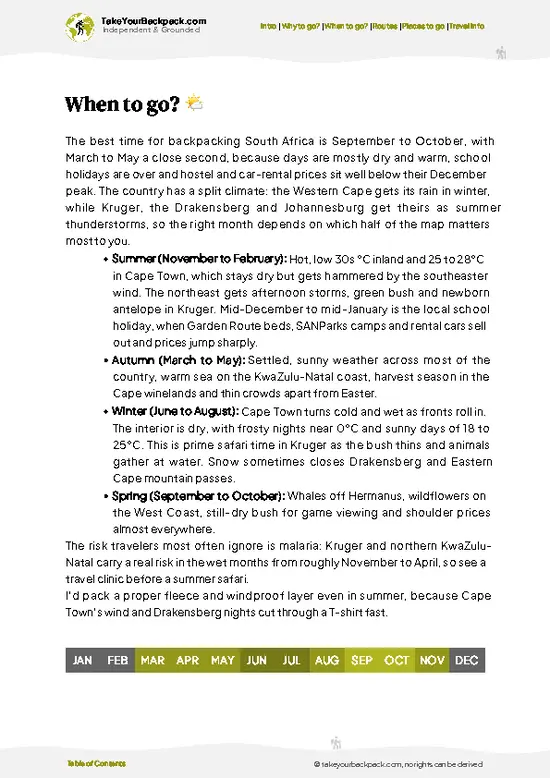
example page 0 from our offline Travel Guide for South Africa
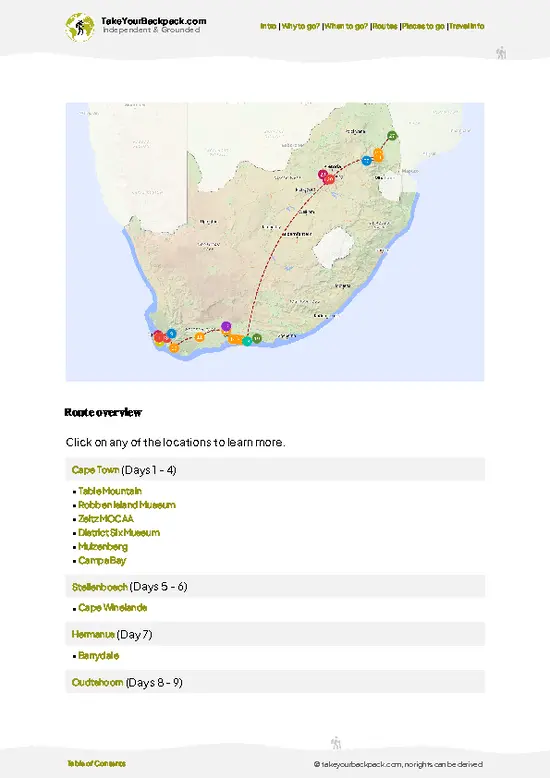
example page 1 from our offline Travel Guide for South Africa
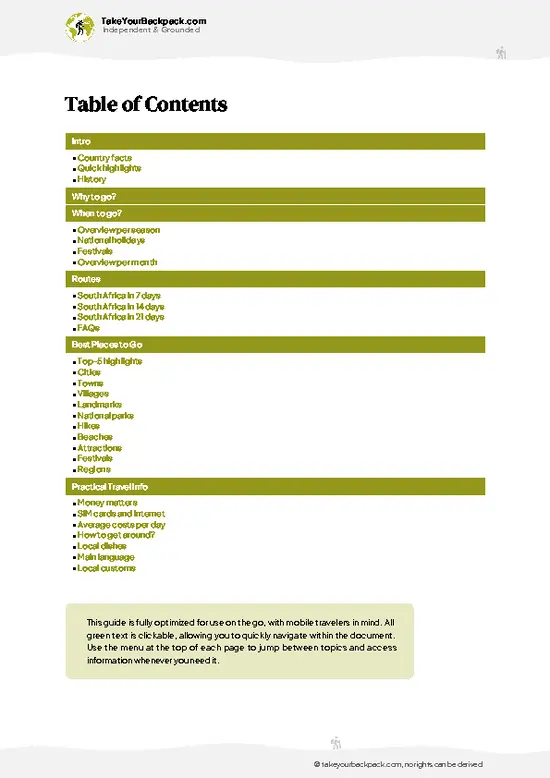
example page 2 from our offline Travel Guide for South Africa
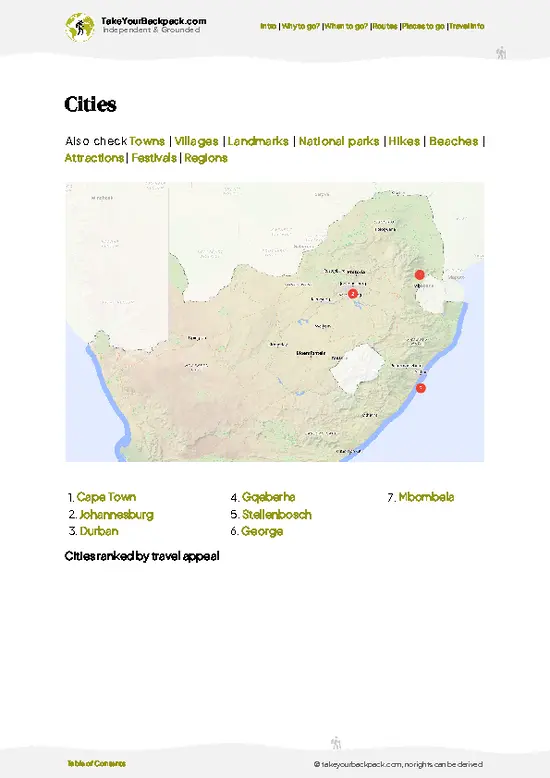
example page 3 from our offline Travel Guide for South Africa
example page 4 from our offline Travel Guide for South Africa
example page 5 from our offline Travel Guide for South Africa
example page 6 from our offline Travel Guide for South Africa
example page 7 from our offline Travel Guide for South Africa
Loading the map 🌍
CLICK TO FILTER
cities
towns
villages
landmarks
national parks
hikes
beaches
attractions
festivals
regions
SHOW COUNTRY’S BESTSHOW ALL

✨ Why go?
Ranked #3 festival in South Africa
The unique appeal for travelers

The National Arts Festival works as a route anchor because it turns a quiet Eastern Cape town into a ten-day meeting point for performers, students and travelers who all end up in the same queues and bars. Sleeping options are mostly student digs and guesthouses, so you share kitchens and tips with strangers, and a show recommendation from a hostel table often beats the program. The festival is also where South African theater and dance get tested. Productions on the Fringe are open to anyone, so you see raw new work alongside polished main-program pieces, with many tickets priced low enough to see four or five shows a day. The Village Green Market gives you cheap meals, crafts and a place to meet people between performances. The timing helps too. It sits in the South African winter, so it … read more 👉
The National Arts Festival works as a route anchor because it turns a quiet Eastern Cape town into a ten-day meeting point for performers, students and travelers who all end up in the same queues and bars. Sleeping options are mostly student digs and guesthouses, so you share kitchens and tips with strangers, and a show recommendation from a hostel table often beats the program. The festival is also where South African theater and dance get tested. Productions on the Fringe are open to anyone, so you see raw new work alongside polished main-program pieces, with many tickets priced low enough to see four or five shows a day. The Village Green Market gives you cheap meals, crafts and a place to meet people between performances. The timing helps too. It sits in the South African winter, so it fits neatly between a Garden Route trip and a stretch along the Wild Coast or into the Karoo. Few festivals here let you meet this many working artists without a backstage pass.

💡 HighlightsEssential experiences to have while celebrating the National Arts

  1. The Fringe Programme: Open-access theater, comedy, music and dance across churches, school halls and pop-up spaces. Quality swings wildly, which is the fun, and a small ticket gamble can turn into the best hour of your trip.
  2. The Main Programme: Curated productions in the Monument and other large venues, including new South African plays and dance. Book these early because the best shows sell out.
  3. Village Green Market: The festival’s crafts and food market, with stalls selling leatherwork, jewelry, clothing and hot street food. It is where you eat cheaply and bump into people you saw on stage the night before.
  4. The 1820 Settlers National Monument: A large hilltop complex above town that hosts major performances and has a sweeping view over Makhanda’s rooftops and the surrounding hills. Go for a
… read more 👉
  1. The Fringe Programme: Open-access theater, comedy, music and dance across churches, school halls and pop-up spaces. Quality swings wildly, which is the fun, and a small ticket gamble can turn into the best hour of your trip.
  2. The Main Programme: Curated productions in the Monument and other large venues, including new South African plays and dance. Book these early because the best shows sell out.
  3. Village Green Market: The festival’s crafts and food market, with stalls selling leatherwork, jewelry, clothing and hot street food. It is where you eat cheaply and bump into people you saw on stage the night before.
  4. The 1820 Settlers National Monument: A large hilltop complex above town that hosts major performances and has a sweeping view over Makhanda’s rooftops and the surrounding hills. Go for a show and stay for the view.
  5. Street performance and visual art exhibitions: Galleries, installations and buskers fill the town center, many free. Wander the main streets between shows and you pick up music, poetry and sculpture without a ticket.
The National Arts Festival can be sampled in three days, but five to seven lets you build a proper rhythm of shows, meals and wandering.
Spotted a mistake or missing something? Contact us.

Things to do near National Arts Festival

Ratings based on Tripadvisor reviews. When you book through this link, you support our work at no extra cost to you.

🌤️ When to go?When is the celebration of National Arts Festival?

The National Arts Festival runs for about ten days from late June into early July in Makhanda (Grahamstown), Eastern Cape, centered on the 1820 Settlers National Monument and the town’s university and church venues, with the dates shifting slightly each year.
  • Best days: The first weekend and the middle weekend have the most shows, street activity and Village Green market energy. Weekdays are calmer, with easier seats at popular productions.
  • Weather: Winter here means crisp, dry days around 15 to 20°C (59 to 68°F) and nights that can fall near 0 to 5°C (32 to 41°F). Rain and cold snaps do happen. Bring a warm jacket, beanie, gloves and comfortable walking shoes, since venues are spread across town and many halls are unheated.
  • Booking: Reserve a bed two to four months ahead. Prices commonly rise
… read more 👉
The National Arts Festival runs for about ten days from late June into early July in Makhanda (Grahamstown), Eastern Cape, centered on the 1820 Settlers National Monument and the town’s university and church venues, with the dates shifting slightly each year.
  • Best days: The first weekend and the middle weekend have the most shows, street activity and Village Green market energy. Weekdays are calmer, with easier seats at popular productions.
  • Weather: Winter here means crisp, dry days around 15 to 20°C (59 to 68°F) and nights that can fall near 0 to 5°C (32 to 41°F). Rain and cold snaps do happen. Bring a warm jacket, beanie, gloves and comfortable walking shoes, since venues are spread across town and many halls are unheated.
  • Booking: Reserve a bed two to four months ahead. Prices commonly rise 30 to 100 percent during the festival. Tickets for headline shows sell out early, so buy those as soon as the program is released.
  • Roads and travel: Arrive midweek if you can. Opening and closing weekends bring traffic and full parking around the central streets. Buses and shared taxis from Gqeberha (Port Elizabeth) and East London fill on Fridays and Sundays, so book seats early.
Buy your show tickets before you arrive, then leave a free afternoon for the fringe and street performances.


source: climatestotravel.comJANJanuary: not recommended for travelingFEBFebruary: not recommended for travelingMARMarch: not recommended for travelingAPRApril: not recommended for travelingMAYMay: not recommended for travelingJUNJune: excellent for travelingJULJuly: excellent for travelingAUGAugust: not recommended for travelingSEPSeptember: not recommended for travelingOCTOctober: not recommended for travelingNOVNovember: not recommended for travelingDECDecember: not recommended for traveling

✈️ The backpacker research shortcutSouth Africa Travel Guide

An offline-friendly backpacking guide with optimized travel routes, ranked highlights, transport advice, and the best areas to stay.
example page 0 from our offline Travel Guide for South Africa
example page 1 from our offline Travel Guide for South Africa
example page 2 from our offline Travel Guide for South Africa
example page 3 from our offline Travel Guide for South Africa
example page 4 from our offline Travel Guide for South Africa
example page 5 from our offline Travel Guide for South Africa
example page 6 from our offline Travel Guide for South Africa
example page 7 from our offline Travel Guide for South Africa
The digital guide (457 pages) contains:
✅ 125 highlights, ranked by travel appeal
✅ Optimized 7, 14 & 21-day travel routes
✅ Cities, national parks, landmarks, beaches
✅ How to get around
✅ Offline-friendly for travel without Wi-Fi
👉 Click to see all 30+ guide features

📅 Plan smarter in minutes, not weeks
✅ Month by month travel advice
✅ Festivals & national holidays
✅ Budget expectations

🗺️ Go to the right places, skip the overrated ones
✅ Honest pros & cons of destinations
✅ Top hikes, parks & viewpoints
✅ Lesser-known places most travelers miss
✅ Clear “worth it vs skip it” guidance

🛏️ Travel smoothly without rookie mistakes
✅ Best areas to stay
✅ Transport systems explained simply
✅ Common scams & safety advice
✅ SIM cards, money & practical tips

🌍 Understand the country, not just visit it
✅ Culture & traditions
✅ 52 Essential phrases & customs
✅ Festivals worth planning around
✅ Traveler-friendly historical context
✅ Insights that make places more meaningful

📱 Built for real travel conditions
✅ Fully downloadable PDF
✅ Works completely offline
✅ Optimized for phone use
✅ Useful in remote areas & buses
✅ Everything in one place
Stop searching, start planning
Get instant access to your full guide. 30‑day money-back guarantee.
+ Add another guide for just

By proceeding you agree to our terms.
Sent to your inbox immediately after payment • 100% Secure Checkout
Best Backpacking Travel Advisor 2025 tourism awardBest Backpacking
Travel Advisor
2025
What others say about Take Your Backpack Guides:
⭐⭐⭐⭐⭐
Fantastic, amazing amount of information!
⭐⭐⭐⭐⭐
My goodness this is amazing, it's what I've been looking for hats off too you!
⭐⭐⭐⭐⭐
I think this is absolutely BRILLIANT
⭐⭐⭐⭐
Very complete and informative. It's still missing places, but I gotta to commend you
⭐⭐⭐⭐⭐
This is truly amazing, thank you, can't wait to explore it with my kids!
⭐⭐⭐⭐⭐
Awesome resource, thank you!
⭐⭐⭐⭐⭐
This is amazing! Can't wait to explore the ones I haven't seen
⭐⭐⭐⭐
I love this! Well done, great idea.
⭐⭐⭐⭐⭐
Thanks for taking the time to make this gem!
⭐⭐⭐⭐⭐
This might be the best website I've ever seen.
⭐⭐⭐⭐⭐
Congratulations, and thank you so much for your work; it's incredibly valuable.
⭐⭐⭐⭐
In all seriousness I think you did a great job pointing out the important spots
⭐⭐⭐⭐⭐
10/10 very good
⭐⭐⭐⭐⭐
As someone who's only just starting to visit regularly this is awesome, thank you.
⭐⭐⭐⭐
Thank you very much! I'm going to visit my dad, it's going to be very useful!
⭐⭐⭐⭐⭐
This is really cool! We'll be travelling for the first time and this definitely come in handy.
⭐⭐⭐⭐⭐
You are now our minister of culture, congratulations 👨‍💼
⭐⭐⭐⭐⭐
Just wanted to tell you that this is a pearl! Going to follow your recommendations.
⭐⭐⭐⭐⭐
This is so cool. I'll definitely be using the resource for my travels soon.
⭐⭐⭐⭐⭐
This is very impressive! Good work.
⭐⭐⭐⭐⭐
This is an amazing and informative site. Very well done!

🛏️ Where to stay?Where staying makes the most sense

Central Makhanda, within walking distance of the main festival venues, is the best area to stay, because you can reach shows on foot and avoid parking battles after dark.
The streets around High Street and the Rhodes University edge are the social hub. During the festival, students’ houses and guesthouses open up as budget rooms, and hostel-style dorms fill with solo travelers, performers and volunteers who swap show recommendations over breakfast. Late-night walks between venues are common, and the crowds make the main routes feel lively and safe, though stick to well-lit streets and travel in … read more 👉
Central Makhanda, within walking distance of the main festival venues, is the best area to stay, because you can reach shows on foot and avoid parking battles after dark.
The streets around High Street and the Rhodes University edge are the social hub. During the festival, students’ houses and guesthouses open up as budget rooms, and hostel-style dorms fill with solo travelers, performers and volunteers who swap show recommendations over breakfast. Late-night walks between venues are common, and the crowds make the main routes feel lively and safe, though stick to well-lit streets and travel in groups after midnight.
The neighborhoods near the 1820 Settlers National Monument are quieter and slightly hillier. They suit people who want a calmer evening, and the monument’s own venues sit on the doorstep. Expect a short uphill walk home, so pack a headlamp.
Homestays and private rooms in residential streets around the university are a good budget-friendly option. Hosts often know the program well and can advise on which shows to catch.
Camping and farm stays outside town cost less but need a car or a shared lift, and the cold nights make them a harder sell in winter. Book early, as nearly everything central is gone by spring.

👛 Costs (as of 22 October 2026)Typical daily expenses

A realistic daily budget for the National Arts Festival is about US$95 to 135 per person, with beds and show tickets making up most of it.
CategoryBudget RangeLocal Reality
Festival ticketsUS$5 to 25 per showMany fringe and street events are free or cheap, while main-stage shows cost more. Budget for two or three ticketed shows a day, roughly US$15 to 40.
AccommodationUS$20 to 45 (dorm or shared room); US$50 to 110 (private room, high season)Rates rise sharply during the festival and sell out early. Student houses and homestays offer the best value.
Local transportUS$0 to 8Central venues are walkable. Shuttles and taxis cost a few dollars, and an intercity bus from Gqeberha or East London runs about US$15 to 30 each way.
Food & drinksUS$15 to 30Street stalls and market meals cost US$4 to 8,
… read more 👉
A realistic daily budget for the National Arts Festival is about US$95 to 135 per person, with beds and show tickets making up most of it.
CategoryBudget RangeLocal Reality
Festival ticketsUS$5 to 25 per showMany fringe and street events are free or cheap, while main-stage shows cost more. Budget for two or three ticketed shows a day, roughly US$15 to 40.
AccommodationUS$20 to 45 (dorm or shared room); US$50 to 110 (private room, high season)Rates rise sharply during the festival and sell out early. Student houses and homestays offer the best value.
Local transportUS$0 to 8Central venues are walkable. Shuttles and taxis cost a few dollars, and an intercity bus from Gqeberha or East London runs about US$15 to 30 each way.
Food & drinksUS$15 to 30Street stalls and market meals cost US$4 to 8, sit-down dinners US$10 to 18, and a hot drink about US$2 to 3.
Miscellaneous expensesUS$5 to 15Warm clothing, craft purchases, programs and the occasional cash withdrawal fee.
Total Daily BudgetUS$95 to 135Based on high-season accommodation and a mix of paid and free shows.
⚠️ Prices can change and everyone travels differently, so take this as a rough guide. Hope it helps you plan your adventure!

🍲 FoodEating & Drinking in National Arts

Food at the National Arts Festival is a winter affair, built around hot street food, warming drinks and long lunches between shows.
The Village Green market and craft stalls around the main venues serve boerewors rolls, toasted sandwiches, curries, vetkoek (fried dough filled with mince) and wood-fired pizzas. Look for potjiekos stews and braai plates, plus fresh pancakes and koeksisters when stalls are in full swing. Vegetarian and vegan options appear at many stands, as the crowd is arty and varied.
For drinks, hot chocolate, mulled wine and strong filter coffee are the winter staples, with Eastern Cape craft beers and South African wines at festival bars. A small cup of mulled wine in a cold courtyard between shows is the right way to do it.
The town’s cafés and pubs fill up quickly, so eat … read more 👉
Food at the National Arts Festival is a winter affair, built around hot street food, warming drinks and long lunches between shows.
The Village Green market and craft stalls around the main venues serve boerewors rolls, toasted sandwiches, curries, vetkoek (fried dough filled with mince) and wood-fired pizzas. Look for potjiekos stews and braai plates, plus fresh pancakes and koeksisters when stalls are in full swing. Vegetarian and vegan options appear at many stands, as the crowd is arty and varied.
For drinks, hot chocolate, mulled wine and strong filter coffee are the winter staples, with Eastern Cape craft beers and South African wines at festival bars. A small cup of mulled wine in a cold courtyard between shows is the right way to do it.
The town’s cafés and pubs fill up quickly, so eat early or late to avoid lines. Queues form at popular stalls around lunchtime and after evening shows, and portions are generous enough that sharing a plate with a travel companion works well.
Bring cash in small notes, since not every stall takes cards and mobile signal can be patchy in the crowds. Carry a reusable cup and a warm layer, as you will often eat standing outside.

FAQTraveler FAQ

The National Arts Festival takes place over roughly ten days from late June into early July each year in Makhanda (Grahamstown), Eastern Cape. Exact dates shift slightly from year to year, so check the official program. Daytime temperatures run around 15 to 20°C (59 to 68°F) and nights can approach freezing.
Attending the National Arts Festival costs about US$95 to 135 a day for a backpacker, including a bed and a few shows. Individual tickets run roughly US$5 to 25, while many fringe and street events are free or cheap. Dorms and shared rooms cost around US$20 to 45 a night, and street food meals about US$4 to 8.
Yes, buy tickets for popular National Arts Festival shows in advance, because headline productions and main-stage events sell out well before the festival starts. Tickets go on sale online once the program is released, usually a few months ahead. Free fringe and street events need no booking, and some smaller shows still have seats at the box office in town.
⚠️ Things can change over time, so always validate details locally before you go.

Other South African festivals near National Arts

Explore more nearby:


💡 Not sure where to go next?
Create a personalized itinerary for South Africa including National Arts and the places that fit your trip.

Generate my itinerary

👉 Discover all festivals

Or checkout all South Africa has to offer (think cities, towns, villages, national parks, hikes, beaches, festivals)
Country photo of South Africa

We 💚 feedbackSumming up the experience

I would pair the National Arts Festival with the Garden Route on the way in and a few days on the Wild Coast on the way out, so the festival is the culture burst between two outdoor stretches. Book accommodation and main-program tickets months ahead, and skip any plan to drive between venues. Walk.

✈️ When did I visit South Africa?
I have visited South Africa, before and after my Zimbabwe trip in 2001.

✍️ Help improve this page!
The information on this page is based on my own backpacking experience in South Africa, supplemented with up-to-date research and feedback from other travelers. Travel details can change, so if you notice anything outdated or incomplete, feel free to let me know.


🙋‍♂️ Give feedback

👋 Meet the founderWho’s Behind Take Your Backpack?

Johan, backpacker and founder of TakeYourBackpackHi, I’m Johan (Netherlands 🇳🇱), the creator of TakeYourBackpack. Over the past 3 decades, I’ve backpacked through 90+ countries across six continents, gaining extensive experience with independent travel, long-term trips, and overland routes.

This site is built on a combination of firsthand travel experience and carefully curated insights from other backpackers. Many guides are based on places I’ve personally visited, while others bring together tips, observations, and practical advice shared by trusted travelers I’ve met along the way.

The goal is to provide realistic, experience-driven guidance — not generic itineraries — so you can explore destinations with better context, clearer expectations, and more confidence.