×

South Africa🇿🇦 | national parksRichtersveld Transfrontier ParkOrange River camps, quiver tree valley, halfmens trees, 4x4 desert tracks | things to do and best time to go

Explore Augrabies Falls National ParkExplore Bontebok National Park

Backpacking in Richtersveld Transfrontier Park
👍 Recommendednational park ranked #13
By Johan Kruseman 🇳🇱 | Updated October 22, 2026

Book your permit and a 4x4 before you arrive, because nobody turns up here and improvises. Richtersveld Transfrontier Park sits in the far northwest of South Africa, against the Orange River and the Namibian border. Tracks are rough, fuel is far away, and there is no wildlife spectacle to justify a short visit. What you get is raw mountain desert, river camps and silence. At a river camp I expected dead rock and found a quiver tree forest with a pair of rock hyraxes sunning on it. Rock lovers and self-sufficient drivers will love it; anyone wanting big game or easy roads should skip it.

Discover everything you want to know in the 📖 South Africa Travel Guide.


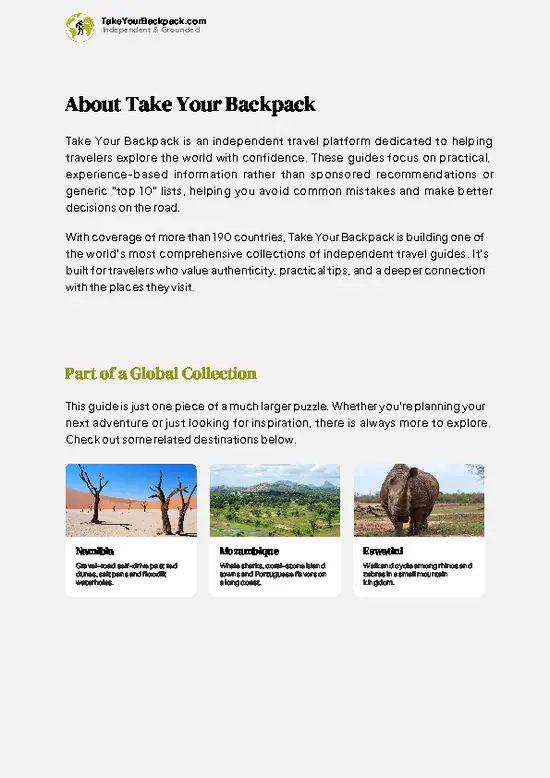
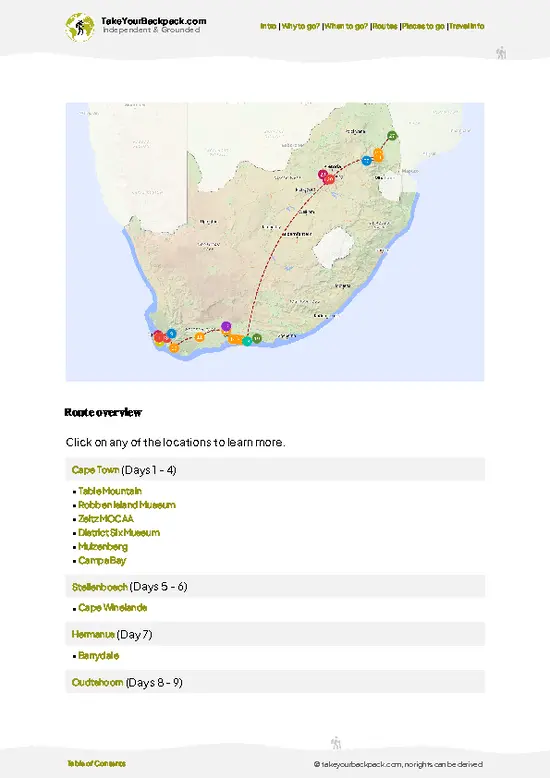
example page 0 from our offline Travel Guide for South Africa
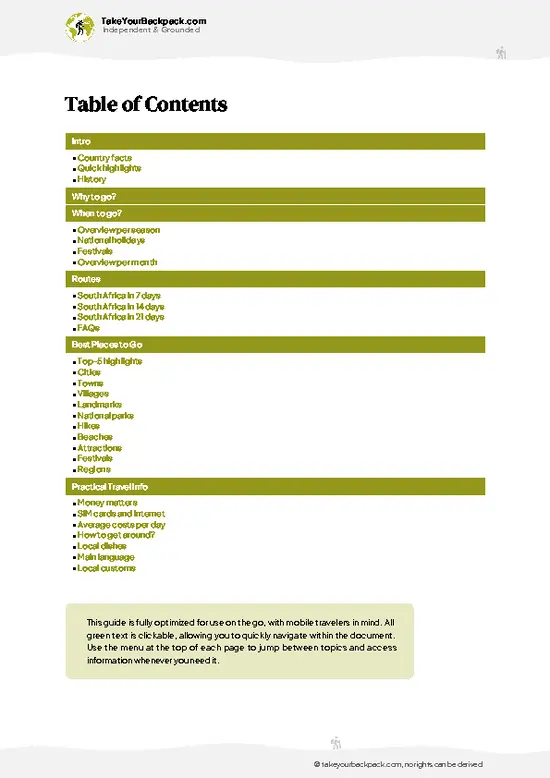
example page 1 from our offline Travel Guide for South Africa
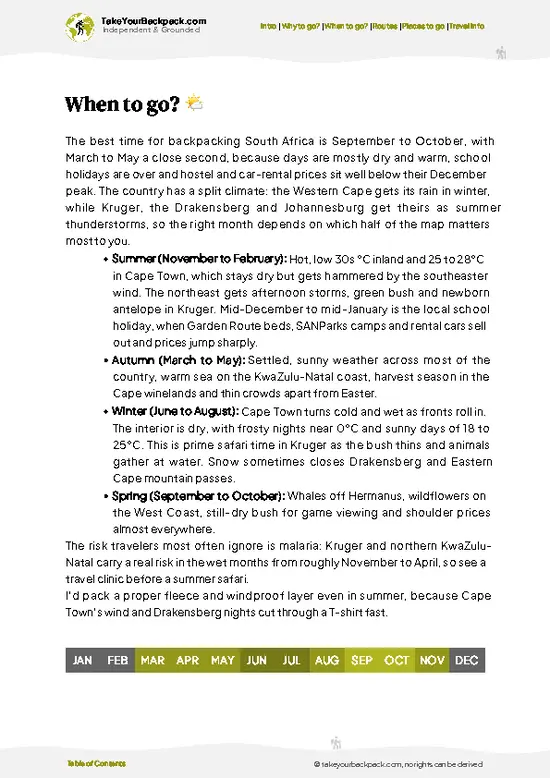
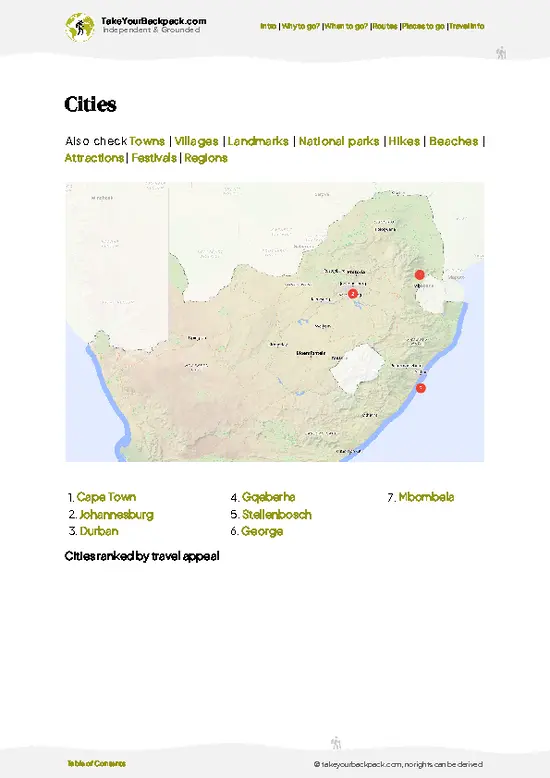
example page 2 from our offline Travel Guide for South Africa
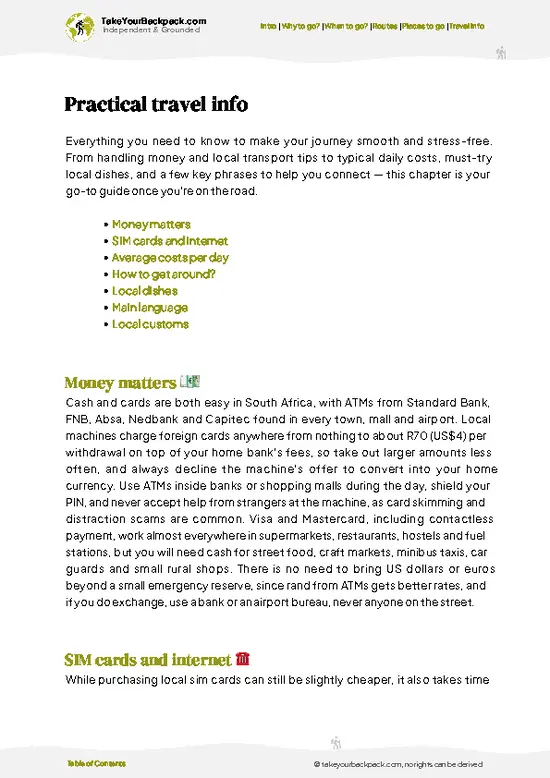
example page 3 from our offline Travel Guide for South Africa
example page 4 from our offline Travel Guide for South Africa
example page 5 from our offline Travel Guide for South Africa
example page 6 from our offline Travel Guide for South Africa
example page 7 from our offline Travel Guide for South Africa
Loading the map 🌍
CLICK TO FILTER
cities
towns
villages
landmarks
national parks
hikes
beaches
attractions
festivals
regions
SHOW COUNTRY’S BESTSHOW ALL

✨ Why go?
Ranked #13 national park in South Africa
The unique appeal for travelers

Richtersveld Transfrontier Park suits backpackers who want to run their own trip, because the 4x4 tracks, the Orange River and the empty rock desert are all yours without a guide leading the way. Self-drivers and small groups can string together camps on a route of their own, from the Sendelingsdrift border post to the Helskloof side valleys, and the sites are simple, spaced far apart and often right on the riverbank. Hiking is the other draw. The Lelieshoek area and the Kodaspiek viewpoint give you wide, quiet ground to walk across without a crowd, and the rock formations change color as you climb. Plan fuel, water and food yourself, since nothing is sold inside. A high-clearance vehicle is the usual choice, though some operators run guided canoe trips down the river for those without one.

💡 HighlightsTop highlights of Richtersveld Transfrontier Park

  1. Orange River: the green ribbon marking the border with Namibia, lined with camps where you can paddle, swim and watch fish eagles against bare orange hills.
  2. Sendelingsdrift: the park gate and pont crossing, handy for the Namibian side and a good place to check road conditions.
  3. Kokerboomkloof: a valley of quiver trees among dolerite boulders, best for slow wandering and photography.
  4. Tatasberg: a rugged mountain area with remote camping and wide views over a landscape of broken rock.
  5. Potjiespram: a river viewpoint area with a quiet camp and easy access to the water.
  6. Halfmens trees: odd, leaning succulent trees, said to look like human figures, found on rocky slopes across the park.
  7. Hell's Gate and Akkedis Pass: dramatic gorge-style driving sections where the road threads through jagged mountains.
Sendelingsdrift … read more 👉
  1. Orange River: the green ribbon marking the border with Namibia, lined with camps where you can paddle, swim and watch fish eagles against bare orange hills.
  2. Sendelingsdrift: the park gate and pont crossing, handy for the Namibian side and a good place to check road conditions.
  3. Kokerboomkloof: a valley of quiver trees among dolerite boulders, best for slow wandering and photography.
  4. Tatasberg: a rugged mountain area with remote camping and wide views over a landscape of broken rock.
  5. Potjiespram: a river viewpoint area with a quiet camp and easy access to the water.
  6. Halfmens trees: odd, leaning succulent trees, said to look like human figures, found on rocky slopes across the park.
  7. Hell's Gate and Akkedis Pass: dramatic gorge-style driving sections where the road threads through jagged mountains.
Sendelingsdrift has no extra attraction cost beyond the park entry, and the roadside halfmens trees cost nothing to enjoy.
Spotted a mistake or missing something? Contact us.

🌤️ When to go?When to go for the best experience

  • Winter (June to August): Days reach 18 to 24°C (64 to 75°F) and nights drop to 5 to 8°C (41 to 46°F), which makes this the most comfortable window for hiking and 4x4 trails. Daylight lasts roughly 10.5 to 11 hours, and this is the busiest and priciest stretch.
  • Spring (September to October): Highs of 25 to 32°C (77 to 90°F). Wildflowers can carpet the plains after good winter rain, and crowds thin out.
  • Summer (November to March): Daytime heat often passes 38 to 45°C (100 to 113°F), with almost no shade. The park is quiet and cheaper, but only suits seasoned desert hikers.
  • Autumn (April to May): Highs of 25 to 30°C (77 to 86°F), cool nights, and light crowds.
Book Easter and winter school-holiday weeks months ahead, since camps and the Orange River pontoon crossing fill up.

source: climatestotravel.comJANJanuary: fair for travelingFEBFebruary: fair for travelingMARMarch: fair for travelingAPRApril: good for travelingMAYMay: highly recommended for travelingJUNJune: highly recommended for travelingJULJuly: highly recommended for travelingAUGAugust: excellent for travelingSEPSeptember: excellent for travelingOCTOctober: good for travelingNOVNovember: fair for travelingDECDecember: fair for traveling
when-to-go

✈️ The backpacker research shortcutSouth Africa Travel Guide

An offline-friendly backpacking guide with optimized travel routes, ranked highlights, transport advice, and the best areas to stay.
example page 0 from our offline Travel Guide for South Africa
example page 1 from our offline Travel Guide for South Africa
example page 2 from our offline Travel Guide for South Africa
example page 3 from our offline Travel Guide for South Africa
example page 4 from our offline Travel Guide for South Africa
example page 5 from our offline Travel Guide for South Africa
example page 6 from our offline Travel Guide for South Africa
example page 7 from our offline Travel Guide for South Africa
The digital guide (457 pages) contains:
✅ 125 highlights, ranked by travel appeal
✅ Optimized 7, 14 & 21-day travel routes
✅ Cities, national parks, landmarks, beaches
✅ How to get around
✅ Offline-friendly for travel without Wi-Fi
👉 Click to see all 30+ guide features

📅 Plan smarter in minutes, not weeks
✅ Month by month travel advice
✅ Festivals & national holidays
✅ Budget expectations

🗺️ Go to the right places, skip the overrated ones
✅ Honest pros & cons of destinations
✅ Top hikes, parks & viewpoints
✅ Lesser-known places most travelers miss
✅ Clear “worth it vs skip it” guidance

🛏️ Travel smoothly without rookie mistakes
✅ Best areas to stay
✅ Transport systems explained simply
✅ Common scams & safety advice
✅ SIM cards, money & practical tips

🌍 Understand the country, not just visit it
✅ Culture & traditions
✅ 52 Essential phrases & customs
✅ Festivals worth planning around
✅ Traveler-friendly historical context
✅ Insights that make places more meaningful

📱 Built for real travel conditions
✅ Fully downloadable PDF
✅ Works completely offline
✅ Optimized for phone use
✅ Useful in remote areas & buses
✅ Everything in one place
Stop searching, start planning
Get instant access to your full guide. 30‑day money-back guarantee.
+ Add another guide for just

By proceeding you agree to our terms.
Sent to your inbox immediately after payment • 100% Secure Checkout
Best Backpacking Travel Advisor 2025 tourism awardBest Backpacking
Travel Advisor
2025
What others say about Take Your Backpack Guides:
⭐⭐⭐⭐⭐
Fantastic, amazing amount of information!
⭐⭐⭐⭐⭐
My goodness this is amazing, it's what I've been looking for hats off too you!
⭐⭐⭐⭐⭐
I think this is absolutely BRILLIANT
⭐⭐⭐⭐
Very complete and informative. It's still missing places, but I gotta to commend you
⭐⭐⭐⭐⭐
This is truly amazing, thank you, can't wait to explore it with my kids!
⭐⭐⭐⭐⭐
Awesome resource, thank you!
⭐⭐⭐⭐⭐
This is amazing! Can't wait to explore the ones I haven't seen
⭐⭐⭐⭐
I love this! Well done, great idea.
⭐⭐⭐⭐⭐
Thanks for taking the time to make this gem!
⭐⭐⭐⭐⭐
This might be the best website I've ever seen.
⭐⭐⭐⭐⭐
Congratulations, and thank you so much for your work; it's incredibly valuable.
⭐⭐⭐⭐
In all seriousness I think you did a great job pointing out the important spots
⭐⭐⭐⭐⭐
10/10 very good
⭐⭐⭐⭐⭐
As someone who's only just starting to visit regularly this is awesome, thank you.
⭐⭐⭐⭐
Thank you very much! I'm going to visit my dad, it's going to be very useful!
⭐⭐⭐⭐⭐
This is really cool! We'll be travelling for the first time and this definitely come in handy.
⭐⭐⭐⭐⭐
You are now our minister of culture, congratulations 👨‍💼
⭐⭐⭐⭐⭐
Just wanted to tell you that this is a pearl! Going to follow your recommendations.
⭐⭐⭐⭐⭐
This is so cool. I'll definitely be using the resource for my travels soon.
⭐⭐⭐⭐⭐
This is very impressive! Good work.
⭐⭐⭐⭐⭐
This is an amazing and informative site. Very well done!

🛏️ Where to stay?Best areas and accommodation options

Inside Richtersveld Transfrontier Park, you sleep at basic wilderness camps run by SANParks, and that is the best option for backpackers. Sendelingsdrif has chalets and campsites near the entrance gate, with a small shop and fuel. Tatasberg, Gannakouriep and Kokerboomkloof offer rustic wilderness camps with limited facilities, so bring your own water, food and shade. Riverside camps along the Orange River, such as Potjiespram and Richtersberg, cost around US$20 to 30 per site, while chalets and cottages run about US$60 to 110. Outside the park, Alexander Bay is the nearest town and has guesthouses, … read more 👉
Inside Richtersveld Transfrontier Park, you sleep at basic wilderness camps run by SANParks, and that is the best option for backpackers. Sendelingsdrif has chalets and campsites near the entrance gate, with a small shop and fuel. Tatasberg, Gannakouriep and Kokerboomkloof offer rustic wilderness camps with limited facilities, so bring your own water, food and shade. Riverside camps along the Orange River, such as Potjiespram and Richtersberg, cost around US$20 to 30 per site, while chalets and cottages run about US$60 to 110. Outside the park, Alexander Bay is the nearest town and has guesthouses, a supermarket and fuel. Port Nolloth, about 90 minutes away on the Atlantic coast, has more budget guesthouses and cafes. Springbok is the main hub farther south for groceries and supplies.

👛 Costs (as of 22 October 2026)What things cost and how to budget

Richtersveld Transfrontier Park costs a backpacker about US$87 to 130 per day, including camping, a 4x4 share, and self-catered food.
CategoryBudget RangeLocal Reality
Entrance feeUS$10 to 15Daily conservation fee per adult, paid in rand; international visitors pay more than locals.
Accommodation (high season)US$20 to 35Camp sites per person at Sendelingsdrif or riverside camps; chalets cost more.
Accommodation (low season)US$15 to 25Summer rates are lower, though heat is extreme.
Local transportUS$25 to 40Share a rented 4x4 and fuel; rental runs about US$90 to 140 daily split between riders.
Food and suppliesUS$12 to 20Stock up in Springbok or Alexander Bay; park shops are limited.
Water and fuel extrasUS$5 to 10Jerrycans of fuel and extra water are needed on long loops.
Total Daily BudgetUS$87 to
… read more 👉
Richtersveld Transfrontier Park costs a backpacker about US$87 to 130 per day, including camping, a 4x4 share, and self-catered food.
CategoryBudget RangeLocal Reality
Entrance feeUS$10 to 15Daily conservation fee per adult, paid in rand; international visitors pay more than locals.
Accommodation (high season)US$20 to 35Camp sites per person at Sendelingsdrif or riverside camps; chalets cost more.
Accommodation (low season)US$15 to 25Summer rates are lower, though heat is extreme.
Local transportUS$25 to 40Share a rented 4x4 and fuel; rental runs about US$90 to 140 daily split between riders.
Food and suppliesUS$12 to 20Stock up in Springbok or Alexander Bay; park shops are limited.
Water and fuel extrasUS$5 to 10Jerrycans of fuel and extra water are needed on long loops.
Total Daily BudgetUS$87 to 130Sharing a vehicle among three or four people lowers costs.
⚠️ Prices can change and everyone travels differently, so take this as a rough guide. Hope it helps you plan your adventure!

🥾 TrailsExploring Richtersveld Transfrontier Park: trails, terrain, and views

Richtersveld Transfrontier Park is better known for 4x4 touring than formal trail networks, but there are real walks. Most are self-guided scrambles from camps or lay-bys.
  • Kokerboomkloof walk: Short wander of 1 to 2 hours, easy to moderate, over rocky ground among quiver trees and boulders.
  • Tatasberg area: Longer, harder day walks over loose rock and steep slopes, with big views; allow 3 to 5 hours and carry plenty of water.
  • Orange River bank: Gentle walks of 30 to 90 minutes from the river camps, sandy and flat, good for birds and shade.
  • Halfmens slopes: Short climbs near the road to see the odd
… read more 👉
Richtersveld Transfrontier Park is better known for 4x4 touring than formal trail networks, but there are real walks. Most are self-guided scrambles from camps or lay-bys.
  • Kokerboomkloof walk: Short wander of 1 to 2 hours, easy to moderate, over rocky ground among quiver trees and boulders.
  • Tatasberg area: Longer, harder day walks over loose rock and steep slopes, with big views; allow 3 to 5 hours and carry plenty of water.
  • Orange River bank: Gentle walks of 30 to 90 minutes from the river camps, sandy and flat, good for birds and shade.
  • Halfmens slopes: Short climbs near the road to see the odd leaning trees, usually under an hour.
Wildlife is sparse but real: klipspringer, baboon, Hartmann's mountain zebra, rock hyrax and many reptiles and birds. Summers are brutal for hiking, so start at dawn and rest at midday.
Public transport to Richtersveld Transfrontier Park is effectively absent, so most visitors self-drive a high-clearance vehicle or join a tour from Springbok or Alexander Bay. Crowds are minimal, with only a handful of campers at any site. An entrance fee and a permit apply, paid at the gate or in advance.
⚠️ Hiking info can sometimes be outdated or inaccurate. Before you hit the trail, check the latest conditions with locals. If you do spot anything that's off, I'd love to hear from you, so I can update it for fellow travelers.

🛡️ SafetyStaying Safe: What Travelers Should Know

Heat and remoteness are the real hazards in Richtersveld Transfrontier Park, and both are manageable with planning. Carry at least 5 liters of water per person per day, and hike early, resting through the afternoon in summer. Tracks are rough, sandy and corrugated, so a high-clearance 4x4 is required for most routes, and you should travel with a second vehicle if possible. Mobile coverage is patchy to absent, so tell someone your route and carry a paper map. Wildlife is low-risk: expect snakes, scorpions and baboons, so shake out boots and store food securely. Nights in winter turn cold, so pack a warm layer. Leave your tent door closed against sand and insects.

FAQCommon questions from travelers

Plan on 3 to 4 days for Richtersveld Transfrontier Park. That lets you drive in from Springbok (roughly 5 hours), camp two nights along the Orange River or at Tatasberg, and still explore Kokerboomkloof and the Helskloof area. Two days only covers the entrance area and one loop.
Visiting Richtersveld Transfrontier Park without a car is very difficult, since there is no public transport and tracks need a high-clearance vehicle. The most realistic options are organized tours from Springbok or Cape Town, or Orange River canoe trips that include transfers. Port Nolloth and Alexander Bay are the closest towns for arranging a ride.
Yes, Richtersveld Transfrontier Park charges a daily conservation fee of roughly US$10 to 15 per adult, and no separate hiking permit is required. Accommodation must be booked in advance through SANParks, especially at Easter and in winter school holidays. Entry at Sendelingsdrif is by gate permit, and the pontoon crossing to Namibia’s Ai-Ais side has its own rules.
⚠️ Things can change over time, so always validate details locally before you go.

Other South African national parks near Richtersveld Transfrontier Park

Explore more nearby:


💡 Not sure where to go next?
Create a personalized itinerary for South Africa including Richtersveld Transfrontier Park and the places that fit your trip.

Generate my itinerary

👉 Discover all national parks

Or checkout all South Africa has to offer (think cities, towns, villages, national parks, hikes, beaches, festivals)
Country photo of South Africa

We 💚 feedbackKey takeaways before you go

Richtersveld Transfrontier Park punishes the common mistake of packing too little fuel, water and spare tires. Fill every container before the last town, carry two spares, and pace yourself on the tracks. I would book river camps early and bring a paper map.

✈️ When did I visit South Africa?
I have visited South Africa, before and after my Zimbabwe trip in 2001.

✍️ Help improve this page!
The information on this page is based on my own backpacking experience in South Africa, supplemented with up-to-date research and feedback from other travelers. Travel details can change, so if you notice anything outdated or incomplete, feel free to let me know.


🙋‍♂️ Give feedback

👋 Meet the founderWho’s Behind Take Your Backpack?

Johan, backpacker and founder of TakeYourBackpackHi, I’m Johan (Netherlands 🇳🇱), the creator of TakeYourBackpack. Over the past 3 decades, I’ve backpacked through 90+ countries across six continents, gaining extensive experience with independent travel, long-term trips, and overland routes.

This site is built on a combination of firsthand travel experience and carefully curated insights from other backpackers. Many guides are based on places I’ve personally visited, while others bring together tips, observations, and practical advice shared by trusted travelers I’ve met along the way.

The goal is to provide realistic, experience-driven guidance — not generic itineraries — so you can explore destinations with better context, clearer expectations, and more confidence.