×

South Africa🇿🇦 | beachesUmhlanga RocksStriped lighthouse, shark-netted flags, warm Indian Ocean, tidal pools | things to do and best time to go

Explore Plett BeachExplore Cape Town

Backpacking in Umhlanga Rocks
👍 Recommendedbeach ranked #3
By Johan Kruseman 🇳🇱 | Updated October 22, 2026

Umhlanga Rocks beach is a working city beach with a famous lighthouse and a long promenade, and the swimming is only safe between the red and yellow flags where lifeguards watch the water. It sits in the north of South Africa’s KwaZulu-Natal coast, just up from Durban. Weekends and school holidays pack the sand and the paid parking, and the strip behind it leans pricey, with polished malls and hotels that will not suit a tight budget. The sea is warm enough for swimming most of the year and the tidal pool below the lighthouse is calm. Surf is average, snorkeling is not worth your time, and the water is often murky after rain. The promenade is clean, flat and easy to walk. Cheap eats are thin on the ground, so pack a lunch. A vendor on the promenade once told me, “Eat before ten, my friend, the wind brings the sand,” and he was right about both. Arrive early, park in the paid lots near the lighthouse, and swim only where the flags are.

Discover everything you want to know in the 📖 South Africa Travel Guide.


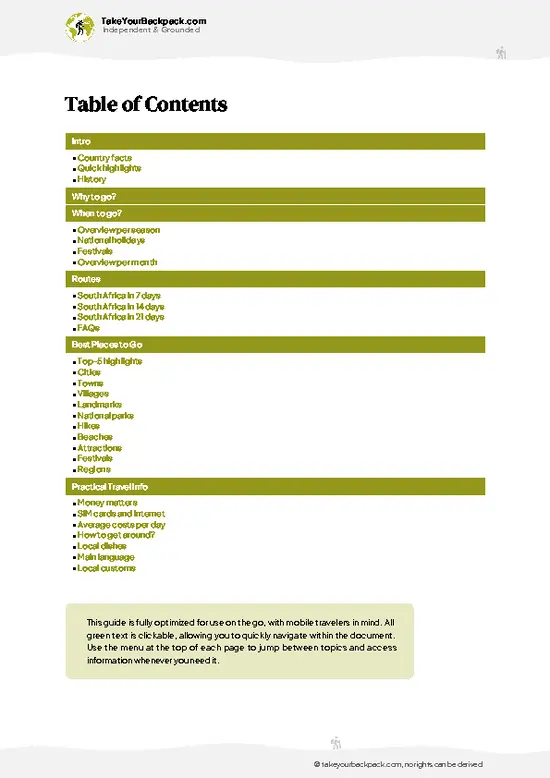
example page 0 from our offline Travel Guide for South Africa
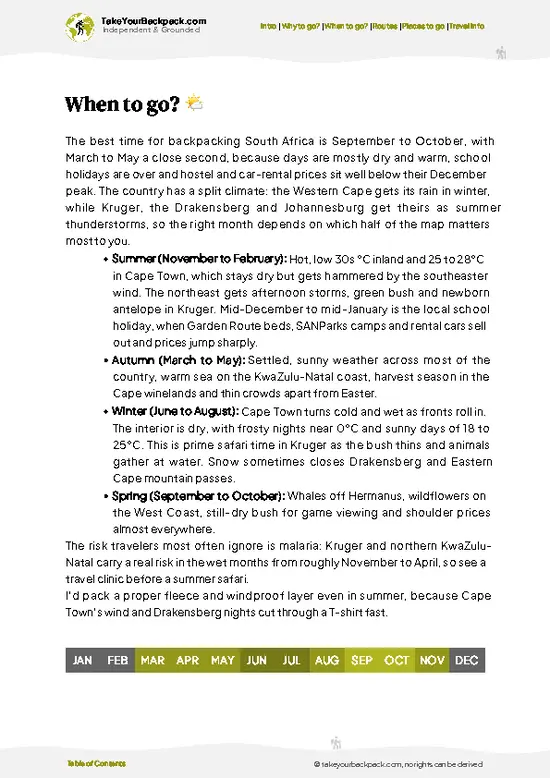
example page 1 from our offline Travel Guide for South Africa
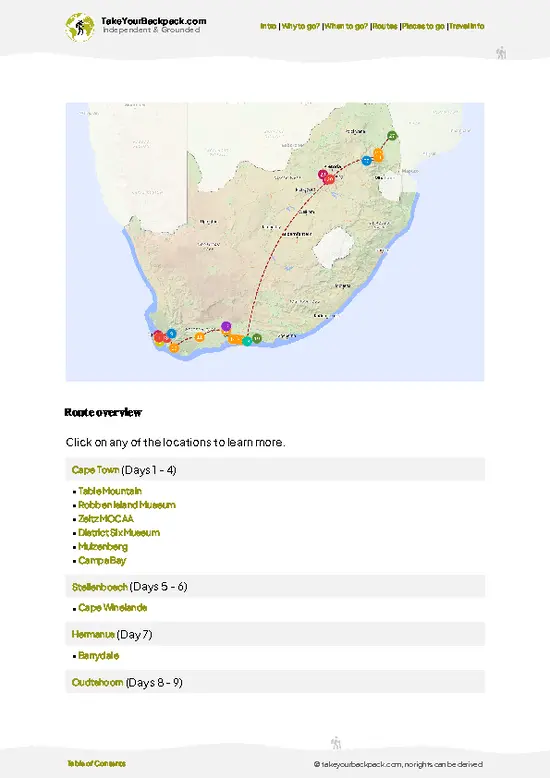
example page 2 from our offline Travel Guide for South Africa
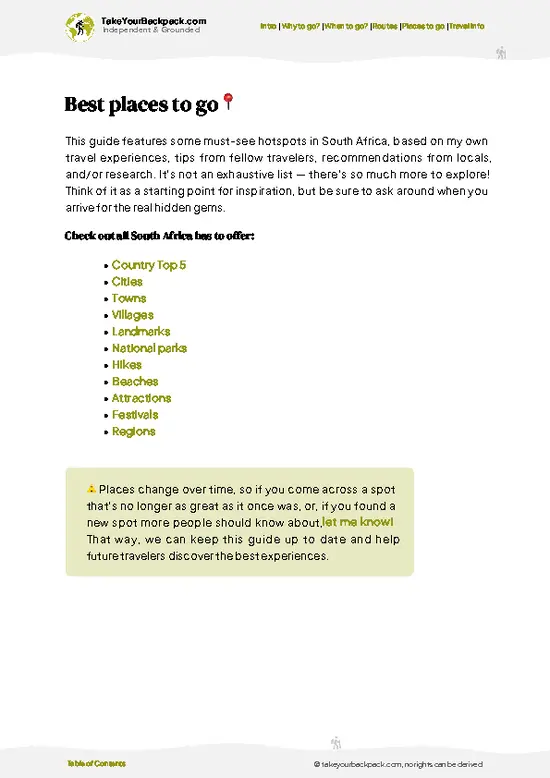
example page 3 from our offline Travel Guide for South Africa
example page 4 from our offline Travel Guide for South Africa
example page 5 from our offline Travel Guide for South Africa
example page 6 from our offline Travel Guide for South Africa
example page 7 from our offline Travel Guide for South Africa
Loading the map 🌍
CLICK TO FILTER
cities
towns
villages
landmarks
national parks
hikes
beaches
attractions
festivals
regions
SHOW COUNTRY’S BESTSHOW ALL

✨ Why go?
Ranked #3 beach in South Africa
Why visitors keep coming back

Umhlanga Rocks beach works for backpackers who want a safe, easy coastal pause rather than a party town. The big draw is the lifeguarded swimming zone with shark nets, which makes it one of the few spots along this coast where you can actually get in the water without worry. The paved promenade running to the lighthouse is flat and well lit, so you can walk, jog or sit with a drink and watch the surf break without needing a plan. It is also a convenient connector: it sits right beside Durban, so it breaks up a long run along the KwaZulu-Natal coast without a detour. Evenings are calm and the area feels secure compared with many other urban beaches in the country. It is not cheap, and nightlife is more polished than rowdy, but you can stretch a budget by buying groceries and picnicking on the … read more 👉
Umhlanga Rocks beach works for backpackers who want a safe, easy coastal pause rather than a party town. The big draw is the lifeguarded swimming zone with shark nets, which makes it one of the few spots along this coast where you can actually get in the water without worry. The paved promenade running to the lighthouse is flat and well lit, so you can walk, jog or sit with a drink and watch the surf break without needing a plan. It is also a convenient connector: it sits right beside Durban, so it breaks up a long run along the KwaZulu-Natal coast without a detour. Evenings are calm and the area feels secure compared with many other urban beaches in the country. It is not cheap, and nightlife is more polished than rowdy, but you can stretch a budget by buying groceries and picnicking on the grass. If you want surf lessons, a long swim, or just a reset between bigger legs of a South African trip, this does the job well.

💡 HighlightsEssential experiences to have while visiting Umhlanga Rocks

  1. Umhlanga Lighthouse and Promenade: The red-and-white striped lighthouse is the landmark everyone photographs. The paved promenade links it to the main beach, and it is free to walk at any hour of daylight.
  2. Swimming between the flags: The main beach has lifeguards and shark nets, so this is the one place to get properly in the water. The surf is gentle enough for confident beginners, and the Indian Ocean is warm for much of the year.
  3. Surfing and bodyboarding: Consistent waves roll in along the beach. Local surf schools and board rental stands offer lessons for newcomers, and watching experienced surfers work the break is entertainment on its own.
  4. Umhlanga Rocks tidal pools: The rocky shelf near the lighthouse forms natural pools at low tide. They hold small fish and crabs, and make a calm alternative
… read more 👉
  1. Umhlanga Lighthouse and Promenade: The red-and-white striped lighthouse is the landmark everyone photographs. The paved promenade links it to the main beach, and it is free to walk at any hour of daylight.
  2. Swimming between the flags: The main beach has lifeguards and shark nets, so this is the one place to get properly in the water. The surf is gentle enough for confident beginners, and the Indian Ocean is warm for much of the year.
  3. Surfing and bodyboarding: Consistent waves roll in along the beach. Local surf schools and board rental stands offer lessons for newcomers, and watching experienced surfers work the break is entertainment on its own.
  4. Umhlanga Rocks tidal pools: The rocky shelf near the lighthouse forms natural pools at low tide. They hold small fish and crabs, and make a calm alternative when the surf is rough. Wear shoes, because the rocks are sharp.
  5. Evening promenade walk: After dark the walkway is lit, and restaurants and cafés along the front fill up. It is a relaxed way to end the day with a sundowner or an ice cream, and you can watch ships waiting off the coast for Durban harbor.
Umhlanga Rocks beach takes about half a day to enjoy fully, and a whole day if you add a surf lesson.
Spotted a mistake or missing something? Contact us.

Things to do near Umhlanga Rocks

Ratings based on Tripadvisor reviews. When you book through this link, you support our work at no extra cost to you.

🌤️ When to go?Weather, crowds, and seasonal trade-offs

  • Summer (December to February): Hot and humid, with highs of 28 to 32°C (82 to 90°F) and afternoon thunderstorms. Days are long, the ocean sits around 24 to 26°C (75 to 79°F), and the beach is packed during the school holidays from mid-December to mid-January. Accommodation prices jump sharply then.
  • Autumn (March to May): Warm and calmer, with highs of 25 to 28°C (77 to 82°F), clearer skies and easing crowds. Rates drop, and the sea is still comfortable for swimming.
  • Winter (June to August): Dry, sunny and mild, with highs of 21 to 24°C (70 to 75°F) and cool nights near 10°C (50°F). Days are shorter and the water is around 20°C (68°F), but the beach is quiet and beds are the cheapest of the year. July brings the sardine run, when dolphins and gannets sometimes show up along the coast.
  • Spring (September
… read more 👉
  • Summer (December to February): Hot and humid, with highs of 28 to 32°C (82 to 90°F) and afternoon thunderstorms. Days are long, the ocean sits around 24 to 26°C (75 to 79°F), and the beach is packed during the school holidays from mid-December to mid-January. Accommodation prices jump sharply then.
  • Autumn (March to May): Warm and calmer, with highs of 25 to 28°C (77 to 82°F), clearer skies and easing crowds. Rates drop, and the sea is still comfortable for swimming.
  • Winter (June to August): Dry, sunny and mild, with highs of 21 to 24°C (70 to 75°F) and cool nights near 10°C (50°F). Days are shorter and the water is around 20°C (68°F), but the beach is quiet and beds are the cheapest of the year. July brings the sardine run, when dolphins and gannets sometimes show up along the coast.
  • Spring (September to November): Highs of 23 to 27°C (73 to 81°F), fewer people and rising prices toward November. Windy days are common.
Book December stays months ahead, or aim for April and early September when the weather is good and the beds are cheap.


source: climatestotravel.comJANJanuary: excellent for travelingFEBFebruary: excellent for travelingMARMarch: excellent for travelingAPRApril: highly recommended for travelingMAYMay: good for travelingJUNJune: fair for travelingJULJuly: fair for travelingAUGAugust: fair for travelingSEPSeptember: good for travelingOCTOctober: highly recommended for travelingNOVNovember: excellent for travelingDECDecember: excellent for traveling
when-to-go

✈️ The backpacker research shortcutSouth Africa Travel Guide

An offline-friendly backpacking guide with optimized travel routes, ranked highlights, transport advice, and the best areas to stay.
example page 0 from our offline Travel Guide for South Africa
example page 1 from our offline Travel Guide for South Africa
example page 2 from our offline Travel Guide for South Africa
example page 3 from our offline Travel Guide for South Africa
example page 4 from our offline Travel Guide for South Africa
example page 5 from our offline Travel Guide for South Africa
example page 6 from our offline Travel Guide for South Africa
example page 7 from our offline Travel Guide for South Africa
The digital guide (457 pages) contains:
✅ 125 highlights, ranked by travel appeal
✅ Optimized 7, 14 & 21-day travel routes
✅ Cities, national parks, landmarks, beaches
✅ How to get around
✅ Offline-friendly for travel without Wi-Fi
👉 Click to see all 30+ guide features

📅 Plan smarter in minutes, not weeks
✅ Month by month travel advice
✅ Festivals & national holidays
✅ Budget expectations

🗺️ Go to the right places, skip the overrated ones
✅ Honest pros & cons of destinations
✅ Top hikes, parks & viewpoints
✅ Lesser-known places most travelers miss
✅ Clear “worth it vs skip it” guidance

🛏️ Travel smoothly without rookie mistakes
✅ Best areas to stay
✅ Transport systems explained simply
✅ Common scams & safety advice
✅ SIM cards, money & practical tips

🌍 Understand the country, not just visit it
✅ Culture & traditions
✅ 52 Essential phrases & customs
✅ Festivals worth planning around
✅ Traveler-friendly historical context
✅ Insights that make places more meaningful

📱 Built for real travel conditions
✅ Fully downloadable PDF
✅ Works completely offline
✅ Optimized for phone use
✅ Useful in remote areas & buses
✅ Everything in one place
Stop searching, start planning
Get instant access to your full guide. 30‑day money-back guarantee.
+ Add another guide for just

By proceeding you agree to our terms.
Sent to your inbox immediately after payment • 100% Secure Checkout
Best Backpacking Travel Advisor 2025 tourism awardBest Backpacking
Travel Advisor
2025
What others say about Take Your Backpack Guides:
⭐⭐⭐⭐⭐
Fantastic, amazing amount of information!
⭐⭐⭐⭐⭐
My goodness this is amazing, it's what I've been looking for hats off too you!
⭐⭐⭐⭐⭐
I think this is absolutely BRILLIANT
⭐⭐⭐⭐
Very complete and informative. It's still missing places, but I gotta to commend you
⭐⭐⭐⭐⭐
This is truly amazing, thank you, can't wait to explore it with my kids!
⭐⭐⭐⭐⭐
Awesome resource, thank you!
⭐⭐⭐⭐⭐
This is amazing! Can't wait to explore the ones I haven't seen
⭐⭐⭐⭐
I love this! Well done, great idea.
⭐⭐⭐⭐⭐
Thanks for taking the time to make this gem!
⭐⭐⭐⭐⭐
This might be the best website I've ever seen.
⭐⭐⭐⭐⭐
Congratulations, and thank you so much for your work; it's incredibly valuable.
⭐⭐⭐⭐
In all seriousness I think you did a great job pointing out the important spots
⭐⭐⭐⭐⭐
10/10 very good
⭐⭐⭐⭐⭐
As someone who's only just starting to visit regularly this is awesome, thank you.
⭐⭐⭐⭐
Thank you very much! I'm going to visit my dad, it's going to be very useful!
⭐⭐⭐⭐⭐
This is really cool! We'll be travelling for the first time and this definitely come in handy.
⭐⭐⭐⭐⭐
You are now our minister of culture, congratulations 👨‍💼
⭐⭐⭐⭐⭐
Just wanted to tell you that this is a pearl! Going to follow your recommendations.
⭐⭐⭐⭐⭐
This is so cool. I'll definitely be using the resource for my travels soon.
⭐⭐⭐⭐⭐
This is very impressive! Good work.
⭐⭐⭐⭐⭐
This is an amazing and informative site. Very well done!

🛏️ Where to stay?How to pick the right area

The best base for backpackers is the Umhlanga Rocks village itself, within a ten-minute walk of the beach, though true dorm-style budget options are few here. Umhlanga is a polished, resort-style suburb, so the cheapest beds run about US$20 to 35 in a dorm or US$45 to 80 for a private room outside school holidays. Staying near the Lighthouse and the promenade means you can walk to the sand, cafes and restaurants, and the area is well lit and patrolled, which suits solo travelers arriving late.

If prices sting, Durban's Florida Road in Morningside and the Berea are the main alternatives. Both … read more 👉
The best base for backpackers is the Umhlanga Rocks village itself, within a ten-minute walk of the beach, though true dorm-style budget options are few here. Umhlanga is a polished, resort-style suburb, so the cheapest beds run about US$20 to 35 in a dorm or US$45 to 80 for a private room outside school holidays. Staying near the Lighthouse and the promenade means you can walk to the sand, cafes and restaurants, and the area is well lit and patrolled, which suits solo travelers arriving late.

If prices sting, Durban's Florida Road in Morningside and the Berea are the main alternatives. Both have more social hostels, bars and a younger crowd, and you can reach Umhlanga in about 25 to 40 minutes by ride-hailing or car, costing roughly US$8 to 15 each way. Durban's beachfront near the Golden Mile is the other cheap option, but it is grittier and less comfortable after dark.

The upmarket stretch toward Gateway and La Lucia has apartment rentals that work if you are splitting costs with a group. Self-catering is useful here, since restaurants on the promenade are pricey. Book early for December and Easter, when everything near the sea fills.

🛡️ SafetyTraveler Safety Guide

Umhlanga Rocks beach is one of the better-managed beaches in the country, with lifeguards on duty daily and a swimming area marked by flags. Swim only between the flags. Rip currents form along this coast, especially after a big swell, and the lifeguards will wave you in if the water turns sketchy. Shark nets are installed along the KwaZulu-Natal coast, and the beach is protected by them. Blue bottles (Portuguese man o' war) wash up after strong northeasterly winds, so check the sand before wading in and avoid touching any.

The sun is fierce from October to March, and the UV index is high even in mild winter weather. Bring strong SPF and take shade at midday. The promenade is busy and patrolled, so the main risk is opportunistic theft. Keep phones and bags with you rather than leaving them … read more 👉
Umhlanga Rocks beach is one of the better-managed beaches in the country, with lifeguards on duty daily and a swimming area marked by flags. Swim only between the flags. Rip currents form along this coast, especially after a big swell, and the lifeguards will wave you in if the water turns sketchy. Shark nets are installed along the KwaZulu-Natal coast, and the beach is protected by them. Blue bottles (Portuguese man o' war) wash up after strong northeasterly winds, so check the sand before wading in and avoid touching any.

The sun is fierce from October to March, and the UV index is high even in mild winter weather. Bring strong SPF and take shade at midday. The promenade is busy and patrolled, so the main risk is opportunistic theft. Keep phones and bags with you rather than leaving them on the sand while you swim, and walk back after dark along the lit promenade rather than the beach itself.

FAQTraveler FAQ

Umhlanga Rocks beach lies about 15 to 20 km north of central Durban, a 20 to 30 minute drive up the M4 or N2. Ride-hailing with Uber or Bolt costs roughly US$10 to 18 from the city center or US$12 to 20 from King Shaka Airport (about 15 minutes away). Minibus taxis and the GO!Durban buses run along the corridor, but they are slow and confusing for visitors, so most backpackers take an app ride.
Swimming is the main draw at Umhlanga Rocks beach, with lifeguards and shark nets covering the flagged area, and the sea is around 20 to 26°C (68 to 79°F) year-round. Surfing is possible on the beach breaks, which are best on a south swell, though Durban's North Beach and Cave Rock are the better-known surf spots. Snorkeling is poor because visibility is usually low, so head to Aliwal Shoal or Sodwana Bay for reefs.
Umhlanga Rocks beach is free to enter, with no charge for the sand, the promenade or the lifeguarded swimming area. Parking near the Lighthouse and the main beachfront costs about US$1 to 3 an hour at paid bays or with car guards, who expect a small tip of around US$0.50 to 1. Showers and toilets near the main beach are generally free, and the promenade stays open at all hours.
⚠️ Things can change over time, so always validate details locally before you go.

Other South African beaches near Umhlanga Rocks

Explore more nearby:

  • Coffee Bay—Long left-hand waves, Hole in the Wall hike, hostel fires, river-mouth walks| 312 km away
  • Plett Beach—wide sandy bay, dolphin sightings, Robberg Peninsula, holiday town| 873 km away
  • Muizenberg—Beginner surf schools, colored bathing huts, False Bay sand, coastal train| 1286 km away

💡 Not sure where to go next?
Create a personalized itinerary for South Africa including Umhlanga Rocks and the places that fit your trip.

Generate my itinerary

👉 Discover all beaches

Or checkout all South Africa has to offer (think cities, towns, villages, national parks, hikes, beaches, festivals)
Country photo of South Africa

We 💚 feedbackParting advice and final tips

Umhlanga Rocks beach deserves one full day, two if you want a surf lesson and a slow evening on the promenade. Beyond that, the polished resort feel starts to wear thin and your budget will notice. I would stay one night, swim in the morning when the lifeguards are on duty, and move on.

✈️ When did I visit South Africa?
I have visited South Africa, before and after my Zimbabwe trip in 2001.

✍️ Help improve this page!
The information on this page is based on my own backpacking experience in South Africa, supplemented with up-to-date research and feedback from other travelers. Travel details can change, so if you notice anything outdated or incomplete, feel free to let me know.


🙋‍♂️ Give feedback

👋 Meet the founderWho’s Behind Take Your Backpack?

Johan, backpacker and founder of TakeYourBackpackHi, I’m Johan (Netherlands 🇳🇱), the creator of TakeYourBackpack. Over the past 3 decades, I’ve backpacked through 90+ countries across six continents, gaining extensive experience with independent travel, long-term trips, and overland routes.

This site is built on a combination of firsthand travel experience and carefully curated insights from other backpackers. Many guides are based on places I’ve personally visited, while others bring together tips, observations, and practical advice shared by trusted travelers I’ve met along the way.

The goal is to provide realistic, experience-driven guidance — not generic itineraries — so you can explore destinations with better context, clearer expectations, and more confidence.