
×
Cape Town

South Africa🇿🇦 | citiesCape TownTable Mountain views, Atlantic beaches, Cape Malay neighborhoods, Robben Island | things to do and best time to go

Explore Umhlanga RocksExplore Durban

Backpacking in Cape Town
🏆 Top pickcity ranked #1
By Johan Kruseman 🇳🇱 | Updated September 3, 2026

Cape Town’s biggest surprise? For all its postcard Table Mountain drama, it’s one of the only cities in Africa where you can hike from the city center to a world-class beach, pass penguins, and end the day at a jazz bar—without ever needing a car. Tucked into South Africa’s southwest corner, Cape Town is a city where backpackers can feast on street food in the Bo-Kaap, wander the Company’s Garden, and debate politics with strangers in Long Street’s late-night haunts. The city is visually spectacular, but the real draw is its mash-up of cultures and the way hostels double as social clubs—meeting other travelers is almost too easy. Costs are lower than Europe but higher than most of Africa; you’ll pay for the view, but a local minibus can get you across town for pocket change. Safety is a real concern after dark, especially outside the center, but compared to Johannesburg or Durban, Cape Town feels more relaxed, less frantic, and infinitely more walkable. The vibe? Creative, unpredictable, and always a little bit wild.

Discover everything you want to know in the 📖 South Africa Travel Guide.
Loading the map 🌍
CLICK TO FILTER
cities
towns
villages
landmarks
national parks
hikes
beaches
attractions
festivals
regions
SHOW COUNTRY’S BESTSHOW ALL

✨ Why go?
Ranked #1 city in South Africa
What makes it a must-see city

Cape Town is a backpacker’s paradise that strikes a balance between time, money, and comfort. First off, the highlights are plentiful, making it a perfect base for those who want to pack in experiences without feeling rushed. You can explore iconic sites and still have time to unwind. The hostel scene is vibrant and affordable, offering a great way to meet fellow travelers and share tips.

Food options range from street vendors to cozy cafes, catering to all budgets. This city is incredibly walkable, allowing you to soak in the atmosphere without the hassle of public transport. When the sun sets, the nightlife buzzes with energy, providing a fun way to connect with locals and other backpackers alike.

Plus, Cape Town serves as an excellent launchpad for day trips to stunning landscapes and … read more 👉
Cape Town is a backpacker’s paradise that strikes a balance between time, money, and comfort. First off, the highlights are plentiful, making it a perfect base for those who want to pack in experiences without feeling rushed. You can explore iconic sites and still have time to unwind. The hostel scene is vibrant and affordable, offering a great way to meet fellow travelers and share tips.

Food options range from street vendors to cozy cafes, catering to all budgets. This city is incredibly walkable, allowing you to soak in the atmosphere without the hassle of public transport. When the sun sets, the nightlife buzzes with energy, providing a fun way to connect with locals and other backpackers alike.

Plus, Cape Town serves as an excellent launchpad for day trips to stunning landscapes and nearby attractions. If you’re planning to head further into South Africa or beyond, the transport links are solid, making onward travel easy.

In short, Cape Town is not just a stopover; it’s a strategic hub that enhances your journey while offering a rich tapestry of experiences.
Want to include Cape Town in your South Africa route?
Create a personalized South Africa itinerary that includes Cape Town and the places that fit your trip — based on your travel style, budget, and available time. Get your route in seconds.

Generate my trip

💡 HighlightsWhat this place is best known for

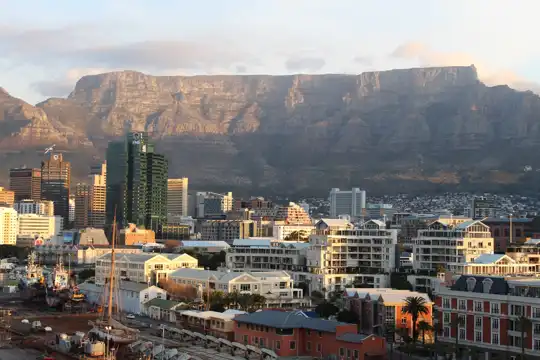
  1. Table Mountain — The skyline-defining flat-topped mountain: take the cableway (or hike up Platteklip Gorge) for impossible city-to-sea views, unique fynbos, and a proper sense of where Cape Town sits in the world. Weather can turn fast, so check the conditions before you commit.
  2. Robben Island — The ferry ride and guided prison tour give you a powerful, on-the-ground lesson about apartheid and Nelson Mandela’s imprisonment; many guides are former inmates, which makes the storytelling raw and unforgettable.
  3. Bo-Kaap — A compact neighborhood of brightly painted houses and Cape Malay culture: explore the cobbled streets, sample sambals and curries, and learn about the Muslim community’s history tied to slavery and displacement.
  4. Kirstenbosch National Botanical Garden — World-class gardens at
read more 👉
  1. Table Mountain — The skyline-defining flat-topped mountain: take the cableway (or hike up Platteklip Gorge) for impossible city-to-sea views, unique fynbos, and a proper sense of where Cape Town sits in the world. Weather can turn fast, so check the conditions before you commit.
  2. Robben Island — The ferry ride and guided prison tour give you a powerful, on-the-ground lesson about apartheid and Nelson Mandela’s imprisonment; many guides are former inmates, which makes the storytelling raw and unforgettable.
  3. Bo-Kaap — A compact neighborhood of brightly painted houses and Cape Malay culture: explore the cobbled streets, sample sambals and curries, and learn about the Muslim community’s history tied to slavery and displacement.
  4. Kirstenbosch National Botanical Garden — World-class gardens at the eastern slopes of Table Mountain showcasing South Africa’s fynbos; perfect for a picnic, summer concert, or a stroll on the elevated “Boomslang” walkway above the trees.
  5. Zeitz MOCAA (V&A Waterfront) — Housed in converted grain silos, this is the largest museum of contemporary African art in the world; the building itself is a work of art and the exhibits give real insight into modern African creativity.
  6. District Six Museum — Small but emotionally heavy: personal stories, maps and photographs document the forced removals under apartheid and the neighborhood that used to be; vital context for understanding Cape Town’s social fabric.
  7. Iziko Slave Lodge — One of Cape Town’s oldest buildings, now a museum focusing on the histories of slavery, colonialism and resilience; visiting here gives depth to the city’s colonial-era story you won’t get from postcards.
  8. Langa Township — One of Cape Town’s oldest townships where guided walks, community art spaces (like Guga S’thebe), and home-cooked meals offer meaningful encounters with daily life, history and resilient creativity.
  9. Old Biscuit Mill & Neighbourgoods Market (Woodstock) — A weekend ritual for locals: designer stalls, street food, vintage finds and street art in an old factory quarter—great for seeing Cape Town’s creative, entrepreneurial side up close.
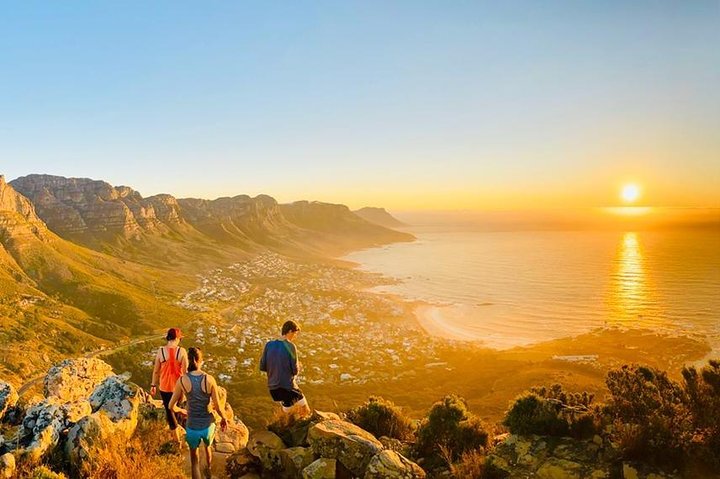
  10. Lion’s Head — Short, steep hike with a circular, panoramic view—especially popular at full moon and sunset; less of a slog than Table Mountain but just as rewarding for photo-worthy perspectives of city, ocean and mountains.
A few great day trips outside the city: the Cape Winelands (Stellenbosch and Franschhoek) for wine and food, the Cape Peninsula/Cape Point loop with Simon’s Town and Boulders Beach (penguins), and seasonal whale-watching around Hermanus.
Spotted a mistake or missing something? Contact us.

Things to do in Cape Town

Ratings based on Tripadvisor reviews. When you book through this link, you support our work at no extra cost to you.

🏘️ NeighborhoodsNeighborhood guide to Cape Town

Cape Town is a vibrant city where each neighborhood offers a unique flavor for backpackers. Here’s how to navigate your choices between time, money, and comfort.

City Bowl: This is the heart of Cape Town, where you’ll find a mix of culture and convenience. It’s walkable, with plenty of cafes, shops, and attractions like the Company’s Garden. Prices can be higher here, but the nightlife is buzzing, making it ideal for short stays. Public transport is accessible, but you might want to budget for rideshares late at night.

Camps Bay: Known for its stunning beach and upscale vibe, Camps Bay is perfect for those who want a slice of luxury without breaking the bank. It’s less walkable than the City Bowl, so expect to rely on public transport or taxis. The nightlife is more laid-back, with beach … read more 👉
Cape Town is a vibrant city where each neighborhood offers a unique flavor for backpackers. Here’s how to navigate your choices between time, money, and comfort.

City Bowl: This is the heart of Cape Town, where you’ll find a mix of culture and convenience. It’s walkable, with plenty of cafes, shops, and attractions like the Company’s Garden. Prices can be higher here, but the nightlife is buzzing, making it ideal for short stays. Public transport is accessible, but you might want to budget for rideshares late at night.

Camps Bay: Known for its stunning beach and upscale vibe, Camps Bay is perfect for those who want a slice of luxury without breaking the bank. It’s less walkable than the City Bowl, so expect to rely on public transport or taxis. The nightlife is more laid-back, with beach bars and restaurants. Great for longer stays if you’re looking to unwind.

Kalk Bay: A charming coastal village with a bohemian feel. It’s quieter, making it suitable for those seeking a peaceful retreat. Prices are moderate, and the area is walkable, with quirky shops and local eateries. It’s a bit further from the city center, so plan for transport time if you want to explore more.

Bo-Kaap: Famous for its colorful houses and rich history, Bo-Kaap is a cultural hotspot. It’s affordable and walkable, with a vibrant local scene. While nightlife is quieter, the area is perfect for short stays focused on cultural immersion. Public transport is available, but you can easily explore on foot.

Observatory: A student-friendly area with a laid-back vibe. It’s budget-friendly and offers a mix of bars and cafes. Walkability is high, making it easy to explore. Ideal for longer stays if you enjoy a more local experience, but nightlife can be hit or miss. Public transport connects you to the city center, but it’s a bit of a trek.

⌛️ 1 dayA smart one-day plan

Cape Town is a vibrant blend of stunning landscapes, rich history, and diverse cultures. Nestled between the iconic Table Mountain and the Atlantic Ocean, it offers a unique mix of urban life and natural beauty. You can easily spend a day here, soaking in the sights and flavors without feeling rushed.

Start your morning in the colorful Bo-Kaap neighborhood. The bright houses and cobblestone streets are a feast for the eyes. Grab a traditional Cape Malay breakfast at one of the local cafés—think spicy bobotie or fluffy koeksisters. After fueling up, take a stroll through the area, snapping photos and chatting with locals about their heritage. This neighborhood is often overlooked by tourists, but it’s a slice of Cape Town’s soul.

As the sun climbs higher, head to the V&A Waterfront. It’s … read more 👉
Cape Town is a vibrant blend of stunning landscapes, rich history, and diverse cultures. Nestled between the iconic Table Mountain and the Atlantic Ocean, it offers a unique mix of urban life and natural beauty. You can easily spend a day here, soaking in the sights and flavors without feeling rushed.

Start your morning in the colorful Bo-Kaap neighborhood. The bright houses and cobblestone streets are a feast for the eyes. Grab a traditional Cape Malay breakfast at one of the local cafés—think spicy bobotie or fluffy koeksisters. After fueling up, take a stroll through the area, snapping photos and chatting with locals about their heritage. This neighborhood is often overlooked by tourists, but it’s a slice of Cape Town’s soul.

As the sun climbs higher, head to the V&A Waterfront. It’s a bustling hub with shops, restaurants, and stunning views of the harbor. You can hop on a ferry to Robben Island, where Nelson Mandela was imprisoned. The tour is both eye-opening and moving, offering a deeper understanding of South Africa’s history. If you prefer to stay on land, explore the Two Oceans Aquarium, where you can marvel at the marine life of both the Atlantic and Indian Oceans.

In the afternoon, make your way to the trendy Woodstock area. This neighborhood is known for its street art and creative vibe. Check out the Old Biscuit Mill, where you can browse local crafts and grab a bite at the Neighbourgoods Market if it’s a Saturday. The atmosphere is electric, filled with the sounds of laughter and sizzling street food.

As evening approaches, head to Camps Bay for a sunset view. The beach is lined with restaurants, perfect for unwinding after a day of exploration. Treat yourself to fresh seafood while watching the sun dip below the horizon, painting the sky in hues of orange and pink.

Cape Town is a city that invites you to linger, but even in a day, you can capture its essence. Each choice you make—from breakfast in Bo-Kaap to dinner in Camps Bay—offers a unique glimpse into the heart of this remarkable place.
Turn your Cape Town visit into an South Africa adventure
Build a complete South Africa route with Cape Town, hidden gems, must-see destinations, and realistic travel times included.

Generate my trip

🌤️ When to go?Best time to visit Cape Town


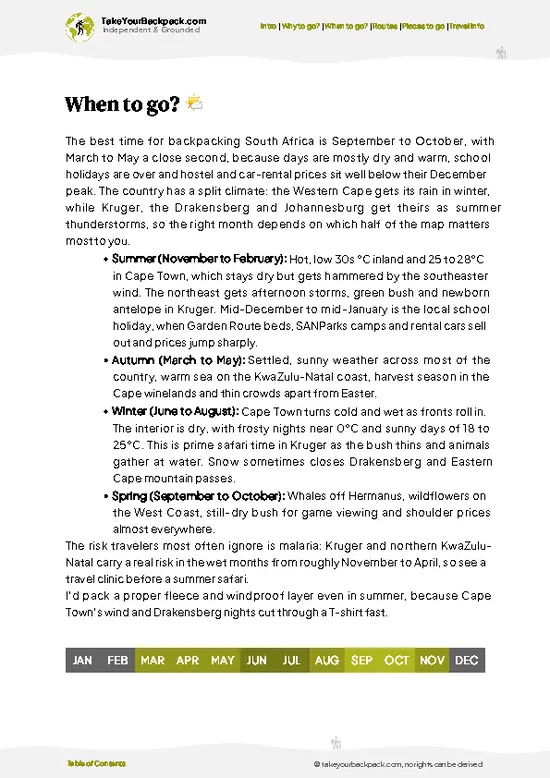
  • Topic: Weather and Temperature — Cape Town’s Mediterranean climate means dry, warm summers (December to February) with highs around 26-29°C (79-84°F) and mild, wet winters (June to August) dropping to 7-18°C (45-64°F). Summer’s ideal for beach days but expect heat and occasional wind gusts.

  • Topic: Daylight Hours — Long summer days stretch up to 14 hours of sunlight, perfect for squeezing in hikes and sightseeing. Winter days shrink to about 10 hours, limiting outdoor time but offering softer light for photography.

  • Topic: Crowds — Peak tourist season aligns with summer, so expect busy spots and higher prices. Winter sees fewer visitors, giving you more breathing room at popular sites like Table Mountain and the V&A Waterfront.

  • Topic: Seasonal Activities — Summer is prime for outdoor
read more 👉

  • Topic: Weather and Temperature — Cape Town’s Mediterranean climate means dry, warm summers (December to February) with highs around 26-29°C (79-84°F) and mild, wet winters (June to August) dropping to 7-18°C (45-64°F). Summer’s ideal for beach days but expect heat and occasional wind gusts.

  • Topic: Daylight Hours — Long summer days stretch up to 14 hours of sunlight, perfect for squeezing in hikes and sightseeing. Winter days shrink to about 10 hours, limiting outdoor time but offering softer light for photography.

  • Topic: Crowds — Peak tourist season aligns with summer, so expect busy spots and higher prices. Winter sees fewer visitors, giving you more breathing room at popular sites like Table Mountain and the V&A Waterfront.

  • Topic: Seasonal Activities — Summer is prime for outdoor adventures—surfing, vineyard tours, and festivals. Winter brings whale watching along the coast and cozy indoor experiences like wine tastings and local markets.

  • Topic: Price Fluctuations — Accommodation and flights spike in summer due to demand. Winter offers better deals but some outdoor activities may be weather-limited, so weigh cost savings against your activity list.


Pro-tip: Visit in shoulder seasons (spring: Sept-Nov or autumn: Mar-May) to balance mild weather, manageable crowds, and reasonable prices—your smartest move for a high-value Cape Town trip.


source: climatestotravel.comJANJanuary: highly recommended for travelingFEBFebruary: highly recommended for travelingMARMarch: highly recommended for travelingAPRApril: highly recommended for travelingMAYMay: good for travelingJUNJune: fair for travelingJULJuly: fair for travelingAUGAugust: fair for travelingSEPSeptember: highly recommended for travelingOCTOctober: highly recommended for travelingNOVNovember: highly recommended for travelingDECDecember: highly recommended for traveling
South Africa - Cape Town

✈️ The backpacker research shortcutSouth Africa Travel Guide

An offline-friendly backpacking guide with optimized travel routes, ranked highlights, transport advice, and the best areas to stay.
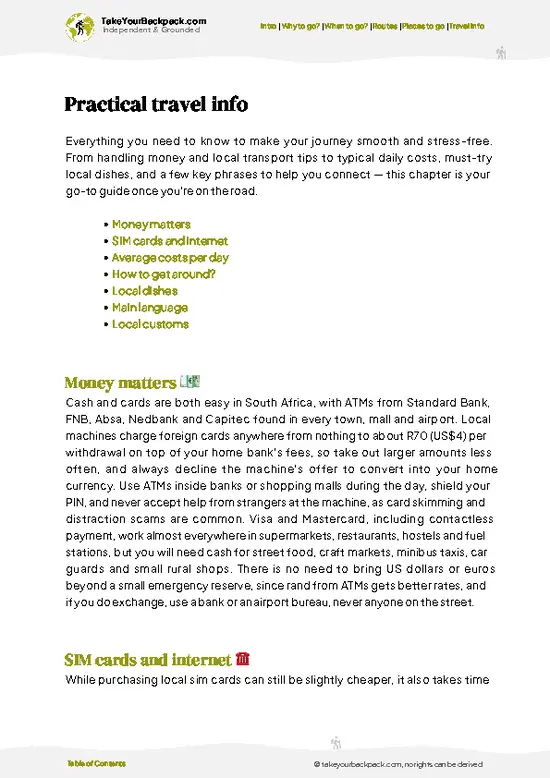
example page 0 from our offline Travel Guide for South Africa
example page 1 from our offline Travel Guide for South Africa
example page 2 from our offline Travel Guide for South Africa
example page 3 from our offline Travel Guide for South Africa
example page 4 from our offline Travel Guide for South Africa
example page 5 from our offline Travel Guide for South Africa
example page 6 from our offline Travel Guide for South Africa
example page 7 from our offline Travel Guide for South Africa
The digital guide (453 pages) contains:
129 highlights, ranked by travel appeal
Optimized 7, 14 & 21-day travel routes
Cities, national parks, landmarks, beaches
How to get around
Offline-friendly for travel without Wi-Fi
👉 Click to see all 30+ guide features

📅 Plan smarter in minutes, not weeks
Month by month travel advice
Festivals & national holidays
Budget expectations

🗺️ Go to the right places, skip the overrated ones
Honest pros & cons of destinations
Top hikes, parks & viewpoints
Lesser-known places most travelers miss
Clear “worth it vs skip it” guidance

🛏️ Travel smoothly without rookie mistakes
Best areas to stay
Transport systems explained simply
Common scams & safety advice
SIM cards, money & practical tips

🌍 Understand the country, not just visit it
Culture & traditions
Local customs
Festivals worth planning around
Traveler-friendly historical context
Insights that make places more meaningful

📱 Built for real travel conditions
Fully downloadable PDF
Works completely offline
Optimized for phone use
Useful in remote areas & buses
Everything in one place
Save weeks of stressful planning
Get instant access to your full guide. 30‑day money-back guarantee.
+ Add another guide for just R$44.25

By proceeding you agree to our terms.
Sent to your inbox immediately after payment • 100% Secure Checkout
Best Backpacking Travel Advisor 2025 tourism awardBest Backpacking
Travel Advisor
2025
What others say about Take Your Backpack Guides:
⭐⭐⭐⭐⭐
Fantastic, amazing amount of information!
⭐⭐⭐⭐⭐
My goodness this is amazing, it's what I've been looking for hats off too you!
⭐⭐⭐⭐⭐
I think this is absolutely BRILLIANT
⭐⭐⭐⭐
Very complete and informative. It's still missing places, but I gotta to commend you
⭐⭐⭐⭐⭐
This is truly amazing, thank you, can't wait to explore it with my kids!
⭐⭐⭐⭐⭐
Awesome resource, thank you!
⭐⭐⭐⭐⭐
This is amazing! Can't wait to explore the ones I haven't seen
⭐⭐⭐⭐
I love this! Well done, great idea.
⭐⭐⭐⭐⭐
Thanks for taking the time to make this gem!
⭐⭐⭐⭐⭐
This might be the best website I've ever seen.
⭐⭐⭐⭐⭐
Congratulations, and thank you so much for your work; it's incredibly valuable.
⭐⭐⭐⭐
In all seriousness I think you did a great job pointing out the important spots
⭐⭐⭐⭐⭐
10/10 very good
⭐⭐⭐⭐⭐
As someone who's only just starting to visit regularly this is awesome, thank you.
⭐⭐⭐⭐
Thank you very much! I'm going to visit my dad, it's going to be very useful!
⭐⭐⭐⭐⭐
This is really cool! We'll be travelling for the first time and this definitely come in handy.
⭐⭐⭐⭐⭐
You are now our minister of culture, congratulations 👨‍💼
⭐⭐⭐⭐⭐
Just wanted to tell you that this is a pearl! Going to follow your recommendations.
⭐⭐⭐⭐⭐
This is so cool. I'll definitely be using the resource for my travels soon.
⭐⭐⭐⭐⭐
This is very impressive! Good work.
⭐⭐⭐⭐⭐
This is an amazing and informative site. Very well done!

🛏️ Where to stay?Best areas and accommodation options

City Bowl is the undeniable hub for backpackers in Cape Town. It’s where you get the best bang for your buck in terms of safety, social buzz, and access. The area stretches from the central business district up to the slopes of Table Mountain, offering a dense cluster of hostels that cater specifically to budget travelers and solo adventurers. Here, you’re never far from a lively bar or a communal kitchen where conversations spark easily. The vibe is a mix of urban grit and mountain chill, with a backdrop of iconic views that remind you why you’re here.

Compared to other parts of Cape Town, … read more 👉
City Bowl is the undeniable hub for backpackers in Cape Town. It’s where you get the best bang for your buck in terms of safety, social buzz, and access. The area stretches from the central business district up to the slopes of Table Mountain, offering a dense cluster of hostels that cater specifically to budget travelers and solo adventurers. Here, you’re never far from a lively bar or a communal kitchen where conversations spark easily. The vibe is a mix of urban grit and mountain chill, with a backdrop of iconic views that remind you why you’re here.

Compared to other parts of Cape Town, City Bowl strikes a sweet spot between convenience and character. It’s safer than some of the outlying suburbs, which can be hit-or-miss for solo travelers, and it’s more affordable than the beachfront areas like Camps Bay or Clifton, which lean heavily into luxury. Plus, public transport and shuttle options are more reliable here, saving you time and hassle.

If you want to stretch your legs and meet people, the City Bowl’s compact layout means you can walk to markets, museums, and nightlife without burning cash on taxis. It’s a strategic base that maximizes your comfort without blowing your budget—perfect for turning Cape Town’s sprawling complexity into a manageable, rewarding game.

🚌 Getting aroundGetting around like a local

Cape Town moves with a rhythm that’s part clockwork, part improvisation. The city’s pulse is a blend of punctual commuter trains and the unpredictable dance of minibus taxis weaving through traffic like they own the streets. Here, time is both a resource and a gamble. You’ll find moments where schedules are sacred—like the MyCiTi bus—and others where you’re better off reading the flow of the crowd than any timetable. Understanding this dynamic is your key to mastering Cape Town’s transit game: it’s about choosing when to play it safe and when to embrace the chaos for a richer, more authentic ride.


  • MyCiTi Bus: The backbone of Cape Town’s public transit, this bus system runs from early morning (around 5:30 AM) until about 9:30 PM. It’s fast, reliable, and clean, with fares starting at roughly
read more 👉
Cape Town moves with a rhythm that’s part clockwork, part improvisation. The city’s pulse is a blend of punctual commuter trains and the unpredictable dance of minibus taxis weaving through traffic like they own the streets. Here, time is both a resource and a gamble. You’ll find moments where schedules are sacred—like the MyCiTi bus—and others where you’re better off reading the flow of the crowd than any timetable. Understanding this dynamic is your key to mastering Cape Town’s transit game: it’s about choosing when to play it safe and when to embrace the chaos for a richer, more authentic ride.


  • MyCiTi Bus: The backbone of Cape Town’s public transit, this bus system runs from early morning (around 5:30 AM) until about 9:30 PM. It’s fast, reliable, and clean, with fares starting at roughly 10 ZAR. The MyCiTi is your best bet for comfort and punctuality, especially if you’re heading between the airport, the city center, and the beachfront. It’s a bit pricier than other options but worth it for the predictability and safety.


  • Minibus Taxis: The wild card of Cape Town’s streets. These shared vans operate on a semi-formal schedule but mostly run when full. Fares hover around 8-12 ZAR, making them the cheapest option. They’re fast and frequent, but comfort and safety vary widely. If you’re up for a bit of local flavor and can handle tight spaces and aggressive driving, this is a budget traveler’s shortcut—just be ready to negotiate and stay alert.


  • Metered Taxis and Ride-Hailing (Uber, Bolt): More expensive, with fares starting around 50 ZAR for short trips, but they offer door-to-door convenience and a fixed price upfront. Ideal for late-night travel or when you want to avoid the unpredictability of minibus taxis. Comfort is high, and you control your schedule, but the trade-off is a heavier hit to your wallet.


  • Walking: Cape Town’s compact city center and waterfront areas are best explored on foot. Walking costs nothing and gives you the freedom to soak in the city’s textures—street art, market stalls, and ocean views—at your own pace. Just be mindful of safety, especially after dark, and plan your route to avoid long stretches without pedestrian infrastructure.


  • Rental Bicycles and E-Scooters: For short hops around the city, these offer a fun, flexible middle ground. Prices vary but expect to pay about 20-40 ZAR per hour. They’re great for avoiding traffic jams and getting a bit of exercise, though Cape Town’s hills and occasional rough pavement can make this a challenge. Use them during daylight hours for the best experience.

👛 Costs (as of 3 September 2026)Travel costs and budget guide for Cape Town

Cape Town’s daily costs for backpackers vary with the season and your style, but here’s a clear breakdown to help you plan smart.
  • Dorm Accommodation (High Season): Expect to pay around $15 to $25 per night in popular hostels during peak months (December to February). These spots fill fast, so prices reflect demand and the city’s tourist buzz.
  • Dorm Accommodation (Off-Season): From March to November, prices drop to about $10 to $18 per night. You’ll find quieter hostels with the same vibe but fewer crowds, which can be a win for budget and comfort.
  • Meals: Street food and casual eateries will run you about $3 to $7 per meal. If you’re hitting local markets or grabbing a quick bite, you can keep daily food costs around $10 to $15. Splurge meals at mid-range restaurants push this higher, but
read more 👉
Cape Town’s daily costs for backpackers vary with the season and your style, but here’s a clear breakdown to help you plan smart.
  • Dorm Accommodation (High Season): Expect to pay around $15 to $25 per night in popular hostels during peak months (December to February). These spots fill fast, so prices reflect demand and the city’s tourist buzz.
  • Dorm Accommodation (Off-Season): From March to November, prices drop to about $10 to $18 per night. You’ll find quieter hostels with the same vibe but fewer crowds, which can be a win for budget and comfort.
  • Meals: Street food and casual eateries will run you about $3 to $7 per meal. If you’re hitting local markets or grabbing a quick bite, you can keep daily food costs around $10 to $15. Splurge meals at mid-range restaurants push this higher, but it’s easy to stick to affordable, tasty options.
  • Local Transport: Minibus taxis are the cheapest option, roughly $0.50 to $1 per ride, but they can be chaotic and less safe for newcomers. Metered taxis or ride-hailing apps like Bolt cost about $3 to $7 for short trips within the city center.
  • City Transport Pass: The MyCiTi bus system is reliable and safe, with daily passes around $5 to $7. It’s a solid choice if you plan multiple trips and want to avoid the unpredictability of taxis.
  • Basic Activities/Entry Fees: Many iconic spots like Table Mountain cable car tickets cost about $20 to $25. Museums and smaller attractions range from $3 to $10. Budget $10 to $20 daily if you want to mix in a few paid experiences.
  • Miscellaneous Expenses: Think bottled water, snacks, occasional laundry, or a SIM card top-up. Around $3 to $7 daily covers these small but necessary extras.

Add it all up, and you’re looking at roughly $30 to $60 per day, depending on how much you lean into comfort or cut corners. Cape Town rewards those who balance smart spending with a few splurges—like a cable car ride or a night out in the city—turning your budget into a tool for memorable experiences rather than a limitation.
⚠️ Prices can change and everyone travels differently, so take this as a rough guide. Hope it helps you plan your adventure!

🚌 Day tripsShort trips worth adding

Cape Town is a fantastic launchpad for day trips that pack a punch without draining your wallet or time. Here are some standout options that balance adventure and accessibility.

Cape Point and the Cape of Good Hope
Just over an hour from the city, this trip offers breathtaking coastal views and a chance to see the meeting point of two oceans. The entrance fee is around R360, but the experience of standing at the southwestern tip of Africa is priceless. Don’t miss the scenic drive along Chapman’s Peak, but be wary of the winding roads if you’re prone to motion sickness. Best visited in spring or fall when the weather is mild and the crowds are thinner.


Hiking Table Mountain
A mere 30 minutes from the city center, this iconic hike is a must. The trail is free, but if you opt for the … read more 👉
Cape Town is a fantastic launchpad for day trips that pack a punch without draining your wallet or time. Here are some standout options that balance adventure and accessibility.

Cape Point and the Cape of Good Hope
Just over an hour from the city, this trip offers breathtaking coastal views and a chance to see the meeting point of two oceans. The entrance fee is around R360, but the experience of standing at the southwestern tip of Africa is priceless. Don’t miss the scenic drive along Chapman’s Peak, but be wary of the winding roads if you’re prone to motion sickness. Best visited in spring or fall when the weather is mild and the crowds are thinner.


Hiking Table Mountain
A mere 30 minutes from the city center, this iconic hike is a must. The trail is free, but if you opt for the cable car, expect to pay around R360 for a round trip. The views from the top are worth every step, especially at sunrise or sunset when the light transforms the landscape. A common mistake is underestimating the weather; it can change quickly, so pack layers.
👉 Explore Table Mountain

Stellenbosch Wine Region
About 45 minutes away, Stellenbosch is a haven for wine lovers. You can explore vineyards and sample local wines for around R100 to R300, depending on the tastings you choose. The town itself is charming, with oak-lined streets and great eateries. Visit during the harvest season (February to April) for the full experience, but avoid weekends if you can; the crowds can be overwhelming.
👉 Explore Stellenbosch

Boulders Beach
Just under an hour from Cape Town, this beach is famous for its resident African penguin colony. Entry is about R160, and you can spend hours watching these quirky birds in their natural habitat. The best time to visit is early morning or late afternoon to avoid the heat and crowds. Many first-timers miss the nearby tidal pools, which are perfect for a quick dip.


Ceres Valley
Around 90 minutes from Cape Town, Ceres is known for its fruit farms and stunning mountain scenery. A day trip here can cost around R200 for transport and activities. The best time to visit is during the fruit-picking season (summer), but the valley is beautiful year-round. Many backpackers overlook this area, thinking it’s just a stopover, but it’s a delightful escape into nature.
Want to know what more South Africa offers?
The South Africa Travel Guide describes 129 highlights, from cities to national parks, from beaches to hikes

Get the Travel Guide -

🍲 FoodLocal Cuisine & Drinks

In Cape Town, food and drink are not just sustenance; they’re a vibrant part of the culture. You can’t miss the bunny chow, a hollowed-out loaf filled with spicy curry, or braai, where locals gather to grill meat over open flames. The smoky aroma wafts through the air, drawing you in.

Street food is where the magic happens. Markets buzz with energy, offering everything from biltong (dried cured meat) to koeksisters, sweet syrup-soaked pastries. Grab a plate of pap and sauce, a staple that pairs perfectly with any meal.

Cafés spill onto sidewalks, inviting you to sip on rooibos tea or a local craft beer. The drinking culture here is relaxed; you’ll often find people sharing stories over a pint. Don’t shy away from trying South African wines—the Cape Winelands are just a short trip away, … read more 👉
In Cape Town, food and drink are not just sustenance; they’re a vibrant part of the culture. You can’t miss the bunny chow, a hollowed-out loaf filled with spicy curry, or braai, where locals gather to grill meat over open flames. The smoky aroma wafts through the air, drawing you in.

Street food is where the magic happens. Markets buzz with energy, offering everything from biltong (dried cured meat) to koeksisters, sweet syrup-soaked pastries. Grab a plate of pap and sauce, a staple that pairs perfectly with any meal.

Cafés spill onto sidewalks, inviting you to sip on rooibos tea or a local craft beer. The drinking culture here is relaxed; you’ll often find people sharing stories over a pint. Don’t shy away from trying South African wines—the Cape Winelands are just a short trip away, and tasting local varietals is a must.

Etiquette is laid-back. Sharing food is common, and it’s polite to greet vendors with a smile. Embrace the communal vibe; meals are often enjoyed with friends, laughter, and a sense of togetherness. In Cape Town, every bite and sip tells a story, making your culinary journey as rich as the city itself.

🛡️ SafetyTraveler Safety Guide

Cape Town is generally safe for backpackers, but like any vibrant city, it has its nuances. Areas like the city center and the Waterfront are usually bustling with tourists and locals alike, making them relatively secure. However, when venturing into neighborhoods like Hillbrow or parts of the Cape Flats, stay alert and avoid wandering alone after dark.

If you’re traveling solo, keep your belongings close and be mindful of your surroundings, especially at night. The vibrant nightlife is tempting, but stick to well-lit areas and trusted transport options like Uber.

Common scams include overly friendly locals offering unsolicited help or asking for money. Politely decline and keep moving. Street vendors can be persistent, but a firm ”no, thank you” usually does the trick.

Overall, Cape … read more 👉
Cape Town is generally safe for backpackers, but like any vibrant city, it has its nuances. Areas like the city center and the Waterfront are usually bustling with tourists and locals alike, making them relatively secure. However, when venturing into neighborhoods like Hillbrow or parts of the Cape Flats, stay alert and avoid wandering alone after dark.

If you’re traveling solo, keep your belongings close and be mindful of your surroundings, especially at night. The vibrant nightlife is tempting, but stick to well-lit areas and trusted transport options like Uber.

Common scams include overly friendly locals offering unsolicited help or asking for money. Politely decline and keep moving. Street vendors can be persistent, but a firm ”no, thank you” usually does the trick.

Overall, Cape Town rewards those who engage with its culture while remaining aware. Carry yourself confidently, and you’ll navigate the city like a pro.

FAQCommon questions from travelers

4 to 5 days are ideal to explore Cape Town thoroughly, including Table Mountain, Robben Island, and the Cape Winelands. This allows time for city tours, beaches, and nearby nature reserves without rushing.
Yes, Cape Town is safe for solo backpackers if you stay in well-known areas like the City Bowl, Green Point, or Camps Bay and avoid walking alone at night. Use registered taxis or ride-hailing apps and keep valuables secure to minimize risks.
Cape Town is known for its iconic Table Mountain, vibrant cultural scene, and stunning coastal landscapes. It is also famous for Robben Island, where Nelson Mandela was imprisoned, and the nearby Cape Winelands producing world-class wines.
⚠️ Things can change over time, so always validate details locally before you go.

Other South African cities near Cape Town

Explore more nearby:

  • Stellenbosch—Vineyard landscapes, Cape Dutch buildings, university town, oak-lined avenues| 40 km away
  • George—Garden Route hub, Outeniqua Mountains, coastal forests| 376 km away
  • Port Elizabeth—Algoa Bay, colonial architecture, wind-swept beaches, marine wildlife| 661 km away

💡 Not sure where to go next?
Create a personalized itinerary for South Africa including Cape Town and the places that fit your trip.

Generate my itinerary

👉 Discover all cities

Or checkout all South Africa has to offer (think cities, towns, villages, national parks, hikes, beaches, festivals)
Country photo of South Africa

We 💚 feedbackWhat to keep in mind

Cape Town’s breathtaking landscapes are a game-changer. Standing atop Table Mountain, you realize how small your worries are compared to the vast ocean and rugged cliffs. But here’s the catch: the city can be pricey, especially in tourist hotspots. You’ll need to balance your budget against those epic views and experiences. Choose wisely, and you’ll walk away with stories that are worth every rand spent.

✈️ When did I visit South Africa?
I have visited South Africa, before and after my Zimbabwe trip in 2001.

✍️ Help improve this page!
The information on this page is based on my own backpacking experience in South Africa, supplemented with up-to-date research and feedback from other travelers. Travel details can change, so if you notice anything outdated or incomplete, feel free to let me know.


🙋‍♂️ Give feedback

👋 Meet the founderWho’s Behind Take Your Backpack?

Johan, backpacker and founder of TakeYourBackpackHi, I’m Johan (Netherlands 🇳🇱), the creator of TakeYourBackpack. Over the past decade, I’ve backpacked through 80+ countries across six continents, gaining extensive experience with independent travel, long-term trips, and overland routes.

This site is built on a combination of firsthand travel experience and carefully curated insights from other backpackers. Many guides are based on places I’ve personally visited, while others bring together tips, observations, and practical advice shared by trusted travelers I’ve met along the way.

The goal is to provide realistic, experience-driven guidance — not generic itineraries — so you can explore destinations with better context, clearer expectations, and more confidence.

Get full country guide •
Instant download • 129 highlights • Full Offline guide