×

South Africa🇿🇦 | regionsWaterbergMalaria-free bushveld, vulture cliffs, sandstone massif, hot springs | things to do and best time to go

Explore Pondolàndia(Transkei)Explore West Coast

Backpacking in Waterberg
👀 For curious travelersregion ranked #9
By Johan Kruseman 🇳🇱 | Updated October 22, 2026

Fresh rhino and leopard tracks cross the sandy two-tracks of Waterberg, and the Marakele park rangers will point out where. The region lies in the north of South Africa, in Limpopo, a few hours' drive north of Johannesburg and Pretoria. It is malaria-free bushveld and sandstone massif, with big game and no crowds. Public transport is thin, so you need a car or a tour. Skip the lodge-heavy resort strip along the R33 unless you want spa buffets. Spend your time on the escarpment drives and the cheaper community-run camps. I stopped at the Marakele gate, asked for the vulture colony map, and drove the Lenong viewpoint road, where Cape vultures wheel at eye level beneath the cliffs.

Discover everything you want to know in the 📖 South Africa Travel Guide.


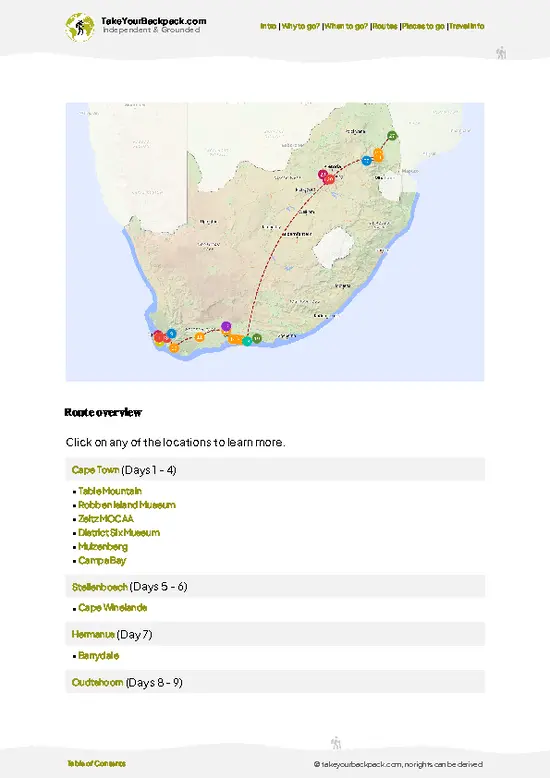
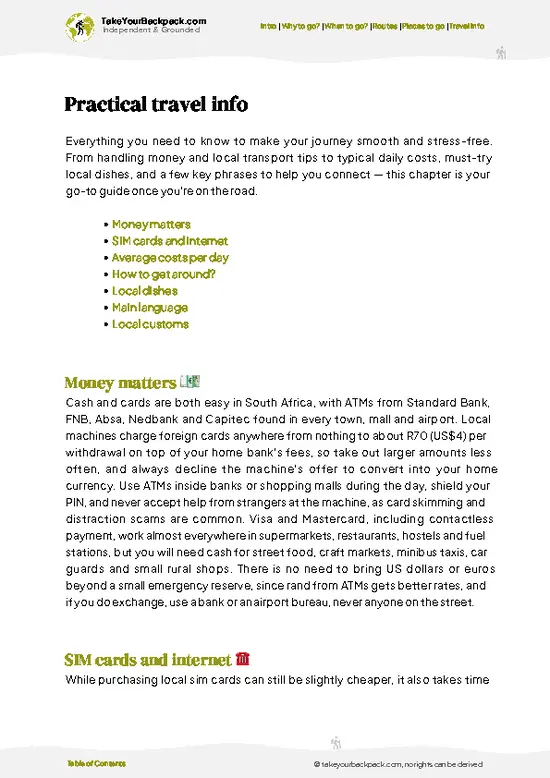
example page 0 from our offline Travel Guide for South Africa
example page 1 from our offline Travel Guide for South Africa
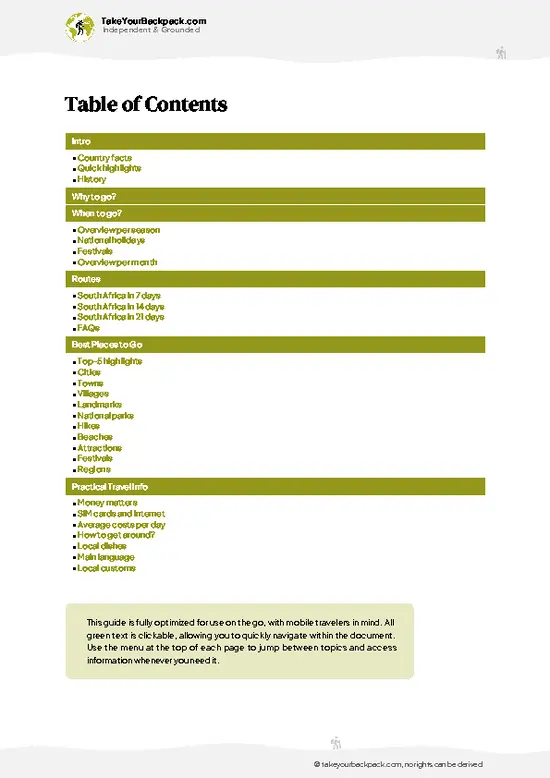
example page 2 from our offline Travel Guide for South Africa
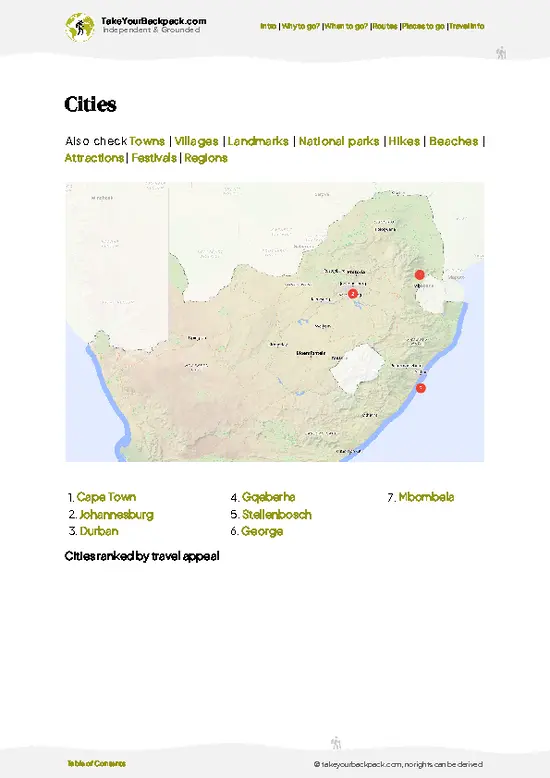
example page 3 from our offline Travel Guide for South Africa
example page 4 from our offline Travel Guide for South Africa
example page 5 from our offline Travel Guide for South Africa
example page 6 from our offline Travel Guide for South Africa
example page 7 from our offline Travel Guide for South Africa
Loading the map 🌍
CLICK TO FILTER
cities
towns
villages
landmarks
national parks
hikes
beaches
attractions
festivals
regions
SHOW COUNTRY’S BESTSHOW ALL

✨ Why go?
Ranked #9 region in South Africa
What makes it a must-see region

Waterberg suits backpackers who want serious wildlife without a Kruger-sized queue. The reasons are practical. First, the region is malaria-free, so you skip the tablets and still see rhino, buffalo and elephant, including at Marakele National Park, where roads climb into the Waterberg mountains. Second, self-drive is easy. Gravel roads are mostly fine for a normal hatchback, and you can pack hikes, game drives and village stops into one loop without changing base. Third, there is real variety in a small area: red sandstone cliffs, thornveld flats, the hot springs at Bela-Bela and rock art sites that few people visit. Mixing nature and culture means slow days, a braai at the campsite, and a morning on foot rather than another hour in a vehicle. Share a rental car with other travelers and the region becomes very doable.

💡 HighlightsKey sights and experiences for travelers

  1. Marakele National Park: the region's headline reserve, with a mountain road to Lenong viewpoint, white rhino, elephant and one of the world's largest Cape vulture colonies. Entry runs roughly US$15 to 20.
  2. Lenong Viewpoint: at the top of the Waterberg road in Marakele, with cliff-edge views and vultures soaring below you.
  3. Bela-Bela Warmbaths Hot Springs: natural mineral pools in a resort town, good for stiff legs after hiking.
  4. Welgevonden Game Reserve: a large private reserve with limited access and strong predator and rhino sightings, best booked as a guided drive.
  5. Lapalala Wilderness: a conservation area on the Palala River, known for rhino and for walking safaris and environmental education.
  6. Nylsvley Nature Reserve: a seasonal floodplain near Modimolle with huge bird counts, ideal for casual
… read more 👉
  1. Marakele National Park: the region's headline reserve, with a mountain road to Lenong viewpoint, white rhino, elephant and one of the world's largest Cape vulture colonies. Entry runs roughly US$15 to 20.
  2. Lenong Viewpoint: at the top of the Waterberg road in Marakele, with cliff-edge views and vultures soaring below you.
  3. Bela-Bela Warmbaths Hot Springs: natural mineral pools in a resort town, good for stiff legs after hiking.
  4. Welgevonden Game Reserve: a large private reserve with limited access and strong predator and rhino sightings, best booked as a guided drive.
  5. Lapalala Wilderness: a conservation area on the Palala River, known for rhino and for walking safaris and environmental education.
  6. Nylsvley Nature Reserve: a seasonal floodplain near Modimolle with huge bird counts, ideal for casual birders and rarely busy.
  7. Modimolle Town: a farm-service town with a quiet main street, local butchers and biltong, and a good place to restock.
  8. Thabazimbi Iron Ore Heritage: a mining town at the edge of the range, interesting for its history and a gateway to Marakele.
  9. Mokopane Cave of Hearths: nearby archaeological caves in the Makapan Valley, part of a fossil-rich World Heritage landscape and mostly missed.
  10. Zebediela Citrus Area Roadside Stops: farm stalls selling fresh citrus and local produce, a simple local stop.
Waterberg rewards an early start, so do Marakele first, while the animals are active and the Lenong road is quiet.
Spotted a mistake or missing something? Contact us.

⌛️ 5 daysHow to make the most of Waterberg

Waterberg runs on a private car or a rented 4x4, because no regular public transport links the plateau's lodges, so each day is paced around a long midday break in the shade and drives timed for the cooler hours either side.
Day 1: Vaalwater:
Base yourself in Vaalwater, the small farming town on the plateau's edge. Stock up on food and fuel at the supermarket and filling station, since the lodges beyond are remote. Spend the afternoon on the gravel roads in your own vehicle, where giraffe and kudu stand by the fences.
Day 2: Marakele National Park:
Marakele is the anchor of the trip. Enter early and drive up the steep, winding road to the Waterberg's high ridge, where Cape vultures nest on the cliffs, then settle in for a midday rest at a picnic spot and spend the afternoon on the lower game … read more 👉
Waterberg runs on a private car or a rented 4x4, because no regular public transport links the plateau's lodges, so each day is paced around a long midday break in the shade and drives timed for the cooler hours either side.
Day 1: Vaalwater:
Base yourself in Vaalwater, the small farming town on the plateau's edge. Stock up on food and fuel at the supermarket and filling station, since the lodges beyond are remote. Spend the afternoon on the gravel roads in your own vehicle, where giraffe and kudu stand by the fences.
Day 2: Marakele National Park:
Marakele is the anchor of the trip. Enter early and drive up the steep, winding road to the Waterberg's high ridge, where Cape vultures nest on the cliffs, then settle in for a midday rest at a picnic spot and spend the afternoon on the lower game loops for elephant, rhino and buffalo.
Day 3: Marakele National Park:
Stay inside the park, as the long drive back out would eat the day. Walk the camp's short paths, then do an evening game drive and watch the plains empty of heat and fill with animals.
Day 4: Lapalala Wilderness:
This private reserve suits a slower day. Choose a guided walk or a game drive, because the reserve's tracks need a guide and the sightings of rhino and wild dog are better with one. Use the hot hours for the rock art and the river.
Day 5: Detour to Mokopane:
For a detour, drive north to Mokopane and the Makapan Valley caves. A guided visit shows the fossil site where early human remains were found, and the road returns to the main highway without disrupting your exit.
My single pick is Day 2. Reaching the vultures' cliff at the top of Marakele's road, with the whole plateau spread below, justifies the entire trip.

🌤️ When to go?Choosing the right time of year

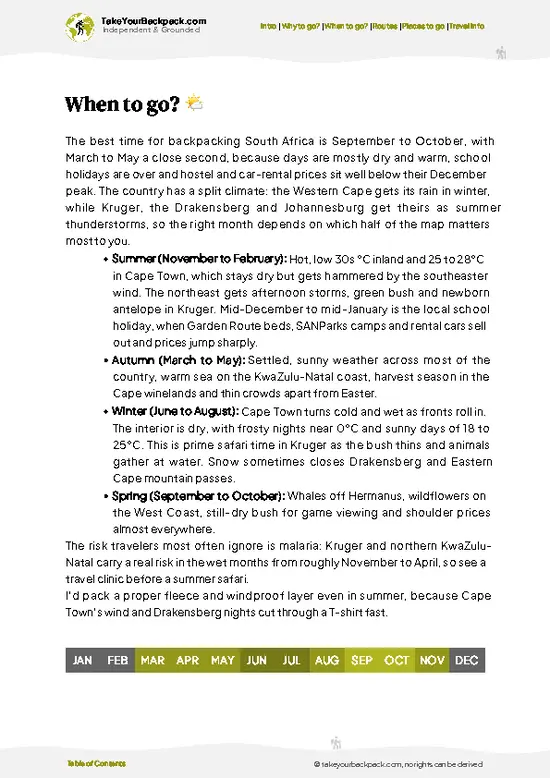
May to September is the dry, cool season, and it suits Waterberg best for hiking and game viewing. Here is how the year breaks down.
  • Winter (June to August): Days run 20 to 24°C (68 to 75°F), nights drop to 2 to 5°C (36 to 41°F), sometimes with frost. Bush is thin, so animals gather at waterholes. Daylight is about 10.5 hours.
  • Summer (November to March): Hot and humid, 30 to 35°C (86 to 95°F), with afternoon thunderstorms. Everything turns green and birding is excellent, but ticks and heat wear on you. Days stretch to about 13.5 hours.
  • Spring and autumn (April, May, September, October): Mild, 24 to 30°C (75 to 86°F), quieter trails and the lowest lodge rates outside summer.
  • School holidays: Late June to July and December to January fill up, and prices climb.
Book winter weekends early, since South African families fill the reserves.

source: climatestotravel.comJANJanuary: fair for travelingFEBFebruary: fair for travelingMARMarch: fair for travelingAPRApril: good for travelingMAYMay: excellent for travelingJUNJune: excellent for travelingJULJuly: excellent for travelingAUGAugust: excellent for travelingSEPSeptember: excellent for travelingOCTOctober: good for travelingNOVNovember: fair for travelingDECDecember: fair for traveling
south-africa-region-waterberg
© Google |

✈️ The backpacker research shortcutSouth Africa Travel Guide

An offline-friendly backpacking guide with optimized travel routes, ranked highlights, transport advice, and the best areas to stay.
example page 0 from our offline Travel Guide for South Africa
example page 1 from our offline Travel Guide for South Africa
example page 2 from our offline Travel Guide for South Africa
example page 3 from our offline Travel Guide for South Africa
example page 4 from our offline Travel Guide for South Africa
example page 5 from our offline Travel Guide for South Africa
example page 6 from our offline Travel Guide for South Africa
example page 7 from our offline Travel Guide for South Africa
The digital guide (457 pages) contains:
✅ 125 highlights, ranked by travel appeal
✅ Optimized 7, 14 & 21-day travel routes
✅ Cities, national parks, landmarks, beaches
✅ How to get around
✅ Offline-friendly for travel without Wi-Fi
👉 Click to see all 30+ guide features

📅 Plan smarter in minutes, not weeks
✅ Month by month travel advice
✅ Festivals & national holidays
✅ Budget expectations

🗺️ Go to the right places, skip the overrated ones
✅ Honest pros & cons of destinations
✅ Top hikes, parks & viewpoints
✅ Lesser-known places most travelers miss
✅ Clear “worth it vs skip it” guidance

🛏️ Travel smoothly without rookie mistakes
✅ Best areas to stay
✅ Transport systems explained simply
✅ Common scams & safety advice
✅ SIM cards, money & practical tips

🌍 Understand the country, not just visit it
✅ Culture & traditions
✅ 52 Essential phrases & customs
✅ Festivals worth planning around
✅ Traveler-friendly historical context
✅ Insights that make places more meaningful

📱 Built for real travel conditions
✅ Fully downloadable PDF
✅ Works completely offline
✅ Optimized for phone use
✅ Useful in remote areas & buses
✅ Everything in one place
Stop searching, start planning
Get instant access to your full guide. 30‑day money-back guarantee.
+ Add another guide for just

By proceeding you agree to our terms.
Sent to your inbox immediately after payment • 100% Secure Checkout
Best Backpacking Travel Advisor 2025 tourism awardBest Backpacking
Travel Advisor
2025
What others say about Take Your Backpack Guides:
⭐⭐⭐⭐⭐
Fantastic, amazing amount of information!
⭐⭐⭐⭐⭐
My goodness this is amazing, it's what I've been looking for hats off too you!
⭐⭐⭐⭐⭐
I think this is absolutely BRILLIANT
⭐⭐⭐⭐
Very complete and informative. It's still missing places, but I gotta to commend you
⭐⭐⭐⭐⭐
This is truly amazing, thank you, can't wait to explore it with my kids!
⭐⭐⭐⭐⭐
Awesome resource, thank you!
⭐⭐⭐⭐⭐
This is amazing! Can't wait to explore the ones I haven't seen
⭐⭐⭐⭐
I love this! Well done, great idea.
⭐⭐⭐⭐⭐
Thanks for taking the time to make this gem!
⭐⭐⭐⭐⭐
This might be the best website I've ever seen.
⭐⭐⭐⭐⭐
Congratulations, and thank you so much for your work; it's incredibly valuable.
⭐⭐⭐⭐
In all seriousness I think you did a great job pointing out the important spots
⭐⭐⭐⭐⭐
10/10 very good
⭐⭐⭐⭐⭐
As someone who's only just starting to visit regularly this is awesome, thank you.
⭐⭐⭐⭐
Thank you very much! I'm going to visit my dad, it's going to be very useful!
⭐⭐⭐⭐⭐
This is really cool! We'll be travelling for the first time and this definitely come in handy.
⭐⭐⭐⭐⭐
You are now our minister of culture, congratulations 👨‍💼
⭐⭐⭐⭐⭐
Just wanted to tell you that this is a pearl! Going to follow your recommendations.
⭐⭐⭐⭐⭐
This is so cool. I'll definitely be using the resource for my travels soon.
⭐⭐⭐⭐⭐
This is very impressive! Good work.
⭐⭐⭐⭐⭐
This is an amazing and informative site. Very well done!

🛏️ Where to stay?How to pick the right area

Bela-Bela is the easiest base for budget travelers in Waterberg, with the most beds, shops and shared rides. It sits right off the N1, about 2 hours from Johannesburg, and its hot springs give you a social place to unwind after hiking. Dorms and campsites here run roughly US$12 to 25 a night.
Modimolle is a quieter farm town with supermarkets, cafés and guesthouses, good for stocking up and meeting other overlanders heading north. It is safe to walk around in daylight.
Vaalwater is the gateway to the heart of the mountains. It is small and friendly, with a handful of bush camps and self-catering … read more 👉
Bela-Bela is the easiest base for budget travelers in Waterberg, with the most beds, shops and shared rides. It sits right off the N1, about 2 hours from Johannesburg, and its hot springs give you a social place to unwind after hiking. Dorms and campsites here run roughly US$12 to 25 a night.
Modimolle is a quieter farm town with supermarkets, cafés and guesthouses, good for stocking up and meeting other overlanders heading north. It is safe to walk around in daylight.
Vaalwater is the gateway to the heart of the mountains. It is small and friendly, with a handful of bush camps and self-catering cottages nearby (US$15 to 40 a person). Expect to meet hikers, birders and wildlife volunteers rather than a party crowd.
Near Marakele National Park, camping is the budget option. You wake to baboon calls and cliff-top vultures, though you need your own food and transport.

🚌 Getting aroundHow to get around Waterberg

Waterberg has no local public transport, and the cheapest way to get between towns is a minibus taxi at roughly US$1 to 4 a hop, paid in cash to the driver or his assistant. Those taxis run between Bela-Bela, Modimolle, Vaalwater and Lephalale, and they are reliable on the main roads and nearly nonexistent on the dirt tracks to the reserves. Most backpackers combine a taxi to the nearest town with a pre-arranged lift or a rental car for the last stretch.
  • Minibus taxis: Fast and frequent in the morning, thinning out by mid-afternoon. Bela-Bela to Modimolle is about 30 minutes for US$1 to 2. Expect packed seats and a loud radio, and a front-row view of the bushveld along the N1.
  • Intercity buses: Long-distance coaches stop on the N1 at Bela-Bela and Modimolle from Johannesburg and Pretoria, roughly
… read more 👉
Waterberg has no local public transport, and the cheapest way to get between towns is a minibus taxi at roughly US$1 to 4 a hop, paid in cash to the driver or his assistant. Those taxis run between Bela-Bela, Modimolle, Vaalwater and Lephalale, and they are reliable on the main roads and nearly nonexistent on the dirt tracks to the reserves. Most backpackers combine a taxi to the nearest town with a pre-arranged lift or a rental car for the last stretch.
  • Minibus taxis: Fast and frequent in the morning, thinning out by mid-afternoon. Bela-Bela to Modimolle is about 30 minutes for US$1 to 2. Expect packed seats and a loud radio, and a front-row view of the bushveld along the N1.
  • Intercity buses: Long-distance coaches stop on the N1 at Bela-Bela and Modimolle from Johannesburg and Pretoria, roughly 2 to 3 hours for US$12 to 25. Comfortable, air-conditioned, and the easiest way in without driving.
  • Rental car: Worth the money here, at US$25 to 40 a day for a small car. Roads to Vaalwater and Marakele are paved, with gravel at the end, so you reach trailheads and sunrise game drives on your own schedule.
  • Lodge or hostel transfers: Many places collect guests from Bela-Bela or Modimolle for about US$10 to 30. Skip this if you can share a car, but it beats standing on a gravel road waiting for a lift that never comes.
  • Hitching: Not worth the time. Traffic is sparse, distances are long, and midday heat is brutal. Save it for the last few kilometers when a farmer offers.
Fill the tank in Modimolle or Vaalwater before heading to the reserves, since fuel is scarce beyond them.

🍲 FoodLocal Cuisine & Drinks

Waterberg eats like the bushveld it is: braai country, where weekends smell of boerewors sausage, lamb chops and mealie pap hissing over wood coals. Try biltong and droëwors from farm shops, salty and peppery, ideal trail snacks. Game meat such as kudu, impala and springbok turns up on lodge menus, rich and lean, often as a stew called potjiekos simmered for hours in a cast-iron pot.
For a backpacker, the practical choices are farm stalls and small-town cafés in Modimolle, Bela-Bela and Vaalwater, where a big breakfast or toasted sandwich costs about US$4 to 8. Supermarkets stock braai packs cheaply, and most hostels and camps have a fire pit.
Wash it down with rooibos tea or a cold local lager, and look for amarula at sundowners. Braai etiquette is social: bring your own meat, share the fire, … read more 👉
Waterberg eats like the bushveld it is: braai country, where weekends smell of boerewors sausage, lamb chops and mealie pap hissing over wood coals. Try biltong and droëwors from farm shops, salty and peppery, ideal trail snacks. Game meat such as kudu, impala and springbok turns up on lodge menus, rich and lean, often as a stew called potjiekos simmered for hours in a cast-iron pot.
For a backpacker, the practical choices are farm stalls and small-town cafés in Modimolle, Bela-Bela and Vaalwater, where a big breakfast or toasted sandwich costs about US$4 to 8. Supermarkets stock braai packs cheaply, and most hostels and camps have a fire pit.
Wash it down with rooibos tea or a cold local lager, and look for amarula at sundowners. Braai etiquette is social: bring your own meat, share the fire, and expect to be invited to join. Tipping around 10 percent is normal, and many farm stalls close by mid-afternoon.

FAQCommon questions from travelers

Three to four days covers Waterberg well. Spend one day around Bela-Bela and its hot springs, one or two on trails and game drives near Vaalwater, and one at Marakele National Park, about 2 to 3 hours from Bela-Bela by road.
Getting around Waterberg without a car means minibus taxis between Bela-Bela, Modimolle and Vaalwater, costing about US$1 to 4 a ride. Coaches from Johannesburg or Pretoria stop at Bela-Bela and Modimolle for US$12 to 25. For reserves and trailheads, lodge transfers (US$10 to 30) or shared rental cars are the practical choice.
Waterberg is known for its sandstone mountains, malaria-free Big Five game reserves, and Marakele National Park with its huge Cape vulture colony. It also has Bela-Bela hot springs and ancient rock art sites. Most visitors come for hiking, birding and safaris at lower prices than Kruger, from about US$15 a night for camping.
⚠️ Things can change over time, so always validate details locally before you go.

Other South African regions near Waterberg

Explore more nearby:

  • Mapungubwe—sandstone ridges, baobab trees, ancient ruins, Limpopo River| 218 km away
  • Panorama Route—canyon viewpoints, waterfalls, misty escarpment, forest walks| 239 km away
  • Midlands Meander—artisan workshops, farm stays, tea gardens, craft markets| 611 km away

💡 Not sure where to go next?
Create a personalized itinerary for South Africa including Waterberg and the places that fit your trip.

Generate my itinerary

👉 Discover all regions

Or checkout all South Africa has to offer (think cities, towns, villages, national parks, hikes, beaches, festivals)
Country photo of South Africa

We 💚 feedbackFinal thoughts on visiting Waterberg

Waterberg trips go wrong when people treat it as a single stop and try to cover everything in a weekend. Pick two bases and drive slowly. I would spend the most time in Marakele and add one private reserve guided drive. Skip the resort strips, and bring your own food and plenty of water.

✈️ When did I visit South Africa?
I have visited South Africa, before and after my Zimbabwe trip in 2001.

✍️ Help improve this page!
The information on this page is based on my own backpacking experience in South Africa, supplemented with up-to-date research and feedback from other travelers. Travel details can change, so if you notice anything outdated or incomplete, feel free to let me know.


🙋‍♂️ Give feedback

👋 Meet the founderWho’s Behind Take Your Backpack?

Johan, backpacker and founder of TakeYourBackpackHi, I’m Johan (Netherlands 🇳🇱), the creator of TakeYourBackpack. Over the past 3 decades, I’ve backpacked through 90+ countries across six continents, gaining extensive experience with independent travel, long-term trips, and overland routes.

This site is built on a combination of firsthand travel experience and carefully curated insights from other backpackers. Many guides are based on places I’ve personally visited, while others bring together tips, observations, and practical advice shared by trusted travelers I’ve met along the way.

The goal is to provide realistic, experience-driven guidance — not generic itineraries — so you can explore destinations with better context, clearer expectations, and more confidence.