×

South Africa🇿🇦 | regionsWild CoastSea arch, rondavel villages, gravel tracks, river-mouth lodges | things to do and best time to go

Explore West CoastExplore Kleinmond

Backpacking in Wild Coast
🌟 Highlightregion ranked #3
By Johan Kruseman 🇳🇱 | Updated October 22, 2026

Wild Coast is famous for empty beaches, green headlands and Xhosa villages of round, pastel-painted rondavels, and what gets overlooked is how little infrastructure sits between them. Roads turn to gravel, signal drops, and the pace is set by cattle and minibus taxis. This is the Eastern Cape of South Africa, running down the coast around Port St Johns. I expected a quiet beach walk to be private. Instead a herd of cows crossed the sand ahead of me and a boy in school uniform nodded as though I were the one in the way. Choices matter here. Renting a car costs the most money but saves hours and your back. Hostel shuttles cost little and spare you the gravel. Walking between hostels is slowest and cheapest, and gives a backpacker the most. Skip the resort strips and chase the hikes. Walkers and slow-travelers will love it, while anyone wanting nightlife, guarantees or polish will not.

Discover everything you want to know in the 📖 South Africa Travel Guide.


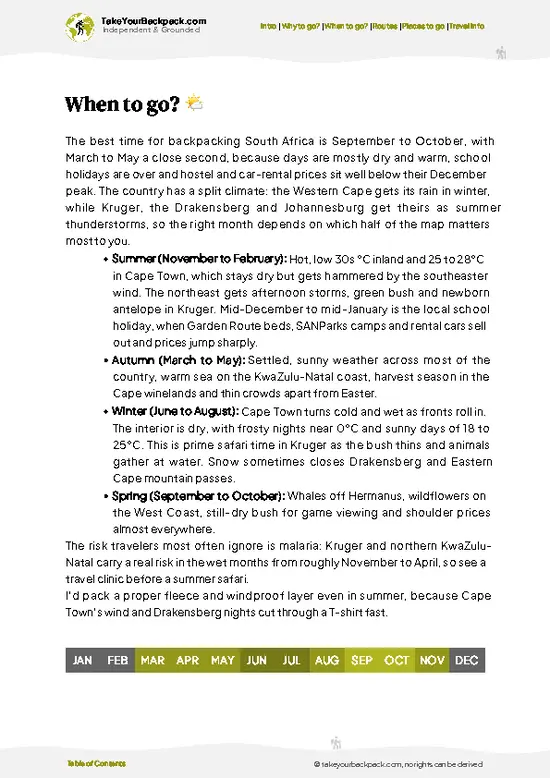
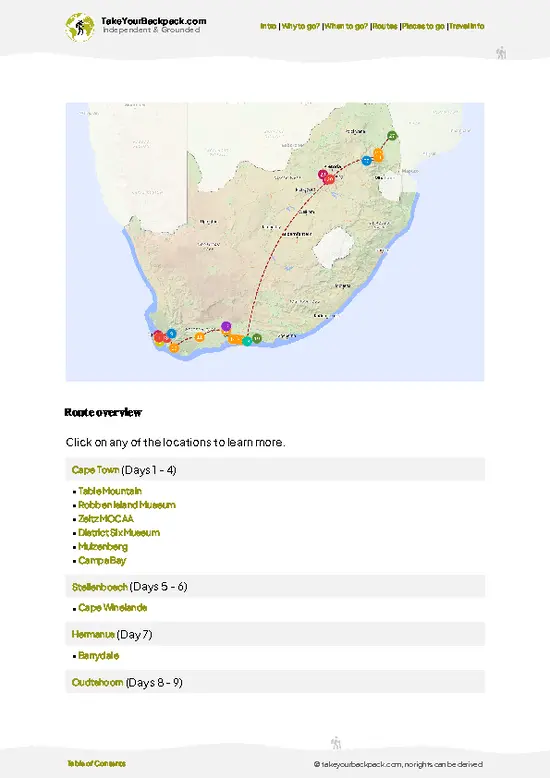
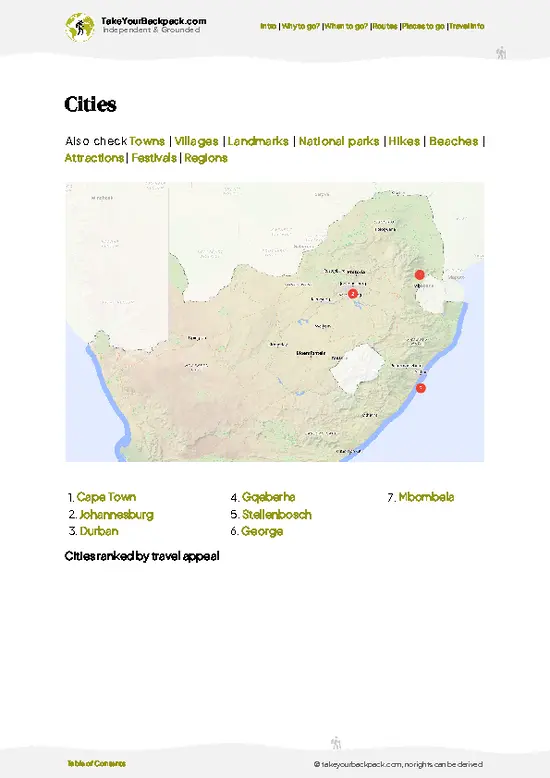
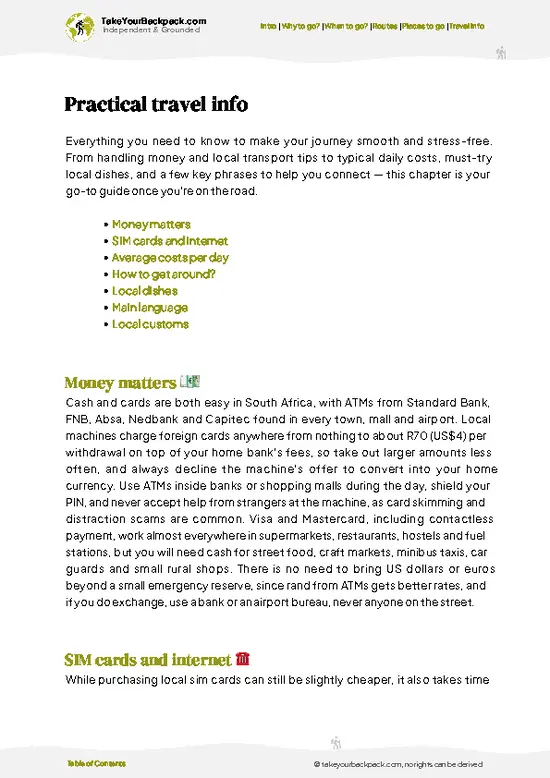
example page 0 from our offline Travel Guide for South Africa
example page 1 from our offline Travel Guide for South Africa
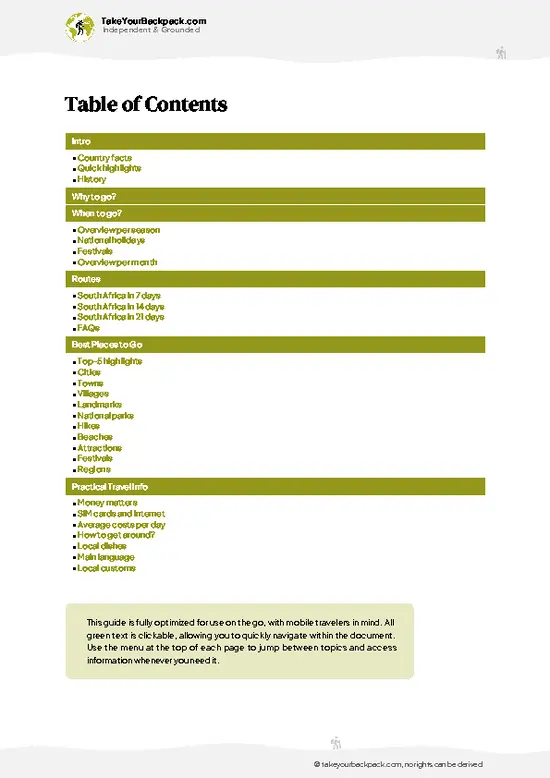
example page 2 from our offline Travel Guide for South Africa
example page 3 from our offline Travel Guide for South Africa
example page 4 from our offline Travel Guide for South Africa
example page 5 from our offline Travel Guide for South Africa
example page 6 from our offline Travel Guide for South Africa
example page 7 from our offline Travel Guide for South Africa
Loading the map 🌍
CLICK TO FILTER
cities
towns
villages
landmarks
national parks
hikes
beaches
attractions
festivals
regions
SHOW COUNTRY’S BESTSHOW ALL

✨ Why go?
Ranked #3 region in South Africa
What makes this region worth visiting

Wild Coast rewards people who like moving under their own power. The strongest reason is the hostel-to-hostel coastal hikes, where each night ends in a village lodge with a communal dinner, so you cover a lot of coastline without repacking a car. The second is the range packed into one strip. In a single stretch you can swim at Second Beach in Port St Johns, walk to the sea arch at Hole in the Wall, and sleep in a Xhosa homestead, all without a flight or a long drive between them. Mixing nature and culture happens by default, because the paths run through working villages and not around them. Transport also shapes the experience. Shuttles link the main hostels, minibus taxis fill the gaps, and the pace stays slow enough that a village stay becomes a few days. The standout natural payoff is … read more 👉
Wild Coast rewards people who like moving under their own power. The strongest reason is the hostel-to-hostel coastal hikes, where each night ends in a village lodge with a communal dinner, so you cover a lot of coastline without repacking a car. The second is the range packed into one strip. In a single stretch you can swim at Second Beach in Port St Johns, walk to the sea arch at Hole in the Wall, and sleep in a Xhosa homestead, all without a flight or a long drive between them. Mixing nature and culture happens by default, because the paths run through working villages and not around them. Transport also shapes the experience. Shuttles link the main hostels, minibus taxis fill the gaps, and the pace stays slow enough that a village stay becomes a few days. The standout natural payoff is Waterfall Bluff, where a river drops straight into the Indian Ocean. Few places in the country offer anything like it, and almost nobody else is there.

💡 HighlightsTop highlights of Wild Coast

  1. Hole in the Wall: A huge sea-carved arch in a rock island off Hluleka-side cliffs near Coffee Bay. Walk the cliff path from Coffee Bay and you reach it with views of surf booming through the gap.
  2. Coffee Bay: A small surf village with a long beach, hostels and homestay walks. Good for a first swim and easy beginners’ waves.
  3. Second Beach, Port St Johns: A wide golden crescent backed by forested hills, with a tidal pool at one end. Swimming is sensible only where the lifeguards operate.
  4. Mount Thesiger and Port St Johns Lookout: A climb above the town that opens up the Mzimvubu River mouth and the cliff-lined gorge. Quiet and free.
  5. Silaka Nature Reserve: A coastal reserve near Port St Johns with Cape fur seals on rocks, hiking paths and zebra and blesbok. Few backpackers venture beyond the town beaches.
… read more 👉
  1. Hole in the Wall: A huge sea-carved arch in a rock island off Hluleka-side cliffs near Coffee Bay. Walk the cliff path from Coffee Bay and you reach it with views of surf booming through the gap.
  2. Coffee Bay: A small surf village with a long beach, hostels and homestay walks. Good for a first swim and easy beginners’ waves.
  3. Second Beach, Port St Johns: A wide golden crescent backed by forested hills, with a tidal pool at one end. Swimming is sensible only where the lifeguards operate.
  4. Mount Thesiger and Port St Johns Lookout: A climb above the town that opens up the Mzimvubu River mouth and the cliff-lined gorge. Quiet and free.
  5. Silaka Nature Reserve: A coastal reserve near Port St Johns with Cape fur seals on rocks, hiking paths and zebra and blesbok. Few backpackers venture beyond the town beaches.
  6. Waterfall Bluff: A hike in the northern stretch where a river plunges straight off a cliff into the ocean. A guide helps with routes and river crossings.
  7. Mkambati Nature Reserve: Wild grassland cut by gorges, with Horseshoe Falls and Msikaba River. Hikes here feel properly remote.
  8. Bulungula Lodge, Nqileni: A community-owned lodge on a river mouth, with village walks, canoeing and Xhosa meals. One of the better ways to meet local life.
  9. Mazeppa Bay: A small island linked to the shore by a footbridge, with fishing, rock pools and a quiet beach.
  10. Dwesa-Cwebe Nature Reserve: A forested coastal reserve with trails, rocky shores and rare birdlife. Seldom visited, well worth seeking out.
Wild Coast could fill two weeks, but the main highlights fit into five or six days if you stay selective.
Spotted a mistake or missing something? Contact us.

⌛️ 5 daysWhat you can realistically do in a week

Day 1: Port St Johns: A beach-and-lookout day, with nothing to rush for. Start with a swim and a long walk on Second Beach, then climb to the town lookout when the afternoon softens. Port St Johns works as an opener because minibus taxis and shuttles from larger towns end up here, so you arrive without fuss and can leave the next stage to a shuttle. Spend the following day on a detour to Silaka Nature Reserve, which adds fur seals, coastal paths and quiet shoreline without changing your overnight base.
Day 3: Coffee Bay: Transport shapes the pace here. Gravel roads and infrequent taxis mean you should treat Day 3 mostly as a travel day, ideally booking a hostel shuttle so you arrive with daylight left. Settle in at Coffee Bay, swim, and eat at the hostel. On Day 4 walk to Hole in the Wall along … read more 👉
Day 1: Port St Johns: A beach-and-lookout day, with nothing to rush for. Start with a swim and a long walk on Second Beach, then climb to the town lookout when the afternoon softens. Port St Johns works as an opener because minibus taxis and shuttles from larger towns end up here, so you arrive without fuss and can leave the next stage to a shuttle. Spend the following day on a detour to Silaka Nature Reserve, which adds fur seals, coastal paths and quiet shoreline without changing your overnight base.
Day 3: Coffee Bay: Transport shapes the pace here. Gravel roads and infrequent taxis mean you should treat Day 3 mostly as a travel day, ideally booking a hostel shuttle so you arrive with daylight left. Settle in at Coffee Bay, swim, and eat at the hostel. On Day 4 walk to Hole in the Wall along the cliff path, a day hike that suits the village rhythm and costs nothing beyond lunch. This is the stretch I would build the whole trip around, because the sea arch sits at the end of a long, windswept walk and feels earned.
Day 5: Nqileni: Finish at Bulungula Lodge, on a river mouth where the pace slows further. Canoe the estuary or join a village walk, and eat a communal dinner with other travelers. It suits the end of the trip because there is nowhere to rush to and nothing demanding a schedule. My single pick for the day that justifies the whole trip is Day 4, the Hole in the Wall hike, with the sea booming through the arch.

🌤️ When to go?When to go for the best experience

September to April is when the Wild Coast works best for hiking and swimming, with the warm, humid summer running from November to March.
  • Summer (Dec to Feb): Highs of 26 to 30°C (79 to 86°F), thick humidity and afternoon thunderstorms. Days run long, roughly 14 hours of light. South African school holidays fill Coffee Bay and Port St Johns, and prices climb.
  • Autumn (Mar to May): 22 to 26°C (72 to 79°F), clearer skies and calmer seas. Rivers are still full enough to swim in, and the crowds thin out fast after Easter.
  • Winter (Jun to Aug): Dry and sunny, with days of 18 to 23°C (64 to 73°F) and nights down to 7 to 10°C (45 to 50°F). Daylight is about 10.5 hours, so plan hikes to finish early. This is the season for whale watching and the sardine run, and for the cheapest beds.
  • Spring (Sep to Nov):
… read more 👉
September to April is when the Wild Coast works best for hiking and swimming, with the warm, humid summer running from November to March.
  • Summer (Dec to Feb): Highs of 26 to 30°C (79 to 86°F), thick humidity and afternoon thunderstorms. Days run long, roughly 14 hours of light. South African school holidays fill Coffee Bay and Port St Johns, and prices climb.
  • Autumn (Mar to May): 22 to 26°C (72 to 79°F), clearer skies and calmer seas. Rivers are still full enough to swim in, and the crowds thin out fast after Easter.
  • Winter (Jun to Aug): Dry and sunny, with days of 18 to 23°C (64 to 73°F) and nights down to 7 to 10°C (45 to 50°F). Daylight is about 10.5 hours, so plan hikes to finish early. This is the season for whale watching and the sardine run, and for the cheapest beds.
  • Spring (Sep to Nov): 20 to 25°C (68 to 77°F), humpback whales offshore and wildflowers on the hills. Rain returns toward November.
Book beds early for the December and Easter weeks, and hike the coast in May or September to avoid the rain and the crowds.


source: climatestotravel.comJANJanuary: good for travelingFEBFebruary: good for travelingMARMarch: highly recommended for travelingAPRApril: highly recommended for travelingMAYMay: highly recommended for travelingJUNJune: highly recommended for travelingJULJuly: highly recommended for travelingAUGAugust: highly recommended for travelingSEPSeptember: excellent for travelingOCTOctober: excellent for travelingNOVNovember: highly recommended for travelingDECDecember: good for traveling
when-to-go

✈️ The backpacker research shortcutSouth Africa Travel Guide

An offline-friendly backpacking guide with optimized travel routes, ranked highlights, transport advice, and the best areas to stay.
example page 0 from our offline Travel Guide for South Africa
example page 1 from our offline Travel Guide for South Africa
example page 2 from our offline Travel Guide for South Africa
example page 3 from our offline Travel Guide for South Africa
example page 4 from our offline Travel Guide for South Africa
example page 5 from our offline Travel Guide for South Africa
example page 6 from our offline Travel Guide for South Africa
example page 7 from our offline Travel Guide for South Africa
The digital guide (457 pages) contains:
✅ 125 highlights, ranked by travel appeal
✅ Optimized 7, 14 & 21-day travel routes
✅ Cities, national parks, landmarks, beaches
✅ How to get around
✅ Offline-friendly for travel without Wi-Fi
👉 Click to see all 30+ guide features

📅 Plan smarter in minutes, not weeks
✅ Month by month travel advice
✅ Festivals & national holidays
✅ Budget expectations

🗺️ Go to the right places, skip the overrated ones
✅ Honest pros & cons of destinations
✅ Top hikes, parks & viewpoints
✅ Lesser-known places most travelers miss
✅ Clear “worth it vs skip it” guidance

🛏️ Travel smoothly without rookie mistakes
✅ Best areas to stay
✅ Transport systems explained simply
✅ Common scams & safety advice
✅ SIM cards, money & practical tips

🌍 Understand the country, not just visit it
✅ Culture & traditions
✅ 52 Essential phrases & customs
✅ Festivals worth planning around
✅ Traveler-friendly historical context
✅ Insights that make places more meaningful

📱 Built for real travel conditions
✅ Fully downloadable PDF
✅ Works completely offline
✅ Optimized for phone use
✅ Useful in remote areas & buses
✅ Everything in one place
Stop searching, start planning
Get instant access to your full guide. 30‑day money-back guarantee.
+ Add another guide for just

By proceeding you agree to our terms.
Sent to your inbox immediately after payment • 100% Secure Checkout
Best Backpacking Travel Advisor 2025 tourism awardBest Backpacking
Travel Advisor
2025
What others say about Take Your Backpack Guides:
⭐⭐⭐⭐⭐
Fantastic, amazing amount of information!
⭐⭐⭐⭐⭐
My goodness this is amazing, it's what I've been looking for hats off too you!
⭐⭐⭐⭐⭐
I think this is absolutely BRILLIANT
⭐⭐⭐⭐
Very complete and informative. It's still missing places, but I gotta to commend you
⭐⭐⭐⭐⭐
This is truly amazing, thank you, can't wait to explore it with my kids!
⭐⭐⭐⭐⭐
Awesome resource, thank you!
⭐⭐⭐⭐⭐
This is amazing! Can't wait to explore the ones I haven't seen
⭐⭐⭐⭐
I love this! Well done, great idea.
⭐⭐⭐⭐⭐
Thanks for taking the time to make this gem!
⭐⭐⭐⭐⭐
This might be the best website I've ever seen.
⭐⭐⭐⭐⭐
Congratulations, and thank you so much for your work; it's incredibly valuable.
⭐⭐⭐⭐
In all seriousness I think you did a great job pointing out the important spots
⭐⭐⭐⭐⭐
10/10 very good
⭐⭐⭐⭐⭐
As someone who's only just starting to visit regularly this is awesome, thank you.
⭐⭐⭐⭐
Thank you very much! I'm going to visit my dad, it's going to be very useful!
⭐⭐⭐⭐⭐
This is really cool! We'll be travelling for the first time and this definitely come in handy.
⭐⭐⭐⭐⭐
You are now our minister of culture, congratulations 👨‍💼
⭐⭐⭐⭐⭐
Just wanted to tell you that this is a pearl! Going to follow your recommendations.
⭐⭐⭐⭐⭐
This is so cool. I'll definitely be using the resource for my travels soon.
⭐⭐⭐⭐⭐
This is very impressive! Good work.
⭐⭐⭐⭐⭐
This is an amazing and informative site. Very well done!

🛏️ Where to stay?Where staying makes the most sense

Coffee Bay is the first place most backpackers should stay, with Port St Johns a close second. Coffee Bay sits at the end of a long road from Mthatha, and the village is small enough that you meet everyone on the beach within a day. Several hostels host communal dinners, surf lessons, village walks and trips to Hole in the Wall, and dorm beds run about US$10 to 18. It feels safe in daylight and the hostels are used to solo travelers, though you should not walk the beach alone after dark.
Port St Johns is the place for a longer stay. It lies where the Mzimvubu River meets the sea, with a handful … read more 👉
Coffee Bay is the first place most backpackers should stay, with Port St Johns a close second. Coffee Bay sits at the end of a long road from Mthatha, and the village is small enough that you meet everyone on the beach within a day. Several hostels host communal dinners, surf lessons, village walks and trips to Hole in the Wall, and dorm beds run about US$10 to 18. It feels safe in daylight and the hostels are used to solo travelers, though you should not walk the beach alone after dark.
Port St Johns is the place for a longer stay. It lies where the Mzimvubu River meets the sea, with a handful of backpacker lodges around Second Beach and Agate Terrace, and beds cost roughly US$10 to 20. The town itself is rougher at the edges, so sleep near the beach and use hostel transport at night. Hiking, river trips and beach days are the draw.
For a quieter option, the villages of Mdumbi and Bulungula offer rondavel stays run with the local community, usually US$15 to 30 including meals. They are remote and have limited electricity, but the social atmosphere is excellent, with shared tables and guided walks. Stay at least two nights here to make the journey worthwhile.

🚌 Getting aroundMoving around without the hassle

Wild Coast shared minibus taxis cost roughly US$1 to 6 per leg, paid in cash (rand) to the driver or his assistant once you are rolling, so carry small notes. Most backpackers combine the Baz Bus, local taxis and their own feet, and it works well if you accept that nothing runs to a strict timetable. Roads inland are patchy and the stretches between Mthatha and the coast can be rough.
  • Baz Bus: This hop-on, hop-off hostel shuttle links Mthatha, Coffee Bay, Port St Johns and Durban, with some routes requiring a transfer, and costs about US$25 to 60 per leg. It is the best choice for most backpackers, because it drops you at the hostel door and saves haggling over rides. It is pricier than a taxi and needs advance booking.
  • Minibus taxis: Shared minibuses from Mthatha to Coffee Bay take about 1.
… read more 👉
Wild Coast shared minibus taxis cost roughly US$1 to 6 per leg, paid in cash (rand) to the driver or his assistant once you are rolling, so carry small notes. Most backpackers combine the Baz Bus, local taxis and their own feet, and it works well if you accept that nothing runs to a strict timetable. Roads inland are patchy and the stretches between Mthatha and the coast can be rough.
  • Baz Bus: This hop-on, hop-off hostel shuttle links Mthatha, Coffee Bay, Port St Johns and Durban, with some routes requiring a transfer, and costs about US$25 to 60 per leg. It is the best choice for most backpackers, because it drops you at the hostel door and saves haggling over rides. It is pricier than a taxi and needs advance booking.
  • Minibus taxis: Shared minibuses from Mthatha to Coffee Bay take about 1.5 to 2 hours and cost US$3 to 6. They are the cheapest option and the most authentic, but they leave only when full, the seats are tight and luggage is piled on top. Worth it if you have time and a small pack.
  • Hostel shuttles and local transfers: Many hostels run pickups from Mthatha for roughly US$12 to 25 per person. They are good value in a group of three or four, and they cut out the waiting.
  • Hiking: The coastal trail between Coffee Bay and Hole in the Wall is about 9 km (5.6 miles) and takes 3 to 4 hours, with longer multi-day routes heading north and south. It costs nothing and is the best way to see the coast, but you need a guide or a good offline map because paths split often and rivers must be crossed at low tide.
  • Rental car: A 4x4 or high-clearance car costs about US$40 to 70 a day. It gives the most freedom, but gravel, livestock on the road and the cost make it poor value for a solo traveler. Skip driving at night.
Arrive in Mthatha before early afternoon, since onward taxis thin out by mid-afternoon and you do not want to be stranded after dark.

🍲 FoodEating & Drinking in Wild Coast

Eating on the Wild Coast means fresh seafood, home cooking and a lot of braai smoke. Grilled fish, calamari and, on the beaches near Port St Johns, local oysters are the headline items. Many hostels serve a communal dinner of fish or chicken with rice and vegetables for roughly US$5 to 9, and you eat at one long table with strangers.
The local staple is pap, a firm maize porridge, served with chakalaka, a spicy tomato and bean relish, or with a meaty stew. Umqombothi, a sour traditional maize beer, is brewed at homesteads and shared from a communal container. Take a sip when offered and pass it along, because turning it down looks rude. Amadumbe (a starchy root) and fresh steamed bread called ujeqe also appear on village tables.
For eating on a budget, look to small village spaza shops, beachfront … read more 👉
Eating on the Wild Coast means fresh seafood, home cooking and a lot of braai smoke. Grilled fish, calamari and, on the beaches near Port St Johns, local oysters are the headline items. Many hostels serve a communal dinner of fish or chicken with rice and vegetables for roughly US$5 to 9, and you eat at one long table with strangers.
The local staple is pap, a firm maize porridge, served with chakalaka, a spicy tomato and bean relish, or with a meaty stew. Umqombothi, a sour traditional maize beer, is brewed at homesteads and shared from a communal container. Take a sip when offered and pass it along, because turning it down looks rude. Amadumbe (a starchy root) and fresh steamed bread called ujeqe also appear on village tables.
For eating on a budget, look to small village spaza shops, beachfront cafés in Coffee Bay and Port St Johns, and roadside stalls selling corn, fruit and braaied meat for US$2 to 4. Supplies in remote villages are limited, so stock up on groceries in Mthatha or Port St Johns before heading to quieter stretches. Cash is needed almost everywhere. Meals arrive slowly, and that is part of the deal.

FAQTraveler FAQ

Four to seven days gives you a proper taste of the Wild Coast, while a full hike from Coffee Bay to Port St Johns takes about a week. Two days is enough to see Coffee Bay and Hole in the Wall, and another two let you add Mdumbi or Port St Johns. Allow extra time in rainy months, as river crossings can delay hikes.
Without a car, the Wild Coast is best covered by Baz Bus, shared minibus taxis and hiking. The Baz Bus connects Mthatha, Coffee Bay and Port St Johns for about US$25 to 60 per leg. Taxis from Mthatha to Coffee Bay take 1.5 to 2 hours and cost around US$3 to 6, and hostels also arrange transfers for US$12 to 25.
The Wild Coast is known for its rugged, largely undeveloped shoreline, rural Xhosa villages and some of South Africa’s best coastal hiking. Highlights include Hole in the Wall, a sea-carved rock arch near Coffee Bay, and the beaches around Port St Johns. The area also draws surfers, whale watchers from June to November, and travelers staying in community-run lodges for US$15 to 30 a night.
⚠️ Things can change over time, so always validate details locally before you go.

Other South African regions near Wild Coast

Explore more nearby:


💡 Not sure where to go next?
Create a personalized itinerary for South Africa including Wild Coast and the places that fit your trip.

Generate my itinerary

👉 Discover all regions

Or checkout all South Africa has to offer (think cities, towns, villages, national parks, hikes, beaches, festivals)
Country photo of South Africa

We 💚 feedbackFinal thoughts on visiting Wild Coast

Wild Coast suits slow walkers, curious village-stayers and anyone happy with gravel roads and patchy signal. It will frustrate people who want polished service or tight schedules. I would pack sturdy shoes, book a hostel shuttle for the longest roads, and spend extra nights at one lodge instead of hurrying through several.

✈️ When did I visit South Africa?
I have visited South Africa, before and after my Zimbabwe trip in 2001.

✍️ Help improve this page!
The information on this page is based on my own backpacking experience in South Africa, supplemented with up-to-date research and feedback from other travelers. Travel details can change, so if you notice anything outdated or incomplete, feel free to let me know.


🙋‍♂️ Give feedback

👋 Meet the founderWho’s Behind Take Your Backpack?

Johan, backpacker and founder of TakeYourBackpackHi, I’m Johan (Netherlands 🇳🇱), the creator of TakeYourBackpack. Over the past 3 decades, I’ve backpacked through 90+ countries across six continents, gaining extensive experience with independent travel, long-term trips, and overland routes.

This site is built on a combination of firsthand travel experience and carefully curated insights from other backpackers. Many guides are based on places I’ve personally visited, while others bring together tips, observations, and practical advice shared by trusted travelers I’ve met along the way.

The goal is to provide realistic, experience-driven guidance — not generic itineraries — so you can explore destinations with better context, clearer expectations, and more confidence.