×

South Korea🇰🇷 | national parksHallyeohaesang National Parkisland archipelago, sea kayaking, coastal trails | things to do and best time to go

Explore Deogyusan National ParkExplore Odaesan National Park

Backpacking in Hallyeohaesang
🌟 Highlightnational park ranked #6
By Johan Kruseman 🇳🇱 | Updated September 4, 2026

Most travelers assume Hallyeohaesang National Park is just a string of pretty islands for day-trippers, but that’s only half the story. Set along South Korea’s southern coast, stretching from Geoje to Yeosu, this park is a patchwork of forested islands, rocky peninsulas, and quiet fishing villages. For backpackers, the hiking is real—think steep coastal trails, pine forests, and sea cliffs, not just gentle strolls. The scenery is dramatic, but wildlife is shy and the best views demand effort. Public transport is possible but slow; ferries and buses rarely sync, so patience is required. Entrance is free, but camping is limited and budget beds fill fast in peak season. Compared to Jirisan or Hallasan, Hallyeohaesang is less about mountain summits and more about salt air, sea views, and the slow rhythm of island life.

Discover everything you want to know in the 📖 South Korea Travel Guide.
Loading the map 🌍
CLICK TO FILTER
cities
towns
villages
landmarks
national parks
hikes
beaches
attractions
festivals
regions
SHOW COUNTRY’S BESTSHOW ALL

✨ Why go?
Ranked #6 national park in South Korea
Why Hallyeohaesang should be on your travel list

Hallyeohaesang National Park draws backpackers for its independent exploration opportunities. You can roam its diverse trails without the constraints of guided tours. The park’s budget-friendly camping and nearby hostels make it easy to stretch your funds, allowing you to invest in experiences rather than accommodations.

With trails ranging from coastal walks to rugged mountain paths, there’s something for every skill level. This variety keeps the adventure fresh and engaging. Plus, the park’s layout is conducive to self-guided travelers, meaning you can set your own pace and discover hidden spots without feeling rushed. Just be mindful of the weather and trail conditions; preparation is key to enjoying all that Hallyeohaesang has to offer.
Want to include Hallyeohaesang National Park in your South Korea route?
Create a personalized South Korea itinerary that includes Hallyeohaesang National Park and the places that fit your trip — based on your travel style, budget, and available time. Get your route in seconds.

Generate my trip

💡 HighlightsKey sights and experiences for travelers

  • Oedo Botania (Oedo Island) — A cultivated paradise on a rocky island: formal terraces, palms, sculptures and sweeping views of the archipelago. It’s wildly photogenic and feels unlike most Korean parks because it’s essentially a European-style garden dropped into a marine setting.
  • Haegeumgang (the “Sea Diamond” rock formations) — Jagged sea cliffs and sculpted rock stacks rising straight from the water off Geoje. Best experienced by boat at close range for dramatic photos, especially at golden hour when the shapes and shadows pop.
  • Jangsado Sea Botanical Garden — A small, well-maintained botanical garden on Jangsa Island with seaside paths and themed plantings. Easy walking, great for families or anyone who likes plants plus ocean views without a big hike.
  • Boriam and Mount Geumsan (Namhae)
read more 👉
  • Oedo Botania (Oedo Island) — A cultivated paradise on a rocky island: formal terraces, palms, sculptures and sweeping views of the archipelago. It’s wildly photogenic and feels unlike most Korean parks because it’s essentially a European-style garden dropped into a marine setting.
  • Haegeumgang (the “Sea Diamond” rock formations) — Jagged sea cliffs and sculpted rock stacks rising straight from the water off Geoje. Best experienced by boat at close range for dramatic photos, especially at golden hour when the shapes and shadows pop.
  • Jangsado Sea Botanical Garden — A small, well-maintained botanical garden on Jangsa Island with seaside paths and themed plantings. Easy walking, great for families or anyone who likes plants plus ocean views without a big hike.
  • Boriam and Mount Geumsan (Namhae) — A short but rewarding climb to a cliff-top hermitage with wide panoramas over the dotted sea. Popular at sunrise; the ridge trails and coastal outlooks give a good mix of hiking, culture and views.
  • Hallyeo waterway cruises and island-hopping — The park’s defining experience: boat trips that thread between islets, reveal hidden coves and let you feel the scale of the archipelago. You’ll see small fishing islands, sea caves and plenty of photo stops.
  • Coastal wildlife, tidepools and seabirds — The park’s intertidal zones and kelp beds support crabs, shellfish and lots of coastal birds. Bring a tide chart and binoculars for low-tide exploration and birdwatching along shore trails.
Spotted a mistake or missing something? Contact us.

Things to do near Hallyeohaesang National Park

Ratings based on Tripadvisor reviews. When you book through this link, you support our work at no extra cost to you.

🌤️ When to go?Seasonal considerations and timing


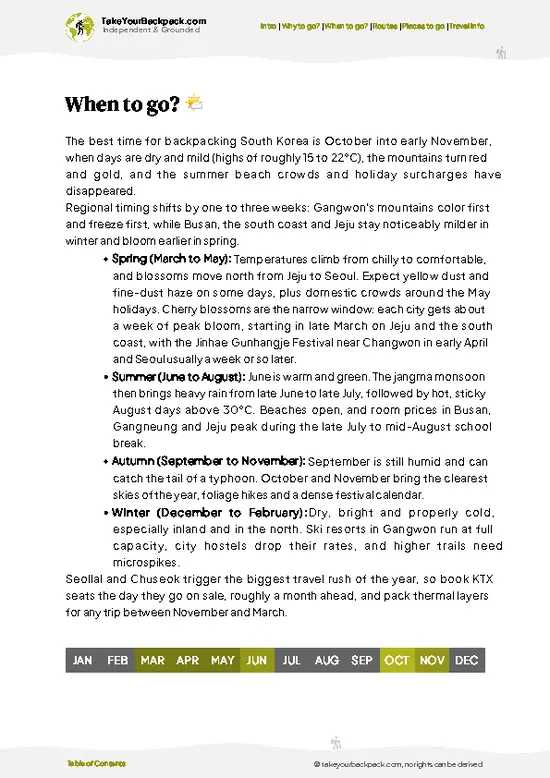
  • Topic: Weather and Temperature – Spring (April to June) and autumn (September to November) offer mild temperatures ranging from 15°C to 25°C (59°F to 77°F), ideal for hiking without the oppressive heat or cold. Summers can spike above 30°C (86°F) with high humidity, while winters dip below freezing, making trails slippery and less accessible.

  • Topic: Daylight Hours – Longer daylight in late spring and early autumn means more time on the trail, with up to 14 hours of light. Winter days shrink to about 9 hours, limiting exploration time and increasing the need for careful planning.

  • Topic: Crowds – Peak season hits in summer and national holidays, especially around Chuseok (Korean Thanksgiving). Expect busy trails and crowded ferry rides. Shoulder seasons provide a quieter experience, letting
read more 👉

  • Topic: Weather and Temperature – Spring (April to June) and autumn (September to November) offer mild temperatures ranging from 15°C to 25°C (59°F to 77°F), ideal for hiking without the oppressive heat or cold. Summers can spike above 30°C (86°F) with high humidity, while winters dip below freezing, making trails slippery and less accessible.

  • Topic: Daylight Hours – Longer daylight in late spring and early autumn means more time on the trail, with up to 14 hours of light. Winter days shrink to about 9 hours, limiting exploration time and increasing the need for careful planning.

  • Topic: Crowds – Peak season hits in summer and national holidays, especially around Chuseok (Korean Thanksgiving). Expect busy trails and crowded ferry rides. Shoulder seasons provide a quieter experience, letting you enjoy the park’s natural rhythm.

  • Topic: Seasonal Activities – Spring brings blooming azaleas and camellias, while autumn paints the landscape with fiery foliage. Summer is best for island hopping and water activities, but be ready for heat and humidity. Winter’s off-season means fewer services and limited access.

  • Topic: Price Fluctuations – Accommodation and transport costs rise sharply during summer and holidays. Booking early in shoulder seasons can save money and secure spots on popular ferries and guesthouses.


Pro-tip: Aim for late April to early June or mid-September to early October to dodge crowds, enjoy comfortable weather, and keep costs reasonable—perfect for stretching your energy and budget where it counts.


source: climatestotravel.comJANJanuary: below average for travelingFEBFebruary: below average for travelingMARMarch: good for travelingAPRApril: excellent for travelingMAYMay: excellent for travelingJUNJune: highly recommended for travelingJULJuly: fair for travelingAUGAugust: fair for travelingSEPSeptember: excellent for travelingOCTOctober: excellent for travelingNOVNovember: highly recommended for travelingDECDecember: fair for traveling
when-to-go

✈️ The backpacker research shortcutSouth Korea Travel Guide

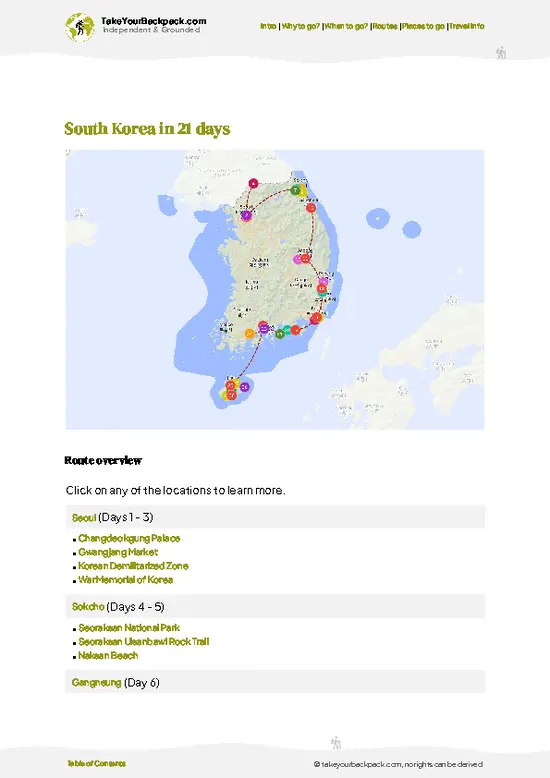
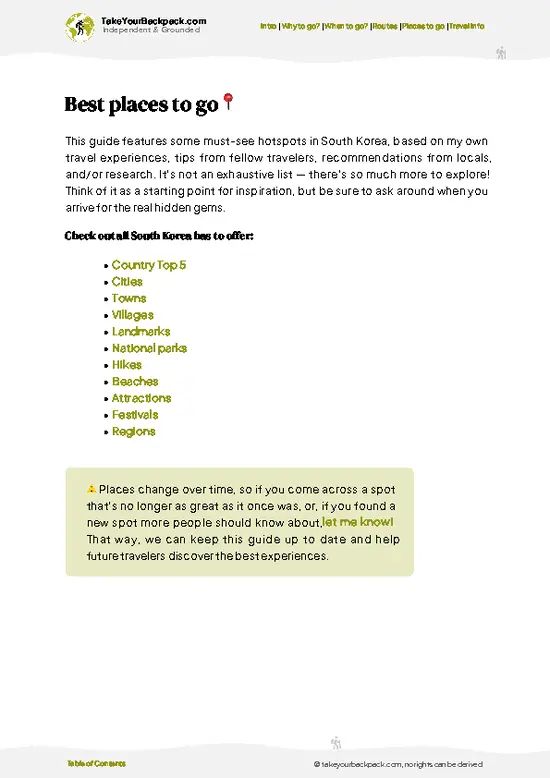
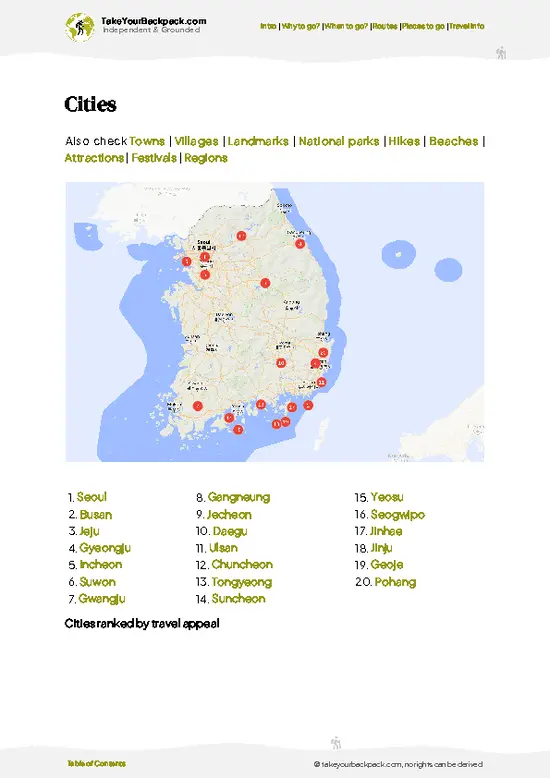
An offline-friendly backpacking guide with optimized travel routes, ranked highlights, transport advice, and the best areas to stay.
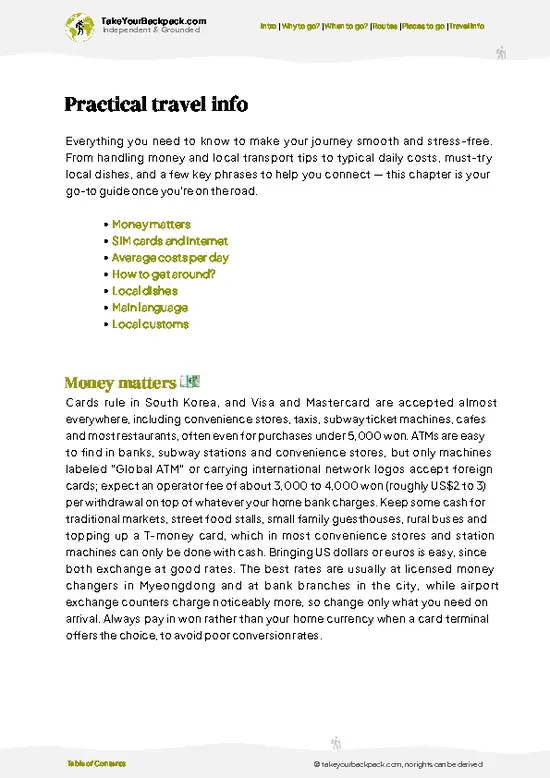
example page 0 from our offline Travel Guide for South Korea
example page 1 from our offline Travel Guide for South Korea
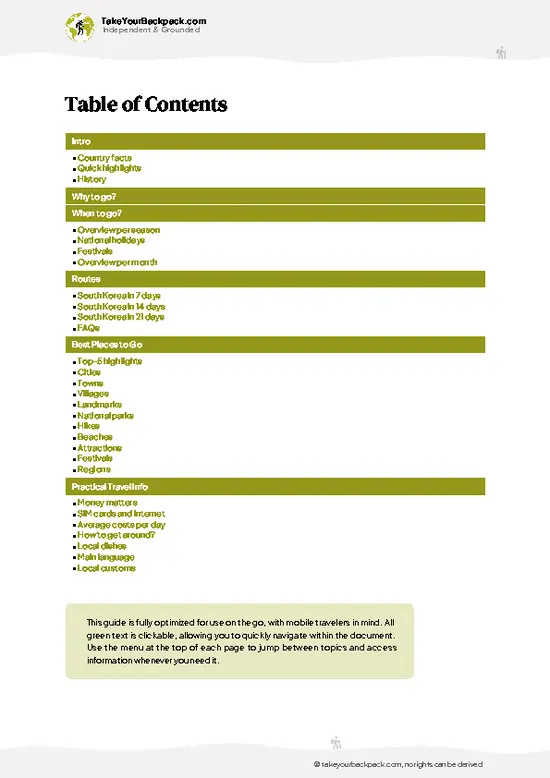
example page 2 from our offline Travel Guide for South Korea
example page 3 from our offline Travel Guide for South Korea
example page 4 from our offline Travel Guide for South Korea
example page 5 from our offline Travel Guide for South Korea
example page 6 from our offline Travel Guide for South Korea
example page 7 from our offline Travel Guide for South Korea
The digital guide (439 pages) contains:
124 highlights, ranked by travel appeal
Optimized 7, 14 & 21-day travel routes
Cities, national parks, landmarks, beaches
How to get around
Offline-friendly for travel without Wi-Fi
👉 Click to see all 30+ guide features

📅 Plan smarter in minutes, not weeks
Month by month travel advice
Festivals & national holidays
Budget expectations

🗺️ Go to the right places, skip the overrated ones
Honest pros & cons of destinations
Top hikes, parks & viewpoints
Lesser-known places most travelers miss
Clear “worth it vs skip it” guidance

🛏️ Travel smoothly without rookie mistakes
Best areas to stay
Transport systems explained simply
Common scams & safety advice
SIM cards, money & practical tips

🌍 Understand the country, not just visit it
Culture & traditions
52 Essential phrases & customs
Festivals worth planning around
Traveler-friendly historical context
Insights that make places more meaningful

📱 Built for real travel conditions
Fully downloadable PDF
Works completely offline
Optimized for phone use
Useful in remote areas & buses
Everything in one place
Save weeks of stressful planning
Get instant access to your full guide. 30‑day money-back guarantee.
+ Add another guide for just US$7.80

By proceeding you agree to our terms.
Sent to your inbox immediately after payment • 100% Secure Checkout
Best Backpacking Travel Advisor 2025 tourism awardBest Backpacking
Travel Advisor
2025
What others say about Take Your Backpack Guides:
⭐⭐⭐⭐⭐
Fantastic, amazing amount of information!
⭐⭐⭐⭐⭐
My goodness this is amazing, it's what I've been looking for hats off too you!
⭐⭐⭐⭐⭐
I think this is absolutely BRILLIANT
⭐⭐⭐⭐
Very complete and informative. It's still missing places, but I gotta to commend you
⭐⭐⭐⭐⭐
This is truly amazing, thank you, can't wait to explore it with my kids!
⭐⭐⭐⭐⭐
Awesome resource, thank you!
⭐⭐⭐⭐⭐
This is amazing! Can't wait to explore the ones I haven't seen
⭐⭐⭐⭐
I love this! Well done, great idea.
⭐⭐⭐⭐⭐
Thanks for taking the time to make this gem!
⭐⭐⭐⭐⭐
This might be the best website I've ever seen.
⭐⭐⭐⭐⭐
Congratulations, and thank you so much for your work; it's incredibly valuable.
⭐⭐⭐⭐
In all seriousness I think you did a great job pointing out the important spots
⭐⭐⭐⭐⭐
10/10 very good
⭐⭐⭐⭐⭐
As someone who's only just starting to visit regularly this is awesome, thank you.
⭐⭐⭐⭐
Thank you very much! I'm going to visit my dad, it's going to be very useful!
⭐⭐⭐⭐⭐
This is really cool! We'll be travelling for the first time and this definitely come in handy.
⭐⭐⭐⭐⭐
You are now our minister of culture, congratulations 👨‍💼
⭐⭐⭐⭐⭐
Just wanted to tell you that this is a pearl! Going to follow your recommendations.
⭐⭐⭐⭐⭐
This is so cool. I'll definitely be using the resource for my travels soon.
⭐⭐⭐⭐⭐
This is very impressive! Good work.
⭐⭐⭐⭐⭐
This is an amazing and informative site. Very well done!

🛏️ Where to stay?Best areas to stay in South Korea

Hallyeohaesang National Park offers limited accommodation options directly within its boundaries. Most backpackers find their best bets in nearby towns like Tongyeong and Geoje.

In Tongyeong, you can find budget-friendly guesthouses and hostels that cater to travelers. Look for places near the waterfront for easy access to ferry services and local eateries. Geoje also has a range of options, from cozy pensions to more traditional stays.

If you prefer a more immersive experience, consider camping in designated areas within the park. Just be aware of the regulations and prepare for basic amenities. … read more 👉
Hallyeohaesang National Park offers limited accommodation options directly within its boundaries. Most backpackers find their best bets in nearby towns like Tongyeong and Geoje.

In Tongyeong, you can find budget-friendly guesthouses and hostels that cater to travelers. Look for places near the waterfront for easy access to ferry services and local eateries. Geoje also has a range of options, from cozy pensions to more traditional stays.

If you prefer a more immersive experience, consider camping in designated areas within the park. Just be aware of the regulations and prepare for basic amenities.

Keep an eye on transportation costs, as getting around can add up. Staying in these towns allows you to explore the park while keeping your budget intact for the experiences that truly matter.

👛 Costs (as of 4 September 2026)Money, prices, and spending tips

Hallyeohaesang National Park in South Korea offers a range of costs that can catch you off guard if you’re not prepared.

Entry fees typically range from $3 to $5 USD. This is a small price for access to stunning coastal views and hiking trails. However, if you plan to visit specific islands within the park, additional ferry fees apply. Expect to pay around $10 to $20 USD for a round trip, depending on the island.

Accommodation options vary widely. Budget travelers can find hostels or guesthouses for about $20 to $40 USD per night. Mid-range hotels will set you back around $60 to $100 USD. If you’re looking for something more upscale, expect to pay $150 USD and up.

Food costs are reasonable. Street food and local eateries offer meals for $5 to $10 USD. Dining in a sit-down restaurant will … read more 👉
Hallyeohaesang National Park in South Korea offers a range of costs that can catch you off guard if you’re not prepared.

Entry fees typically range from $3 to $5 USD. This is a small price for access to stunning coastal views and hiking trails. However, if you plan to visit specific islands within the park, additional ferry fees apply. Expect to pay around $10 to $20 USD for a round trip, depending on the island.

Accommodation options vary widely. Budget travelers can find hostels or guesthouses for about $20 to $40 USD per night. Mid-range hotels will set you back around $60 to $100 USD. If you’re looking for something more upscale, expect to pay $150 USD and up.

Food costs are reasonable. Street food and local eateries offer meals for $5 to $10 USD. Dining in a sit-down restaurant will usually cost between $15 to $30 USD per person.

Transportation is another factor. Public buses are affordable, typically costing $2 to $5 USD for local routes. If you opt for taxis, be prepared for higher fares, especially if you’re traveling longer distances.

Plan your budget carefully. Hidden costs can add up quickly, especially with transportation and accommodation. Prioritize your spending on experiences that matter most to you.
⚠️ Prices can change and everyone travels differently, so take this as a rough guide. Hope it helps you plan your adventure!

🥾 TrailsBest hikes in Hallyeohaesang national park

Hallyeohaesang National Park is a gem on South Korea’s southern coast, offering stunning coastal views and a mix of rugged terrain and serene waters. The park is dotted with islands and is famous for its striking rock formations and diverse marine life. You can spot everything from seabirds to playful dolphins if you’re lucky. The trails vary in difficulty, so whether you’re a seasoned hiker or just looking for a leisurely stroll, there’s something for everyone.

One of the standout trails is Jangsaengpo Trail, which is about 8 kilometers long and typically takes around 3-4 hours to complete. … read more 👉
Hallyeohaesang National Park is a gem on South Korea’s southern coast, offering stunning coastal views and a mix of rugged terrain and serene waters. The park is dotted with islands and is famous for its striking rock formations and diverse marine life. You can spot everything from seabirds to playful dolphins if you’re lucky. The trails vary in difficulty, so whether you’re a seasoned hiker or just looking for a leisurely stroll, there’s something for everyone.

One of the standout trails is Jangsaengpo Trail, which is about 8 kilometers long and typically takes around 3-4 hours to complete. Here’s a quick breakdown:
  • Length: 8 km
  • Estimated Duration: 3-4 hours
  • Difficulty Level: Moderate
  • Key Features: Coastal views, rock formations, and occasional wildlife sightings
  • Terrain: Mixed paths with some rocky sections and gentle ascents

Getting to Hallyeohaesang National Park is pretty straightforward. You can hop on a bus from major cities like Busan or Tongyeong, and it usually takes about an hour or so. The park can get a bit crowded, especially on weekends and holidays, so if you prefer some solitude, aim for a weekday visit. As for entrance fees, there’s usually a small charge, but it’s worth it for the natural beauty you’ll experience. Just pack some snacks, bring plenty of water, and enjoy the adventure!
⚠️ Hiking info can sometimes be outdated or inaccurate. Before you hit the trail, check the latest conditions with locals. If you do spot anything that's off, I'd love to hear from you, so I can update it for fellow travelers.

🛡️ SafetyTraveler Safety Guide

Hallyeohaesang National Park offers a generally manageable hiking experience, but a few practical considerations can enhance your adventure. Weather can shift unexpectedly, so pack layers and a reliable rain jacket. The terrain varies; some trails are steep and rocky, requiring good footwear and careful footing. Navigation is straightforward, but keep a map handy—cell service can be spotty.

Wildlife encounters are rare, but if you see a deer or a wild boar, maintain your distance and don’t feed them. Start your hikes early to avoid crowds and the heat, especially in summer. Respect trail etiquette; stay on marked paths to preserve the environment. These small preparations will help you focus on the beauty around you.

FAQFrequently asked questions about Hallyeohaesang

2 to 3 days are sufficient to explore the main islands and coastal areas of Hallyeohaesang National Park. This allows time for hiking, boat tours, and visiting scenic spots like Odongdo Island and Tongyeong. Extending your stay can help if you want to explore more remote islands or enjoy water activities.
Yes, you can visit Hallyeohaesang National Park without a car. Public buses and ferries connect major access points like Tongyeong and Geoje to the park's islands and trails. Local taxis and bike rentals are also available for flexible travel within the park area.
No entrance fee or special permit is required to enter Hallyeohaesang National Park. Some specific activities, such as boat tours or guided excursions, may have separate charges. Basic access to hiking trails and public areas is free year-round.
⚠️ Things can change over time, so always validate details locally before you go.

Other South Korean national parks near Hallyeohaesang

Explore more nearby:


💡 Not sure where to go next?
Create a personalized itinerary for South Korea including Hallyeohaesang and the places that fit your trip.

Generate my itinerary

👉 Discover all national parks

Or checkout all South Korea has to offer (think cities, towns, villages, national parks, hikes, beaches, festivals)
Country photo of South Korea

We 💚 feedbackSumming up the experience

Hallyeohaesang National Park is a breath of fresh air, but don’t underestimate the weather. It can shift quickly, so pack layers. The best surprise? The quiet coves where you can escape the crowds. Embrace the local seafood; it’s worth every won. Just remember, the trails can be steep—keep your energy for the views that truly matter.

✍️ Help improve this page!
The information on this page is based on in-depth research, insights shared by experienced travelers, and feedback from the local travel community in South Korea. While every effort is made to keep the information accurate and current, conditions can change — so if you spot anything incorrect or outdated, please get in touch.


🙋‍♂️ Give feedback

👋 Meet the founderWho’s Behind Take Your Backpack?

Johan, backpacker and founder of TakeYourBackpackHi, I’m Johan (Netherlands 🇳🇱), the creator of TakeYourBackpack. Over the past decade, I’ve backpacked through 80+ countries across six continents, gaining extensive experience with independent travel, long-term trips, and overland routes.

This site is built on a combination of firsthand travel experience and carefully curated insights from other backpackers. Many guides are based on places I’ve personally visited, while others bring together tips, observations, and practical advice shared by trusted travelers I’ve met along the way.

The goal is to provide realistic, experience-driven guidance — not generic itineraries — so you can explore destinations with better context, clearer expectations, and more confidence.

Get full country guide •
Instant download • 124 highlights • Full Offline guide