×

South Korea🇰🇷 | national parksUpo Wetlandmarshes, migratory birds, boardwalks | things to do and best time to go

Explore Gyeongju National ParkExplore Cheongsando Island

Backpacking in Upo Wetland
👀 For curious travelersnational park ranked #22
By Johan Kruseman 🇳🇱 | Updated October 15, 2026

Your bike chain clicks softly while frogs croak from the reeds and a heron lifts off just a few meters away, wings thudding the damp air. This is Upo Wetland, in Changnyeong, Gyeongsangnam-do, southeast South Korea. For backpackers, it’s flat paths, birdlife, and quiet water instead of big-peak drama: cheap or free entry, easy buses, mellow boardwalks, and simple pensions rather than wild camping. Compared with Jirisan or Gayasan, Upo is gentler, smaller, more about slow observation than summit glory—and it can feel underwhelming if you crave serious elevation or remote backcountry.

Discover everything you want to know in the 📖 South Korea Travel Guide.


example page 0 from our offline Travel Guide for South Korea
example page 1 from our offline Travel Guide for South Korea
example page 2 from our offline Travel Guide for South Korea
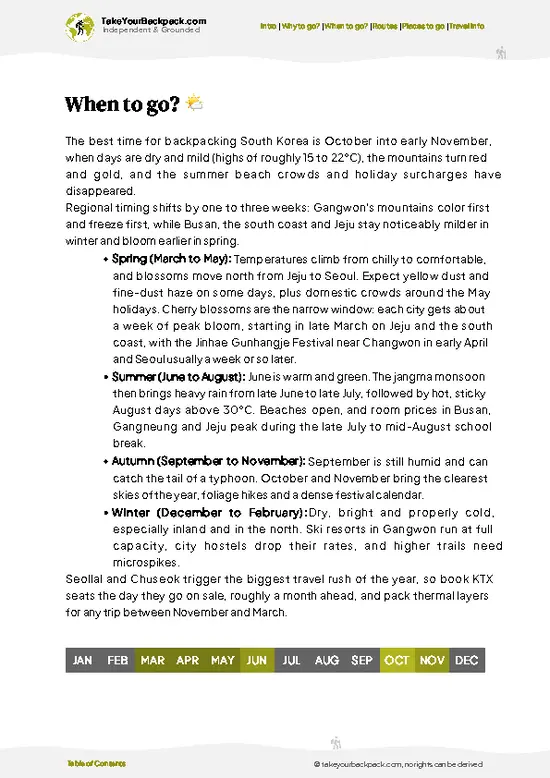
example page 3 from our offline Travel Guide for South Korea
example page 4 from our offline Travel Guide for South Korea
example page 5 from our offline Travel Guide for South Korea
example page 6 from our offline Travel Guide for South Korea
example page 7 from our offline Travel Guide for South Korea
Loading the map 🌍
CLICK TO FILTER
cities
towns
villages
landmarks
national parks
hikes
beaches
attractions
festivals
regions
SHOW COUNTRY’S BESTSHOW ALL

✨ Why go?
Ranked #22 national park in South Korea
Reasons people choose to explore here

Upo Wetland attracts backpackers for several compelling reasons. First, independent exploration is a breeze here; the park’s well-marked trails invite you to wander at your own pace. Budget-conscious travelers appreciate the camping options and nearby hostels, which keep costs low without sacrificing comfort. The variety of trails caters to all skill levels, from leisurely strolls to more challenging hikes, ensuring you can tailor your experience. Unlike many destinations that push guided tours, Upo Wetland is perfect for self-guided travelers. You can soak in the serene landscapes and diverse wildlife without the pressure of a group. This freedom allows you to truly connect with the environment while keeping your budget intact.

💡 HighlightsKey sights and experiences for travelers

  1. Expansive reed fields — Waves of tall reeds dominate Upo’s landscape and give the marsh its dramatic textures: golden in late autumn, green in summer. Walk along the edges for great close-up photos and to see small birds and insects that live in the stems.
  2. Birdwatching towers and observatories — Several raised hides let you watch waterfowl and migratory species without disturbing them. Spring and autumn migrations are the best times to spot large flocks; bring binoculars and be patient.
  3. Wooden boardwalk loops — Gentle, well-maintained boardwalks thread through the wetland so you can cover different habitats without getting muddy. Routes range from short strolls to longer loops that feel like a mini-hike.
  4. Summer lotus and shallow pools — In warm months wide swathes of lotus flowers bloom
… read more 👉
  1. Expansive reed fields — Waves of tall reeds dominate Upo’s landscape and give the marsh its dramatic textures: golden in late autumn, green in summer. Walk along the edges for great close-up photos and to see small birds and insects that live in the stems.
  2. Birdwatching towers and observatories — Several raised hides let you watch waterfowl and migratory species without disturbing them. Spring and autumn migrations are the best times to spot large flocks; bring binoculars and be patient.
  3. Wooden boardwalk loops — Gentle, well-maintained boardwalks thread through the wetland so you can cover different habitats without getting muddy. Routes range from short strolls to longer loops that feel like a mini-hike.
  4. Summer lotus and shallow pools — In warm months wide swathes of lotus flowers bloom over the shallow water, turning parts of the marsh into a pink-and-green palette that photographers and families love.
  5. Mirror-like sunrise and sunset views — Low light skims the water and creates dramatic reflections of sky and reeds. Early morning mist or late-afternoon light makes for serene, nearly silent moments—perfect if you want to escape crowds.
  6. Upo Wetland Ecological Center — The visitor center has displays on local ecology, guided-walk info, and practical tips for wildlife watching. Staff can point out seasonal highlights and nearby trails worth combining with your visit.
  7. Seasonal boat/canoe rides & local village walks — Small, organized boat or canoe experiences (when available) let you glide into quieter channels. Pair that with a short walk through adjacent farming villages to see reed harvesting, local crafts, and how the wetland fits into daily life.
Spotted a mistake or missing something? Contact us.

Things to do near Upo Wetland

Ratings based on Tripadvisor reviews. When you book through this link, you support our work at no extra cost to you.

🌤️ When to go?Seasonal considerations and timing

  • Weather: Spring (April-May) and autumn (September-October) offer mild, dry conditions. Summers can be hot and humid, often above 30°C (86°F), while winters drop below freezing, making trails slippery and less accessible.
  • Temperature: Expect 15-25°C (59-77°F) in spring and autumn—ideal for hiking without overheating or freezing. Winter lows can hit -5°C (23°F), and summer highs often exceed 30°C (86°F), which can sap your energy fast.
  • Daylight Hours: Longer days in late spring and early autumn provide 12-14 hours of light, perfect for extended exploration. Winter days shrink to about 9 hours, limiting your hiking window.
  • Crowds: Peak visitor numbers align with spring cherry blossoms and autumn foliage. If you want solitude, aim for early spring or late autumn weekdays.
  • Seasonal Activities:
… read more 👉
  • Weather: Spring (April-May) and autumn (September-October) offer mild, dry conditions. Summers can be hot and humid, often above 30°C (86°F), while winters drop below freezing, making trails slippery and less accessible.
  • Temperature: Expect 15-25°C (59-77°F) in spring and autumn—ideal for hiking without overheating or freezing. Winter lows can hit -5°C (23°F), and summer highs often exceed 30°C (86°F), which can sap your energy fast.
  • Daylight Hours: Longer days in late spring and early autumn provide 12-14 hours of light, perfect for extended exploration. Winter days shrink to about 9 hours, limiting your hiking window.
  • Crowds: Peak visitor numbers align with spring cherry blossoms and autumn foliage. If you want solitude, aim for early spring or late autumn weekdays.
  • Seasonal Activities: Birdwatching peaks in spring and autumn migrations. Summer brings lush greenery but also mosquitoes. Winter offers quiet, but many facilities close.
  • Price Fluctuations: Accommodation and transport costs rise during peak seasons (spring and autumn). Off-season visits can save money but expect fewer services.
Pro-tip: Visit in early autumn to balance pleasant weather, manageable crowds, and active wildlife without the premium prices of peak season.


source: climatestotravel.comJANJanuary: fair for travelingFEBFebruary: fair for travelingMARMarch: good for travelingAPRApril: excellent for travelingMAYMay: excellent for travelingJUNJune: good for travelingJULJuly: fair for travelingAUGAugust: fair for travelingSEPSeptember: excellent for travelingOCTOctober: excellent for travelingNOVNovember: good for travelingDECDecember: fair for traveling
when-to-go

✈️ The backpacker research shortcutSouth Korea Travel Guide

An offline-friendly backpacking guide with optimized travel routes, ranked highlights, transport advice, and the best areas to stay.
example page 0 from our offline Travel Guide for South Korea
example page 1 from our offline Travel Guide for South Korea
example page 2 from our offline Travel Guide for South Korea
example page 3 from our offline Travel Guide for South Korea
example page 4 from our offline Travel Guide for South Korea
example page 5 from our offline Travel Guide for South Korea
example page 6 from our offline Travel Guide for South Korea
example page 7 from our offline Travel Guide for South Korea
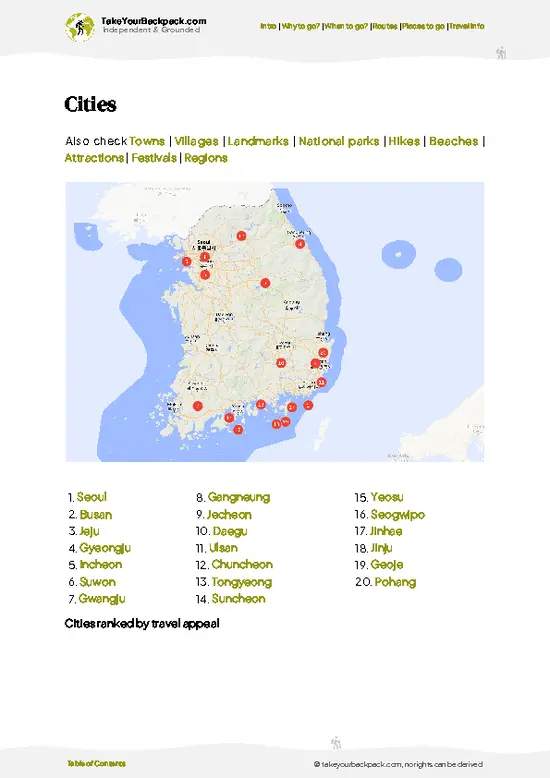
The digital guide (419 pages) contains:
✅ 117 highlights, ranked by travel appeal
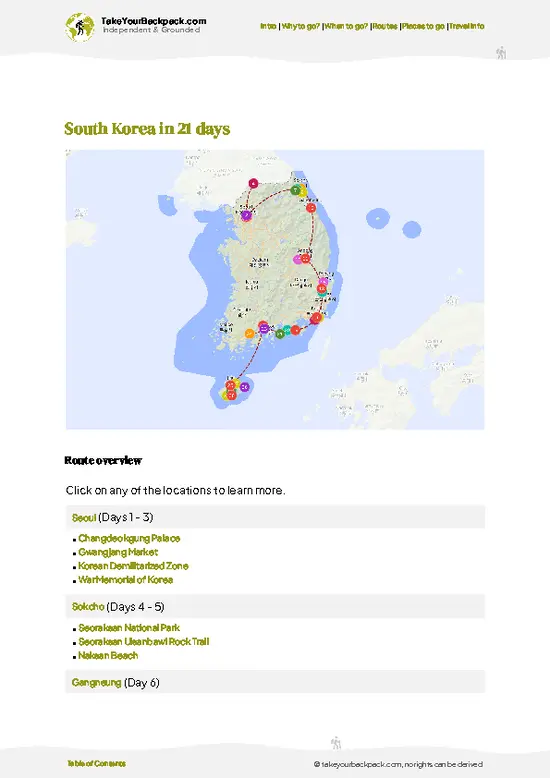
✅ Optimized 7, 14 & 21-day travel routes
✅ Cities, national parks, landmarks, beaches
✅ How to get around
✅ Offline-friendly for travel without Wi-Fi
👉 Click to see all 30+ guide features

📅 Plan smarter in minutes, not weeks
✅ Month by month travel advice
✅ Festivals & national holidays
✅ Budget expectations

🗺️ Go to the right places, skip the overrated ones
✅ Honest pros & cons of destinations
✅ Top hikes, parks & viewpoints
✅ Lesser-known places most travelers miss
✅ Clear “worth it vs skip it” guidance

🛏️ Travel smoothly without rookie mistakes
✅ Best areas to stay
✅ Transport systems explained simply
✅ Common scams & safety advice
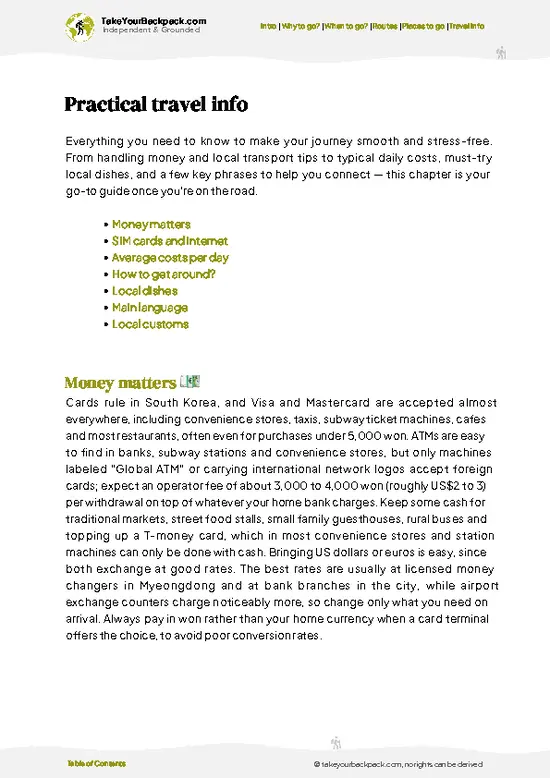
✅ SIM cards, money & practical tips

🌍 Understand the country, not just visit it
✅ Culture & traditions
✅ 52 Essential phrases & customs
✅ Festivals worth planning around
✅ Traveler-friendly historical context
✅ Insights that make places more meaningful

📱 Built for real travel conditions
✅ Fully downloadable PDF
✅ Works completely offline
✅ Optimized for phone use
✅ Useful in remote areas & buses
✅ Everything in one place
Stop searching, start planning
Get instant access to your full guide. 30‑day money-back guarantee.
+ Add another guide for just

By proceeding you agree to our terms.
Sent to your inbox immediately after payment • 100% Secure Checkout
Best Backpacking Travel Advisor 2025 tourism awardBest Backpacking
Travel Advisor
2025
What others say about Take Your Backpack Guides:
⭐⭐⭐⭐⭐
Fantastic, amazing amount of information!
⭐⭐⭐⭐⭐
My goodness this is amazing, it's what I've been looking for hats off too you!
⭐⭐⭐⭐⭐
I think this is absolutely BRILLIANT
⭐⭐⭐⭐
Very complete and informative. It's still missing places, but I gotta to commend you
⭐⭐⭐⭐⭐
This is truly amazing, thank you, can't wait to explore it with my kids!
⭐⭐⭐⭐⭐
Awesome resource, thank you!
⭐⭐⭐⭐⭐
This is amazing! Can't wait to explore the ones I haven't seen
⭐⭐⭐⭐
I love this! Well done, great idea.
⭐⭐⭐⭐⭐
Thanks for taking the time to make this gem!
⭐⭐⭐⭐⭐
This might be the best website I've ever seen.
⭐⭐⭐⭐⭐
Congratulations, and thank you so much for your work; it's incredibly valuable.
⭐⭐⭐⭐
In all seriousness I think you did a great job pointing out the important spots
⭐⭐⭐⭐⭐
10/10 very good
⭐⭐⭐⭐⭐
As someone who's only just starting to visit regularly this is awesome, thank you.
⭐⭐⭐⭐
Thank you very much! I'm going to visit my dad, it's going to be very useful!
⭐⭐⭐⭐⭐
This is really cool! We'll be travelling for the first time and this definitely come in handy.
⭐⭐⭐⭐⭐
You are now our minister of culture, congratulations 👨‍💼
⭐⭐⭐⭐⭐
Just wanted to tell you that this is a pearl! Going to follow your recommendations.
⭐⭐⭐⭐⭐
This is so cool. I'll definitely be using the resource for my travels soon.
⭐⭐⭐⭐⭐
This is very impressive! Good work.
⭐⭐⭐⭐⭐
This is an amazing and informative site. Very well done!

🛏️ Where to stay?How to pick the right area

For backpackers visiting Upo Wetland, options are limited within the park itself. There are no official accommodations inside the wetland area, so plan to stay in nearby towns.

Changnyeong is your best bet. It’s just a short bus ride away and offers guesthouses and budget hotels that cater to travelers. Look for places like the Changnyeong Tourist Hotel for a decent stay without breaking the bank.

Another option is the city of Jinju, about 30 minutes away. It has a wider range of accommodations, from hostels to mid-range hotels.

Keep in mind that public transport can be sparse, especially … read more 👉
For backpackers visiting Upo Wetland, options are limited within the park itself. There are no official accommodations inside the wetland area, so plan to stay in nearby towns.

Changnyeong is your best bet. It’s just a short bus ride away and offers guesthouses and budget hotels that cater to travelers. Look for places like the Changnyeong Tourist Hotel for a decent stay without breaking the bank.

Another option is the city of Jinju, about 30 minutes away. It has a wider range of accommodations, from hostels to mid-range hotels.

Keep in mind that public transport can be sparse, especially in the evenings. Factor that into your plans to avoid getting stuck. Prioritize your energy and budget for the experiences that matter, like exploring the wetland’s unique ecosystem.

👛 Costs (as of 15 October 2026)Travel costs and budget guide for Upo Wetland

Visiting Upo Wetland in South Korea can be a rewarding experience, but it’s essential to be aware of the costs involved to avoid surprises.

Entry to Upo Wetland is generally around 2,000 to 3,000 KRW, which translates to approximately €1.50 to €2.25 or $1.60 to $2.40. This fee grants you access to the park and its trails, but keep in mind that some guided tours may cost extra, ranging from 10,000 to 30,000 KRW (€7.50 to €22.50 or $8 to $24).

If you plan to rent a bike to explore the area, expect to pay around 3,000 to 5,000 KRW (€2.25 to €3.75 or $2.40 to $5). Food options within the park are limited, so budgeting for meals outside the park is wise. Local eateries offer meals for about 8,000 to 15,000 KRW (€6 to €11 or $6.50 to $16), depending on your choice.

Transportation to Upo Wetland … read more 👉
Visiting Upo Wetland in South Korea can be a rewarding experience, but it’s essential to be aware of the costs involved to avoid surprises.

Entry to Upo Wetland is generally around 2,000 to 3,000 KRW, which translates to approximately €1.50 to €2.25 or $1.60 to $2.40. This fee grants you access to the park and its trails, but keep in mind that some guided tours may cost extra, ranging from 10,000 to 30,000 KRW (€7.50 to €22.50 or $8 to $24).

If you plan to rent a bike to explore the area, expect to pay around 3,000 to 5,000 KRW (€2.25 to €3.75 or $2.40 to $5). Food options within the park are limited, so budgeting for meals outside the park is wise. Local eateries offer meals for about 8,000 to 15,000 KRW (€6 to €11 or $6.50 to $16), depending on your choice.

Transportation to Upo Wetland can vary. If you’re coming from Jinju, a bus ticket will cost around 1,500 to 2,500 KRW (€1.10 to €1.85 or $1.20 to $2.70). Taxis will be more expensive, typically starting at 10,000 KRW (€7.50 or $8) and increasing based on distance.

Plan accordingly. Being aware of these costs will help you manage your budget and energy, allowing you to focus on enjoying the natural beauty of Upo Wetland.


source: english.visitkorea.or.kr
⚠️ Prices can change and everyone travels differently, so take this as a rough guide. Hope it helps you plan your adventure!

🥾 TrailsWhere to hike in Upo Wetland: trails for every level

Upo Wetland is a hidden gem for those who appreciate nature, with its serene landscapes and diverse wildlife. The hiking opportunities here are fantastic, especially if you’re keen on birdwatching or just soaking in some tranquil vibes. The terrain is mostly flat, making it accessible for most hikers, but it does have some soft, marshy areas, so sturdy footwear is a must. As you wander through, keep an eye out for the stunning migratory birds, especially during spring and fall—it’s like nature’s own show.

One of the popular trails is the Upo Wetland Trail, which offers a great way to explore … read more 👉
Upo Wetland is a hidden gem for those who appreciate nature, with its serene landscapes and diverse wildlife. The hiking opportunities here are fantastic, especially if you’re keen on birdwatching or just soaking in some tranquil vibes. The terrain is mostly flat, making it accessible for most hikers, but it does have some soft, marshy areas, so sturdy footwear is a must. As you wander through, keep an eye out for the stunning migratory birds, especially during spring and fall—it’s like nature’s own show.

One of the popular trails is the Upo Wetland Trail, which offers a great way to explore the area. Here are the details:
  • Length: 6 km
  • Estimated Duration: 2-3 hours
  • Difficulty Level: Easy
  • Key Features: Scenic wetland views, birdwatching spots, educational signage about local flora and fauna
  • Terrain: Mostly flat with boardwalks and some soft paths

Getting to Upo Wetland is pretty straightforward. You can catch a bus from Jinju, which takes about an hour. Just be aware that it can get a bit crowded on weekends, especially during peak seasons when the birds are in town. And yes, there’s a small entrance fee, but it’s totally worth it for the experience. Just remember to bring some snacks and enjoy the peace!
⚠️ Hiking info can sometimes be outdated or inaccurate. Before you hit the trail, check the latest conditions with locals. If you do spot anything that's off, I'd love to hear from you, so I can update it for fellow travelers.

🛡️ SafetyScams, Hazards, and Annoyances

Upo Wetland is generally safe and well-maintained, but a few practical considerations can enhance your experience. Weather can shift quickly, especially in spring and fall, so pack layers and a reliable rain jacket. The terrain is mostly flat, but some trails may have muddy sections after rain, so sturdy footwear is essential.

Wildlife is present, including birds and insects; keep a respectful distance and avoid feeding them. Timing your hikes for early morning or late afternoon can help you avoid crowds and maximize wildlife sightings. Stay on marked paths to protect the ecosystem and ensure your safety. With these tips, you’ll preserve your energy and budget for the moments that truly matter.

FAQFrequently asked questions about Upo Wetland

1 to 2 days are sufficient to explore Upo Wetland thoroughly. This allows time for walking trails, bird watching, and visiting the ecological center. Most visitors find a full day enough, but an overnight stay nearby can enhance the experience.
Yes, you can visit Upo Wetland without a car. Public buses run from nearby cities like Changnyeong and Miryang, and local taxis can cover the last stretch. Biking is also an option within the wetland area for easier mobility.
No entrance fee or special permit is required to visit Upo Wetland. The area is open to the public year-round, making it accessible for spontaneous visits. However, some guided tours or special programs may charge a fee.
⚠️ Things can change over time, so always validate details locally before you go.

Other South Korean national parks near Upo Wetland

Explore more nearby:

  • Gayasan—Haeinsa Temple, forested valleys, Buddhist relics| 40 km away
  • Yeongnam Alps—open grasslands, wind farms, panoramic summits| 47 km away
  • Geumosan Provincial Park—volcanic lake, cable car, city backdrop| 61 km away

💡 Not sure where to go next?
Create a personalized itinerary for South Korea including Upo Wetland and the places that fit your trip.

Generate my itinerary

👉 Discover all national parks

Or checkout all South Korea has to offer (think cities, towns, villages, national parks, hikes, beaches, festivals)
Country photo of South Korea

We 💚 feedbackParting advice and final tips

Upo Wetland is a serene escape, where the quiet rustle of reeds and the soft calls of birds create a calming backdrop. The best surprise? Spotting a rare black-faced spoonbill. Just a heads-up: the trails can get muddy, so sturdy shoes are a must. Embrace the stillness; it’s worth every step.

✍️ Help improve this page!
The information on this page is based on in-depth research, insights shared by experienced travelers, and feedback from the local travel community in South Korea. While every effort is made to keep the information accurate and current, conditions can change — so if you spot anything incorrect or outdated, please get in touch.


🙋‍♂️ Give feedback

👋 Meet the founderWho’s Behind Take Your Backpack?

Johan, backpacker and founder of TakeYourBackpackHi, I’m Johan (Netherlands 🇳🇱), the creator of TakeYourBackpack. Over the past 3 decades, I’ve backpacked through 90+ countries across six continents, gaining extensive experience with independent travel, long-term trips, and overland routes.

This site is built on a combination of firsthand travel experience and carefully curated insights from other backpackers. Many guides are based on places I’ve personally visited, while others bring together tips, observations, and practical advice shared by trusted travelers I’ve met along the way.

The goal is to provide realistic, experience-driven guidance — not generic itineraries — so you can explore destinations with better context, clearer expectations, and more confidence.