×

South Korea🇰🇷 | festivalsJeju Fire Festivalgrass burning, volcanic landscapes, local rituals | things to do and best time to go

Explore Jinju Namgang Yudeung (Lantern) FestivalExplore Daegu Chimac Festival

Backpacking in Jeju Fire
👌 Worth visitingfestival ranked #12
By Johan Kruseman 🇳🇱 | Updated July 9, 2026

Most people only realize on the last night that the best views at Jeju Fire Festival are free if you hike up early and claim a spot instead of paying for cramped “premium” seating. The festival burns across the grasslands of Saebyeol Oreum, near Aewol on Jeju Island off South Korea’s southern coast. It’s a few intense days of bonfires, torch parades, folk performances, and loud K‑pop and EDM stages pulling in families, couples, and younger backpackers chasing a big, primal spectacle. The vibe swings from village fair to full-on rave once the hills ignite. It’s worth it if you like crowds, smoke, and late nights; skip it if you hate chaos or have tight lungs.

Discover everything you want to know in the 📖 South Korea Travel Guide.
Loading the map 🌍
CLICK TO FILTER
cities
towns
villages
landmarks
national parks
hikes
beaches
attractions
festivals
regions
SHOW COUNTRY’S BESTSHOW ALL

✨ Why go?
Ranked #12 festival in South Korea
What makes this festival worth celebrating

Backpackers flock to the Jeju Fire Festival for a jolt of social energy and a taste of temporary community. This isn’t just a party; it’s a vibrant celebration of local culture where you can immerse yourself in traditional fire rituals and lively performances. The festival’s affordability compared to similar events makes it a no-brainer for budget-conscious travelers. You’ll find that the experience is rich, not just in sights but in connections with fellow adventurers and locals alike.

Planning your route around this festival means weaving it into a broader travel narrative. It’s a perfect pit stop on your journey through South Korea, allowing you to recharge your spirit before tackling the next leg of your adventure. Don’t miss out on this chance to blend exploration with celebration—it’s where the journey truly ignites!
Want to include Jeju Fire Festival in your South Korea route?
Create a personalized South Korea itinerary that includes Jeju Fire Festival and the places that fit your trip — based on your travel style, budget, and available time. Get your route in seconds.

Generate my trip

💡 HighlightsWhat this place is best known for

  1. The Great Bonfire and Field-burning Ritual — The visual and visceral heart of the festival: huge controlled fires set on the grasslands that symbolize cleansing the old year and welcoming new growth. It’s not just spectacle — it’s an agricultural rite you can actually feel, with heat, smoke, and chant creating a surprisingly primal, communal buzz.
  2. Torchlight Procession and Night Parade — Crowds carrying torches winding through low hills and village streets make the night feel like one big, moving campfire. The procession’s energy is infectious; it’s the kind of shared activity that makes strangers cheer together and photos actually look cinematic.
  3. Traditional Performances and Ceremonial Rites — Expect folk music, percussion, dances and ritual ceremonies rooted in island customs. These
read more 👉
  1. The Great Bonfire and Field-burning Ritual — The visual and visceral heart of the festival: huge controlled fires set on the grasslands that symbolize cleansing the old year and welcoming new growth. It’s not just spectacle — it’s an agricultural rite you can actually feel, with heat, smoke, and chant creating a surprisingly primal, communal buzz.
  2. Torchlight Procession and Night Parade — Crowds carrying torches winding through low hills and village streets make the night feel like one big, moving campfire. The procession’s energy is infectious; it’s the kind of shared activity that makes strangers cheer together and photos actually look cinematic.
  3. Traditional Performances and Ceremonial Rites — Expect folk music, percussion, dances and ritual ceremonies rooted in island customs. These performances link the modern party atmosphere back to Jeju’s older shamanic and farming traditions, so you get entertainment that also teaches something about local identity.
  4. Hands-on Workshops, Folk Games, and Local Food — From making simple fire-related crafts to trying traditional games, the festival invites you to join in rather than just watch. Plus, stalls selling Jeju specialties (think fresh seafood, black pork, tangerine snacks) mean you can warm up with real island flavors between events.
  5. Volcanic Scenery and the Nighttime Fire Glow — The festival’s setting on Jeju’s low volcanic slopes and fields amps up the atmosphere: bonfires reflected off lava rock, wind off the sea, and wide-open skies. It’s a sensory combo—smell, sound, and light—unique to a volcanic island, and it feels much bigger than the sum of its parts.
Spotted a mistake or missing something? Contact us.

Things to do near Jeju Fire Festival

Ratings based on Tripadvisor reviews. When you book through this link, you support our work at no extra cost to you.

🌤️ When to go?When is the celebration of Jeju Fire Festival?


  • Topic: Weather — The Jeju Fire Festival lights up in March, when the island shakes off winter’s chill. Expect crisp air, around 7-13°C (45-55°F), perfect for layering without overheating during active events.

  • Topic: Temperature — Days hover in the cool teens Celsius (50s Fahrenheit), but nights dip close to freezing. Pack a warm jacket for evening festivities; the fire’s warmth won’t fully shield you.

  • Topic: Daylight Hours — Early spring means daylight stretches from about 6:30 AM to 6:30 PM, giving you ample time to explore Jeju’s landscapes before the festival’s fiery night shows.

  • Topic: Crowds — March draws a moderate crowd—busy enough to feel the buzz but not so packed that you lose elbow room. Arrive early to snag prime viewing spots.

  • Topic: Seasonal Activities — The festival coincides
read more 👉

  • Topic: Weather — The Jeju Fire Festival lights up in March, when the island shakes off winter’s chill. Expect crisp air, around 7-13°C (45-55°F), perfect for layering without overheating during active events.

  • Topic: Temperature — Days hover in the cool teens Celsius (50s Fahrenheit), but nights dip close to freezing. Pack a warm jacket for evening festivities; the fire’s warmth won’t fully shield you.

  • Topic: Daylight Hours — Early spring means daylight stretches from about 6:30 AM to 6:30 PM, giving you ample time to explore Jeju’s landscapes before the festival’s fiery night shows.

  • Topic: Crowds — March draws a moderate crowd—busy enough to feel the buzz but not so packed that you lose elbow room. Arrive early to snag prime viewing spots.

  • Topic: Seasonal Activities — The festival coincides with Jeju’s agricultural cycle, showcasing traditional farming rituals and fire-based ceremonies that vanish once spring blooms fully.

  • Topic: Price Fluctuations — Off-peak travel rates apply outside the festival weekend, but expect a price bump on accommodation and transport during the event. Booking early locks in better deals.


Pro-tip: Time your visit for mid-March to catch the festival’s peak energy before spring crowds and prices surge—your wallet and stamina will thank you.


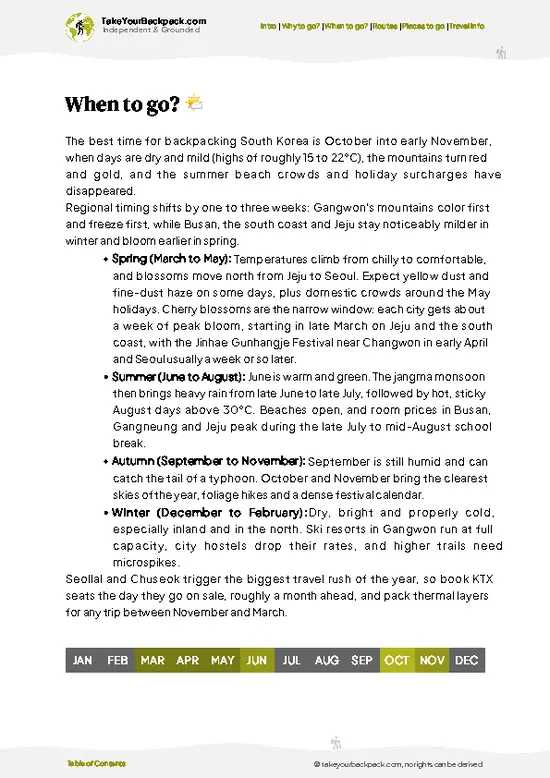
source: climatestotravel.comJANJanuary: not recommended for travelingFEBFebruary: not recommended for travelingMARMarch: excellent for travelingAPRApril: not recommended for travelingMAYMay: not recommended for travelingJUNJune: not recommended for travelingJULJuly: not recommended for travelingAUGAugust: not recommended for travelingSEPSeptember: not recommended for travelingOCTOctober: not recommended for travelingNOVNovember: not recommended for travelingDECDecember: not recommended for traveling

✈️ The backpacker research shortcutSouth Korea Travel Guide

An offline-friendly backpacking guide with optimized travel routes, ranked highlights, transport advice, and the best areas to stay.
example page 0 from our offline Travel Guide for South Korea
example page 1 from our offline Travel Guide for South Korea
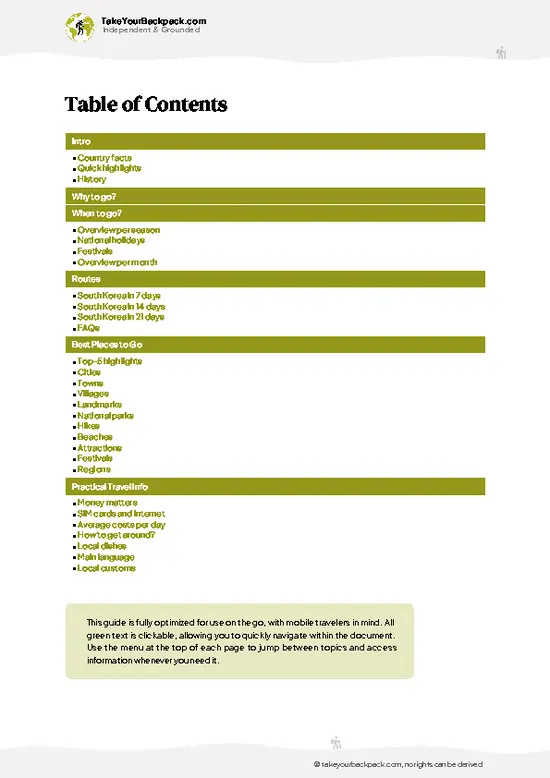
example page 2 from our offline Travel Guide for South Korea
example page 3 from our offline Travel Guide for South Korea
example page 4 from our offline Travel Guide for South Korea
example page 5 from our offline Travel Guide for South Korea
example page 6 from our offline Travel Guide for South Korea
example page 7 from our offline Travel Guide for South Korea
The digital guide (439 pages) contains:
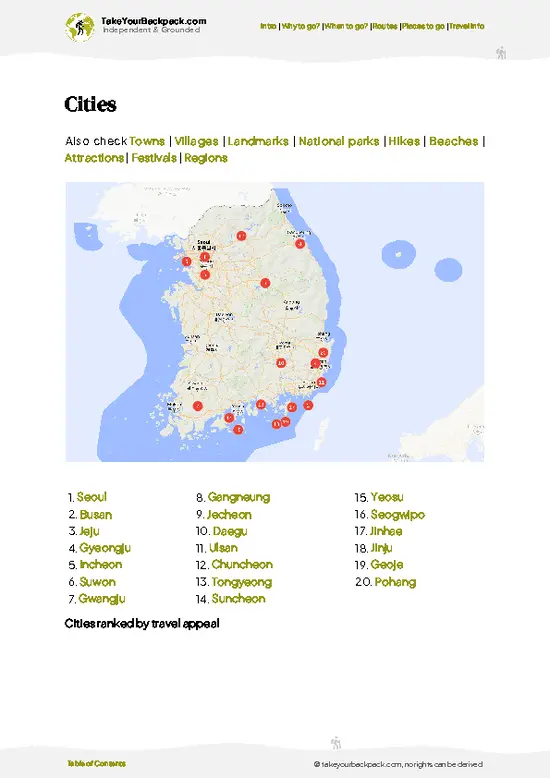
124 highlights, ranked by travel appeal
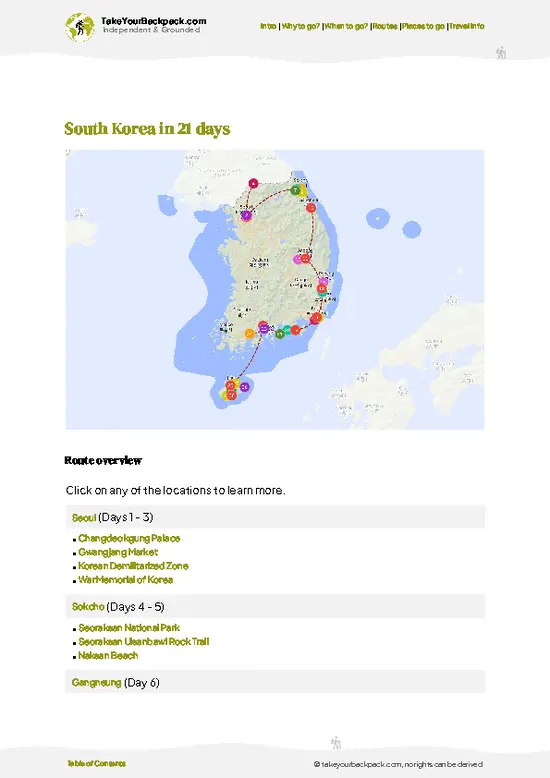
Optimized 7, 14 & 21-day travel routes
Cities, national parks, landmarks, beaches
How to get around
Offline-friendly for travel without Wi-Fi
👉 Click to see all 30+ guide features

📅 Plan smarter in minutes, not weeks
Month by month travel advice
Festivals & national holidays
Budget expectations

🗺️ Go to the right places, skip the overrated ones
Honest pros & cons of destinations
Top hikes, parks & viewpoints
Lesser-known places most travelers miss
Clear “worth it vs skip it” guidance

🛏️ Travel smoothly without rookie mistakes
Best areas to stay
Transport systems explained simply
Common scams & safety advice
SIM cards, money & practical tips

🌍 Understand the country, not just visit it
Culture & traditions
52 Essential phrases & customs
Festivals worth planning around
Traveler-friendly historical context
Insights that make places more meaningful

📱 Built for real travel conditions
Fully downloadable PDF
Works completely offline
Optimized for phone use
Useful in remote areas & buses
Everything in one place
Save weeks of stressful planning
Get instant access to your full guide. 30‑day money-back guarantee.


By proceeding you agree to our terms.
Sent to your inbox immediately after payment • 100% Secure Checkout
Best Backpacking Travel Advisor 2025 tourism awardBest Backpacking
Travel Advisor
2025
What others say about Take Your Backpack Guides:
⭐⭐⭐⭐⭐
Fantastic, amazing amount of information!
⭐⭐⭐⭐⭐
My goodness this is amazing, it's what I've been looking for hats off too you!
⭐⭐⭐⭐⭐
I think this is absolutely BRILLIANT
⭐⭐⭐⭐
Very complete and informative. It's still missing places, but I gotta to commend you
⭐⭐⭐⭐⭐
This is truly amazing, thank you, can't wait to explore it with my kids!
⭐⭐⭐⭐⭐
Awesome resource, thank you!
⭐⭐⭐⭐⭐
This is amazing! Can't wait to explore the ones I haven't seen
⭐⭐⭐⭐
I love this! Well done, great idea.
⭐⭐⭐⭐⭐
Thanks for taking the time to make this gem!
⭐⭐⭐⭐⭐
This might be the best website I've ever seen.
⭐⭐⭐⭐⭐
Congratulations, and thank you so much for your work; it's incredibly valuable.
⭐⭐⭐⭐
In all seriousness I think you did a great job pointing out the important spots
⭐⭐⭐⭐⭐
10/10 very good
⭐⭐⭐⭐⭐
As someone who's only just starting to visit regularly this is awesome, thank you.
⭐⭐⭐⭐
Thank you very much! I'm going to visit my dad, it's going to be very useful!
⭐⭐⭐⭐⭐
This is really cool! We'll be travelling for the first time and this definitely come in handy.
⭐⭐⭐⭐⭐
You are now our minister of culture, congratulations 👨‍💼
⭐⭐⭐⭐⭐
Just wanted to tell you that this is a pearl! Going to follow your recommendations.
⭐⭐⭐⭐⭐
This is so cool. I'll definitely be using the resource for my travels soon.
⭐⭐⭐⭐⭐
This is very impressive! Good work.
⭐⭐⭐⭐⭐
This is an amazing and informative site. Very well done!

🛏️ Where to stay?Best areas to stay in South Korea

For the Jeju Fire Festival, you want to be close to the action without burning a hole in your wallet. Head to the bustling area around Jeju City. This is where the festival vibes pulse with energy. You’ll find a mix of budget-friendly guesthouses and hostels, perfect for meeting fellow travelers.

Another solid option is Seogwipo, just a short bus ride away. It’s a bit quieter but offers stunning coastal views and a laid-back atmosphere. You can soak in the local culture while still being close enough to catch the festival’s fiery displays.

Stay near the harbor for easy access to food stalls … read more 👉
For the Jeju Fire Festival, you want to be close to the action without burning a hole in your wallet. Head to the bustling area around Jeju City. This is where the festival vibes pulse with energy. You’ll find a mix of budget-friendly guesthouses and hostels, perfect for meeting fellow travelers.

Another solid option is Seogwipo, just a short bus ride away. It’s a bit quieter but offers stunning coastal views and a laid-back atmosphere. You can soak in the local culture while still being close enough to catch the festival’s fiery displays.

Stay near the harbor for easy access to food stalls and local markets. Grab some street food, mingle with locals, and soak in the festival spirit. This is where you’ll find the real heart of Jeju, making your experience richer and more memorable. Keep your energy for the festival, not for overpriced accommodations.

👛 Costs (as of 23 March 2026)Money, prices, and spending tips

The Jeju Fire Festival is a thrilling experience, but knowing the costs can help you maximize your adventure without burning a hole in your pocket.
  • Festival Tickets: Expect to pay around €10 to €20 ($11 to $22) for entry. This fee usually covers access to all the main events, including the fire shows and cultural performances. Grab your tickets early to avoid any last-minute price hikes.
  • Accommodation: Prices vary widely. Budget hostels start at about €15 ($16) per night, while mid-range hotels can range from €50 to €100 ($55 to $110). If you want a unique experience, consider guesthouses or traditional hanoks, which can be found for around €30 to €60 ($33 to $66).
  • Local Transport: Public transport is your best friend here. Buses are efficient and cost about €1 ($1.10) per ride. If you’re planning
read more 👉
The Jeju Fire Festival is a thrilling experience, but knowing the costs can help you maximize your adventure without burning a hole in your pocket.
  • Festival Tickets: Expect to pay around €10 to €20 ($11 to $22) for entry. This fee usually covers access to all the main events, including the fire shows and cultural performances. Grab your tickets early to avoid any last-minute price hikes.
  • Accommodation: Prices vary widely. Budget hostels start at about €15 ($16) per night, while mid-range hotels can range from €50 to €100 ($55 to $110). If you want a unique experience, consider guesthouses or traditional hanoks, which can be found for around €30 to €60 ($33 to $66).
  • Local Transport: Public transport is your best friend here. Buses are efficient and cost about €1 ($1.10) per ride. If you’re planning to explore more of the island, consider renting a scooter for around €20 to €30 ($22 to $33) per day. Just remember to factor in fuel costs!
  • Food & Drinks: Street food is a must-try and will set you back about €3 to €7 ($3.30 to $7.70) per meal. If you prefer dining in restaurants, budget around €10 to €20 ($11 to $22) for a decent meal. Don’t forget to sample local specialties like black pork and fresh seafood.
  • Miscellaneous Expenses: This includes souvenirs, snacks, and any extra activities. Set aside about €20 to €50 ($22 to $55) for these extras. It’s easy to get caught up in the moment, so keep an eye on your spending to save energy for the festival highlights.

Planning ahead will keep your budget intact and your energy high, allowing you to fully immerse yourself in the fiery festivities.


source: visitkorea.or.kr
⚠️ Prices can change and everyone travels differently, so take this as a rough guide. Hope it helps you plan your adventure!

🍲 FoodLocal Cuisine & Drinks

At the **Jeju Fire Festival**, food and drink are as much a part of the experience as the flames. Dive into **local specialties** like **black pork**, grilled to perfection and bursting with flavor. You’ll find stalls serving up **spicy tteokbokki**—chewy rice cakes drenched in a fiery sauce that’ll wake up your taste buds. Don’t miss the **Jeju mandarin oranges**; they’re sweet, juicy, and a refreshing counterpoint to the savory dishes.

When it comes to drinks, grab a cup of **makgeolli**, a traditional Korean rice wine that’s slightly fizzy and perfect for sharing. Speaking of sharing, be prepared for a bit of **festival etiquette**: lines can get long, and locals often invite you to join in on their food. Embrace it! Cash is king here, so keep some on hand for those stalls. Serving sizes … read more 👉
At the **Jeju Fire Festival**, food and drink are as much a part of the experience as the flames. Dive into **local specialties** like **black pork**, grilled to perfection and bursting with flavor. You’ll find stalls serving up **spicy tteokbokki**—chewy rice cakes drenched in a fiery sauce that’ll wake up your taste buds. Don’t miss the **Jeju mandarin oranges**; they’re sweet, juicy, and a refreshing counterpoint to the savory dishes.

When it comes to drinks, grab a cup of **makgeolli**, a traditional Korean rice wine that’s slightly fizzy and perfect for sharing. Speaking of sharing, be prepared for a bit of **festival etiquette**: lines can get long, and locals often invite you to join in on their food. Embrace it! Cash is king here, so keep some on hand for those stalls. Serving sizes can be generous, so pace yourself—there’s plenty to explore. Enjoy the flavors, and let the festival fuel your adventure!

Other South Korean festivals near Jeju Fire

Explore more nearby:


💡 Not sure where to go next?
Create a personalized itinerary for South Korea including Jeju Fire and the places that fit your trip.

Generate my itinerary

👉 Discover all festivals

Or checkout all South Korea has to offer (think cities, towns, villages, national parks, hikes, beaches, festivals)
Country photo of South Korea

We 💚 feedbackIs it worth it?

The Jeju Fire Festival is a wild ride. Expect a vibrant mix of fire, laughter, and community spirit. The best surprise? The spontaneous dance-offs that break out—join in! Just a heads-up: the crowds can swell, so snag your spot early for the best views. Embrace the chaos; it’s all part of the adventure. You’ll leave buzzing with stories.

✍️ Help improve this page!
The information on this page is based on in-depth research, insights shared by experienced travelers, and feedback from the local travel community in South Korea. While every effort is made to keep the information accurate and current, conditions can change — so if you spot anything incorrect or outdated, please get in touch.


🙋‍♂️ Give feedback

👋 Meet the founderWho’s Behind Take Your Backpack?

Johan, backpacker and founder of TakeYourBackpackHi, I’m Johan (Netherlands 🇳🇱), the creator of TakeYourBackpack. Over the past decade, I’ve backpacked through 80+ countries across six continents, gaining extensive experience with independent travel, long-term trips, and overland routes.

This site is built on a combination of firsthand travel experience and carefully curated insights from other backpackers. Many guides are based on places I’ve personally visited, while others bring together tips, observations, and practical advice shared by trusted travelers I’ve met along the way.

The goal is to provide realistic, experience-driven guidance — not generic itineraries — so you can explore destinations with better context, clearer expectations, and more confidence.

Get full country guide •
Instant download • 124 highlights • Full Offline guide