×

South Korea🇰🇷 | regionsCheongsando IslandStone-walled fields, terraced hills, slow city designation | things to do and best time to go

Explore Upo WetlandExplore Namhae Island

Backpacking in Cheongsando Island
👌 Worth visitingregion ranked #4
By Johan Kruseman 🇳🇱 | Updated September 4, 2026

Your boots crunch on a narrow stone path between terraced fields, the air thick with salt and cut grass, and somewhere below a tractor coughs once, then goes quiet so you can hear waves slap the rocks. A woman in a sun hat looks up from her seaweed nets, gives you a quick nod, then goes back to work like hikers pass her doorstep every day. This is Cheongsando Island, off the southern coast of South Korea near Wando, way down past the usual Seoul–Busan circuit.

For backpackers, Cheongsando is slow-travel territory: big sea views, yellow rapeseed fields in spring, quiet fishing villages, and not a lot of nightlife or hostels. It’s cheaper than Jeju, more low-key than Yeosu, but ferries and buses add time and hassle. You trade convenience and variety for calm, real-life coastal Korea and long, meditative walks instead of big-ticket attractions.

Discover everything you want to know in the 📖 South Korea Travel Guide.
Loading the map 🌍
CLICK TO FILTER
cities
towns
villages
landmarks
national parks
hikes
beaches
attractions
festivals
regions
SHOW COUNTRY’S BESTSHOW ALL

✨ Why go?
Ranked #4 region in South Korea
Reasons people choose to visit here

Cheongsando Island is a backpacker’s paradise in South Korea, where you can savor the best of both nature and culture without the hassle of constant relocation. This island offers a variety of landscapes—from rolling hills to serene coastlines—making it easy to immerse yourself in diverse experiences. You can hike the Cheongsando Slow Walking Path, which meanders through picturesque fields and quaint villages, allowing you to soak in the local vibe at a leisurely pace.

Transport here is a breeze. You can hop on a local bus or rent a bike to explore at your own speed, giving you the freedom to linger where you please. This flexibility means you can easily mix in cultural experiences, like visiting the Cheongsando Island Art Museum or enjoying a traditional meal at a family-run restaurant. … read more 👉
Cheongsando Island is a backpacker’s paradise in South Korea, where you can savor the best of both nature and culture without the hassle of constant relocation. This island offers a variety of landscapes—from rolling hills to serene coastlines—making it easy to immerse yourself in diverse experiences. You can hike the Cheongsando Slow Walking Path, which meanders through picturesque fields and quaint villages, allowing you to soak in the local vibe at a leisurely pace.

Transport here is a breeze. You can hop on a local bus or rent a bike to explore at your own speed, giving you the freedom to linger where you please. This flexibility means you can easily mix in cultural experiences, like visiting the Cheongsando Island Art Museum or enjoying a traditional meal at a family-run restaurant.

By embracing slow travel, you’re not just ticking boxes; you’re creating memories that resonate. Cheongsando is about savoring the journey, making it a high-value stop on your backpacking adventure.
Want to include Cheongsando Island in your South Korea route?
Create a personalized South Korea itinerary that includes Cheongsando Island and the places that fit your trip — based on your travel style, budget, and available time. Get your route in seconds.

Generate my trip

💡 HighlightsMust-see experiences and standout moments

  • Cheongsando Slow Road (Slow walking trails) — A stitched network of low-traffic stone lanes and coastal paths that link the island’s villages; walking here is the point, not racing through. You’ll pass rice paddies, oceanside cliffs and tiny hamlets, and the routes are laid out for unhurried day hikes or multi-stop village rambles that feel unique to this island’s rhythm.
  • Dry stone walls and patchwork farmland — The island is famously quilted with short, dry-stacked stone walls that fence tiny plots. The walls aren’t just photogenic; they tell the story of generations of small-scale farming and create a landscape pattern you won’t see in the same way on big, industrialized islands.
  • Cittaslow (Slow City) community scene — Cheongsando’s village-led slow-living ethos shows up in family-run
read more 👉
  • Cheongsando Slow Road (Slow walking trails) — A stitched network of low-traffic stone lanes and coastal paths that link the island’s villages; walking here is the point, not racing through. You’ll pass rice paddies, oceanside cliffs and tiny hamlets, and the routes are laid out for unhurried day hikes or multi-stop village rambles that feel unique to this island’s rhythm.
  • Dry stone walls and patchwork farmland — The island is famously quilted with short, dry-stacked stone walls that fence tiny plots. The walls aren’t just photogenic; they tell the story of generations of small-scale farming and create a landscape pattern you won’t see in the same way on big, industrialized islands.
  • Cittaslow (Slow City) community scene — Cheongsando’s village-led slow-living ethos shows up in family-run guesthouses, slow cafés, local food stalls and hands-on workshops. The community focus on local produce, simple meals and traditional techniques makes for genuine, small-scale cultural exchanges you can’t replicate in a city.
  • Fishing-port life and seafood markets — Small working ports where fishermen land daily catches, neighborhood hoe (raw fish) spots and modest seaside stalls are the real attractions. Early mornings here offer the clearest sense of local rhythm: boats, nets, and fresh seafood straight from the dock.
  • Tidal flats and seaweed-farming shores — The shallow flats around the island are active working areas for seaweed (gim/nori) and shellfish farming. Walk the shore at low tide to see the racks and rows, and join simple harvest or drying experiences run by locals to understand why the sea shapes island life.
Spotted a mistake or missing something? Contact us.

⌛️ 5 daysWhat you can realistically do in a week

Day 1: Cheongsando Island

The moment you step onto Cheongsando, you’ll feel the island’s pulse. The transport system here is simple but effective. Buses run regularly, connecting key spots. Start your journey at the Cheongsando ferry terminal. Grab a bus to the southern coast, where the famous Cheongsando Slow Walking Path begins. This isn’t just a stroll; it’s a chance to soak in the island’s unique landscape. The path winds through terraced fields and coastal views, setting the tone for your adventure.

Day 2: Slow Walking Path

Today is all about savoring the journey. The Slow Walking Path is your main event. Take your time; it’s not a race. This is where you’ll appreciate the island’s charm. Stop for a local meal at a small eatery along the way. The fresh seafood here is a must-try. … read more 👉
Day 1: Cheongsando Island

The moment you step onto Cheongsando, you’ll feel the island’s pulse. The transport system here is simple but effective. Buses run regularly, connecting key spots. Start your journey at the Cheongsando ferry terminal. Grab a bus to the southern coast, where the famous Cheongsando Slow Walking Path begins. This isn’t just a stroll; it’s a chance to soak in the island’s unique landscape. The path winds through terraced fields and coastal views, setting the tone for your adventure.

Day 2: Slow Walking Path

Today is all about savoring the journey. The Slow Walking Path is your main event. Take your time; it’s not a race. This is where you’ll appreciate the island’s charm. Stop for a local meal at a small eatery along the way. The fresh seafood here is a must-try. The rhythm of the day is dictated by your pace, so linger where you feel drawn.

Day 3: Off-Path Reward: Baengnyeongdo Island

Here’s the insider tip: take a short ferry to Baengnyeongdo Island. It’s a detour, but the untouched beauty is worth it. Hike to the lighthouse for panoramic views. This is a chance to escape the crowds and connect with nature. The ferry schedules are manageable, so you won’t lose much time.

Day 4: Local Culture

Return to Cheongsando and dive into local culture. Visit the Cheongsando Hanok Village. The traditional houses offer a glimpse into the island’s history. Engage with locals; they’re often eager to share stories. This day is about soaking in the island’s essence.

Day 5: Must-Do Day: Sunset at the Lighthouse

Wrap up your trip with a visit to the lighthouse at sunset. The view is breathtaking, and it’s the perfect way to reflect on your journey. This day encapsulates everything Cheongsando offers: beauty, tranquility, and connection. You’ll leave with memories that linger long after you’ve returned home.
Turn your Cheongsando Island visit into an South Korea adventure
Build a complete South Korea route with Cheongsando Island, hidden gems, must-see destinations, and realistic travel times included.

Generate my trip

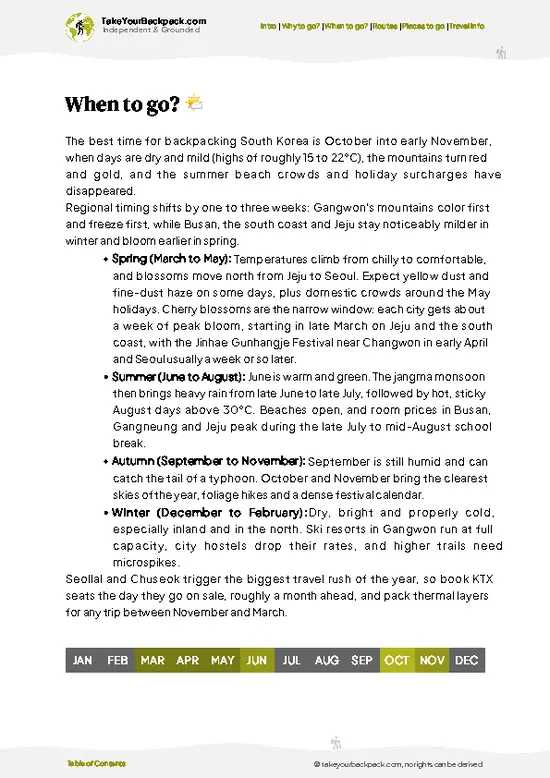
🌤️ When to go?Weather, crowds, and seasonal trade-offs


  • Weather: Spring (April to June) and autumn (September to November) are your sweet spots. Expect mild, dry days perfect for hiking—think 15-22°C (59-72°F). Summer can be a sweaty slog with humidity and occasional typhoons, while winter bites with chilly winds and temps around 0-5°C (32-41°F).

  • Daylight Hours: Longer days in late spring and early autumn mean more daylight for exploring—up to 13-14 hours. Winter days shrink to about 9-10 hours, cutting your adventure time short.

  • Crowds: Summer draws the weekend warriors and families, especially July and August. Spring and autumn keep the crowds thin, giving you that off-the-beaten-path vibe without sacrificing good weather.

  • Seasonal Activities: Spring brings wildflowers and fresh greens, while autumn dresses the island in fiery foliage—both prime
read more 👉

  • Weather: Spring (April to June) and autumn (September to November) are your sweet spots. Expect mild, dry days perfect for hiking—think 15-22°C (59-72°F). Summer can be a sweaty slog with humidity and occasional typhoons, while winter bites with chilly winds and temps around 0-5°C (32-41°F).

  • Daylight Hours: Longer days in late spring and early autumn mean more daylight for exploring—up to 13-14 hours. Winter days shrink to about 9-10 hours, cutting your adventure time short.

  • Crowds: Summer draws the weekend warriors and families, especially July and August. Spring and autumn keep the crowds thin, giving you that off-the-beaten-path vibe without sacrificing good weather.

  • Seasonal Activities: Spring brings wildflowers and fresh greens, while autumn dresses the island in fiery foliage—both prime for photography and peaceful trails. Summer’s beach scene is lively but crowded. Winter is quiet, great if you want solitude but less activity.

  • Price Fluctuations: Peak summer and major holidays hike up accommodation and ferry costs. Shoulder seasons (spring and autumn) offer better deals and availability, letting you stretch your budget without skimping on comfort.


Pro-tip: Aim for mid-October weekdays—cool air, golden leaves, fewer tourists, and wallet-friendly prices. You’ll feel like you’ve got the island all to yourself.


source: climatestotravel.comJANJanuary: fair for travelingFEBFebruary: fair for travelingMARMarch: good for travelingAPRApril: excellent for travelingMAYMay: excellent for travelingJUNJune: highly recommended for travelingJULJuly: fair for travelingAUGAugust: fair for travelingSEPSeptember: highly recommended for travelingOCTOctober: excellent for travelingNOVNovember: highly recommended for travelingDECDecember: fair for traveling
when-to-go

✈️ The backpacker research shortcutSouth Korea Travel Guide

An offline-friendly backpacking guide with optimized travel routes, ranked highlights, transport advice, and the best areas to stay.
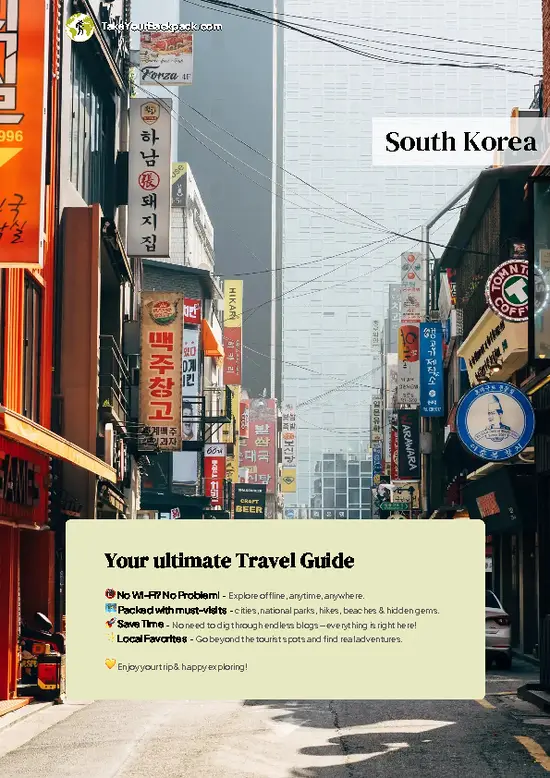
example page 0 from our offline Travel Guide for South Korea
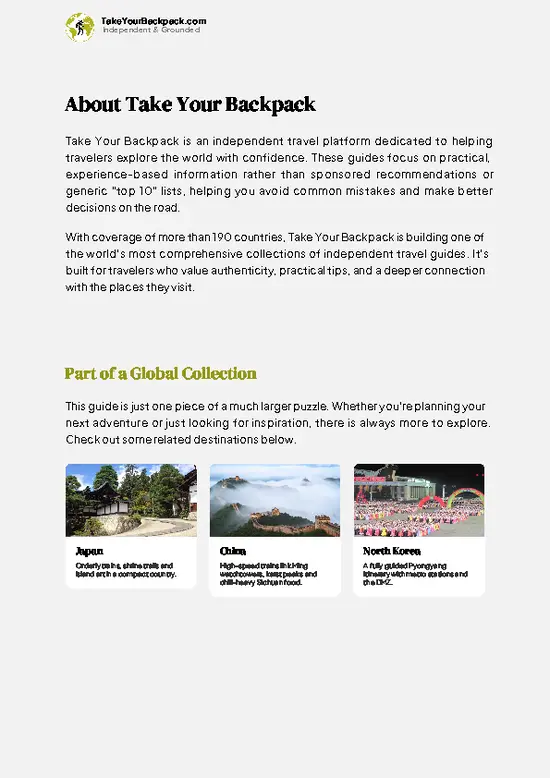
example page 1 from our offline Travel Guide for South Korea
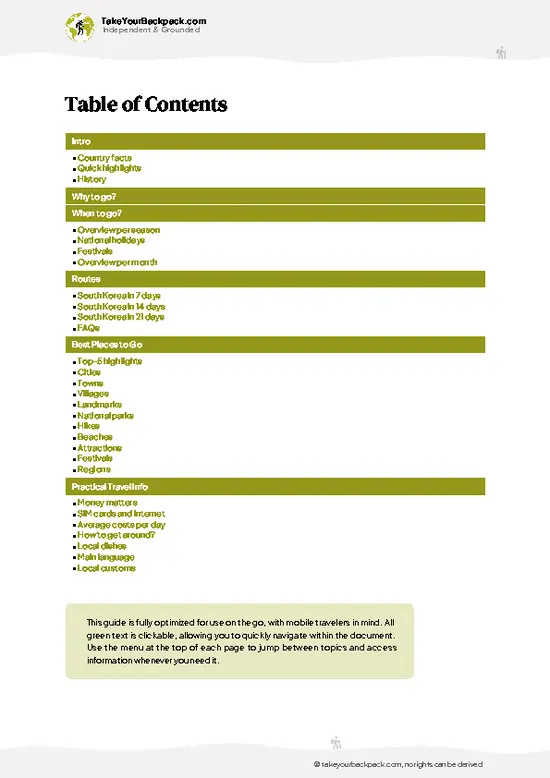
example page 2 from our offline Travel Guide for South Korea
example page 3 from our offline Travel Guide for South Korea
example page 4 from our offline Travel Guide for South Korea
example page 5 from our offline Travel Guide for South Korea
example page 6 from our offline Travel Guide for South Korea
example page 7 from our offline Travel Guide for South Korea
The digital guide (439 pages) contains:
124 highlights, ranked by travel appeal
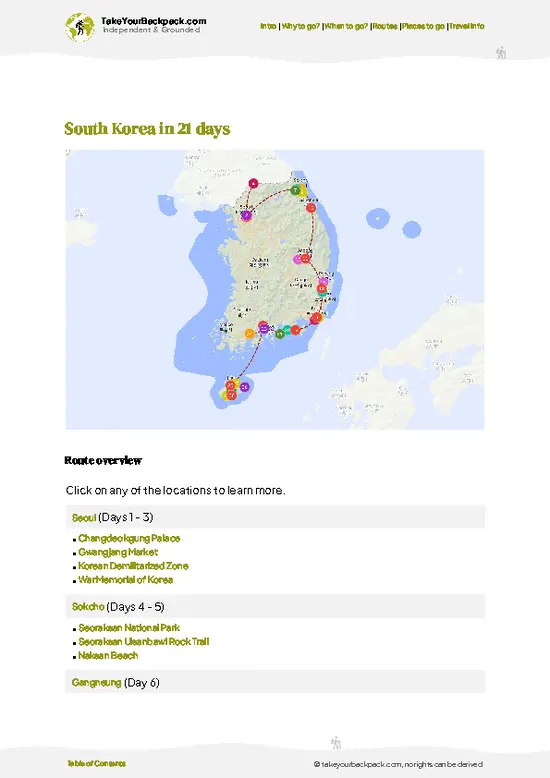
Optimized 7, 14 & 21-day travel routes
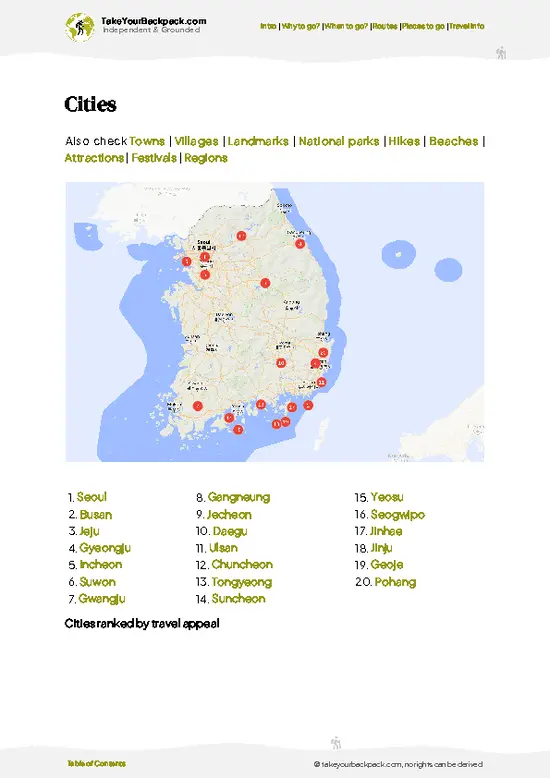
Cities, national parks, landmarks, beaches
How to get around
Offline-friendly for travel without Wi-Fi
👉 Click to see all 30+ guide features

📅 Plan smarter in minutes, not weeks
Month by month travel advice
Festivals & national holidays
Budget expectations

🗺️ Go to the right places, skip the overrated ones
Honest pros & cons of destinations
Top hikes, parks & viewpoints
Lesser-known places most travelers miss
Clear “worth it vs skip it” guidance

🛏️ Travel smoothly without rookie mistakes
Best areas to stay
Transport systems explained simply
Common scams & safety advice
SIM cards, money & practical tips

🌍 Understand the country, not just visit it
Culture & traditions
52 Essential phrases & customs
Festivals worth planning around
Traveler-friendly historical context
Insights that make places more meaningful

📱 Built for real travel conditions
Fully downloadable PDF
Works completely offline
Optimized for phone use
Useful in remote areas & buses
Everything in one place
Save weeks of stressful planning
Get instant access to your full guide. 30‑day money-back guarantee.
+ Add another guide for just US$7.80

By proceeding you agree to our terms.
Sent to your inbox immediately after payment • 100% Secure Checkout
Best Backpacking Travel Advisor 2025 tourism awardBest Backpacking
Travel Advisor
2025
What others say about Take Your Backpack Guides:
⭐⭐⭐⭐⭐
Fantastic, amazing amount of information!
⭐⭐⭐⭐⭐
My goodness this is amazing, it's what I've been looking for hats off too you!
⭐⭐⭐⭐⭐
I think this is absolutely BRILLIANT
⭐⭐⭐⭐
Very complete and informative. It's still missing places, but I gotta to commend you
⭐⭐⭐⭐⭐
This is truly amazing, thank you, can't wait to explore it with my kids!
⭐⭐⭐⭐⭐
Awesome resource, thank you!
⭐⭐⭐⭐⭐
This is amazing! Can't wait to explore the ones I haven't seen
⭐⭐⭐⭐
I love this! Well done, great idea.
⭐⭐⭐⭐⭐
Thanks for taking the time to make this gem!
⭐⭐⭐⭐⭐
This might be the best website I've ever seen.
⭐⭐⭐⭐⭐
Congratulations, and thank you so much for your work; it's incredibly valuable.
⭐⭐⭐⭐
In all seriousness I think you did a great job pointing out the important spots
⭐⭐⭐⭐⭐
10/10 very good
⭐⭐⭐⭐⭐
As someone who's only just starting to visit regularly this is awesome, thank you.
⭐⭐⭐⭐
Thank you very much! I'm going to visit my dad, it's going to be very useful!
⭐⭐⭐⭐⭐
This is really cool! We'll be travelling for the first time and this definitely come in handy.
⭐⭐⭐⭐⭐
You are now our minister of culture, congratulations 👨‍💼
⭐⭐⭐⭐⭐
Just wanted to tell you that this is a pearl! Going to follow your recommendations.
⭐⭐⭐⭐⭐
This is so cool. I'll definitely be using the resource for my travels soon.
⭐⭐⭐⭐⭐
This is very impressive! Good work.
⭐⭐⭐⭐⭐
This is an amazing and informative site. Very well done!

🛏️ Where to stay?Best areas and accommodation options

Cheongsando Island is a treasure for backpackers, and knowing where to stay can elevate your experience.

Start in Cheongsan Village. This is the heart of the island, where you’ll find a mix of locals and travelers. The vibe is relaxed, and the community is welcoming. You can stroll through quaint streets, grab a bite at local eateries, and soak in the island’s charm. Plus, it’s a great launchpad for hiking trails that lead to stunning coastal views.

Then there’s Myeongdong, a bit more off the beaten path. It’s quieter, perfect for those who want to escape the hustle. You’ll find cozy guesthouses … read more 👉
Cheongsando Island is a treasure for backpackers, and knowing where to stay can elevate your experience.

Start in Cheongsan Village. This is the heart of the island, where you’ll find a mix of locals and travelers. The vibe is relaxed, and the community is welcoming. You can stroll through quaint streets, grab a bite at local eateries, and soak in the island’s charm. Plus, it’s a great launchpad for hiking trails that lead to stunning coastal views.

Then there’s Myeongdong, a bit more off the beaten path. It’s quieter, perfect for those who want to escape the hustle. You’ll find cozy guesthouses and a chance to connect with fellow backpackers. The sunsets here are something else, and you can enjoy them without the crowds.

Don’t overlook Sangju, either. This village is known for its beautiful landscapes and friendly atmosphere. It’s a bit more rural, giving you a taste of local life. You can easily hop on a bike and explore the surrounding fields and coastline.

Each area offers a unique slice of Cheongsando, balancing safety, social opportunities, and budget-friendly options. Choose wisely, and you’ll unlock the island’s true spirit.

🚌 Getting aroundHow to get around Cheongsando Island

Cheongsando Island is a realm where time feels fluid, not rigid. The air is thick with the scent of salt and wildflowers, and the rhythm of life here dances between the gentle lapping of waves and the rustle of wind through the fields. Schedules? They’re more like suggestions. Locals move with a relaxed intuition, and you should too. Embrace the spontaneity; it’s part of the charm. But don’t worry, you won’t be stranded. There are solid transport options to help you navigate this picturesque island without breaking the bank.


  • Local Buses: These are your best bet for budget travel. They run every 30-60 minutes, with the first bus at 6:00 AM and the last around 9:00 PM. Fares are around 1,200 KRW (less than $1), making them a wallet-friendly choice. Expect a bit of a squeeze during peak times,
read more 👉
Cheongsando Island is a realm where time feels fluid, not rigid. The air is thick with the scent of salt and wildflowers, and the rhythm of life here dances between the gentle lapping of waves and the rustle of wind through the fields. Schedules? They’re more like suggestions. Locals move with a relaxed intuition, and you should too. Embrace the spontaneity; it’s part of the charm. But don’t worry, you won’t be stranded. There are solid transport options to help you navigate this picturesque island without breaking the bank.


  • Local Buses: These are your best bet for budget travel. They run every 30-60 minutes, with the first bus at 6:00 AM and the last around 9:00 PM. Fares are around 1,200 KRW (less than $1), making them a wallet-friendly choice. Expect a bit of a squeeze during peak times, but the views are worth it.


  • Bicycles for Rent: Renting a bike is a game-changer. Prices hover around 5,000 KRW for a full day. You can pick one up at various spots near the ferry terminal. It’s a comfortable way to explore the island at your own pace, and you’ll feel like a local zipping past the scenic trails.


  • Ferries: If you’re hopping between Cheongsando and nearby islands, ferries are essential. They run from early morning until late afternoon, with fares starting at 10,000 KRW. The ride is smooth, and you’ll get stunning views of the coastline. Just check the schedule ahead of time, as they can be less frequent in the off-season.


  • Taxis: While pricier, taxis can be a good option if you’re in a group or need to get somewhere quickly. Fares start at 3,000 KRW, and they’re generally reliable. Just be aware that English might not be widely spoken, so have your destination written down in Korean.


For a master tactical tip: download a local map app that works offline. This way, you can navigate the island’s winding paths and hidden spots without relying on spotty internet. Trust me, it’ll save you time and keep you in the flow of Cheongsando’s laid-back vibe.

🍲 FoodLocal Flavors for Backpackers

Cheongsando Island is a **culinary treasure** waiting to be explored. Dive into the local specialty, **Cheongsando Tofu**, a silky delight made from fresh soybeans, often served with a drizzle of sesame oil. Pair it with **seafood pancakes**, crispy and bursting with the ocean’s flavor, best enjoyed hot off the griddle. Don’t miss the **local rice wine**, **Makgeolli**, which has a slightly sweet, tangy kick that complements the island’s dishes beautifully.

For a truly local experience, hit up the **markets**. Vendors serve up **street food** like **grilled fish skewers** and **spicy rice cakes** that sizzle and pop on the grill. The atmosphere is electric, filled with laughter and the chatter of locals. Cafés dot the landscape, offering a cozy spot to sip on **herbal teas** made from island-grown … read more 👉
Cheongsando Island is a **culinary treasure** waiting to be explored. Dive into the local specialty, **Cheongsando Tofu**, a silky delight made from fresh soybeans, often served with a drizzle of sesame oil. Pair it with **seafood pancakes**, crispy and bursting with the ocean’s flavor, best enjoyed hot off the griddle. Don’t miss the **local rice wine**, **Makgeolli**, which has a slightly sweet, tangy kick that complements the island’s dishes beautifully.

For a truly local experience, hit up the **markets**. Vendors serve up **street food** like **grilled fish skewers** and **spicy rice cakes** that sizzle and pop on the grill. The atmosphere is electric, filled with laughter and the chatter of locals. Cafés dot the landscape, offering a cozy spot to sip on **herbal teas** made from island-grown ingredients, each cup a fragrant journey.

Dining here is casual and communal. Expect to share dishes, so don’t be shy about passing the **banchan** (side dishes). Remember, it’s all about connection. Embrace the slower pace, savor each bite, and let the flavors of Cheongsando linger on your palate.

FAQCommon questions from travelers

2 to 3 days are sufficient to explore Cheongsando Island thoroughly. This allows time to hike the Olle Trail sections, visit the terraced rice paddies, and enjoy the local beaches. The island is small, about 15 km long, making it easy to cover key spots within this timeframe.
You can get around Cheongsando Island on foot or by bicycle, as there are no cars allowed for tourists. The island has well-marked walking trails and bike rentals available for around 10,000 KRW per day. Public transportation is limited, so walking and biking are the best options.
Cheongsando Island is known for its traditional stone walls and terraced rice paddies, which are part of a UNESCO Global Geopark. It is also famous for its eco-friendly policies, including the ban on cars for tourists, preserving its natural beauty and tranquility.
⚠️ Things can change over time, so always validate details locally before you go.

Other South Korean regions near Cheongsando Island

Explore more nearby:

  • Namhae Island—Rice paddies, German village, coastal ridges| 158 km away
  • Jeju Island—Lava tubes, oreum cones, tangerine orchards| 169 km away
  • Ulleungdo Island—Volcanic cliffs, sea caves, wind-bent forests| 521 km away

💡 Not sure where to go next?
Create a personalized itinerary for South Korea including Cheongsando Island and the places that fit your trip.

Generate my itinerary

👉 Discover all regions

Or checkout all South Korea has to offer (think cities, towns, villages, national parks, hikes, beaches, festivals)
Country photo of South Korea

We 💚 feedbackFinal thoughts on visiting Cheongsando Island

Cheongsando Island is a breath of fresh air. The vibe? Chill, with locals who genuinely smile. Don’t miss the stunning sunset at the Cheongsando Slow Walking Path; it’s a game changer. But here’s the kicker: the ferry schedule can be a bit wonky, so plan ahead. You might find yourself waiting longer than expected. Embrace the slower pace, though. It’s all part of the charm. Trust me, you’ll leave feeling recharged and inspired.

✍️ Help improve this page!
The information on this page is based on in-depth research, insights shared by experienced travelers, and feedback from the local travel community in South Korea. While every effort is made to keep the information accurate and current, conditions can change — so if you spot anything incorrect or outdated, please get in touch.


🙋‍♂️ Give feedback

👋 Meet the founderWho’s Behind Take Your Backpack?

Johan, backpacker and founder of TakeYourBackpackHi, I’m Johan (Netherlands 🇳🇱), the creator of TakeYourBackpack. Over the past decade, I’ve backpacked through 80+ countries across six continents, gaining extensive experience with independent travel, long-term trips, and overland routes.

This site is built on a combination of firsthand travel experience and carefully curated insights from other backpackers. Many guides are based on places I’ve personally visited, while others bring together tips, observations, and practical advice shared by trusted travelers I’ve met along the way.

The goal is to provide realistic, experience-driven guidance — not generic itineraries — so you can explore destinations with better context, clearer expectations, and more confidence.

Get full country guide •
Instant download • 124 highlights • Full Offline guide