×

South Sudan🇸🇸 | attractionsAll Saints CathedralFree entry, Sunday services, multilingual hymns, Juba's mother church | things to do and best time to go

Explore Juba StadiumExplore St. Theresa Cathedral

Backpacking in All Saints Cathedral
🏆 Top pickattraction ranked #4
By Johan Kruseman 🇳🇱 | Updated October 22, 2026

Entry to All Saints Cathedral costs nothing, and a Sunday morning there gives you more of Juba than most paid sights will. The Anglican cathedral stands in South Sudan’s capital, in the city center, and it is the mother church of the Episcopal Church of South Sudan. It is not a landmark in the architectural sense. Skip it if you want carved stone, towers or a ticketed museum, because you will not find them. What you get is a working congregation, hymns sung in several languages, and a front-row view of how faith has held communities together through decades of war. Crowds are never an issue outside big service days, and nobody will hustle you. Dress modestly, keep your camera low during worship, and ask before photographing people. A first day could start with the morning service, then a slow walk through the compound, then lunch at a nearby market stall.

Discover everything you want to know in the 📖 South Sudan Travel Guide.
Safety warning

The current risk level for South Sudan is high. Check the advice before going.


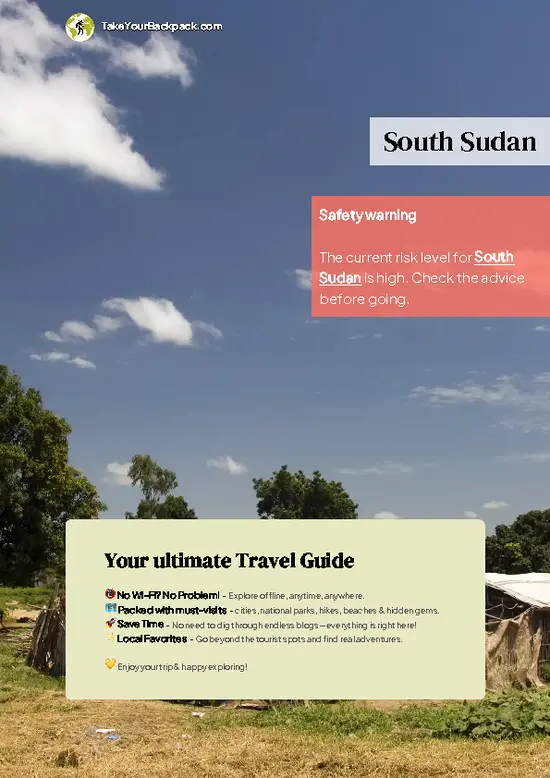
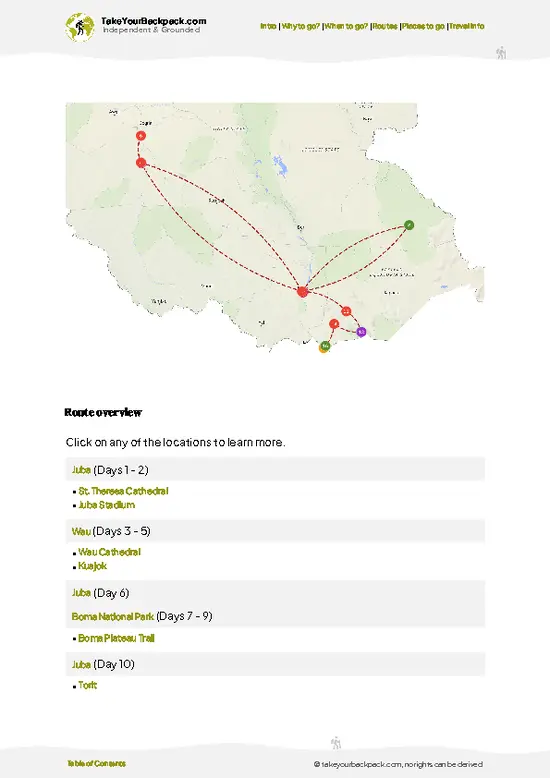
example page 0 from our offline Travel Guide for South Sudan
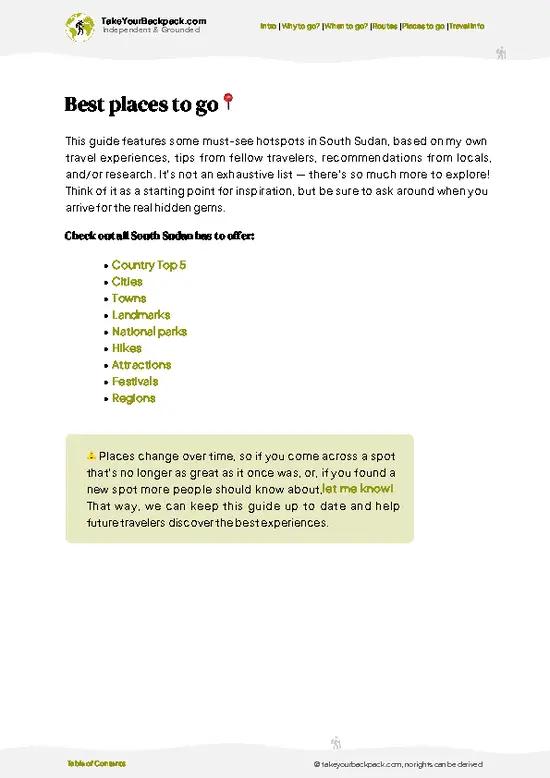
example page 1 from our offline Travel Guide for South Sudan
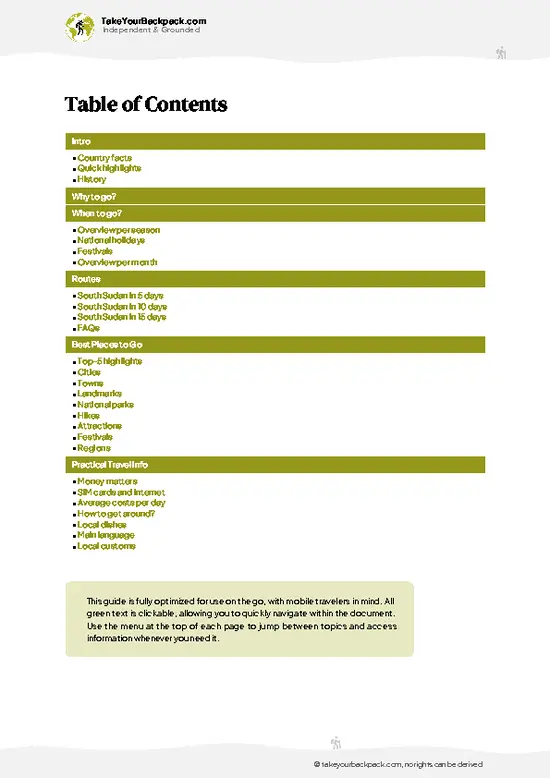
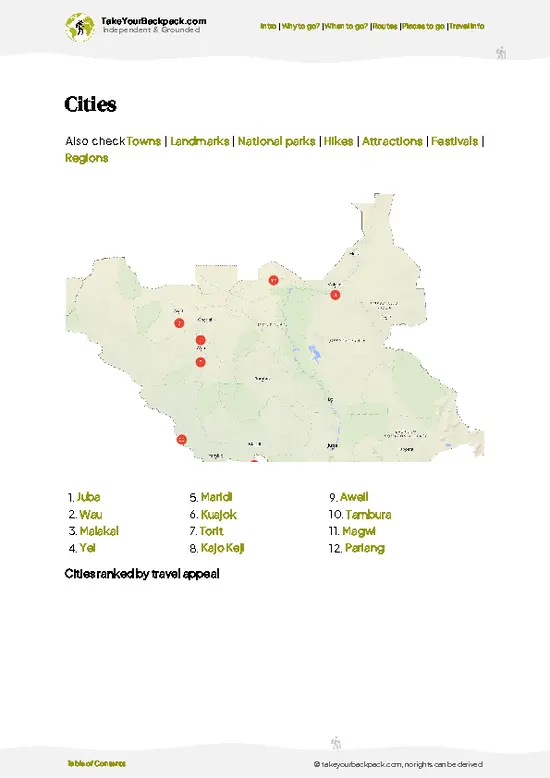
example page 2 from our offline Travel Guide for South Sudan
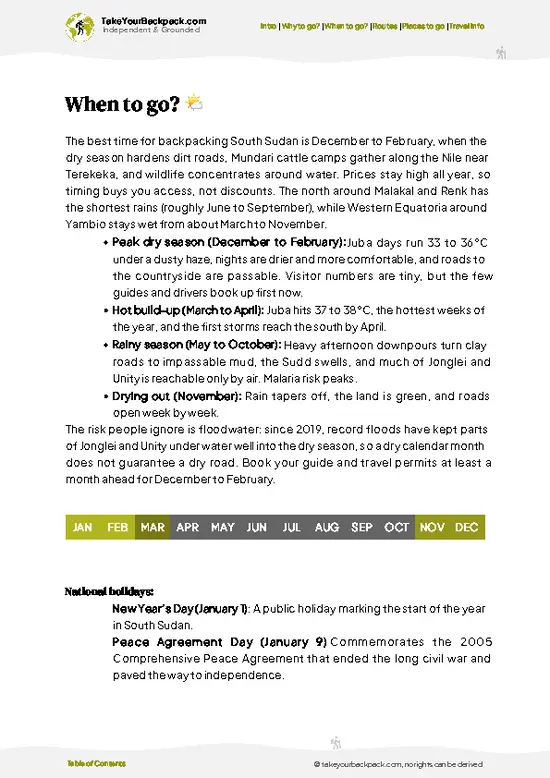
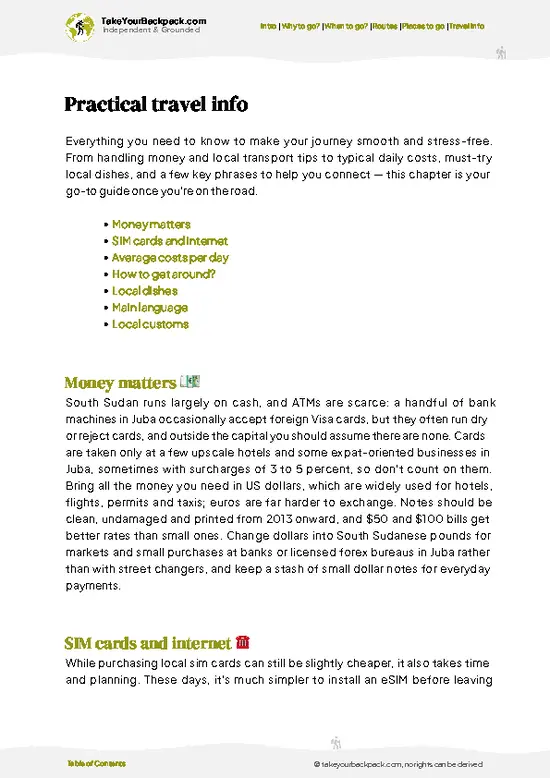
example page 3 from our offline Travel Guide for South Sudan
example page 4 from our offline Travel Guide for South Sudan
example page 5 from our offline Travel Guide for South Sudan
example page 6 from our offline Travel Guide for South Sudan
example page 7 from our offline Travel Guide for South Sudan
Loading the map 🌍
CLICK TO FILTER
cities
towns
landmarks
national parks
hikes
attractions
festivals
regions
SHOW COUNTRY’S BESTSHOW ALL

✨ Why go?
Ranked #4 attraction in South Sudan
What makes this attraction worth visiting

All Saints Cathedral is one of the few places in Juba where you can sit among local people without a transaction attached. That alone makes it worth an hour or two of your schedule.
The main reason is the congregation. A Sunday service here means choral singing in a mix of languages, often with drums and clapping, and a packed nave where visitors are noticed and usually welcomed warmly. It is a far better way to meet Juba residents than a hotel bar.
The second reason is context. As the seat of the Episcopal Church of South Sudan, the cathedral sits at the center of a church that served communities through long conflict, running schools, relief and mediation when little else functioned. Standing in the compound makes that history easier to grasp than any plaque would.
For a route through the country, … read more 👉
All Saints Cathedral is one of the few places in Juba where you can sit among local people without a transaction attached. That alone makes it worth an hour or two of your schedule.
The main reason is the congregation. A Sunday service here means choral singing in a mix of languages, often with drums and clapping, and a packed nave where visitors are noticed and usually welcomed warmly. It is a far better way to meet Juba residents than a hotel bar.
The second reason is context. As the seat of the Episcopal Church of South Sudan, the cathedral sits at the center of a church that served communities through long conflict, running schools, relief and mediation when little else functioned. Standing in the compound makes that history easier to grasp than any plaque would.
For a route through the country, it is a gentle, low-risk stop that helps you read the capital before you head out to more remote regions.

💡 HighlightsDon't-miss highlights and experiences

  1. Sunday Morning Service: The main event. Services run long, often more than two hours, and the congregation sings, prays and preaches in a mix of languages. Arrive early for a seat and stay for the whole thing if you can.
  2. The Cathedral Choirs: Choral singing is the heart of worship here. Harmonies are layered and loud, sometimes backed by drums, and they are the most memorable thing you will hear in Juba.
  3. The Nave and Altar: The sanctuary is simple and functional rather than ornate. Look at how the space fills up, with whole families dressed in their best clothes.
  4. The Cathedral Compound: The grounds hold church offices and gathering space for the diocese. Walking through before or after a service lets you see people talking, organizing and catching up, which is where the community feels most visible.
… read more 👉
  1. Sunday Morning Service: The main event. Services run long, often more than two hours, and the congregation sings, prays and preaches in a mix of languages. Arrive early for a seat and stay for the whole thing if you can.
  2. The Cathedral Choirs: Choral singing is the heart of worship here. Harmonies are layered and loud, sometimes backed by drums, and they are the most memorable thing you will hear in Juba.
  3. The Nave and Altar: The sanctuary is simple and functional rather than ornate. Look at how the space fills up, with whole families dressed in their best clothes.
  4. The Cathedral Compound: The grounds hold church offices and gathering space for the diocese. Walking through before or after a service lets you see people talking, organizing and catching up, which is where the community feels most visible.
  5. Konyokonyo Market: Juba’s biggest and busiest market is a natural follow-up to the cathedral. Go for the sheer range of goods, from clothes to produce to household items, and bargain politely.
  6. Jebel Kujur: The hill on the edge of the city is the best place to see Juba spread out toward the White Nile. It adds a physical sense of the capital to the human one you found at church.
For a first visit, the Sunday morning service is the one to prioritize, because the building is plain and the people inside it are the attraction.
Spotted a mistake or missing something? Contact us.

🌤️ When to go?Choosing the right time of year

  • Dry Season (December to March): Roads are firm, skies are clear and Juba stays hot, with days of 33 to 38°C (91 to 100°F) and nights near 21 to 24°C (70 to 75°F). Dust hangs in the air by February. Services on Sunday are busiest, and you will find the most visitors and humanitarian staff in town, so beds cost the most.
  • Early Rains (April to June): Afternoon storms arrive, days cool slightly to 30 to 34°C (86 to 93°F), and the dirt lanes around the cathedral turn to red mud. Prices ease a little.
  • Peak Rains (July to October): Heavy showers and humidity of 70 percent or more. Flooded streets slow motorbike taxis, though mornings are often dry and the compound is green.
  • Christmas and Easter: Services run long with choirs and large crowds. Expect higher prices and full guesthouses.
Arrive for a Sunday … read more 👉
  • Dry Season (December to March): Roads are firm, skies are clear and Juba stays hot, with days of 33 to 38°C (91 to 100°F) and nights near 21 to 24°C (70 to 75°F). Dust hangs in the air by February. Services on Sunday are busiest, and you will find the most visitors and humanitarian staff in town, so beds cost the most.
  • Early Rains (April to June): Afternoon storms arrive, days cool slightly to 30 to 34°C (86 to 93°F), and the dirt lanes around the cathedral turn to red mud. Prices ease a little.
  • Peak Rains (July to October): Heavy showers and humidity of 70 percent or more. Flooded streets slow motorbike taxis, though mornings are often dry and the compound is green.
  • Christmas and Easter: Services run long with choirs and large crowds. Expect higher prices and full guesthouses.
Arrive for a Sunday morning service in the dry months, and confirm the service times locally the day before.


source: climatestotravel.comJANJanuary: excellent for travelingFEBFebruary: excellent for travelingMARMarch: highly recommended for travelingAPRApril: highly recommended for travelingMAYMay: fair for travelingJUNJune: fair for travelingJULJuly: fair for travelingAUGAugust: fair for travelingSEPSeptember: fair for travelingOCTOctober: fair for travelingNOVNovember: good for travelingDECDecember: excellent for traveling
when-to-go

✈️ The backpacker research shortcutSouth Sudan Travel Guide

An offline-friendly backpacking guide with optimized travel routes, ranked highlights, transport advice, and the best areas to stay.
example page 0 from our offline Travel Guide for South Sudan
example page 1 from our offline Travel Guide for South Sudan
example page 2 from our offline Travel Guide for South Sudan
example page 3 from our offline Travel Guide for South Sudan
example page 4 from our offline Travel Guide for South Sudan
example page 5 from our offline Travel Guide for South Sudan
example page 6 from our offline Travel Guide for South Sudan
example page 7 from our offline Travel Guide for South Sudan
The digital guide (242 pages) contains:
✅ 57 highlights, ranked by travel appeal
✅ Optimized 5, 10 & 15-day travel routes
✅ Cities, national parks, landmarks, beaches
✅ How to get around
✅ Offline-friendly for travel without Wi-Fi
👉 Click to see all 30+ guide features

📅 Plan smarter in minutes, not weeks
✅ Month by month travel advice
✅ Festivals & national holidays
✅ Budget expectations

🗺️ Go to the right places, skip the overrated ones
✅ Honest pros & cons of destinations
✅ Top hikes, parks & viewpoints
✅ Lesser-known places most travelers miss
✅ Clear “worth it vs skip it” guidance

🛏️ Travel smoothly without rookie mistakes
✅ Best areas to stay
✅ Transport systems explained simply
✅ Common scams & safety advice
✅ SIM cards, money & practical tips

🌍 Understand the country, not just visit it
✅ Culture & traditions
✅ 52 Essential phrases & customs
✅ Festivals worth planning around
✅ Traveler-friendly historical context
✅ Insights that make places more meaningful

📱 Built for real travel conditions
✅ Fully downloadable PDF
✅ Works completely offline
✅ Optimized for phone use
✅ Useful in remote areas & buses
✅ Everything in one place
Stop searching, start planning
Get instant access to your full guide. 30‑day money-back guarantee.
+ Add another guide for just

By proceeding you agree to our terms.
Sent to your inbox immediately after payment • 100% Secure Checkout
Best Backpacking Travel Advisor 2025 tourism awardBest Backpacking
Travel Advisor
2025
What others say about Take Your Backpack Guides:
⭐⭐⭐⭐⭐
Fantastic, amazing amount of information!
⭐⭐⭐⭐⭐
My goodness this is amazing, it's what I've been looking for hats off too you!
⭐⭐⭐⭐⭐
I think this is absolutely BRILLIANT
⭐⭐⭐⭐
Very complete and informative. It's still missing places, but I gotta to commend you
⭐⭐⭐⭐⭐
This is truly amazing, thank you, can't wait to explore it with my kids!
⭐⭐⭐⭐⭐
Awesome resource, thank you!
⭐⭐⭐⭐⭐
This is amazing! Can't wait to explore the ones I haven't seen
⭐⭐⭐⭐
I love this! Well done, great idea.
⭐⭐⭐⭐⭐
Thanks for taking the time to make this gem!
⭐⭐⭐⭐⭐
This might be the best website I've ever seen.
⭐⭐⭐⭐⭐
Congratulations, and thank you so much for your work; it's incredibly valuable.
⭐⭐⭐⭐
In all seriousness I think you did a great job pointing out the important spots
⭐⭐⭐⭐⭐
10/10 very good
⭐⭐⭐⭐⭐
As someone who's only just starting to visit regularly this is awesome, thank you.
⭐⭐⭐⭐
Thank you very much! I'm going to visit my dad, it's going to be very useful!
⭐⭐⭐⭐⭐
This is really cool! We'll be travelling for the first time and this definitely come in handy.
⭐⭐⭐⭐⭐
You are now our minister of culture, congratulations 👨‍💼
⭐⭐⭐⭐⭐
Just wanted to tell you that this is a pearl! Going to follow your recommendations.
⭐⭐⭐⭐⭐
This is so cool. I'll definitely be using the resource for my travels soon.
⭐⭐⭐⭐⭐
This is very impressive! Good work.
⭐⭐⭐⭐⭐
This is an amazing and informative site. Very well done!

🛏️ Where to stay?How to pick the right area

The best base for All Saints Cathedral is central Juba, in the neighborhoods around Juba Town and Hai Jalaba, where the cathedral sits within a short boda-boda ride or a walk of 10 to 20 minutes. Juba has no backpacker scene like those in East Africa, so social travel here means small guesthouses, church-run lodgings and compounds with shared courtyards where aid workers, missionaries and the occasional overlander swap news. That is where you will meet people.

Juba Town puts you near government offices, the Nile bank, money changers and the main markets, and you can reach most places on foot … read more 👉
The best base for All Saints Cathedral is central Juba, in the neighborhoods around Juba Town and Hai Jalaba, where the cathedral sits within a short boda-boda ride or a walk of 10 to 20 minutes. Juba has no backpacker scene like those in East Africa, so social travel here means small guesthouses, church-run lodgings and compounds with shared courtyards where aid workers, missionaries and the occasional overlander swap news. That is where you will meet people.

Juba Town puts you near government offices, the Nile bank, money changers and the main markets, and you can reach most places on foot in daylight. Hai Jalaba and the area toward Juba Road have more restaurants and quieter streets with walled compounds that have generators and water tanks, which matter during frequent power cuts.

The Tongping and airport side suits an early flight, though it is further from the cathedral and needs a taxi. Choose places with a guarded gate, a generator and a staff member who can arrange trusted drivers. Book ahead in the dry season, and avoid wandering between neighborhoods after dark. Take a registered taxi instead.

👛 Costs (as of 22 October 2026)Typical daily expenses

All Saints Cathedral costs about US$38 to 88 a day to visit as a backpacker, mostly because of Juba’s high lodging prices; the cathedral itself has no set entry fee.
CategoryBudget RangeLocal Reality
EntranceUS$0Visits and services are free, though a small donation is appreciated.
Accommodation (high season)US$30 to 60Basic guesthouse rooms or shared tents in a compound are priced in dollars; rooms drop by US$5 to 15 in the rains.
FoodUS$6 to 12Local meals such as beans, fish and kisra cost less than restaurant food, which is imported and pricey.
Local TransportUS$2 to 6Boda-bodas and shared minibuses are cheap; private taxis cost more. Fares are negotiated and paid in cash.
Photo PermitUS$0 to 10Ask permission before photographing; official permits may be required for some sites in Juba.
Total Daily
… read more 👉
All Saints Cathedral costs about US$38 to 88 a day to visit as a backpacker, mostly because of Juba’s high lodging prices; the cathedral itself has no set entry fee.
CategoryBudget RangeLocal Reality
EntranceUS$0Visits and services are free, though a small donation is appreciated.
Accommodation (high season)US$30 to 60Basic guesthouse rooms or shared tents in a compound are priced in dollars; rooms drop by US$5 to 15 in the rains.
FoodUS$6 to 12Local meals such as beans, fish and kisra cost less than restaurant food, which is imported and pricey.
Local TransportUS$2 to 6Boda-bodas and shared minibuses are cheap; private taxis cost more. Fares are negotiated and paid in cash.
Photo PermitUS$0 to 10Ask permission before photographing; official permits may be required for some sites in Juba.
Total Daily BudgetUS$38 to 88Roughly US$62 a day with high-season lodging.
⚠️ Prices can change and everyone travels differently, so take this as a rough guide. Hope it helps you plan your adventure!

FAQTraveler FAQ

Allow 1 to 2 hours for All Saints Cathedral if you want to see the building and its grounds, or about 3 hours if you attend a Sunday service. Services are long, with choir singing, and often start in the morning. The cathedral sits in central Juba, so you can pair it with a walk along the Nile or a visit to the nearby markets.
All Saints Cathedral is worth a visit because entry is free and the Sunday service gives a direct look at Juba’s community life, with sung hymns in several languages. A donation of US$1 to 5 is welcome. The building is modest rather than grand, so go for the atmosphere, not for architecture, and ask permission before taking photos.
To reach All Saints Cathedral, fly into Juba International Airport, about 5 to 10 minutes of road distance from the center depending on traffic. From the airport a taxi to Juba Town costs roughly US$10 to 20, and boda-bodas within town cost US$1 to 3. Agree on the fare before you set off, and use trusted drivers arranged through your guesthouse.
⚠️ Things can change over time, so always validate details locally before you go.

Other South Sudanese attractions near All Saints Cathedral

Explore more nearby:

  • Juba Stadium—Bright Stars matches, drumming terraces, grilled fish, concrete bowl| 1 km away
  • St. Theresa Cathedral—Catholic Mass, drum-backed choirs, Kator churchyard, papal visit site| 2 km away
  • Nyakuron Cultural Centre—Dance troupes, Juba bands, theater nights, courtyard crowd| 3 km away

💡 Not sure where to go next?
Create a personalized itinerary for South Sudan including All Saints Cathedral and the places that fit your trip.

Generate my itinerary

👉 Discover all attractions

Or checkout all South Sudan has to offer (think cities, towns, villages, national parks, hikes, beaches, festivals)
Country photo of South Sudan

We 💚 feedbackWhat to keep in mind

All Saints Cathedral rewards people who stay after the final hymn. Most visitors slip out during the blessing, but the minutes afterward, when families gather in the compound to talk, are when strangers get invited into conversation. I would arrive early, dress neatly, and plan nothing for the hour after the service ends.

✍️ Help improve this page!
The information on this page is based on in-depth research, insights shared by experienced travelers, and feedback from the local travel community in South Sudan. While every effort is made to keep the information accurate and current, conditions can change — so if you spot anything incorrect or outdated, please get in touch.


🙋‍♂️ Give feedback

👋 Meet the founderWho’s Behind Take Your Backpack?

Johan, backpacker and founder of TakeYourBackpackHi, I’m Johan (Netherlands 🇳🇱), the creator of TakeYourBackpack. Over the past 3 decades, I’ve backpacked through 90+ countries across six continents, gaining extensive experience with independent travel, long-term trips, and overland routes.

This site is built on a combination of firsthand travel experience and carefully curated insights from other backpackers. Many guides are based on places I’ve personally visited, while others bring together tips, observations, and practical advice shared by trusted travelers I’ve met along the way.

The goal is to provide realistic, experience-driven guidance — not generic itineraries — so you can explore destinations with better context, clearer expectations, and more confidence.