×

South Sudan🇸🇸 | attractionsWau CathedralBrick nave, parish Mass, Jur River banks, old rail terminus | things to do and best time to go

Explore Dr. John Garang Memorial University cultural groundsExplore Wau Cultural Centre

Backpacking in Wau Cathedral
🌟 Highlightattraction ranked #5
By Johan Kruseman 🇳🇱 | Updated October 22, 2026

People come to Wau Cathedral for the Catholic landmark itself, the seat of the Diocese of Wau, and for Sunday Mass, when the congregation fills the building with choir singing. What matters just as much, and gets overlooked, is that the compound has served as a refuge for families displaced by fighting in the town, so it shows you how Wau lives through hard years. It stands in Wau, in the northwest of South Sudan. Crowds are not a problem, since foreign visitors are rare, but getting here is the expensive and uncertain part, and security advice changes. Don’t expect polished facilities, a ticket office or a museum. What is worth your time is the people, the singing and the plain, solid architecture. A good first day: arrive for morning Mass, introduce yourself to the parish staff, then walk the compound.

Discover everything you want to know in the 📖 South Sudan Travel Guide.
Safety warning

The current risk level for South Sudan is high. Check the advice before going.


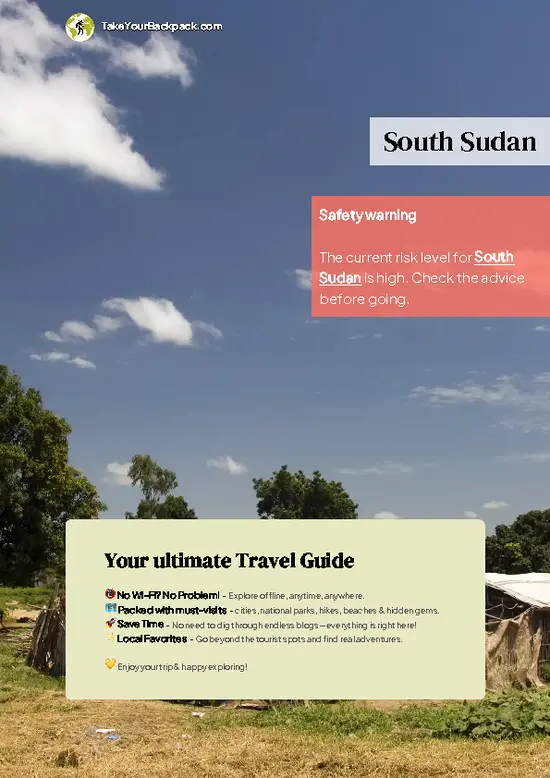
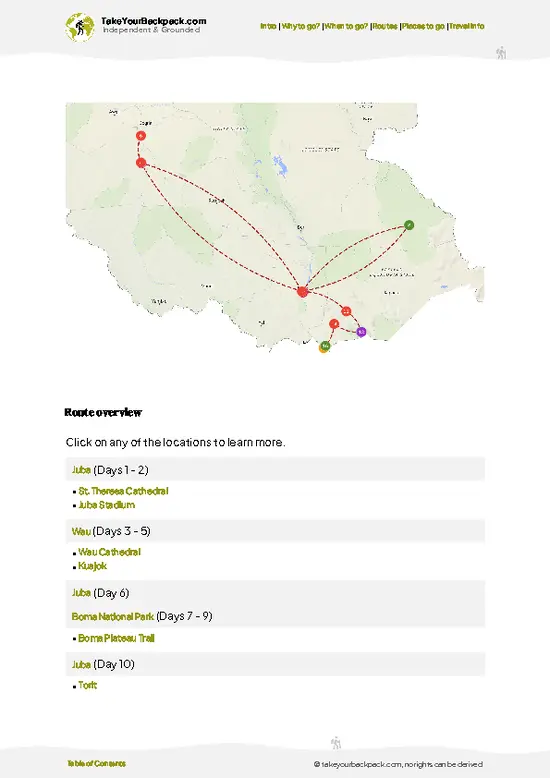
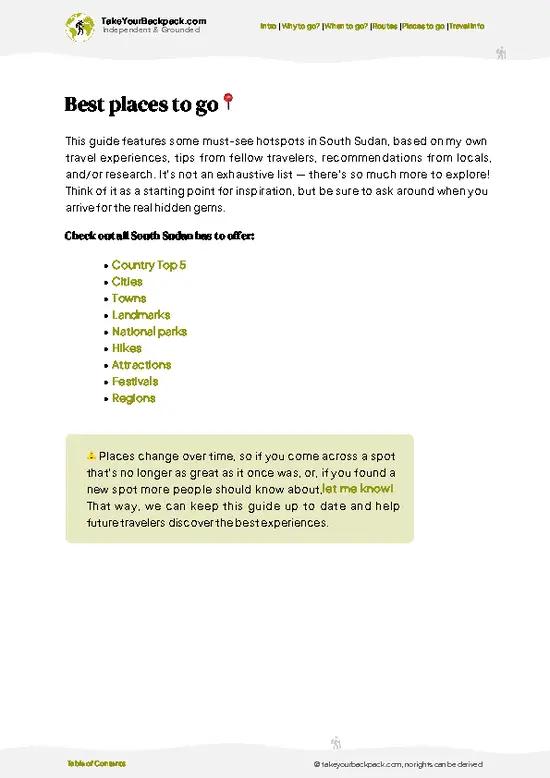
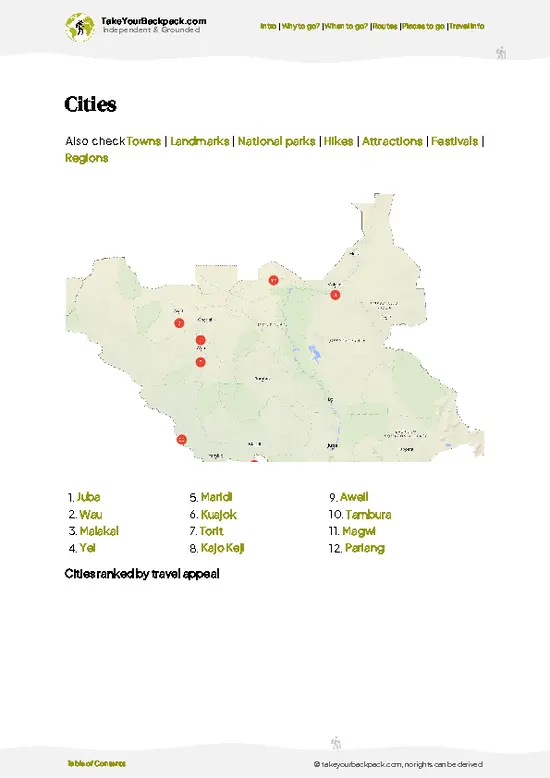
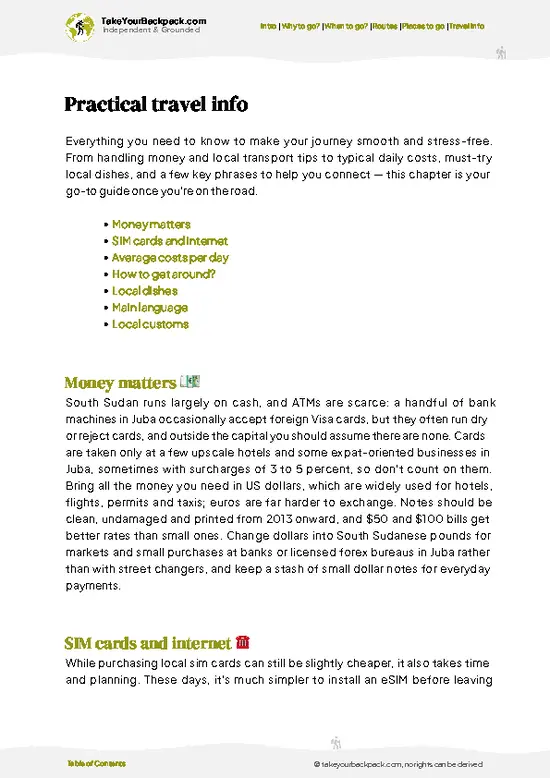
example page 0 from our offline Travel Guide for South Sudan
example page 1 from our offline Travel Guide for South Sudan
example page 2 from our offline Travel Guide for South Sudan
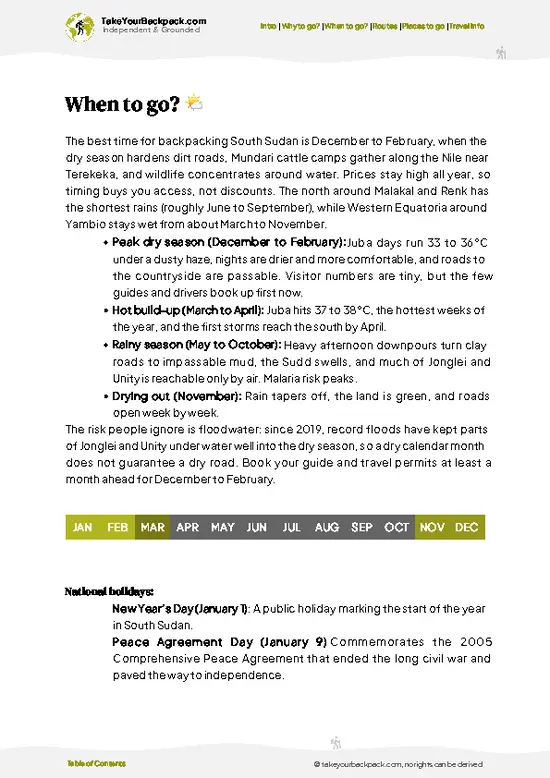
example page 3 from our offline Travel Guide for South Sudan
example page 4 from our offline Travel Guide for South Sudan
example page 5 from our offline Travel Guide for South Sudan
example page 6 from our offline Travel Guide for South Sudan
example page 7 from our offline Travel Guide for South Sudan
Loading the map 🌍
CLICK TO FILTER
cities
towns
landmarks
national parks
hikes
attractions
festivals
regions
SHOW COUNTRY’S BESTSHOW ALL

✨ Why go?
Ranked #5 attraction in South Sudan
The unique appeal for travelers

Wau Cathedral gives you a rare look at a working church community in a country where few outsiders ever sit in a pew. The big reason is its role in Wau’s story: the Comboni missionary presence goes back to the early twentieth century, and the cathedral has been a gathering point for the town through civil war and flare-ups of violence. That makes a Sunday here more about people than stonework, and you will be welcomed more warmly for showing respect than for showing a camera.

The second reason is context on a route through the northwest. Wau sits on the old Jur River country and at the end of a historic railway line, so the cathedral anchors a visit to a town that sheds light on how South Sudan’s regions differ from Juba. If you are collecting places that explain a country rather than merely … read more 👉
Wau Cathedral gives you a rare look at a working church community in a country where few outsiders ever sit in a pew. The big reason is its role in Wau’s story: the Comboni missionary presence goes back to the early twentieth century, and the cathedral has been a gathering point for the town through civil war and flare-ups of violence. That makes a Sunday here more about people than stonework, and you will be welcomed more warmly for showing respect than for showing a camera.

The second reason is context on a route through the northwest. Wau sits on the old Jur River country and at the end of a historic railway line, so the cathedral anchors a visit to a town that sheds light on how South Sudan’s regions differ from Juba. If you are collecting places that explain a country rather than merely decorate it, this one earns its slot, provided conditions allow travel and you go with local contacts.

💡 HighlightsThe experiences that define the visit

  1. Wau Cathedral (St. Mary’s): the building people search for. Its brick and plaster walls, tall nave and simple bell tower define the church quarter of town, and the exterior is the best-known image of Catholic Wau.
  2. Sunday Mass: the strongest experience on offer. Choirs sing in local languages and Arabic, and the whole parish dresses up. Sit near the back and stay quiet.
  3. The cathedral compound: the grounds hold parish offices, schools and, at times, families sheltering there. Walk through only with permission and keep photography to the church itself.
  4. Diocese of Wau offices: the administrative heart of the Catholic church in the region. A courteous introduction here is often the way to meet local guides and get honest advice on which streets are safe that day.
  5. Jur River banks: a short outing from
… read more 👉
  1. Wau Cathedral (St. Mary’s): the building people search for. Its brick and plaster walls, tall nave and simple bell tower define the church quarter of town, and the exterior is the best-known image of Catholic Wau.
  2. Sunday Mass: the strongest experience on offer. Choirs sing in local languages and Arabic, and the whole parish dresses up. Sit near the back and stay quiet.
  3. The cathedral compound: the grounds hold parish offices, schools and, at times, families sheltering there. Walk through only with permission and keep photography to the church itself.
  4. Diocese of Wau offices: the administrative heart of the Catholic church in the region. A courteous introduction here is often the way to meet local guides and get honest advice on which streets are safe that day.
  5. Jur River banks: a short outing from the church quarter. Women wash clothes and boys fish here, and it explains why the town grew on this spot.
  6. Wau Market: the town’s main trading area, with produce, fabrics, charcoal and phone credit stalls. Go with a local companion and carry little cash.
  7. Wau railway station: the terminus of the line that once connected the town with the north. The weathered platform and rusting track are a quiet reminder of what moved through here.
Wau Cathedral and these nearby sights fit into a single long day, or a relaxed two days if you attend Mass and meet local people.
Spotted a mistake or missing something? Contact us.

🌤️ When to go?When to go for the best experience

  • Dry Season (November to March): Roads are firm, and Wau is most reachable by road and air. Days run 32 to 38°C (90 to 100°F), nights 18 to 22°C (64 to 72°F). Dust from the harmattan haze softens the light. Sunday Mass is easiest to attend in these months, and Christmas and Easter services draw big congregations.
  • Early Rains (April to June): Afternoon storms start, 28 to 34°C (82 to 93°F). Dirt tracks around Wau turn to slick red mud, and bus and truck journeys stretch by hours. Crowds are thin.
  • Peak Rains (July to October): Humid, 25 to 31°C (77 to 88°F), with near-daily downpours. Some roads in Western Bahr el Ghazal become impassable. Skip it unless you fly in.
  • Daylight: Days stay close to twelve hours all year, so timing hinges on rain, not light.
Prices for transport and food climb when rains … read more 👉
  • Dry Season (November to March): Roads are firm, and Wau is most reachable by road and air. Days run 32 to 38°C (90 to 100°F), nights 18 to 22°C (64 to 72°F). Dust from the harmattan haze softens the light. Sunday Mass is easiest to attend in these months, and Christmas and Easter services draw big congregations.
  • Early Rains (April to June): Afternoon storms start, 28 to 34°C (82 to 93°F). Dirt tracks around Wau turn to slick red mud, and bus and truck journeys stretch by hours. Crowds are thin.
  • Peak Rains (July to October): Humid, 25 to 31°C (77 to 88°F), with near-daily downpours. Some roads in Western Bahr el Ghazal become impassable. Skip it unless you fly in.
  • Daylight: Days stay close to twelve hours all year, so timing hinges on rain, not light.
Prices for transport and food climb when rains cut the roads, so arrive in January or February and plan your Mass visit for a Sunday morning.


source: climatestotravel.comJANJanuary: excellent for travelingFEBFebruary: excellent for travelingMARMarch: highly recommended for travelingAPRApril: good for travelingMAYMay: good for travelingJUNJune: fair for travelingJULJuly: below average for travelingAUGAugust: below average for travelingSEPSeptember: fair for travelingOCTOctober: good for travelingNOVNovember: excellent for travelingDECDecember: excellent for traveling
when-to-go

✈️ The backpacker research shortcutSouth Sudan Travel Guide

An offline-friendly backpacking guide with optimized travel routes, ranked highlights, transport advice, and the best areas to stay.
example page 0 from our offline Travel Guide for South Sudan
example page 1 from our offline Travel Guide for South Sudan
example page 2 from our offline Travel Guide for South Sudan
example page 3 from our offline Travel Guide for South Sudan
example page 4 from our offline Travel Guide for South Sudan
example page 5 from our offline Travel Guide for South Sudan
example page 6 from our offline Travel Guide for South Sudan
example page 7 from our offline Travel Guide for South Sudan
The digital guide (242 pages) contains:
✅ 57 highlights, ranked by travel appeal
✅ Optimized 5, 10 & 15-day travel routes
✅ Cities, national parks, landmarks, beaches
✅ How to get around
✅ Offline-friendly for travel without Wi-Fi
👉 Click to see all 30+ guide features

📅 Plan smarter in minutes, not weeks
✅ Month by month travel advice
✅ Festivals & national holidays
✅ Budget expectations

🗺️ Go to the right places, skip the overrated ones
✅ Honest pros & cons of destinations
✅ Top hikes, parks & viewpoints
✅ Lesser-known places most travelers miss
✅ Clear “worth it vs skip it” guidance

🛏️ Travel smoothly without rookie mistakes
✅ Best areas to stay
✅ Transport systems explained simply
✅ Common scams & safety advice
✅ SIM cards, money & practical tips

🌍 Understand the country, not just visit it
✅ Culture & traditions
✅ 52 Essential phrases & customs
✅ Festivals worth planning around
✅ Traveler-friendly historical context
✅ Insights that make places more meaningful

📱 Built for real travel conditions
✅ Fully downloadable PDF
✅ Works completely offline
✅ Optimized for phone use
✅ Useful in remote areas & buses
✅ Everything in one place
Stop searching, start planning
Get instant access to your full guide. 30‑day money-back guarantee.
+ Add another guide for just

By proceeding you agree to our terms.
Sent to your inbox immediately after payment • 100% Secure Checkout
Best Backpacking Travel Advisor 2025 tourism awardBest Backpacking
Travel Advisor
2025
What others say about Take Your Backpack Guides:
⭐⭐⭐⭐⭐
Fantastic, amazing amount of information!
⭐⭐⭐⭐⭐
My goodness this is amazing, it's what I've been looking for hats off too you!
⭐⭐⭐⭐⭐
I think this is absolutely BRILLIANT
⭐⭐⭐⭐
Very complete and informative. It's still missing places, but I gotta to commend you
⭐⭐⭐⭐⭐
This is truly amazing, thank you, can't wait to explore it with my kids!
⭐⭐⭐⭐⭐
Awesome resource, thank you!
⭐⭐⭐⭐⭐
This is amazing! Can't wait to explore the ones I haven't seen
⭐⭐⭐⭐
I love this! Well done, great idea.
⭐⭐⭐⭐⭐
Thanks for taking the time to make this gem!
⭐⭐⭐⭐⭐
This might be the best website I've ever seen.
⭐⭐⭐⭐⭐
Congratulations, and thank you so much for your work; it's incredibly valuable.
⭐⭐⭐⭐
In all seriousness I think you did a great job pointing out the important spots
⭐⭐⭐⭐⭐
10/10 very good
⭐⭐⭐⭐⭐
As someone who's only just starting to visit regularly this is awesome, thank you.
⭐⭐⭐⭐
Thank you very much! I'm going to visit my dad, it's going to be very useful!
⭐⭐⭐⭐⭐
This is really cool! We'll be travelling for the first time and this definitely come in handy.
⭐⭐⭐⭐⭐
You are now our minister of culture, congratulations 👨‍💼
⭐⭐⭐⭐⭐
Just wanted to tell you that this is a pearl! Going to follow your recommendations.
⭐⭐⭐⭐⭐
This is so cool. I'll definitely be using the resource for my travels soon.
⭐⭐⭐⭐⭐
This is very impressive! Good work.
⭐⭐⭐⭐⭐
This is an amazing and informative site. Very well done!

🛏️ Where to stay?Best areas and accommodation options

The central area of Wau town, within walking distance of the cathedral, is the safest and most practical place for backpackers to sleep. Guesthouses and small compounds here sit near the main market, the river road and the church, so you can reach food, money changers and transport without a motorbike ride after dark.

The neighborhoods around the market suit solo travelers best. Shared compounds often put you in contact with aid workers, church visitors and traders, and that is where you pick up current road and security news. Evenings are quiet, so socializing usually means a shared meal or … read more 👉
The central area of Wau town, within walking distance of the cathedral, is the safest and most practical place for backpackers to sleep. Guesthouses and small compounds here sit near the main market, the river road and the church, so you can reach food, money changers and transport without a motorbike ride after dark.

The neighborhoods around the market suit solo travelers best. Shared compounds often put you in contact with aid workers, church visitors and traders, and that is where you pick up current road and security news. Evenings are quiet, so socializing usually means a shared meal or tea rather than a bar crawl.

Staying closer to the airport side puts you near flights and the main road out, which helps if you are leaving early, but you will pay more for boda-boda rides into town. Areas on the outskirts have less lighting and fewer neighbors, so skip them.

Book ahead if you can, and arrive in daylight. Choose places with a walled compound and a night guard, and register with local authorities and the nearest humanitarian contacts, as many guesthouses will help you do.

👛 Costs (as of 22 October 2026)Typical daily expenses

Expect to spend about US$85 a day around Wau Cathedral, since entry is free and most of your money goes to a bed, food and local transport.
CategoryBudget RangeLocal Reality
Cathedral entryUS$0No ticket. A small donation at Mass is appreciated.
Accommodation (high season)US$35 to 60Basic guesthouse room with fan or generator power. Rainy season rates dip slightly, around US$25 to 45.
FoodUS$8 to 15Market stews, beans, rice, grilled fish and tea. Imported goods cost more.
Local transportUS$3 to 8Boda-boda rides around town are short and negotiated before you climb on.
Water and extrasUS$2 to 4Bottled water, phone credit and small snacks.
Total Daily BudgetUS$58 to 87About US$85 at the high-season end of the range.


source: visitwau.godaddysites.com
⚠️ Prices can change and everyone travels differently, so take this as a rough guide. Hope it helps you plan your adventure!

FAQTraveler FAQ

Plan on one to two hours at Wau Cathedral if you only want to see the building and its grounds. A Sunday morning Mass can run two hours or more, so set aside half a day. Wau itself needs a full day or two to cover the market and river area.
Wau Cathedral is free to enter, so the question is really about your time and a modest donation of US$1 to 3. You get one of the best-known church buildings in the country and a chance to attend a lively Sunday service. Dress modestly and ask before taking photos.
Most travelers fly from Juba to Wau, a flight of about 1.5 hours with fares of roughly US$150 to 300 one way. The road from Juba is long, often takes more than a day, and becomes very hard in the rainy season. Once in town, Wau Cathedral is a short boda-boda ride of US$1 to 3 from most central guesthouses.
⚠️ Things can change over time, so always validate details locally before you go.

Other South Sudanese attractions near Wau Cathedral

Explore more nearby:


💡 Not sure where to go next?
Create a personalized itinerary for South Sudan including Wau Cathedral and the places that fit your trip.

Generate my itinerary

👉 Discover all attractions

Or checkout all South Sudan has to offer (think cities, towns, villages, national parks, hikes, beaches, festivals)
Country photo of South Sudan

We 💚 feedbackWhat to keep in mind

Wau Cathedral works best as the anchor of a northwest loop, paired with the riverbank, the market and the old railway station in a single stay. I would arrive on a Saturday, attend Mass the next morning, and bring a small gift for the parish, such as school supplies. Skip the camera at first.

✍️ Help improve this page!
The information on this page is based on in-depth research, insights shared by experienced travelers, and feedback from the local travel community in South Sudan. While every effort is made to keep the information accurate and current, conditions can change — so if you spot anything incorrect or outdated, please get in touch.


🙋‍♂️ Give feedback

👋 Meet the founderWho’s Behind Take Your Backpack?

Johan, backpacker and founder of TakeYourBackpackHi, I’m Johan (Netherlands 🇳🇱), the creator of TakeYourBackpack. Over the past 3 decades, I’ve backpacked through 90+ countries across six continents, gaining extensive experience with independent travel, long-term trips, and overland routes.

This site is built on a combination of firsthand travel experience and carefully curated insights from other backpackers. Many guides are based on places I’ve personally visited, while others bring together tips, observations, and practical advice shared by trusted travelers I’ve met along the way.

The goal is to provide realistic, experience-driven guidance — not generic itineraries — so you can explore destinations with better context, clearer expectations, and more confidence.