×

South Sudan🇸🇸 | attractionsWau Cultural Centrecommunity theater, local crafts, open-air stage | things to do and best time to go

Explore Wau CathedralExplore Malakal Stadium

Backpacking in Wau Cultural Centre
👌 Worth visitingattraction ranked #7
By Johan Kruseman 🇳🇱 | Updated July 30, 2026

Forget the travel-brochure fantasy: Wau Cultural Centre is not some polished, Instagram-ready museum with air-conditioned galleries and curated gift shops. It’s the living, breathing heart of Wau, a city in northwestern South Sudan where the Bahr el Ghazal and Jur rivers meet. If you’re picturing a slick tourist attraction, reset your expectations—this is raw, real, and sometimes chaotic, but that’s exactly why it matters. The Centre is a patchwork of open-air stages, murals, and community spaces where you’ll find local musicians, dancers, and artists actually shaping the city’s culture in real time. Yes, you’ll deal with patchy infrastructure, unpredictable opening hours, and a total lack of crowds—because most travelers skip Wau entirely. Costs are low, but so are creature comforts. What you get instead is a front-row seat to South Sudanese resilience and creativity, far from the sanitized experiences of Juba or Nimule. This is the kind of place that sticks with you, for better or worse.

Discover everything you want to know in the 📖 South Sudan Travel Guide.
Safety warning

The current risk level for South Sudan is high. Check the advice before going.


Get your South Sudan guide
68 ranked highlights, routes & tips, works offline (270 pages)
Loading the map 🌍
CLICK TO FILTER
cities
towns
landmarks
national parks
hikes
attractions
festivals
regions
SHOW COUNTRY’S BESTSHOW ALL

✨ Why go?
Ranked #7 attraction in South Sudan
What makes it a must-see attraction

The Wau Cultural Centre in South Sudan isn’t some polished tourist trap with crowds elbowing for selfies. In fact, expect a sparse crowd—this place is off the beaten path for a reason. But that’s exactly why it’s worth your time. This centre is a rare window into South Sudan’s complex cultural mosaic, showcasing traditional crafts, music, and storytelling that you won’t find anywhere else. It’s not about glossy displays; it’s about raw, living culture that’s survived decades of conflict and upheaval.

If you’re backpacking through South Sudan, the Wau Cultural Centre is a major milestone. It’s a moment to pause and grasp the country’s soul beyond headlines and hardship. The effort to get here—rough roads, limited infrastructure—filters out casual tourists, leaving you with an authentic experience … read more 👉
The Wau Cultural Centre in South Sudan isn’t some polished tourist trap with crowds elbowing for selfies. In fact, expect a sparse crowd—this place is off the beaten path for a reason. But that’s exactly why it’s worth your time. This centre is a rare window into South Sudan’s complex cultural mosaic, showcasing traditional crafts, music, and storytelling that you won’t find anywhere else. It’s not about glossy displays; it’s about raw, living culture that’s survived decades of conflict and upheaval.

If you’re backpacking through South Sudan, the Wau Cultural Centre is a major milestone. It’s a moment to pause and grasp the country’s soul beyond headlines and hardship. The effort to get here—rough roads, limited infrastructure—filters out casual tourists, leaving you with an authentic experience that feels earned. The adrenaline rush isn’t from adrenaline parks or extreme sports; it’s from stepping into a place where history, resilience, and identity collide in real time.

This isn’t a quick stop. It’s a deep dive into a culture that’s often misunderstood but fiercely proud. For anyone serious about understanding South Sudan, the Wau Cultural Centre is non-negotiable.
Want to include Wau Cultural Centre in your South Sudan route?
Create a personalized South Sudan itinerary that includes Wau Cultural Centre and the places that fit your trip — based on your travel style, budget, and available time. Get your route in seconds.

Generate my trip

💡 HighlightsKey sights and experiences for travelers

The Main Performance Hall
Forget the glossy travel brochures—Wau Cultural Centre’s main hall is not a polished, air-conditioned theater. It’s a living, breathing arena where the city’s pulse is loudest. When the drums start, you feel it in your chest. The crowd is a mix of school kids, elders, and the occasional government official, all packed onto wooden benches that have seen decades of stories. The real show isn’t just on stage; it’s in the way the audience reacts—cheering, singing, sometimes even joining in. If you want to understand what entertainment means in Wau, this is the epicenter. No velvet ropes, no VIP section, just raw, communal energy.


Traditional Dance Festivals
Instagram will show you a filtered snippet of dancers in bright costumes. What it won’t show you is the sheer stamina … read more 👉
The Main Performance Hall
Forget the glossy travel brochures—Wau Cultural Centre’s main hall is not a polished, air-conditioned theater. It’s a living, breathing arena where the city’s pulse is loudest. When the drums start, you feel it in your chest. The crowd is a mix of school kids, elders, and the occasional government official, all packed onto wooden benches that have seen decades of stories. The real show isn’t just on stage; it’s in the way the audience reacts—cheering, singing, sometimes even joining in. If you want to understand what entertainment means in Wau, this is the epicenter. No velvet ropes, no VIP section, just raw, communal energy.


Traditional Dance Festivals
Instagram will show you a filtered snippet of dancers in bright costumes. What it won’t show you is the sheer stamina and pride behind those moves. These aren’t rehearsed for tourists; they’re the real deal, with troupes representing different South Sudanese tribes. The footwork is fast, the rhythms relentless, and the stories—told through movement—are older than the city itself. If you’re lucky enough to catch a festival, you’ll see rival groups trying to outdo each other, and the crowd egging them on. It’s competitive, it’s loud, and it’s absolutely electric.


Local Art Exhibitions
You won’t find any pretentious gallery lighting or overpriced prints here. The art at Wau Cultural Centre is as unfiltered as it gets—murals, wood carvings, beadwork, and paintings that reflect the region’s struggles and hopes. Some pieces are rough, some are heartbreakingly beautiful, but all are honest. Artists are often on-site, eager to talk about their work, and you’ll get more out of a five-minute conversation here than an hour in any big-city museum. This is art with dirt under its fingernails.


Community Storytelling Nights
This is where the Instagram crowd completely misses the point. Storytelling nights at the Centre are not staged for outsiders. They’re for the locals, by the locals—elders recounting folktales, young poets testing their voices, and everyone else chiming in with laughter or debate. If you’re invited to sit in, you’re not just a spectator; you’re part of the circle. The stories are raw, sometimes political, sometimes hilarious, and always deeply rooted in the realities of Wau. You’ll leave with more questions than answers—and that’s the point.


Grassroots Music Jams
No fancy sound system, no setlist, and definitely no auto-tune. Musicians gather with battered guitars, homemade drums, and voices that carry across the compound. The music is a mashup of local genres, gospel, and whatever someone feels like playing that night. It’s unpredictable, sometimes chaotic, and always genuine. If you want to hear what Wau sounds like after dark, this is it—unfiltered, unscripted, and impossible to fake.
Spotted a mistake or missing something? Contact us.

🌤️ When to go?Weather, crowds, and seasonal trade-offs


  • Weather: The dry season from November to February is your best bet. Expect minimal rain, which means trails and roads won’t turn into mud traps. Avoid the heavy rains of June to September when flooding can make travel unpredictable and downright miserable.

  • Temperature: Daytime highs hover around 30-35°C (86-95°F) during the dry months, manageable if you pace yourself. Nights cool down to about 15-20°C (59-68°F), so pack a light jacket. The wet season brings more humidity and slightly cooler temps but adds discomfort with sticky heat.

  • Daylight Hours: South Sudan enjoys roughly 11 to 12 hours of daylight year-round. From November to February, the sun rises around 6:00 AM and sets near 6:00 PM, giving you ample time to explore without rushing.

  • Crowds: Don’t expect hordes of tourists
read more 👉

  • Weather: The dry season from November to February is your best bet. Expect minimal rain, which means trails and roads won’t turn into mud traps. Avoid the heavy rains of June to September when flooding can make travel unpredictable and downright miserable.

  • Temperature: Daytime highs hover around 30-35°C (86-95°F) during the dry months, manageable if you pace yourself. Nights cool down to about 15-20°C (59-68°F), so pack a light jacket. The wet season brings more humidity and slightly cooler temps but adds discomfort with sticky heat.

  • Daylight Hours: South Sudan enjoys roughly 11 to 12 hours of daylight year-round. From November to February, the sun rises around 6:00 AM and sets near 6:00 PM, giving you ample time to explore without rushing.

  • Crowds: Don’t expect hordes of tourists here—Wau Cultural Centre is off the beaten path. The dry season sees a slight uptick in visitors, mostly local and regional travelers, but you’ll still have plenty of breathing room.

  • Seasonal Activities: The dry months coincide with local festivals and cultural events, offering a rare chance to witness traditional dances and crafts in full swing. The wet season quiets down these activities, limiting your cultural immersion.

  • Price Fluctuations: Prices for guides and accommodations tend to rise during the dry season due to increased demand. The wet season offers cheaper rates but comes with the trade-off of tougher travel conditions and fewer services.


Pro-tip: Aim for late November or early December—dry, cool enough to move comfortably, and just before the local festival season kicks into high gear.


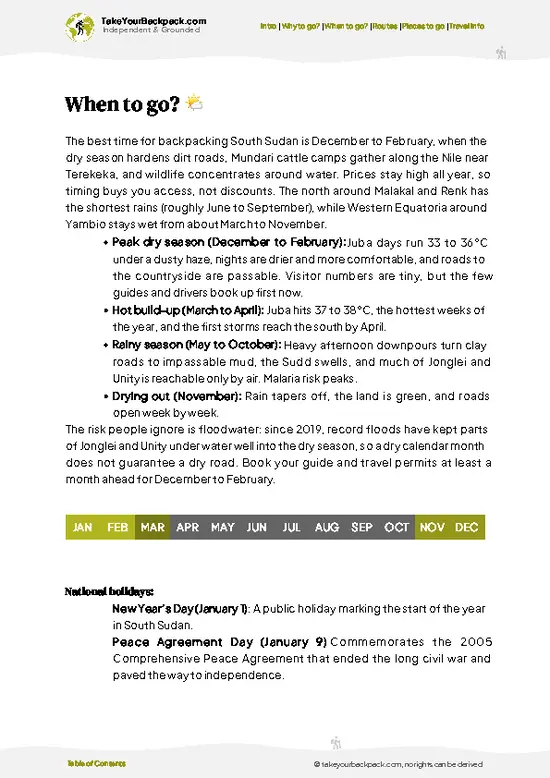
source: climatestotravel.comJANJanuary: excellent for travelingFEBFebruary: excellent for travelingMARMarch: good for travelingAPRApril: fair for travelingMAYMay: fair for travelingJUNJune: below average for travelingJULJuly: below average for travelingAUGAugust: below average for travelingSEPSeptember: below average for travelingOCTOctober: fair for travelingNOVNovember: excellent for travelingDECDecember: excellent for traveling
when-to-go

✈️ The backpacker research shortcutSouth Sudan Travel Guide

An offline-friendly backpacking guide with optimized travel routes, ranked highlights, transport advice, and the best areas to stay.
example page 0 from our offline Travel Guide for South Sudan
example page 1 from our offline Travel Guide for South Sudan
example page 2 from our offline Travel Guide for South Sudan
example page 3 from our offline Travel Guide for South Sudan
example page 4 from our offline Travel Guide for South Sudan
example page 5 from our offline Travel Guide for South Sudan
example page 6 from our offline Travel Guide for South Sudan
example page 7 from our offline Travel Guide for South Sudan
The digital guide (270 pages) contains:
68 highlights, ranked by travel appeal
Optimized 5, 10 & 15-day travel routes
Cities, national parks, landmarks, beaches
How to get around
Offline-friendly for travel without Wi-Fi
👉 Click to see all 30+ guide features

📅 Plan smarter in minutes, not weeks
Month by month travel advice
Festivals & national holidays
Budget expectations

🗺️ Go to the right places, skip the overrated ones
Honest pros & cons of destinations
Top hikes, parks & viewpoints
Lesser-known places most travelers miss
Clear “worth it vs skip it” guidance

🛏️ Travel smoothly without rookie mistakes
Best areas to stay
Transport systems explained simply
Common scams & safety advice
SIM cards, money & practical tips

🌍 Understand the country, not just visit it
Culture & traditions
52 Essential phrases & customs
Festivals worth planning around
Traveler-friendly historical context
Insights that make places more meaningful

📱 Built for real travel conditions
Fully downloadable PDF
Works completely offline
Optimized for phone use
Useful in remote areas & buses
Everything in one place
Save weeks of stressful planning
Get instant access to your full guide. 30‑day money-back guarantee.


By proceeding you agree to our terms.
Sent to your inbox immediately after payment • 100% Secure Checkout
Best Backpacking Travel Advisor 2025 tourism awardBest Backpacking
Travel Advisor
2025
What others say about Take Your Backpack Guides:
⭐⭐⭐⭐⭐
Fantastic, amazing amount of information!
⭐⭐⭐⭐⭐
My goodness this is amazing, it's what I've been looking for hats off too you!
⭐⭐⭐⭐⭐
I think this is absolutely BRILLIANT
⭐⭐⭐⭐
Very complete and informative. It's still missing places, but I gotta to commend you
⭐⭐⭐⭐⭐
This is truly amazing, thank you, can't wait to explore it with my kids!
⭐⭐⭐⭐⭐
Awesome resource, thank you!
⭐⭐⭐⭐⭐
This is amazing! Can't wait to explore the ones I haven't seen
⭐⭐⭐⭐
I love this! Well done, great idea.
⭐⭐⭐⭐⭐
Thanks for taking the time to make this gem!
⭐⭐⭐⭐⭐
This might be the best website I've ever seen.
⭐⭐⭐⭐⭐
Congratulations, and thank you so much for your work; it's incredibly valuable.
⭐⭐⭐⭐
In all seriousness I think you did a great job pointing out the important spots
⭐⭐⭐⭐⭐
10/10 very good
⭐⭐⭐⭐⭐
As someone who's only just starting to visit regularly this is awesome, thank you.
⭐⭐⭐⭐
Thank you very much! I'm going to visit my dad, it's going to be very useful!
⭐⭐⭐⭐⭐
This is really cool! We'll be travelling for the first time and this definitely come in handy.
⭐⭐⭐⭐⭐
You are now our minister of culture, congratulations 👨‍💼
⭐⭐⭐⭐⭐
Just wanted to tell you that this is a pearl! Going to follow your recommendations.
⭐⭐⭐⭐⭐
This is so cool. I'll definitely be using the resource for my travels soon.
⭐⭐⭐⭐⭐
This is very impressive! Good work.
⭐⭐⭐⭐⭐
This is an amazing and informative site. Very well done!

🛏️ Where to stay?How to pick the right area

Wau Cultural Centre isn’t exactly a backpacker magnet like the usual hotspots. The reality? South Sudan is still finding its feet as a travel destination, and that means infrastructure is sparse, and the crowds are minimal. If you’re chasing Instagram-perfect scenes, you’ll be disappointed. But if you want to experience something raw, unfiltered, and genuinely off the beaten path, this is it.

The best place to stay is right in the heart of Wau town. It’s where you’ll find the pulse of local life—markets, street food vendors, and the kind of social spots where you can actually connect with South … read more 👉
Wau Cultural Centre isn’t exactly a backpacker magnet like the usual hotspots. The reality? South Sudan is still finding its feet as a travel destination, and that means infrastructure is sparse, and the crowds are minimal. If you’re chasing Instagram-perfect scenes, you’ll be disappointed. But if you want to experience something raw, unfiltered, and genuinely off the beaten path, this is it.

The best place to stay is right in the heart of Wau town. It’s where you’ll find the pulse of local life—markets, street food vendors, and the kind of social spots where you can actually connect with South Sudanese people rather than just other tourists. Safety is a concern everywhere here, so sticking to well-trodden areas near the town center is smart. These neighborhoods are where you’ll find the few guesthouses and lodges that cater to budget travelers and solo adventurers. They’re not fancy, but they’re social hubs where you can swap stories and get real advice from fellow travelers and locals alike.

Forget luxury or polished tourist zones; the charm here is in the gritty authenticity. Staying close to the Cultural Centre means you can walk to the site, soak in the local vibe, and avoid the hassle of unreliable transport. It’s not about comfort—it’s about immersion. If you’re ready to trade convenience for a story worth telling, this is your spot.

👛 Costs (as of 30 July 2026)Travel costs and budget guide for Wau Cultural Centre

As of the most recent estimates, the entrance fee for national parks in South Sudan for foreign visitors is USD10 for adults and USD20 for children. While specific information about the Wau Cultural Centre is not available, it's reasonable to expect that the entrance fee would fall within this range. Additional costs may include transportation, which can vary depending on the distance and mode of travel. Local transport options in Wau are limited, so hiring a private vehicle may be necessary, with costs ranging from USD30 to USD50 per day. Meals at local eateries typically cost between USD3 and USD10. It's advisable to contact local tour operators or the Wau Cultural Centre directly for the most accurate and up-to-date pricing information.

source: mofp.gov.ss
⚠️ Prices can change and everyone travels differently, so take this as a rough guide. Hope it helps you plan your adventure!

Other South Sudanese attractions near Wau Cultural Centre

Explore more nearby:


💡 Not sure where to go next?
Create a personalized itinerary for South Sudan including Wau Cultural Centre and the places that fit your trip.

Generate my itinerary

👉 Discover all attractions

Or checkout all South Sudan has to offer (think cities, towns, villages, national parks, hikes, beaches, festivals)
Country photo of South Sudan

We 💚 feedbackIs it worth it?

The Wau Cultural Centre isn’t some polished tourist magnet—expect a raw, sometimes chaotic vibe that’s part museum, part community hub. It’s not about shiny displays but real stories, told by locals who live the history every day. The best surprise? The warmth and openness of the people, eager to share their culture beyond the usual scripts. Just a heads-up: facilities are basic, so temper expectations on comfort. If you’re after authenticity over gloss, this place punches way above its weight and stays with you long after you leave.

✍️ Help improve this page!
The information on this page is based on in-depth research, insights shared by experienced travelers, and feedback from the local travel community in South Sudan. While every effort is made to keep the information accurate and current, conditions can change — so if you spot anything incorrect or outdated, please get in touch.


🙋‍♂️ Give feedback

👋 Meet the founderWho’s Behind Take Your Backpack?

Johan, backpacker and founder of TakeYourBackpackHi, I’m Johan (Netherlands 🇳🇱), the creator of TakeYourBackpack. Over the past decade, I’ve backpacked through 80+ countries across six continents, gaining extensive experience with independent travel, long-term trips, and overland routes.

This site is built on a combination of firsthand travel experience and carefully curated insights from other backpackers. Many guides are based on places I’ve personally visited, while others bring together tips, observations, and practical advice shared by trusted travelers I’ve met along the way.

The goal is to provide realistic, experience-driven guidance — not generic itineraries — so you can explore destinations with better context, clearer expectations, and more confidence.

Get full country guide •
Instant download • 68 highlights • Full Offline guide