v2.webp)
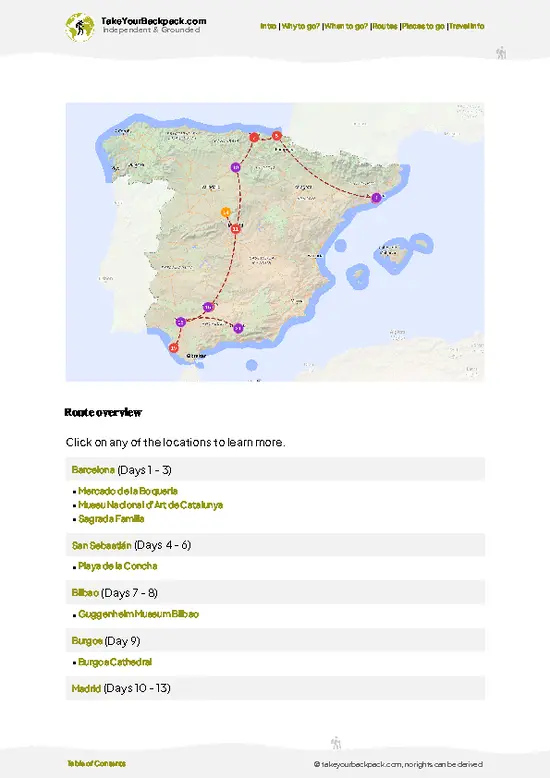
- Catedral de Santa María (Burgos Cathedral) — A towering Gothic masterpiece and UNESCO World Heritage site: incredible stained glass, flamboyant spires, and the tombs associated with El Cid. Climb parts of the towers or wander the chapels to feel why Burgos once mattered so much.
- Museo de la Evolución Humana (MEH) — Modern, hands-on museum focused on the Atapuerca finds and human prehistory. The displays are surprisingly engaging and give real context to the nearby archaeological sites.
- Arco de Santa María — One of the city’s original gates, rebuilt as a monumental arch with sculptures of kings and local heroes. You can go inside and get a close look at the carvings and the old city-wall vibe.
- Cartuja de Miraflores — A peaceful Carthusian monastery with an astonishing late-Gothic altarpiece
- Catedral de Santa María (Burgos Cathedral) — A towering Gothic masterpiece and UNESCO World Heritage site: incredible stained glass, flamboyant spires, and the tombs associated with El Cid. Climb parts of the towers or wander the chapels to feel why Burgos once mattered so much.
- Museo de la Evolución Humana (MEH) — Modern, hands-on museum focused on the Atapuerca finds and human prehistory. The displays are surprisingly engaging and give real context to the nearby archaeological sites.
- Arco de Santa María — One of the city’s original gates, rebuilt as a monumental arch with sculptures of kings and local heroes. You can go inside and get a close look at the carvings and the old city-wall vibe.
- Cartuja de Miraflores — A peaceful Carthusian monastery with an astonishing late-Gothic altarpiece and finely carved royal tombs. Light and sculpture here feel intimate compared with the cathedral’s scale.
- Monasterio de las Huelgas — A royal medieval monastery where Castilian kings were crowned and buried; the cloister and the medieval royal pantheon are genuinely atmospheric and full of history.
- Castillo de Burgos — The castle ruins on the hill give the best panoramic views over the city and the plain; there’s a small military museum and enough ramparts to imagine the medieval defenses.
- Paseo del Espolón & riverside walks — The town’s leafy promenade and the paths along the Arlanzón are where locals hang out. Good for people-watching, casual cafés, and spotting small sculptural details and bridges you’d miss rushing through.
- Casa del Cordón — A 15th-century civic palace with the characteristic “cord” motif on its façade. It’s a compact slice of late-medieval Burgos and often hosts interesting temporary exhibits or events.
- Museo de Burgos (Museo Provincial) — Small but dense: archaeology, Roman remains, medieval art and regional objects that knit together Burgos province’s deeper story—great if you like artifacts that explain why the city developed here.
- Colegiata de San Lesmes — The church of Burgos’s patron, quieter than the cathedral but rich in carved stonework and local devotion. Good for a slower, less-touristy spiritual stop and to appreciate Burgos’s local identity.
Spotted a mistake or missing something? Contact us.

Rioja Like A Native Wine Tour

Authentic Rioja Wine Experience

Visit and Wine Tasting at the Territorio Luthier Winery

Visit a winery of the 19th century and its draft

Private Full Day Wine Tour in Rioja

Visit to the winery with a tasting of 3 wines and appetizers

Ribera del Duero Underground Cellar & Wine Tasting Experience

Exclusive tour: Ribera del Duero "like a native", with lamb in a wood oven

Family winery visit with food


 Best Backpacking
.jpg) Hi, I’m Johan (Netherlands 🇳🇱), the creator of TakeYourBackpack. Over the past 3 decades, I’ve backpacked through 90+ countries across six continents, gaining extensive experience with independent travel, long-term trips, and overland routes.
Hi, I’m Johan (Netherlands 🇳🇱), the creator of TakeYourBackpack. Over the past 3 decades, I’ve backpacked through 90+ countries across six continents, gaining extensive experience with independent travel, long-term trips, and overland routes.