
- Santa Cueva (Holy Cave) — A tiny rock-cut sanctuary tucked into the cliff where the image of La Santina (the Virgin of Covadonga) is venerated. It’s intimate, slightly otherworldly and packed with centuries of local devotion; the stone, candles and echoes make it feel like a real pause in time.
- Basilica of Santa María la Real de Covadonga — The pink limestone neo-Romanesque church that rises below the cave. Architecturally striking against the mountains, it’s worth lingering for the façades, stained-glass light and the way the building frames the whole sanctuary complex.
- History of Don Pelayo and the Battle of Covadonga — This place is the symbolic starting point of the Reconquista. Even if the exact battlelines are fuzzy, the story and local monuments give a powerful sense of how legend,
- Santa Cueva (Holy Cave) — A tiny rock-cut sanctuary tucked into the cliff where the image of La Santina (the Virgin of Covadonga) is venerated. It’s intimate, slightly otherworldly and packed with centuries of local devotion; the stone, candles and echoes make it feel like a real pause in time.
- Basilica of Santa María la Real de Covadonga — The pink limestone neo-Romanesque church that rises below the cave. Architecturally striking against the mountains, it’s worth lingering for the façades, stained-glass light and the way the building frames the whole sanctuary complex.
- History of Don Pelayo and the Battle of Covadonga — This place is the symbolic starting point of the Reconquista. Even if the exact battlelines are fuzzy, the story and local monuments give a powerful sense of how legend, faith and identity shaped Asturias.
- Lagos de Covadonga (Enol and Ercina) — Glacial lakes up on the Picos de Europa, mirror-smooth on calm mornings and surrounded by alpine meadows and dramatic peaks. Great for easy walks, photography and simple alpine solitude — my personal favorite for sunrise and day-hikes.
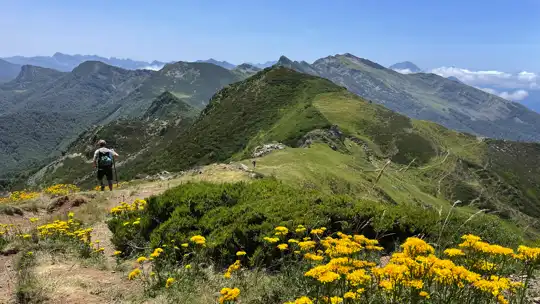
- The mountain road and viewpoints — The climb from the sanctuary up to the lakes is a highlight in itself: hairpins, sudden panoramas and roadside lookouts where you can see the Picos unfold. It’s also a legendary Vuelta a España climb, so expect cyclists on race days.
- Wildlife and high-mountain scenery — Keep an eye out for chamois (rebecos), raptors and seasonal wildflowers. The contrast between the lush lower valley and the rocky cirques above is dramatic and gives the area a proper mountain-wild feel.
- Local culture and food — Small cafés and taverns in the surrounding villages (and in nearby Cangas de Onís) serve Asturian staples — sidra poured the right way, hearty stews and strong cheeses. It’s a good place to refuel after hiking and to taste the region properly.
Spotted a mistake or missing something? Contact us.

Day trip to Luarca, Cudillero and Avilés from Oviedo and Gijón

Tour to Lakes of Covadonga, Onís Cangas and Ballasts from Gijón

From Oviedo and Gijón: Llanes, Ribadesella, Alto de Fitu and Bowls

Excursion to Playa de las Catedrals, Ribadeo and Tapia de Casariego

Picos de Europa : Bunnes with funicular and Cabrales cheese cave

Full-Day Cudillero and Luarca Private Tour from Gijon

Scenic Tour in TukTuk, Gijón

Hiking Experience in Asturias, from Gijón or Oviedo

Gijon Self-Guided Detective Murder Mystery Game


 Best Backpacking
 Hi, I’m Johan (Netherlands 🇳🇱), the creator of TakeYourBackpack. Over the past 3 decades, I’ve backpacked through 90+ countries across six continents, gaining extensive experience with independent travel, long-term trips, and overland routes.