×

Sri Lanka🇱🇰 | attractionsColombo National Museumroyal regalia, ancient manuscripts, stone carvings | things to do and best time to go

Explore Galle Dutch Fort and RampartsExplore Gangaramaya Temple & Museum

Backpacking in Colombo National Museum
🌟 Highlightattraction ranked #4
By Johan Kruseman 🇳🇱 | Updated September 4, 2026

Here’s what nobody tells you: the Colombo National Museum is air-conditioned. In the Sri Lankan capital’s sticky, relentless heat, this is a game-changer—especially after a week of sweating through temples and tuk-tuk rides. You’ll find the museum in the heart of Colombo, tucked among banyan trees and colonial-era government buildings. Here’s the straight talk: if you’re backpacking Sri Lanka for wild landscapes or spiritual epiphanies, this isn’t your adrenaline fix. But if you want to actually understand the country you’re wandering through—beyond the Instagram beaches—this is where the puzzle pieces click. The crowds are mostly local school groups and the odd history buff, so you won’t be elbowing for selfies. Entry is pricier than most Sri Lankan attractions, but you get real value: ancient royal regalia, Kandyan swords, and a crash course in the island’s tangled, fascinating past. It’s not flashy, but it’s the real deal.

Discover everything you want to know in the 📖 Sri Lanka Travel Guide.
Loading the map 🌍
CLICK TO FILTER
cities
towns
villages
landmarks
national parks
hikes
beaches
attractions
festivals
regions
SHOW COUNTRY’S BESTSHOW ALL

✨ Why go?
Ranked #4 attraction in Sri Lanka
What makes this attraction worth visiting

The Colombo National Museum is not your typical tourist checkbox. Yes, it’s crowded, especially on weekends, and the entrance fee isn’t dirt cheap by local standards. But here’s the real deal: this place is the heartbeat of Sri Lanka’s history and culture, packed into one sprawling colonial-era building that screams stories. Backpackers who make time for it aren’t just ticking off an iconic spot—they’re diving headfirst into the island’s soul. You’ll find everything from ancient royal regalia to intricate Kandyan art, all laid out with a depth that no Instagram post can capture. It’s a major milestone on any Sri Lanka route because it roots you in the country’s complex past before you hit the beaches or jungles. The effort to navigate the crowds and the slightly overwhelming exhibits pays … read more 👉
The Colombo National Museum is not your typical tourist checkbox. Yes, it’s crowded, especially on weekends, and the entrance fee isn’t dirt cheap by local standards. But here’s the real deal: this place is the heartbeat of Sri Lanka’s history and culture, packed into one sprawling colonial-era building that screams stories. Backpackers who make time for it aren’t just ticking off an iconic spot—they’re diving headfirst into the island’s soul. You’ll find everything from ancient royal regalia to intricate Kandyan art, all laid out with a depth that no Instagram post can capture. It’s a major milestone on any Sri Lanka route because it roots you in the country’s complex past before you hit the beaches or jungles. The effort to navigate the crowds and the slightly overwhelming exhibits pays off with a genuine understanding of Sri Lanka’s identity. Skip it, and you miss the foundation beneath the surface-level beauty everyone else is chasing. This museum is where history hits you with real weight—and that’s worth every minute.
Want to include Colombo National Museum in your Sri Lanka route?
Create a personalized Sri Lanka itinerary that includes Colombo National Museum and the places that fit your trip — based on your travel style, budget, and available time. Get your route in seconds.

Generate my trip

💡 HighlightsPlaces and moments you shouldn't skip

The Throne Room
Let’s cut through the fantasy: you’re not going to sit on the throne, and yes, you’ll be jostling for elbow space with school groups and selfie squads. But the Kandyan throne, with its gold and red velvet, is the real deal—Sri Lankan royalty sat here, not some movie extra. The craftsmanship is dense with symbolism, and the aura is more “history’s heavy crown” than “Disney magic.” If you want to feel the weight of Sri Lanka’s monarchy, this is the room that delivers—no filter needed.


The Crown Jewels and Regalia
You’ll see glass cases, not velvet pillows, but the regalia inside is the stuff of actual coronations. Swords, crowns, and ritual objects that survived colonial plundering and palace intrigue. The details—filigree, gems, the wear on the hilts—tell stories you won’t … read more 👉
The Throne Room
Let’s cut through the fantasy: you’re not going to sit on the throne, and yes, you’ll be jostling for elbow space with school groups and selfie squads. But the Kandyan throne, with its gold and red velvet, is the real deal—Sri Lankan royalty sat here, not some movie extra. The craftsmanship is dense with symbolism, and the aura is more “history’s heavy crown” than “Disney magic.” If you want to feel the weight of Sri Lanka’s monarchy, this is the room that delivers—no filter needed.


The Crown Jewels and Regalia
You’ll see glass cases, not velvet pillows, but the regalia inside is the stuff of actual coronations. Swords, crowns, and ritual objects that survived colonial plundering and palace intrigue. The details—filigree, gems, the wear on the hilts—tell stories you won’t find in the captions. It’s not about sparkle; it’s about survival and identity. If you want to see what power looked like before Instagram, this is your window.


The Bodhisattva Statue
Forget the endless parade of Buddha statues you’ll see across Asia. This 8th-century bronze Bodhisattva Avalokiteshvara is a knockout—serene, yes, but also radiating a kind of cosmic cool. The museum’s lighting is criminally bad, but the statue’s grace cuts through. It’s a rare, almost mystical artifact that survived centuries of chaos. If you want a single object that justifies the ticket price, this is it. (Personal favorite—every time I see it, I’m floored by the sheer presence.)


Ancient Palm-Leaf Manuscripts
You won’t find these on a postcard rack. The museum’s manuscript collection is a time capsule of Sri Lankan intellect—Buddhist texts, medical treatises, even royal decrees, all etched on palm leaves. The display is low-key, but the content is wild: centuries-old knowledge, preserved against humidity, insects, and colonial indifference. If you geek out on the written word, this is a quiet, powerful corner.


Colonial-Era Paintings and Portraits
This isn’t your average “old paintings” gallery. The colonial portraits here are loaded with tension—British officials in stiff uniforms, local elites in hybrid dress, all staring down the barrel of history. The brushwork is sometimes clumsy, sometimes masterful, but always revealing. It’s a crash course in power dynamics, and a reminder that museums aren’t neutral ground.


The Giant Skeletons (Blue Whale and Elephants)
If you need a break from the gold and oil paint, the natural history wing delivers a left hook: a full blue whale skeleton, plus some massive Sri Lankan elephant bones. It’s a little dusty, a little retro, but the scale is jaw-dropping. Kids love it, but adults get a kick out of the “how did they get this in here?” factor. It’s weird, it’s wonderful, and it’s pure entertainment.
Spotted a mistake or missing something? Contact us.

Things to do around Colombo National Museum

Ratings based on Tripadvisor reviews. When you book through this link, you support our work at no extra cost to you.

🌤️ When to go?Seasonal considerations and timing


  • Weather: Colombo’s tropical climate means it’s hot and humid year-round, but the best window is December to March when the southwest monsoon eases up. Expect less rain, making museum visits dry and comfortable.

  • Temperature: Daily highs hover around 30-32°C (86-90°F) throughout the year, but humidity makes it feel hotter. Nights cool down slightly to 24-26°C (75-79°F), so plan your indoor museum time during the warmer afternoons.

  • Daylight Hours: Roughly 11 to 12 hours of daylight year-round, with sunrise around 6:00 AM and sunset near 6:30 PM. This gives you plenty of time to explore without rushing, especially if you start mid-morning.

  • Crowds: Peak tourist season (December to February) means more visitors at the museum, especially on weekends and holidays. If you want a quieter experience,
read more 👉

  • Weather: Colombo’s tropical climate means it’s hot and humid year-round, but the best window is December to March when the southwest monsoon eases up. Expect less rain, making museum visits dry and comfortable.

  • Temperature: Daily highs hover around 30-32°C (86-90°F) throughout the year, but humidity makes it feel hotter. Nights cool down slightly to 24-26°C (75-79°F), so plan your indoor museum time during the warmer afternoons.

  • Daylight Hours: Roughly 11 to 12 hours of daylight year-round, with sunrise around 6:00 AM and sunset near 6:30 PM. This gives you plenty of time to explore without rushing, especially if you start mid-morning.

  • Crowds: Peak tourist season (December to February) means more visitors at the museum, especially on weekends and holidays. If you want a quieter experience, aim for the shoulder months of November or March.

  • Seasonal Activities: The museum hosts special exhibits and cultural events mostly during the dry season, adding layers to your visit beyond the permanent collection.

  • Price Fluctuations: Entry fees remain stable year-round, but expect higher prices for guided tours and extras during peak season. Booking in advance can sometimes save you a few bucks.


Pro-tip: Visit early on a weekday in February or March to dodge crowds, soak in the air-conditioning, and catch any special exhibits without sweating through your shirt.


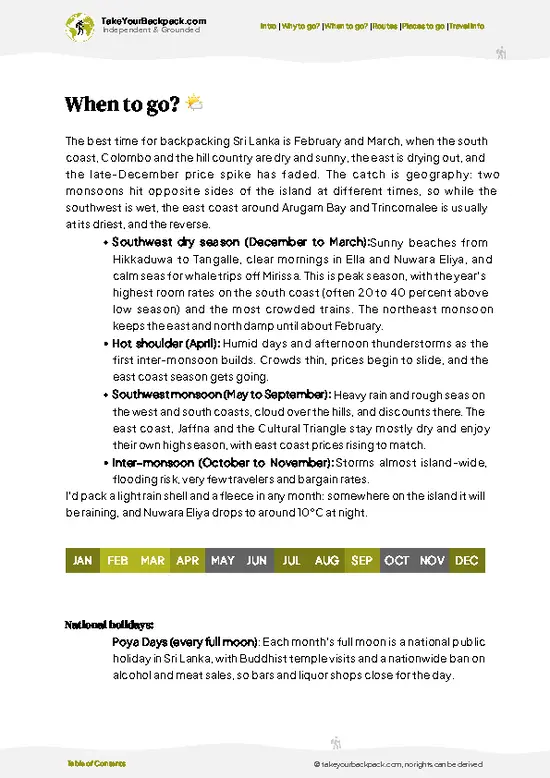
source: climatestotravel.comJANJanuary: excellent for travelingFEBFebruary: excellent for travelingMARMarch: highly recommended for travelingAPRApril: fair for travelingMAYMay: fair for travelingJUNJune: fair for travelingJULJuly: fair for travelingAUGAugust: fair for travelingSEPSeptember: fair for travelingOCTOctober: fair for travelingNOVNovember: highly recommended for travelingDECDecember: excellent for traveling
when-to-go

✈️ The backpacker research shortcutSri Lanka Travel Guide

An offline-friendly backpacking guide with optimized travel routes, ranked highlights, transport advice, and the best areas to stay.
example page 0 from our offline Travel Guide for Sri Lanka
example page 1 from our offline Travel Guide for Sri Lanka
example page 2 from our offline Travel Guide for Sri Lanka
example page 3 from our offline Travel Guide for Sri Lanka
example page 4 from our offline Travel Guide for Sri Lanka
example page 5 from our offline Travel Guide for Sri Lanka
example page 6 from our offline Travel Guide for Sri Lanka
example page 7 from our offline Travel Guide for Sri Lanka
The digital guide (445 pages) contains:
124 highlights, ranked by travel appeal
Optimized 5, 10 & 15-day travel routes
Cities, national parks, landmarks, beaches
How to get around
Offline-friendly for travel without Wi-Fi
👉 Click to see all 30+ guide features

📅 Plan smarter in minutes, not weeks
Month by month travel advice
Festivals & national holidays
Budget expectations

🗺️ Go to the right places, skip the overrated ones
Honest pros & cons of destinations
Top hikes, parks & viewpoints
Lesser-known places most travelers miss
Clear “worth it vs skip it” guidance

🛏️ Travel smoothly without rookie mistakes
Best areas to stay
Transport systems explained simply
Common scams & safety advice
SIM cards, money & practical tips

🌍 Understand the country, not just visit it
Culture & traditions
52 Essential phrases & customs
Festivals worth planning around
Traveler-friendly historical context
Insights that make places more meaningful

📱 Built for real travel conditions
Fully downloadable PDF
Works completely offline
Optimized for phone use
Useful in remote areas & buses
Everything in one place
Save weeks of stressful planning
Get instant access to your full guide. 30‑day money-back guarantee.
+ Add another guide for just US$7.80

By proceeding you agree to our terms.
Sent to your inbox immediately after payment • 100% Secure Checkout
Best Backpacking Travel Advisor 2025 tourism awardBest Backpacking
Travel Advisor
2025
What others say about Take Your Backpack Guides:
⭐⭐⭐⭐⭐
Fantastic, amazing amount of information!
⭐⭐⭐⭐⭐
My goodness this is amazing, it's what I've been looking for hats off too you!
⭐⭐⭐⭐⭐
I think this is absolutely BRILLIANT
⭐⭐⭐⭐
Very complete and informative. It's still missing places, but I gotta to commend you
⭐⭐⭐⭐⭐
This is truly amazing, thank you, can't wait to explore it with my kids!
⭐⭐⭐⭐⭐
Awesome resource, thank you!
⭐⭐⭐⭐⭐
This is amazing! Can't wait to explore the ones I haven't seen
⭐⭐⭐⭐
I love this! Well done, great idea.
⭐⭐⭐⭐⭐
Thanks for taking the time to make this gem!
⭐⭐⭐⭐⭐
This might be the best website I've ever seen.
⭐⭐⭐⭐⭐
Congratulations, and thank you so much for your work; it's incredibly valuable.
⭐⭐⭐⭐
In all seriousness I think you did a great job pointing out the important spots
⭐⭐⭐⭐⭐
10/10 very good
⭐⭐⭐⭐⭐
As someone who's only just starting to visit regularly this is awesome, thank you.
⭐⭐⭐⭐
Thank you very much! I'm going to visit my dad, it's going to be very useful!
⭐⭐⭐⭐⭐
This is really cool! We'll be travelling for the first time and this definitely come in handy.
⭐⭐⭐⭐⭐
You are now our minister of culture, congratulations 👨‍💼
⭐⭐⭐⭐⭐
Just wanted to tell you that this is a pearl! Going to follow your recommendations.
⭐⭐⭐⭐⭐
This is so cool. I'll definitely be using the resource for my travels soon.
⭐⭐⭐⭐⭐
This is very impressive! Good work.
⭐⭐⭐⭐⭐
This is an amazing and informative site. Very well done!

🛏️ Where to stay?Where staying makes the most sense

Colombo National Museum sits smack in the middle of Colombo’s hustle, and if you want to be close, you’re looking at two main neighborhoods that backpackers swear by: Cinnamon Gardens and Fort. Both have their quirks, but they’re the real deal for budget travelers who want safety, social vibes, and easy access.

Cinnamon Gardens is the quieter, leafy part of town. It’s where you’ll find a mix of guesthouses and budget stays that feel more like a local’s home than a tourist trap. The streets are calmer, which means you can crash without the constant honking and chaos that Colombo is famous for. … read more 👉
Colombo National Museum sits smack in the middle of Colombo’s hustle, and if you want to be close, you’re looking at two main neighborhoods that backpackers swear by: Cinnamon Gardens and Fort. Both have their quirks, but they’re the real deal for budget travelers who want safety, social vibes, and easy access.

Cinnamon Gardens is the quieter, leafy part of town. It’s where you’ll find a mix of guesthouses and budget stays that feel more like a local’s home than a tourist trap. The streets are calmer, which means you can crash without the constant honking and chaos that Colombo is famous for. Plus, it’s close enough to the museum that you can stroll there without sweating buckets or dodging traffic. It’s a solid choice if you want to recharge after a day of museum-hopping and city exploring.

Fort, on the other hand, is the city’s beating heart. It’s busy, noisy, and packed with backpackers who want to meet others and dive into Colombo’s street food scene. Hostels here are social hubs, perfect for solo travelers looking to swap stories over cheap beers. The trade-off is the noise and crowds, but if you thrive on energy and want to be steps from the museum, this is your spot.

Both areas offer safety and a chance to connect with fellow travelers, but your vibe will dictate the choice: calm and local in Cinnamon Gardens, or buzzing and social in Fort. Either way, you’re close enough to the museum to make it a highlight, not a hassle.

👛 Costs (as of 4 September 2026)Money, prices, and spending tips

As of the most recent estimates, the entrance fee for foreign adults to the Colombo National Museum is approximately €5 to €10. Additional costs may include guided tours, which are available upon request at the entrance. Photography is permitted with payment of a camera fee; however, flash photography near delicate artifacts is prohibited. The museum is open daily from 9:00 AM to 5:00 PM, except on public holidays. ([srilankatourhelp.org](https://srilankatourhelp.org/articles/colombo-national-museum-visit-guide.html?utm_source=openai))
⚠️ Prices can change and everyone travels differently, so take this as a rough guide. Hope it helps you plan your adventure!

FAQTraveler FAQ

2 to 3 hours is sufficient to visit Colombo National Museum. This allows time to explore the main exhibits and the extensive collection of artifacts. Plan for more time if you want to read detailed descriptions or join a guided tour.
Yes, Colombo National Museum is worth the entrance fee, which is around 1500 LKR for foreigners. It offers a comprehensive insight into Sri Lankan history and culture with well-preserved artifacts and royal regalia. The value is high for history enthusiasts and cultural travelers.
You can get to Colombo National Museum by tuk-tuk or bus from central Colombo, as it is located about 3 km from the city center. The museum is near the Viharamahadevi Park and well-signposted. Taxis and ride-hailing services are also convenient options.
⚠️ Things can change over time, so always validate details locally before you go.

Other Sri Lankan attractions near Colombo National Museum

Explore more nearby:


💡 Not sure where to go next?
Create a personalized itinerary for Sri Lanka including Colombo National Museum and the places that fit your trip.

Generate my itinerary

👉 Discover all attractions

Or checkout all Sri Lanka has to offer (think cities, towns, villages, national parks, hikes, beaches, festivals)
Country photo of Sri Lanka

We 💚 feedbackIs it worth it?

The Colombo National Museum isn’t a quiet stroll through history—it’s often packed, and the entry fee can feel steep compared to other local sights. But if you stick it out, you’ll find a treasure trove of Sri Lanka’s real story, from ancient kings to colonial clashes, all packed into one place. It’s the kind of spot where you leave with a deeper respect for the island’s complex soul, not just a photo.

✈️ When did I visit Sri Lanka?
In December 2025 I visited Sri Lanka.

✍️ Help improve this page!
The information on this page is based on my own backpacking experience in Sri Lanka, supplemented with up-to-date research and feedback from other travelers. Travel details can change, so if you notice anything outdated or incomplete, feel free to let me know.


🙋‍♂️ Give feedback

👋 Meet the founderWho’s Behind Take Your Backpack?

Johan, backpacker and founder of TakeYourBackpackHi, I’m Johan (Netherlands 🇳🇱), the creator of TakeYourBackpack. Over the past decade, I’ve backpacked through 80+ countries across six continents, gaining extensive experience with independent travel, long-term trips, and overland routes.

This site is built on a combination of firsthand travel experience and carefully curated insights from other backpackers. Many guides are based on places I’ve personally visited, while others bring together tips, observations, and practical advice shared by trusted travelers I’ve met along the way.

The goal is to provide realistic, experience-driven guidance — not generic itineraries — so you can explore destinations with better context, clearer expectations, and more confidence.

Get full Sri Lanka guide •
Instant download • 124 highlights • Full Offline guide