×

Sri Lanka🇱🇰 | landmarksPolonnaruwaancient ruins, stone Buddhas, royal reservoirs | things to do and best time to go

Explore Jaffna FortExplore Rangiri Dambulla Cave Temple

Backpacking in Polonnaruwa
🏆 Top pickunique site ranked #1
By Johan Kruseman 🇳🇱 | Updated September 4, 2026

Most people arrive in Polonnaruwa expecting a single postcard temple and a quick photo stop; that’s wrong. What you actually get is an entire dead capital spread across dry forest and lakes, quietly crumbling in the heat. Polonnaruwa sits in Sri Lanka’s North Central Province, east of Sigiriya, right in the heart of the so‑called Cultural Triangle. For backpackers, it’s a slow-burn kind of wow: no one building punches you in the face like Sigiriya’s rock, but the scale of the ruins, the Buddha statues at Gal Vihara, and the way monkeys own the place at sunset all add up. It’s cheaper and less hassly than Kandy or the south coast, but the ticket price for foreigners stings and the midday sun is brutal. Crowds are manageable, mostly tour buses that move in waves, so with a bicycle and some patience you can still find yourself alone among thousand-year-old stonework, which feels far better than any polished “ancient city” reel on Instagram.

Discover everything you want to know in the 📖 Sri Lanka Travel Guide.
Loading the map 🌍
CLICK TO FILTER
cities
towns
villages
landmarks
national parks
hikes
beaches
attractions
festivals
regions
SHOW COUNTRY’S BESTSHOW ALL

✨ Why go?
Ranked #1 unique site in Sri Lanka
What makes it a must-see unique site

Polonnaruwa is not just another stop on your Sri Lanka itinerary; it’s a time capsule that pulls you into the island’s rich history. Sure, the crowds can be overwhelming, especially during peak season, but that’s part of the experience. You’ll find yourself wandering among ancient ruins that whisper stories of kings and kingdoms.

The cost? Minimal. Entry fees are low, and you can easily explore on foot or rent a bike for a few bucks. This isn’t just a site; it’s a journey through time. The Buddha statues carved into rock and the intricate stonework of the Gal Vihara are breathtaking, and they’ll make you forget the throngs of tourists snapping selfies.

What makes Polonnaruwa truly special is how it fits into a broader route. Pair it with a visit to Sigiriya or the Cultural Triangle, and … read more 👉
Polonnaruwa is not just another stop on your Sri Lanka itinerary; it’s a time capsule that pulls you into the island’s rich history. Sure, the crowds can be overwhelming, especially during peak season, but that’s part of the experience. You’ll find yourself wandering among ancient ruins that whisper stories of kings and kingdoms.

The cost? Minimal. Entry fees are low, and you can easily explore on foot or rent a bike for a few bucks. This isn’t just a site; it’s a journey through time. The Buddha statues carved into rock and the intricate stonework of the Gal Vihara are breathtaking, and they’ll make you forget the throngs of tourists snapping selfies.

What makes Polonnaruwa truly special is how it fits into a broader route. Pair it with a visit to Sigiriya or the Cultural Triangle, and you’ve got a rich tapestry of experiences that flow seamlessly together. It’s not just about ticking boxes; it’s about immersing yourself in the soul of Sri Lanka. So, yes, the crowds are there, but the authenticity and history make it worth every moment.
Want to include Polonnaruwa in your Sri Lanka route?
Create a personalized Sri Lanka itinerary that includes Polonnaruwa and the places that fit your trip — based on your travel style, budget, and available time. Get your route in seconds.

Generate my trip

💡 HighlightsWhat this place is best known for

  • Gal Vihara — A jaw-dropping group of rock-cut Buddhas carved straight into a granite face: two seated, one standing and a long reclining image. The scale and polish of the stonework are superb; it’s the single most photographed, iconic piece of Polonnaruwa craftsmanship.
  • Royal Palace of Parakramabahu — The crumbling brick shell of what was likely a multi-storey palace complex. Walk the ruins and you can still feel the ambition of a king who urbanized the city; the layout and remaining chambers hint at courtly life a thousand years ago.
  • The Sacred Quadrangle (Vatadage, Thuparama, Hatadage) — A compact cluster of highly ornate shrines with exquisitely carved moonstones, guardstones and stone pillars. The Vatadage’s concentric stone rings and Hatadage’s sculptural detail make this area the
read more 👉
  • Gal Vihara — A jaw-dropping group of rock-cut Buddhas carved straight into a granite face: two seated, one standing and a long reclining image. The scale and polish of the stonework are superb; it’s the single most photographed, iconic piece of Polonnaruwa craftsmanship.
  • Royal Palace of Parakramabahu — The crumbling brick shell of what was likely a multi-storey palace complex. Walk the ruins and you can still feel the ambition of a king who urbanized the city; the layout and remaining chambers hint at courtly life a thousand years ago.
  • The Sacred Quadrangle (Vatadage, Thuparama, Hatadage) — A compact cluster of highly ornate shrines with exquisitely carved moonstones, guardstones and stone pillars. The Vatadage’s concentric stone rings and Hatadage’s sculptural detail make this area the spiritual and artistic heart of the site.
  • Rankoth Vehera — A massive, perfectly rounded stupa that dominates Polonnaruwa’s skyline. It’s an impressive example of Sinhalese stupa architecture: climb around its base for different sightlines and an immediate sense of scale.
  • Parakrama Samudra (the king’s “sea”) — An enormous ancient reservoir built as part of Polonnaruwa’s irrigation network. It’s both a technical marvel and a peaceful spot for birdwatching, sunsets, and seeing how water shaped the city’s power and prosperity.
  • Lankatilaka Temple — A tall, imposing brick-and-stone temple with a huge seated Buddha inside and delicate stone detailing on the exterior. Its vertical presence and hybrid decoration feel different from the lower, sprawling stupas—more temple theatre than plain monument.
  • Audience Hall & Lotus Bath — Small but charming: the royal audience hall’s stone platforms and the carved “lotus” bathing pool nearby give a quirky, human glimpse of everyday royal ritual and palace design—nice to spot after the bigger monuments.
Spotted a mistake or missing something? Contact us.

Things to do near Polonnaruwa

Ratings based on Tripadvisor reviews. When you book through this link, you support our work at no extra cost to you.

🌤️ When to go?Choosing the right time of year


  • Weather: Polonnaruwa bakes under a tropical climate, with the dry season from May to September offering the most reliable weather. Expect highs around 30-33°C (86-91°F), perfect for exploring ruins without the monsoon mud and downpours that hit from October to January.

  • Temperature: Daytime temps hover between 28-33°C (82-91°F) year-round, but the dry season feels less oppressive thanks to lower humidity. Nights cool down to a manageable 22-24°C (72-75°F), making early mornings and late afternoons ideal for trekking.

  • Daylight Hours: Roughly 11-12 hours of daylight throughout the year, with sunrise around 6:00 AM and sunset near 6:30 PM. This steady light window gives you plenty of time to cover the sprawling archaeological park without rushing.

  • Crowds: Peak tourist season aligns with
read more 👉

  • Weather: Polonnaruwa bakes under a tropical climate, with the dry season from May to September offering the most reliable weather. Expect highs around 30-33°C (86-91°F), perfect for exploring ruins without the monsoon mud and downpours that hit from October to January.

  • Temperature: Daytime temps hover between 28-33°C (82-91°F) year-round, but the dry season feels less oppressive thanks to lower humidity. Nights cool down to a manageable 22-24°C (72-75°F), making early mornings and late afternoons ideal for trekking.

  • Daylight Hours: Roughly 11-12 hours of daylight throughout the year, with sunrise around 6:00 AM and sunset near 6:30 PM. This steady light window gives you plenty of time to cover the sprawling archaeological park without rushing.

  • Crowds: Peak tourist season aligns with the dry months, especially July and August, when international visitors flood in. If you want fewer selfie sticks and more breathing room, aim for shoulder months like May or September.

  • Seasonal Activities: The dry season is prime for cycling the ancient city’s vast ruins, while the wet season’s lush greenery transforms the landscape but can make paths slippery and less accessible.

  • Price Fluctuations: Accommodation and tours spike during the dry season’s peak, with budget options filling fast. Off-season sees better deals but brace for unpredictable weather and some closed services.


Pro-tip: Hit Polonnaruwa early in the dry season—May or early June—to dodge crowds, enjoy cooler mornings, and snag better prices without sacrificing the experience.


source: climatestotravel.comJANJanuary: fair for travelingFEBFebruary: fair for travelingMARMarch: fair for travelingAPRApril: fair for travelingMAYMay: highly recommended for travelingJUNJune: highly recommended for travelingJULJuly: excellent for travelingAUGAugust: excellent for travelingSEPSeptember: highly recommended for travelingOCTOctober: below average for travelingNOVNovember: below average for travelingDECDecember: below average for traveling
sri-lanka-unique-site-polonnaruwa
© Google |

✈️ The backpacker research shortcutSri Lanka Travel Guide

An offline-friendly backpacking guide with optimized travel routes, ranked highlights, transport advice, and the best areas to stay.
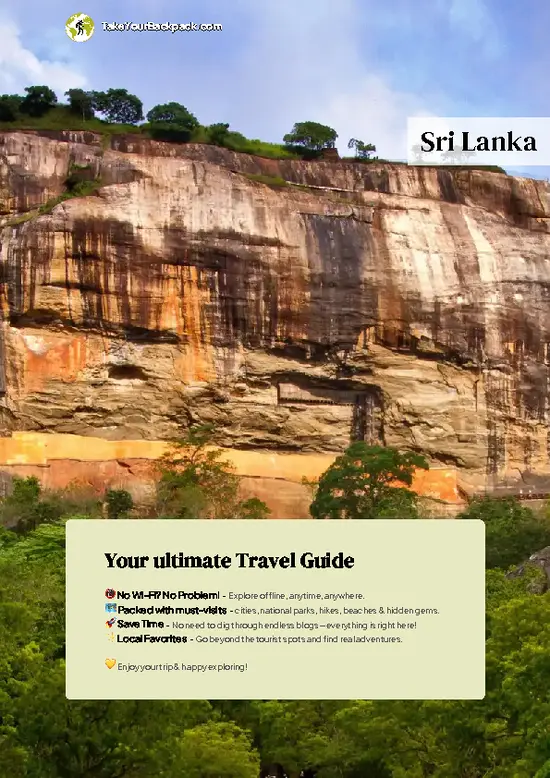
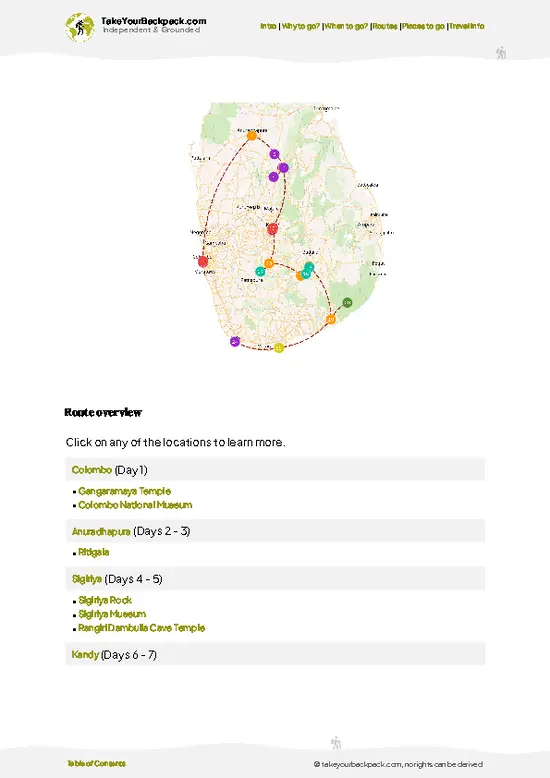
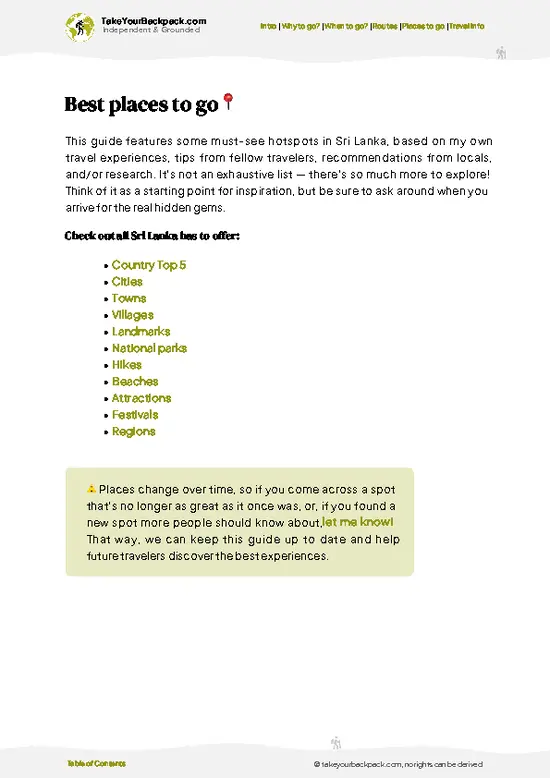
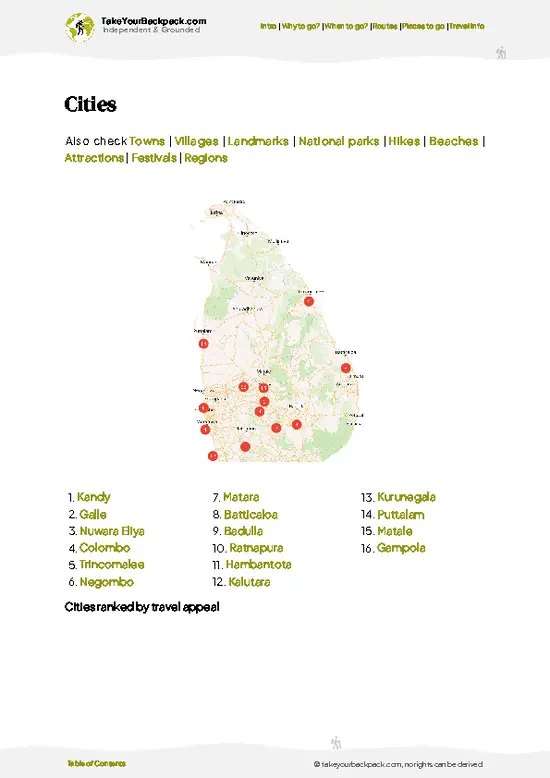
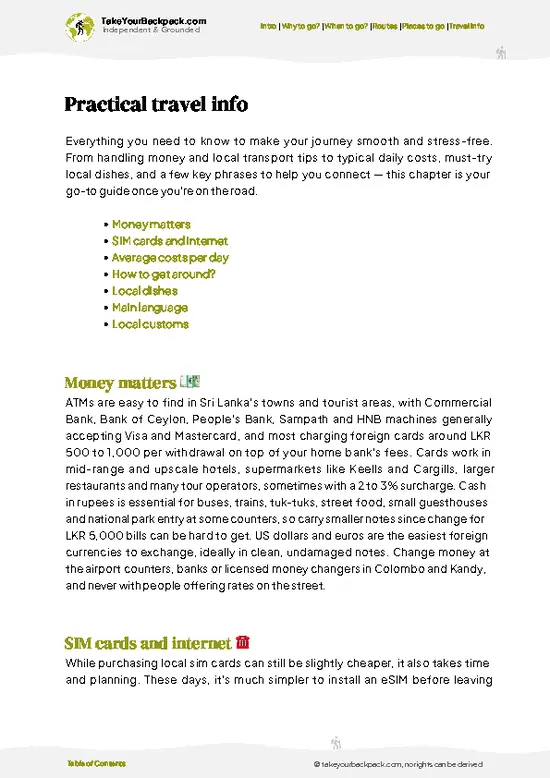
example page 0 from our offline Travel Guide for Sri Lanka
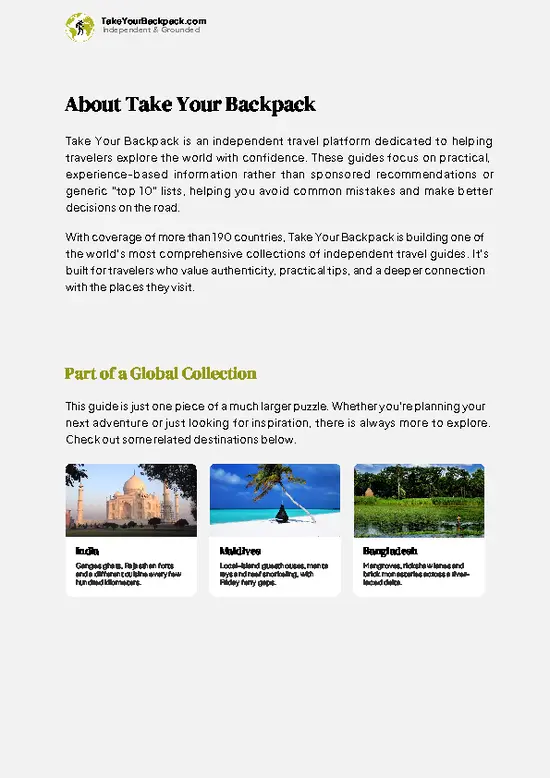
example page 1 from our offline Travel Guide for Sri Lanka
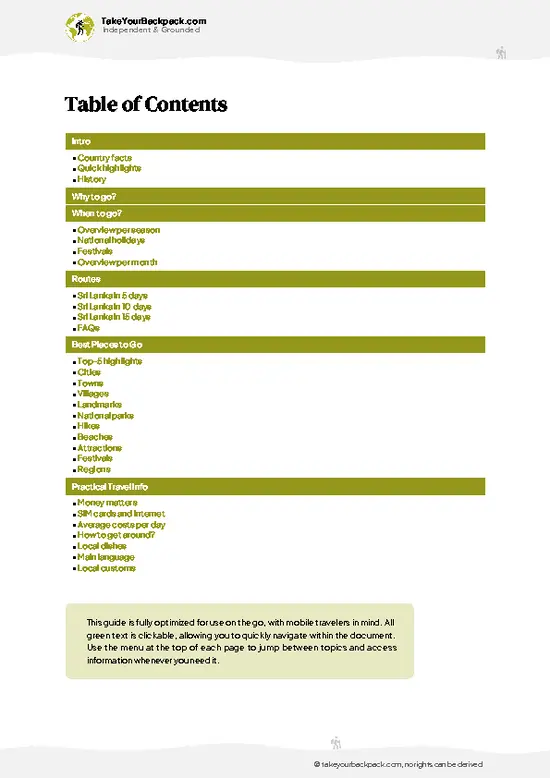
example page 2 from our offline Travel Guide for Sri Lanka
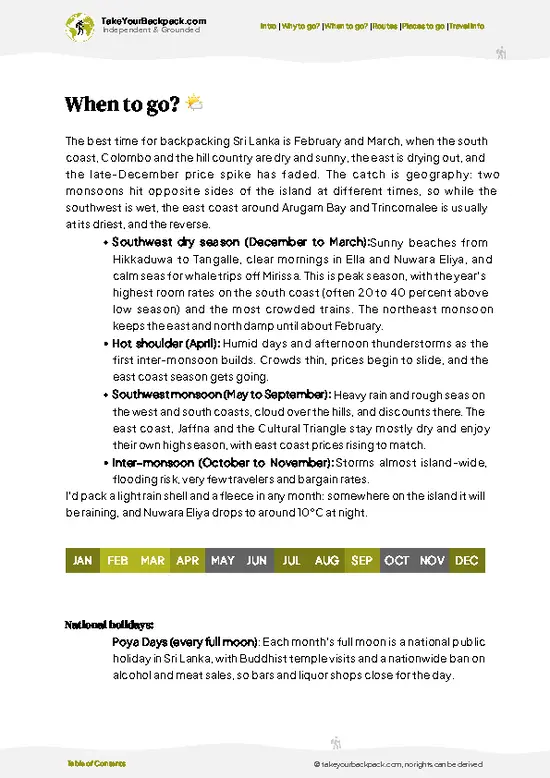
example page 3 from our offline Travel Guide for Sri Lanka
example page 4 from our offline Travel Guide for Sri Lanka
example page 5 from our offline Travel Guide for Sri Lanka
example page 6 from our offline Travel Guide for Sri Lanka
example page 7 from our offline Travel Guide for Sri Lanka
The digital guide (445 pages) contains:
124 highlights, ranked by travel appeal
Optimized 5, 10 & 15-day travel routes
Cities, national parks, landmarks, beaches
How to get around
Offline-friendly for travel without Wi-Fi
👉 Click to see all 30+ guide features

📅 Plan smarter in minutes, not weeks
Month by month travel advice
Festivals & national holidays
Budget expectations

🗺️ Go to the right places, skip the overrated ones
Honest pros & cons of destinations
Top hikes, parks & viewpoints
Lesser-known places most travelers miss
Clear “worth it vs skip it” guidance

🛏️ Travel smoothly without rookie mistakes
Best areas to stay
Transport systems explained simply
Common scams & safety advice
SIM cards, money & practical tips

🌍 Understand the country, not just visit it
Culture & traditions
52 Essential phrases & customs
Festivals worth planning around
Traveler-friendly historical context
Insights that make places more meaningful

📱 Built for real travel conditions
Fully downloadable PDF
Works completely offline
Optimized for phone use
Useful in remote areas & buses
Everything in one place
Save weeks of stressful planning
Get instant access to your full guide. 30‑day money-back guarantee.
+ Add another guide for just US$7.80

By proceeding you agree to our terms.
Sent to your inbox immediately after payment • 100% Secure Checkout
Best Backpacking Travel Advisor 2025 tourism awardBest Backpacking
Travel Advisor
2025
What others say about Take Your Backpack Guides:
⭐⭐⭐⭐⭐
Fantastic, amazing amount of information!
⭐⭐⭐⭐⭐
My goodness this is amazing, it's what I've been looking for hats off too you!
⭐⭐⭐⭐⭐
I think this is absolutely BRILLIANT
⭐⭐⭐⭐
Very complete and informative. It's still missing places, but I gotta to commend you
⭐⭐⭐⭐⭐
This is truly amazing, thank you, can't wait to explore it with my kids!
⭐⭐⭐⭐⭐
Awesome resource, thank you!
⭐⭐⭐⭐⭐
This is amazing! Can't wait to explore the ones I haven't seen
⭐⭐⭐⭐
I love this! Well done, great idea.
⭐⭐⭐⭐⭐
Thanks for taking the time to make this gem!
⭐⭐⭐⭐⭐
This might be the best website I've ever seen.
⭐⭐⭐⭐⭐
Congratulations, and thank you so much for your work; it's incredibly valuable.
⭐⭐⭐⭐
In all seriousness I think you did a great job pointing out the important spots
⭐⭐⭐⭐⭐
10/10 very good
⭐⭐⭐⭐⭐
As someone who's only just starting to visit regularly this is awesome, thank you.
⭐⭐⭐⭐
Thank you very much! I'm going to visit my dad, it's going to be very useful!
⭐⭐⭐⭐⭐
This is really cool! We'll be travelling for the first time and this definitely come in handy.
⭐⭐⭐⭐⭐
You are now our minister of culture, congratulations 👨‍💼
⭐⭐⭐⭐⭐
Just wanted to tell you that this is a pearl! Going to follow your recommendations.
⭐⭐⭐⭐⭐
This is so cool. I'll definitely be using the resource for my travels soon.
⭐⭐⭐⭐⭐
This is very impressive! Good work.
⭐⭐⭐⭐⭐
This is an amazing and informative site. Very well done!

🛏️ Where to stay?Best areas and accommodation options

Polonnaruwa is a treasure trove of ancient ruins, but let’s be real: it’s also a magnet for crowds and tour buses. If you’re looking to stay close to the action without getting swallowed by the tourist trap vibe, head to the area around the Old Town. This is where you’ll find a mix of budget-friendly guesthouses and hostels that cater to backpackers.

The vibe here is relaxed and social. You’ll meet fellow travelers swapping stories over a shared meal or a cold drink. Plus, it’s just a short bike ride or walk to the archaeological sites, so you can beat the heat and the crowds by getting an early … read more 👉
Polonnaruwa is a treasure trove of ancient ruins, but let’s be real: it’s also a magnet for crowds and tour buses. If you’re looking to stay close to the action without getting swallowed by the tourist trap vibe, head to the area around the Old Town. This is where you’ll find a mix of budget-friendly guesthouses and hostels that cater to backpackers.

The vibe here is relaxed and social. You’ll meet fellow travelers swapping stories over a shared meal or a cold drink. Plus, it’s just a short bike ride or walk to the archaeological sites, so you can beat the heat and the crowds by getting an early start.

Another solid option is the area near the Parakrama Samudra lake. It’s quieter, with stunning views and a more local feel. You can find homestays that offer a genuine glimpse into Sri Lankan life. The hospitality here is warm, and you might even score a home-cooked meal.

Avoid the overpriced spots near the main entrance to the ruins. They’re convenient but lack character and community. Instead, embrace the authentic experience that Polonnaruwa offers, and you’ll leave with memories that go beyond the usual snapshots.

👛 Costs (as of 4 September 2026)What things cost and how to budget

Visiting Polonnaruwa, Sri Lanka, can be a rewarding experience, but it’s essential to know what you’re getting into financially.
  • Entrance Fees: Expect to pay around $25 to $30 for a ticket. This grants you access to the ancient ruins and temples. It’s worth every penny, but be prepared for the crowds, especially during peak tourist season.
  • Transportation: Getting to Polonnaruwa can vary. A bus from Colombo will cost about $3 to $5. If you opt for a taxi or tuk-tuk, budget around $50 to $70 for a one-way trip. Renting a bike in the area is a great option too, usually around $2 to $5 per day.
  • Accommodation: Options range widely. Budget hostels start at about $10 per night, while mid-range hotels can go from $30 to $70. If you’re looking for something more upscale, expect to pay upwards of $100.
read more 👉
Visiting Polonnaruwa, Sri Lanka, can be a rewarding experience, but it’s essential to know what you’re getting into financially.
  • Entrance Fees: Expect to pay around $25 to $30 for a ticket. This grants you access to the ancient ruins and temples. It’s worth every penny, but be prepared for the crowds, especially during peak tourist season.
  • Transportation: Getting to Polonnaruwa can vary. A bus from Colombo will cost about $3 to $5. If you opt for a taxi or tuk-tuk, budget around $50 to $70 for a one-way trip. Renting a bike in the area is a great option too, usually around $2 to $5 per day.
  • Accommodation: Options range widely. Budget hostels start at about $10 per night, while mid-range hotels can go from $30 to $70. If you’re looking for something more upscale, expect to pay upwards of $100. Booking in advance can save you some cash.
  • Food: Eating local is both delicious and affordable. Street food can cost as little as $1 to $3 per meal. If you prefer dining in a restaurant, budget around $5 to $15 for a decent meal. Splurging on a nice dinner? That could run you $20 or more.
  • Guided Tours: If you want to dive deeper into the history, consider a guided tour. Prices typically range from $15 to $50, depending on the length and inclusions. This can enhance your experience, especially if you want to avoid the usual tourist traps.

Understanding these costs helps you plan wisely. Polonnaruwa is rich in history and culture, and with the right approach, it can be a highlight of your Sri Lankan adventure.


source: srilanka.travel
⚠️ Prices can change and everyone travels differently, so take this as a rough guide. Hope it helps you plan your adventure!

FAQTraveler FAQ

Polonnaruwa is an ancient city in Sri Lanka that served as the second capital after the destruction of Anuradhapura. It is renowned for its well-preserved ruins of palaces, temples, and statues dating back to the 11th and 12th centuries. The site is a UNESCO World Heritage Site and a key archaeological location.
You need about one full day to visit Polonnaruwa to cover the main archaeological sites thoroughly. Renting a bicycle or hiring a tuk-tuk for the day is common to navigate the large area efficiently. Starting early in the morning helps avoid the midday heat and crowds.
Polonnaruwa is accessible by train, bus, or car from major cities like Colombo and Kandy. The train journey from Colombo takes approximately 7 hours, while buses are more frequent and take around 5 to 6 hours. Hiring a private car or tuk-tuk from nearby towns like Dambulla is also a convenient option.
⚠️ Things can change over time, so always validate details locally before you go.

Other Sri Lankan landmarks near Polonnaruwa

Explore more nearby:


💡 Not sure where to go next?
Create a personalized itinerary for Sri Lanka including Polonnaruwa and the places that fit your trip.

Generate my itinerary

👉 Discover all landmarks

Or checkout all Sri Lanka has to offer (think cities, towns, villages, national parks, hikes, beaches, festivals)
Country photo of Sri Lanka

We 💚 feedbackFinal thoughts on visiting Polonnaruwa

Polonnaruwa is a treasure trove of ancient ruins that whisper stories of a bygone era. The intricate carvings and massive stupas are jaw-dropping, and wandering through them feels like stepping back in time. But let’s be real: the crowds can be overwhelming, especially during peak season. If you can handle the hustle, the history here is worth every step. Just go early to beat the masses and soak in the magic.

✈️ When did I visit Sri Lanka?
In December 2025 I visited Sri Lanka.

✍️ Help improve this page!
The information on this page is based on my own backpacking experience in Sri Lanka, supplemented with up-to-date research and feedback from other travelers. Travel details can change, so if you notice anything outdated or incomplete, feel free to let me know.


🙋‍♂️ Give feedback

👋 Meet the founderWho’s Behind Take Your Backpack?

Johan, backpacker and founder of TakeYourBackpackHi, I’m Johan (Netherlands 🇳🇱), the creator of TakeYourBackpack. Over the past decade, I’ve backpacked through 80+ countries across six continents, gaining extensive experience with independent travel, long-term trips, and overland routes.

This site is built on a combination of firsthand travel experience and carefully curated insights from other backpackers. Many guides are based on places I’ve personally visited, while others bring together tips, observations, and practical advice shared by trusted travelers I’ve met along the way.

The goal is to provide realistic, experience-driven guidance — not generic itineraries — so you can explore destinations with better context, clearer expectations, and more confidence.

Get full Sri Lanka guide •
Instant download • 124 highlights • Full Offline guide