×

Sri Lanka🇱🇰 | best landmarksEssential 10 landmarks to Explore in Sri Lanka

Landmarks in Sri Lanka are mostly living places: Buddhist temples where frangipani and jasmine smell sweet against hot stone, ancient ruins scattered across dry-zone plains, and colonial forts wrapped in sea salt. In the Cultural Triangle of the north-central interior, sites are big, open to the sun and priced for foreigners, so costs climb fast. The hill country is cooler and misty, with tea-country railways and temples reached by steep steps. The south and west coast offers Dutch ramparts and lighthouses you can often walk around for free. Independent travelers move easily by bus and train, but expect heat, bare feet on scorching paving and early starts.

By Johan Kruseman 🇳🇱 | Updated October 19, 2026
Explore the best national parks in Sri Lanka

Why go?What Makes Them Special

Sri Lanka packs an unusual density of heritage into an island roughly 440 kilometers long. Buddhism has been continuously practiced here for over two thousand years, so many landmarks are still active places of worship. You hear drums and chanting, smell incense and lamp oil, and walk barefoot on stone that holds the day's heat. That living quality sets the island apart from countries where monuments are mostly museum pieces.

Geography shapes what you see. The dry zone in the north and center sheltered early kingdoms, built around huge man-made reservoirs, while the wet southwest and cool highlands developed later under Portuguese, Dutch and British rule, leaving forts, churches and railways. Distances are short, yet the roads are slow, winding and busy, so a map overstates how much you can … read more 👉
Sri Lanka packs an unusual density of heritage into an island roughly 440 kilometers long. Buddhism has been continuously practiced here for over two thousand years, so many landmarks are still active places of worship. You hear drums and chanting, smell incense and lamp oil, and walk barefoot on stone that holds the day's heat. That living quality sets the island apart from countries where monuments are mostly museum pieces.

Geography shapes what you see. The dry zone in the north and center sheltered early kingdoms, built around huge man-made reservoirs, while the wet southwest and cool highlands developed later under Portuguese, Dutch and British rule, leaving forts, churches and railways. Distances are short, yet the roads are slow, winding and busy, so a map overstates how much you can cover.

Before choosing Sri Lanka, know that foreigner ticket prices at the major archaeological sites are high compared with local fees and with neighboring countries, often US$25 to 40 each. Dress rules are strict at religious places: covered shoulders and knees, and shoes and hats off. Midday heat on open ruins is brutal. Rain, crowds and festival dates change what is open, so flexibility matters more than a rigid plan.
How the List Was Created
The list of best unique sites in Sri Lanka is created based on history or culture, wow factor, atmosphere, quirks, and memorability. If you feel a unique site is missing in this list, please let us know.

When to go?Seasonal Guide to Visiting

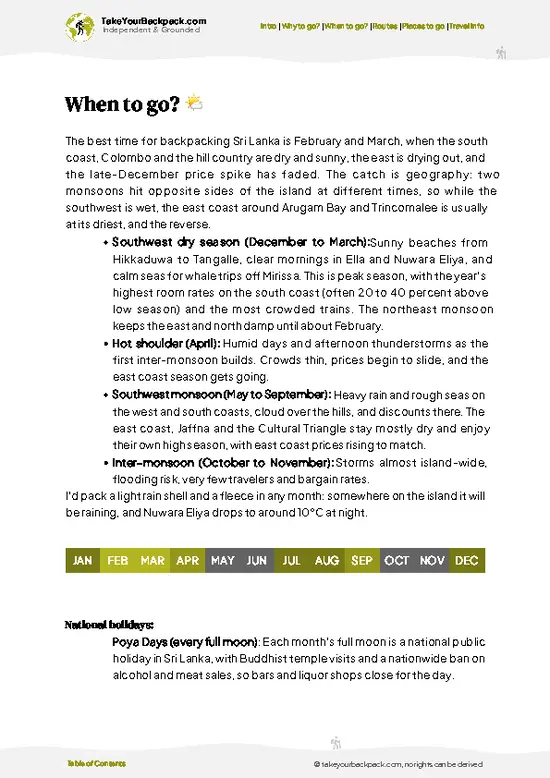
Best months: Rather than one season, Sri Lanka has two monsoons, and the best months for landmarks are December to March for the west, south and hill country, and May to September for the north-central and eastern sides, because those regions sit dry while the opposite coast gets rain. The Cultural Triangle is usable most of the year, but it is hottest from March to May, when midday temperatures reach 33 to 36°C and stone steps burn bare feet by 9 a.m.
Shoulder seasons and rain: The Southwest Monsoon (May to September) brings heavy rain to the south and west coast and the hills, with grey skies, wet paths and slippery steps. The Northeast Monsoon (October to January) soaks the north and east, and the interior sees showers from October to November. In the hill country, mornings are clear and … read more 👉
Best months: Rather than one season, Sri Lanka has two monsoons, and the best months for landmarks are December to March for the west, south and hill country, and May to September for the north-central and eastern sides, because those regions sit dry while the opposite coast gets rain. The Cultural Triangle is usable most of the year, but it is hottest from March to May, when midday temperatures reach 33 to 36°C and stone steps burn bare feet by 9 a.m.
Shoulder seasons and rain: The Southwest Monsoon (May to September) brings heavy rain to the south and west coast and the hills, with grey skies, wet paths and slippery steps. The Northeast Monsoon (October to January) soaks the north and east, and the interior sees showers from October to November. In the hill country, mornings are clear and cool at 15 to 20°C, with mist and afternoon cloud rolling in. Shoulder months such as April and October can be humid, with sudden downpours.
Crowds and prices: Peak season, December to February, fills guesthouses near major sites, and rooms can cost 30 to 50 percent more than in the quiet months. Poya (full moon) days bring white-clad pilgrims to temples, which is atmospheric but crowded. Alcohol is not sold on Poya days. Vesak in May is the biggest festival, with lanterns and packed transport.

unique site hoppingPlanning Your Route Efficiently

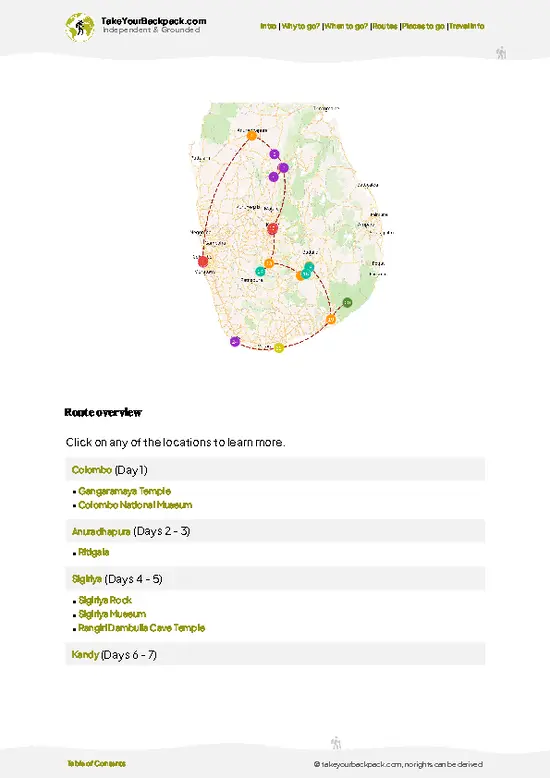
How many days: A trip linking several landmarks in Sri Lanka needs 10 to 14 days, because roads are slow and even short hops take half a day. Most travelers start at Colombo or Negombo airport and run a loop: north to the Cultural Triangle, then south-east into the hill country, then down to the south coast. Going this way ends on the beach, and the train from the hills toward Colombo or the coast is a ride of rattling windows and tea-scented air.
Time per stop: Large ruin complexes need a half day to a full day each, ideally beginning at sunrise before the heat. Hill towns need one to two nights, and a fort town or coastal stop takes two to three hours of wandering. Typical transfers: Colombo to the Cultural Triangle takes 4 to 5 hours by road, the Triangle to Kandy 2 to 3 hours, Kandy to … read more 👉
How many days: A trip linking several landmarks in Sri Lanka needs 10 to 14 days, because roads are slow and even short hops take half a day. Most travelers start at Colombo or Negombo airport and run a loop: north to the Cultural Triangle, then south-east into the hill country, then down to the south coast. Going this way ends on the beach, and the train from the hills toward Colombo or the coast is a ride of rattling windows and tea-scented air.
Time per stop: Large ruin complexes need a half day to a full day each, ideally beginning at sunrise before the heat. Hill towns need one to two nights, and a fort town or coastal stop takes two to three hours of wandering. Typical transfers: Colombo to the Cultural Triangle takes 4 to 5 hours by road, the Triangle to Kandy 2 to 3 hours, Kandy to Ella around 6 to 7 hours by train, and Ella to the south coast 4 to 5 hours by road.
Planning mistakes: The classic error is trusting map distances. Winding roads and buses that stop constantly mean 100 kilometers can take three hours or more. Cramming two big ruin sites into one day leaves you wilted by noon, so give each its own morning. Booking trains late is another trap, as reserved seats on scenic routes sell out days ahead. Book early, travel light, and leave a buffer day.

The ListTop landmarks of Sri Lanka

1 Polonnaruwa

ancient ruins, stone Buddhas, royal reservoirs

Cycle between scattered temples and vast tanks, exploring a city where stonework and water management reveal a lost kingdom.

sri-lanka-unique-site-polonnaruwa
© Google |

2 Galle Fort

Dutch bastions, cobbled lanes, coastal ramparts

Trace the outline of a walled town shaped by centuries of trade, with sea breezes and layered architecture at every turn.

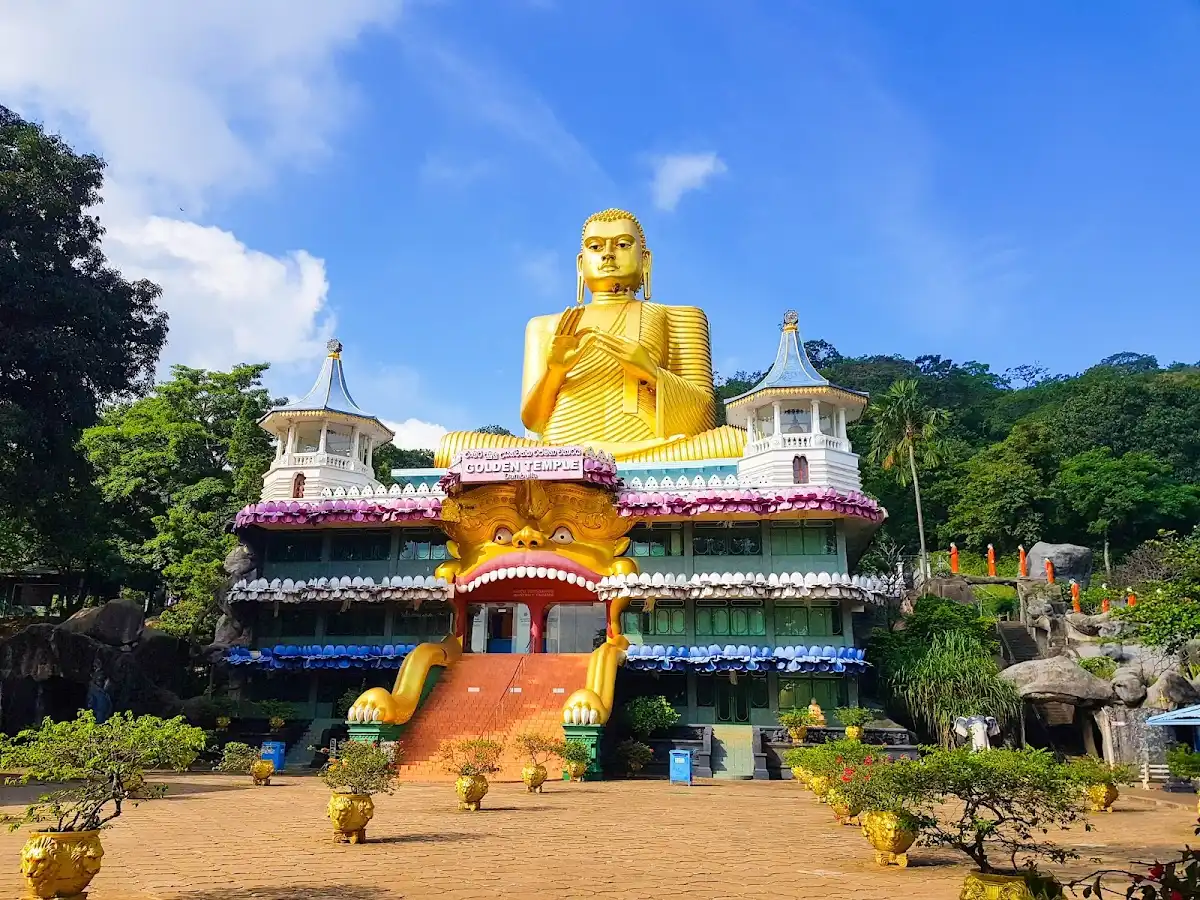
3 Rangiri Dambulla Cave Temple

painted caves, reclining Buddha, hillside sanctuary

Climb to a rock shelter filled with murals and statues, where pilgrims light lamps in cool, shadowed chambers.

sri-lanka-unique-site-rangiri-dambulla-cave-temple
© Google |

4 Sigiriya Rock

ancient citadel, frescoes, lion stairway, symmetrical gardens

Climb stone steps past painted walls and water gardens to explore the remains of a royal stronghold perched high above the plains.

sri-lanka-unique-site-sigiriya-rock
© Google |

5 Koneswaram Temple

clifftop sanctuary, ocean views, Hindu rituals

Stand above the sea where worshippers gather, incense drifts on the wind, and the coastline frames centuries of devotion.

6 Jaffna Fort

star-shaped walls, lagoon views, northern outpost

Survey open skies and tidal flats from a fort that has witnessed sieges, changing rulers, and the rhythms of the northern peninsula.

7 Bopath Ella Falls

waterfall plunge, forest trails, local bathing spot

Follow forest paths to a triangular cascade where locals cool off, and the sound of falling water fills the air.

8 Ritigala

jungle monastery, mossy stone paths, medicinal plants

Hike through dense forest to ancient ruins, where silence and overgrown terraces hint at a monastic past tied to herbal lore.

9 Fort Frederick

colonial ramparts, military relics, deer sightings

Walk through stone gates into a fort where colonial history meets daily life and wild deer graze along the old walls.

10 Thirukkovil Temple

eastern shrines, Tamil festivals, rural setting

Experience temple life in a quiet village, where processions and ceremonies unfold amid coconut groves and open fields.

sri-lanka-unique-site-thirukkovil-temple
© Google |
Loading the map 🌍

Expert viewInsights from Locals and Experts

How many landmarks: I advise five to eight landmarks on a typical two-week trip. Roads are slow, the heat is draining, and temple fatigue is real by the fourth or fifth ruin. That number lets you start at dawn, rest at midday and still have energy for sunset. Trying for ten or more usually means more time in tuk-tuks and buses than at the places themselves.
Choosing between kinds: Sri Lanka's landmarks fall roughly into ancient ruins, living temples, colonial forts and hill-country sites. If history is your priority, spend the most on the ancient ruins, where the big entry fees buy the largest sites. If atmosphere matters most, pick living temples, where evening ritual, drums and flower offerings can be seen for a small donation or modest ticket. On a tight budget, favor forts, lighthouses … read more 👉
How many landmarks: I advise five to eight landmarks on a typical two-week trip. Roads are slow, the heat is draining, and temple fatigue is real by the fourth or fifth ruin. That number lets you start at dawn, rest at midday and still have energy for sunset. Trying for ten or more usually means more time in tuk-tuks and buses than at the places themselves.
Choosing between kinds: Sri Lanka's landmarks fall roughly into ancient ruins, living temples, colonial forts and hill-country sites. If history is your priority, spend the most on the ancient ruins, where the big entry fees buy the largest sites. If atmosphere matters most, pick living temples, where evening ritual, drums and flower offerings can be seen for a small donation or modest ticket. On a tight budget, favor forts, lighthouses and coastal ramparts, which are often free to walk around. Hikers should prioritize hill-country sites reached on foot, since early climbs offer cool air and cloud-filled valleys.
What it costs: A frugal backpacker can manage on US$35 to 55 a day including a dorm or basic guesthouse, buses and local meals, with landmark fees on top. Foreigner tickets at the main archaeological sites run roughly US$25 to 40 each, while many temples charge 1,000 to 2,500 rupees (about US$3 to 8) or ask for a donation. A registered guide costs roughly US$10 to 25 for a site visit, and a tuk-tuk for a half day around a site is often 3,000 to 6,000 rupees (US$10 to 20). Budget US$30 to 60 per major visit when you add transport and a guide, and less for minor ones. Carry small rupee notes, as card machines at the gates are unreliable.
Safety and etiquette: Dress modestly: cover shoulders and knees, and remove shoes and hats at temples. Shoes are left at the entrance, and the stone can be scorching, so carry thin socks if permitted, or visit early. Never pose with your back to a Buddha statue for photos, and do not touch or climb statues, as it is both disrespectful and illegal. Tattoos of Buddha can lead to deportation or fines. Touts near big sites may claim the site is closed or offer fake guide cards, so buy tickets only at official counters. Monkeys snatch food and sunglasses. Drink plenty of water, wear sunscreen and a hat, and begin walks before 8 a.m. to avoid the worst of the heat.

✈️ The backpacker research shortcutSri Lanka Travel Guide

An offline-friendly backpacking guide with optimized travel routes, ranked highlights, transport advice, and the best areas to stay.
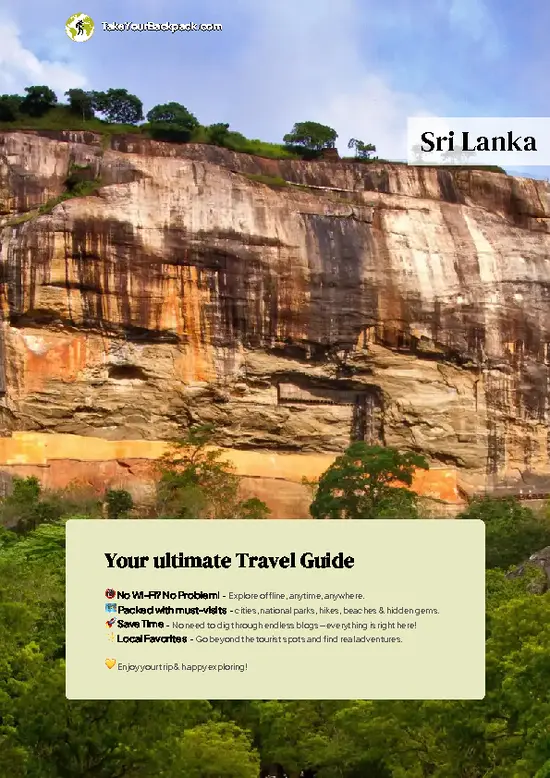
example page 0 from our offline Travel Guide for Sri Lanka
example page 1 from our offline Travel Guide for Sri Lanka
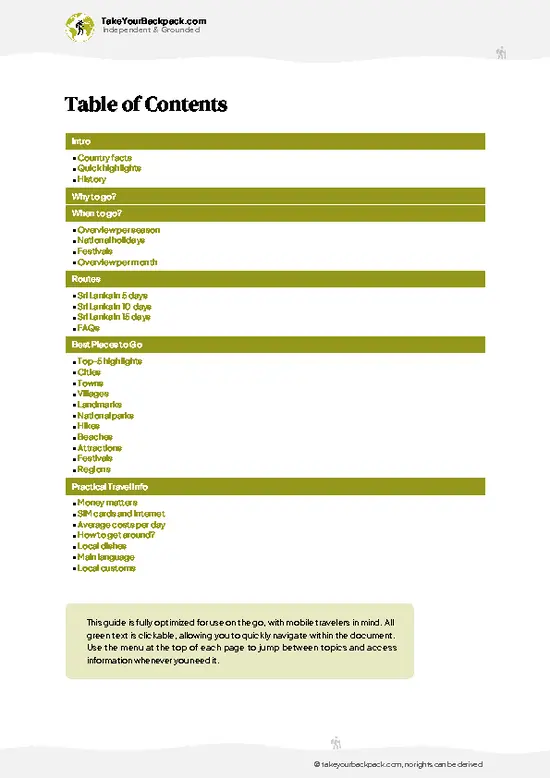
example page 2 from our offline Travel Guide for Sri Lanka
example page 3 from our offline Travel Guide for Sri Lanka
example page 4 from our offline Travel Guide for Sri Lanka
example page 5 from our offline Travel Guide for Sri Lanka
example page 6 from our offline Travel Guide for Sri Lanka
example page 7 from our offline Travel Guide for Sri Lanka
The digital guide (435 pages) contains:
✅ 121 highlights, ranked by travel appeal
✅ Optimized 5, 10 & 15-day travel routes
✅ Cities, national parks, landmarks, beaches
✅ How to get around
✅ Offline-friendly for travel without Wi-Fi
👉 Click to see all 30+ guide features

📅 Plan smarter in minutes, not weeks
✅ Month by month travel advice
✅ Festivals & national holidays
✅ Budget expectations

🗺️ Go to the right places, skip the overrated ones
✅ Honest pros & cons of destinations
✅ Top hikes, parks & viewpoints
✅ Lesser-known places most travelers miss
✅ Clear “worth it vs skip it” guidance

🛏️ Travel smoothly without rookie mistakes
✅ Best areas to stay
✅ Transport systems explained simply
✅ Common scams & safety advice
✅ SIM cards, money & practical tips

🌍 Understand the country, not just visit it
✅ Culture & traditions
✅ 52 Essential phrases & customs
✅ Festivals worth planning around
✅ Traveler-friendly historical context
✅ Insights that make places more meaningful

📱 Built for real travel conditions
✅ Fully downloadable PDF
✅ Works completely offline
✅ Optimized for phone use
✅ Useful in remote areas & buses
✅ Everything in one place
Stop searching, start planning
Get instant access to your full guide. 30‑day money-back guarantee.
+ Add another guide for just

By proceeding you agree to our terms.
Sent to your inbox immediately after payment • 100% Secure Checkout
Best Backpacking Travel Advisor 2025 tourism awardBest Backpacking
Travel Advisor
2025
What others say about Take Your Backpack Guides:
⭐⭐⭐⭐⭐
Fantastic, amazing amount of information!
⭐⭐⭐⭐⭐
My goodness this is amazing, it's what I've been looking for hats off too you!
⭐⭐⭐⭐⭐
I think this is absolutely BRILLIANT
⭐⭐⭐⭐
Very complete and informative. It's still missing places, but I gotta to commend you
⭐⭐⭐⭐⭐
This is truly amazing, thank you, can't wait to explore it with my kids!
⭐⭐⭐⭐⭐
Awesome resource, thank you!
⭐⭐⭐⭐⭐
This is amazing! Can't wait to explore the ones I haven't seen
⭐⭐⭐⭐
I love this! Well done, great idea.
⭐⭐⭐⭐⭐
Thanks for taking the time to make this gem!
⭐⭐⭐⭐⭐
This might be the best website I've ever seen.
⭐⭐⭐⭐⭐
Congratulations, and thank you so much for your work; it's incredibly valuable.
⭐⭐⭐⭐
In all seriousness I think you did a great job pointing out the important spots
⭐⭐⭐⭐⭐
10/10 very good
⭐⭐⭐⭐⭐
As someone who's only just starting to visit regularly this is awesome, thank you.
⭐⭐⭐⭐
Thank you very much! I'm going to visit my dad, it's going to be very useful!
⭐⭐⭐⭐⭐
This is really cool! We'll be travelling for the first time and this definitely come in handy.
⭐⭐⭐⭐⭐
You are now our minister of culture, congratulations 👨‍💼
⭐⭐⭐⭐⭐
Just wanted to tell you that this is a pearl! Going to follow your recommendations.
⭐⭐⭐⭐⭐
This is so cool. I'll definitely be using the resource for my travels soon.
⭐⭐⭐⭐⭐
This is very impressive! Good work.
⭐⭐⭐⭐⭐
This is an amazing and informative site. Very well done!

🛏️ Where to stay?Best Stay Options in Sri Lanka

Sri Lanka has plenty of hostels and family-run guesthouses, with dorm beds typically around LKR 2,500 to 4,500 (US$8 to 15) and simple private doubles from about LKR 5,000 to 9,000 (US$17 to 30). In Colombo, Fort puts you next to the main train and bus stations but goes quiet after dark, while Kollupitiya and Bambalapitiya offer more restaurants and bars at slightly higher prices. In the hill country, Ella has the densest cluster of social hostels within walking distance of the main trails, and Kandy concentrates its budget beds on the hillsides around the lake, which are quiet but involve steep walks. On the south coast, Mirissa and Hikkaduwa are the party-leaning beach bases, Unawatuna and … read more 👉
Sri Lanka has plenty of hostels and family-run guesthouses, with dorm beds typically around LKR 2,500 to 4,500 (US$8 to 15) and simple private doubles from about LKR 5,000 to 9,000 (US$17 to 30). In Colombo, Fort puts you next to the main train and bus stations but goes quiet after dark, while Kollupitiya and Bambalapitiya offer more restaurants and bars at slightly higher prices. In the hill country, Ella has the densest cluster of social hostels within walking distance of the main trails, and Kandy concentrates its budget beds on the hillsides around the lake, which are quiet but involve steep walks. On the south coast, Mirissa and Hikkaduwa are the party-leaning beach bases, Unawatuna and Tangalle are calmer, and Arugam Bay on the east coast fills with surfers from roughly April to October, when prices climb.

If you enjoy meeting fellow travelers, consider choosing hostels with high ratings for atmosphere. On the other hand, if you prefer having your own space, a hotel might be a better option.

Sri LankaWhere to Go Next

👋 Meet the founderWho’s Behind Take Your Backpack?

Johan, backpacker and founder of TakeYourBackpackHi, I’m Johan (Netherlands 🇳🇱), the creator of TakeYourBackpack. Over the past 3 decades, I’ve backpacked through 90+ countries across six continents, gaining extensive experience with independent travel, long-term trips, and overland routes.

This site is built on a combination of firsthand travel experience and carefully curated insights from other backpackers. Many guides are based on places I’ve personally visited, while others bring together tips, observations, and practical advice shared by trusted travelers I’ve met along the way.

The goal is to provide realistic, experience-driven guidance — not generic itineraries — so you can explore destinations with better context, clearer expectations, and more confidence.