×

Sweden🇸🇪 | national parksAbiskoLapland wilderness, northern lights, alpine valley | things to do and best time to go

Explore JämtlandstriangelnExplore Fulufjället

Backpacking in Abisko
🏆 Top picknational park ranked #1
By Johan Kruseman 🇳🇱 | Updated June 15, 2026

Many people arrive in Abisko expecting some kind of Arctic theme park with guaranteed auroras and easy trails. It isn’t that. It’s a real subarctic valley at the far north of Sweden, in Lapland, near the Norwegian border along the E10 and the Kiruna–Narvik rail line. Abisko National Park is fantastic for backpackers who like big landscapes and simple logistics: you step off the train, walk a few minutes, and you’re basically on the Kungsleden. The scenery is wide-open—birch forest, bare ridges, the canyon, Lapporten on the horizon—but weather turns fast, and trails can feel bleak if you’re underprepared. Wildlife is there (reindeer, ptarmigan, occasional moose) but not a safari. No entrance fee, which is great, but food and huts are expensive, and STF accommodation books out in peak season, so tenting is the real budget move. Compared with nearby Padjelanta or Sarek, Abisko is far more accessible, more crowded, and less wild—but much easier for a first Lapland trip.

Discover everything you want to know in the 📖 Sweden Travel Guide.


Get your Sweden guide
119 ranked highlights, routes & tips, works offline (449 pages)
Loading the map 🌍
CLICK TO FILTER
cities
towns
villages
landmarks
national parks
hikes
beaches
attractions
festivals
regions
SHOW COUNTRY’S BESTSHOW ALL

✨ Why go?
Ranked #1 national park in Sweden
What makes it a must-see national park

Abisko National Park in Sweden attracts backpackers for several compelling reasons. First, it offers independent exploration. The trails are well-marked, allowing you to navigate without a guide. This freedom is a huge draw for those who want to set their own pace and discover the park’s beauty on their terms.

Budget-conscious travelers appreciate the camping and hostel options nearby. You can pitch a tent under the stars or stay in a cozy hostel, keeping costs down while still enjoying the stunning landscapes. This flexibility means you can save your funds for experiences that matter, like a night under the Northern Lights.

The trail variety is another highlight. Whether you’re looking for a leisurely stroll or a challenging hike, Abisko has it all. The terrain ranges from gentle paths … read more 👉
Abisko National Park in Sweden attracts backpackers for several compelling reasons. First, it offers independent exploration. The trails are well-marked, allowing you to navigate without a guide. This freedom is a huge draw for those who want to set their own pace and discover the park’s beauty on their terms.

Budget-conscious travelers appreciate the camping and hostel options nearby. You can pitch a tent under the stars or stay in a cozy hostel, keeping costs down while still enjoying the stunning landscapes. This flexibility means you can save your funds for experiences that matter, like a night under the Northern Lights.

The trail variety is another highlight. Whether you’re looking for a leisurely stroll or a challenging hike, Abisko has it all. The terrain ranges from gentle paths to rugged routes, catering to different skill levels and preferences.

Lastly, the park is particularly suited for self-guided travelers. While tours are available, many find that the real magic lies in wandering off the beaten path. With the right preparation, you can immerse yourself in the serene wilderness without the constraints of a group. This blend of independence and accessibility makes Abisko a top choice for backpackers.
Want to include Abisko in your Sweden route?
Create a personalized Sweden itinerary that includes Abisko and the places that fit your trip — based on your travel style, budget, and available time. Get your route in seconds.

Generate my trip

💡 HighlightsEssential experiences to have while exploring Abisko

  • Kungsleden (King’s Trail) — Abisko section: The famed long-distance trail begins/ends here, so you get classic Scandinavian backcountry without complicated logistics — well-marked paths, wild river valleys, and alpine plateaus that are great for both multi-day treks and single-day jaunts.
  • Abisko Canyon (Abiskojåkka): A dramatic, narrow gorge carved by glacial meltwater with easy boardwalks and viewpoints; the rushing waterfalls and columnar rock make it a photographer’s favorite and it’s surprisingly accessible.
  • Aurora Sky Station & Northern Lights: Abisko’s stable microclimate and low light pollution make it one of Europe’s best aurora spots — take the chairlift up to the Sky Station for panoramic viewing and a much better chance to see the lights.
  • Mount Nuolja and the chairlift: Short
read more 👉
  • Kungsleden (King’s Trail) — Abisko section: The famed long-distance trail begins/ends here, so you get classic Scandinavian backcountry without complicated logistics — well-marked paths, wild river valleys, and alpine plateaus that are great for both multi-day treks and single-day jaunts.
  • Abisko Canyon (Abiskojåkka): A dramatic, narrow gorge carved by glacial meltwater with easy boardwalks and viewpoints; the rushing waterfalls and columnar rock make it a photographer’s favorite and it’s surprisingly accessible.
  • Aurora Sky Station & Northern Lights: Abisko’s stable microclimate and low light pollution make it one of Europe’s best aurora spots — take the chairlift up to the Sky Station for panoramic viewing and a much better chance to see the lights.
  • Mount Nuolja and the chairlift: Short lift ride, huge payoff — you get sweeping views over Torneträsk and Lapporten, good high-altitude hiking, and brilliant vantage points for both midnight sun and aurora photographs.
  • Lapporten (The Lapponian Gate): That iconic U-shaped valley you’ll see in every Lapland postcard — dramatic, easy to photograph from several nearby lookouts, and an emblem of the region’s glacial history.
  • Lake Torneträsk: One of Sweden’s largest alpine lakes — turquoise in summer, mirror-like ice in winter. Shore walks, fishing and reflections of the surrounding peaks make it quietly spectacular.
  • Arctic flora, birdlife and reindeer: The mix of birch forest, alpine tundra and wetlands supports migratory birds, arctic wildflowers and resident reindeer. Keep your eyes open on hikes — you’ll likely spot ptarmigan, waders or herds of reindeer and get a sense of Sami cultural landscapes.
Spotted a mistake or missing something? Contact us.

Things to do around Abisko

Ratings based on Tripadvisor reviews. When you book through this link, you support our work at no extra cost to you.

🌤️ When to go?Weather, crowds, and seasonal trade-offs


  • Weather: Abisko’s weather swings sharply with the seasons. Summer (June to August) offers mild conditions, typically 10–20°C (50–68°F), but sudden rain and wind are common. Winter plunges below freezing, often -10 to -20°C (14 to -4°F), demanding serious cold-weather gear.

  • Temperature: Spring and autumn are transitional and unpredictable, with temperatures ranging from just above freezing to 10°C (50°F). These shoulder seasons can be chilly and wet, making backpacking less comfortable unless you’re prepared for variable conditions.

  • Daylight Hours: Summer brings the midnight sun, with nearly 24 hours of daylight from late May to mid-July—perfect for long hiking days but potentially disruptive to sleep. Winter flips to polar night, with almost no daylight from early December to early
read more 👉

  • Weather: Abisko’s weather swings sharply with the seasons. Summer (June to August) offers mild conditions, typically 10–20°C (50–68°F), but sudden rain and wind are common. Winter plunges below freezing, often -10 to -20°C (14 to -4°F), demanding serious cold-weather gear.

  • Temperature: Spring and autumn are transitional and unpredictable, with temperatures ranging from just above freezing to 10°C (50°F). These shoulder seasons can be chilly and wet, making backpacking less comfortable unless you’re prepared for variable conditions.

  • Daylight Hours: Summer brings the midnight sun, with nearly 24 hours of daylight from late May to mid-July—perfect for long hiking days but potentially disruptive to sleep. Winter flips to polar night, with almost no daylight from early December to early January, limiting hiking options.

  • Crowds: Peak season is summer, especially July, when the park sees the most visitors. This means busier trails and higher accommodation prices. Winter attracts fewer people, mostly those chasing the Northern Lights, so expect solitude but limited services.

  • Seasonal Activities: Summer is prime for hiking, fishing, and mountain biking. Winter shifts focus to cross-country skiing, snowshoeing, and aurora watching. Spring and autumn offer fewer organized activities and less predictable trail conditions.

  • Price Fluctuations: Accommodation and transport costs spike in summer due to demand. Winter prices can be lower but factor in extra costs for specialized gear rental and guided tours if you’re not self-sufficient.


Pro-tip: Aim for late June or early August to catch stable weather, long daylight, and thinner crowds—this sweet spot saves your energy and wallet for the trails that truly matter.


source: climatestotravel.comJANJanuary: fair for travelingFEBFebruary: good for travelingMARMarch: good for travelingAPRApril: fair for travelingMAYMay: good for travelingJUNJune: highly recommended for travelingJULJuly: good for travelingAUGAugust: highly recommended for travelingSEPSeptember: fair for travelingOCTOctober: fair for travelingNOVNovember: fair for travelingDECDecember: below average for traveling
sweden-national-park-abisko
© Google | Henric Johnson

✈️ The backpacker research shortcutSweden Travel Guide

An offline-friendly backpacking guide with optimized travel routes, ranked highlights, transport advice, and the best areas to stay.
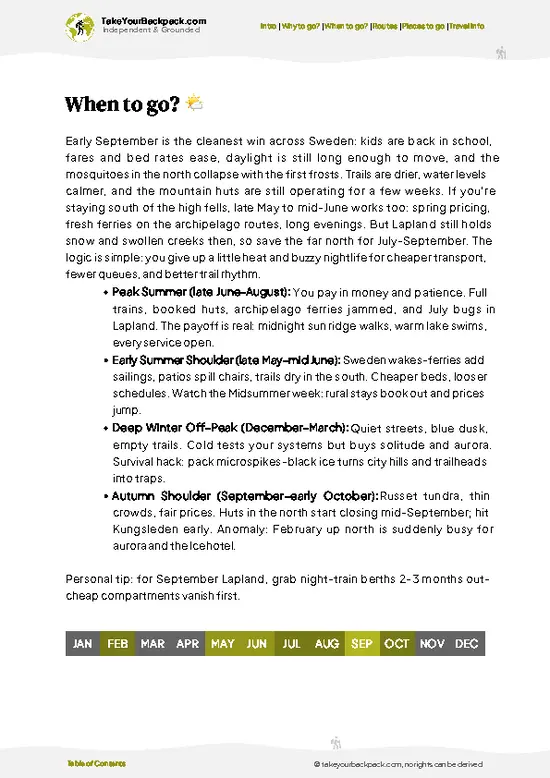
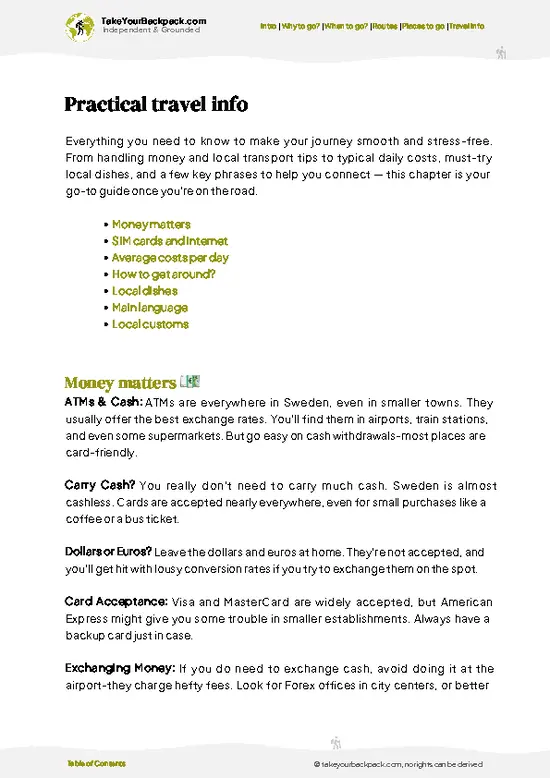
example page 0 from our offline Travel Guide for Sweden
example page 1 from our offline Travel Guide for Sweden
example page 2 from our offline Travel Guide for Sweden
example page 3 from our offline Travel Guide for Sweden
example page 4 from our offline Travel Guide for Sweden
example page 5 from our offline Travel Guide for Sweden
example page 6 from our offline Travel Guide for Sweden
example page 7 from our offline Travel Guide for Sweden
The digital guide (449 pages) contains:
119 highlights, ranked by travel appeal
Optimized 5, 10 & 15-day travel routes
Cities, national parks, landmarks, beaches
How to get around
Offline-friendly for travel without Wi-Fi
👉 Click to see all 30+ guide features

📅 Plan smarter in minutes, not weeks
Month by month travel advice
Festivals & national holidays
Budget expectations

🗺️ Go to the right places, skip the overrated ones
Honest pros & cons of destinations
Top hikes, parks & viewpoints
Lesser-known places most travelers miss
Clear “worth it vs skip it” guidance

🛏️ Travel smoothly without rookie mistakes
Best areas to stay
Transport systems explained simply
Common scams & safety advice
SIM cards, money & practical tips

🌍 Understand the country, not just visit it
Culture & traditions
52 Essential phrases & customs
Festivals worth planning around
Traveler-friendly historical context
Insights that make places more meaningful

📱 Built for real travel conditions
Fully downloadable PDF
Works completely offline
Optimized for phone use
Useful in remote areas & buses
Everything in one place
Save weeks of stressful planning
Get instant access to your full guide. 30‑day money-back guarantee.


By proceeding you agree to our terms.
Sent to your inbox immediately after payment • 100% Secure Checkout
Best Backpacking Travel Advisor 2025 tourism awardBest Backpacking
Travel Advisor
2025
What others say about Take Your Backpack Guides:
⭐⭐⭐⭐⭐
Fantastic, amazing amount of information!
⭐⭐⭐⭐⭐
My goodness this is amazing, it's what I've been looking for hats off too you!
⭐⭐⭐⭐⭐
I think this is absolutely BRILLIANT
⭐⭐⭐⭐
Very complete and informative. It's still missing places, but I gotta to commend you
⭐⭐⭐⭐⭐
This is truly amazing, thank you, can't wait to explore it with my kids!
⭐⭐⭐⭐⭐
Awesome resource, thank you!
⭐⭐⭐⭐⭐
This is amazing! Can't wait to explore the ones I haven't seen
⭐⭐⭐⭐
I love this! Well done, great idea.
⭐⭐⭐⭐⭐
Thanks for taking the time to make this gem!
⭐⭐⭐⭐⭐
This might be the best website I've ever seen.
⭐⭐⭐⭐⭐
Congratulations, and thank you so much for your work; it's incredibly valuable.
⭐⭐⭐⭐
In all seriousness I think you did a great job pointing out the important spots
⭐⭐⭐⭐⭐
10/10 very good
⭐⭐⭐⭐⭐
As someone who's only just starting to visit regularly this is awesome, thank you.
⭐⭐⭐⭐
Thank you very much! I'm going to visit my dad, it's going to be very useful!
⭐⭐⭐⭐⭐
This is really cool! We'll be travelling for the first time and this definitely come in handy.
⭐⭐⭐⭐⭐
You are now our minister of culture, congratulations 👨‍💼
⭐⭐⭐⭐⭐
Just wanted to tell you that this is a pearl! Going to follow your recommendations.
⭐⭐⭐⭐⭐
This is so cool. I'll definitely be using the resource for my travels soon.
⭐⭐⭐⭐⭐
This is very impressive! Good work.
⭐⭐⭐⭐⭐
This is an amazing and informative site. Very well done!

🛏️ Where to stay?How to pick the right area

Abisko National Park is a prime spot for backpackers, and while it’s not overflowing with accommodation options, there are solid choices to consider.

Inside the park, the Abisko Turiststation is your best bet. It’s a well-equipped lodge that offers dormitory-style rooms and private cabins. The communal kitchen is a lifesaver for budget-conscious travelers, allowing you to whip up meals instead of relying on pricey dining options. Plus, the location is unbeatable for accessing trails and the stunning Abisko Canyon.

If you prefer a bit more local flavor, head to the nearby village of Abisko. … read more 👉
Abisko National Park is a prime spot for backpackers, and while it’s not overflowing with accommodation options, there are solid choices to consider.

Inside the park, the Abisko Turiststation is your best bet. It’s a well-equipped lodge that offers dormitory-style rooms and private cabins. The communal kitchen is a lifesaver for budget-conscious travelers, allowing you to whip up meals instead of relying on pricey dining options. Plus, the location is unbeatable for accessing trails and the stunning Abisko Canyon.

If you prefer a bit more local flavor, head to the nearby village of Abisko. It’s small but has a few guesthouses and hostels that cater to backpackers. The Abisko Mountain Lodge offers cozy rooms and a friendly atmosphere, perfect for unwinding after a day on the trails.

For a more urban experience, consider Kiruna, about an hour away by train. It’s larger and has a wider range of accommodations, from hostels to hotels. Just be mindful of transportation costs and schedules, as they can eat into your time and budget.

Plan ahead, especially during peak seasons, to secure your spot. This way, you can focus your energy on the breathtaking landscapes rather than scrambling for a place to sleep.

👛 Costs (as of 29 August 2025)How expensive it really is

Visiting Abisko National Park in Sweden can be a rewarding experience, but it’s essential to be aware of the costs involved to avoid surprises.

Entrance to the park is free. However, if you’re planning to use the facilities, like the visitor center, budget around €5 to €10 for any guided tours or special activities.

Accommodation options vary widely. A basic campsite will set you back about €10 to €20 per night. If you prefer a cabin or hotel, expect to pay between €80 and €150 per night, depending on the season and amenities.

Food costs can add up quickly. A meal at a local restaurant typically ranges from €15 to €30. If you’re cooking for yourself, groceries will run about €50 to €70 for a week, depending on your preferences.

Transportation is another factor. If you’re flying into … read more 👉
Visiting Abisko National Park in Sweden can be a rewarding experience, but it’s essential to be aware of the costs involved to avoid surprises.

Entrance to the park is free. However, if you’re planning to use the facilities, like the visitor center, budget around €5 to €10 for any guided tours or special activities.

Accommodation options vary widely. A basic campsite will set you back about €10 to €20 per night. If you prefer a cabin or hotel, expect to pay between €80 and €150 per night, depending on the season and amenities.

Food costs can add up quickly. A meal at a local restaurant typically ranges from €15 to €30. If you’re cooking for yourself, groceries will run about €50 to €70 for a week, depending on your preferences.

Transportation is another factor. If you’re flying into Kiruna, expect to pay around €100 to €200 for a round-trip ticket. Local transport options, like buses to Abisko, can cost around €20 to €30 each way.

Plan for additional expenses like gear rentals if you don’t have your own. Renting outdoor equipment can range from €10 to €30 per day.

Being aware of these costs will help you allocate your budget wisely, ensuring you have the energy and funds for the experiences that truly matter in this stunning landscape.


source: swedishtouristassociation.com
⚠️ Prices can change and everyone travels differently, so take this as a rough guide. Hope it helps you plan your adventure!

🥾 TrailsExploring Abisko: trails, terrain, and views

Abisko National Park is a hiker’s dream, showcasing the rugged beauty of Swedish Lapland. The scenery is nothing short of breathtaking, with dramatic cliffs, shimmering lakes, and the Northern Lights dancing overhead if you’re lucky. The terrain varies from easy-going paths to more challenging rocky trails, so there’s something for everyone. Wildlife is abundant too; keep an eye out for reindeer, arctic foxes, and a variety of bird species.

One popular trail is Kungsleden (King’s Trail). Here are the details:
  • Length: 440 km (you can hike sections)
  • Estimated Duration: Varies by section; typically
read more 👉
Abisko National Park is a hiker’s dream, showcasing the rugged beauty of Swedish Lapland. The scenery is nothing short of breathtaking, with dramatic cliffs, shimmering lakes, and the Northern Lights dancing overhead if you’re lucky. The terrain varies from easy-going paths to more challenging rocky trails, so there’s something for everyone. Wildlife is abundant too; keep an eye out for reindeer, arctic foxes, and a variety of bird species.

One popular trail is Kungsleden (King’s Trail). Here are the details:
  • Length: 440 km (you can hike sections)
  • Estimated Duration: Varies by section; typically 5-10 days for the whole trail
  • Difficulty Level: Moderate to difficult, depending on the section
  • Key Features: Stunning views of mountains, lakes, and valleys; chance to see the Northern Lights
  • Terrain: Mix of well-marked paths, rocky sections, and some elevation changes

Getting to Abisko is pretty straightforward. You can hop on a train from Stockholm or Kiruna, and it drops you right at the park entrance. The vibe can get busy during peak summer months, especially with hikers and tourists flocking to see the midnight sun. As for entrance fees, there’s no charge to access the park itself, which makes it even sweeter for budget travelers. Just pack your gear and hit the trails!
⚠️ Hiking info can sometimes be outdated or inaccurate. Before you hit the trail, check the latest conditions with locals. If you do spot anything that's off, I'd love to hear from you, so I can update it for fellow travelers.

🛡️ SafetyTraveler Safety Guide

Abisko National Park is a haven for backpackers, but a few practical realities can enhance your experience. Weather can shift quickly. Even in summer, temperatures can drop unexpectedly, so layering is key. A solid waterproof jacket and thermal layers will keep you comfortable.

The terrain is generally manageable, but some trails can be steep and rocky. Good footwear is essential; sturdy hiking boots will save you from slips and blisters. Navigation is straightforward, thanks to well-marked paths, but always carry a map and compass. GPS can fail in remote areas.

Wildlife encounters are rare but possible. If you spot a reindeer, keep your distance. They’re curious but can be unpredictable.

Many first-timers underestimate the importance of pacing. Take breaks to enjoy the scenery and hydrate. … read more 👉
Abisko National Park is a haven for backpackers, but a few practical realities can enhance your experience. Weather can shift quickly. Even in summer, temperatures can drop unexpectedly, so layering is key. A solid waterproof jacket and thermal layers will keep you comfortable.

The terrain is generally manageable, but some trails can be steep and rocky. Good footwear is essential; sturdy hiking boots will save you from slips and blisters. Navigation is straightforward, thanks to well-marked paths, but always carry a map and compass. GPS can fail in remote areas.

Wildlife encounters are rare but possible. If you spot a reindeer, keep your distance. They’re curious but can be unpredictable.

Many first-timers underestimate the importance of pacing. Take breaks to enjoy the scenery and hydrate. Plan your hikes around daylight hours, especially in the shoulder seasons when nights come early. With these tips, you’ll be set to enjoy the beauty of Abisko without unnecessary stress.

Other Swedish national parks near Abisko

Explore more nearby:


💡 Not sure where to go next?
Create a personalized itinerary for Sweden including Abisko and the places that fit your trip.

Generate my itinerary

👉 Discover all national parks

Or checkout all Sweden has to offer (think cities, towns, villages, national parks, hikes, beaches, festivals)
Country photo of Sweden

We 💚 feedbackWhat to keep in mind

Abisko is a dream for those who crave the Northern Lights. Standing under that celestial dance is worth every effort. But be ready for the cold; winter temperatures can bite hard. Layering is essential, and don’t underestimate the wind chill. If you come prepared, you’ll save your energy for the awe-inspiring moments. Just remember, comfort is key to enjoying this stunning wilderness.

✈️ When did I visit Sweden?
Having played floorball (famous sport in Sweden, known as innebandy) for many years, I have visited Sweden many times too in the years between 1999 and 2012.

✍️ Help improve this page!
The information on this page is based on my own backpacking experience in Sweden, supplemented with up-to-date research and feedback from other travelers. Travel details can change, so if you notice anything outdated or incomplete, feel free to let me know.


🙋‍♂️ Give feedback

👋 Meet the founderWho’s Behind Take Your Backpack?

Johan, backpacker and founder of TakeYourBackpackHi, I’m Johan (Netherlands 🇳🇱), the creator of TakeYourBackpack. Over the past decade, I’ve backpacked through 80+ countries across six continents, gaining extensive experience with independent travel, long-term trips, and overland routes.

This site is built on a combination of firsthand travel experience and carefully curated insights from other backpackers. Many guides are based on places I’ve personally visited, while others bring together tips, observations, and practical advice shared by trusted travelers I’ve met along the way.

The goal is to provide realistic, experience-driven guidance — not generic itineraries — so you can explore destinations with better context, clearer expectations, and more confidence.

Get full Sweden guide •
Instant download • 119 highlights • Full Offline guide