v2.webp)
1. The North Shore Trail: Water, Rock, and Wildflowers
The north shore of Lake Klönthal is a living postcard, but don’t expect a gentle stroll. The trail hugs the water’s edge, sometimes squeezing you between sheer limestone and the lake’s glassy surface. In spring and early summer, wildflowers explode in color—alpine roses, gentians, and the occasional stubborn edelweiss. The path is uneven, roots and stones underfoot, and you’ll earn every meter. But then you round a bend and the Glarus Alps punch into view, their snowy crowns mirrored in the lake. It’s the kind of symmetry that makes you stop, sweat cooling on your back, and just stare. This is the stretch where you’ll see locals swimming, grilling sausages, or just soaking up the sun—proof that the Swiss know how to savor a landscape.
… read more 👉
The north shore of Lake Klönthal is a living postcard, but don’t expect a gentle stroll. The trail hugs the water’s edge, sometimes squeezing you between sheer limestone and the lake’s glassy surface. In spring and early summer, wildflowers explode in color—alpine roses, gentians, and the occasional stubborn edelweiss. The path is uneven, roots and stones underfoot, and you’ll earn every meter. But then you round a bend and the Glarus Alps punch into view, their snowy crowns mirrored in the lake. It’s the kind of symmetry that makes you stop, sweat cooling on your back, and just stare. This is the stretch where you’ll see locals swimming, grilling sausages, or just soaking up the sun—proof that the Swiss know how to savor a landscape.
… read more 👉
1. The North Shore Trail: Water, Rock, and Wildflowers
The north shore of Lake Klönthal is a living postcard, but don’t expect a gentle stroll. The trail hugs the water’s edge, sometimes squeezing you between sheer limestone and the lake’s glassy surface. In spring and early summer, wildflowers explode in color—alpine roses, gentians, and the occasional stubborn edelweiss. The path is uneven, roots and stones underfoot, and you’ll earn every meter. But then you round a bend and the Glarus Alps punch into view, their snowy crowns mirrored in the lake. It’s the kind of symmetry that makes you stop, sweat cooling on your back, and just stare. This is the stretch where you’ll see locals swimming, grilling sausages, or just soaking up the sun—proof that the Swiss know how to savor a landscape.
2. Chlüstalp: The Soundtrack of Cowbells
Push past the lake’s far end and climb toward Chlüstalp, a high meadow that feels like a set from a Swiss film—except it’s real, and you’re in it. The ascent is a leg-burner, zigzagging through spruce and larch, but the reward is a rolling pasture dotted with cows and their melodic bells. The air smells of grass and woodsmoke. If you’re lucky, you’ll catch a farmer selling fresh Alpkäse (mountain cheese) from a wooden hut. This is where the human and natural worlds blend: the clang of bells, the distant echo of a waterfall, and the taste of cheese that’s traveled zero kilometers. It’s not just scenic; it’s alive.
3. The Platten: Cliffside Drama
If you crave a shot of adrenaline, detour to the Platten, a rocky outcrop that juts above the lake’s southern rim. The trail narrows, the drop sharpens, and suddenly you’re perched above a turquoise abyss. The wind here is a force, sometimes howling, sometimes whispering secrets from the peaks. You’ll spot paragliders launching themselves into the void, their canopies bright against the sky. The view is pure drama: lake, forest, and the serrated teeth of the Glärnisch massif. This is my personal favorite—nothing else on the circuit makes you feel quite so small and so alive at the same time.
4. The Klöntal Dam: Engineering Meets Alpine Majesty
At the lake’s western end, the Klöntal dam stands as a monument to Swiss precision. It’s not just a slab of concrete; it’s a vantage point. Walk across and you get a panoramic sweep of the entire valley, the water shimmering below, the mountains crowding the horizon. The dam’s scale is humbling, but it’s the contrast—the rawness of nature against the clean lines of human effort—that sticks with you. This is where you realize the Swiss don’t just live with their landscape; they shape it, respect it, and invite you to do the same.
The north shore of Lake Klönthal is a living postcard, but don’t expect a gentle stroll. The trail hugs the water’s edge, sometimes squeezing you between sheer limestone and the lake’s glassy surface. In spring and early summer, wildflowers explode in color—alpine roses, gentians, and the occasional stubborn edelweiss. The path is uneven, roots and stones underfoot, and you’ll earn every meter. But then you round a bend and the Glarus Alps punch into view, their snowy crowns mirrored in the lake. It’s the kind of symmetry that makes you stop, sweat cooling on your back, and just stare. This is the stretch where you’ll see locals swimming, grilling sausages, or just soaking up the sun—proof that the Swiss know how to savor a landscape.
2. Chlüstalp: The Soundtrack of Cowbells
Push past the lake’s far end and climb toward Chlüstalp, a high meadow that feels like a set from a Swiss film—except it’s real, and you’re in it. The ascent is a leg-burner, zigzagging through spruce and larch, but the reward is a rolling pasture dotted with cows and their melodic bells. The air smells of grass and woodsmoke. If you’re lucky, you’ll catch a farmer selling fresh Alpkäse (mountain cheese) from a wooden hut. This is where the human and natural worlds blend: the clang of bells, the distant echo of a waterfall, and the taste of cheese that’s traveled zero kilometers. It’s not just scenic; it’s alive.
3. The Platten: Cliffside Drama
If you crave a shot of adrenaline, detour to the Platten, a rocky outcrop that juts above the lake’s southern rim. The trail narrows, the drop sharpens, and suddenly you’re perched above a turquoise abyss. The wind here is a force, sometimes howling, sometimes whispering secrets from the peaks. You’ll spot paragliders launching themselves into the void, their canopies bright against the sky. The view is pure drama: lake, forest, and the serrated teeth of the Glärnisch massif. This is my personal favorite—nothing else on the circuit makes you feel quite so small and so alive at the same time.
4. The Klöntal Dam: Engineering Meets Alpine Majesty
At the lake’s western end, the Klöntal dam stands as a monument to Swiss precision. It’s not just a slab of concrete; it’s a vantage point. Walk across and you get a panoramic sweep of the entire valley, the water shimmering below, the mountains crowding the horizon. The dam’s scale is humbling, but it’s the contrast—the rawness of nature against the clean lines of human effort—that sticks with you. This is where you realize the Swiss don’t just live with their landscape; they shape it, respect it, and invite you to do the same.
Spotted a mistake or missing something? Contact us.

Private Transfer from Lucerne to Zurich Airport ZRH
✓ Free cancellation

Private Tour of Basel and Alsace Region from Zurich
✓ Free cancellation
Private Transfer from Lucerne to Engelberg
✓ Free cancellation
Private Transfer from Lucerne to Grindelwald
✓ Free cancellation

Mount Pilatus & Lucerne Private Tour from Zurich
✓ Free cancellation
Private Transfer from Lucerne to Interlaken
✓ Free cancellation
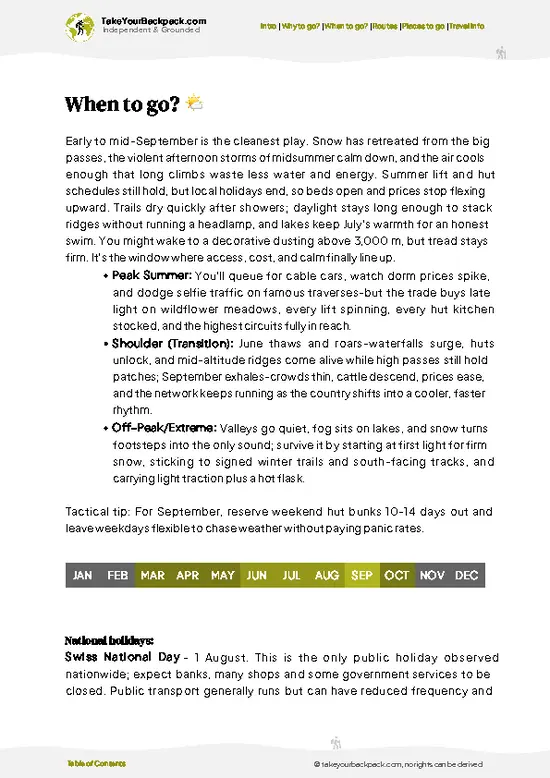


 Best Backpacking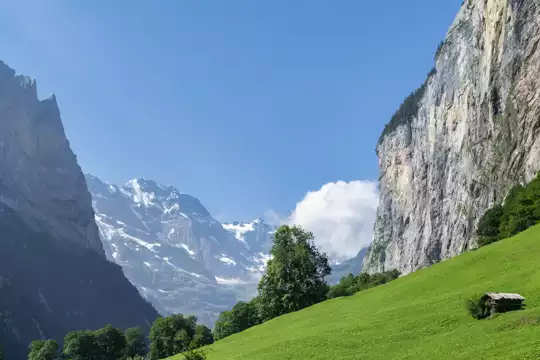
.jpg) Hi, I’m Johan (Netherlands 🇳🇱), the creator of TakeYourBackpack. Over the past decade, I’ve backpacked through 80+ countries across six continents, gaining extensive experience with independent travel, long-term trips, and overland routes.
Hi, I’m Johan (Netherlands 🇳🇱), the creator of TakeYourBackpack. Over the past decade, I’ve backpacked through 80+ countries across six continents, gaining extensive experience with independent travel, long-term trips, and overland routes.