×

Switzerland🇨🇭 | best hikesThe Must-See 10 hikes in Switzerland

Switzerland’s hiking trails are a masterclass in diversity, offering everything from gentle lakeside strolls to challenging alpine ascents. The country’s unique geography means that options vary significantly by region; the Jungfrau region boasts high-altitude trails with breathtaking views, while the Lake Geneva area features more accessible paths perfect for leisurely exploration. Seasonal changes also play a crucial role; summer hikes benefit from long daylight hours, while autumn offers stunning foliage. Choosing the right hike impacts your vibe and cultural immersion, shaping your overall experience. For backpackers and independent travelers, understanding these nuances ensures a safer, more enriching adventure.

By Johan Kruseman 🇳🇱 | Updated June 9, 2026
Explore the best beaches in Switzerland

Why go?Why Travelers Love These Spots

Switzerland’s hikes stand out due to their terrain variety. From lush valleys to rugged alpine peaks, the landscape offers a dynamic range of experiences. This diversity allows hikers to choose trails that match their skill levels and desired scenery, making it easier to find a hike that feels just right. However, this variety also introduces a trade-off: the more challenging trails often reward with breathtaking views, while easier paths may lack the same dramatic scenery.

The altitude of Swiss hikes is another critical factor. Many trails ascend rapidly, which can lead to altitude sickness if not approached with caution. Understanding your limits is essential; acclimatization can enhance enjoyment and safety. In contrast, lower-altitude hikes may offer a more leisurely experience but can … read more 👉
Switzerland’s hikes stand out due to their terrain variety. From lush valleys to rugged alpine peaks, the landscape offers a dynamic range of experiences. This diversity allows hikers to choose trails that match their skill levels and desired scenery, making it easier to find a hike that feels just right. However, this variety also introduces a trade-off: the more challenging trails often reward with breathtaking views, while easier paths may lack the same dramatic scenery.

The altitude of Swiss hikes is another critical factor. Many trails ascend rapidly, which can lead to altitude sickness if not approached with caution. Understanding your limits is essential; acclimatization can enhance enjoyment and safety. In contrast, lower-altitude hikes may offer a more leisurely experience but can be crowded, especially in peak season.

Switzerland’s trail infrastructure is world-class, with well-marked paths and facilities that cater to hikers. However, this can create a false sense of security. While trails are generally safe, weather conditions can change rapidly, making it vital to check forecasts and be prepared for sudden shifts.

Lastly, consider the logistics of travel time versus depth of exploration. The Swiss public transport system is efficient, but reaching remote trails can take time. Balancing accessibility with the desire for immersive experiences is key to maximizing your hiking adventure in this stunning country.
Our Approach to Ranking
The list of best hikes in Switzerland is created based on scenery, challenge, trail quality, landmarks, and overall enjoyment. If you feel a hike is missing in this list, please let us know.

When to go?Optimal Periods for Travel

Seasonality and Hiking in Switzerland


Switzerland’s hiking landscape is shaped by altitude, weather patterns, and daylight hours, creating a dynamic system that varies throughout the year. In summer, typically from June to September, trails are most accessible. Temperatures are mild, and snow has melted at lower elevations, allowing for a wide range of hikes. However, this is also peak tourist season, leading to crowded trails and higher accommodation costs.

Spring and autumn serve as shoulder seasons. In spring, trails begin to open, but lingering snow at higher altitudes can limit access. Rainfall is common, and conditions can be unpredictable. Conversely, autumn offers stunning foliage and fewer crowds, but shorter daylight hours and the potential for early snowfall can pose challenges. … read more 👉

Seasonality and Hiking in Switzerland


Switzerland’s hiking landscape is shaped by altitude, weather patterns, and daylight hours, creating a dynamic system that varies throughout the year. In summer, typically from June to September, trails are most accessible. Temperatures are mild, and snow has melted at lower elevations, allowing for a wide range of hikes. However, this is also peak tourist season, leading to crowded trails and higher accommodation costs.

Spring and autumn serve as shoulder seasons. In spring, trails begin to open, but lingering snow at higher altitudes can limit access. Rainfall is common, and conditions can be unpredictable. Conversely, autumn offers stunning foliage and fewer crowds, but shorter daylight hours and the potential for early snowfall can pose challenges.

Winter hiking is a niche experience, with specific trails maintained for snowshoeing or winter hiking. While the scenery is breathtaking, safety becomes paramount due to icy conditions and limited daylight.

Understanding these seasonal shifts allows for strategic planning. Optimal months for hiking balance safety and scenic reward. Consider trail access, weather conditions, and recovery needs when selecting the timing of hikes. This approach transforms logistics into a calculated strategy, ensuring a fulfilling hiking experience in Switzerland.

hike hoppingSuggested Travel Strategies

General routing logic

Switzerland’s hiking trails are interconnected, allowing for efficient routing. Start in the Bernese Oberland, where iconic peaks like Eiger and Jungfrau dominate. From there, head south to the Valais region, home to the Matterhorn. This direction minimizes backtracking and maximizes scenic variety.

Typical time needed

Allocate at least three to four days per region. This allows for two to three hikes, factoring in recovery time. High-altitude hikes often require a day for acclimatization, especially if ascending above 2,500 meters.

Common planning mistakes

Travelers often underestimate the time needed for recovery and overestimate their hiking capabilities. Prioritize quality over quantity. It’s better to savor a few trails than rush through many.

Trade-offs

read more 👉

General routing logic

Switzerland’s hiking trails are interconnected, allowing for efficient routing. Start in the Bernese Oberland, where iconic peaks like Eiger and Jungfrau dominate. From there, head south to the Valais region, home to the Matterhorn. This direction minimizes backtracking and maximizes scenic variety.

Typical time needed

Allocate at least three to four days per region. This allows for two to three hikes, factoring in recovery time. High-altitude hikes often require a day for acclimatization, especially if ascending above 2,500 meters.

Common planning mistakes

Travelers often underestimate the time needed for recovery and overestimate their hiking capabilities. Prioritize quality over quantity. It’s better to savor a few trails than rush through many.

Trade-offs and constraints

Consider the balance between speed and depth of experience. A faster pace may lead to fatigue, diminishing enjoyment. Budget constraints can also affect accommodation choices, impacting comfort and recovery.

Pacing strategies

Plan hikes with varying difficulty levels. Start with easier trails to build stamina before tackling more challenging routes. Flexibility is key; weather can change rapidly, so be prepared to adjust plans. This strategic approach ensures a rewarding experience while minimizing exhaustion.

The ListMust-Visit hikes in Switzerland

1 Haute Route

glacier crossings, remote huts, multi-day traverse

Cross high passes and ancient glaciers on a demanding trek linking Chamonix and Zermatt, relying on mountain refuges for overnight stays.

Switzerland - the Haute Route

2 Matterhorn Circuit

cross-border loop, alpine passes, remote valleys

Complete a full circuit around the Matterhorn, crossing into Italy and Switzerland while navigating rugged terrain and isolated hamlets.

Switzerland & Italy - Matterhorn Circuit

3 Jungfrau Region Hikes

glacier valleys, cog railways, iconic peaks

Experience a network of trails weaving through deep valleys and high meadows, with frequent train access and views of the Bernese Alps.

Switzerland - Jungfrau Region Hikes

4 Eiger Trail

north face, moraine paths, alpine wildflowers

Follow the base of the Eiger’s imposing wall, passing beneath sheer cliffs and across rocky slopes dotted with seasonal blooms.

switzerland-hike-eiger-trail
© Google | Gleb

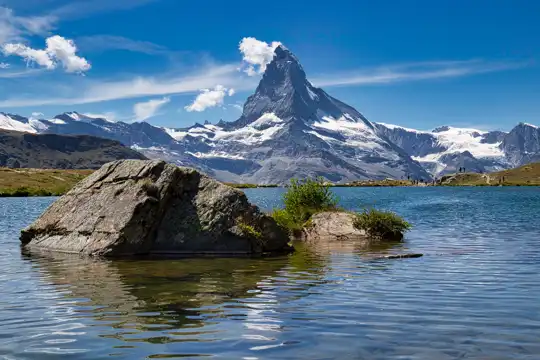
5 Five Lakes Walk

crystal lakes, Pizol massif, reflective waters

Walk between clear mountain lakes, each offering distinct colors and mirrored peaks, with steady elevation changes and open vistas.

switzerland-hike-five-lakes-walk
© Google | Devshack

6 Schynige Platte Panorama Trail

flower fields, ridge walk, Eiger views

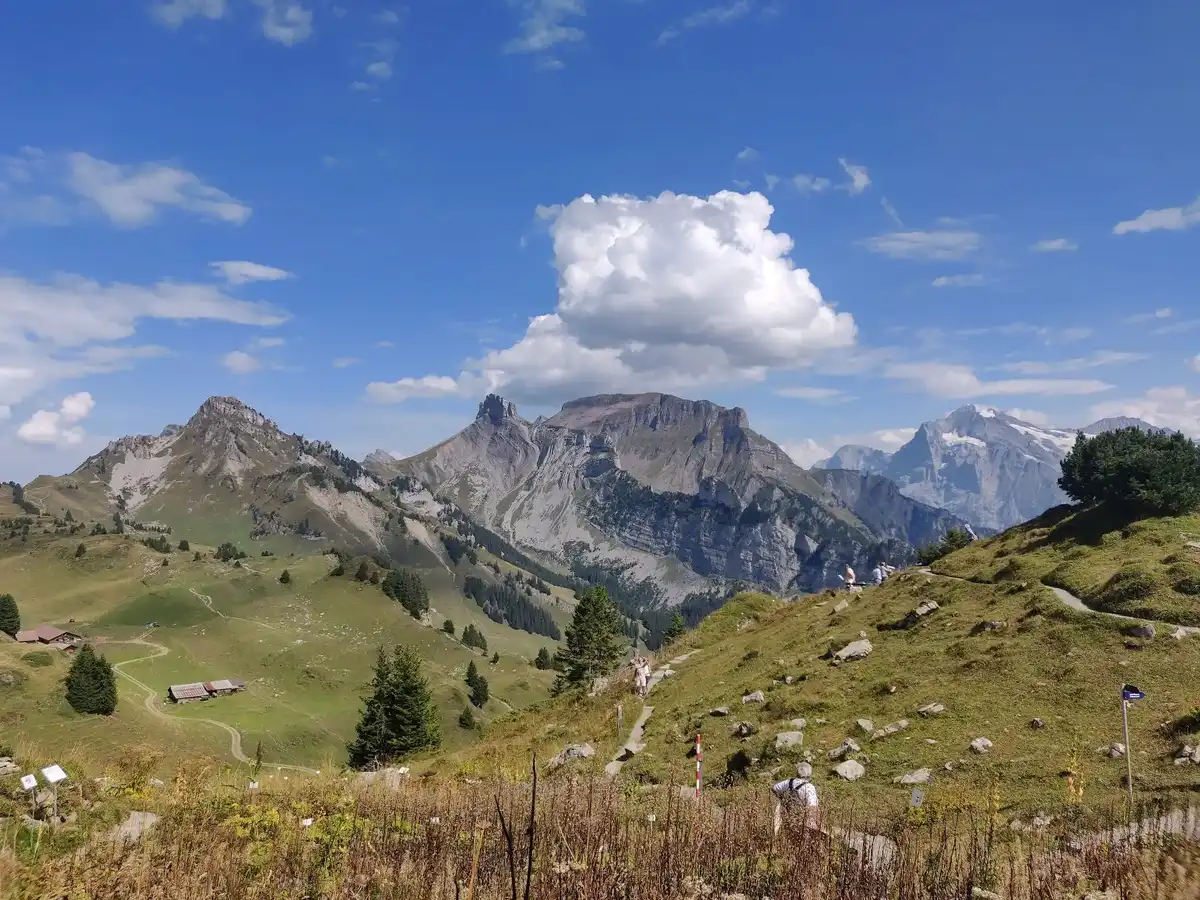
Walk a high ridge above Interlaken, with open views of the Jungfrau massif and abundant alpine flora in summer.

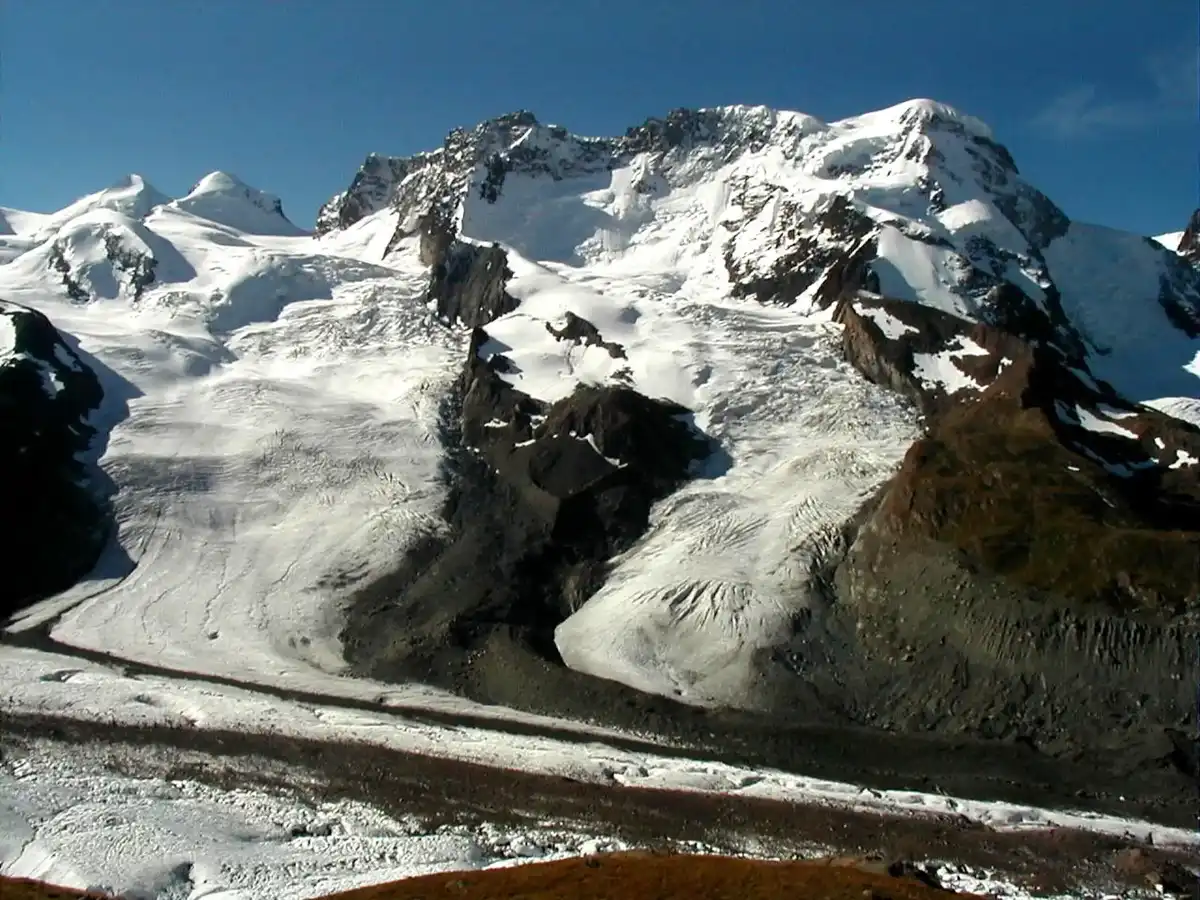
7 Matterhorn Glacier Trail

glacial moraines, ice views, educational panels

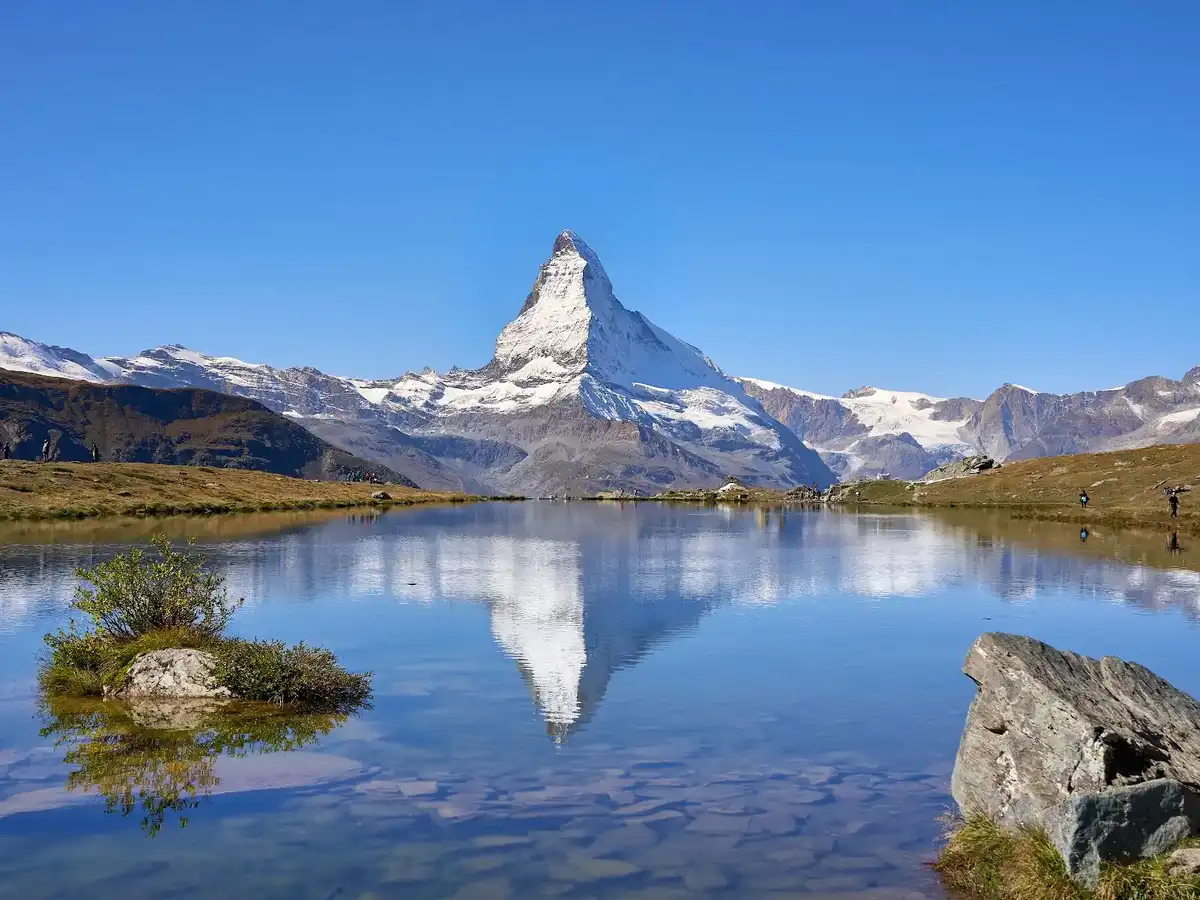
Walk above Zermatt on a marked route tracing the glacier’s retreat, with interpretive signs and close-up views of ancient ice.

switzerland-hike-matterhorn-glacier-trail
© Google | Kristin Christ

8 Oeschinensee Lake Trail

turquoise lake, limestone cliffs, alpine meadows

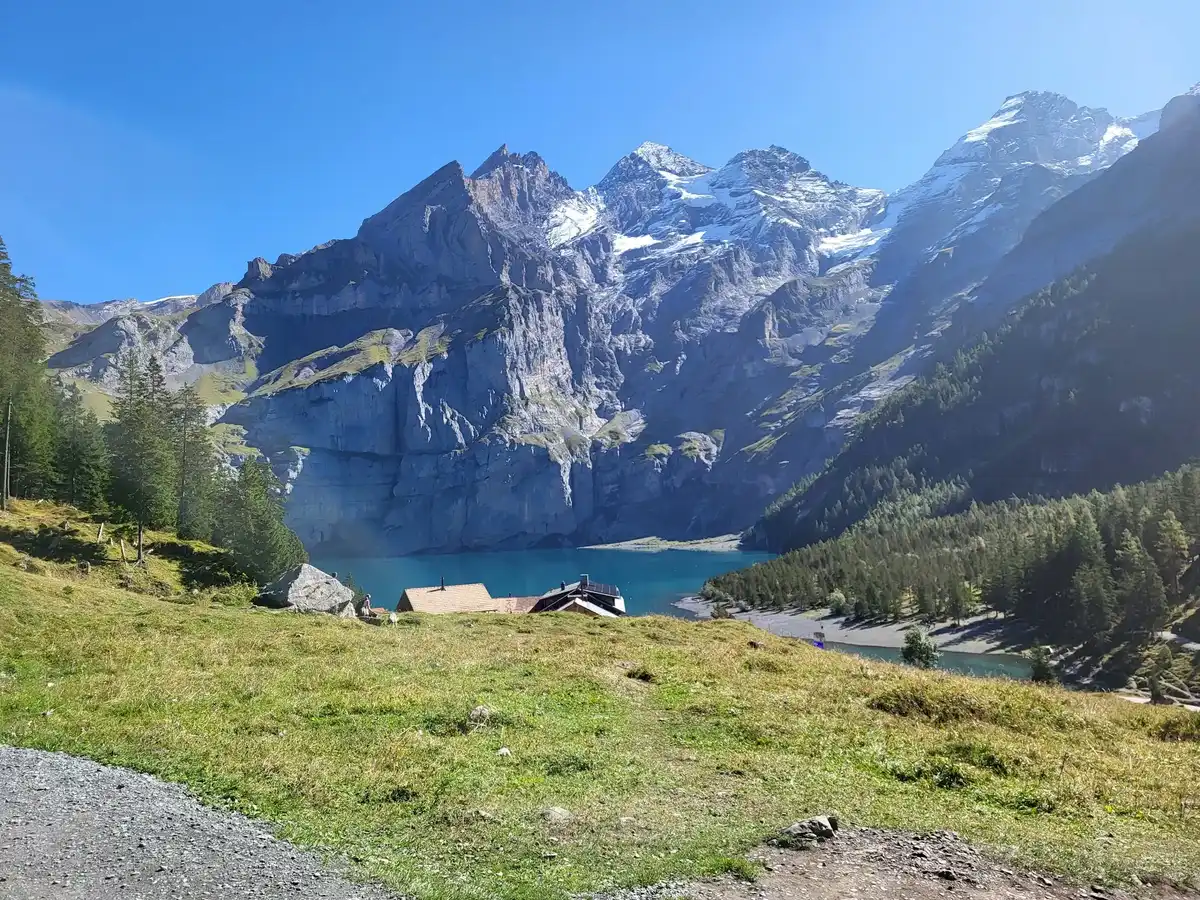
Hike above a glacial lake surrounded by sheer rock walls and flower-filled pastures, with options for swimming or rowing.

switzerland-hike-oeschinensee-lake-trail
© Google | Wvdv 98

9 Rigi Panoramic Trail

lake panoramas, gentle gradients, cogwheel train

Follow a mostly level path along the Rigi ridge, enjoying sweeping views over lakes and easy access via historic mountain railways.

switzerland-hike-rigi-panoramic-trail
© Google |

10 Mount Säntis Hike

Appenzell peaks, weather station, exposed ridges

Ascend varied terrain to the region’s highest summit, encountering shifting weather and expansive views over six countries.

11 Heidiland

storybook villages, rolling vineyards, spa towns

Move through gentle hills and rural hamlets, encountering thermal springs and cultivated slopes that inspired the Heidi tales.

12 Tour of Monte Rosa

glacier crossings, Italian hamlets, high passes

Circle the Monte Rosa massif on a demanding multi-day trek, linking remote villages and traversing challenging alpine terrain.

switzerland-hike-tour-of-monte-rosa
© Google | Rudolf Posch

13 Lake Klönthal

emerald lake, steep cliffs, forested shoreline

Circle a glacial lake framed by wooded slopes and dramatic rock faces, with opportunities for swimming and quiet lakeside rest.

14 Viamala Slucht

deep canyon, ancient bridges, turquoise river

Descend stone steps into a dramatic chasm, where the Hinterrhein river carves through towering rock and centuries-old crossings remain.

15 Twannbachschlucht

limestone gorge, mossy walls, wooden walkways

Follow a narrow path through a shaded ravine, with footbridges and stairways guiding you past waterfalls and lush rock faces.

switzerland-hike-twannbachschlucht
© Google |

16 Dreibündenstein

alpine plateau, panoramic ridges, Roman history

Traverse high-altitude meadows and ancient boundary stones while gaining wide views over Graubünden’s layered mountain landscapes.

17 Rofla Slucht

narrow gorge, waterfalls, granite walls

Descend into a deep ravine carved by rushing water, passing under overhangs and alongside cascades in a shaded, cool setting.

18 Rofla Slucht

narrow gorge, waterfalls, granite walls

Descend into a deep ravine carved by rushing water, passing under overhangs and alongside cascades in a shaded, cool setting.

Think you know Switzerland?

Prove you’re a true local — uncover 8 lesser-known hikes in Switzerland that locals tend to keep to themselves.
Loading the map 🌍

Expert viewInsights from Locals and Experts

Trail Logistics

Switzerland’s hiking trails are a well-oiled machine, but understanding the logistics is key to unlocking their full potential. Aim for three to five hikes during your visit. This range allows you to experience a variety of terrains and altitudes without overwhelming yourself. Each hike offers a different flavor of the Swiss landscape, from alpine meadows to rugged peaks.

Consider the time commitment. Most hikes can take anywhere from four to eight hours, depending on difficulty and distance. Factor in breaks for food and photos; the scenery is too captivating to rush through. Budget-wise, expect to spend on transportation, food, and possibly accommodation if you’re tackling multi-day hikes. A Swiss Travel Pass can be a game-changer for getting around, as it covers many … read more 👉

Trail Logistics

Switzerland’s hiking trails are a well-oiled machine, but understanding the logistics is key to unlocking their full potential. Aim for three to five hikes during your visit. This range allows you to experience a variety of terrains and altitudes without overwhelming yourself. Each hike offers a different flavor of the Swiss landscape, from alpine meadows to rugged peaks.

Consider the time commitment. Most hikes can take anywhere from four to eight hours, depending on difficulty and distance. Factor in breaks for food and photos; the scenery is too captivating to rush through. Budget-wise, expect to spend on transportation, food, and possibly accommodation if you’re tackling multi-day hikes. A Swiss Travel Pass can be a game-changer for getting around, as it covers many train and bus routes that access trailheads.

Altitude Awareness

Switzerland’s elevation can be both exhilarating and challenging. Many trails start at high altitudes, which can lead to altitude sickness if you’re not acclimatized. Pay attention to your body; if you feel dizzy or excessively fatigued, it’s wise to descend. A good rule of thumb is to ascend no more than 300 meters (about 1,000 feet) per day if you’re not used to high altitudes.

Plan your hikes with altitude in mind. Some trails are accessible via lifts, allowing you to start at a higher elevation and enjoy a less strenuous trek. This trade-off can save energy for those breathtaking views at the summit.

Difficulty and Pacing

Switzerland offers hikes ranging from easy strolls to technical climbs. Understanding the grading system is crucial. Easy trails are well-marked and suitable for families, while difficult ones may require scrambling and a good level of fitness. Always check the trail grading before you go.

Pacing is equally important. A common mistake is to underestimate how long a hike will take. The Swiss terrain can be deceptive; what looks like a short distance on a map can take longer than expected due to elevation changes and trail conditions. Aim for a pace that allows you to enjoy the journey, not just the destination.

Recovery and Preparation

Recovery is often overlooked but vital for a successful hiking experience. After a long day on the trails, prioritize hydration and nutrition. Swiss cuisine offers hearty options like rösti or fondue, perfect for replenishing energy.

Consider your preparation as well. Invest in quality gear, especially footwear. A good pair of hiking boots can make or break your experience. Also, familiarize yourself with local weather patterns; conditions can change rapidly in the mountains.

Safety and Cultural Considerations

Safety should always be top of mind. Inform someone of your hiking plans and estimated return time. Many trails are remote, and cell service can be spotty. Carry a map and a first-aid kit, and know basic navigation skills.

Culturally, respect local customs and the environment. Switzerland takes pride in its natural beauty, and hikers are expected to follow Leave No Trace principles. This not only preserves the trails for future generations but also fosters goodwill with locals.

By understanding these logistical nuances, you can navigate Switzerland’s hiking landscape like a pro. Each hike becomes not just a physical challenge but a rewarding experience that deepens your connection to this stunning country.

✈️ The backpacker research shortcutSwitzerland Travel Guide

An offline-friendly backpacking guide with optimized travel routes, ranked highlights, transport advice, and the best areas to stay.
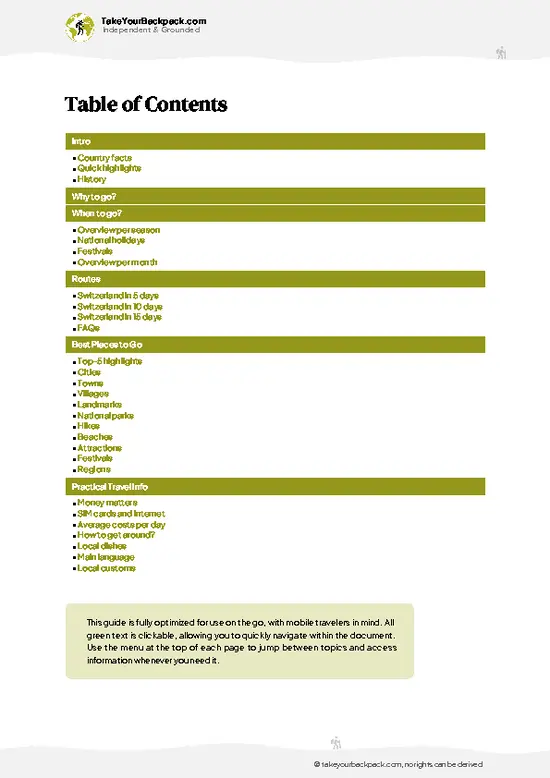
example page 0 from our offline Travel Guide for Switzerland
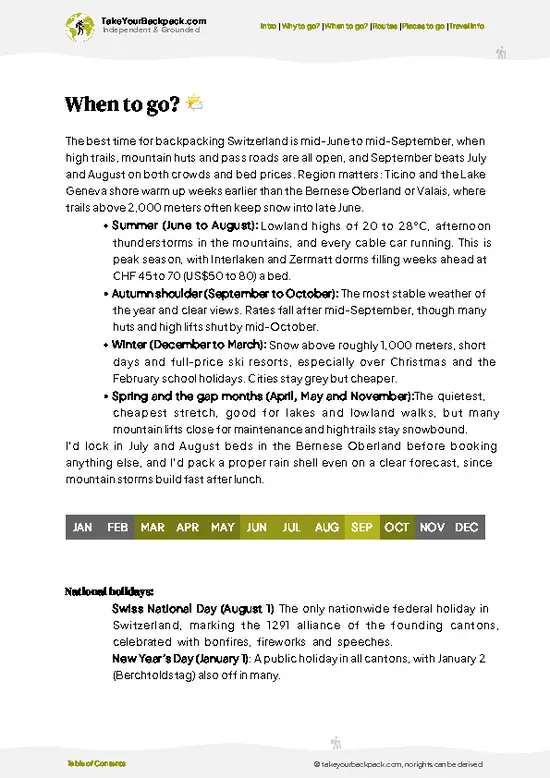
example page 1 from our offline Travel Guide for Switzerland
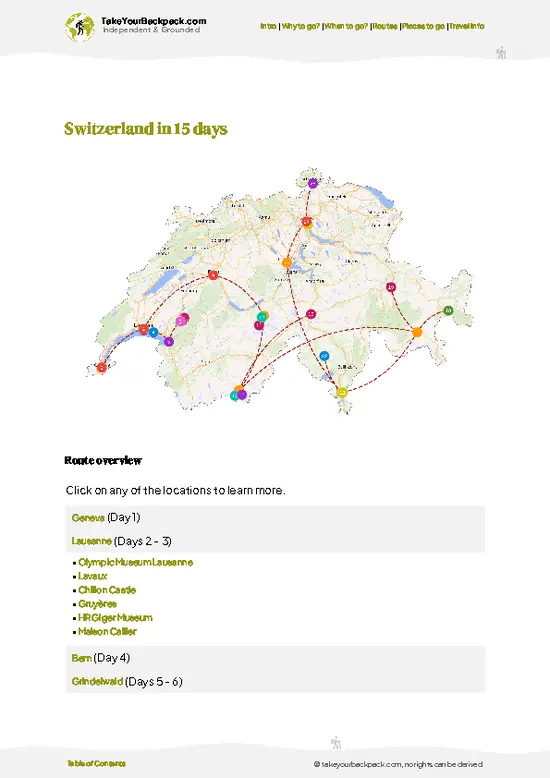
example page 2 from our offline Travel Guide for Switzerland
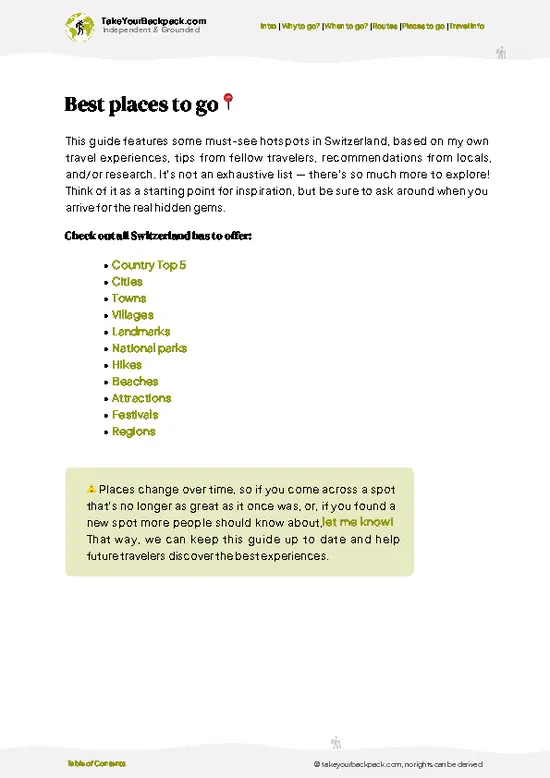
example page 3 from our offline Travel Guide for Switzerland
example page 4 from our offline Travel Guide for Switzerland
example page 5 from our offline Travel Guide for Switzerland
example page 6 from our offline Travel Guide for Switzerland
example page 7 from our offline Travel Guide for Switzerland
The digital guide (449 pages) contains:
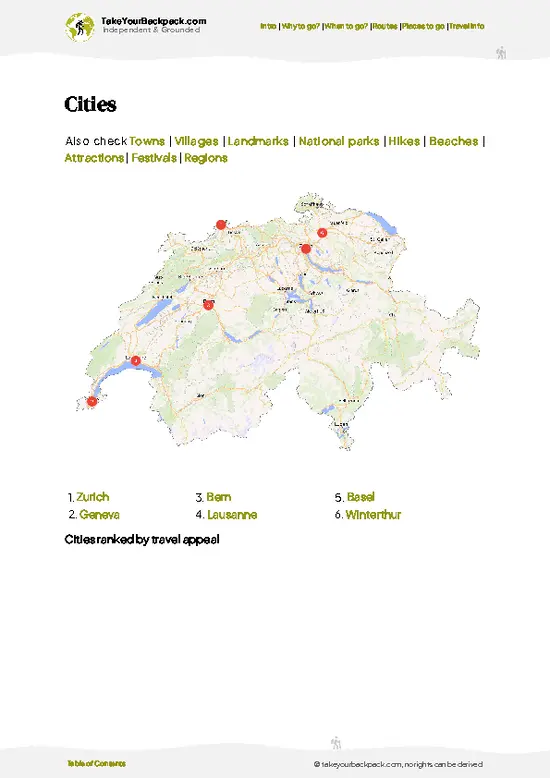
121 highlights, ranked by travel appeal
Optimized 5, 10 & 15-day travel routes
Cities, national parks, landmarks, beaches
How to get around
Offline-friendly for travel without Wi-Fi
👉 Click to see all 30+ guide features

📅 Plan smarter in minutes, not weeks
Month by month travel advice
Festivals & national holidays
Budget expectations

🗺️ Go to the right places, skip the overrated ones
Honest pros & cons of destinations
Top hikes, parks & viewpoints
Lesser-known places most travelers miss
Clear “worth it vs skip it” guidance

🛏️ Travel smoothly without rookie mistakes
Best areas to stay
Transport systems explained simply
Common scams & safety advice
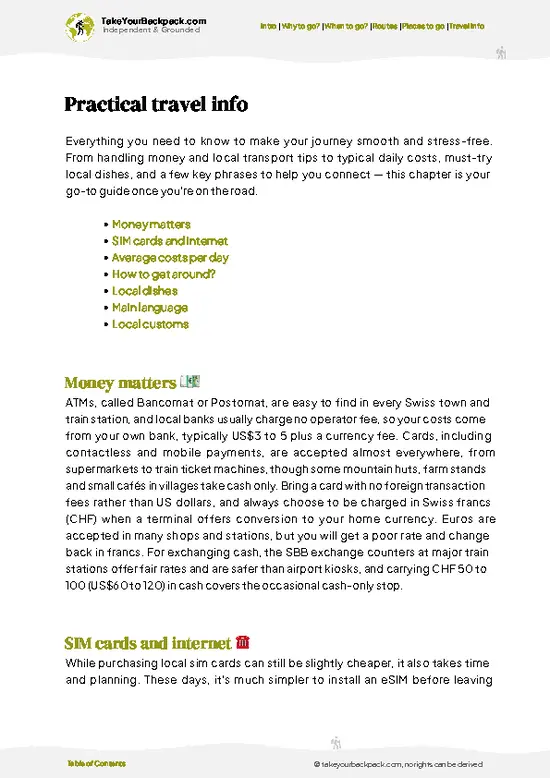
SIM cards, money & practical tips

🌍 Understand the country, not just visit it
Culture & traditions
52 Essential phrases & customs
Festivals worth planning around
Traveler-friendly historical context
Insights that make places more meaningful

📱 Built for real travel conditions
Fully downloadable PDF
Works completely offline
Optimized for phone use
Useful in remote areas & buses
Everything in one place
Save weeks of stressful planning
Get instant access to your full guide. 30‑day money-back guarantee.


By proceeding you agree to our terms.
Sent to your inbox immediately after payment • 100% Secure Checkout
Best Backpacking Travel Advisor 2025 tourism awardBest Backpacking
Travel Advisor
2025
What others say about Take Your Backpack Guides:
⭐⭐⭐⭐⭐
Fantastic, amazing amount of information!
⭐⭐⭐⭐⭐
My goodness this is amazing, it's what I've been looking for hats off too you!
⭐⭐⭐⭐⭐
I think this is absolutely BRILLIANT
⭐⭐⭐⭐
Very complete and informative. It's still missing places, but I gotta to commend you
⭐⭐⭐⭐⭐
This is truly amazing, thank you, can't wait to explore it with my kids!
⭐⭐⭐⭐⭐
Awesome resource, thank you!
⭐⭐⭐⭐⭐
This is amazing! Can't wait to explore the ones I haven't seen
⭐⭐⭐⭐
I love this! Well done, great idea.
⭐⭐⭐⭐⭐
Thanks for taking the time to make this gem!
⭐⭐⭐⭐⭐
This might be the best website I've ever seen.
⭐⭐⭐⭐⭐
Congratulations, and thank you so much for your work; it's incredibly valuable.
⭐⭐⭐⭐
In all seriousness I think you did a great job pointing out the important spots
⭐⭐⭐⭐⭐
10/10 very good
⭐⭐⭐⭐⭐
As someone who's only just starting to visit regularly this is awesome, thank you.
⭐⭐⭐⭐
Thank you very much! I'm going to visit my dad, it's going to be very useful!
⭐⭐⭐⭐⭐
This is really cool! We'll be travelling for the first time and this definitely come in handy.
⭐⭐⭐⭐⭐
You are now our minister of culture, congratulations 👨‍💼
⭐⭐⭐⭐⭐
Just wanted to tell you that this is a pearl! Going to follow your recommendations.
⭐⭐⭐⭐⭐
This is so cool. I'll definitely be using the resource for my travels soon.
⭐⭐⭐⭐⭐
This is very impressive! Good work.
⭐⭐⭐⭐⭐
This is an amazing and informative site. Very well done!

🛏️ Where to stay?Top Places to Consider Staying

Yes; hostels and budget accommodation are common in Switzerland, concentrated in city centres and tourist hubs such as Zurich (Old Town / Kreis 1, Langstrasse), Geneva (Old Town, Plainpalais), Lucerne (Old Town / near the train station), Interlaken (West, Ost, Matten), Bern (Old Town, Länggasse) and Basel (Old Town, St. Johann).
Old Towns and station areas put you closest to highlights and transport but can be busier and pricier; Langstrasse and Interlaken West offer cheaper beds and nightlife at the cost of more noise; suburbs and neighbourhoods like Länggasse or station suburbs are quieter, cheaper and safer for early mountain departures; mountain villages have fewer budget beds and higher … read more 👉
Yes; hostels and budget accommodation are common in Switzerland, concentrated in city centres and tourist hubs such as Zurich (Old Town / Kreis 1, Langstrasse), Geneva (Old Town, Plainpalais), Lucerne (Old Town / near the train station), Interlaken (West, Ost, Matten), Bern (Old Town, Länggasse) and Basel (Old Town, St. Johann).
Old Towns and station areas put you closest to highlights and transport but can be busier and pricier; Langstrasse and Interlaken West offer cheaper beds and nightlife at the cost of more noise; suburbs and neighbourhoods like Länggasse or station suburbs are quieter, cheaper and safer for early mountain departures; mountain villages have fewer budget beds and higher prices, so book early and factor in extra travel time.

If you enjoy meeting fellow travelers, consider choosing hostels with high ratings for atmosphere. On the other hand, if you prefer having your own space, a hotel might be a better option.

SwitzerlandMore Places Across Switzerland

👋 Meet the founderWho’s Behind Take Your Backpack?

Johan, backpacker and founder of TakeYourBackpackHi, I’m Johan (Netherlands 🇳🇱), the creator of TakeYourBackpack. Over the past decade, I’ve backpacked through 80+ countries across six continents, gaining extensive experience with independent travel, long-term trips, and overland routes.

This site is built on a combination of firsthand travel experience and carefully curated insights from other backpackers. Many guides are based on places I’ve personally visited, while others bring together tips, observations, and practical advice shared by trusted travelers I’ve met along the way.

The goal is to provide realistic, experience-driven guidance — not generic itineraries — so you can explore destinations with better context, clearer expectations, and more confidence.

Get full country guide •
Instant download • 121 highlights • Full Offline guide