×

Switzerland🇨🇭 | national parksParc Elaglacial lakes, high passes, Romansh culture | things to do and best time to go

Explore Naturpark ThalExplore Swiss National Park

Backpacking in Parc Ela
🏆 Top picknational park ranked #2
By Johan Kruseman 🇳🇱 | Updated June 6, 2026

Your boots crunch on frost-hardened grass, cowbells clink somewhere below, and the air smells like cold stone and larch resin; a raven rides the updraft over a jagged ridge while the first sun hits the peaks in a sharp, almost metallic light. This is Parc Ela, in the canton of Graubünden in eastern Switzerland, between the Albula and Julier passes. For backpackers, it’s serious mountain country without the circus of the big-name resorts: long, honest trails, big passes, real silence. Scenery is harsh more than pretty—rock, scree, high meadows, and villages that feel lived-in, not curated. Wildlife is there (ibex, chamois, marmots) but you need patience and early starts. Access by train and postbus is good, but once you’re in, it’s legs-only and the elevation gain adds up. No entrance fee, but huts and guesthouses aren’t cheap, and wild camping is restricted and policed more than many blogs admit. Compared with the Swiss National Park near Zernez, Parc Ela is less strictly protected, more cultural landscape than pure wilderness, which means more trails, more villages, and a bit more flexibility, but also more roads and infrastructure in your sightlines. I like it for that mix: you can do a hard, lonely ridge walk, then drop into a Romansh-speaking village for a budget-ish dorm bed and a plate of barley soup that actually fills you. Crowds stay manageable except on a few classic passes in peak summer; if you’ve only done the glossy side of Switzerland, Parc Ela feels like the country with its work clothes still on.

Discover everything you want to know in the 📖 Switzerland Travel Guide.
Loading the map 🌍
CLICK TO FILTER
cities
towns
villages
landmarks
national parks
hikes
beaches
attractions
festivals
regions
SHOW COUNTRY’S BESTSHOW ALL

✨ Why go?
Ranked #2 national park in Switzerland
What makes this national park worth exploring

Parc Ela in Switzerland attracts backpackers for several compelling reasons. First, the independent exploration it offers is a major draw. You can roam freely across diverse landscapes, from lush valleys to rugged peaks, without the constraints of guided tours. This flexibility allows you to tailor your experience to your pace and interests.

Budget-conscious travelers appreciate the camping and hostel options nearby. You’ll find well-maintained campsites that let you immerse yourself in nature without breaking the bank. Hostels in the area provide a cozy base for those who prefer a little more comfort while still keeping costs low.

The trail variety is another highlight. Whether you’re after a leisurely stroll or a challenging hike, Parc Ela has it all. Trails are well-marked, making it … read more 👉
Parc Ela in Switzerland attracts backpackers for several compelling reasons. First, the independent exploration it offers is a major draw. You can roam freely across diverse landscapes, from lush valleys to rugged peaks, without the constraints of guided tours. This flexibility allows you to tailor your experience to your pace and interests.

Budget-conscious travelers appreciate the camping and hostel options nearby. You’ll find well-maintained campsites that let you immerse yourself in nature without breaking the bank. Hostels in the area provide a cozy base for those who prefer a little more comfort while still keeping costs low.

The trail variety is another highlight. Whether you’re after a leisurely stroll or a challenging hike, Parc Ela has it all. Trails are well-marked, making it easy to navigate for self-guided adventurers.

This park is particularly suited for self-guided travelers. With ample resources available, including maps and local tips, you can confidently explore at your own rhythm. Just be mindful of weather changes and trail conditions to ensure a safe and enjoyable experience.
Want to include Parc Ela in your Switzerland route?
Create a personalized Switzerland itinerary that includes Parc Ela and the places that fit your trip — based on your travel style, budget, and available time. Get your route in seconds.

Generate my trip

💡 HighlightsDon't-miss highlights and experiences

  • Ela massif panoramas — The park’s backbone is a compact, rough-edged massif that gives you big alpine views without the crowds. Hike a ridge for long vistas into neighbouring valleys and feel like you’ve escaped the tourist routes (you have).
  • High-alpine lakes and tarns — A chain of small, crystal-clear lakes tucked into cirques and bowls. They’re picture-perfect, usually quiet, and make great picnic or wild-swim spots if you don’t mind cold water and solitude.
  • Alpine pastures and summer huts — Cows, larch trees and simple mountain huts where locals make cheese in summer. Short pasture walks are rewarding and cheap: buy fresh dairy at a hut or crash in a basic alpine shelter for the night.
  • Traditional Romansh villages (Bergün, Savognin and others) — Small villages with stone houses, local
read more 👉
  • Ela massif panoramas — The park’s backbone is a compact, rough-edged massif that gives you big alpine views without the crowds. Hike a ridge for long vistas into neighbouring valleys and feel like you’ve escaped the tourist routes (you have).
  • High-alpine lakes and tarns — A chain of small, crystal-clear lakes tucked into cirques and bowls. They’re picture-perfect, usually quiet, and make great picnic or wild-swim spots if you don’t mind cold water and solitude.
  • Alpine pastures and summer huts — Cows, larch trees and simple mountain huts where locals make cheese in summer. Short pasture walks are rewarding and cheap: buy fresh dairy at a hut or crash in a basic alpine shelter for the night.
  • Traditional Romansh villages (Bergün, Savognin and others) — Small villages with stone houses, local food and real-life mountain culture. They’re useful low-cost bases with trailheads right outside town; great for a slow day when you want culture and a cheap meal.
  • Wildlife watching — ibex, chamois, marmots and raptors — Quiet valleys and cliffs attract classic alpine animals. Dawn and dusk hikes increase your chances of sightings; bring binoculars and keep your distance for better photos and happier wildlife.
  • Well-marked hiking network — Trails range from easy valley strolls to full-day ridge traverses. Routes are generally clear and maintained, so you can piece together half-day walks or multi-day itineraries without needing fancy gear.
  • Silence and dark skies — Low light pollution and empty valleys make the park excellent for evening walks and stargazing. If you’re after a peaceful night with a view of the Milky Way, this is a smart, cheap alternative to crowded viewpoints.
Spotted a mistake or missing something? Contact us.

Things to do near Parc Ela

Ratings based on Tripadvisor reviews. When you book through this link, you support our work at no extra cost to you.

🌤️ When to go?Weather, crowds, and seasonal trade-offs


  • Weather: Parc Ela’s weather swings sharply with the seasons. Summer (June to September) offers stable, dry conditions ideal for hiking, but sudden afternoon thunderstorms are common. Winters bring heavy snow, limiting backpacking to snowshoeing or ski touring.

  • Temperature: Summer highs range from 15°C to 25°C (59°F to 77°F), perfect for long days on the trail without overheating. Spring and autumn can be chilly, especially at night, dropping to near freezing. Winter temperatures often plunge below -5°C (23°F), demanding serious cold-weather gear.

  • Daylight Hours: Long summer days stretch up to 16 hours of light, maximizing hiking time. By contrast, winter days shrink to about 8 hours, restricting daylight for outdoor activities and requiring early starts and careful planning.

  • Crowds:
read more 👉

  • Weather: Parc Ela’s weather swings sharply with the seasons. Summer (June to September) offers stable, dry conditions ideal for hiking, but sudden afternoon thunderstorms are common. Winters bring heavy snow, limiting backpacking to snowshoeing or ski touring.

  • Temperature: Summer highs range from 15°C to 25°C (59°F to 77°F), perfect for long days on the trail without overheating. Spring and autumn can be chilly, especially at night, dropping to near freezing. Winter temperatures often plunge below -5°C (23°F), demanding serious cold-weather gear.

  • Daylight Hours: Long summer days stretch up to 16 hours of light, maximizing hiking time. By contrast, winter days shrink to about 8 hours, restricting daylight for outdoor activities and requiring early starts and careful planning.

  • Crowds: Summer attracts the most visitors, especially weekends, which can dilute the solitude you might expect in a Swiss national park. Shoulder seasons (late spring and early autumn) offer quieter trails and a more intimate experience.

  • Seasonal Activities: Summer is prime for hiking, mountain biking, and wildflower spotting. Autumn colors peak in late September to early October, rewarding early fall visits. Winter shifts focus to snow sports, but backpacking routes close or become hazardous.

  • Price Fluctuations: Accommodation and transport costs spike in July and August, reflecting peak tourist season. Booking outside these months can save money and reduce stress, but some mountain huts may close off-season.


Pro-tip: Aim for late June or early September to catch stable weather, fewer crowds, and better prices—perfect for stretching your legs without stretching your budget.


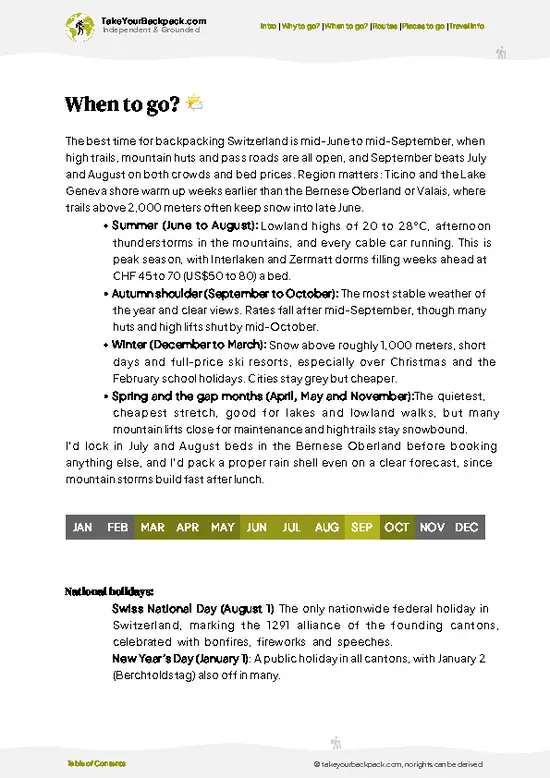
source: climatestotravel.comJANJanuary: below average for travelingFEBFebruary: below average for travelingMARMarch: fair for travelingAPRApril: good for travelingMAYMay: good for travelingJUNJune: excellent for travelingJULJuly: highly recommended for travelingAUGAugust: highly recommended for travelingSEPSeptember: excellent for travelingOCTOctober: highly recommended for travelingNOVNovember: fair for travelingDECDecember: below average for traveling

✈️ The backpacker research shortcutSwitzerland Travel Guide

An offline-friendly backpacking guide with optimized travel routes, ranked highlights, transport advice, and the best areas to stay.
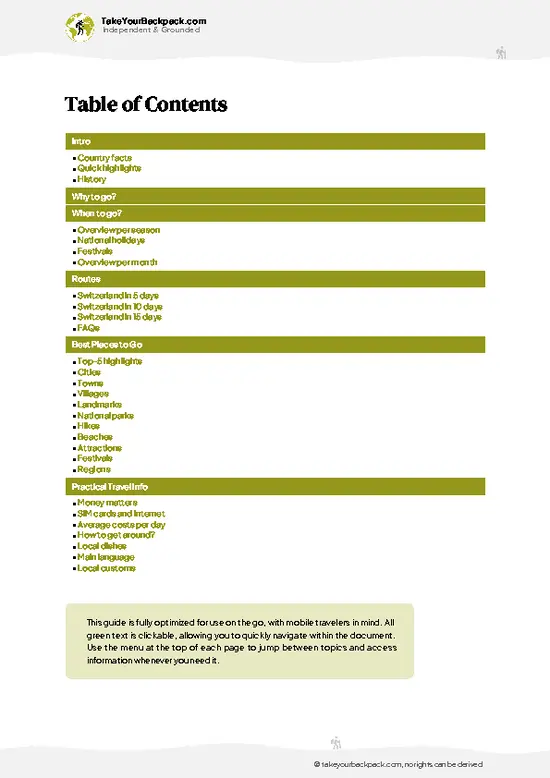
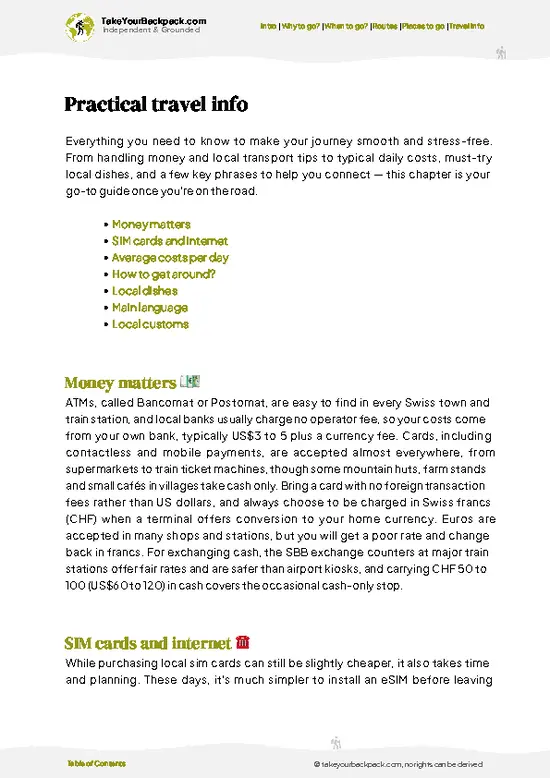
example page 0 from our offline Travel Guide for Switzerland
example page 1 from our offline Travel Guide for Switzerland
example page 2 from our offline Travel Guide for Switzerland
example page 3 from our offline Travel Guide for Switzerland
example page 4 from our offline Travel Guide for Switzerland
example page 5 from our offline Travel Guide for Switzerland
example page 6 from our offline Travel Guide for Switzerland
example page 7 from our offline Travel Guide for Switzerland
The digital guide (449 pages) contains:
121 highlights, ranked by travel appeal
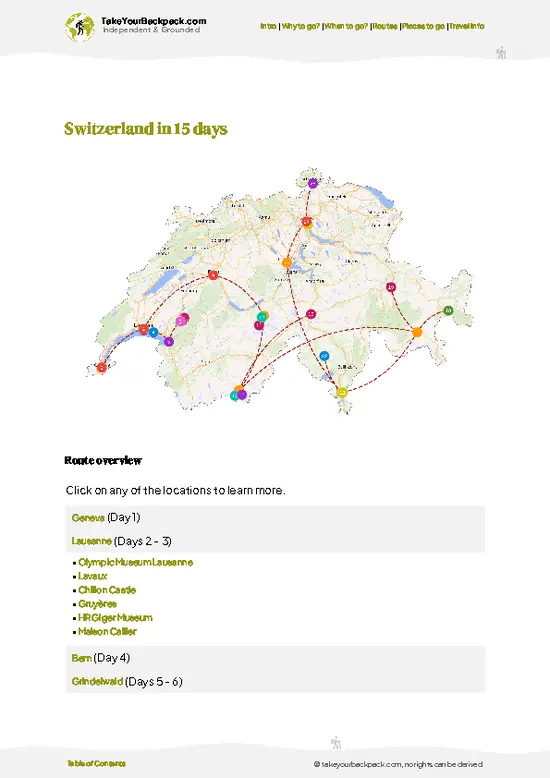
Optimized 5, 10 & 15-day travel routes
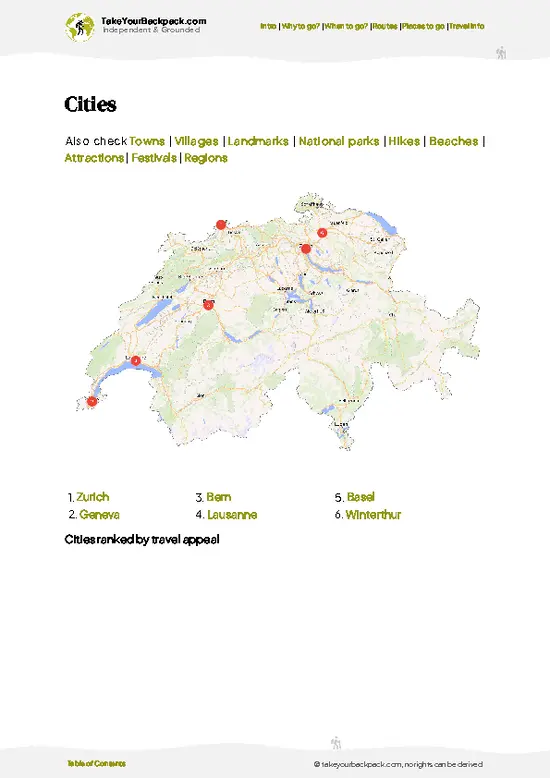
Cities, national parks, landmarks, beaches
How to get around
Offline-friendly for travel without Wi-Fi
👉 Click to see all 30+ guide features

📅 Plan smarter in minutes, not weeks
Month by month travel advice
Festivals & national holidays
Budget expectations

🗺️ Go to the right places, skip the overrated ones
Honest pros & cons of destinations
Top hikes, parks & viewpoints
Lesser-known places most travelers miss
Clear “worth it vs skip it” guidance

🛏️ Travel smoothly without rookie mistakes
Best areas to stay
Transport systems explained simply
Common scams & safety advice
SIM cards, money & practical tips

🌍 Understand the country, not just visit it
Culture & traditions
52 Essential phrases & customs
Festivals worth planning around
Traveler-friendly historical context
Insights that make places more meaningful

📱 Built for real travel conditions
Fully downloadable PDF
Works completely offline
Optimized for phone use
Useful in remote areas & buses
Everything in one place
Save weeks of stressful planning
Get instant access to your full guide. 30‑day money-back guarantee.


By proceeding you agree to our terms.
Sent to your inbox immediately after payment • 100% Secure Checkout
Best Backpacking Travel Advisor 2025 tourism awardBest Backpacking
Travel Advisor
2025
What others say about Take Your Backpack Guides:
⭐⭐⭐⭐⭐
Fantastic, amazing amount of information!
⭐⭐⭐⭐⭐
My goodness this is amazing, it's what I've been looking for hats off too you!
⭐⭐⭐⭐⭐
I think this is absolutely BRILLIANT
⭐⭐⭐⭐
Very complete and informative. It's still missing places, but I gotta to commend you
⭐⭐⭐⭐⭐
This is truly amazing, thank you, can't wait to explore it with my kids!
⭐⭐⭐⭐⭐
Awesome resource, thank you!
⭐⭐⭐⭐⭐
This is amazing! Can't wait to explore the ones I haven't seen
⭐⭐⭐⭐
I love this! Well done, great idea.
⭐⭐⭐⭐⭐
Thanks for taking the time to make this gem!
⭐⭐⭐⭐⭐
This might be the best website I've ever seen.
⭐⭐⭐⭐⭐
Congratulations, and thank you so much for your work; it's incredibly valuable.
⭐⭐⭐⭐
In all seriousness I think you did a great job pointing out the important spots
⭐⭐⭐⭐⭐
10/10 very good
⭐⭐⭐⭐⭐
As someone who's only just starting to visit regularly this is awesome, thank you.
⭐⭐⭐⭐
Thank you very much! I'm going to visit my dad, it's going to be very useful!
⭐⭐⭐⭐⭐
This is really cool! We'll be travelling for the first time and this definitely come in handy.
⭐⭐⭐⭐⭐
You are now our minister of culture, congratulations 👨‍💼
⭐⭐⭐⭐⭐
Just wanted to tell you that this is a pearl! Going to follow your recommendations.
⭐⭐⭐⭐⭐
This is so cool. I'll definitely be using the resource for my travels soon.
⭐⭐⭐⭐⭐
This is very impressive! Good work.
⭐⭐⭐⭐⭐
This is an amazing and informative site. Very well done!

🛏️ Where to stay?Where staying makes the most sense

When it comes to staying near Parc Ela, you have a few solid options that cater to backpackers without breaking the bank.

Inside the park, accommodations are limited but not nonexistent. The Berghaus Gaflei is a cozy mountain lodge that offers dormitory-style rooms. It’s a great base for hiking, and the views are worth every step you take to get there. Just be aware that it can fill up quickly during peak season, so book ahead.

If you prefer a bit more variety, head to Lenzerheide or Arosa, both towns just a short bus ride from the park. Lenzerheide has several hostels and guesthouses that … read more 👉
When it comes to staying near Parc Ela, you have a few solid options that cater to backpackers without breaking the bank.

Inside the park, accommodations are limited but not nonexistent. The Berghaus Gaflei is a cozy mountain lodge that offers dormitory-style rooms. It’s a great base for hiking, and the views are worth every step you take to get there. Just be aware that it can fill up quickly during peak season, so book ahead.

If you prefer a bit more variety, head to Lenzerheide or Arosa, both towns just a short bus ride from the park. Lenzerheide has several hostels and guesthouses that cater to budget travelers. The Youth Hostel Lenzerheide is a reliable choice, with clean facilities and a friendly atmosphere. Arosa, while slightly pricier, offers stunning scenery and a few budget-friendly hotels.

Keep in mind that public transport is your friend here. Buses run regularly between these towns and the park, but check the schedules to avoid long waits. Also, be prepared for some hidden costs, like local taxes that can add up. Knowing this helps you budget better, leaving you with more energy and funds for the adventures that truly matter.

👛 Costs (as of 15 April 2026)How expensive it really is

Visiting Parc Ela in Switzerland can be a rewarding experience, but it’s essential to be aware of the costs involved to avoid surprises.

Entry to the park is generally free. However, if you plan to use the various facilities or participate in guided tours, expect to pay. Guided tours can range from €15 to €50 per person, depending on the length and type of experience.

Parking fees are another consideration. If you drive, parking can cost around €5 to €10 per day. Some areas may have free parking, but they can fill up quickly during peak seasons.

Accommodation varies widely. If you’re camping, fees can be as low as €10 per night. For a more comfortable stay, budget around €80 to €150 for a hotel or guesthouse.

Food costs can add up. A meal at a mid-range restaurant typically runs between … read more 👉
Visiting Parc Ela in Switzerland can be a rewarding experience, but it’s essential to be aware of the costs involved to avoid surprises.

Entry to the park is generally free. However, if you plan to use the various facilities or participate in guided tours, expect to pay. Guided tours can range from €15 to €50 per person, depending on the length and type of experience.

Parking fees are another consideration. If you drive, parking can cost around €5 to €10 per day. Some areas may have free parking, but they can fill up quickly during peak seasons.

Accommodation varies widely. If you’re camping, fees can be as low as €10 per night. For a more comfortable stay, budget around €80 to €150 for a hotel or guesthouse.

Food costs can add up. A meal at a mid-range restaurant typically runs between €20 and €40. If you’re looking to save, consider packing your own meals or eating at local bakeries, where you can find options for under €10.

Lastly, don’t forget about transportation. If you’re using public transport, a day pass can cost around €10 to €15.

Being aware of these costs will help you manage your budget effectively, allowing you to focus on enjoying the park’s natural beauty without financial stress.


source: myswitzerland.com
⚠️ Prices can change and everyone travels differently, so take this as a rough guide. Hope it helps you plan your adventure!

🥾 TrailsWhere to hike in Parc Ela: trails for every level

Parc Ela is a hidden gem in Switzerland, perfect for those who crave stunning alpine scenery without the usual crowds. You can expect a mix of lush meadows, rugged peaks, and crystal-clear lakes. The wildlife here is a treat too; keep your eyes peeled for chamois, marmots, and even the occasional golden eagle soaring above. The terrain varies from gentle slopes to more challenging paths, making it accessible for different skill levels.

One popular trail is Parc Ela Panorama Trail, which offers breathtaking views throughout. Here are the details:
  • Length: 18 km
  • Estimated Duration: 5-6 hours
  • Difficulty
read more 👉
Parc Ela is a hidden gem in Switzerland, perfect for those who crave stunning alpine scenery without the usual crowds. You can expect a mix of lush meadows, rugged peaks, and crystal-clear lakes. The wildlife here is a treat too; keep your eyes peeled for chamois, marmots, and even the occasional golden eagle soaring above. The terrain varies from gentle slopes to more challenging paths, making it accessible for different skill levels.

One popular trail is Parc Ela Panorama Trail, which offers breathtaking views throughout. Here are the details:
  • Length: 18 km
  • Estimated Duration: 5-6 hours
  • Difficulty Level: Moderate
  • Key Features: Panoramic views, diverse landscapes, and opportunities to spot wildlife
  • Terrain: Mix of well-maintained paths and some rocky sections

Getting to Parc Ela is pretty straightforward. You can hop on a train to the nearby town of Bergün, which is well-connected by Swiss public transport. The park can get a bit busy during peak summer months, so an early start is your best bet for avoiding the crowds. As for entrance fees, the park is free to enter, so you can save your money for that Swiss chocolate instead!
⚠️ Hiking info can sometimes be outdated or inaccurate. Before you hit the trail, check the latest conditions with locals. If you do spot anything that's off, I'd love to hear from you, so I can update it for fellow travelers.

🛡️ SafetyScams, Hazards, and Annoyances

Parc Ela is generally a well-managed and accessible destination for hikers, but a few practical considerations can enhance your experience. Weather can shift quickly in the Alps, so pack layers and a reliable rain jacket. Even in summer, temperatures can drop at higher altitudes, so be prepared for chillier conditions.

The terrain varies from gentle slopes to steeper sections, especially near the higher trails. Good footwear is essential; sturdy hiking boots will provide the grip and support you need. Navigation is straightforward, but a map or GPS can help you stay oriented, especially in foggy conditions.

Wildlife encounters are rare but possible. If you spot a chamois or marmot, keep your distance and don’t feed them. This preserves their natural behavior and keeps you safe.

Lastly, … read more 👉
Parc Ela is generally a well-managed and accessible destination for hikers, but a few practical considerations can enhance your experience. Weather can shift quickly in the Alps, so pack layers and a reliable rain jacket. Even in summer, temperatures can drop at higher altitudes, so be prepared for chillier conditions.

The terrain varies from gentle slopes to steeper sections, especially near the higher trails. Good footwear is essential; sturdy hiking boots will provide the grip and support you need. Navigation is straightforward, but a map or GPS can help you stay oriented, especially in foggy conditions.

Wildlife encounters are rare but possible. If you spot a chamois or marmot, keep your distance and don’t feed them. This preserves their natural behavior and keeps you safe.

Lastly, start your hikes early to avoid afternoon storms and ensure you have ample daylight. With these tips in mind, you’ll be set to enjoy the park’s beauty without unnecessary stress.

Other Swiss national parks near Parc Ela

Explore more nearby:


💡 Not sure where to go next?
Create a personalized itinerary for Switzerland including Parc Ela and the places that fit your trip.

Generate my itinerary

👉 Discover all national parks

Or checkout all Switzerland has to offer (think cities, towns, villages, national parks, hikes, beaches, festivals)
Country photo of Switzerland

We 💚 feedbackIs it worth it?

Parc Ela is a slice of Swiss paradise, where the trails lead you through untouched landscapes and charming villages. The real kicker? The local cuisine—don’t miss the hearty rösti after a long hike.

But here’s the catch: public transport can be tricky. Buses aren’t always frequent, so plan your connections carefully. It’s a small price for the peace you’ll find, but it’s worth knowing to keep your adventure smooth.

✈️ When did I visit Switzerland?
Being so close to my home country, and me loving mountains, I have visited Switzerland many times in my childhood during summer holidays for hiking in the Alps. One of the most beautiful countries in the world, though expensive.

✍️ Help improve this page!
The information on this page is based on my own backpacking experience in Switzerland, supplemented with up-to-date research and feedback from other travelers. Travel details can change, so if you notice anything outdated or incomplete, feel free to let me know.


🙋‍♂️ Give feedback

👋 Meet the founderWho’s Behind Take Your Backpack?

Johan, backpacker and founder of TakeYourBackpackHi, I’m Johan (Netherlands 🇳🇱), the creator of TakeYourBackpack. Over the past decade, I’ve backpacked through 80+ countries across six continents, gaining extensive experience with independent travel, long-term trips, and overland routes.

This site is built on a combination of firsthand travel experience and carefully curated insights from other backpackers. Many guides are based on places I’ve personally visited, while others bring together tips, observations, and practical advice shared by trusted travelers I’ve met along the way.

The goal is to provide realistic, experience-driven guidance — not generic itineraries — so you can explore destinations with better context, clearer expectations, and more confidence.

Get full country guide •
Instant download • 121 highlights • Full Offline guide