×

Syria🇸🇾 | citiesHamaWaterwheels, riverfront gardens, low-rise quarters | things to do and best time to go

Explore Deir ez-ZorExplore Homs

Backpacking in Hama
🌟 Highlightcity ranked #5
By Johan Kruseman 🇳🇱 | Updated June 18, 2026

Hama used to be the kind of place overlanders whispered about: quiet river town, famous for its creaking wooden waterwheels, cheap guesthouses, and long, lazy evenings by the Orontes. Today, after years of war and tension, it’s a different equation: more checkpoints, fewer backpackers, and a heavier mood under the same blue sky. Hama sits in west‑central Syria, between Damascus and Aleppo, and you feel that crossroads energy, but muted. The old norias and riverside promenade are still the main draw, plus a compact old town that hints at how charming this city once felt. Travel here is logistically possible but not frictionless; expect bureaucracy, limited transport options, and very thin hostel culture, so meeting other travelers is rare. It’s cheaper and calmer than Damascus, but also less rewarding; the vibe is cautious, local, and a bit shell‑shocked.

Discover everything you want to know in the 📖 Syria Travel Guide.
Safety warning

The current risk level for Syria is high. Check the advice before going.


Get your Syria guide
90 ranked highlights, routes & tips, works offline (347 pages)
Loading the map 🌍
CLICK TO FILTER
cities
towns
landmarks
national parks
hikes
beaches
attractions
festivals
regions
SHOW COUNTRY’S BESTSHOW ALL

✨ Why go?
Ranked #5 city in Syria
Reasons people choose to visit here

Hama, Syria, is a strategic stop for backpackers weaving through the region. It’s not just about the highlights; it’s about the experience. The city offers a unique blend of affordability and comfort, making it a solid basecamp for day trips to nearby wonders. You’ll find hostels that cater to budget travelers, providing a cozy atmosphere and a chance to meet fellow adventurers.

The walkability of Hama is a game-changer. You can easily explore the city’s rich history on foot, soaking in the local vibe without the hassle of transport. When hunger strikes, the food scene delivers—think hearty local dishes that won’t break the bank. As the sun sets, the nightlife offers a relaxed ambiance, perfect for unwinding after a day of exploration.

Plus, Hama’s location makes onward travel a breeze. … read more 👉
Hama, Syria, is a strategic stop for backpackers weaving through the region. It’s not just about the highlights; it’s about the experience. The city offers a unique blend of affordability and comfort, making it a solid basecamp for day trips to nearby wonders. You’ll find hostels that cater to budget travelers, providing a cozy atmosphere and a chance to meet fellow adventurers.

The walkability of Hama is a game-changer. You can easily explore the city’s rich history on foot, soaking in the local vibe without the hassle of transport. When hunger strikes, the food scene delivers—think hearty local dishes that won’t break the bank. As the sun sets, the nightlife offers a relaxed ambiance, perfect for unwinding after a day of exploration.

Plus, Hama’s location makes onward travel a breeze. Whether you’re heading to Aleppo or Palmyra, the connections are straightforward. This city isn’t just a stop; it’s a valuable piece of your backpacking puzzle.
Want to include Hama in your Syria route?
Create a personalized Syria itinerary that includes Hama and the places that fit your trip — based on your travel style, budget, and available time. Get your route in seconds.

Generate my trip

💡 HighlightsWhat this place is best known for

  • Norias of Hama — The iconic giant wooden water-wheels along the Orontes; they’re not just photogenic, they’re living engineering—still a focal point for locals and the single most recognizable image of the city.
  • Orontes River Promenade and Riverside Parks — Walkable green spaces that stitch the city together, full of tea stalls, benches, and views of the norias; ideal for people-watching and catching Hama’s everyday rhythms.
  • Azm Palace (Hama) — An 18th-century Ottoman governor’s house with an intimate courtyard, carved woodwork and period rooms; it gives a direct feel for elite domestic life in historic Syria.
  • Hama Citadel (Qal’at Hama) — The raised archaeological mound and its ruins that overlook parts of the city; climb around for layered history and better-than-expected panoramas of
read more 👉
  • Norias of Hama — The iconic giant wooden water-wheels along the Orontes; they’re not just photogenic, they’re living engineering—still a focal point for locals and the single most recognizable image of the city.
  • Orontes River Promenade and Riverside Parks — Walkable green spaces that stitch the city together, full of tea stalls, benches, and views of the norias; ideal for people-watching and catching Hama’s everyday rhythms.
  • Azm Palace (Hama) — An 18th-century Ottoman governor’s house with an intimate courtyard, carved woodwork and period rooms; it gives a direct feel for elite domestic life in historic Syria.
  • Hama Citadel (Qal’at Hama) — The raised archaeological mound and its ruins that overlook parts of the city; climb around for layered history and better-than-expected panoramas of Hama and the river.
  • Hama National Museum — Regional finds and local antiquities collected in one place; useful for understanding the long human story of the Orontes valley before you wander the streets.
  • The Great Mosque (central historic mosque) — A main worship site whose architecture and atmospheric courtyard reflect centuries of religious and civic life in Hama; worth a respectful look even if you only admire it from the outside.
  • Old Souk around the norias — Narrow lanes and small shops selling spices, textiles and everyday goods; less about big purchases and more about tasting the textures and sounds of old-city commerce.
  • Traditional Ottoman-era Houses and Courtyards (Old Hama) — Scattered clusters of preserved homes with wooden mashrabiya and inner gardens; wandering these alleys gives a calm, human-scale counterpoint to the busy riverfront.
  • Local Handicraft Workshops — Small family-run metalwork, carpentry and textile shops where you can watch traditional techniques up close and pick up authentic souvenirs made in the city.
  • Historic Bridges and River Crossings — A handful of old bridges and crossings offer classic framing of the norias and the river; great spots for photos and for seeing how the city grew around the Orontes.
Nearby day-trip highlights include the Roman ruins of Apamea, the medieval fortress at Masyaf, and the regional town of Salamiyah — Apamea (that long colonnaded Roman site) is a personal favorite.
Spotted a mistake or missing something? Contact us.

🏘️ NeighborhoodsNeighborhood guide to Hama

Hama, with its rich history and vibrant culture, offers a unique blend of experiences for backpackers. Here’s a breakdown of key neighborhoods to help you navigate your stay.

Al-Mahatta: This area is the heart of Hama, buzzing with local life. It’s affordable, making it great for budget travelers. The walkability is excellent, with cafes and shops lining the streets. While nightlife is limited, you can find a few spots for evening tea. Ideal for short stays, it keeps you close to major attractions.

Al-Hamidiya: Known for its bustling souk, this neighborhood is a sensory overload. Prices are reasonable, but you might splurge on unique finds. The vibe is lively, especially during the day, but quiets down at night. It’s walkable, though be prepared for crowds. Perfect for those wanting to immerse … read more 👉
Hama, with its rich history and vibrant culture, offers a unique blend of experiences for backpackers. Here’s a breakdown of key neighborhoods to help you navigate your stay.

Al-Mahatta: This area is the heart of Hama, buzzing with local life. It’s affordable, making it great for budget travelers. The walkability is excellent, with cafes and shops lining the streets. While nightlife is limited, you can find a few spots for evening tea. Ideal for short stays, it keeps you close to major attractions.

Al-Hamidiya: Known for its bustling souk, this neighborhood is a sensory overload. Prices are reasonable, but you might splurge on unique finds. The vibe is lively, especially during the day, but quiets down at night. It’s walkable, though be prepared for crowds. Perfect for those wanting to immerse themselves in local culture for a few days.

Al-Jazira: A quieter residential area, Al-Jazira offers a more relaxed atmosphere. Costs are slightly higher here, but you gain comfort and peace. It’s less walkable, so public transport is necessary. This area suits longer stays, especially if you prefer a slower pace and local interactions.

Al-Mazra’a: This neighborhood is a bit off the beaten path, providing a more authentic experience. Prices are low, and the walkability is decent. It’s quiet, making it perfect for those looking to recharge. Best for longer stays where you can truly settle in and explore.

⌛️ 1 daySeeing the highlights in 24 hours

Hama, Syria, is a city where history whispers through ancient streets and the Orontes River flows with stories. Known for its iconic waterwheels, or ”norias,” Hama offers a unique blend of cultural richness and local charm. You can easily spend a day here, soaking in its essence without feeling rushed.

Start your morning at the bustling Al-Mahatta neighborhood. Grab a strong cup of Arabic coffee at a local café, where the aroma mingles with the sound of morning chatter. After fueling up, stroll to the nearby Norias Park. The sight of these massive wooden wheels turning slowly in the river is mesmerizing. Take a moment to appreciate the craftsmanship and the way they’ve been part of life here for centuries.

As the sun climbs higher, head towards the historic Old City. Wander through its narrow … read more 👉
Hama, Syria, is a city where history whispers through ancient streets and the Orontes River flows with stories. Known for its iconic waterwheels, or ”norias,” Hama offers a unique blend of cultural richness and local charm. You can easily spend a day here, soaking in its essence without feeling rushed.

Start your morning at the bustling Al-Mahatta neighborhood. Grab a strong cup of Arabic coffee at a local café, where the aroma mingles with the sound of morning chatter. After fueling up, stroll to the nearby Norias Park. The sight of these massive wooden wheels turning slowly in the river is mesmerizing. Take a moment to appreciate the craftsmanship and the way they’ve been part of life here for centuries.

As the sun climbs higher, head towards the historic Old City. Wander through its narrow alleys, where you’ll find charming shops selling handmade crafts and spices. Don’t miss the Um al-Azam Mosque, a stunning example of Islamic architecture. The intricate details will leave you in awe. For lunch, seek out a local eatery and try some traditional kibbeh or a fresh tabbouleh salad. Eating where the locals eat is always a win.

In the afternoon, make your way to the lesser-known Al-Ma’ara neighborhood. Here, you can visit the ancient Roman ruins of Apamea, a short drive away. It’s often overlooked by tourists, but the sprawling columns and remnants of history are worth the trip.

As evening approaches, return to the city center. The sunset over the Orontes is breathtaking. Find a spot along the riverbank to unwind, perhaps with a sweet dessert like baklava. Reflect on your day, knowing you’ve experienced Hama’s heart and soul, far beyond the typical tourist path.
Turn your Hama visit into an Syria adventure
Build a complete Syria route with Hama, hidden gems, must-see destinations, and realistic travel times included.

Generate my trip

🌤️ When to go?Best time to visit Hama


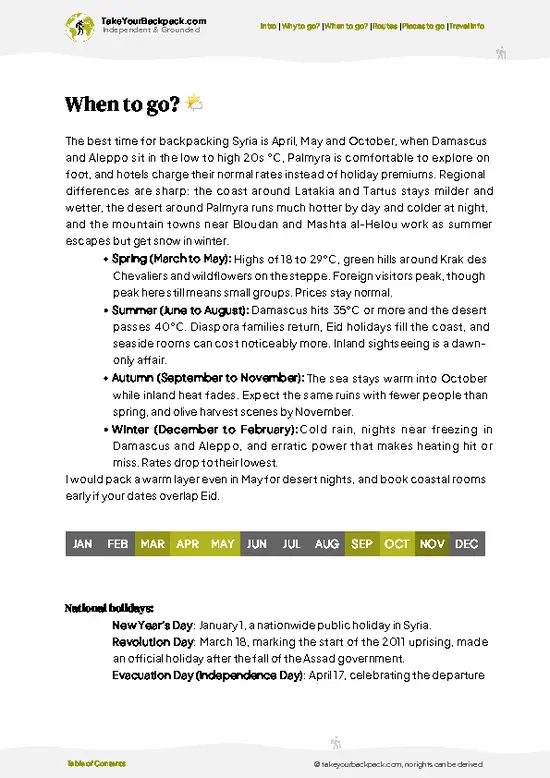
  • Weather: Spring (March to May) and autumn (September to November) offer the most pleasant conditions. Temperatures hover between 15-25°C (59-77°F), avoiding the scorching summer heat that can soar above 40°C (104°F), which drains energy fast.

  • Temperature: Winters are mild but can dip to 5°C (41°F) at night, so pack layers if you go then. Summer’s relentless heat makes midday trekking tough, pushing you to early mornings or late afternoons.

  • Daylight Hours: Around 11-13 hours in spring and autumn, giving you ample time to explore without rushing. Summer days stretch longer but come with the trade-off of intense sun.

  • Crowds: Tourist numbers peak in spring and autumn, especially around local festivals. Winter sees fewer visitors, offering a quieter, more intimate experience but with cooler
read more 👉

  • Weather: Spring (March to May) and autumn (September to November) offer the most pleasant conditions. Temperatures hover between 15-25°C (59-77°F), avoiding the scorching summer heat that can soar above 40°C (104°F), which drains energy fast.

  • Temperature: Winters are mild but can dip to 5°C (41°F) at night, so pack layers if you go then. Summer’s relentless heat makes midday trekking tough, pushing you to early mornings or late afternoons.

  • Daylight Hours: Around 11-13 hours in spring and autumn, giving you ample time to explore without rushing. Summer days stretch longer but come with the trade-off of intense sun.

  • Crowds: Tourist numbers peak in spring and autumn, especially around local festivals. Winter sees fewer visitors, offering a quieter, more intimate experience but with cooler weather.

  • Seasonal Activities: Spring brings blossoming gardens and outdoor markets alive, while autumn hosts harvest festivals. Summer’s heat limits outdoor events, pushing social life indoors or to shaded spots.

  • Price Fluctuations: Expect higher prices during spring and autumn due to demand. Winter offers better deals on accommodation and transport but fewer open services.


Pro-tip: Aim for late March or early October to balance comfortable weather, manageable crowds, and reasonable prices—perfect for savoring Hama’s charm without the extremes.


source: climatestotravel.comJANJanuary: good for travelingFEBFebruary: good for travelingMARMarch: highly recommended for travelingAPRApril: excellent for travelingMAYMay: excellent for travelingJUNJune: fair for travelingJULJuly: below average for travelingAUGAugust: below average for travelingSEPSeptember: highly recommended for travelingOCTOctober: excellent for travelingNOVNovember: highly recommended for travelingDECDecember: good for traveling
when-to-go

✈️ The backpacker research shortcutSyria Travel Guide

An offline-friendly backpacking guide with optimized travel routes, ranked highlights, transport advice, and the best areas to stay.
example page 0 from our offline Travel Guide for Syria
example page 1 from our offline Travel Guide for Syria
example page 2 from our offline Travel Guide for Syria
example page 3 from our offline Travel Guide for Syria
example page 4 from our offline Travel Guide for Syria
example page 5 from our offline Travel Guide for Syria
example page 6 from our offline Travel Guide for Syria
example page 7 from our offline Travel Guide for Syria
The digital guide (347 pages) contains:
90 highlights, ranked by travel appeal
Optimized 5, 10 & 15-day travel routes
Cities, national parks, landmarks, beaches
How to get around
Offline-friendly for travel without Wi-Fi
👉 Click to see all 30+ guide features

📅 Plan smarter in minutes, not weeks
Month by month travel advice
Festivals & national holidays
Budget expectations

🗺️ Go to the right places, skip the overrated ones
Honest pros & cons of destinations
Top hikes, parks & viewpoints
Lesser-known places most travelers miss
Clear “worth it vs skip it” guidance

🛏️ Travel smoothly without rookie mistakes
Best areas to stay
Transport systems explained simply
Common scams & safety advice
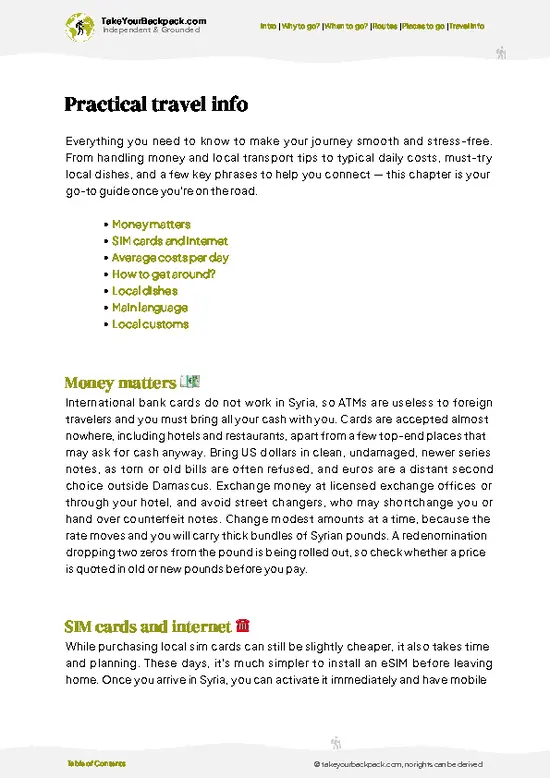
SIM cards, money & practical tips

🌍 Understand the country, not just visit it
Culture & traditions
52 Essential phrases & customs
Festivals worth planning around
Traveler-friendly historical context
Insights that make places more meaningful

📱 Built for real travel conditions
Fully downloadable PDF
Works completely offline
Optimized for phone use
Useful in remote areas & buses
Everything in one place
Save weeks of stressful planning
Get instant access to your full guide. 30‑day money-back guarantee.


By proceeding you agree to our terms.
Sent to your inbox immediately after payment • 100% Secure Checkout
Best Backpacking Travel Advisor 2025 tourism awardBest Backpacking
Travel Advisor
2025
What others say about Take Your Backpack Guides:
⭐⭐⭐⭐⭐
Fantastic, amazing amount of information!
⭐⭐⭐⭐⭐
My goodness this is amazing, it's what I've been looking for hats off too you!
⭐⭐⭐⭐⭐
I think this is absolutely BRILLIANT
⭐⭐⭐⭐
Very complete and informative. It's still missing places, but I gotta to commend you
⭐⭐⭐⭐⭐
This is truly amazing, thank you, can't wait to explore it with my kids!
⭐⭐⭐⭐⭐
Awesome resource, thank you!
⭐⭐⭐⭐⭐
This is amazing! Can't wait to explore the ones I haven't seen
⭐⭐⭐⭐
I love this! Well done, great idea.
⭐⭐⭐⭐⭐
Thanks for taking the time to make this gem!
⭐⭐⭐⭐⭐
This might be the best website I've ever seen.
⭐⭐⭐⭐⭐
Congratulations, and thank you so much for your work; it's incredibly valuable.
⭐⭐⭐⭐
In all seriousness I think you did a great job pointing out the important spots
⭐⭐⭐⭐⭐
10/10 very good
⭐⭐⭐⭐⭐
As someone who's only just starting to visit regularly this is awesome, thank you.
⭐⭐⭐⭐
Thank you very much! I'm going to visit my dad, it's going to be very useful!
⭐⭐⭐⭐⭐
This is really cool! We'll be travelling for the first time and this definitely come in handy.
⭐⭐⭐⭐⭐
You are now our minister of culture, congratulations 👨‍💼
⭐⭐⭐⭐⭐
Just wanted to tell you that this is a pearl! Going to follow your recommendations.
⭐⭐⭐⭐⭐
This is so cool. I'll definitely be using the resource for my travels soon.
⭐⭐⭐⭐⭐
This is very impressive! Good work.
⭐⭐⭐⭐⭐
This is an amazing and informative site. Very well done!

🛏️ Where to stay?Choosing the right base

In Hama, the best base for backpackers is the Old City district, especially around the iconic Norias area. This neighborhood strikes a rare balance: it’s safe, packed with local life, and offers a social vibe without the tourist overload you find in bigger Syrian cities. You’ll find budget guesthouses and small hostels here, perfect for solo travelers looking to connect with others or just soak in the authentic atmosphere. The streets buzz with vendors, tea shops, and locals going about their day, making it easy to strike up conversations and get insider tips.

Compared to newer parts of Hama, … read more 👉
In Hama, the best base for backpackers is the Old City district, especially around the iconic Norias area. This neighborhood strikes a rare balance: it’s safe, packed with local life, and offers a social vibe without the tourist overload you find in bigger Syrian cities. You’ll find budget guesthouses and small hostels here, perfect for solo travelers looking to connect with others or just soak in the authentic atmosphere. The streets buzz with vendors, tea shops, and locals going about their day, making it easy to strike up conversations and get insider tips.

Compared to newer parts of Hama, which lean more residential and quiet, the Old City feels alive and accessible. It’s also close to the Orontes River and the famous water wheels, so you’re never far from the city’s soul. While some neighborhoods outside the center might offer cheaper stays, they lack the social pulse and safety that backpackers need to feel comfortable exploring solo. In Hama, choosing the Old City means trading a bit of modern convenience for a richer, more immersive experience that’s worth every step.

🚌 Getting aroundHow to get from A to B

Hama moves at a pace that feels like a negotiation between old-world rhythms and the push of modern hustle. The city’s pulse isn’t dictated by strict timetables but by a blend of habitual routines and spontaneous bursts of activity. You’ll find that the flow here leans more toward intuition than rigid schedules—buses and minibuses don’t always leave on the dot, but they rarely leave you stranded for long. It’s a system that rewards patience and a keen eye for the right moment to hop on. Understanding this dynamic is your key to mastering transit in Hama without wasting time or money.


  • Walking: The most reliable and cost-free way to navigate Hama’s compact center. Streets are walkable, and many key sites cluster within a 20-30 minute stroll. Walking lets you absorb the city’s texture and
read more 👉
Hama moves at a pace that feels like a negotiation between old-world rhythms and the push of modern hustle. The city’s pulse isn’t dictated by strict timetables but by a blend of habitual routines and spontaneous bursts of activity. You’ll find that the flow here leans more toward intuition than rigid schedules—buses and minibuses don’t always leave on the dot, but they rarely leave you stranded for long. It’s a system that rewards patience and a keen eye for the right moment to hop on. Understanding this dynamic is your key to mastering transit in Hama without wasting time or money.


  • Walking: The most reliable and cost-free way to navigate Hama’s compact center. Streets are walkable, and many key sites cluster within a 20-30 minute stroll. Walking lets you absorb the city’s texture and avoid any transit unpredictability.


  • Shared Minibuses (Service Taxis): These are the backbone of local transit. They run frequently from early morning (around 6:00 AM) until late evening (10:00 PM), costing just a few Syrian pounds per ride. They’re fast and efficient but can get cramped during peak hours. Expect a semi-flexible schedule—drivers wait until the vehicle is full before departing, so timing varies.


  • Public Buses: Less common than minibuses but still useful for longer routes. They operate on a rough timetable, typically from 7:00 AM to 7:00 PM. Tickets are cheap, but buses are slower and less comfortable, often stopping frequently. Ideal if you want a predictable route without the rush of minibuses.


  • Shared Taxis: More expensive than minibuses but faster and more comfortable. They run on demand rather than fixed schedules, so you can leave when ready. Prices vary but expect to pay several times more than a minibus. Best for when you’re short on time and willing to spend a bit extra.


  • Private Taxi: The most comfortable and flexible option, but also the priciest. Available 24/7, fares can be negotiated upfront. Ideal for late-night travel or when carrying heavy gear. Use sparingly if you’re budget-conscious, but invaluable for comfort and speed when needed.

👛 Costs (as of 12 July 2025)What things cost and how to budget

Backpacking in Hama, Syria, demands a clear-eyed view of where your money goes, so you can balance time, comfort, and cost without surprises.
  • Dorm Accommodation (High Season): Expect to pay around $10 to $15 per night for a basic dorm bed. High season can push prices up slightly due to demand, but options remain limited and simple.
  • Dorm Accommodation (Off-Season): Off-peak times see prices drop to about $7 to $10 per night. Fewer travelers mean more negotiating power and quieter stays, though amenities stay minimal.
  • Meals: Local eateries serve filling meals for $3 to $6. Street food and small restaurants offer the best value, with dishes like kebabs, falafel, and fresh bread. Avoid tourist spots if you want to keep costs low and flavors authentic.
  • Local Transport: Shared minibuses and
read more 👉
Backpacking in Hama, Syria, demands a clear-eyed view of where your money goes, so you can balance time, comfort, and cost without surprises.
  • Dorm Accommodation (High Season): Expect to pay around $10 to $15 per night for a basic dorm bed. High season can push prices up slightly due to demand, but options remain limited and simple.
  • Dorm Accommodation (Off-Season): Off-peak times see prices drop to about $7 to $10 per night. Fewer travelers mean more negotiating power and quieter stays, though amenities stay minimal.
  • Meals: Local eateries serve filling meals for $3 to $6. Street food and small restaurants offer the best value, with dishes like kebabs, falafel, and fresh bread. Avoid tourist spots if you want to keep costs low and flavors authentic.
  • Local Transport: Shared minibuses and local taxis cost roughly $0.20 to $0.50 per ride. They’re frequent but can be crowded and irregular, so factor in some waiting time if you’re on a tight schedule.
  • City Transport Pass: Hama doesn’t have a formal city transport pass system. Budget around $2 to $3 daily if you plan multiple rides, or simply pay per trip for flexibility.
  • Basic Activities/Entry Fees: Entry to key sites like the Norias of Hama or local museums typically costs $1 to $3. These modest fees support preservation and offer a window into the city’s heritage without breaking the bank.
  • Miscellaneous Expenses: Budget $2 to $5 for essentials like bottled water, snacks, or small souvenirs. Keep some cash handy for unexpected costs, as card payments are rare.

Total daily costs for backpacking in Hama generally fall between $15 and $30, depending on your season and comfort choices. This range lets you decide if you want to stretch your budget for a bit more comfort or save by embracing the local pace and simplicity.
⚠️ Prices can change and everyone travels differently, so take this as a rough guide. Hope it helps you plan your adventure!

🚌 Day tripsBest day trips from Hama

Hama, Syria, is a strategic launchpad for day trips that blend history, culture, and stunning landscapes. Here’s how to maximize your experience without breaking the bank.

Baalbek
Just a couple of hours from Hama, Baalbek is home to some of the most impressive Roman ruins in the world. The Temple of Bacchus is a jaw-dropper, with towering columns that make you feel like you’ve stepped back in time. The bus ride is about 2.5 hours, costing around 5,000 SYP. Aim for spring or fall when the weather is mild. A common mistake? Underestimating the size of the site; wear comfortable shoes and allocate at least half a day to explore.


Krak des Chevaliers
This medieval castle is a must-see, just an hour’s drive from Hama. The views from the ramparts are breathtaking, and the history is palpable. … read more 👉
Hama, Syria, is a strategic launchpad for day trips that blend history, culture, and stunning landscapes. Here’s how to maximize your experience without breaking the bank.

Baalbek
Just a couple of hours from Hama, Baalbek is home to some of the most impressive Roman ruins in the world. The Temple of Bacchus is a jaw-dropper, with towering columns that make you feel like you’ve stepped back in time. The bus ride is about 2.5 hours, costing around 5,000 SYP. Aim for spring or fall when the weather is mild. A common mistake? Underestimating the size of the site; wear comfortable shoes and allocate at least half a day to explore.


Krak des Chevaliers
This medieval castle is a must-see, just an hour’s drive from Hama. The views from the ramparts are breathtaking, and the history is palpable. Entry is around 1,000 SYP, and you can easily spend a few hours wandering through its labyrinthine corridors. Spring is ideal for visiting, as the surrounding landscape bursts into bloom. First-timers often miss the less-traveled paths that lead to stunning vistas—don’t skip those!


Apamea
About 40 minutes from Hama, Apamea is a treasure trove of ancient ruins, featuring a long colonnade that stretches into the horizon. The site is less crowded, allowing for a more intimate experience with history. Entry is free, making it a budget-friendly option. Visit in the early morning to catch the sunrise over the ruins—it’s magical. A common oversight? Not bringing enough water; the site can be quite expansive.
👉 Explore Apamea

Qalaat al-Madiq
This charming village is a quick 30-minute drive from Hama and offers a glimpse into local life. The nearby ruins of the ancient city of Apamea are worth exploring, but the real draw is the stunning views of the Orontes River. Expect to spend around 2,000 SYP for a meal at a local eatery. Late afternoon is perfect for a leisurely stroll. Many first-timers overlook the local eateries—don’t miss the chance to taste authentic Syrian cuisine!
Want to know what more Syria offers?
The Syria Travel Guide describes 90 highlights, from cities to national parks, from beaches to hikes

Get the Travel Guide -

🍲 FoodEating & Drinking in Hama

In Hama, **food** isn’t just sustenance; it’s a vibrant part of daily life. Dive into the local **cuisine** and you’ll find dishes that tell stories. Don’t miss **kibbeh**, a savory mix of bulgur and minced meat, often served with a side of tangy yogurt. Then there’s **mujadara**, a comforting blend of lentils and rice topped with caramelized onions — simple yet deeply satisfying.

Street food is where the magic happens. Vendors line the bustling markets, offering **sambousek**, flaky pastries stuffed with spiced meat or cheese. Grab a few while sipping on **ayran**, a refreshing yogurt drink that balances the spices beautifully. The atmosphere is electric, with locals chatting and laughing, making it easy to strike up a conversation.

Eating customs here are relaxed but meaningful. Sharing … read more 👉
In Hama, **food** isn’t just sustenance; it’s a vibrant part of daily life. Dive into the local **cuisine** and you’ll find dishes that tell stories. Don’t miss **kibbeh**, a savory mix of bulgur and minced meat, often served with a side of tangy yogurt. Then there’s **mujadara**, a comforting blend of lentils and rice topped with caramelized onions — simple yet deeply satisfying.

Street food is where the magic happens. Vendors line the bustling markets, offering **sambousek**, flaky pastries stuffed with spiced meat or cheese. Grab a few while sipping on **ayran**, a refreshing yogurt drink that balances the spices beautifully. The atmosphere is electric, with locals chatting and laughing, making it easy to strike up a conversation.

Eating customs here are relaxed but meaningful. Sharing food is common; it’s a sign of hospitality. When offered a dish, it’s polite to accept, even if just a small taste. And don’t forget to enjoy your meal slowly; savoring each bite is part of the experience. In Hama, every meal is a chance to connect — with the food, the culture, and the people.

🛡️ SafetyStaying Safe: What Travelers Should Know

Hama is generally safe for travelers, but staying aware can enhance your experience. The city’s bustling markets are vibrant, but keep an eye on your belongings—pickpockets can be a nuisance in crowded areas.

If you’re venturing out solo at night, stick to well-lit streets and avoid wandering into quieter neighborhoods. Most locals are friendly, but it’s wise to gauge the atmosphere before engaging.

Common scams are rare, but be cautious of overly eager guides offering unsolicited help. Politely decline if you’re not interested.

Everyday annoyances might include persistent street vendors; a firm but friendly “no, thank you” usually does the trick. Carry yourself confidently, and you’ll blend in seamlessly. Embrace the local culture, and you’ll find Hama rewarding without unnecessary stress.

Other Syrian cities near Hama

Explore more nearby:

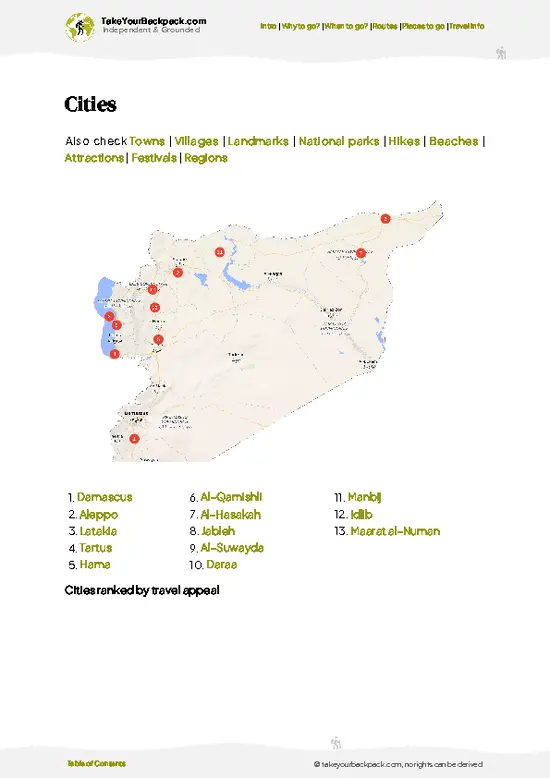
  • Homs—city center, Orontes River, urban sprawl| 45 km away
  • Maarat al-Numan—mosaic museum, Ottoman caravanserai, highway stop| 57 km away
  • Jableh—Roman theater, citrus groves, Mediterranean shore| 79 km away

💡 Not sure where to go next?
Create a personalized itinerary for Syria including Hama and the places that fit your trip.

Generate my itinerary

👉 Discover all cities

Or checkout all Syria has to offer (think cities, towns, villages, national parks, hikes, beaches, festivals)
Country photo of Syria

We 💚 feedbackKey takeaways before you go

Hama’s waterwheels are a mesmerizing sight, a dance of ancient engineering that tells stories of a time long past. You’ll feel the pulse of history here, and it’s worth every moment. But be prepared: the infrastructure isn’t always tourist-friendly. Roads can be bumpy, and English isn’t widely spoken. Embrace the challenge; it’s part of the adventure. Just know that patience is key to unlocking Hama’s charm.

✈️ When did I visit Syria?
As part of my trip to Jordan in August 2004, I also visited Syria, which sadly changed for the worse soon afterwards.

✍️ Help improve this page!
The information on this page is based on my own backpacking experience in Syria, supplemented with up-to-date research and feedback from other travelers. Travel details can change, so if you notice anything outdated or incomplete, feel free to let me know.


🙋‍♂️ Give feedback

👋 Meet the founderWho’s Behind Take Your Backpack?

Johan, backpacker and founder of TakeYourBackpackHi, I’m Johan (Netherlands 🇳🇱), the creator of TakeYourBackpack. Over the past decade, I’ve backpacked through 80+ countries across six continents, gaining extensive experience with independent travel, long-term trips, and overland routes.

This site is built on a combination of firsthand travel experience and carefully curated insights from other backpackers. Many guides are based on places I’ve personally visited, while others bring together tips, observations, and practical advice shared by trusted travelers I’ve met along the way.

The goal is to provide realistic, experience-driven guidance — not generic itineraries — so you can explore destinations with better context, clearer expectations, and more confidence.

Get full Syria guide •
Instant download • 90 highlights • Full Offline guide