×

Syria🇸🇾 | townsKobaniKurdish culture, rebuilt center, border fence | things to do and best time to go

Explore AzazExplore Al-Bab

Backpacking in Kobani
🌟 Highlighttown ranked #6
By Johan Kruseman 🇳🇱 | Updated June 10, 2026

Dust hangs in the late-afternoon light as a motorbike growls past, kicking up the smell of hot earth and diesel; kids chase its wake, laughing, while an old man pours thick, cardamom-heavy coffee into tiny glasses on a plastic table. This is Kobani, in northern Syria on the Turkish border, a town whose name you’ve probably heard for reasons that have nothing to do with tourism.

As a backpacker stop, Kobani is raw, not polished. It’s more pilgrimage than playground. You come to understand recent history, not to tick off sights. The town is compact and walkable, with a few cafés where you can linger, but almost no classic backpacker infrastructure, little nightlife, and very few other foreigners. Compared with bigger hubs like Gaziantep across the border or Qamishli further east, Kobani feels quieter, more scarred, and more emotionally heavy. Transport in and out can be complicated, safety conditions can shift, and costs are modest but not a reason to come on their own. It works best as a short, intentional stop on a wider regional route, not as a base.

Discover everything you want to know in the 📖 Syria Travel Guide.
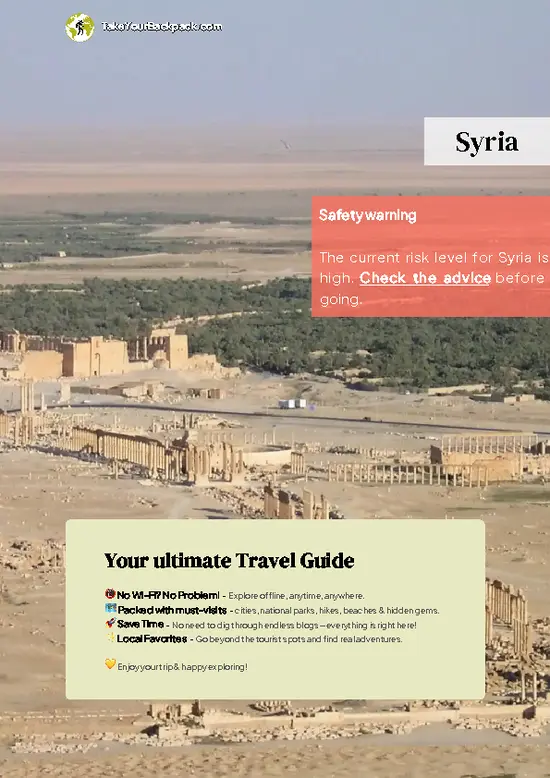
Safety warning

The current risk level for Syria is high. Check the advice before going.


Get your Syria guide
90 ranked highlights, routes & tips, works offline (347 pages)
Loading the map 🌍
CLICK TO FILTER
cities
towns
landmarks
national parks
hikes
beaches
attractions
festivals
regions
SHOW COUNTRY’S BESTSHOW ALL

✨ Why go?
Ranked #6 town in Syria
The unique appeal for travelers

Kobani draws backpackers for its strategic location along routes to stunning hikes and cultural sites. The walkable streets invite exploration, where you can soak in the local atmosphere without the chaos of larger cities. Small-scale hostels and guesthouses offer a cozy, communal vibe, perfect for solo travelers or small groups looking to connect. The local food scene is a treat; savoring freshly made dishes while chatting with locals adds depth to your experience.

Most travelers stay briefly, often just a couple of days, using Kobani as a base for nearby adventures. It’s not a party town, but the friendly social atmosphere makes it easy to meet fellow backpackers. If you’re a slow traveler or a hiker, you’ll appreciate the balance of quiet moments and the thrill of discovery. Kobani isn’t … read more 👉
Kobani draws backpackers for its strategic location along routes to stunning hikes and cultural sites. The walkable streets invite exploration, where you can soak in the local atmosphere without the chaos of larger cities. Small-scale hostels and guesthouses offer a cozy, communal vibe, perfect for solo travelers or small groups looking to connect. The local food scene is a treat; savoring freshly made dishes while chatting with locals adds depth to your experience.

Most travelers stay briefly, often just a couple of days, using Kobani as a base for nearby adventures. It’s not a party town, but the friendly social atmosphere makes it easy to meet fellow backpackers. If you’re a slow traveler or a hiker, you’ll appreciate the balance of quiet moments and the thrill of discovery. Kobani isn’t just a stop; it’s a gateway to deeper experiences in Syria.
Want to include Kobani in your Syria route?
Create a personalized Syria itinerary that includes Kobani and the places that fit your trip — based on your travel style, budget, and available time. Get your route in seconds.

Generate my trip

💡 HighlightsDon't-miss highlights and experiences

  • Kobani Martyrs’ Cemetery — a quiet, solemn burial ground for the fighters who defended the town; visiting puts the scale of the city’s recent history into a human, very tangible perspective.
  • Resistance Street Murals — the best “museum” in Kobani is the city itself: buildings, walls and shutters are covered in murals, stencils and hand-painted slogans that tell the story of the siege and the community’s resilience.
  • Central Souk (Main Market) — the reopened market area where locals trade produce, spices, textiles and everyday goods; it’s the most honest place to see how life is returning to a battered town and to try simple, cheap local food.
  • Women’s Cooperatives and Handicraft Workshops — small, locally run cooperatives where women spin, weave, sew and make preserves and soap; buying directly
read more 👉
  • Kobani Martyrs’ Cemetery — a quiet, solemn burial ground for the fighters who defended the town; visiting puts the scale of the city’s recent history into a human, very tangible perspective.
  • Resistance Street Murals — the best “museum” in Kobani is the city itself: buildings, walls and shutters are covered in murals, stencils and hand-painted slogans that tell the story of the siege and the community’s resilience.
  • Central Souk (Main Market) — the reopened market area where locals trade produce, spices, textiles and everyday goods; it’s the most honest place to see how life is returning to a battered town and to try simple, cheap local food.
  • Women’s Cooperatives and Handicraft Workshops — small, locally run cooperatives where women spin, weave, sew and make preserves and soap; buying directly here supports reconstruction and gives a close-up on community life.
  • Community Cultural Center / Performance Space — a modest but active spot for music, poetry and community gatherings; programs change often, so it’s where you’ll feel the pulse of local cultural revival.
  • Frontline Sites and Memorial Plaques — specific corners and ruined buildings still bear shell damage and memorials; visiting with a local guide turns rubble into stories and helps you understand key moments of the fighting.
  • Municipal Square and Reconstruction Projects — public rebuilding works, new municipal bulletin boards and community-led projects are easy to spot and tell you a lot about priorities and daily concerns during recovery.
  • Local Teahouses and Cafes — small tea shops where neighbors gather, debate and swap news; these are where you’ll overhear the real conversations and get invited into small-town life if you’re respectful.
  • Neighborhood Mosques and Local Cemeteries — modest, working religious sites that reflect the town’s traditions and rhythms; observing (quietly and respectfully) during non-prayer times gives cultural context missing from headlines.
  • Border Viewpoints (town edge) — short walks to points on the town’s edge give clear views across to the Turkish border and the surrounding plain; it’s a useful, sobering way to map the landscape that shaped recent events.
A few real, visitable day-trip options just outside Kobani include short visits to nearby border lookout ridges, neighboring villages where markets still run on market days, and the agricultural countryside that feeds the town — my personal favorite is spending time at the women’s cooperatives (supporting them feels like the most direct, positive way to see and help the community).
Spotted a mistake or missing something? Contact us.
🏘️ NeighborhoodsUnderstanding the local layout

Kobani, a town rich in history and resilience, offers a unique backdrop for backpackers seeking authentic experiences. Each neighborhood has its own character, making it essential to choose wisely.

City Center: This is the heartbeat of Kobani. Bustling with local shops and street vendors, it’s where you’ll find the best food stalls serving up savory kebabs and fresh bread. The vibe is energetic, perfect for those who thrive on activity. Walkability is high, and you can easily navigate the area on foot. Nightlife is minimal, but the evenings come alive with locals gathering for tea. Ideal for short stays, as everything is within reach.

East Kobani: A quieter area, East Kobani is more residential. Here, you’ll encounter a slower pace, with families enjoying their evenings. It’s less touristy, … read more 👉
Kobani, a town rich in history and resilience, offers a unique backdrop for backpackers seeking authentic experiences. Each neighborhood has its own character, making it essential to choose wisely.

City Center: This is the heartbeat of Kobani. Bustling with local shops and street vendors, it’s where you’ll find the best food stalls serving up savory kebabs and fresh bread. The vibe is energetic, perfect for those who thrive on activity. Walkability is high, and you can easily navigate the area on foot. Nightlife is minimal, but the evenings come alive with locals gathering for tea. Ideal for short stays, as everything is within reach.

East Kobani: A quieter area, East Kobani is more residential. Here, you’ll encounter a slower pace, with families enjoying their evenings. It’s less touristy, which means lower costs for accommodations. The atmosphere is peaceful, making it suitable for longer stays if you’re looking to immerse yourself in daily life. Transport access is decent, but you might need to rely on local taxis for longer trips.

West Kobani: This area is a blend of modernity and tradition. You’ll find cafes and small shops alongside traditional markets. It’s a great spot for those who want a mix of local culture and comfort. Walkability is good, and the nightlife is slightly more vibrant, with a few bars and cafes staying open late. Perfect for both short and longer stays, especially if you enjoy a lively atmosphere.

⌛️ 1 day1-day itinerary for Kobani

Kobani, a town rich in resilience and history, offers a unique glimpse into the heart of Syria. The air carries a blend of spices and the distant sound of children playing, creating an atmosphere that feels alive and hopeful.

Start your morning at the bustling local market. The vibrant stalls overflow with fresh produce, fragrant herbs, and handmade crafts. Engage with the vendors; their stories are as rich as the spices they sell. Grab a breakfast of warm flatbread and za’atar, paired with a cup of strong Arabic coffee. The warmth of the sun will start to rise, casting a golden hue over the town.

In the afternoon, wander through the historic neighborhoods. Visit the iconic Kobani Museum, where artifacts tell tales of the town’s storied past. The museum is often overlooked by tourists, … read more 👉
Kobani, a town rich in resilience and history, offers a unique glimpse into the heart of Syria. The air carries a blend of spices and the distant sound of children playing, creating an atmosphere that feels alive and hopeful.

Start your morning at the bustling local market. The vibrant stalls overflow with fresh produce, fragrant herbs, and handmade crafts. Engage with the vendors; their stories are as rich as the spices they sell. Grab a breakfast of warm flatbread and za’atar, paired with a cup of strong Arabic coffee. The warmth of the sun will start to rise, casting a golden hue over the town.

In the afternoon, wander through the historic neighborhoods. Visit the iconic Kobani Museum, where artifacts tell tales of the town’s storied past. The museum is often overlooked by tourists, but it’s a treasure trove of local history. Afterward, stroll along the Euphrates River. The gentle flow of water and the rustling leaves create a serene backdrop, perfect for reflection.

As evening approaches, head to the local café scene. Find a spot where you can sip tea while watching the sunset paint the sky in shades of orange and pink. The laughter and chatter around you will remind you of the community spirit that thrives here.

Kobani may not be on every travel itinerary, but its warmth and authenticity will leave you with a deeper appreciation for the human experience. Embrace the journey, and you’ll find that the hard parts only enhance the beauty of the day.
Turn your Kobani visit into an Syria adventure
Build a complete Syria route with Kobani, hidden gems, must-see destinations, and realistic travel times included.

Generate my trip

🌤️ When to go?When to go for the best experience


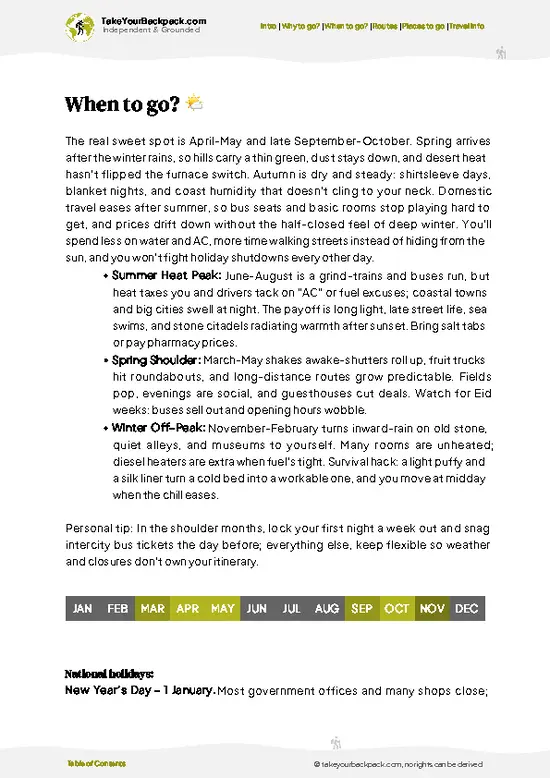
  • Topic: Weather and Temperature – Kobani’s climate swings from cold winters around 5°C (41°F) to hot summers hitting 38°C (100°F). Spring and autumn offer the sweet spot: mild days in the low 20s Celsius (68-75°F), perfect for long walks without overheating or freezing.

  • Topic: Daylight Hours – In spring and autumn, daylight stretches comfortably from about 6:30 AM to 6:30 PM, giving you ample time to explore without rushing. Winter’s shorter days limit your window, while summer’s long light can burn you out fast under the sun.

  • Topic: Crowds – Kobani isn’t a tourist hotspot, but local activity peaks during spring festivals and harvest time in autumn. Visiting just before or after these periods means quieter streets and more authentic interactions.

  • Topic: Seasonal Activities – Spring
read more 👉

  • Topic: Weather and Temperature – Kobani’s climate swings from cold winters around 5°C (41°F) to hot summers hitting 38°C (100°F). Spring and autumn offer the sweet spot: mild days in the low 20s Celsius (68-75°F), perfect for long walks without overheating or freezing.

  • Topic: Daylight Hours – In spring and autumn, daylight stretches comfortably from about 6:30 AM to 6:30 PM, giving you ample time to explore without rushing. Winter’s shorter days limit your window, while summer’s long light can burn you out fast under the sun.

  • Topic: Crowds – Kobani isn’t a tourist hotspot, but local activity peaks during spring festivals and harvest time in autumn. Visiting just before or after these periods means quieter streets and more authentic interactions.

  • Topic: Seasonal Activities – Spring brings wildflowers and fresh produce markets, while autumn offers harvest celebrations and cooler hiking conditions. Summer’s heat can make outdoor adventures exhausting, and winter’s chill can limit options.

  • Topic: Price Fluctuations – Prices for accommodation and local transport tend to rise slightly during spring festivals and autumn harvests due to increased local demand. Off-season winter months offer the best deals but come with trade-offs in comfort.


Pro-tip: Aim for late April to early June or September to early October—these shoulder months balance weather, light, and crowd levels, letting you soak in Kobani’s raw atmosphere without the extremes.


source: climatestotravel.comJANJanuary: fair for travelingFEBFebruary: fair for travelingMARMarch: good for travelingAPRApril: highly recommended for travelingMAYMay: excellent for travelingJUNJune: highly recommended for travelingJULJuly: below average for travelingAUGAugust: below average for travelingSEPSeptember: excellent for travelingOCTOctober: highly recommended for travelingNOVNovember: good for travelingDECDecember: fair for traveling
when-to-go

✈️ The backpacker research shortcutSyria Travel Guide

An offline-friendly backpacking guide with optimized travel routes, ranked highlights, transport advice, and the best areas to stay.
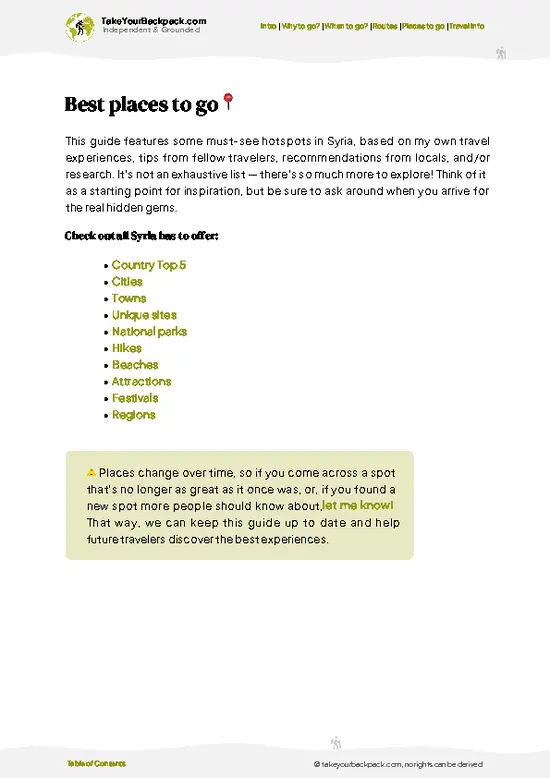
example page 0 from our offline Travel Guide for Syria
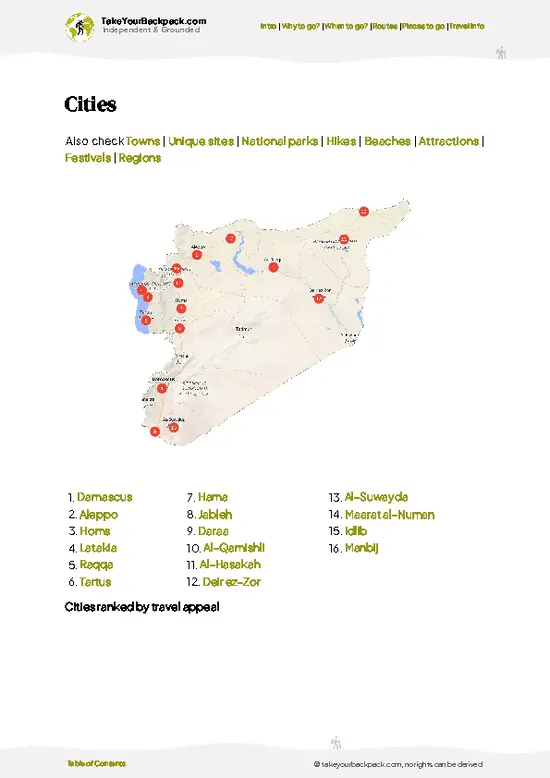
example page 1 from our offline Travel Guide for Syria
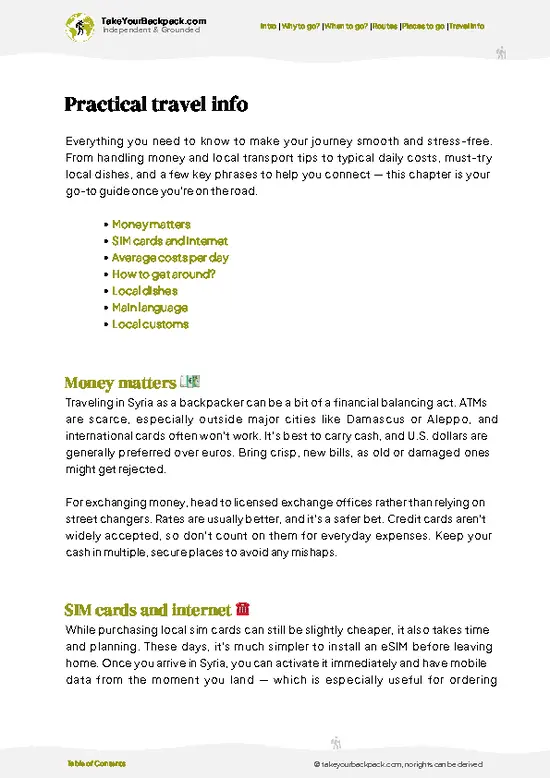
example page 2 from our offline Travel Guide for Syria
example page 3 from our offline Travel Guide for Syria
example page 4 from our offline Travel Guide for Syria
example page 5 from our offline Travel Guide for Syria
example page 6 from our offline Travel Guide for Syria
example page 7 from our offline Travel Guide for Syria
The digital guide (347 pages) contains:
90 highlights, ranked by travel appeal
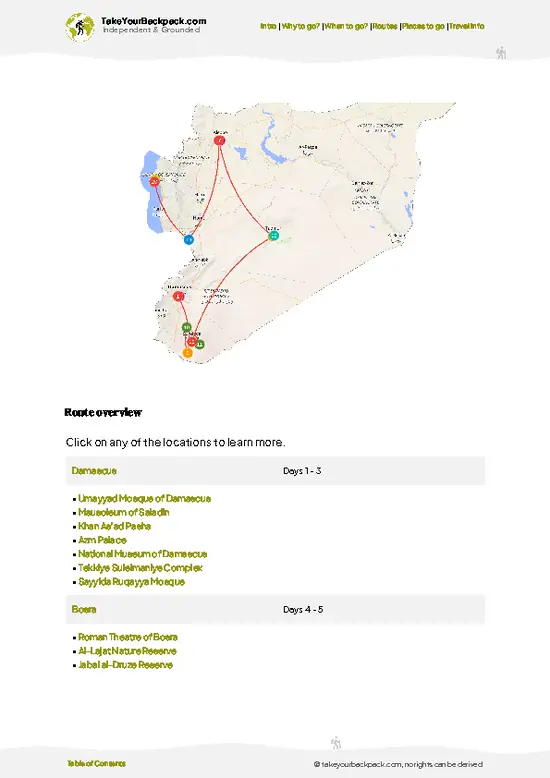
Optimized 5, 10 & 15-day travel routes
Cities, national parks, landmarks, beaches
How to get around
Offline-friendly for travel without Wi-Fi
👉 Click to see all 30+ guide features

📅 Plan smarter in minutes, not weeks
Month by month travel advice
Festivals & national holidays
Budget expectations

🗺️ Go to the right places, skip the overrated ones
Honest pros & cons of destinations
Top hikes, parks & viewpoints
Lesser-known places most travelers miss
Clear “worth it vs skip it” guidance

🛏️ Travel smoothly without rookie mistakes
Best areas to stay
Transport systems explained simply
Common scams & safety advice
SIM cards, money & practical tips

🌍 Understand the country, not just visit it
Culture & traditions
52 Essential phrases & customs
Festivals worth planning around
Traveler-friendly historical context
Insights that make places more meaningful

📱 Built for real travel conditions
Fully downloadable PDF
Works completely offline
Optimized for phone use
Useful in remote areas & buses
Everything in one place
Save weeks of stressful planning
Get instant access to your full guide. 30‑day money-back guarantee.


By proceeding you agree to our terms.
Sent to your inbox immediately after payment • 100% Secure Checkout
Best Backpacking Travel Advisor 2025 tourism awardBest Backpacking
Travel Advisor
2025
What others say about Take Your Backpack Guides:
⭐⭐⭐⭐⭐
Fantastic, amazing amount of information!
⭐⭐⭐⭐⭐
My goodness this is amazing, it's what I've been looking for hats off too you!
⭐⭐⭐⭐⭐
I think this is absolutely BRILLIANT
⭐⭐⭐⭐
Very complete and informative. It's still missing places, but I gotta to commend you
⭐⭐⭐⭐⭐
This is truly amazing, thank you, can't wait to explore it with my kids!
⭐⭐⭐⭐⭐
Awesome resource, thank you!
⭐⭐⭐⭐⭐
This is amazing! Can't wait to explore the ones I haven't seen
⭐⭐⭐⭐
I love this! Well done, great idea.
⭐⭐⭐⭐⭐
Thanks for taking the time to make this gem!
⭐⭐⭐⭐⭐
This might be the best website I've ever seen.
⭐⭐⭐⭐⭐
Congratulations, and thank you so much for your work; it's incredibly valuable.
⭐⭐⭐⭐
In all seriousness I think you did a great job pointing out the important spots
⭐⭐⭐⭐⭐
10/10 very good
⭐⭐⭐⭐⭐
As someone who's only just starting to visit regularly this is awesome, thank you.
⭐⭐⭐⭐
Thank you very much! I'm going to visit my dad, it's going to be very useful!
⭐⭐⭐⭐⭐
This is really cool! We'll be travelling for the first time and this definitely come in handy.
⭐⭐⭐⭐⭐
You are now our minister of culture, congratulations 👨‍💼
⭐⭐⭐⭐⭐
Just wanted to tell you that this is a pearl! Going to follow your recommendations.
⭐⭐⭐⭐⭐
This is so cool. I'll definitely be using the resource for my travels soon.
⭐⭐⭐⭐⭐
This is very impressive! Good work.
⭐⭐⭐⭐⭐
This is an amazing and informative site. Very well done!

🛏️ Where to stay?Where staying makes the most sense

In Kobani, the best area for backpackers is the city center, especially around the main market streets. This is where the pulse of daily life beats strongest—vendors call out over the scent of fresh bread and spices, and locals gather in small cafes that spill onto the sidewalks. Staying here means you’re never far from the action, which is crucial in a place where safety comes from blending into the rhythm of the community rather than isolating yourself. The city center offers a handful of budget guesthouses and simple hostels, which, while modest, provide a chance to meet other travelers and … read more 👉
In Kobani, the best area for backpackers is the city center, especially around the main market streets. This is where the pulse of daily life beats strongest—vendors call out over the scent of fresh bread and spices, and locals gather in small cafes that spill onto the sidewalks. Staying here means you’re never far from the action, which is crucial in a place where safety comes from blending into the rhythm of the community rather than isolating yourself. The city center offers a handful of budget guesthouses and simple hostels, which, while modest, provide a chance to meet other travelers and locals alike. The vibe is raw and unpolished, but that’s part of the appeal—it’s a place where stories are shared over strong tea, and the walls seem to hum with resilience.

Avoid the outskirts or newer developments; they tend to be quieter but lack the social fabric and practical amenities backpackers rely on. Here, you’ll find fewer options for food, transport, or fellow travelers, and the atmosphere can feel disconnected. In contrast, the city center’s compact layout means you can walk everywhere, soaking in the light shifting through narrow streets and the honest, unfiltered life of Kobani. This is where your experience deepens beyond the surface, turning a visit into a meaningful encounter.

🚌 Getting aroundHow to get from A to B

Kobani moves at the pace of its people—steady, deliberate, and shaped by resilience more than rush. The streets hum with a mix of purposeful footsteps and the occasional burst of spontaneous chatter. It’s not a place where you’ll find strict timetables or polished transit hubs. Instead, the rhythm here is organic, a blend of old-school grit and practical improvisation. The sun casts long shadows on cracked pavement, and the scent of fresh bread mingles with dust and diesel. Navigating Kobani means tuning into this flow—embracing the unpredictability while knowing the essentials that keep the town connected.


  • Walking: The heart of Kobani’s transit. Most neighborhoods and markets are within a 20-30 minute walk, making it the cheapest and most immersive way to get around. The streets are uneven,
read more 👉
Kobani moves at the pace of its people—steady, deliberate, and shaped by resilience more than rush. The streets hum with a mix of purposeful footsteps and the occasional burst of spontaneous chatter. It’s not a place where you’ll find strict timetables or polished transit hubs. Instead, the rhythm here is organic, a blend of old-school grit and practical improvisation. The sun casts long shadows on cracked pavement, and the scent of fresh bread mingles with dust and diesel. Navigating Kobani means tuning into this flow—embracing the unpredictability while knowing the essentials that keep the town connected.


  • Walking: The heart of Kobani’s transit. Most neighborhoods and markets are within a 20-30 minute walk, making it the cheapest and most immersive way to get around. The streets are uneven, so sturdy shoes are a must, especially if you want to explore beyond the main roads where the real local life unfolds.


  • Shared Taxis (Dolmuş-style): These minibuses or vans run on flexible routes, leaving only when full. Expect to pay a few Syrian pounds per ride. They operate roughly from dawn until early evening, but don’t count on a strict schedule—timing depends on passenger flow. They’re faster than walking and offer a chance to chat with locals, though comfort is basic and space tight.


  • Motorcycle Taxis: A quick, if slightly wild, way to navigate narrow alleys or reach outskirts. Prices are negotiable but generally low. They run all day, and while they’re faster than shared taxis, the ride can be bumpy and exposed to dust and sun. Ideal for short hops when time is tight.


  • Bicycle Rentals: Less common but growing in popularity. Renting a bike gives you freedom to cover more ground without the noise and fumes of motor vehicles. The terrain is mostly flat, but watch for potholes and occasional debris. Rentals are affordable and usually available from local shops near the town center.


  • Intercity Buses: For budget travelers looking to leave Kobani, buses connect to nearby cities like Aleppo or Gaziantep. They depart from a modest terminal on the town’s edge, usually early morning or late afternoon. Tickets are cheap, but expect basic seating and a no-frills ride that can be slow depending on road conditions and checkpoints.

👛 Costs (as of 10 July 2025)Money, prices, and spending tips

Backpacking in Kobani, Syria, is a raw experience where every dollar counts and local conditions shape your spending in real time. Here’s the breakdown of what you’ll typically spend daily as an independent traveler navigating this town.
  • Dorm Accommodation: Options are extremely limited and basic, often in guesthouses or small hostels rather than formal dorms. Expect to pay around $5 to $10 per night. The rooms are simple, sometimes with shared bathrooms, but clean enough to rest after a day of exploring.
  • Meals: Food is straightforward and hearty—think local bread, lentils, fresh vegetables, and grilled meats. Street food or small local eateries will cost about $3 to $7 per meal. Cooking your own food is rare due to limited facilities, so budget accordingly.
  • Local Transport: Public transport
read more 👉
Backpacking in Kobani, Syria, is a raw experience where every dollar counts and local conditions shape your spending in real time. Here’s the breakdown of what you’ll typically spend daily as an independent traveler navigating this town.
  • Dorm Accommodation: Options are extremely limited and basic, often in guesthouses or small hostels rather than formal dorms. Expect to pay around $5 to $10 per night. The rooms are simple, sometimes with shared bathrooms, but clean enough to rest after a day of exploring.
  • Meals: Food is straightforward and hearty—think local bread, lentils, fresh vegetables, and grilled meats. Street food or small local eateries will cost about $3 to $7 per meal. Cooking your own food is rare due to limited facilities, so budget accordingly.
  • Local Transport: Public transport is minimal; most travel is by shared taxis or minibuses. A typical short ride costs around $0.50 to $1.50. Walking is often the best way to soak in the atmosphere and save money.
  • Basic Activities/Entry Fees: Kobani’s main draw is its history and resilience rather than formal tourist sites. Entry fees are negligible or nonexistent, but if you hire a local guide to understand the complex recent history, expect to pay around $10 to $20 for a half-day.
  • Miscellaneous Expenses: This covers water, snacks, phone credit, and occasional small purchases. Budget around $2 to $5 daily. Keep cash handy as card payments are rare.

All told, a realistic daily budget for backpacking in Kobani falls between $15 and $40. The lower end suits those who embrace simplicity and local rhythms, while the higher end allows for occasional guided insights and a bit more comfort. The town’s atmosphere is gritty and charged, so every dollar spent feels like an investment in understanding a place few travelers see firsthand.
⚠️ Prices can change and everyone travels differently, so take this as a rough guide. Hope it helps you plan your adventure!

🚌 Day tripsBest day trips from Kobani

Kobani, Syria, is a unique launchpad for day trips that blend history, culture, and stunning landscapes. The town itself is a vibrant tapestry of resilience and community, making it a compelling base for exploration. Here are some worthwhile day trips that will enrich your experience.

Trip to the Ancient City of Tell Halaf
Just a short drive from Kobani, Tell Halaf is an archaeological treasure trove. The remnants of this ancient city whisper stories of civilizations long gone. You can wander through the ruins, marveling at the intricate stone carvings that have withstood the test of time. The trip takes about 30 minutes, and you can expect to spend around $5 for transportation. Spring and fall are ideal for this visit, as the weather is mild. A common mistake? Many overlook the small museum … read more 👉
Kobani, Syria, is a unique launchpad for day trips that blend history, culture, and stunning landscapes. The town itself is a vibrant tapestry of resilience and community, making it a compelling base for exploration. Here are some worthwhile day trips that will enrich your experience.

Trip to the Ancient City of Tell Halaf
Just a short drive from Kobani, Tell Halaf is an archaeological treasure trove. The remnants of this ancient city whisper stories of civilizations long gone. You can wander through the ruins, marveling at the intricate stone carvings that have withstood the test of time. The trip takes about 30 minutes, and you can expect to spend around $5 for transportation. Spring and fall are ideal for this visit, as the weather is mild. A common mistake? Many overlook the small museum nearby that houses artifacts from the site, adding depth to your understanding.


Trip to the Euphrates River
The Euphrates is not just a river; it’s a lifeline that has shaped cultures for millennia. A 45-minute drive from Kobani leads you to its banks, where you can enjoy a picnic or simply soak in the serene atmosphere. The total cost for this trip is minimal, around $10 for transport and snacks. Early morning is the best time to visit, as the light dances on the water, creating a magical scene. First-timers often miss the chance to engage with local fishermen, who can share stories that bring the river to life.


Trip to the Town of Manbij
Manbij is a bustling town rich in history and culture, just an hour away from Kobani. The vibrant markets are a feast for the senses, with spices filling the air and local crafts beckoning. Expect to spend about $15 for transport and a few extra bucks for lunch. Late morning is perfect for exploring, as the market comes alive. A common pitfall? Many stick to the main streets and miss the quieter alleyways where you can find hidden cafés and local artisans.
👉 Explore Manbij

Trip to the Mountains of Kurdistan
For a dose of nature, head to the nearby mountains of Kurdistan. A 90-minute drive rewards you with breathtaking views and fresh air. The journey costs around $20, but the experience is priceless. Late spring is ideal, when wildflowers bloom and the landscape is vibrant. Many first-timers underestimate the chill in the mountains, so pack a light jacket. The trails offer a chance to connect with nature and reflect on your journey.
Want to know what more Syria offers?
The Syria Travel Guide describes 90 highlights, from cities to national parks, from beaches to hikes

Get the Travel Guide -

🛡️ SafetyTraveler Safety Guide

Kobani is generally safe, but awareness is key. Stick to well-trodden paths, especially near the market where locals bustle and the air is rich with spices. Solo travelers should avoid wandering too far after dark; the streets can feel different when the sun sets, and it’s best to keep your plans simple.

Be mindful of your belongings in crowded areas. While scams are rare, some may try to overcharge for goods or services. Always ask for prices upfront, and don’t hesitate to walk away if something feels off.

Engage with locals; they’re often welcoming and can provide insights that enhance your experience. A friendly demeanor goes a long way in building trust and navigating the town smoothly.

Other Syrian towns near Kobani

Explore more nearby:

  • Al-Bab—agricultural hub, traffic circle, mosque skyline| 94 km away
  • Azaz—border town, refugee camps, local bazaars| 121 km away
  • Sarmada—Byzantine ruins, border proximity, limestone hills| 165 km away

💡 Not sure where to go next?
Create a personalized itinerary for Syria including Kobani and the places that fit your trip.

Generate my itinerary

👉 Discover all towns

Or checkout all Syria has to offer (think cities, towns, villages, national parks, hikes, beaches, festivals)
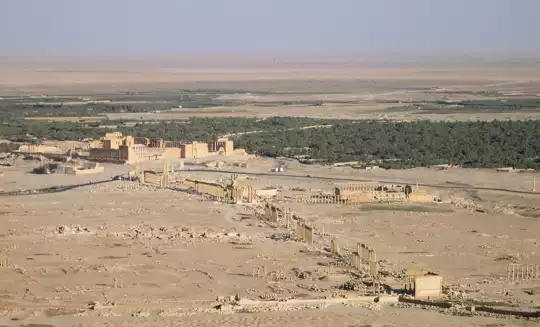
Country photo of Syria

We 💚 feedbackIs it worth it?

Kobani pulses with resilience. The vibrant street markets are alive with the scent of spices and the chatter of locals, offering a raw glimpse into daily life. But be prepared: navigating the aftermath of conflict means infrastructure can be shaky. Embrace the challenge; it’s part of the journey. The stories you’ll collect here are worth every bump along the way.

✈️ When did I visit Syria?
As part of my trip to Jordan in August 2004, I also visited Syria, which sadly changed for the worse soon afterwards.

✍️ Help improve this page!
The information on this page is based on my own backpacking experience in Syria, supplemented with up-to-date research and feedback from other travelers. Travel details can change, so if you notice anything outdated or incomplete, feel free to let me know.


🙋‍♂️ Give feedback

👋 Meet the founderWho’s Behind Take Your Backpack?

Johan, backpacker and founder of TakeYourBackpackHi, I’m Johan (Netherlands 🇳🇱), the creator of TakeYourBackpack. Over the past decade, I’ve backpacked through 80+ countries across six continents, gaining extensive experience with independent travel, long-term trips, and overland routes.

This site is built on a combination of firsthand travel experience and carefully curated insights from other backpackers. Many guides are based on places I’ve personally visited, while others bring together tips, observations, and practical advice shared by trusted travelers I’ve met along the way.

The goal is to provide realistic, experience-driven guidance — not generic itineraries — so you can explore destinations with better context, clearer expectations, and more confidence.

Get full Syria guide •
Instant download • 90 highlights • Full Offline guide