×

Taiwan🇹🇼 | attractionsFo Guang Shan Buddha Museumgiant Buddha statue, Buddhist relics, tranquil courtyards | things to do and best time to go

Explore Raohe Street Night MarketExplore Chimei Museum

Backpacking in Fo Guang Shan Buddha Museum
🌟 Highlightattraction ranked #5
By Johan Kruseman 🇳🇱 | Updated September 4, 2026

Here’s what nobody tells you until you’re sweating in the Kaohsiung sun: Fo Guang Shan Buddha Museum is one of the rare major sights in Taiwan where you can actually find shade, sit down, and breathe—without paying for a coffee or fighting for a bench. Tucked on the outskirts of Kaohsiung in southern Taiwan, this sprawling complex is less a quick photo stop and more a full-on immersion in Buddhist philosophy, art, and hospitality. Yes, the main Buddha statue is colossal and the scale is jaw-dropping, but the real magic is in the calm—especially compared to the shoulder-to-shoulder chaos of Taipei’s temples or Jiufen’s alleys. Crowds swell on weekends, but the site’s size means you rarely feel boxed in. Entry is free, and the vibe is contemplative, not commercial. If you’re chasing adrenaline, look elsewhere. If you want a deep breath and a dose of perspective, this is the real deal.

Discover everything you want to know in the 📖 Taiwan Travel Guide.


Get your Taiwan guide
113 ranked highlights, routes & tips, works offline (407 pages)
Loading the map 🌍
CLICK TO FILTER
cities
towns
villages
landmarks
national parks
hikes
beaches
attractions
festivals
regions
SHOW COUNTRY’S BESTSHOW ALL

✨ Why go?
Ranked #5 attraction in Taiwan
Why Fo Guang Shan Buddha Museum should be on your travel list

The Fo Guang Shan Buddha Museum in Taiwan isn’t just another photo op for your feed—it’s a heavyweight cultural landmark that demands your time. Yes, it draws crowds, especially on weekends and holidays, and the sprawling complex can feel overwhelming at first. But here’s the kicker: this place is a masterclass in modern Buddhist architecture and spiritual depth, wrapped in a vibe that’s both serene and grandiose. The massive Buddha statue alone is iconic, but the real draw is the museum’s role as a living hub of Buddhist education and practice, not just a static shrine. For backpackers threading through Taiwan, it’s a milestone that offers a break from the usual city buzz and a chance to dive into Taiwan’s religious and cultural heartbeat. The effort to get there—whether by bus or scooter—is … read more 👉
The Fo Guang Shan Buddha Museum in Taiwan isn’t just another photo op for your feed—it’s a heavyweight cultural landmark that demands your time. Yes, it draws crowds, especially on weekends and holidays, and the sprawling complex can feel overwhelming at first. But here’s the kicker: this place is a masterclass in modern Buddhist architecture and spiritual depth, wrapped in a vibe that’s both serene and grandiose. The massive Buddha statue alone is iconic, but the real draw is the museum’s role as a living hub of Buddhist education and practice, not just a static shrine. For backpackers threading through Taiwan, it’s a milestone that offers a break from the usual city buzz and a chance to dive into Taiwan’s religious and cultural heartbeat. The effort to get there—whether by bus or scooter—is rewarded with expansive gardens, intricate carvings, and a sense of calm that’s rare in tourist-heavy spots. Skip the surface-level Instagram shots; linger here to feel the pulse of Taiwan’s spiritual legacy.
Want to include Fo Guang Shan Buddha Museum in your Taiwan route?
Create a personalized Taiwan itinerary that includes Fo Guang Shan Buddha Museum and the places that fit your trip — based on your travel style, budget, and available time. Get your route in seconds.

Generate my trip

💡 HighlightsPlaces and moments you shouldn't skip

The Great Buddha Statue
Let’s get real: you’ve seen a thousand Buddha statues on Instagram, but this one is a monster—literally. At 108 meters tall, it’s one of the largest seated Buddha statues on the planet. You don’t just look at it; you feel it looming over the entire complex, radiating a kind of serene authority that makes even the most jaded traveler pause. The scale is absurd in the best way, and the view from its base is a rare moment where the hype matches reality.


The Eight Pagodas
Forget the symmetrical perfection you see in travel brochures—these pagodas are more than just photo props. Each one represents a core Buddhist value, and if you actually step inside (most people don’t), you’ll find interactive exhibits, calligraphy workshops, and even monks willing to chat about philosophy. … read more 👉
The Great Buddha Statue
Let’s get real: you’ve seen a thousand Buddha statues on Instagram, but this one is a monster—literally. At 108 meters tall, it’s one of the largest seated Buddha statues on the planet. You don’t just look at it; you feel it looming over the entire complex, radiating a kind of serene authority that makes even the most jaded traveler pause. The scale is absurd in the best way, and the view from its base is a rare moment where the hype matches reality.


The Eight Pagodas
Forget the symmetrical perfection you see in travel brochures—these pagodas are more than just photo props. Each one represents a core Buddhist value, and if you actually step inside (most people don’t), you’ll find interactive exhibits, calligraphy workshops, and even monks willing to chat about philosophy. It’s a choose-your-own-adventure for your brain, not just your camera roll.


The Main Hall (Fo Guang Building)
This isn’t your average temple hall with incense and a donation box. The Main Hall is a labyrinth of shrines, relics, and murals that tell the story of Buddhism’s journey from India to Taiwan. The real kicker? The Buddha’s tooth relic, displayed with a level of security that would make a bank jealous. Whether you’re spiritual or just curious, the energy here is palpable—part reverence, part spectacle.


The Buddha Museum Underground Palace
Here’s the plot twist: beneath the sprawling courtyards, there’s an underground palace that feels like a cross between a sci-fi bunker and a sacred vault. It’s packed with rare artifacts, multimedia displays, and a cool, hushed atmosphere that’s a relief after the midday sun. This is where the crowds thin out and you get a sense of the museum’s real ambition—to be a living archive, not just a monument.


Vegetarian Dining Halls
You’re not coming here for Michelin stars, but the vegetarian buffets are a crash course in Taiwanese Buddhist cuisine. Skip the overpriced snacks outside and head for the dining halls where monks and locals eat. It’s communal, hearty, and surprisingly inventive—think lotus root soup, taro cakes, and tofu dishes that actually taste like something. Eating here isn’t just about food; it’s about joining the rhythm of daily life at the monastery.


Volunteer-Led Guided Tours
Most people wander aimlessly, but if you want the real stories—the political drama behind the museum’s founding, the logistics of moving relics across continents, the monk who moonlights as a calligraphy master—join a free tour. The volunteers are passionate, sometimes blunt, and always ready to share the kind of details you’ll never find on a plaque. This is where the place comes alive, quirks and all.
Spotted a mistake or missing something? Contact us.

Things to do around Fo Guang Shan Buddha Museum

Ratings based on Tripadvisor reviews. When you book through this link, you support our work at no extra cost to you.

🌤️ When to go?Best time to visit Fo Guang Shan Buddha Museum


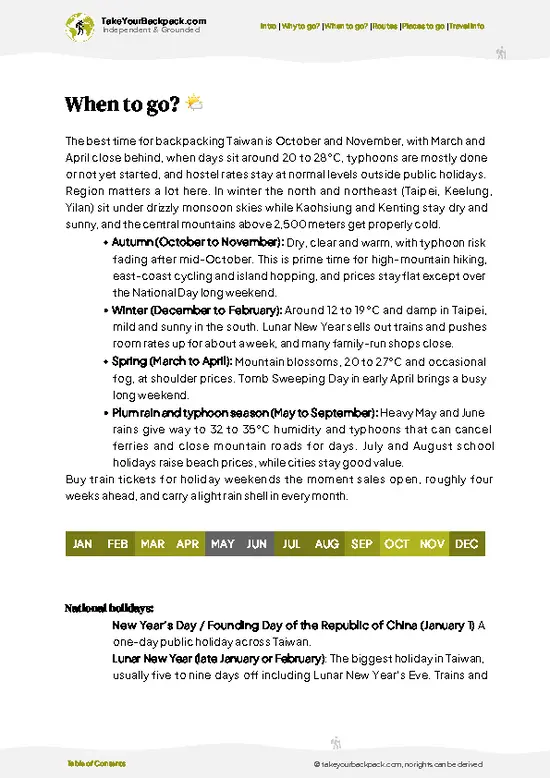
  • Weather: Taiwan’s subtropical climate means hot, humid summers and mild winters. From June to August, expect sticky heat with temperatures hitting 30-35°C (86-95°F), which can sap your energy fast. The best weather hits between November and March, when it’s cooler and drier, around 15-22°C (59-72°F).

  • Temperature: If you’re not a fan of sweating through your shirt, avoid summer. Spring (March-May) and autumn (September-November) offer comfortable temps in the 20-25°C (68-77°F) range, perfect for wandering the sprawling grounds without overheating.

  • Daylight Hours: Taiwan enjoys roughly 11-13 hours of daylight year-round. The longer days in spring and summer give you more time to explore, but remember, the sun can be brutal midday.

  • Crowds: The museum draws big crowds during weekends and Taiwanese
read more 👉

  • Weather: Taiwan’s subtropical climate means hot, humid summers and mild winters. From June to August, expect sticky heat with temperatures hitting 30-35°C (86-95°F), which can sap your energy fast. The best weather hits between November and March, when it’s cooler and drier, around 15-22°C (59-72°F).

  • Temperature: If you’re not a fan of sweating through your shirt, avoid summer. Spring (March-May) and autumn (September-November) offer comfortable temps in the 20-25°C (68-77°F) range, perfect for wandering the sprawling grounds without overheating.

  • Daylight Hours: Taiwan enjoys roughly 11-13 hours of daylight year-round. The longer days in spring and summer give you more time to explore, but remember, the sun can be brutal midday.

  • Crowds: The museum draws big crowds during weekends and Taiwanese holidays, especially Lunar New Year (January/February) and the Buddha’s birthday in May. Weekdays in the off-peak months (November to February) are your best bet for a quieter experience.

  • Seasonal Activities: The Buddha’s birthday festival in May is a spectacle but expect throngs of visitors. Autumn brings fewer events but a peaceful vibe, letting you soak in the architecture and gardens without distractions.

  • Price Fluctuations: Entry is generally free, but local transport and accommodation prices spike during peak holiday seasons (Chinese New Year, summer vacation). Booking outside these times saves you cash and hassle.


Pro-tip: Aim for late autumn or early spring weekdays—cool weather, manageable crowds, and better deals make this the sweet spot for experiencing Fo Guang Shan Buddha Museum without the Instagram chaos.


source: climatestotravel.comJANJanuary: highly recommended for travelingFEBFebruary: good for travelingMARMarch: highly recommended for travelingAPRApril: highly recommended for travelingMAYMay: good for travelingJUNJune: fair for travelingJULJuly: fair for travelingAUGAugust: fair for travelingSEPSeptember: highly recommended for travelingOCTOctober: highly recommended for travelingNOVNovember: excellent for travelingDECDecember: highly recommended for traveling
when-to-go

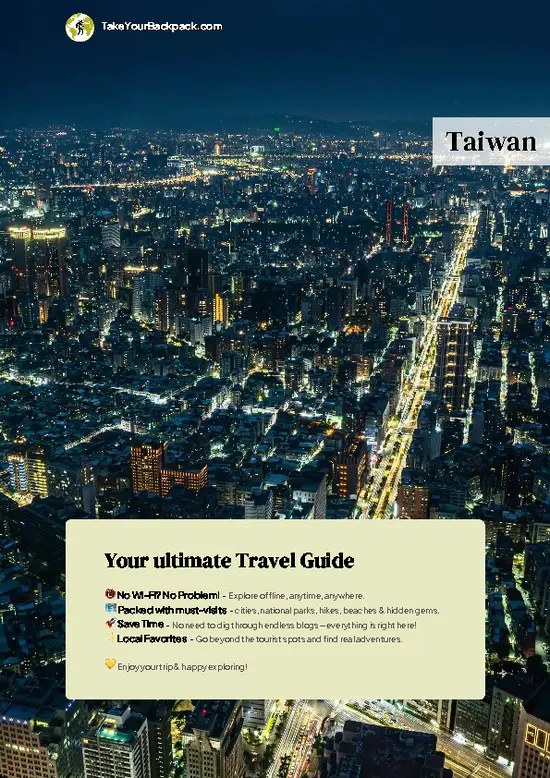
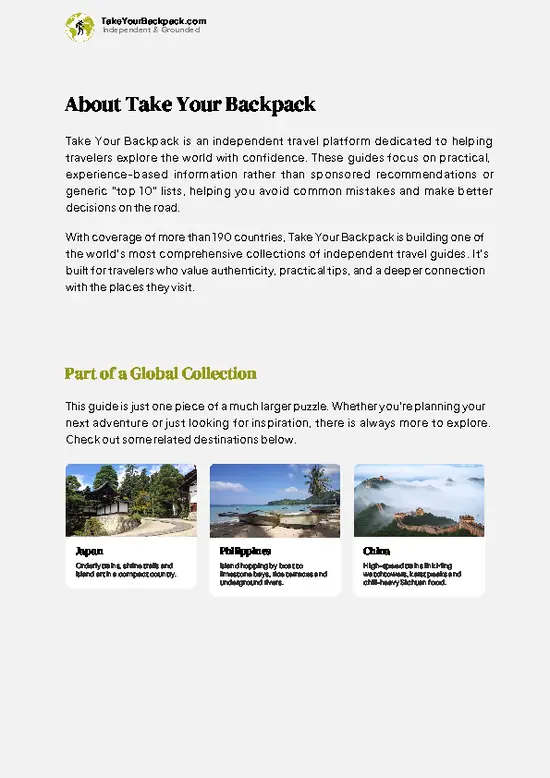
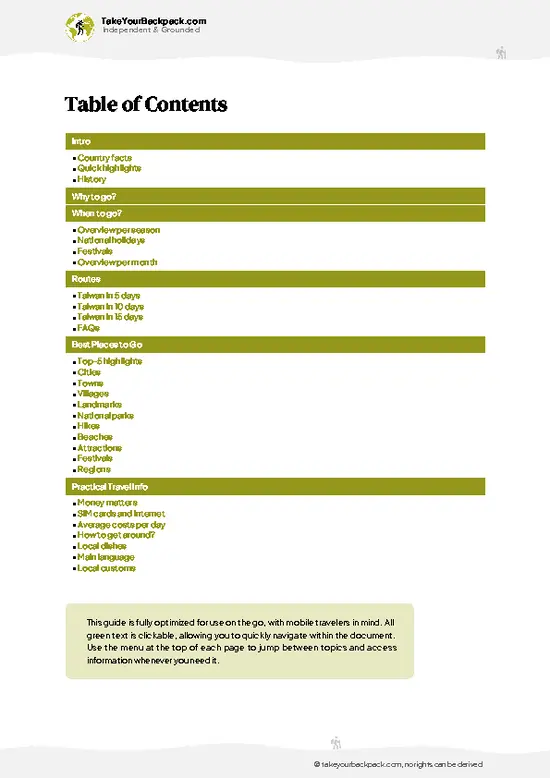
✈️ The backpacker research shortcutTaiwan Travel Guide

An offline-friendly backpacking guide with optimized travel routes, ranked highlights, transport advice, and the best areas to stay.
example page 0 from our offline Travel Guide for Taiwan
example page 1 from our offline Travel Guide for Taiwan
example page 2 from our offline Travel Guide for Taiwan
example page 3 from our offline Travel Guide for Taiwan
example page 4 from our offline Travel Guide for Taiwan
example page 5 from our offline Travel Guide for Taiwan
example page 6 from our offline Travel Guide for Taiwan
example page 7 from our offline Travel Guide for Taiwan
The digital guide (407 pages) contains:
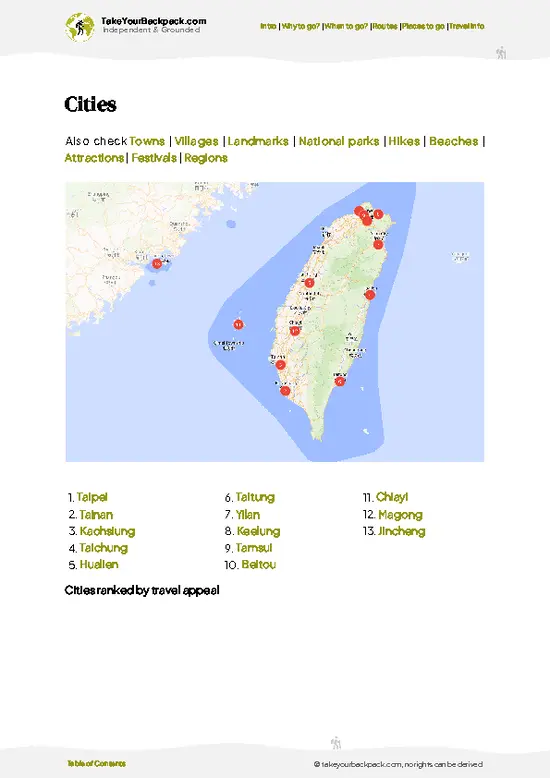
113 highlights, ranked by travel appeal
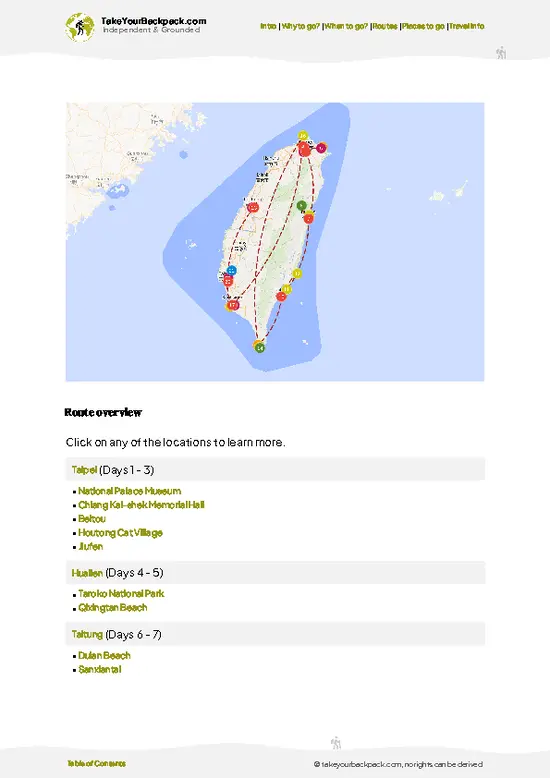
Optimized 5, 10 & 15-day travel routes
Cities, national parks, landmarks, beaches
How to get around
Offline-friendly for travel without Wi-Fi
👉 Click to see all 30+ guide features

📅 Plan smarter in minutes, not weeks
Month by month travel advice
Festivals & national holidays
Budget expectations

🗺️ Go to the right places, skip the overrated ones
Honest pros & cons of destinations
Top hikes, parks & viewpoints
Lesser-known places most travelers miss
Clear “worth it vs skip it” guidance

🛏️ Travel smoothly without rookie mistakes
Best areas to stay
Transport systems explained simply
Common scams & safety advice
SIM cards, money & practical tips

🌍 Understand the country, not just visit it
Culture & traditions
52 Essential phrases & customs
Festivals worth planning around
Traveler-friendly historical context
Insights that make places more meaningful

📱 Built for real travel conditions
Fully downloadable PDF
Works completely offline
Optimized for phone use
Useful in remote areas & buses
Everything in one place
Save weeks of stressful planning
Get instant access to your full guide. 30‑day money-back guarantee.
+ Add another guide for just US$7.80

By proceeding you agree to our terms.
Sent to your inbox immediately after payment • 100% Secure Checkout
Best Backpacking Travel Advisor 2025 tourism awardBest Backpacking
Travel Advisor
2025
What others say about Take Your Backpack Guides:
⭐⭐⭐⭐⭐
Fantastic, amazing amount of information!
⭐⭐⭐⭐⭐
My goodness this is amazing, it's what I've been looking for hats off too you!
⭐⭐⭐⭐⭐
I think this is absolutely BRILLIANT
⭐⭐⭐⭐
Very complete and informative. It's still missing places, but I gotta to commend you
⭐⭐⭐⭐⭐
This is truly amazing, thank you, can't wait to explore it with my kids!
⭐⭐⭐⭐⭐
Awesome resource, thank you!
⭐⭐⭐⭐⭐
This is amazing! Can't wait to explore the ones I haven't seen
⭐⭐⭐⭐
I love this! Well done, great idea.
⭐⭐⭐⭐⭐
Thanks for taking the time to make this gem!
⭐⭐⭐⭐⭐
This might be the best website I've ever seen.
⭐⭐⭐⭐⭐
Congratulations, and thank you so much for your work; it's incredibly valuable.
⭐⭐⭐⭐
In all seriousness I think you did a great job pointing out the important spots
⭐⭐⭐⭐⭐
10/10 very good
⭐⭐⭐⭐⭐
As someone who's only just starting to visit regularly this is awesome, thank you.
⭐⭐⭐⭐
Thank you very much! I'm going to visit my dad, it's going to be very useful!
⭐⭐⭐⭐⭐
This is really cool! We'll be travelling for the first time and this definitely come in handy.
⭐⭐⭐⭐⭐
You are now our minister of culture, congratulations 👨‍💼
⭐⭐⭐⭐⭐
Just wanted to tell you that this is a pearl! Going to follow your recommendations.
⭐⭐⭐⭐⭐
This is so cool. I'll definitely be using the resource for my travels soon.
⭐⭐⭐⭐⭐
This is very impressive! Good work.
⭐⭐⭐⭐⭐
This is an amazing and informative site. Very well done!

🛏️ Where to stay?Where staying makes the most sense

If you’re backpacking to the Fo Guang Shan Buddha Museum, brace yourself: this isn’t your typical backpacker hotspot. The museum sits in Dashu District, a suburban stretch outside Kaohsiung city center, which means you won’t find the usual cluster of hostels or buzzing nightlife right at your doorstep. That’s the reality check—expect fewer fellow travelers and more local vibes.

Your best bet is to base yourself in Kaohsiung’s downtown areas like Yancheng or Sanmin. These neighborhoods offer a solid mix of budget guesthouses and hostels where solo travelers can meet others without breaking the … read more 👉
If you’re backpacking to the Fo Guang Shan Buddha Museum, brace yourself: this isn’t your typical backpacker hotspot. The museum sits in Dashu District, a suburban stretch outside Kaohsiung city center, which means you won’t find the usual cluster of hostels or buzzing nightlife right at your doorstep. That’s the reality check—expect fewer fellow travelers and more local vibes.

Your best bet is to base yourself in Kaohsiung’s downtown areas like Yancheng or Sanmin. These neighborhoods offer a solid mix of budget guesthouses and hostels where solo travelers can meet others without breaking the bank. They’re safe, walkable, and have enough cafes and night markets to keep you entertained after a day of temple-hopping. Plus, public transport from here to Fo Guang Shan is straightforward, so you’re not stuck in the middle of nowhere.

Staying closer to the museum means sacrificing social buzz and budget options for convenience. But if you want the real magic—connecting with locals, swapping stories with other backpackers, and soaking in Taiwan’s urban pulse—Kaohsiung’s city districts are where you want to land. It’s a trade-off, but one that pays off if you’re after more than just a photo op.

👛 Costs (as of 4 September 2026)Travel costs and budget guide for Fo Guang Shan Buddha Museum

Admission to the Fo Guang Shan Buddha Museum is free. While there is no mandatory entrance fee, visitors are encouraged to make voluntary donations to support the museum's operations. Additional costs may include transportation to the museum, meals at on-site vegetarian restaurants, and any purchases from gift shops.

source: fgsbmc.org.tw
⚠️ Prices can change and everyone travels differently, so take this as a rough guide. Hope it helps you plan your adventure!

FAQCommon questions from travelers

Plan for about 2 to 3 hours to visit Fo Guang Shan Buddha Museum to fully explore the main hall, pagodas, and surrounding gardens. This allows time for photography, meditation, and visiting the museum exhibits. Longer visits may be needed if attending ceremonies or special events.
Yes, Fo Guang Shan Buddha Museum is worth the entrance fee, which is generally free or very low cost, depending on special exhibitions. The site offers impressive architecture, a massive Buddha statue, and cultural insights that justify the visit. It is a unique spiritual and cultural experience in Taiwan.
To get to Fo Guang Shan Buddha Museum, take a train or bus to Kaohsiung and then a local bus or taxi to the museum, located about 30 kilometers north of the city center. The museum is accessible via Kaohsiung Main Station with bus routes 8501 or 8502, or by taxi for convenience.
⚠️ Things can change over time, so always validate details locally before you go.

Other Taiwanese attractions near Fo Guang Shan Buddha Museum

Explore more nearby:


💡 Not sure where to go next?
Create a personalized itinerary for Taiwan including Fo Guang Shan Buddha Museum and the places that fit your trip.

Generate my itinerary

👉 Discover all attractions

Or checkout all Taiwan has to offer (think cities, towns, villages, national parks, hikes, beaches, festivals)
Country photo of Taiwan

We 💚 feedbackParting advice and final tips

The Fo Guang Shan Buddha Museum isn’t some quiet sanctuary where you’ll find peace in solitude—expect crowds, especially on weekends and holidays. But here’s the kicker: beyond the selfie frenzy, the scale and detail of the statues and halls hit you with a kind of calm that’s rare in tourist spots. The best surprise? The way the monks’ chants echo through the massive spaces, grounding the whole experience in something deeply real. Don’t rush it.

✍️ Help improve this page!
The information on this page is based on in-depth research, insights shared by experienced travelers, and feedback from the local travel community in Taiwan. While every effort is made to keep the information accurate and current, conditions can change — so if you spot anything incorrect or outdated, please get in touch.


🙋‍♂️ Give feedback

👋 Meet the founderWho’s Behind Take Your Backpack?

Johan, backpacker and founder of TakeYourBackpackHi, I’m Johan (Netherlands 🇳🇱), the creator of TakeYourBackpack. Over the past decade, I’ve backpacked through 80+ countries across six continents, gaining extensive experience with independent travel, long-term trips, and overland routes.

This site is built on a combination of firsthand travel experience and carefully curated insights from other backpackers. Many guides are based on places I’ve personally visited, while others bring together tips, observations, and practical advice shared by trusted travelers I’ve met along the way.

The goal is to provide realistic, experience-driven guidance — not generic itineraries — so you can explore destinations with better context, clearer expectations, and more confidence.

Get full Taiwan guide •
Instant download • 113 highlights • Full Offline guide