×

Taiwan🇹🇼 | best attractionsWhere to Find the 10 Best attractions in Taiwan

Taiwan’s best attractions unfold through a distinct interplay of geography, culture, and climate that shapes every backpacker’s journey. From the urban pulse of Taipei’s night markets to the serene mountain trails of Taroko Gorge, each region offers a unique rhythm that influences travel style and budget. Understanding these patterns—like how the subtropical south invites year-round exploration while the north demands seasonal timing—transforms your itinerary from guesswork into strategy. Choosing the right attraction here isn’t just about ticking boxes; it’s about syncing with local flow to maximize cultural immersion, safety, and ease of travel. For independent travelers, mastering Taiwan’s diverse landscapes and urban hubs unlocks a richer, smarter adventure.

By Johan Kruseman 🇳🇱 | Updated June 6, 2026
Explore the best festivals in Taiwan

Why go?Understanding Their Importance

Taiwan’s attractions matter because they operate within a unique intersection of geography, culture, and infrastructure that shapes how travelers experience the island. Unlike sprawling countries where distances demand long travel days, Taiwan’s compact size means you can access diverse environments—from rugged mountains to bustling urban centers—within a few hours. This proximity creates a trade-off: you can either cover more ground quickly, sacrificing depth, or slow down to savor the layers of history and local life embedded in each place. The island’s dense population and well-developed transport network, including high-speed rail and frequent buses, make accessibility a strong suit, but this also means popular spots can feel crowded, especially during weekends or holidays, challenging … read more 👉
Taiwan’s attractions matter because they operate within a unique intersection of geography, culture, and infrastructure that shapes how travelers experience the island. Unlike sprawling countries where distances demand long travel days, Taiwan’s compact size means you can access diverse environments—from rugged mountains to bustling urban centers—within a few hours. This proximity creates a trade-off: you can either cover more ground quickly, sacrificing depth, or slow down to savor the layers of history and local life embedded in each place. The island’s dense population and well-developed transport network, including high-speed rail and frequent buses, make accessibility a strong suit, but this also means popular spots can feel crowded, especially during weekends or holidays, challenging those seeking solitude.

Taiwan’s cultural fabric blends indigenous heritage, Chinese traditions, and Japanese colonial influences, offering a rich, layered context that demands more than surface-level visits. Understanding this complexity rewards travelers willing to engage beyond the obvious, but it requires time and curiosity—commodities that don’t always align with tight itineraries. Climatically, Taiwan’s subtropical environment supports lush landscapes and vibrant night markets year-round, yet typhoon season and humidity can impose practical limits on outdoor plans. Recognizing these factors upfront helps travelers balance ambition with realism, turning what might seem like logistical hurdles into strategic choices that unlock a more nuanced, rewarding experience.
Why These Made the Cut
The list of best attractions in Taiwan is created based on cultural significance or entertainment value. If you feel a attraction is missing in this list, please let us know.

When to go?Timing Your Visit for the Best Experience

Seasonal Patterns Shape Your Taiwan Experience

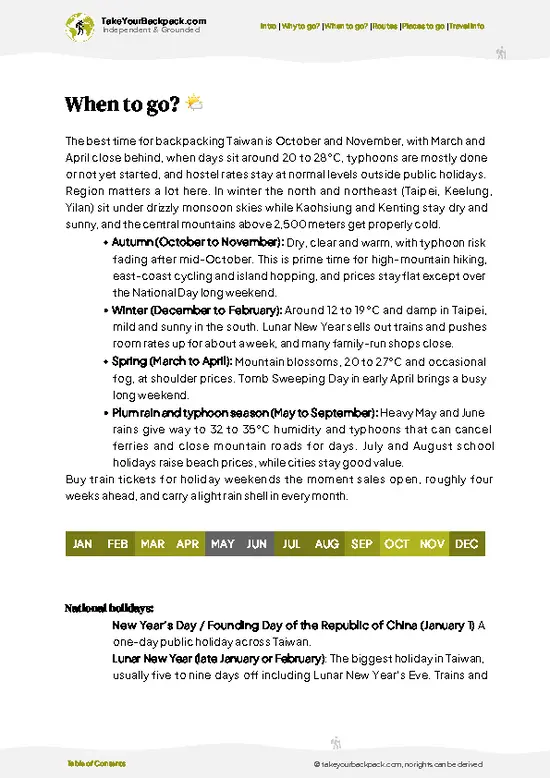
Taiwan’s climate operates on a clear rhythm that directly impacts how you experience its attractions. The island’s subtropical to tropical zones mean hot, humid summers and mild winters, but the real game-changer is the monsoon and typhoon season. Summer months bring intense heat paired with heavy rains and the risk of typhoons, which can disrupt outdoor plans and make some natural attractions less accessible or enjoyable.

Optimal Timing: Balance Comfort and Access

The most reliable window for smooth exploration falls in the cooler, drier months. During this period, humidity drops, skies clear, and the weather stabilizes, creating ideal conditions for outdoor activities and sightseeing. This season also aligns with Taiwan’s lower rainfall, … read more 👉

Seasonal Patterns Shape Your Taiwan Experience

Taiwan’s climate operates on a clear rhythm that directly impacts how you experience its attractions. The island’s subtropical to tropical zones mean hot, humid summers and mild winters, but the real game-changer is the monsoon and typhoon season. Summer months bring intense heat paired with heavy rains and the risk of typhoons, which can disrupt outdoor plans and make some natural attractions less accessible or enjoyable.

Optimal Timing: Balance Comfort and Access

The most reliable window for smooth exploration falls in the cooler, drier months. During this period, humidity drops, skies clear, and the weather stabilizes, creating ideal conditions for outdoor activities and sightseeing. This season also aligns with Taiwan’s lower rainfall, reducing the chance of weather-related interruptions.

Shoulder Seasons: Weighing Crowds and Conditions

The transitional periods before and after the peak season offer a strategic trade-off. Crowds thin out, and prices often dip, but the weather becomes less predictable. You might encounter occasional showers or fluctuating temperatures, which require flexible planning. These shoulder months reward travelers who can adapt with fewer tourists and a more relaxed pace.

Peak Periods: When Demand Shapes Experience

Certain holidays and festivals concentrate visitor numbers, especially during the dry season. This influx can strain accommodations and transportation, making early bookings essential. While the weather is favorable, the increased foot traffic can alter the atmosphere of popular attractions, turning a serene visit into a bustling one.

Understanding these seasonal dynamics lets you tailor your trip to your priorities—whether that’s avoiding crowds, securing the best weather, or balancing cost and convenience. Taiwan’s system of weather and visitor flow is a puzzle; mastering it means turning potential obstacles into strategic advantages.

attraction hoppingPlanning Your Route Efficiently

Mapping Taiwan’s Attractions into a Cohesive Journey

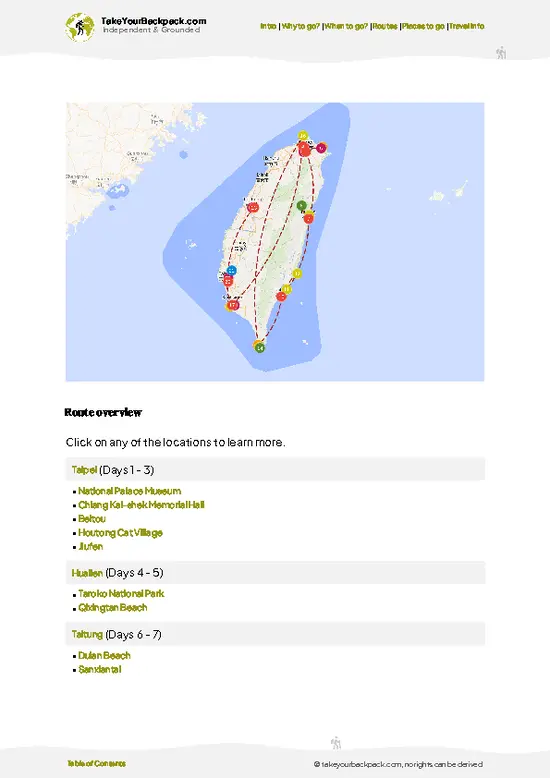
Taiwan’s geography and transport infrastructure naturally divide the island into distinct regions—north, central, south, and east—each with clusters of attractions that share cultural and environmental traits. The most efficient trips respect this regional grouping, minimizing backtracking and maximizing immersion. Start by choosing a logical direction of travel, typically north to south or vice versa, aligning with major transport corridors like the high-speed rail or coastal highways. This sequencing reduces transit time and allows for a rhythm that balances exploration and rest.

Balancing Time and Depth Across Stops

Not all attractions demand equal attention. Urban hubs often require a full day or more to appreciate museums, markets, … read more 👉

Mapping Taiwan’s Attractions into a Cohesive Journey

Taiwan’s geography and transport infrastructure naturally divide the island into distinct regions—north, central, south, and east—each with clusters of attractions that share cultural and environmental traits. The most efficient trips respect this regional grouping, minimizing backtracking and maximizing immersion. Start by choosing a logical direction of travel, typically north to south or vice versa, aligning with major transport corridors like the high-speed rail or coastal highways. This sequencing reduces transit time and allows for a rhythm that balances exploration and rest.

Balancing Time and Depth Across Stops

Not all attractions demand equal attention. Urban hubs often require a full day or more to appreciate museums, markets, and temples, while natural sites or smaller towns might be absorbed in a half-day. Allocating roughly one to two days per major city and half a day to a day for natural or cultural landmarks creates a sustainable pace. This prevents the common trap of rushing through highlights without meaningful engagement, which leads to fatigue and superficial experiences.

Trade-offs: Speed, Comfort, and Experience

Choosing between rapid transit and slower, scenic routes is a strategic decision. High-speed rail offers speed but limits exposure to rural landscapes, while local buses and trains provide richer context at the cost of time. Budget constraints often push travelers toward cheaper, slower options, but this can increase transit fatigue. Conversely, splurging on convenience can free up time for deeper exploration. Flexibility in scheduling—allowing buffer days or optional detours—turns rigid plans into adaptive journeys that respond to on-the-ground discoveries.

Common Pitfalls and Strategic Adjustments

A frequent mistake is overloading itineraries with too many stops, driven by a checklist mentality. This dilutes the experience and increases logistical complexity. Instead, prioritize clusters of attractions within reachable distances, and accept that some sites must be saved for future trips. Recognize that Taiwan’s compact size is an advantage, but only if travel flows logically. Strategic planning means embracing a manageable number of stops, realistic travel times, and a mix of urban and natural experiences that complement rather than compete with each other.

The ListTop attractions of Taiwan

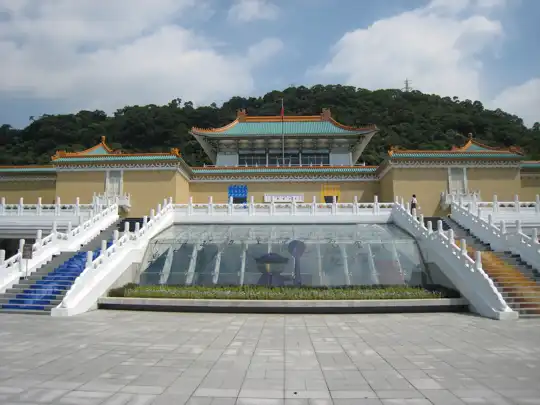
1 National Palace Museum

imperial treasures, jade carvings, ancient scrolls

View dynastic Chinese art and artifacts, including rare ceramics and calligraphy, in a collection spanning thousands of years.

Taiwan - National Palace Museum

2 Taipei 101 Observatory

sky-high deck, city skyline views, high-speed elevators

Ride to the top for panoramic cityscapes and see the world’s largest tuned mass damper inside this iconic skyscraper.

3 Chiang Kai-shek Memorial Hall

white marble monument, ceremonial plaza, changing of the guard

Stand beneath imposing architecture and watch the precision of the guard ceremony while learning about Taiwan’s 20th-century political history.

4 Shilin Night Market

food court basement, carnival games, souvenir shops

Navigate crowded lanes packed with snacks, games, and shopping in Taipei’s largest and most famous night market.

5 Fo Guang Shan Buddha Museum

giant Buddha statue, Buddhist relics, tranquil courtyards

Walk peaceful paths lined with pagodas and explore halls displaying Buddhist art, philosophy, and religious artifacts.

6 Lungshan Temple of Manka

ornate temple, incense rituals, dragon columns

Observe worshippers lighting incense and admire intricate carvings in one of Taipei’s oldest and most active temples.

7 Raohe Street Night Market

lantern-lit street, street food stalls, temple gateway

Sample local snacks and browse vendor stands in a bustling night market anchored by a brightly lit temple entrance.

8 Pier-2 Art Center

harborfront warehouses, street art, creative studios

Stroll through murals, installations, and galleries in a revitalized port district popular with artists and young crowds.

9 Chimei Museum

European-style palace, classical sculptures, rare musical instruments

Browse galleries filled with Western art, weaponry, and unique instruments in a grand setting surrounded by landscaped gardens.

10 Huashan 1914 Creative Park

industrial warehouses, art installations, pop-up markets

Experience repurposed factory spaces hosting rotating exhibitions, indie shops, and creative events in a central Taipei hub.

11 Songshan Cultural and Creative Park

former tobacco factory, design exhibitions, lakeside lawns

Relax by the pond or visit design fairs and art shows in a sprawling complex blending industrial heritage with modern creativity.

12 National Taichung Theater

curved concrete forms, rooftop gardens, performance spaces

Explore organic architecture and attend shows or exhibitions in a venue known for its flowing interiors and city views.

13 National Theater and Concert Hall

twin red-roofed halls, cultural performances, Liberty Square

Attend music, opera, or theater events in grand venues facing a major civic plaza in central Taipei.

14 National Kaohsiung Center for the Arts

wave-like architecture, concert halls, urban park setting

Attend performances or explore vast public spaces inside a striking building set within landscaped grounds in southern Taiwan.

15 National Taiwan Museum

neoclassical building, natural history, ethnographic collections

Discover Taiwan’s geology, flora, fauna, and indigenous cultures in a museum housed in a landmark early-20th-century structure.

16 National Museum of Taiwan History

timeline exhibits, indigenous cultures, interactive displays

Trace Taiwan’s human story from prehistoric times to the present through artifacts, dioramas, and hands-on exhibits.

17 Houtong Cat Village

cat-themed alleys, hillside village, feline residents

Wander narrow lanes where cats lounge on steps and locals have transformed a former mining town into a feline sanctuary.

Think you know Taiwan?

Prove you’re a true local — uncover 7 lesser-known attractions in Taiwan that locals tend to keep to themselves.
Loading the map 🌍

Expert viewExpert Commentary on attractions

Expert Commentary


When you’re sizing up the best attractions in Taiwan, the first thing to grasp is that the island’s appeal isn’t about ticking off a long checklist. Instead, it’s about choosing a handful of experiences that resonate deeply with your interests and travel style. Trying to cram too many attractions into one trip often backfires because Taiwan’s charm lies in its regional diversity and the time it takes to absorb each place’s character. Aim for around three to five main attractions for a balanced trip. This range lets you dive beneath the surface without feeling rushed or overwhelmed.

Taiwan’s geography and infrastructure shape how you approach this. The island is compact but mountainous, with a well-developed transport network that’s efficient but not always rapid outside … read more 👉

Expert Commentary


When you’re sizing up the best attractions in Taiwan, the first thing to grasp is that the island’s appeal isn’t about ticking off a long checklist. Instead, it’s about choosing a handful of experiences that resonate deeply with your interests and travel style. Trying to cram too many attractions into one trip often backfires because Taiwan’s charm lies in its regional diversity and the time it takes to absorb each place’s character. Aim for around three to five main attractions for a balanced trip. This range lets you dive beneath the surface without feeling rushed or overwhelmed.

Taiwan’s geography and infrastructure shape how you approach this. The island is compact but mountainous, with a well-developed transport network that’s efficient but not always rapid outside urban centers. This means travel times between attractions can be deceptively long, especially if you’re venturing into rural or mountainous areas. The trade-off here is between depth and breadth: you can either cover more ground superficially or linger longer in fewer places to truly engage with local culture and environment. Prioritize based on what you want to get out of the trip—whether it’s nature, history, food, or a mix.

Budget-wise, Taiwan offers a wide spectrum. Public transport and street food keep costs manageable, but some attractions—especially those requiring guided tours or entrance fees—can add up. Factor in that some of the most rewarding experiences, like hot springs or cultural performances, might require a bit more investment. The key is to allocate your budget strategically: spend more where the experience is unique and less where alternatives exist. For example, local markets and temples often provide rich cultural insight at minimal cost, while specialized tours or premium dining can be reserved for standout moments.

Planning your itinerary also means understanding the rhythm of local life and cultural norms. Many attractions, especially those tied to religious or traditional practices, have peak times aligned with festivals or weekends. Visiting during these periods can be a double-edged sword: you gain access to vibrant cultural displays but face larger crowds and higher prices. Conversely, off-peak visits offer a quieter, more contemplative experience but may lack the same energy. Balancing these factors depends on your tolerance for crowds and your desire for authenticity versus convenience.

Safety and cultural respect are often overlooked but crucial elements in Taiwan. The island is generally safe, with low crime rates and a strong sense of community. However, some natural attractions—like mountain trails or coastal areas—demand respect for local conditions and weather patterns. Always check local advisories and be prepared for sudden changes. On the cultural side, Taiwan’s society values politeness and humility. Simple gestures like removing shoes when entering homes or temples, and speaking softly in sacred spaces, go a long way. Understanding these nuances enriches your experience and smooths interactions.

One pattern I’ve noticed over multiple trips is how Taiwan’s attractions often cluster around themes—nature, history, indigenous culture, and urban vibrancy. Recognizing this helps you build a coherent itinerary that feels intentional rather than random. For example, pairing a nature-focused visit with a cultural immersion in a nearby indigenous community creates a layered understanding of the island’s identity. This thematic approach also helps manage travel logistics by minimizing backtracking and maximizing time spent engaging rather than commuting.

Finally, the best way to unlock Taiwan’s attractions is to think like a strategist, not a tourist. Use the island’s efficient transport hubs as launch points, but don’t rush from one to the next. Instead, build in downtime to absorb the atmosphere, try local specialties, and chat with residents. The payoff is a trip that feels less like a checklist and more like a story you’re living. That’s the real secret to mastering Taiwan’s attractions: it’s not about seeing everything, but about seeing enough to understand why it matters.

✈️ The backpacker research shortcutTaiwan Travel Guide

An offline-friendly backpacking guide with optimized travel routes, ranked highlights, transport advice, and the best areas to stay.
example page 0 from our offline Travel Guide for Taiwan
example page 1 from our offline Travel Guide for Taiwan
example page 2 from our offline Travel Guide for Taiwan
example page 3 from our offline Travel Guide for Taiwan
example page 4 from our offline Travel Guide for Taiwan
example page 5 from our offline Travel Guide for Taiwan
example page 6 from our offline Travel Guide for Taiwan
example page 7 from our offline Travel Guide for Taiwan
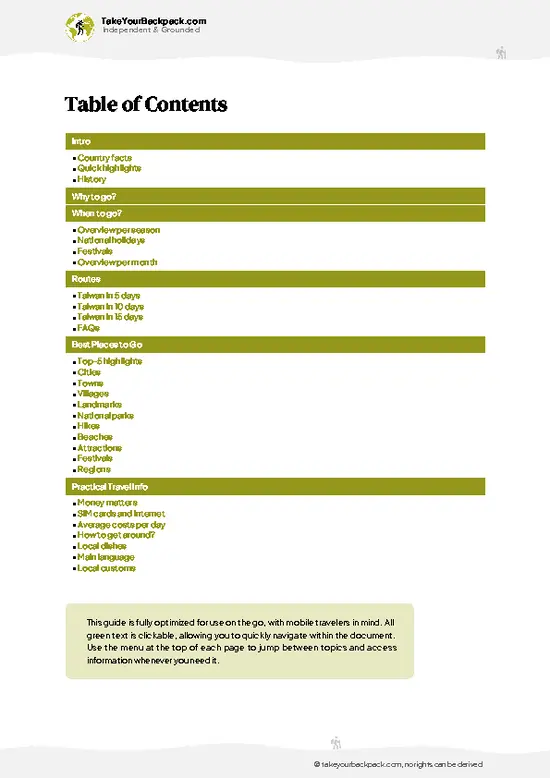
The digital guide (421 pages) contains:
115 highlights, ranked by travel appeal
Optimized 5, 10 & 15-day travel routes
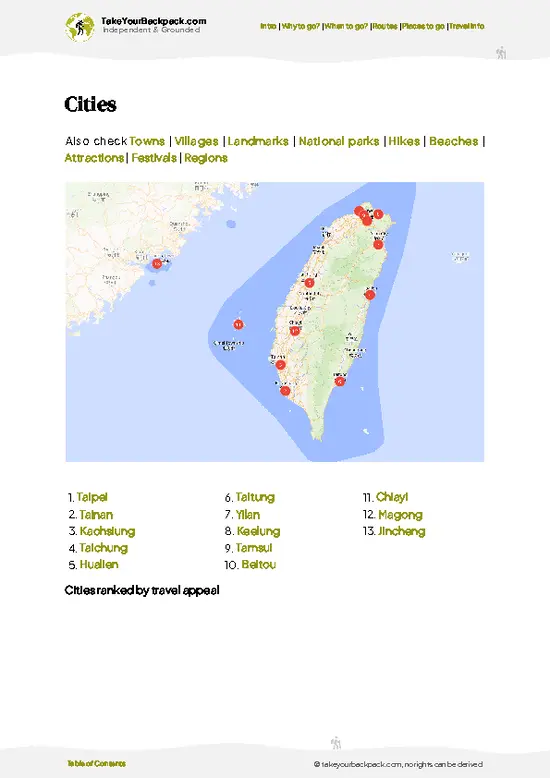
Cities, national parks, landmarks, beaches
How to get around
Offline-friendly for travel without Wi-Fi
👉 Click to see all 30+ guide features

📅 Plan smarter in minutes, not weeks
Month by month travel advice
Festivals & national holidays
Budget expectations

🗺️ Go to the right places, skip the overrated ones
Honest pros & cons of destinations
Top hikes, parks & viewpoints
Lesser-known places most travelers miss
Clear “worth it vs skip it” guidance

🛏️ Travel smoothly without rookie mistakes
Best areas to stay
Transport systems explained simply
Common scams & safety advice
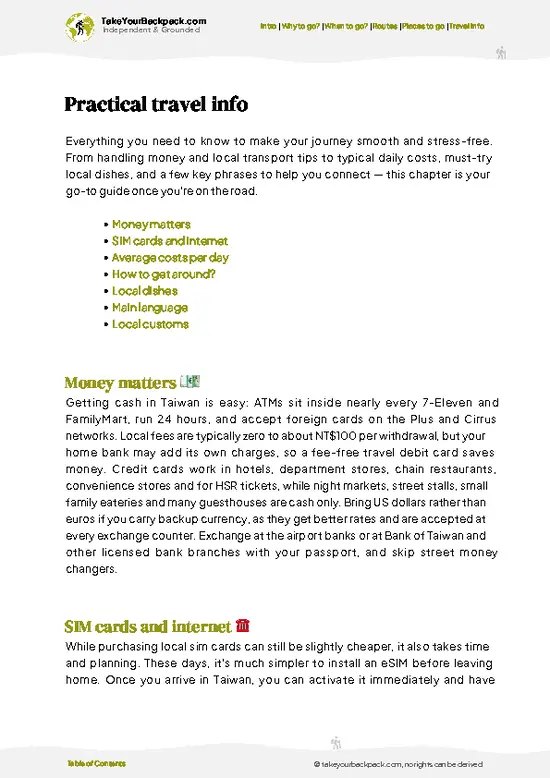
SIM cards, money & practical tips

🌍 Understand the country, not just visit it
Culture & traditions
52 Essential phrases & customs
Festivals worth planning around
Traveler-friendly historical context
Insights that make places more meaningful

📱 Built for real travel conditions
Fully downloadable PDF
Works completely offline
Optimized for phone use
Useful in remote areas & buses
Everything in one place
Save weeks of stressful planning
Get instant access to your full guide. 30‑day money-back guarantee.


By proceeding you agree to our terms.
Sent to your inbox immediately after payment • 100% Secure Checkout
Best Backpacking Travel Advisor 2025 tourism awardBest Backpacking
Travel Advisor
2025
What others say about Take Your Backpack Guides:
⭐⭐⭐⭐⭐
Fantastic, amazing amount of information!
⭐⭐⭐⭐⭐
My goodness this is amazing, it's what I've been looking for hats off too you!
⭐⭐⭐⭐⭐
I think this is absolutely BRILLIANT
⭐⭐⭐⭐
Very complete and informative. It's still missing places, but I gotta to commend you
⭐⭐⭐⭐⭐
This is truly amazing, thank you, can't wait to explore it with my kids!
⭐⭐⭐⭐⭐
Awesome resource, thank you!
⭐⭐⭐⭐⭐
This is amazing! Can't wait to explore the ones I haven't seen
⭐⭐⭐⭐
I love this! Well done, great idea.
⭐⭐⭐⭐⭐
Thanks for taking the time to make this gem!
⭐⭐⭐⭐⭐
This might be the best website I've ever seen.
⭐⭐⭐⭐⭐
Congratulations, and thank you so much for your work; it's incredibly valuable.
⭐⭐⭐⭐
In all seriousness I think you did a great job pointing out the important spots
⭐⭐⭐⭐⭐
10/10 very good
⭐⭐⭐⭐⭐
As someone who's only just starting to visit regularly this is awesome, thank you.
⭐⭐⭐⭐
Thank you very much! I'm going to visit my dad, it's going to be very useful!
⭐⭐⭐⭐⭐
This is really cool! We'll be travelling for the first time and this definitely come in handy.
⭐⭐⭐⭐⭐
You are now our minister of culture, congratulations 👨‍💼
⭐⭐⭐⭐⭐
Just wanted to tell you that this is a pearl! Going to follow your recommendations.
⭐⭐⭐⭐⭐
This is so cool. I'll definitely be using the resource for my travels soon.
⭐⭐⭐⭐⭐
This is very impressive! Good work.
⭐⭐⭐⭐⭐
This is an amazing and informative site. Very well done!

🛏️ Where to stay?Where to Stay: Taiwan Edition

Yes — hostels and budget accommodation are widespread across Taiwan, with the highest density in major cities and tourist towns like Taipei, Taichung, Tainan, Kaohsiung and Hualien.
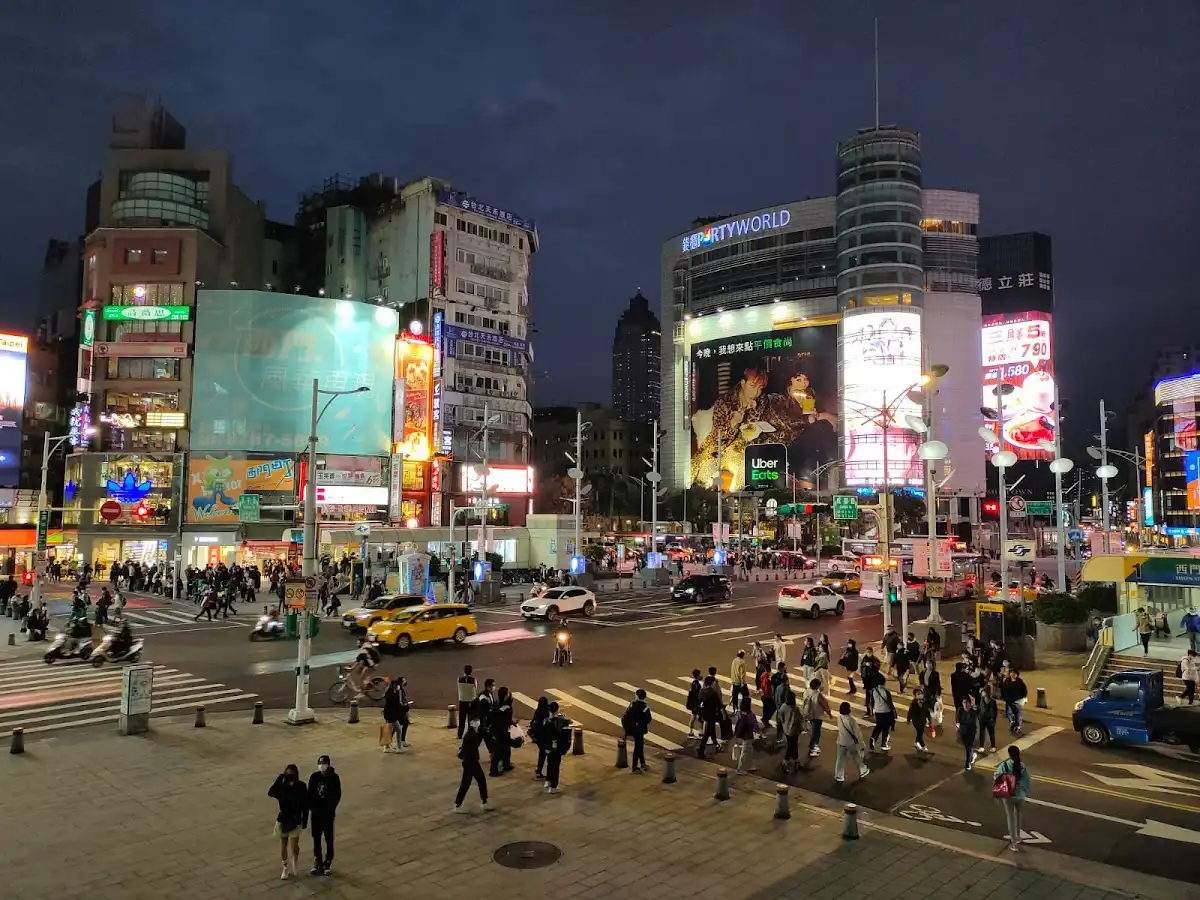
In Taipei look in Ximending (best for nightlife and shopping but noisy) or around Taipei Main Station (cheapest, excellent transit access but less character); in Taichung target the Fengjia area (student vibe and night market, busy evenings); in Tainan try Anping or the old city (close to historic sites and generally quieter at night); in Kaohsiung favor Liuhe/Yancheng (night market, harbour access, central and safe); in Hualien stay near the train station for easy access to Taroko Gorge (convenient for tours but … read more 👉
Yes — hostels and budget accommodation are widespread across Taiwan, with the highest density in major cities and tourist towns like Taipei, Taichung, Tainan, Kaohsiung and Hualien.
In Taipei look in Ximending (best for nightlife and shopping but noisy) or around Taipei Main Station (cheapest, excellent transit access but less character); in Taichung target the Fengjia area (student vibe and night market, busy evenings); in Tainan try Anping or the old city (close to historic sites and generally quieter at night); in Kaohsiung favor Liuhe/Yancheng (night market, harbour access, central and safe); in Hualien stay near the train station for easy access to Taroko Gorge (convenient for tours but quiet after dark).
Expect dorms and cheap private rooms, book early for holiday weekends or festival dates, and choose your neighborhood based on whether you prioritize nightlife, transit links, or quiet before long day trips.

If you enjoy meeting fellow travelers, consider choosing hostels with high ratings for atmosphere. On the other hand, if you prefer having your own space, a hotel might be a better option.

TaiwanExplore Beyond This Category

👋 Meet the founderWho’s Behind Take Your Backpack?

Johan, backpacker and founder of TakeYourBackpackHi, I’m Johan (Netherlands 🇳🇱), the creator of TakeYourBackpack. Over the past decade, I’ve backpacked through 80+ countries across six continents, gaining extensive experience with independent travel, long-term trips, and overland routes.

This site is built on a combination of firsthand travel experience and carefully curated insights from other backpackers. Many guides are based on places I’ve personally visited, while others bring together tips, observations, and practical advice shared by trusted travelers I’ve met along the way.

The goal is to provide realistic, experience-driven guidance — not generic itineraries — so you can explore destinations with better context, clearer expectations, and more confidence.

Get full Taiwan guide •
Instant download • 115 highlights • Full Offline guide