×

Tajikistan🇹🇯 | national parksPamir National Parkhigh Pamir plateau, snow-capped massifs, wildlife corridors | things to do and best time to go

Explore Yashilkul LakeExplore Sangvor National Park

Backpacking in Pamir
🏆 Top picknational park ranked #1
By Johan Kruseman 🇳🇱 | Updated May 26, 2026

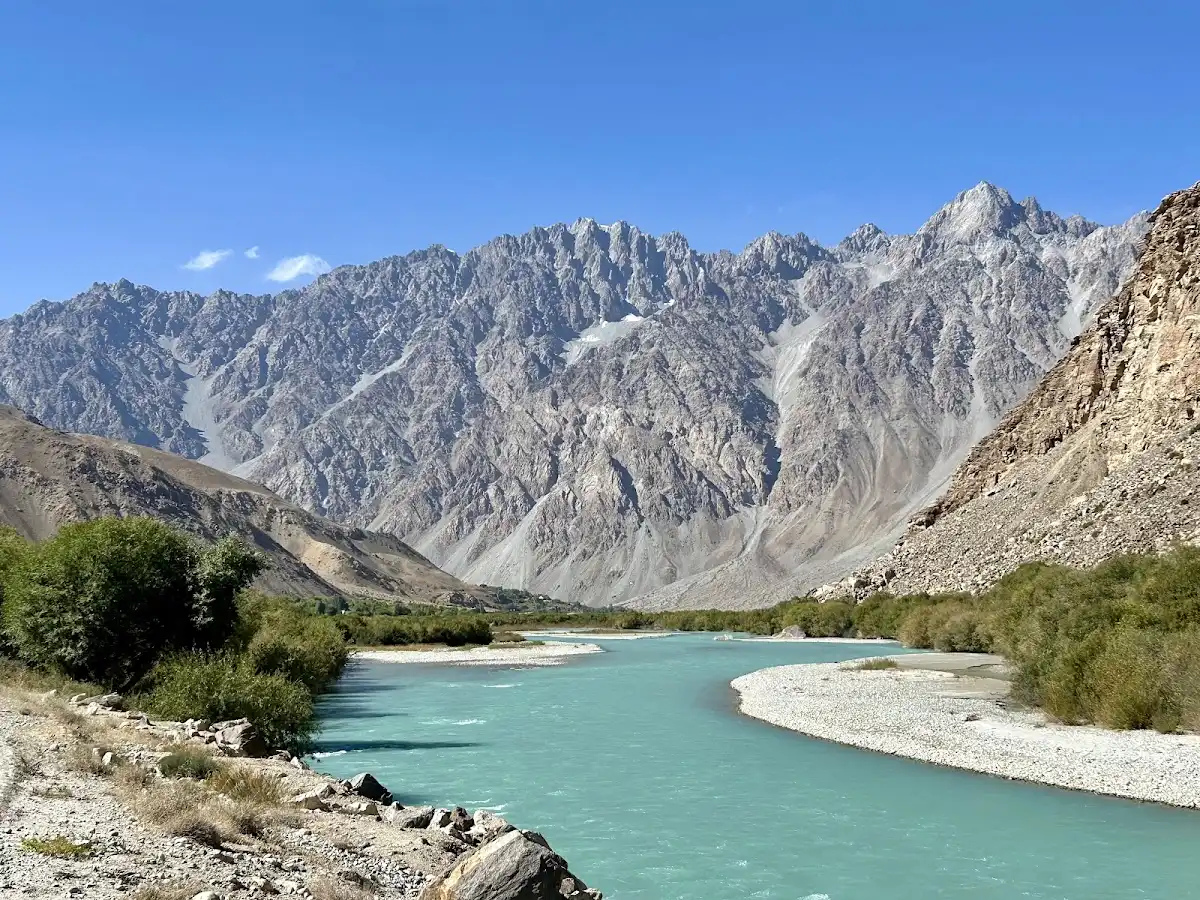
Your breath fogs in the thin morning air as your boots crunch over frozen gravel, yak bells clink somewhere behind you, and the wind carries that dry, metallic cold you only get above 3,500 meters. This is Pamir National Park, spread across much of eastern Tajikistan’s Gorno-Badakhshan region, wrapped around the high Pamir Highway and the Afghan border. For backpackers, it’s big-country trekking: glaciated peaks, stark plateaus, turquoise lakes, and long, lonely valleys where you’re more likely to see Marco Polo sheep than another hiker. The trade-off is real. Access is slow, permits and park fees add up, public transport is thin, and you’ll lean heavily on shared jeeps and homestays rather than classic campgrounds. Compared with Tajikistan’s Fann Mountains or Shirkent National Park, the Pamirs are wilder, higher, less crowded, and less polished—more expedition than weekend hike, better for patient, self-reliant travelers than box-tickers.

Discover everything you want to know in the 📖 Tajikistan Travel Guide.
Loading the map 🌍
CLICK TO FILTER
cities
towns
villages
landmarks
national parks
hikes
attractions
festivals
regions
SHOW COUNTRY’S BESTSHOW ALL

✨ Why go?
Ranked #1 national park in Tajikistan
Why Pamir should be on your travel list

Pamir National Park in Tajikistan draws backpackers for several compelling reasons. First, independent exploration is a major draw. The park’s vast landscapes and well-marked trails allow you to roam freely, soaking in the stunning views without the constraints of a guided tour.

Budget-conscious travelers appreciate the affordable camping options and nearby hostels. You can pitch your tent under a starry sky or find a cozy bed in a local guesthouse, keeping costs low while experiencing authentic Tajik hospitality.

The trail variety is another highlight. Whether you’re seeking a challenging trek or a leisurely stroll, the park offers routes that cater to all skill levels. This diversity means you can tailor your adventure to fit your energy and interests, making each day unique.

Pamir … read more 👉
Pamir National Park in Tajikistan draws backpackers for several compelling reasons. First, independent exploration is a major draw. The park’s vast landscapes and well-marked trails allow you to roam freely, soaking in the stunning views without the constraints of a guided tour.

Budget-conscious travelers appreciate the affordable camping options and nearby hostels. You can pitch your tent under a starry sky or find a cozy bed in a local guesthouse, keeping costs low while experiencing authentic Tajik hospitality.

The trail variety is another highlight. Whether you’re seeking a challenging trek or a leisurely stroll, the park offers routes that cater to all skill levels. This diversity means you can tailor your adventure to fit your energy and interests, making each day unique.

Pamir National Park is particularly suited for self-guided travelers. With clear signage and a wealth of resources available, you can navigate the terrain confidently. Just remember to pack enough supplies and familiarize yourself with the local customs. This preparation will help you avoid any unexpected costs or challenges, allowing you to focus on the breathtaking beauty around you.
Want to include Pamir National Park in your Tajikistan route?
Create a personalized Tajikistan itinerary that includes Pamir National Park and the places that fit your trip — based on your travel style, budget, and available time. Get your route in seconds.

Generate my trip

💡 HighlightsDon't-miss highlights and experiences

  • Fedchenko Glacier — The longest non-polar glacier in the world, a massive river of ice threading through jagged peaks. Walking or trekking near its moraine gives proper glacier scale and that humbling, otherworldly feel you came for.
  • Karakul Lake — A high-altitude mirror set against snow-capped summits (often cobalt-blue on a clear day). It’s an easy stop on the Pamir Highway and offers dramatic reflections, nomad camps, and big-sky photos without much effort.
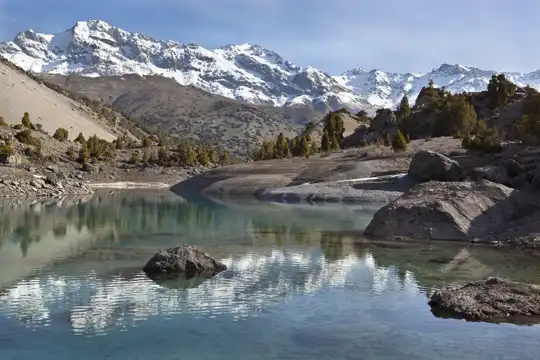
  • Bulunkul & Yashilkul Lakes — Twin alpine lakes sitting in a wide, peaceful valley—great for birding, evening light, and low-key camping. The surrounding wetlands attract migratory birds and make for gentle, scenic walks rather than hard mountaineering.
  • Pamir Highway vistas and high passes (eg. Ak-Baital) — The road itself is a highlight:
read more 👉
  • Fedchenko Glacier — The longest non-polar glacier in the world, a massive river of ice threading through jagged peaks. Walking or trekking near its moraine gives proper glacier scale and that humbling, otherworldly feel you came for.
  • Karakul Lake — A high-altitude mirror set against snow-capped summits (often cobalt-blue on a clear day). It’s an easy stop on the Pamir Highway and offers dramatic reflections, nomad camps, and big-sky photos without much effort.
  • Bulunkul & Yashilkul Lakes — Twin alpine lakes sitting in a wide, peaceful valley—great for birding, evening light, and low-key camping. The surrounding wetlands attract migratory birds and make for gentle, scenic walks rather than hard mountaineering.
  • Pamir Highway vistas and high passes (eg. Ak-Baital) — The road itself is a highlight: massive plateaus, wind-carved ridges and viewpoints that feel like the end of the world. Ak-Baital is one of the highest paved passes in the world and a classic spot for panoramic photos.
  • Wildlife spotting (Marco Polo sheep, ibex, marmots) — The park is one of the last strongholds for high-altitude specialists. You won’t always see them easily, but when you do—Marco Polo sheep on a ridgeline or a wary ibex on a scree slope—it’s memorable.
  • Glacial valleys and trekking routes — Remote, quiet valleys carved by glaciers offer multi-day trekking options with few other hikers. Expect rugged trails, wildflowers in summer, and real backcountry solitude rather than marked, crowded paths.
  • Pamir village life and yurt camps — The human landscape is part of the attraction: simple Pamiri villages, summer yurt camps and shepherds moving flocks across high pastures. It’s a low-key cultural add-on to the scenery—good tea, big hospitality, small-world vibes.
Spotted a mistake or missing something? Contact us.
🌤️ When to go?Weather, crowds, and seasonal trade-offs


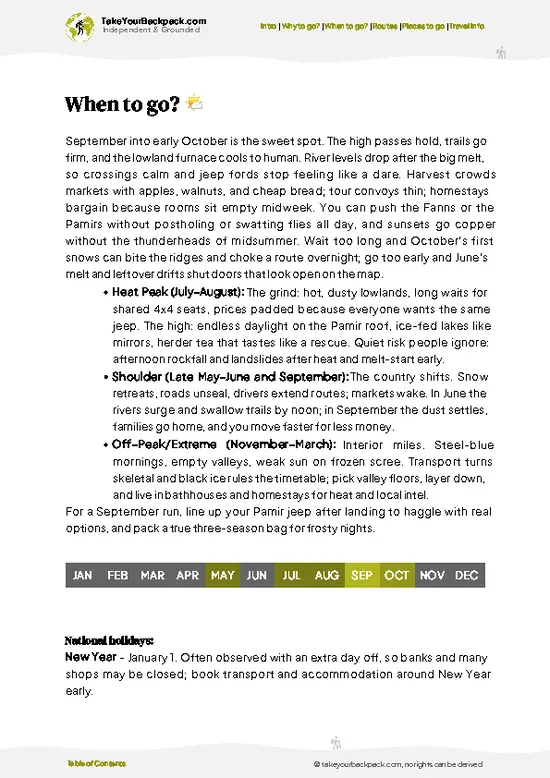
  • Weather: The best window is late June through early September. Outside this, expect snow and freezing conditions that shut down most trails. Summer brings relatively stable weather but be ready for sudden mountain storms.

  • Temperature: Daytime highs hover around 15-25°C (59-77°F) in summer, but nights can dip close to freezing, even in July. Prepare for wide temperature swings—layering is non-negotiable.

  • Daylight Hours: Long summer days offer up to 15 hours of light, giving you plenty of time to cover ground. Winter days shrink drastically, making early starts and late finishes risky.

  • Crowds: The park is remote enough that crowds are minimal year-round. Still, July and August see a slight uptick from local and regional trekkers, so plan accordingly if you want solitude.

  • Seasonal
read more 👉

  • Weather: The best window is late June through early September. Outside this, expect snow and freezing conditions that shut down most trails. Summer brings relatively stable weather but be ready for sudden mountain storms.

  • Temperature: Daytime highs hover around 15-25°C (59-77°F) in summer, but nights can dip close to freezing, even in July. Prepare for wide temperature swings—layering is non-negotiable.

  • Daylight Hours: Long summer days offer up to 15 hours of light, giving you plenty of time to cover ground. Winter days shrink drastically, making early starts and late finishes risky.

  • Crowds: The park is remote enough that crowds are minimal year-round. Still, July and August see a slight uptick from local and regional trekkers, so plan accordingly if you want solitude.

  • Seasonal Activities: Summer is your only real chance for trekking, climbing, and exploring high passes. Spring and fall bring unpredictable weather and limited access, while winter is mostly off-limits.

  • Price Fluctuations: Costs for guides and accommodation peak in summer. Off-season rates drop but come with the risk of closures and harsh conditions, which can end up costing more in delays or gear.


Pro-tip: Aim for early July to balance stable weather, manageable crowds, and the full range of activities without paying peak-season premiums.


source: climatestotravel.comJANJanuary: below average for travelingFEBFebruary: below average for travelingMARMarch: fair for travelingAPRApril: fair for travelingMAYMay: good for travelingJUNJune: highly recommended for travelingJULJuly: excellent for travelingAUGAugust: excellent for travelingSEPSeptember: highly recommended for travelingOCTOctober: fair for travelingNOVNovember: below average for travelingDECDecember: below average for traveling
tajikistan-national-park-pamir-national-park
© Google |

✈️ The backpacker research shortcutTajikistan Travel Guide

An offline-friendly backpacking guide with optimized travel routes, ranked highlights, transport advice, and the best areas to stay.
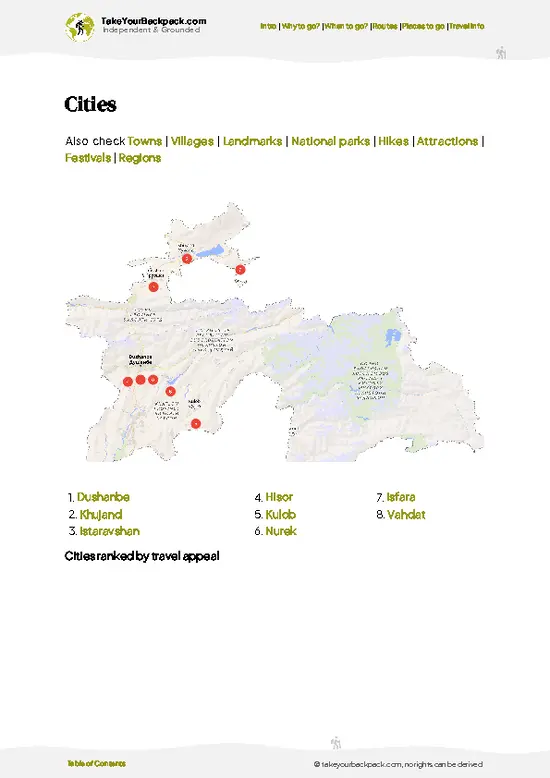
example page 0 from our offline Travel Guide for Tajikistan
example page 1 from our offline Travel Guide for Tajikistan
example page 2 from our offline Travel Guide for Tajikistan
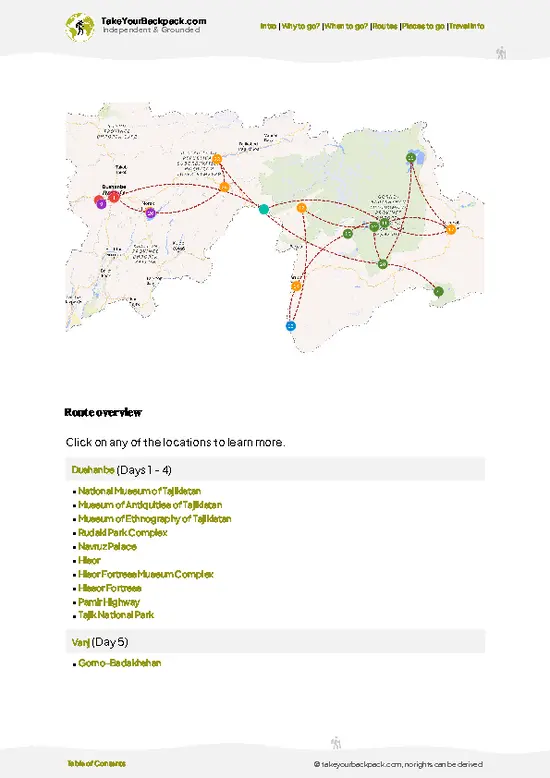
example page 3 from our offline Travel Guide for Tajikistan
example page 4 from our offline Travel Guide for Tajikistan
example page 5 from our offline Travel Guide for Tajikistan
example page 6 from our offline Travel Guide for Tajikistan
example page 7 from our offline Travel Guide for Tajikistan
The digital guide (327 pages) contains:
78 highlights, ranked by travel appeal
Optimized 5, 10 & 15-day travel routes
Cities, national parks, landmarks, beaches
How to get around
Offline-friendly for travel without Wi-Fi
👉 Click to see all 30+ guide features

📅 Plan smarter in minutes, not weeks
Month by month travel advice
Festivals & national holidays
Budget expectations

🗺️ Go to the right places, skip the overrated ones
Honest pros & cons of destinations
Top hikes, parks & viewpoints
Lesser-known places most travelers miss
Clear “worth it vs skip it” guidance

🛏️ Travel smoothly without rookie mistakes
Best areas to stay
Transport systems explained simply
Common scams & safety advice
SIM cards, money & practical tips

🌍 Understand the country, not just visit it
Culture & traditions
52 Essential phrases & customs
Festivals worth planning around
Traveler-friendly historical context
Insights that make places more meaningful

📱 Built for real travel conditions
Fully downloadable PDF
Works completely offline
Optimized for phone use
Useful in remote areas & buses
Everything in one place
Save weeks of stressful planning
Get instant access to your full guide. 30‑day money-back guarantee.


By proceeding you agree to our terms.
Sent to your inbox immediately after payment • 100% Secure Checkout
Best Backpacking Travel Advisor 2025 tourism awardBest Backpacking
Travel Advisor
2025
What others say about Take Your Backpack Guides:
⭐⭐⭐⭐⭐
Fantastic, amazing amount of information!
⭐⭐⭐⭐⭐
My goodness this is amazing, it's what I've been looking for hats off too you!
⭐⭐⭐⭐⭐
I think this is absolutely BRILLIANT
⭐⭐⭐⭐
Very complete and informative. It's still missing places, but I gotta to commend you
⭐⭐⭐⭐⭐
This is truly amazing, thank you, can't wait to explore it with my kids!
⭐⭐⭐⭐⭐
Awesome resource, thank you!
⭐⭐⭐⭐⭐
This is amazing! Can't wait to explore the ones I haven't seen
⭐⭐⭐⭐
I love this! Well done, great idea.
⭐⭐⭐⭐⭐
Thanks for taking the time to make this gem!
⭐⭐⭐⭐⭐
This might be the best website I've ever seen.
⭐⭐⭐⭐⭐
Congratulations, and thank you so much for your work; it's incredibly valuable.
⭐⭐⭐⭐
In all seriousness I think you did a great job pointing out the important spots
⭐⭐⭐⭐⭐
10/10 very good
⭐⭐⭐⭐⭐
As someone who's only just starting to visit regularly this is awesome, thank you.
⭐⭐⭐⭐
Thank you very much! I'm going to visit my dad, it's going to be very useful!
⭐⭐⭐⭐⭐
This is really cool! We'll be travelling for the first time and this definitely come in handy.
⭐⭐⭐⭐⭐
You are now our minister of culture, congratulations 👨‍💼
⭐⭐⭐⭐⭐
Just wanted to tell you that this is a pearl! Going to follow your recommendations.
⭐⭐⭐⭐⭐
This is so cool. I'll definitely be using the resource for my travels soon.
⭐⭐⭐⭐⭐
This is very impressive! Good work.
⭐⭐⭐⭐⭐
This is an amazing and informative site. Very well done!

🛏️ Where to stay?Where staying makes the most sense

Pamir National Park is a wild expanse, and finding the right place to stay can make or break your experience. Inside the park, options are limited but authentic. You’ll find basic guesthouses in villages like Murghab and Alichur. These spots offer a chance to connect with locals and experience their hospitality. Expect simple accommodations, often with shared facilities. Bring your own sleeping bag for extra comfort.

If you prefer a bit more structure, head to Khorog, the capital of the Gorno-Badakhshan region. It’s about a three-hour drive from the park’s entrance. Here, you’ll find a mix of … read more 👉
Pamir National Park is a wild expanse, and finding the right place to stay can make or break your experience. Inside the park, options are limited but authentic. You’ll find basic guesthouses in villages like Murghab and Alichur. These spots offer a chance to connect with locals and experience their hospitality. Expect simple accommodations, often with shared facilities. Bring your own sleeping bag for extra comfort.

If you prefer a bit more structure, head to Khorog, the capital of the Gorno-Badakhshan region. It’s about a three-hour drive from the park’s entrance. Here, you’ll find a mix of guesthouses and small hotels. The Pamir Lodge is popular among backpackers for its friendly vibe and helpful staff. It’s a good base for acclimatization before heading into the park.

Keep in mind that transportation can be tricky. Roads are rough, and public transport is limited. Always factor in extra time for travel. Also, be prepared for fluctuating prices; accommodations can vary based on the season and demand.

Staying flexible and open-minded will help you navigate the challenges and enjoy the stunning landscapes of the Pamirs.

👛 Costs (as of 14 November 2025)Typical daily expenses

Visiting Pamir National Park in Tajikistan can be a rewarding experience, but it’s essential to budget wisely to avoid surprises.

Entry fees for the park typically range from $10 to $20 per person. This fee grants you access to some of the most breathtaking landscapes, but be prepared for additional costs depending on your plans.

Accommodation options vary widely. Basic guesthouses or homestays can cost around $15 to $30 per night. If you prefer more comfort, expect to pay $50 to $100 for mid-range hotels. Camping is also an option, often free if you’re self-sufficient, but check local regulations.

Transportation is another significant factor. Hiring a local driver or guide can range from $50 to $100 per day, depending on the distance and services included. Public transport is cheaper but … read more 👉
Visiting Pamir National Park in Tajikistan can be a rewarding experience, but it’s essential to budget wisely to avoid surprises.

Entry fees for the park typically range from $10 to $20 per person. This fee grants you access to some of the most breathtaking landscapes, but be prepared for additional costs depending on your plans.

Accommodation options vary widely. Basic guesthouses or homestays can cost around $15 to $30 per night. If you prefer more comfort, expect to pay $50 to $100 for mid-range hotels. Camping is also an option, often free if you’re self-sufficient, but check local regulations.

Transportation is another significant factor. Hiring a local driver or guide can range from $50 to $100 per day, depending on the distance and services included. Public transport is cheaper but less reliable, so factor in potential delays.

Food costs are generally low. Meals at local eateries can be as little as $3 to $10. However, if you’re in a more remote area, prices may spike due to limited supplies.

Lastly, consider the cost of permits for trekking or specific activities. These can add another $20 to $50, depending on the region and duration.

Overall, budgeting around $50 to $150 per day should cover most expenses, but always have a buffer for unexpected costs. This way, you can focus on enjoying the stunning scenery without worrying about your wallet.
⚠️ Prices can change and everyone travels differently, so take this as a rough guide. Hope it helps you plan your adventure!

🥾 TrailsBest hikes in Pamir national park

Pamir National Park is a hidden gem for hikers, offering breathtaking scenery that will make your Instagram followers jealous. The rugged terrain, with its towering peaks and deep valleys, is perfect for those who love a good challenge. You can expect to see everything from alpine meadows to glacial lakes, and if you’re lucky, some wildlife like ibex or snow leopards—though spotting them is more of a “wishful thinking” situation.

One of the standout trails is the Base Camp of Ismoil Somoni. Here are the details:
  • Length: 10 km
  • Estimated Duration: 6-8 hours
  • Difficulty Level: Moderate to Difficult
  • Key
read more 👉
Pamir National Park is a hidden gem for hikers, offering breathtaking scenery that will make your Instagram followers jealous. The rugged terrain, with its towering peaks and deep valleys, is perfect for those who love a good challenge. You can expect to see everything from alpine meadows to glacial lakes, and if you’re lucky, some wildlife like ibex or snow leopards—though spotting them is more of a “wishful thinking” situation.

One of the standout trails is the Base Camp of Ismoil Somoni. Here are the details:
  • Length: 10 km
  • Estimated Duration: 6-8 hours
  • Difficulty Level: Moderate to Difficult
  • Key Features: Stunning views of Ismoil Somoni Peak, glacial lakes, and unique rock formations
  • Terrain: Rocky paths, some steep ascents, and occasional snowfields

Getting to the park isn’t too tricky. You can catch a shared taxi or a marshrutka from Dushanbe, which will drop you off in the nearby town of Khorog. Just keep in mind that public transport can be a bit unpredictable, so patience is key. The park isn’t overrun with tourists, which is a huge plus if you’re looking for some solitude in nature. As for the entrance fee, it’s pretty reasonable—just a small price to pay for the stunning vistas and fresh mountain air.
⚠️ Hiking info can sometimes be outdated or inaccurate. Before you hit the trail, check the latest conditions with locals. If you do spot anything that's off, I'd love to hear from you, so I can update it for fellow travelers.

🛡️ SafetyStaying Safe: What Travelers Should Know

Pamir National Park offers a stunning backdrop for backpackers, but it’s essential to approach it with respect and preparation. Weather can shift rapidly, so layering is key. Mornings might start crisp, but by afternoon, you could be facing a downpour or even hail. Always check forecasts before heading out.

The terrain varies significantly. Some trails are steep and rocky, demanding good footing and careful navigation. River crossings can be tricky, especially after rain, so scout your path before committing.

Wildlife encounters are rare but possible. If you spot a marmot or ibex, keep your distance. They’re more afraid of you than you are of them, but it’s best to let them be.

First-time visitors often underestimate altitude. Take your time acclimatizing; don’t rush into high elevations. … read more 👉
Pamir National Park offers a stunning backdrop for backpackers, but it’s essential to approach it with respect and preparation. Weather can shift rapidly, so layering is key. Mornings might start crisp, but by afternoon, you could be facing a downpour or even hail. Always check forecasts before heading out.

The terrain varies significantly. Some trails are steep and rocky, demanding good footing and careful navigation. River crossings can be tricky, especially after rain, so scout your path before committing.

Wildlife encounters are rare but possible. If you spot a marmot or ibex, keep your distance. They’re more afraid of you than you are of them, but it’s best to let them be.

First-time visitors often underestimate altitude. Take your time acclimatizing; don’t rush into high elevations. Hydration is crucial, as is a solid pair of trekking poles for stability. With the right mindset and gear, you’ll preserve your energy for the breathtaking moments that truly matter.

Other Tajik national parks near Pamir

Explore more nearby:

  • Tajik National Park—diverse ecosystems, glacier fields, UNESCO site
  • Jizeu Valley—suspended villages, footbridge crossings, terraced fields
  • Sarez Lake—earthquake lake, Usoi Dam, remote access| 14 km away

💡 Not sure where to go next?
Create a personalized itinerary for Tajikistan including Pamir and the places that fit your trip.

Generate my itinerary

👉 Discover all national parks

Or checkout all Tajikistan has to offer (think cities, towns, villages, national parks, hikes, beaches, festivals)
Country photo of Tajikistan

We 💚 feedbackKey takeaways before you go

Pamir National Park is raw and rugged, a place that demands respect but rewards you tenfold. Expect altitude sickness; it’s real and can hit hard. Take your time acclimatating. The best surprise? The locals. Their warmth and hospitality can turn a tough day into a cherished memory. Don’t rush the experience; the landscape unfolds slowly, revealing its secrets. Pack extra snacks—trust me, you’ll need the energy for those long hikes. Embrace the quiet; it’s where the magic happens.

✍️ Help improve this page!
The information on this page is based on in-depth research, insights shared by experienced travelers, and feedback from the local travel community in Tajikistan. While every effort is made to keep the information accurate and current, conditions can change — so if you spot anything incorrect or outdated, please get in touch.


🙋‍♂️ Give feedback

👋 Meet the founderWho’s Behind Take Your Backpack?

Johan, backpacker and founder of TakeYourBackpackHi, I’m Johan (Netherlands 🇳🇱), the creator of TakeYourBackpack. Over the past decade, I’ve backpacked through 80+ countries across six continents, gaining extensive experience with independent travel, long-term trips, and overland routes.

This site is built on a combination of firsthand travel experience and carefully curated insights from other backpackers. Many guides are based on places I’ve personally visited, while others bring together tips, observations, and practical advice shared by trusted travelers I’ve met along the way.

The goal is to provide realistic, experience-driven guidance — not generic itineraries — so you can explore destinations with better context, clearer expectations, and more confidence.

Get full Tajikistan guide •
Instant download • 78 highlights • Full Offline guide