×

Tajikistan🇹🇯 | regionsZeravshan ValleyAlpine meadows, Soviet relics, Yagnob villages, fruit orchards | things to do and best time to go

Explore Gorno-BadakhshanExplore Iskanderkul Lake

Backpacking in Zeravshan Valley
🌟 Highlightregion ranked #2
By Johan Kruseman 🇳🇱 | Updated May 26, 2026

Ten years ago Zeravshan felt like a rumor: a few Soviet sanatoriums, half-abandoned villages, and trekkers scribbling hand-drawn maps in guesthouse notebooks. Now it’s the “other” valley people whisper about when they’re tired of the Pamir Highway circus. Zeravshan sits in northwest Tajikistan, running east–west above Panjakent toward the Fann Mountains, close enough to Samarkand that you can almost taste the Uzbek plov on the wind.

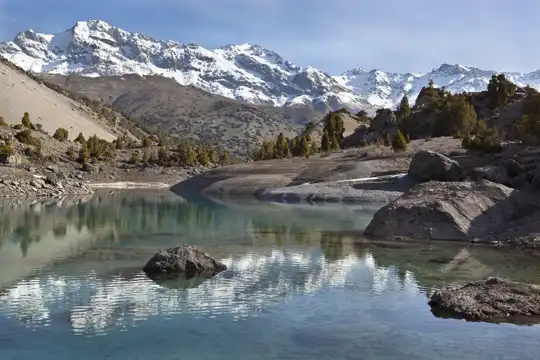
For backpackers, it’s that sweet spot between raw and reachable. You get big alpine lakes, jagged Fann peaks, walnut forests, and village homestays that still feel like you’re a guest, not a walking ATM. Costs are low, but transport between towns is slow, shared-taxi style, and you trade comfort for character almost every day. Panjakent is your scruffy hub; Artuch and the lakes area are your mountain playgrounds. Compared with the Pamirs, Zeravshan is cheaper, greener, more compact—and, for now, a lot less of a show.

Discover everything you want to know in the 📖 Tajikistan Travel Guide.
Loading the map 🌍
CLICK TO FILTER
cities
towns
villages
landmarks
national parks
hikes
attractions
festivals
regions
SHOW COUNTRY’S BESTSHOW ALL

✨ Why go?
Ranked #2 region in Tajikistan
Reasons people choose to visit here

In the Zeravshan Valley, backpackers find a sweet spot where nature and culture collide. This region offers a variety of landscapes—from rugged mountains to lush valleys—without the hassle of constant relocation. You can set up camp in one place and explore multiple trails, each revealing a different facet of Tajikistan’s beauty.

Transport here is surprisingly flexible. Local minibuses and shared taxis make it easy to hop between villages and sights, so you can spend less time stressing about logistics and more time soaking in the scenery.

What’s truly special is the chance to engage with local culture. You can visit traditional bazaars, sip tea with villagers, and even join in on seasonal festivals. This isn’t just a checklist of sights; it’s about slow travel that lets you savor each … read more 👉
In the Zeravshan Valley, backpackers find a sweet spot where nature and culture collide. This region offers a variety of landscapes—from rugged mountains to lush valleys—without the hassle of constant relocation. You can set up camp in one place and explore multiple trails, each revealing a different facet of Tajikistan’s beauty.

Transport here is surprisingly flexible. Local minibuses and shared taxis make it easy to hop between villages and sights, so you can spend less time stressing about logistics and more time soaking in the scenery.

What’s truly special is the chance to engage with local culture. You can visit traditional bazaars, sip tea with villagers, and even join in on seasonal festivals. This isn’t just a checklist of sights; it’s about slow travel that lets you savor each moment.

By choosing Zeravshan Valley, you’re not just backpacking; you’re diving into an experience that balances comfort and adventure—a true insider’s choice.
Want to include Zeravshan Valley in your Tajikistan route?
Create a personalized Tajikistan itinerary that includes Zeravshan Valley and the places that fit your trip — based on your travel style, budget, and available time. Get your route in seconds.

Generate my trip

💡 HighlightsThe experiences that define the visit

  • Old Penjikent (Qadimi Penjikent) ruins — The Sogdian-era hilltop city where you can walk among ruined houses, workshops and vivid wall-painting fragments right above the Zeravshan plain. It’s one of the rare Central Asian sites where everyday ancient urban life is still readable on the ground rather than locked inside a fancy museum.
  • Sarazm archaeological site — A UNESCO-listed Bronze/Iron Age proto-city sitting on a strategic bend of the Zeravshan. The earthen terraces and stone foundations show very early long-distance trade and craft activity — you’ll feel how old urban networks in this valley really are.
  • Yaghnob Valley and Yaghnobi villages — A steep, narrow tributary valley where the Yaghnobi people (direct cultural descendants of the Sogdians) still speak their language and keep
read more 👉
  • Old Penjikent (Qadimi Penjikent) ruins — The Sogdian-era hilltop city where you can walk among ruined houses, workshops and vivid wall-painting fragments right above the Zeravshan plain. It’s one of the rare Central Asian sites where everyday ancient urban life is still readable on the ground rather than locked inside a fancy museum.
  • Sarazm archaeological site — A UNESCO-listed Bronze/Iron Age proto-city sitting on a strategic bend of the Zeravshan. The earthen terraces and stone foundations show very early long-distance trade and craft activity — you’ll feel how old urban networks in this valley really are.
  • Yaghnob Valley and Yaghnobi villages — A steep, narrow tributary valley where the Yaghnobi people (direct cultural descendants of the Sogdians) still speak their language and keep traditional herding and house styles. Visiting small villages, hearing the language and staying with families is a cultural experience you don’t get elsewhere.
  • Kulikalon Lakes / “Seven Lakes” (Haftkulon) — A string of turquoise high-alpine lakes tucked into the Fan Mountains above the Zeravshan basin. They’re a trekker’s favorite for dramatic reflections, easy camping spots and sudden, compact mountain scenery that feels quintessentially Tajik.
  • Chimtarga and the central Fann ridges — Sharp granite peaks that dominate the skyline above the valley — ideal for climbers and serious trekkers who want big alpine walls without the Himalayan logistics. Even day-hikers get jaw-opening views of the Zeravshan drainage from the ridgelines.
  • Ayni and the walnut-fruit belt — Ayni is the practical gateway into the upper valley but the real draw is the riverside orchards and old irrigation terraces around it: walnut groves, apricot trees and tiny village lanes. Low-key homestays and orchard walks give you a slow, local taste of valley life.
  • Panjakent’s riverside orchards & village homestays — Beyond the ruins, Panjakent town and the small agricultural villages along the river are where locals dry fruits, tend pomegranate trees and offer guest rooms. Spending an evening eating plov under a mulberry tree with hosts is far more memorable than another city museum.
  • Artuch village (trailhead to Kulikalon) — hidden gem — A tiny mountain settlement most visitors breeze past on the way to the lakes. Locals run simple guest-houses, shepherd trails leave right from village edges, and the hospitality + fresh mountain dairy is exactly the kind of low-profile, real mountain life travelers miss.
  • Zeravshan River Gorge & walnut forests — hidden gem — The stretch where the river carves through older rocks and the slopes are dotted with small orchards and traditional irrigation channels. It’s an easy day-drive or picnic spot with swimming holes and authentic rural scenes — very few tourists linger here.
  • Small Yaghnobi hamlets and high pastures above the valley — hidden gem — Walk a little higher from the main Yaghnob trail and you find tiny hamlets and alpine pastures (jailoos) where shepherds still make cheese, repair tack and share stories. No signboards, little infrastructure, but real human landscapes that sum up why the Zeravshan is special.
Spotted a mistake or missing something? Contact us.

⌛️ 5 daysA smart one-week plan

Day 1: Penjikent
The journey kicks off in Penjikent, a town steeped in history and culture. You’ll want to acclimate here, as it’s the gateway to the Zeravshan Valley. Spend your day exploring the ancient ruins of the Sogdian civilization. The local market is a sensory overload—grab some fresh bread and local cheese. This sets the tone for your adventure. The transport options are limited, so getting your bearings here is crucial.

Day 2: Iskanderkul Lake
Early morning, you’ll take a shared taxi to Iskanderkul Lake. This stunning alpine lake is about a two-hour ride, but the views are worth every minute. The winding roads offer glimpses of the towering peaks that define the region. Spend the day hiking around the lake, soaking in the serenity. The transport back to Penjikent can be a bit … read more 👉
Day 1: Penjikent
The journey kicks off in Penjikent, a town steeped in history and culture. You’ll want to acclimate here, as it’s the gateway to the Zeravshan Valley. Spend your day exploring the ancient ruins of the Sogdian civilization. The local market is a sensory overload—grab some fresh bread and local cheese. This sets the tone for your adventure. The transport options are limited, so getting your bearings here is crucial.

Day 2: Iskanderkul Lake
Early morning, you’ll take a shared taxi to Iskanderkul Lake. This stunning alpine lake is about a two-hour ride, but the views are worth every minute. The winding roads offer glimpses of the towering peaks that define the region. Spend the day hiking around the lake, soaking in the serenity. The transport back to Penjikent can be a bit tricky, so plan to leave early enough to avoid the evening rush.

Day 3: Saritag
From Penjikent, head to Saritag. This village is a hidden treasure, often overlooked by tourists. The ride is about an hour, and you’ll find yourself surrounded by lush landscapes. Here, you can connect with locals and experience their way of life. The hospitality is genuine, and you might even score a homemade meal. This is where you start to feel the pulse of the valley.

Day 4: Off-Path Reward: Fann Mountains
Take a detour into the Fann Mountains. This is not just a hike; it’s a chance to see some of the most breathtaking scenery in Tajikistan. The trails are less traveled, so you’ll feel like you’ve discovered something special. The transport to the trailhead can be arranged locally, but make sure to check the weather.

Day 5: Must-Do Day: Dushanbe
End your trip in Dushanbe. The capital is a blend of modernity and tradition. Spend your day visiting the National Museum and the bustling markets. The transport options are plentiful, making it easy to navigate. This day ties together your experiences, offering a taste of urban life after the tranquility of the valley. It’s the perfect capstone to your adventure, making the entire trip worthwhile.
Turn your Zeravshan Valley visit into an Tajikistan adventure
Build a complete Tajikistan route with Zeravshan Valley, hidden gems, must-see destinations, and realistic travel times included.

Generate my trip

🌤️ When to go?Best time to visit Zeravshan Valley


  • Weather: Spring (April to June) and early autumn (September to October) are your sweet spots. Expect crisp mornings and warm afternoons, perfect for hiking without melting or freezing. Summer can scorch you with highs around 30-35°C (86-95°F), while winter drops below freezing, often below -10°C (14°F), shutting down most trails.

  • Temperature: Daytime temps in spring and autumn hover between 15-25°C (59-77°F), ideal for long days on the trail. Nights get chilly, so pack layers. Avoid the extremes—summer’s heat zaps energy, winter’s cold limits access.

  • Daylight Hours: Late spring and early autumn offer 12-14 hours of daylight, giving you plenty of time to explore without rushing. Winter days shrink to under 10 hours, making early starts mandatory and late hikes risky.

  • Crowds: Peak season
read more 👉

  • Weather: Spring (April to June) and early autumn (September to October) are your sweet spots. Expect crisp mornings and warm afternoons, perfect for hiking without melting or freezing. Summer can scorch you with highs around 30-35°C (86-95°F), while winter drops below freezing, often below -10°C (14°F), shutting down most trails.

  • Temperature: Daytime temps in spring and autumn hover between 15-25°C (59-77°F), ideal for long days on the trail. Nights get chilly, so pack layers. Avoid the extremes—summer’s heat zaps energy, winter’s cold limits access.

  • Daylight Hours: Late spring and early autumn offer 12-14 hours of daylight, giving you plenty of time to explore without rushing. Winter days shrink to under 10 hours, making early starts mandatory and late hikes risky.

  • Crowds: Peak season in summer draws local tourists and a few adventurous foreigners, but it’s not overrun. Spring and autumn see fewer visitors, so you get more solitude and authentic interactions.

  • Seasonal Activities: Spring brings blooming wildflowers and bird migrations—nature’s own show. Autumn is harvest time, with local festivals and fresh mountain produce. Summer is for high-altitude trekking, but be ready for heat and occasional storms.

  • Price Fluctuations: Accommodation and transport costs spike slightly in summer, especially July and August. Spring and autumn offer better deals and more flexible bookings, so your budget stretches further without sacrificing experience.


Pro-tip: Arrive late April or early October to dodge crowds, enjoy mild weather, and snag the best local flavors before prices climb or trails get too hot or cold.


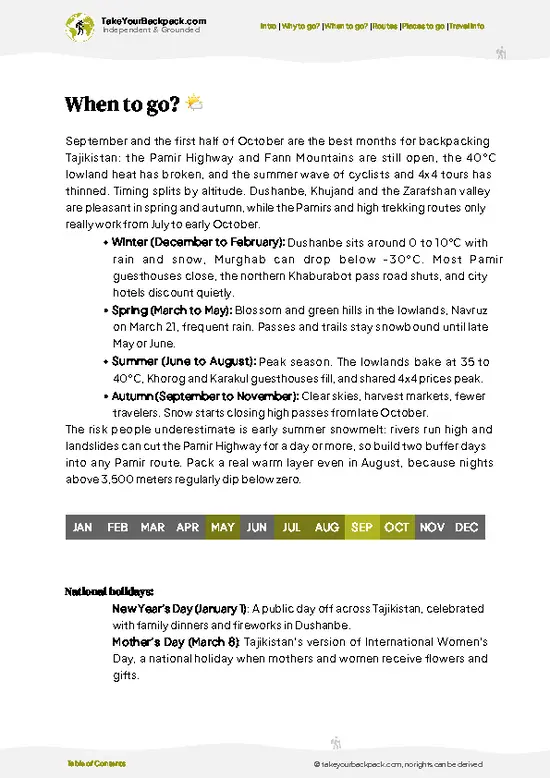
source: climatestotravel.comJANJanuary: below average for travelingFEBFebruary: below average for travelingMARMarch: fair for travelingAPRApril: highly recommended for travelingMAYMay: excellent for travelingJUNJune: excellent for travelingJULJuly: good for travelingAUGAugust: good for travelingSEPSeptember: highly recommended for travelingOCTOctober: highly recommended for travelingNOVNovember: fair for travelingDECDecember: below average for traveling
when-to-go

✈️ The backpacker research shortcutTajikistan Travel Guide

An offline-friendly backpacking guide with optimized travel routes, ranked highlights, transport advice, and the best areas to stay.
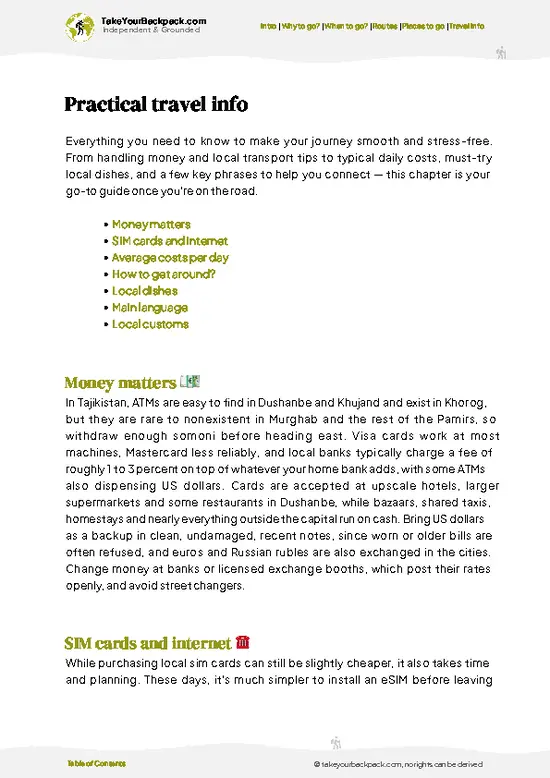
example page 0 from our offline Travel Guide for Tajikistan
example page 1 from our offline Travel Guide for Tajikistan
example page 2 from our offline Travel Guide for Tajikistan
example page 3 from our offline Travel Guide for Tajikistan
example page 4 from our offline Travel Guide for Tajikistan
example page 5 from our offline Travel Guide for Tajikistan
example page 6 from our offline Travel Guide for Tajikistan
example page 7 from our offline Travel Guide for Tajikistan
The digital guide (327 pages) contains:
78 highlights, ranked by travel appeal
Optimized 5, 10 & 15-day travel routes
Cities, national parks, landmarks, beaches
How to get around
Offline-friendly for travel without Wi-Fi
👉 Click to see all 30+ guide features

📅 Plan smarter in minutes, not weeks
Month by month travel advice
Festivals & national holidays
Budget expectations

🗺️ Go to the right places, skip the overrated ones
Honest pros & cons of destinations
Top hikes, parks & viewpoints
Lesser-known places most travelers miss
Clear “worth it vs skip it” guidance

🛏️ Travel smoothly without rookie mistakes
Best areas to stay
Transport systems explained simply
Common scams & safety advice
SIM cards, money & practical tips

🌍 Understand the country, not just visit it
Culture & traditions
52 Essential phrases & customs
Festivals worth planning around
Traveler-friendly historical context
Insights that make places more meaningful

📱 Built for real travel conditions
Fully downloadable PDF
Works completely offline
Optimized for phone use
Useful in remote areas & buses
Everything in one place
Save weeks of stressful planning
Get instant access to your full guide. 30‑day money-back guarantee.


By proceeding you agree to our terms.
Sent to your inbox immediately after payment • 100% Secure Checkout
Best Backpacking Travel Advisor 2025 tourism awardBest Backpacking
Travel Advisor
2025
What others say about Take Your Backpack Guides:
⭐⭐⭐⭐⭐
Fantastic, amazing amount of information!
⭐⭐⭐⭐⭐
My goodness this is amazing, it's what I've been looking for hats off too you!
⭐⭐⭐⭐⭐
I think this is absolutely BRILLIANT
⭐⭐⭐⭐
Very complete and informative. It's still missing places, but I gotta to commend you
⭐⭐⭐⭐⭐
This is truly amazing, thank you, can't wait to explore it with my kids!
⭐⭐⭐⭐⭐
Awesome resource, thank you!
⭐⭐⭐⭐⭐
This is amazing! Can't wait to explore the ones I haven't seen
⭐⭐⭐⭐
I love this! Well done, great idea.
⭐⭐⭐⭐⭐
Thanks for taking the time to make this gem!
⭐⭐⭐⭐⭐
This might be the best website I've ever seen.
⭐⭐⭐⭐⭐
Congratulations, and thank you so much for your work; it's incredibly valuable.
⭐⭐⭐⭐
In all seriousness I think you did a great job pointing out the important spots
⭐⭐⭐⭐⭐
10/10 very good
⭐⭐⭐⭐⭐
As someone who's only just starting to visit regularly this is awesome, thank you.
⭐⭐⭐⭐
Thank you very much! I'm going to visit my dad, it's going to be very useful!
⭐⭐⭐⭐⭐
This is really cool! We'll be travelling for the first time and this definitely come in handy.
⭐⭐⭐⭐⭐
You are now our minister of culture, congratulations 👨‍💼
⭐⭐⭐⭐⭐
Just wanted to tell you that this is a pearl! Going to follow your recommendations.
⭐⭐⭐⭐⭐
This is so cool. I'll definitely be using the resource for my travels soon.
⭐⭐⭐⭐⭐
This is very impressive! Good work.
⭐⭐⭐⭐⭐
This is an amazing and informative site. Very well done!

🛏️ Where to stay?Choosing the right base

When you hit the Zeravshan Valley, you want to feel the pulse of the place, right? Here are the top spots to lay your head, where the vibe is friendly and the prices won’t make you cringe.

Start with Penjikent. This town is a backpacker’s haven, buzzing with energy. You’ll find fellow travelers swapping stories over chai in local cafes. The ruins of ancient Sogdiana are just a stone’s throw away, giving you that perfect blend of history and adventure.

Next up is Iskandar Kul. It’s not just about the stunning lake; it’s about the community. Campfires, shared meals, and the chance to connect … read more 👉
When you hit the Zeravshan Valley, you want to feel the pulse of the place, right? Here are the top spots to lay your head, where the vibe is friendly and the prices won’t make you cringe.

Start with Penjikent. This town is a backpacker’s haven, buzzing with energy. You’ll find fellow travelers swapping stories over chai in local cafes. The ruins of ancient Sogdiana are just a stone’s throw away, giving you that perfect blend of history and adventure.

Next up is Iskandar Kul. It’s not just about the stunning lake; it’s about the community. Campfires, shared meals, and the chance to connect with locals make this a standout. The scenery is jaw-dropping, and you’ll feel like you’re part of something special.

Don’t overlook Ayni. It’s quieter but offers a genuine slice of Tajik life. The surrounding mountains are perfect for day hikes, and the hospitality here is top-notch. You’ll leave with new friends and stories that’ll last a lifetime.

Each of these spots offers a unique flavor of the valley. Choose wisely, and you’ll create memories that stick.

🚌 Getting aroundHow to get around Zeravshan Valley

The Zeravshan Valley is a wild symphony of movement, where the rhythm of life dances between the predictable and the spontaneous. Here, schedules are more like suggestions, and the flow of transport feels like a living organism—sometimes chaotic, often intuitive. You might find yourself waiting for a shared taxi that arrives when it feels like it, or hopping on a bus that’s packed to the brim with locals, all sharing stories and laughter. This isn’t a place for the rigid planner; it’s for the adventurous spirit who thrives on the thrill of the unexpected. Embrace the flow, and you’ll discover that every delay is just another chance to soak in the vibrant culture around you.


  • Shared Taxis: These are your best bet for flexibility. They run frequently throughout the day, typically from 7 AM
read more 👉
The Zeravshan Valley is a wild symphony of movement, where the rhythm of life dances between the predictable and the spontaneous. Here, schedules are more like suggestions, and the flow of transport feels like a living organism—sometimes chaotic, often intuitive. You might find yourself waiting for a shared taxi that arrives when it feels like it, or hopping on a bus that’s packed to the brim with locals, all sharing stories and laughter. This isn’t a place for the rigid planner; it’s for the adventurous spirit who thrives on the thrill of the unexpected. Embrace the flow, and you’ll discover that every delay is just another chance to soak in the vibrant culture around you.


  • Shared Taxis: These are your best bet for flexibility. They run frequently throughout the day, typically from 7 AM to 6 PM, costing around 20-30 somoni (about $2-3) for a ride. Expect a speedy journey, but be ready for a cozy squeeze with fellow travelers.


  • Local Buses: The local buses are a budget-friendly option, with fares around 5-10 somoni (less than $1). They operate from early morning until late afternoon, but don’t expect them to leave until they’re full. Comfort is basic, but the experience is authentic.


  • Private Cars: If you’re looking for a bit more comfort and speed, consider hiring a private car. Prices vary widely, starting around 200 somoni ($20) for a half-day trip. This option allows you to set your own schedule, but it’s a splurge compared to public transport.


  • Motorbike Rentals: For the adventurous, renting a motorbike can be a game-changer. Prices hover around 100 somoni ($10) per day. It gives you the freedom to explore at your own pace, but be cautious—road conditions can be tricky.


Here’s the insider tip: connect with locals to find out the best times to travel. Early mornings often mean less crowded vehicles, and you’ll get to experience the valley waking up. Plus, don’t hesitate to negotiate prices, especially for private rides. A little charm goes a long way in this part of the world.

🍲 FoodWhat to Eat & Drink

In the **Zeravshan Valley**, food is a celebration of local culture and tradition. You can’t miss trying **plov**, the national dish, a fragrant rice dish cooked with tender meat, carrots, and spices. Each family has its own twist, so sampling it from different sources is a must. Pair it with **samsa**, flaky pastries stuffed with spiced meat or pumpkin, often sold by street vendors who know how to make them crispy and golden.

For drinks, seek out **green tea** served in small cups, often accompanied by **bread** fresh from the tandoor. The locals take their tea seriously; it’s not just a drink but a ritual. If you’re feeling adventurous, try **kefir**, a tangy fermented milk drink that’s refreshing after a long hike.

When it comes to dining, embrace the **markets**. They’re bustling with … read more 👉
In the **Zeravshan Valley**, food is a celebration of local culture and tradition. You can’t miss trying **plov**, the national dish, a fragrant rice dish cooked with tender meat, carrots, and spices. Each family has its own twist, so sampling it from different sources is a must. Pair it with **samsa**, flaky pastries stuffed with spiced meat or pumpkin, often sold by street vendors who know how to make them crispy and golden.

For drinks, seek out **green tea** served in small cups, often accompanied by **bread** fresh from the tandoor. The locals take their tea seriously; it’s not just a drink but a ritual. If you’re feeling adventurous, try **kefir**, a tangy fermented milk drink that’s refreshing after a long hike.

When it comes to dining, embrace the **markets**. They’re bustling with life, filled with vendors selling everything from fresh fruits to homemade jams. Grab a seat at a local café where you can enjoy a leisurely meal while watching the world go by.

Remember, sharing food is a sign of friendship here. Don’t be surprised if someone offers you a bite from their plate; it’s all part of the experience. Just dive in, savor the flavors, and soak up the warmth of the community.

Other Tajik regions near Zeravshan Valley

Explore more nearby:

  • Iskanderkul Lake—Turquoise lake, Fan Mountains, forested slopes, waterfall| 148 km away
  • Gorno-Badakhshan—Pamir Highway, high-altitude villages, Wakhan Valley, remote passes| 420 km away

💡 Not sure where to go next?
Create a personalized itinerary for Tajikistan including Zeravshan Valley and the places that fit your trip.

Generate my itinerary

👉 Discover all regions

Or checkout all Tajikistan has to offer (think cities, towns, villages, national parks, hikes, beaches, festivals)
Country photo of Tajikistan

We 💚 feedbackIs it worth it?

Zeravshan Valley is a breath of fresh air, a slice of Tajikistan that feels untouched. The locals are genuine, and their hospitality is the kind that makes you feel like family. Don’t miss the sunrise over the mountains; it’s a moment that’ll stick with you. Just a heads-up: the roads can be rough, so brace yourself for some bumpy rides. But trust me, the landscapes and the warmth of the people make every jolt worth it. You’ll leave with stories, not just photos.

✍️ Help improve this page!
The information on this page is based on in-depth research, insights shared by experienced travelers, and feedback from the local travel community in Tajikistan. While every effort is made to keep the information accurate and current, conditions can change — so if you spot anything incorrect or outdated, please get in touch.


🙋‍♂️ Give feedback

👋 Meet the founderWho’s Behind Take Your Backpack?

Johan, backpacker and founder of TakeYourBackpackHi, I’m Johan (Netherlands 🇳🇱), the creator of TakeYourBackpack. Over the past decade, I’ve backpacked through 80+ countries across six continents, gaining extensive experience with independent travel, long-term trips, and overland routes.

This site is built on a combination of firsthand travel experience and carefully curated insights from other backpackers. Many guides are based on places I’ve personally visited, while others bring together tips, observations, and practical advice shared by trusted travelers I’ve met along the way.

The goal is to provide realistic, experience-driven guidance — not generic itineraries — so you can explore destinations with better context, clearer expectations, and more confidence.

Get full Tajikistan guide •
Instant download • 78 highlights • Full Offline guide