×

Tanzania🇹🇿 | hikesLake Natron Trekalkaline lake, flamingo breeding grounds, volcanic landscape | things to do and best time to go

Explore Kitulo Plateau Walking TrailsExplore Ol Doinyo Lengai Climb

Backpacking in Lake Natron Trek
👍 Recommendedhike ranked #6
By Johan Kruseman 🇳🇱 | Updated September 4, 2026

Your boots crunch over volcanic gravel, sulfur stings your nose, and the wind slaps sweat into your eyes as you push through the heat—then, suddenly, the world opens: a blood-red lake, flamingos scattered like confetti, and the brooding hulk of Ol Doinyo Lengai looming on the horizon. This is the Lake Natron Trek, tucked in northern Tanzania near the Kenyan border, where the Rift Valley feels raw and untamed. The trek is no gentle stroll; it’s hot, exposed, and the alkaline flats can chew up your feet if you’re careless. But the payoff is wild—Martian landscapes, Maasai villages, and the sense you’ve landed on another planet. It’s harder to reach by public transport than Kilimanjaro or Meru, but that’s part of the appeal: fewer crowds, more grit, and scenery that feels earned, not handed to you.

Discover everything you want to know in the 📖 Tanzania Travel Guide.
Best time to go: June - February
Duration: 4 days
Distance: 30 kilometers
Total ascent: 1,200 meters
Loading the map 🌍
CLICK TO FILTER
cities
towns
landmarks
national parks
hikes
beaches
attractions
festivals
SHOW COUNTRY’S BESTSHOW ALL

✨ Why go?
Ranked #6 hike in Tanzania
What sets this place apart

The Lake Natron Trek in Tanzania is a magnet for backpackers craving a blend of challenge and reward. The scenery-to-effort ratio is off the charts; you’ll traverse rugged terrain that leads to the surreal, flamingo-filled shores of Lake Natron. It’s a hike that demands grit, but the payoff? A view that feels like stepping into a painting.

Getting there is a breeze. Public transport options are plentiful, making it easy to hop on a bus from Arusha. The trek is low-cost, perfect for budget travelers. You can choose your distance, whether you want a quick jaunt or a multi-day adventure, allowing for flexibility in your itinerary.

This trek fits seamlessly into a longer backpacking route through Tanzania, making it a perfect pit stop. You’ll sweat, you’ll push your limits, and when you finally … read more 👉
The Lake Natron Trek in Tanzania is a magnet for backpackers craving a blend of challenge and reward. The scenery-to-effort ratio is off the charts; you’ll traverse rugged terrain that leads to the surreal, flamingo-filled shores of Lake Natron. It’s a hike that demands grit, but the payoff? A view that feels like stepping into a painting.

Getting there is a breeze. Public transport options are plentiful, making it easy to hop on a bus from Arusha. The trek is low-cost, perfect for budget travelers. You can choose your distance, whether you want a quick jaunt or a multi-day adventure, allowing for flexibility in your itinerary.

This trek fits seamlessly into a longer backpacking route through Tanzania, making it a perfect pit stop. You’ll sweat, you’ll push your limits, and when you finally crack open that first cold beer at the end, you’ll know every step was worth it.
Want to include Lake Natron Trek in your Tanzania route?
Create a personalized Tanzania itinerary that includes Lake Natron Trek and the places that fit your trip — based on your travel style, budget, and available time. Get your route in seconds.

Generate my trip

💡 HighlightsEssential experiences to have while hiking the Lake Natron Trek

  1. Flamingo flats and soda pan — Vast, shallow alkaline flats dotted with thousands of pink lesser flamingos (numbers fluctuate), producing mirror-like reflections at low light. The colors and textures—bright pink birds against white salt crusts and rusty mineral stains—make for one of the most surreal birding scenes you’ll see anywhere.
  2. Ol Doinyo Lengai (the “Mountain of God”) — An active natrocarbonatite volcano unlike any other: its eruptions and black ash cones are geologically weird and visually striking. You can usually see its cone from the trek and, with a local guide and permit, approach the rim for a dramatic close-up that sets this route apart from ordinary mountain views.
  3. Rift Valley escarpment viewpoints — The trail climbs to sharp viewpoints that drop away into the East African
read more 👉
  1. Flamingo flats and soda pan — Vast, shallow alkaline flats dotted with thousands of pink lesser flamingos (numbers fluctuate), producing mirror-like reflections at low light. The colors and textures—bright pink birds against white salt crusts and rusty mineral stains—make for one of the most surreal birding scenes you’ll see anywhere.
  2. Ol Doinyo Lengai (the “Mountain of God”) — An active natrocarbonatite volcano unlike any other: its eruptions and black ash cones are geologically weird and visually striking. You can usually see its cone from the trek and, with a local guide and permit, approach the rim for a dramatic close-up that sets this route apart from ordinary mountain views.
  3. Rift Valley escarpment viewpoints — The trail climbs to sharp viewpoints that drop away into the East African Rift, offering huge, open panoramas at sunrise and sunset. The scale and starkness—layers of red earth, scrub, and the wide soda lake below—give a real sense of raw, continental landscape.
  4. Salt-crusted shores and mineral formations — Close up, the lake edge is a moonscape of hard white salt, colorful mineral streaks, and bubbling mud patches. It’s not just pretty—those textures and smells tell the geological story of alkaline water, and they change with light and the season, so every visit feels different.
  5. Maasai villages and cultural stops — The trek runs through Maasai grazing country, so you’ll meet herders, see their bomas, and often walk with local guides who share real-life pastoral skills and stories. That human element—simple hospitality, practical knowledge of the land—turns a great hike into a memorable cultural exchange.
Spotted a mistake or missing something? Contact us.

🌤️ When to go?Choosing the right time of year


  • Weather: The dry season from June to October is your best bet. Trails firm up, dust kicks up with every step, and the air stays crisp. Avoid the heavy rains of March to May, when mud turns the trek into a slog and flash floods can shut down access.

  • Temperature: Daytime highs hover around 25-30°C (77-86°F), perfect for pushing hard without overheating. Nights can dip to 10°C (50°F), so pack layers for the chill that sneaks in after sunset.

  • Daylight Hours: Expect roughly 11 to 12 hours of daylight year-round, but June through August offers the longest, sun-drenched days to maximize your trekking hours.

  • Crowds: The trek stays relatively quiet year-round, but June to September sees a slight uptick as international hikers chase dry trails and clear skies. You’ll still find plenty of solitude
read more 👉

  • Weather: The dry season from June to October is your best bet. Trails firm up, dust kicks up with every step, and the air stays crisp. Avoid the heavy rains of March to May, when mud turns the trek into a slog and flash floods can shut down access.

  • Temperature: Daytime highs hover around 25-30°C (77-86°F), perfect for pushing hard without overheating. Nights can dip to 10°C (50°F), so pack layers for the chill that sneaks in after sunset.

  • Daylight Hours: Expect roughly 11 to 12 hours of daylight year-round, but June through August offers the longest, sun-drenched days to maximize your trekking hours.

  • Crowds: The trek stays relatively quiet year-round, but June to September sees a slight uptick as international hikers chase dry trails and clear skies. You’ll still find plenty of solitude compared to more famous routes.

  • Seasonal Activities: Birdwatching peaks in the dry season when flamingos flock to the alkaline lake, turning the landscape into a surreal pink spectacle. This adds a surreal reward to your physical grind.

  • Price Fluctuations: Expect higher prices during the dry season’s peak months due to demand. Off-season offers deals but comes with the risk of weather delays and tougher trail conditions.


Pro-tip: Time your trek for early dry season—June or July—when the trails are firm, the flamingos are in full force, and the crowds haven’t yet swelled.


source: climatestotravel.comJANJanuary: good for travelingFEBFebruary: good for travelingMARMarch: below average for travelingAPRApril: below average for travelingMAYMay: fair for travelingJUNJune: excellent for travelingJULJuly: excellent for travelingAUGAugust: highly recommended for travelingSEPSeptember: highly recommended for travelingOCTOctober: highly recommended for travelingNOVNovember: good for travelingDECDecember: good for traveling
when-to-go

✈️ The backpacker research shortcutTanzania Travel Guide

An offline-friendly backpacking guide with optimized travel routes, ranked highlights, transport advice, and the best areas to stay.
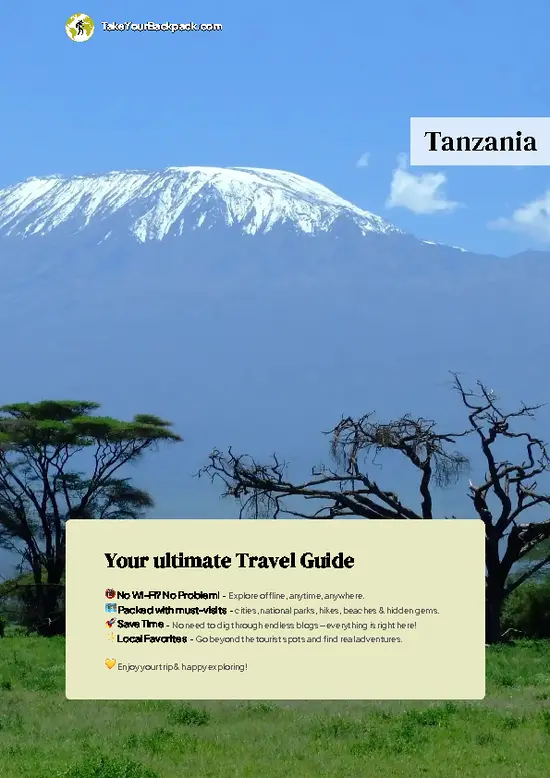
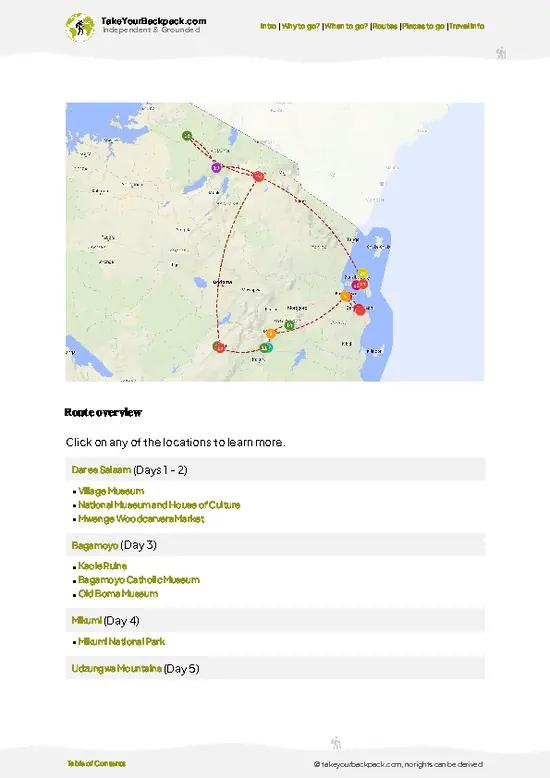
example page 0 from our offline Travel Guide for Tanzania
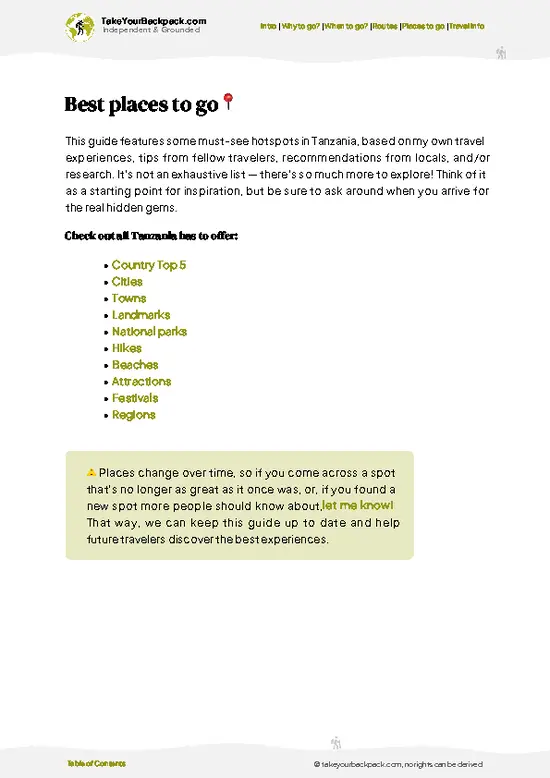
example page 1 from our offline Travel Guide for Tanzania
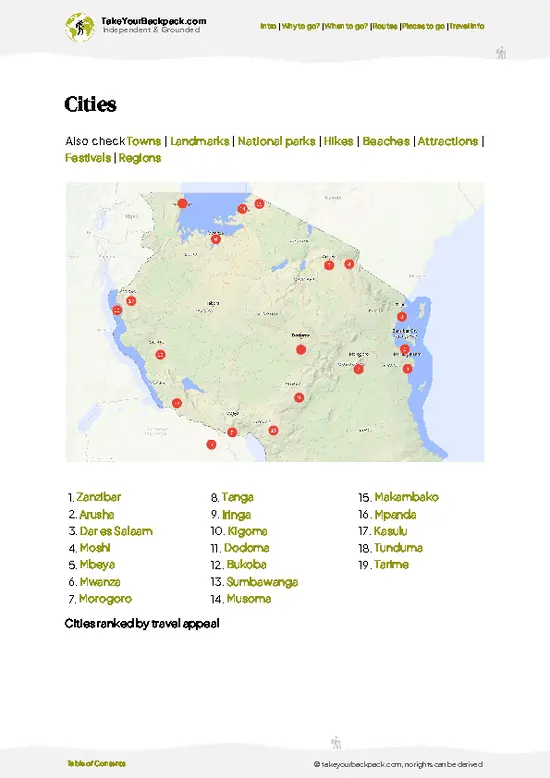
example page 2 from our offline Travel Guide for Tanzania
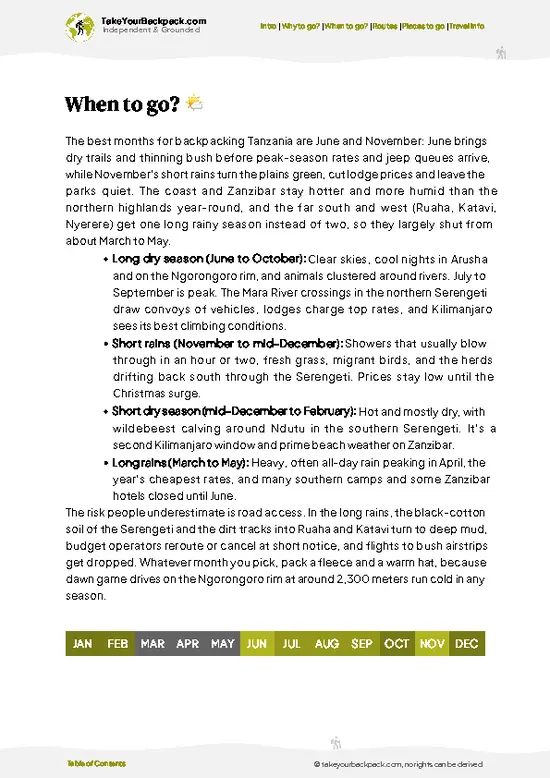
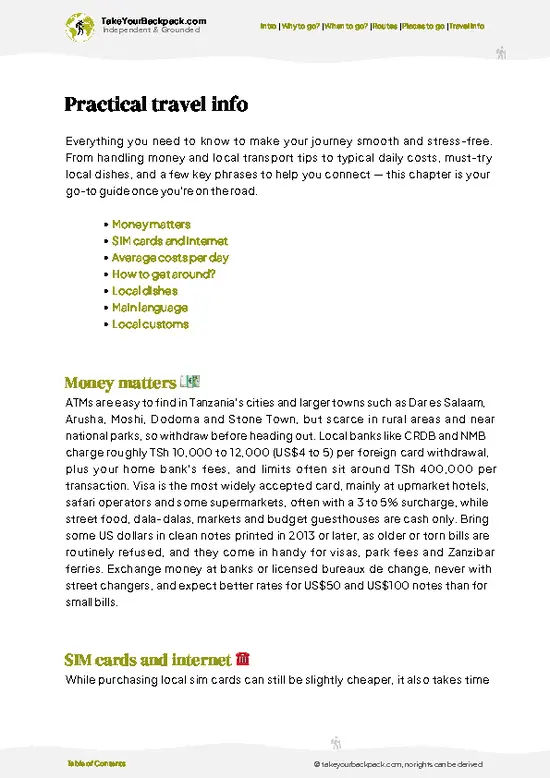
example page 3 from our offline Travel Guide for Tanzania
example page 4 from our offline Travel Guide for Tanzania
example page 5 from our offline Travel Guide for Tanzania
example page 6 from our offline Travel Guide for Tanzania
example page 7 from our offline Travel Guide for Tanzania
The digital guide (377 pages) contains:
100 highlights, ranked by travel appeal
Optimized 7, 14 & 21-day travel routes
Cities, national parks, landmarks, beaches
How to get around
Offline-friendly for travel without Wi-Fi
👉 Click to see all 30+ guide features

📅 Plan smarter in minutes, not weeks
Month by month travel advice
Festivals & national holidays
Budget expectations

🗺️ Go to the right places, skip the overrated ones
Honest pros & cons of destinations
Top hikes, parks & viewpoints
Lesser-known places most travelers miss
Clear “worth it vs skip it” guidance

🛏️ Travel smoothly without rookie mistakes
Best areas to stay
Transport systems explained simply
Common scams & safety advice
SIM cards, money & practical tips

🌍 Understand the country, not just visit it
Culture & traditions
52 Essential phrases & customs
Festivals worth planning around
Traveler-friendly historical context
Insights that make places more meaningful

📱 Built for real travel conditions
Fully downloadable PDF
Works completely offline
Optimized for phone use
Useful in remote areas & buses
Everything in one place
Save weeks of stressful planning
Get instant access to your full guide. 30‑day money-back guarantee.
+ Add another guide for just US$7.80

By proceeding you agree to our terms.
Sent to your inbox immediately after payment • 100% Secure Checkout
Best Backpacking Travel Advisor 2025 tourism awardBest Backpacking
Travel Advisor
2025
What others say about Take Your Backpack Guides:
⭐⭐⭐⭐⭐
Fantastic, amazing amount of information!
⭐⭐⭐⭐⭐
My goodness this is amazing, it's what I've been looking for hats off too you!
⭐⭐⭐⭐⭐
I think this is absolutely BRILLIANT
⭐⭐⭐⭐
Very complete and informative. It's still missing places, but I gotta to commend you
⭐⭐⭐⭐⭐
This is truly amazing, thank you, can't wait to explore it with my kids!
⭐⭐⭐⭐⭐
Awesome resource, thank you!
⭐⭐⭐⭐⭐
This is amazing! Can't wait to explore the ones I haven't seen
⭐⭐⭐⭐
I love this! Well done, great idea.
⭐⭐⭐⭐⭐
Thanks for taking the time to make this gem!
⭐⭐⭐⭐⭐
This might be the best website I've ever seen.
⭐⭐⭐⭐⭐
Congratulations, and thank you so much for your work; it's incredibly valuable.
⭐⭐⭐⭐
In all seriousness I think you did a great job pointing out the important spots
⭐⭐⭐⭐⭐
10/10 very good
⭐⭐⭐⭐⭐
As someone who's only just starting to visit regularly this is awesome, thank you.
⭐⭐⭐⭐
Thank you very much! I'm going to visit my dad, it's going to be very useful!
⭐⭐⭐⭐⭐
This is really cool! We'll be travelling for the first time and this definitely come in handy.
⭐⭐⭐⭐⭐
You are now our minister of culture, congratulations 👨‍💼
⭐⭐⭐⭐⭐
Just wanted to tell you that this is a pearl! Going to follow your recommendations.
⭐⭐⭐⭐⭐
This is so cool. I'll definitely be using the resource for my travels soon.
⭐⭐⭐⭐⭐
This is very impressive! Good work.
⭐⭐⭐⭐⭐
This is an amazing and informative site. Very well done!

🛏️ Where to stay?Best areas to stay in Tanzania

If you enjoy meeting fellow travelers, consider choosing hostels with high ratings for atmosphere. On the other hand, if you prefer having your own space, a hotel might be a better option.

🥾 Hike detailsHike details: route, duration, and difficulty of Lake Natron Trek

Total Distance: The Lake Natron Trek spans approximately 20 kilometers (about 12.4 miles) one way, making it a solid day hike if you’re up for it.

Estimated Duration: Expect to take around 6 to 8 hours to complete the trek, depending on your pace and how often you stop to soak in the views or snap photos.

Difficulty Level: This trail is generally rated as moderate to challenging. You’ll encounter some steep sections, rocky paths, and possibly a bit of scrambling, so a decent level of fitness is recommended.

Starting Point: The trek typically begins in the village of Engaresero. To get there, … read more 👉
Total Distance: The Lake Natron Trek spans approximately 20 kilometers (about 12.4 miles) one way, making it a solid day hike if you’re up for it.

Estimated Duration: Expect to take around 6 to 8 hours to complete the trek, depending on your pace and how often you stop to soak in the views or snap photos.

Difficulty Level: This trail is generally rated as moderate to challenging. You’ll encounter some steep sections, rocky paths, and possibly a bit of scrambling, so a decent level of fitness is recommended.

Starting Point: The trek typically begins in the village of Engaresero. To get there, you can hop on a daladala (shared minibus) from Arusha, which will take you to the village. Just make sure to confirm with the driver that they’re heading to Engaresero, as routes can vary.

Major Landmarks Along the Route:
  • Lake Natron: The stunning salt lake is known for its vibrant red and orange hues, especially at sunset.
  • Oldoinyo Lengai: This active volcano looms large in the background and is a striking sight throughout the hike.
  • Waterfalls: You’ll find a few hidden waterfalls along the way, perfect for a refreshing dip.

Type of Terrain and Scenery: The terrain varies quite a bit. You’ll start with rocky paths, move through sandy stretches, and tackle some steep inclines. The scenery is breathtaking, with sweeping views of the Great Rift Valley, volcanic landscapes, and, of course, the lake itself.

Typical Vegetation and Wildlife: The area is dotted with acacia trees and other hardy plants. Keep an eye out for flamingos at the lake, especially during migration season, and you might spot some monkeys and various bird species along the way.

Pack plenty of water, wear sturdy shoes, and enjoy the adventure!
⚠️ Hiking info can sometimes be outdated or inaccurate. Before you hit the trail, check the latest conditions with locals. If you do spot anything that's off, I'd love to hear from you, so I can update it for fellow travelers.

🛡️ SafetySafety Tips and Common Scams in Lake Natron Trek

The Lake Natron Trek is a wild ride, but it’s manageable with the right mindset and preparation. Expect weather swings; the sun can scorch, but clouds roll in fast. Dress in layers and pack a solid rain jacket. The terrain is rugged—think rocky paths and steep sections. Good footwear is essential; sturdy hiking boots will save your ankles.

Wildlife is part of the experience. You might spot flamingos or even a curious baboon. Keep your distance and don’t feed them; respect their space.

Timing is key. Start early to avoid the midday heat and give yourself ample daylight. Hydration is non-negotiable; carry enough water, especially on the hotter stretches. Embrace the challenge, and the stunning views of the lake will reward your effort.

FAQCommon questions from travelers

The Lake Natron Trek typically takes 2 to 3 days to complete, covering around 40 kilometers depending on the route. Most hikers spend two nights camping near the lake and surrounding areas.
The hike is moderately difficult due to uneven terrain, heat, and occasional steep sections near the Ol Doinyo Lengai volcano. It requires a reasonable level of fitness and acclimatization to the altitude of about 600 to 1,200 meters above sea level.
Yes, you need a local guide and a permit to hike around Lake Natron. Permits are issued by the Tanzanian authorities, and hiring a guide is mandatory for safety and navigation, typically costing around $30 to $50 per day.
⚠️ Things can change over time, so always validate details locally before you go.

Other Tanzanian hikes near Lake Natron Trek

Explore more nearby:


💡 Not sure where to go next?
Create a personalized itinerary for Tanzania including Lake Natron Trek and the places that fit your trip.

Generate my itinerary

👉 Discover all hikes

Or checkout all Tanzania has to offer (think cities, towns, villages, national parks, hikes, beaches, festivals)
Country photo of Tanzania

We 💚 feedbackSumming up the experience

The Lake Natron Trek is raw and real. You’ll feel the heat radiate off the ground as you navigate the rugged trails, but that first glimpse of the flamingos against the shimmering lake? Worth every drop of sweat. Just be ready for the flies—they’re relentless. Pack a good hat and some bug spray. Embrace the grit; it’s part of the charm. This trek isn’t just a hike; it’s a visceral experience that sticks with you long after you leave.

✍️ Help improve this page!
The information on this page is based on in-depth research, insights shared by experienced travelers, and feedback from the local travel community in Tanzania. While every effort is made to keep the information accurate and current, conditions can change — so if you spot anything incorrect or outdated, please get in touch.


🙋‍♂️ Give feedback

👋 Meet the founderWho’s Behind Take Your Backpack?

Johan, backpacker and founder of TakeYourBackpackHi, I’m Johan (Netherlands 🇳🇱), the creator of TakeYourBackpack. Over the past decade, I’ve backpacked through 80+ countries across six continents, gaining extensive experience with independent travel, long-term trips, and overland routes.

This site is built on a combination of firsthand travel experience and carefully curated insights from other backpackers. Many guides are based on places I’ve personally visited, while others bring together tips, observations, and practical advice shared by trusted travelers I’ve met along the way.

The goal is to provide realistic, experience-driven guidance — not generic itineraries — so you can explore destinations with better context, clearer expectations, and more confidence.

Get full Tanzania guide •
Instant download • 100 highlights • Full Offline guide