×
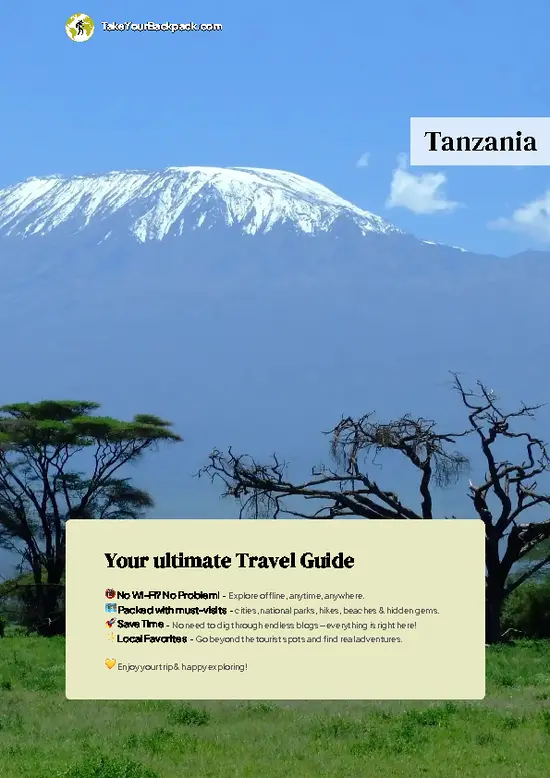
Mount Kilimanjaro

Tanzania🇹🇿 | hikesMount Kilimanjaroglacier summit, alpine desert, rainforest ascent | things to do and best time to go

Explore Mwaka KogwaExplore Usambara Mountains

Backpacking in Mount Kilimanjaro
🏆 Top pickhike ranked #1
By Johan Kruseman 🇳🇱 | Updated September 4, 2026

The first real fork in the road at Mount Kilimanjaro isn’t on the trail—it’s in your planning. Which route do you take? Marangu’s huts or Machame’s tents? Six days or nine? This isn’t a trivial choice. Your odds of reaching the summit, your daily pain level, and even your view of the mountain’s battered glaciers all hinge on it. Kilimanjaro rises from the northern Tanzanian plains like a challenge thrown down by the earth itself, just outside Moshi, near the Kenyan border. The hike is a marathon of altitude and grit, not technical, but relentless—days of switchbacks through rainforest, moorland, and the lunar silence of the summit zone. The scenery is wild: colobus monkeys in the trees, clouds boiling below you, the crater rim sharp as a knife. It’s long, it’s expensive, and public transport gets you close but not quite to the gate—expect a taxi or arranged pickup. Compared to the Usambara Mountains or Mount Meru, Kilimanjaro is bigger, bolder, and far more punishing, but when you stand at Uhuru Peak, breathless and half-frozen, the sunrise over Africa is pure, earned euphoria.

Discover everything you want to know in the 📖 Tanzania Travel Guide.
Best time to go: June - March
Duration: 5 to 10 days
Distance: 70 to 100 kilometers
Total ascent: 4,600 meters
Loading the map 🌍
CLICK TO FILTER
cities
towns
landmarks
national parks
hikes
beaches
attractions
festivals
SHOW COUNTRY’S BESTSHOW ALL

✨ Why go?
Ranked #1 hike in Tanzania
The unique appeal for travelers

Mount Kilimanjaro draws backpackers like moths to a flame. The scenery-to-effort ratio is off the charts. You start in lush rainforests, where the air is thick with the scent of damp earth, and ascend through stark alpine deserts, finally reaching the icy summit. Each step is a mix of sweat and exhilaration, with every altitude gain revealing a new vista that makes the grind worthwhile.

Getting there is a breeze. Public transport access is solid, with buses and shuttles zipping you from Arusha to the trailhead. It’s budget-friendly, too; you can find affordable accommodations and meals in nearby towns. The low cost of entry makes it accessible for many, and the flexible distances allow you to tailor your trek. Whether you want a quick ascent or a leisurely pace, you can choose a route that … read more 👉
Mount Kilimanjaro draws backpackers like moths to a flame. The scenery-to-effort ratio is off the charts. You start in lush rainforests, where the air is thick with the scent of damp earth, and ascend through stark alpine deserts, finally reaching the icy summit. Each step is a mix of sweat and exhilaration, with every altitude gain revealing a new vista that makes the grind worthwhile.

Getting there is a breeze. Public transport access is solid, with buses and shuttles zipping you from Arusha to the trailhead. It’s budget-friendly, too; you can find affordable accommodations and meals in nearby towns. The low cost of entry makes it accessible for many, and the flexible distances allow you to tailor your trek. Whether you want a quick ascent or a leisurely pace, you can choose a route that fits your style.

Kilimanjaro isn’t just a hike; it’s a pivotal stop on a longer backpacking journey through Tanzania. The moment you stand at Uhuru Peak, the world sprawling beneath you, the effort transforms into pure triumph. That first cold beer at base camp? It tastes like victory.
Want to include Mount Kilimanjaro in your Tanzania route?
Create a personalized Tanzania itinerary that includes Mount Kilimanjaro and the places that fit your trip — based on your travel style, budget, and available time. Get your route in seconds.

Generate my trip

💡 HighlightsTop highlights of Mount Kilimanjaro

  1. Rainforest lower slopes — Lush, steamy trail through giant ferns, moss-draped trees and waterfalls where you can spot colobus and blue monkeys and a ridiculous variety of birds. It’s the first taste of Kilimanjaro’s dramatic climate-shift — one minute you’re in a tropical jungle, the next you’ll be above the clouds — something most trails don’t compress into a single day.
  2. Shira Plateau — Wide, wind-swept moorland with big, empty skies and incredible views of Kibo’s volcanic bulk. The plateau feels otherworldly and gives you a sense of altitude without the cram of crampons — great for photos and for noticing how the landscape turns from green to heath to alpine desert.
  3. Barranco Wall (and Karanga Valley) — A short, dramatic scramble up a steep rock face with surprising viewpoints and character-filled
read more 👉
  1. Rainforest lower slopes — Lush, steamy trail through giant ferns, moss-draped trees and waterfalls where you can spot colobus and blue monkeys and a ridiculous variety of birds. It’s the first taste of Kilimanjaro’s dramatic climate-shift — one minute you’re in a tropical jungle, the next you’ll be above the clouds — something most trails don’t compress into a single day.
  2. Shira Plateau — Wide, wind-swept moorland with big, empty skies and incredible views of Kibo’s volcanic bulk. The plateau feels otherworldly and gives you a sense of altitude without the cram of crampons — great for photos and for noticing how the landscape turns from green to heath to alpine desert.
  3. Barranco Wall (and Karanga Valley) — A short, dramatic scramble up a steep rock face with surprising viewpoints and character-filled switchbacks. It’s one of the most memorable “route moments” on the mountain: technical-feeling, very photogenic and a good test of nerves without being a mountaineering pitch.
  4. Lava Tower and the alpine desert — A jagged volcanic outcrop around 4,600 m that marks the sudden shift to cold, dry, lunar-like terrain. Beyond the geology, it’s an important acclimatization stop where the scenery turns stark and you start seeing the glaciers glittering above — a contrast you won’t find on lower-elevation treks.
  5. Stella Point / Uhuru Peak and the glaciers — The summit sunrise is the point every guide will hype, and for good reason: dawn light over the crater rim, the sweeping views across the African plains and the shocking sight of equatorial glaciers clinging to a towering volcano. It’s the grand finale — physically brutal but unmatched as a high-altitude, tropical-summit experience.
Spotted a mistake or missing something? Contact us.

Things to do around Mount Kilimanjaro

Ratings based on Tripadvisor reviews. When you book through this link, you support our work at no extra cost to you.

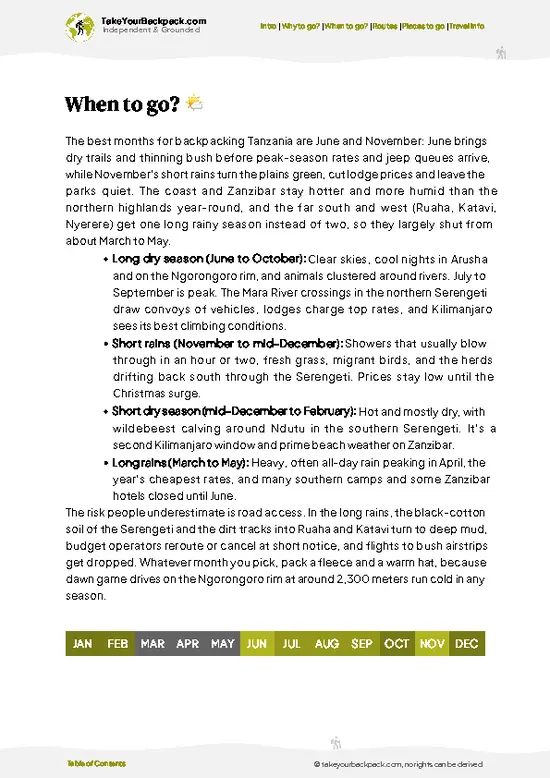
🌤️ When to go?Best time to hike the Mount Kilimanjaro


  • Weather: The best windows are January to mid-March and June to October. These dry seasons slash the mud and slippery trails, making every step more secure and less sloggy. Rain can turn the climb into a slippery mess, so avoid April and May when the long rains flood the paths.

  • Temperature: Expect daytime temps around 20-25°C (68-77°F) at lower elevations, dropping sharply as you ascend. Nights near the summit can plunge below freezing, often hitting -7°C (19°F) or colder. Dress in layers; the cold bite is real above 4,500 meters.

  • Daylight Hours: Roughly 12 hours year-round near the equator. Early starts are mandatory to catch summit views at dawn and avoid afternoon storms that roll in predictably.

  • Crowds: Peak season (June to October) packs the trails with trekkers chasing dry weather
read more 👉

  • Weather: The best windows are January to mid-March and June to October. These dry seasons slash the mud and slippery trails, making every step more secure and less sloggy. Rain can turn the climb into a slippery mess, so avoid April and May when the long rains flood the paths.

  • Temperature: Expect daytime temps around 20-25°C (68-77°F) at lower elevations, dropping sharply as you ascend. Nights near the summit can plunge below freezing, often hitting -7°C (19°F) or colder. Dress in layers; the cold bite is real above 4,500 meters.

  • Daylight Hours: Roughly 12 hours year-round near the equator. Early starts are mandatory to catch summit views at dawn and avoid afternoon storms that roll in predictably.

  • Crowds: Peak season (June to October) packs the trails with trekkers chasing dry weather and clear skies. January to March sees fewer climbers, offering a quieter, more personal battle with the mountain.

  • Seasonal Activities: Dry seasons align with wildlife migrations in nearby parks, so pairing your climb with a safari is prime. Wet seasons dull the landscape but bring lush greenery and fewer tourists.

  • Price Fluctuations: Peak months hike prices up—permits, guides, and gear rentals spike with demand. Off-peak months offer better deals but brace for wetter, tougher conditions.


Pro-tip: Aim for the shoulder months—late January or early March—to dodge crowds and rain while scoring better rates and still enjoying solid trail conditions.


source: climatestotravel.comJANJanuary: excellent for travelingFEBFebruary: excellent for travelingMARMarch: highly recommended for travelingAPRApril: below average for travelingMAYMay: below average for travelingJUNJune: excellent for travelingJULJuly: excellent for travelingAUGAugust: excellent for travelingSEPSeptember: excellent for travelingOCTOctober: excellent for travelingNOVNovember: good for travelingDECDecember: good for traveling
Tanzania - Mount Kilimanjaro

✈️ The backpacker research shortcutTanzania Travel Guide

An offline-friendly backpacking guide with optimized travel routes, ranked highlights, transport advice, and the best areas to stay.
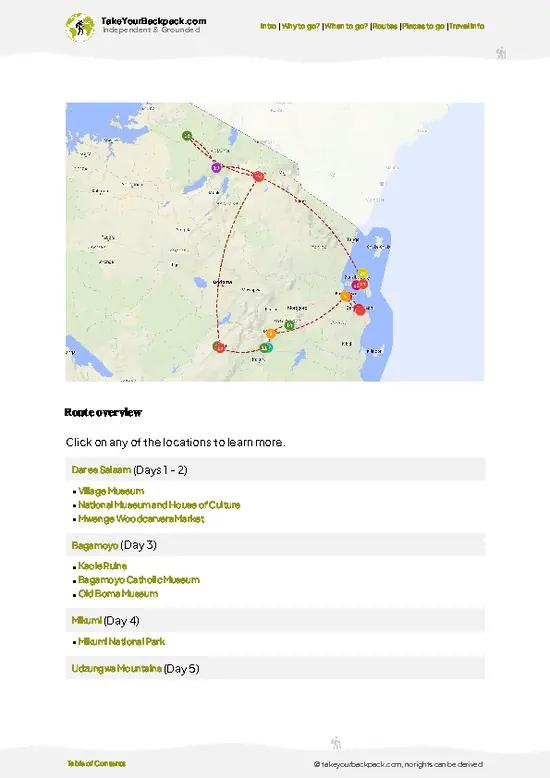
example page 0 from our offline Travel Guide for Tanzania
example page 1 from our offline Travel Guide for Tanzania
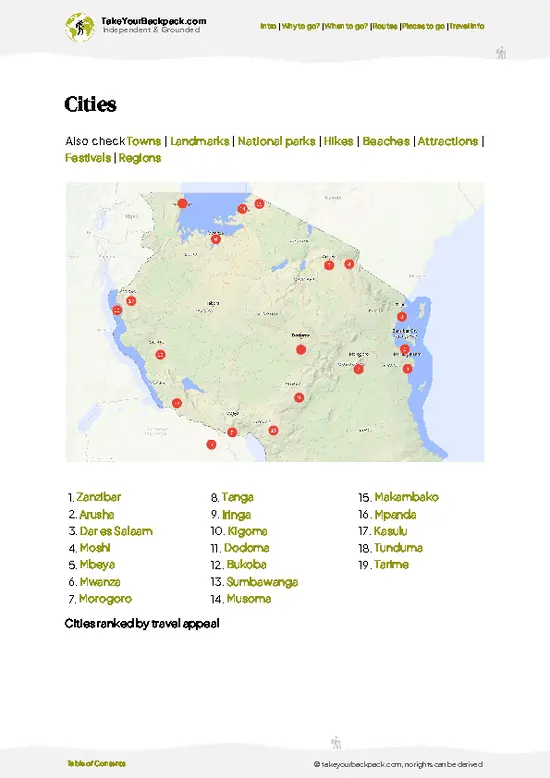
example page 2 from our offline Travel Guide for Tanzania
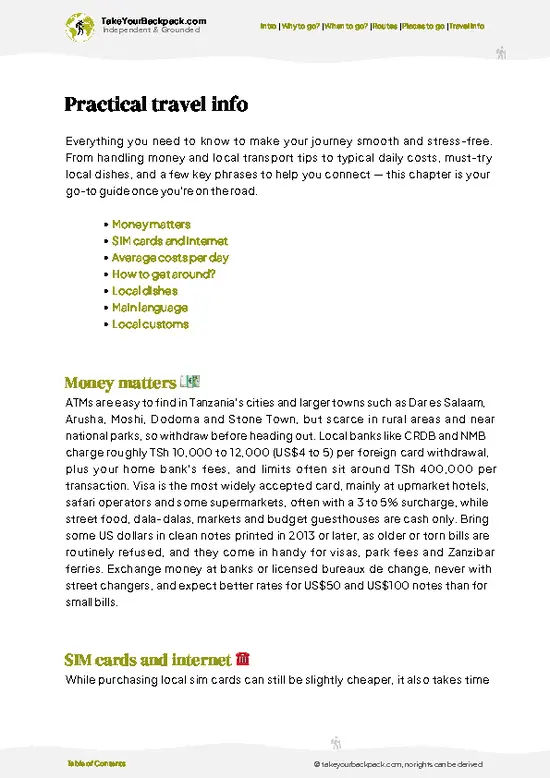
example page 3 from our offline Travel Guide for Tanzania
example page 4 from our offline Travel Guide for Tanzania
example page 5 from our offline Travel Guide for Tanzania
example page 6 from our offline Travel Guide for Tanzania
example page 7 from our offline Travel Guide for Tanzania
The digital guide (377 pages) contains:
100 highlights, ranked by travel appeal
Optimized 7, 14 & 21-day travel routes
Cities, national parks, landmarks, beaches
How to get around
Offline-friendly for travel without Wi-Fi
👉 Click to see all 30+ guide features

📅 Plan smarter in minutes, not weeks
Month by month travel advice
Festivals & national holidays
Budget expectations

🗺️ Go to the right places, skip the overrated ones
Honest pros & cons of destinations
Top hikes, parks & viewpoints
Lesser-known places most travelers miss
Clear “worth it vs skip it” guidance

🛏️ Travel smoothly without rookie mistakes
Best areas to stay
Transport systems explained simply
Common scams & safety advice
SIM cards, money & practical tips

🌍 Understand the country, not just visit it
Culture & traditions
52 Essential phrases & customs
Festivals worth planning around
Traveler-friendly historical context
Insights that make places more meaningful

📱 Built for real travel conditions
Fully downloadable PDF
Works completely offline
Optimized for phone use
Useful in remote areas & buses
Everything in one place
Save weeks of stressful planning
Get instant access to your full guide. 30‑day money-back guarantee.
+ Add another guide for just US$7.80

By proceeding you agree to our terms.
Sent to your inbox immediately after payment • 100% Secure Checkout
Best Backpacking Travel Advisor 2025 tourism awardBest Backpacking
Travel Advisor
2025
What others say about Take Your Backpack Guides:
⭐⭐⭐⭐⭐
Fantastic, amazing amount of information!
⭐⭐⭐⭐⭐
My goodness this is amazing, it's what I've been looking for hats off too you!
⭐⭐⭐⭐⭐
I think this is absolutely BRILLIANT
⭐⭐⭐⭐
Very complete and informative. It's still missing places, but I gotta to commend you
⭐⭐⭐⭐⭐
This is truly amazing, thank you, can't wait to explore it with my kids!
⭐⭐⭐⭐⭐
Awesome resource, thank you!
⭐⭐⭐⭐⭐
This is amazing! Can't wait to explore the ones I haven't seen
⭐⭐⭐⭐
I love this! Well done, great idea.
⭐⭐⭐⭐⭐
Thanks for taking the time to make this gem!
⭐⭐⭐⭐⭐
This might be the best website I've ever seen.
⭐⭐⭐⭐⭐
Congratulations, and thank you so much for your work; it's incredibly valuable.
⭐⭐⭐⭐
In all seriousness I think you did a great job pointing out the important spots
⭐⭐⭐⭐⭐
10/10 very good
⭐⭐⭐⭐⭐
As someone who's only just starting to visit regularly this is awesome, thank you.
⭐⭐⭐⭐
Thank you very much! I'm going to visit my dad, it's going to be very useful!
⭐⭐⭐⭐⭐
This is really cool! We'll be travelling for the first time and this definitely come in handy.
⭐⭐⭐⭐⭐
You are now our minister of culture, congratulations 👨‍💼
⭐⭐⭐⭐⭐
Just wanted to tell you that this is a pearl! Going to follow your recommendations.
⭐⭐⭐⭐⭐
This is so cool. I'll definitely be using the resource for my travels soon.
⭐⭐⭐⭐⭐
This is very impressive! Good work.
⭐⭐⭐⭐⭐
This is an amazing and informative site. Very well done!

🛏️ Where to stay?Best areas and accommodation options

If you enjoy meeting fellow travelers, consider choosing hostels with high ratings for atmosphere. On the other hand, if you prefer having your own space, a hotel might be a better option.

🥾 Hike detailsHike details: route, duration, and difficulty of Mount Kilimanjaro

Total Distance: The total distance to the summit of Mount Kilimanjaro is approximately 70 kilometers (about 43 miles) round trip, depending on the route you choose.

Estimated Duration: Most hikers take around 5 to 9 days to complete the trek, giving your body time to acclimatize to the altitude.

Difficulty Level: This trail is generally considered challenging. It’s not just about the distance; the altitude can really kick your butt, especially as you get higher.

Starting Point: The main starting point is Moshi, a town near the base of the mountain. You can get there by public transport from … read more 👉
Total Distance: The total distance to the summit of Mount Kilimanjaro is approximately 70 kilometers (about 43 miles) round trip, depending on the route you choose.

Estimated Duration: Most hikers take around 5 to 9 days to complete the trek, giving your body time to acclimatize to the altitude.

Difficulty Level: This trail is generally considered challenging. It’s not just about the distance; the altitude can really kick your butt, especially as you get higher.

Starting Point: The main starting point is Moshi, a town near the base of the mountain. You can get there by public transport from Arusha, which is about an hour away. Look for shared minibuses (dala-dalas) that leave frequently; they’re cheap and an adventure in themselves.

Major Landmarks Along the Route:
  • Machame Gate: This is where you officially start your hike. It’s a busy spot with lots of other trekkers.
  • Shira Plateau: A stunning area with expansive views and unique vegetation.
  • Barafu Camp: The base camp for the summit attempt, where you’ll spend a night before your final push.
  • Uhuru Peak: The actual summit, where you can take in breathtaking views and feel on top of the world.

Type of Terrain and Scenery: You’ll encounter a mix of terrain, from lush rainforest at the base to alpine desert as you ascend. The scenery changes dramatically, with rocky paths, volcanic landscapes, and stunning vistas.

Typical Vegetation and Wildlife: The lower slopes are lush with dense forest, home to monkeys and various bird species. As you climb higher, you’ll see moorland with giant heather and unique plants like the giant lobelia. Wildlife is less common at higher altitudes, but you might spot some birds or small mammals if you’re lucky.

Packing your patience and a good camera is a must; the views are worth every step!
⚠️ Hiking info can sometimes be outdated or inaccurate. Before you hit the trail, check the latest conditions with locals. If you do spot anything that's off, I'd love to hear from you, so I can update it for fellow travelers.

🛡️ SafetyStaying Safe: What Travelers Should Know

Mount Kilimanjaro is a majestic beast, but it demands respect. The weather can shift from sunny to stormy in a heartbeat, so layering is key. Start with moisture-wicking base layers, add insulation, and finish with a waterproof shell.

The trails vary from well-trodden paths to steep, rocky sections that require focus. Navigation is straightforward, but don’t let your guard down; a misstep can lead to a twisted ankle. Take your time on the ascent. Altitude sickness is real, so pace yourself and hydrate like it’s your job.

Wildlife encounters are rare but possible. If you spot a monkey or a bird, enjoy the moment but keep your distance. Feeding animals is a no-go; it disrupts their natural behavior.

First-timers often underestimate the cold at night. A good sleeping bag and thermal layers … read more 👉
Mount Kilimanjaro is a majestic beast, but it demands respect. The weather can shift from sunny to stormy in a heartbeat, so layering is key. Start with moisture-wicking base layers, add insulation, and finish with a waterproof shell.

The trails vary from well-trodden paths to steep, rocky sections that require focus. Navigation is straightforward, but don’t let your guard down; a misstep can lead to a twisted ankle. Take your time on the ascent. Altitude sickness is real, so pace yourself and hydrate like it’s your job.

Wildlife encounters are rare but possible. If you spot a monkey or a bird, enjoy the moment but keep your distance. Feeding animals is a no-go; it disrupts their natural behavior.

First-timers often underestimate the cold at night. A good sleeping bag and thermal layers will make a world of difference. Embrace the challenge, and when you reach the summit, the view will reward every ounce of effort.

FAQTraveler FAQ

The Mount Kilimanjaro hike typically takes 5 to 9 days depending on the route chosen. The most popular routes like Machame and Lemosho usually require 6 to 7 days to allow proper acclimatization. Shorter routes exist but increase the risk of altitude sickness.
The hike is considered strenuous due to high altitude and steep terrain. It requires good physical fitness and acclimatization to avoid altitude sickness, with daily trekking distances ranging from 5 to 12 kilometers. Temperatures can vary widely, from tropical at the base to freezing near the summit.
Yes, a guide and permit are mandatory for climbing Mount Kilimanjaro. Permits cost around $70 to $100 USD and must be purchased through registered tour operators. Guides are required by Tanzanian law to ensure safety and environmental protection.
⚠️ Things can change over time, so always validate details locally before you go.

Other Tanzanian hikes near Mount Kilimanjaro

Explore more nearby:


💡 Not sure where to go next?
Create a personalized itinerary for Tanzania including Mount Kilimanjaro and the places that fit your trip.

Generate my itinerary

👉 Discover all hikes

Or checkout all Tanzania has to offer (think cities, towns, villages, national parks, hikes, beaches, festivals)
Country photo of Tanzania

We 💚 feedbackParting advice and final tips

Climbing Kilimanjaro is a wild ride. The trails can be relentless, but the camaraderie among trekkers is electric. Expect to feel every muscle scream, especially on summit night. But when you finally crest that peak, the sunrise over the clouds is a moment that’ll sear into your memory.

Pack layers; the weather flips like a switch. And don’t underestimate altitude sickness—hydrate like it’s your job. Embrace the grind; the journey is as rewarding as the view. You’ll leave with more than just a summit photo; you’ll carry a piece of Africa in your heart.

✍️ Help improve this page!
The information on this page is based on in-depth research, insights shared by experienced travelers, and feedback from the local travel community in Tanzania. While every effort is made to keep the information accurate and current, conditions can change — so if you spot anything incorrect or outdated, please get in touch.


🙋‍♂️ Give feedback

👋 Meet the founderWho’s Behind Take Your Backpack?

Johan, backpacker and founder of TakeYourBackpackHi, I’m Johan (Netherlands 🇳🇱), the creator of TakeYourBackpack. Over the past decade, I’ve backpacked through 80+ countries across six continents, gaining extensive experience with independent travel, long-term trips, and overland routes.

This site is built on a combination of firsthand travel experience and carefully curated insights from other backpackers. Many guides are based on places I’ve personally visited, while others bring together tips, observations, and practical advice shared by trusted travelers I’ve met along the way.

The goal is to provide realistic, experience-driven guidance — not generic itineraries — so you can explore destinations with better context, clearer expectations, and more confidence.

Get full Tanzania guide •
Instant download • 100 highlights • Full Offline guide