×

Tanzania🇹🇿 | hikesUsambara Mountainscloud forest, colonial-era towns, panoramic escarpments | things to do and best time to go

Explore Mount KilimanjaroExplore Rufiji River Trail

Backpacking in Usambara Mountains
🏆 Top pickhike ranked #2
By Johan Kruseman 🇳🇱 | Updated July 30, 2026

You’ll hear the Usambara Mountains called “the Switzerland of Africa,” but here’s the twist: the real magic isn’t in the peaks—it’s in the villages strung along the ridgelines, where you’ll trade high-altitude drama for a living, breathing landscape. The Usambaras slice across northeastern Tanzania, a green spine between Moshi and Tanga, and the hike here is a kinetic, muddy, sweat-on-your-brow affair. Trails snake through rainforest that drips with mist, past red-dirt farms and kids shouting “Jambo!” as you pass. The scenery is a rolling patchwork—ferns, banana groves, and sudden, gasp-worthy views down to the Maasai plains. It’s not a technical trek, but the days are long and the climbs relentless, especially if you’re hauling your own pack. Getting to Lushoto, the main trailhead, is a bumpy but doable bus ride from Arusha or Dar. Compared to Kilimanjaro’s crowds or the dry, sun-blasted Ulugurus, Usambara is quieter, greener, and far more about the journey than the summit.

Discover everything you want to know in the 📖 Tanzania Travel Guide.
Best time to go: June - February
Duration: 5 to 7 days
Distance: 50 to 100 kilometers
Total ascent: 1,000 to 2,000 meters
Loading the map 🌍
CLICK TO FILTER
cities
towns
landmarks
national parks
hikes
beaches
attractions
festivals
SHOW COUNTRY’S BESTSHOW ALL

✨ Why go?
Ranked #2 hike in Tanzania
What makes this hike worth hiking

The Usambara Mountains in Tanzania are a magnet for backpackers craving a mix of challenge and reward. The scenery-to-effort ratio here is off the charts. You’ll trek through lush forests, vibrant tea plantations, and charming villages, all while soaking in breathtaking views that make every step worthwhile.

Getting there is a breeze; public transport access is solid, with buses and shared taxis whisking you from major hubs like Moshi or Arusha. Once you’re on the trail, you can choose your own adventure with flexible distances—from a leisurely stroll to a more intense climb, there’s something for every level.

And let’s talk cost: it’s incredibly low cost for the experience you get. You can easily fit this hike into a longer backpacking route, making it a perfect pit stop. The moment you … read more 👉
The Usambara Mountains in Tanzania are a magnet for backpackers craving a mix of challenge and reward. The scenery-to-effort ratio here is off the charts. You’ll trek through lush forests, vibrant tea plantations, and charming villages, all while soaking in breathtaking views that make every step worthwhile.

Getting there is a breeze; public transport access is solid, with buses and shared taxis whisking you from major hubs like Moshi or Arusha. Once you’re on the trail, you can choose your own adventure with flexible distances—from a leisurely stroll to a more intense climb, there’s something for every level.

And let’s talk cost: it’s incredibly low cost for the experience you get. You can easily fit this hike into a longer backpacking route, making it a perfect pit stop. The moment you reach a viewpoint, with the world sprawling below, or crack open that first cold beer at a local spot, you’ll know every ounce of effort was worth it.
Want to include Usambara Mountains in your Tanzania route?
Create a personalized Tanzania itinerary that includes Usambara Mountains and the places that fit your trip — based on your travel style, budget, and available time. Get your route in seconds.

Generate my trip

💡 HighlightsMust-see experiences and standout moments

  1. Amani Nature Reserve — A patch of emerald cloud forest full of mossy trunks, trickling streams and a research station; the place really shows why the Eastern Arc is a biodiversity hotspot, so expect rare plants, frogs and lots of birds you won’t see on lowland savanna hikes.
  2. Mazumbai Forest Reserve — Ancient montane forest with thick epiphytes, orchids and giant trees; the atmosphere is otherworldly and quieter than the more popular trails, great for botanists and anyone who likes walking through living, green cathedrals.
  3. Honde Valley & Soni Plateau Viewpoints — Dramatic escarpment drops and sweeping views over a patchwork of tea, banana terraces and deep valley fog; sunrise or late-afternoon light here makes the landscape feel enormous—perfect for photographers and anyone who enjoys a
read more 👉
  1. Amani Nature Reserve — A patch of emerald cloud forest full of mossy trunks, trickling streams and a research station; the place really shows why the Eastern Arc is a biodiversity hotspot, so expect rare plants, frogs and lots of birds you won’t see on lowland savanna hikes.
  2. Mazumbai Forest Reserve — Ancient montane forest with thick epiphytes, orchids and giant trees; the atmosphere is otherworldly and quieter than the more popular trails, great for botanists and anyone who likes walking through living, green cathedrals.
  3. Honde Valley & Soni Plateau Viewpoints — Dramatic escarpment drops and sweeping views over a patchwork of tea, banana terraces and deep valley fog; sunrise or late-afternoon light here makes the landscape feel enormous—perfect for photographers and anyone who enjoys a big, wild vista.
  4. Irente viewpoint and nearby waterfalls — Short detours from main trails lead to sudden waterfalls and cliff-top lookouts (Irente is the best-known); the contrast of cool cascades and wide-open valley views gives the hike a mixed-reward feel—muddy boots one minute, panoramic peace the next.
  5. Lushoto, tea estates and local villages — Not a single “site” but a string of cultural highlights: colonial-era townscapes, working tea plantations, bustling markets and friendly village homestays. These human touches make the trek feel lived-in and give you chances to taste local food, tea and stories from guides.
Spotted a mistake or missing something? Contact us.

Things to do near Usambara Mountains

Ratings based on Tripadvisor reviews. When you book through this link, you support our work at no extra cost to you.

🌤️ When to go?When to go for the best experience


  • Weather: The Usambara Mountains split the year between wet and dry seasons. The dry months from June to October offer crisp air and clear trails, while the wet season from March to May drenches paths and turns the forest into a slippery challenge.

  • Temperature: Daytime highs hover around 20-25°C (68-77°F) during the dry season, perfect for sustained hiking without overheating. Nights dip to 10-15°C (50-59°F), so pack layers. The wet season feels cooler and damper, adding chill to the air.

  • Daylight Hours: Expect roughly 11 to 12 hours of daylight year-round, with sunrise around 6:30 AM and sunset near 6:30 PM. Early starts maximize your trekking window and avoid afternoon showers in the wet months.

  • Crowds: The dry season draws more trekkers, especially July and August, but the Usambaras
read more 👉

  • Weather: The Usambara Mountains split the year between wet and dry seasons. The dry months from June to October offer crisp air and clear trails, while the wet season from March to May drenches paths and turns the forest into a slippery challenge.

  • Temperature: Daytime highs hover around 20-25°C (68-77°F) during the dry season, perfect for sustained hiking without overheating. Nights dip to 10-15°C (50-59°F), so pack layers. The wet season feels cooler and damper, adding chill to the air.

  • Daylight Hours: Expect roughly 11 to 12 hours of daylight year-round, with sunrise around 6:30 AM and sunset near 6:30 PM. Early starts maximize your trekking window and avoid afternoon showers in the wet months.

  • Crowds: The dry season draws more trekkers, especially July and August, but the Usambaras remain relatively quiet compared to other Tanzanian spots. The wet season sees fewer visitors, offering solitude at the cost of muddier trails.

  • Seasonal Activities: Dry months align with local festivals and harvests, adding cultural layers to your hike. The wet season brings lush greenery and blooming orchids, rewarding those willing to brave the mud.

  • Price Fluctuations: Accommodation and guide fees peak in the dry season due to demand. The wet season offers better deals but expect some lodges to close or reduce services.


Pro-tip: Aim for late June or early October to catch dry trails, manageable crowds, and a sweet spot on prices—where the mountains reward your effort with both solitude and spectacle.


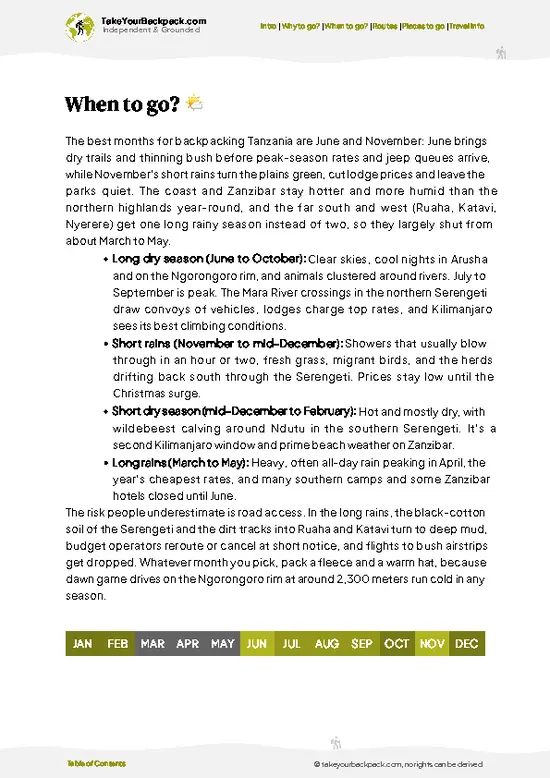
source: climatestotravel.comJANJanuary: good for travelingFEBFebruary: good for travelingMARMarch: fair for travelingAPRApril: fair for travelingMAYMay: fair for travelingJUNJune: highly recommended for travelingJULJuly: excellent for travelingAUGAugust: excellent for travelingSEPSeptember: highly recommended for travelingOCTOctober: highly recommended for travelingNOVNovember: good for travelingDECDecember: good for traveling
when-to-go

✈️ The backpacker research shortcutTanzania Travel Guide

An offline-friendly backpacking guide with optimized travel routes, ranked highlights, transport advice, and the best areas to stay.
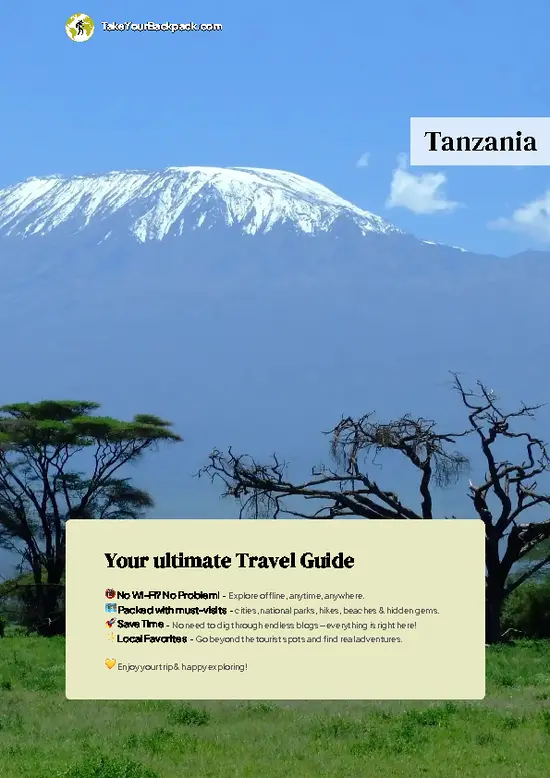
example page 0 from our offline Travel Guide for Tanzania
example page 1 from our offline Travel Guide for Tanzania
example page 2 from our offline Travel Guide for Tanzania
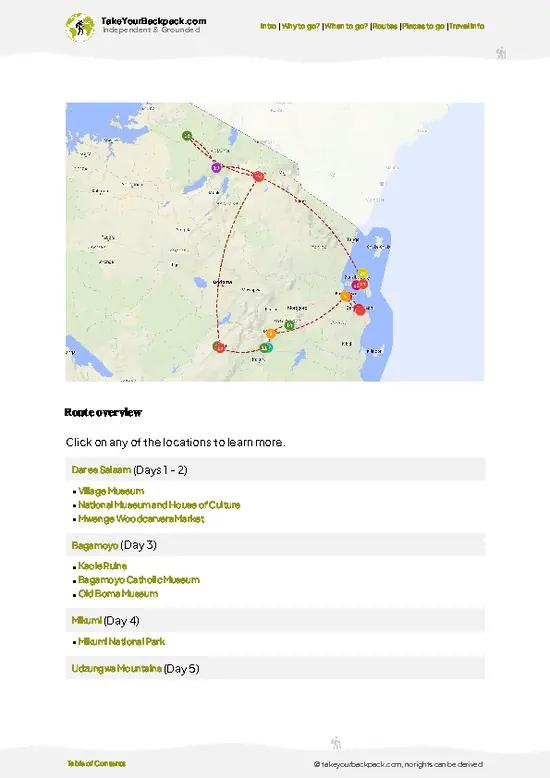
example page 3 from our offline Travel Guide for Tanzania
example page 4 from our offline Travel Guide for Tanzania
example page 5 from our offline Travel Guide for Tanzania
example page 6 from our offline Travel Guide for Tanzania
example page 7 from our offline Travel Guide for Tanzania
The digital guide (377 pages) contains:
100 highlights, ranked by travel appeal
Optimized 7, 14 & 21-day travel routes
Cities, national parks, landmarks, beaches
How to get around
Offline-friendly for travel without Wi-Fi
👉 Click to see all 30+ guide features

📅 Plan smarter in minutes, not weeks
Month by month travel advice
Festivals & national holidays
Budget expectations

🗺️ Go to the right places, skip the overrated ones
Honest pros & cons of destinations
Top hikes, parks & viewpoints
Lesser-known places most travelers miss
Clear “worth it vs skip it” guidance

🛏️ Travel smoothly without rookie mistakes
Best areas to stay
Transport systems explained simply
Common scams & safety advice
SIM cards, money & practical tips

🌍 Understand the country, not just visit it
Culture & traditions
52 Essential phrases & customs
Festivals worth planning around
Traveler-friendly historical context
Insights that make places more meaningful

📱 Built for real travel conditions
Fully downloadable PDF
Works completely offline
Optimized for phone use
Useful in remote areas & buses
Everything in one place
Save weeks of stressful planning
Get instant access to your full guide. 30‑day money-back guarantee.


By proceeding you agree to our terms.
Sent to your inbox immediately after payment • 100% Secure Checkout
Best Backpacking Travel Advisor 2025 tourism awardBest Backpacking
Travel Advisor
2025
What others say about Take Your Backpack Guides:
⭐⭐⭐⭐⭐
Fantastic, amazing amount of information!
⭐⭐⭐⭐⭐
My goodness this is amazing, it's what I've been looking for hats off too you!
⭐⭐⭐⭐⭐
I think this is absolutely BRILLIANT
⭐⭐⭐⭐
Very complete and informative. It's still missing places, but I gotta to commend you
⭐⭐⭐⭐⭐
This is truly amazing, thank you, can't wait to explore it with my kids!
⭐⭐⭐⭐⭐
Awesome resource, thank you!
⭐⭐⭐⭐⭐
This is amazing! Can't wait to explore the ones I haven't seen
⭐⭐⭐⭐
I love this! Well done, great idea.
⭐⭐⭐⭐⭐
Thanks for taking the time to make this gem!
⭐⭐⭐⭐⭐
This might be the best website I've ever seen.
⭐⭐⭐⭐⭐
Congratulations, and thank you so much for your work; it's incredibly valuable.
⭐⭐⭐⭐
In all seriousness I think you did a great job pointing out the important spots
⭐⭐⭐⭐⭐
10/10 very good
⭐⭐⭐⭐⭐
As someone who's only just starting to visit regularly this is awesome, thank you.
⭐⭐⭐⭐
Thank you very much! I'm going to visit my dad, it's going to be very useful!
⭐⭐⭐⭐⭐
This is really cool! We'll be travelling for the first time and this definitely come in handy.
⭐⭐⭐⭐⭐
You are now our minister of culture, congratulations 👨‍💼
⭐⭐⭐⭐⭐
Just wanted to tell you that this is a pearl! Going to follow your recommendations.
⭐⭐⭐⭐⭐
This is so cool. I'll definitely be using the resource for my travels soon.
⭐⭐⭐⭐⭐
This is very impressive! Good work.
⭐⭐⭐⭐⭐
This is an amazing and informative site. Very well done!

🛏️ Where to stay?Where staying makes the most sense

If you enjoy meeting fellow travelers, consider choosing hostels with high ratings for atmosphere. On the other hand, if you prefer having your own space, a hotel might be a better option.

🥾 Hike detailsA practical overview of the hike

Total Distance: The main trail through the Usambara Mountains covers about 65 kilometers (around 40 miles) if you take the full loop. You can also break it down into shorter segments if you prefer.

Estimated Duration: Expect to spend about 4 to 6 days on the trail, depending on your pace and how much you want to explore. If you’re feeling adventurous, you can always add extra days for side trips.

Difficulty Level: This trail is generally rated as moderate. There are some steep sections and rocky paths, but nothing too extreme. A decent level of fitness will make it manageable, and you’ll be … read more 👉
Total Distance: The main trail through the Usambara Mountains covers about 65 kilometers (around 40 miles) if you take the full loop. You can also break it down into shorter segments if you prefer.

Estimated Duration: Expect to spend about 4 to 6 days on the trail, depending on your pace and how much you want to explore. If you’re feeling adventurous, you can always add extra days for side trips.

Difficulty Level: This trail is generally rated as moderate. There are some steep sections and rocky paths, but nothing too extreme. A decent level of fitness will make it manageable, and you’ll be rewarded with stunning views.

Starting Point: The trail usually kicks off in the town of Lushoto. You can get there by taking a bus from Dar es Salaam or Arusha. The buses are pretty frequent, but be prepared for a bumpy ride. Once you arrive in Lushoto, you can easily find accommodations and local guides if you want some help navigating.

Major Landmarks Along the Route:
  • Shaghalu Waterfall: A beautiful spot for a break and some photos.
  • Irente Viewpoint: Offers breathtaking views of the surrounding valleys and mountains.
  • Local Villages: You’ll pass through several villages where you can experience local culture and maybe grab a snack.

Type of Terrain and Scenery: The trail features a mix of rocky paths, dirt trails, and some paved sections. You’ll navigate through lush forests, rolling hills, and terraced farmland. The scenery shifts from dense greenery to open vistas, making every turn a new delight.

Typical Vegetation and Wildlife:
  • Vegetation: Expect to see plenty of tropical plants, including banana trees, coffee bushes, and various types of ferns.
  • Wildlife: Keep an eye out for colorful birds, monkeys, and maybe even some small reptiles. The area is rich in biodiversity, so you never know what you might spot!
⚠️ Hiking info can sometimes be outdated or inaccurate. Before you hit the trail, check the latest conditions with locals. If you do spot anything that's off, I'd love to hear from you, so I can update it for fellow travelers.

🛡️ SafetyStaying Safe: What Travelers Should Know

The Usambara Mountains offer a thrilling mix of challenge and beauty. Expect sudden weather shifts; a sunny morning can morph into a downpour by noon. Dress in layers and pack a rain jacket. The trails are well-marked but can be steep and rocky, so sturdy footwear is essential.

Keep an eye out for wildlife, like the elusive blue monkey or colorful birds. Maintain a respectful distance; don’t feed them.

Altitude isn’t a major concern here, but you’ll feel the burn in your legs on the ascents. Pace yourself, especially on the longer stretches.

Be mindful of your surroundings, especially near river crossings. A slip can happen, so take it slow. With the right preparation, you’ll find the effort pays off in breathtaking views and the satisfaction of conquering the trail.

Other Tanzanian hikes near Usambara Mountains

Explore more nearby:


💡 Not sure where to go next?
Create a personalized itinerary for Tanzania including Usambara Mountains and the places that fit your trip.

Generate my itinerary

👉 Discover all hikes

Or checkout all Tanzania has to offer (think cities, towns, villages, national parks, hikes, beaches, festivals)
Country photo of Tanzania

We 💚 feedbackKey takeaways before you go

The Usambara Mountains pulse with life. You’ll feel the rhythm of local markets and hear laughter echoing through the trees. The best surprise? Stumbling upon a hidden waterfall after a sweaty trek—it’s like nature’s reward for your effort. Just a heads-up: the trails can be slippery after rain, so tread carefully. But trust me, that first sip of cold Kilimanjaro beer while soaking in the view is worth every step. Embrace the grit; the payoff is real.

✍️ Help improve this page!
The information on this page is based on in-depth research, insights shared by experienced travelers, and feedback from the local travel community in Tanzania. While every effort is made to keep the information accurate and current, conditions can change — so if you spot anything incorrect or outdated, please get in touch.


🙋‍♂️ Give feedback

👋 Meet the founderWho’s Behind Take Your Backpack?

Johan, backpacker and founder of TakeYourBackpackHi, I’m Johan (Netherlands 🇳🇱), the creator of TakeYourBackpack. Over the past decade, I’ve backpacked through 80+ countries across six continents, gaining extensive experience with independent travel, long-term trips, and overland routes.

This site is built on a combination of firsthand travel experience and carefully curated insights from other backpackers. Many guides are based on places I’ve personally visited, while others bring together tips, observations, and practical advice shared by trusted travelers I’ve met along the way.

The goal is to provide realistic, experience-driven guidance — not generic itineraries — so you can explore destinations with better context, clearer expectations, and more confidence.

Get full Tanzania guide •
Instant download • 100 highlights • Full Offline guide